Usually, not merely because the machine goes into an automotive factory.
That distinction can save a purchasing department a surprisingly large amount of paperwork.
IATF Rules 6th explains that organizations eligible for IATF 16949 certification manufacture automotive products—parts or processed materials for applicable automotive vehicles. Ordinary industrial machinery, tooling and factory equipment are not automatically automotive products merely because an automotive OEM uses them.
However, an automotive OEM or machinery builder can still contractually flow down automotive quality methods to its mechanical suppliers. For example: APQP, PFMEA, Control Plan, PPAP, MSA, SPC, lot traceability, special characteristics, supplier change notification, and documented corrective action.
That gives procurement a much better question than: “Is this control box IATF certified?”
Ask: “Which automotive quality controls does our program actually require the sheet metal supplier to follow?”
For MSTFAB, the manufacturing scope remains simple: We make the empty galvanized steel control box shell.
We do not supply: PLCs, VFDs, servo drives, HMIs, breakers, terminals, electrical wiring, programming, machine controls, or finished electrical systems.
You build the machine. We make the metal part of the machine behave itself. That is already a full-time job.

Why “The Machine Goes Into a Car Factory” Is Not Enough
This is the biggest misconception behind the keyword IATF 16949 galvanized steel control box machinery manufacturer.
Consider two projects.
Project A
A sheet metal bracket is installed permanently in a vehicle and supplied through an automotive Tier chain. That is an automotive product context.
Project B
A galvanized control cabinet is mounted beside a robotic welding cell that manufactures vehicles. The cabinet belongs to the manufacturing equipment.
The fact that a Toyota, Ford, GM or another vehicle eventually passes nearby does not magically install the control cabinet into the vehicle.
Therefore, do not automatically specify: “IATF required because automotive factory.”
First establish: What is the supplied product? Does it become part of an automotive vehicle? What does the customer contract actually require? Is the buyer asking for formal IATF certification or simply automotive Core Tool controls?
Those are different questions. The factory location does not decide the standard. Otherwise the coffee machine in the automotive plant cafeteria might eventually need PPAP.
Customer Flow-Down Can Still Be Very Real
Now for the part procurement actually cares about.
Even when the machinery control box itself is not an IATF-eligible automotive vehicle part, an automotive customer may contractually require its machinery suppliers to use specific automotive quality methods.
That can happen because the production equipment is: highly repeatable, deployed across multiple plants, part of a validated manufacturing cell, expensive to modify after installation, or dependent on tightly controlled replacement parts.
The machinery OEM may therefore request: dimensional submission, FAI, PFMEA, Control Plan, PPAP-style approval, MSA, process capability, lot identification, or change notification.
Those requirements can be perfectly legitimate contractual requirements. But the correct language is: “Customer-required automotive quality flow-down.”
Not: “This machinery box is an IATF-certified product.” One is quality planning. The other is marketing getting ahead of engineering.
Build the Quality Package Around the Exact Box—Not Around an Acronym
Suppose the buyer requests: “IATF control box.”
The sheet metal supplier still does not know what to manufacture. The RFQ needs a controlled product definition.
- Product Identity: customer part number, drawing number, drawing revision, 3D model revision.
- Material: galvanized steel specification, thickness, coating designation, allowed alternatives.
- Mechanical Interfaces: HMI opening, push-button openings, mounting plate, fan/filter openings, cable-entry plate, external mounting, grounding studs, brackets.
- Quality Flow-Down: CTQs, special characteristics, FAI format, PPAP requirement if applicable, capability requirement, MSA requirement, traceability, change notification.
Now the supplier has something meaningful. An acronym can open the conversation. A released drawing has to finish it.
Do Not Duplicate Generic HMI DFM on This Page
MSTFAB already has automation enclosure content explaining HMI openings, button cutouts, mounting plates and component clearance.
So this article asks a different question: How does the automotive-style quality flow-down control that already-approved HMI opening during repeat production?
For example, once the HMI interface is approved, Drawing Rev C may define opening size, corner radius, hole pattern, position from Datum A/B, door flatness requirement, and rear keep-out.
The quality plan might then identify SC-01 — HMI cutout true position and connect it to PFMEA failure mode, Control Plan characteristic, measurement method, inspection frequency, and reaction plan.

Link PFMEA to Real Sheet Metal Failure Modes
PFMEA should not be a document produced solely because the customer’s portal has an upload button. For a machinery control box shell, realistic process risks may include:
| Process | Potential Failure | Customer Effect |
|---|---|---|
| Laser cutting | Wrong HMI profile | HMI cannot install |
| Bending | Incorrect enclosure depth | VFD/mounting plate interference |
| Welding | Door opening distortion | Door rubs or seal geometry changes |
| Stud welding | Ground stud misplaced | Downstream bonding interface cannot assemble |
| PEM insertion | Wrong hardware | Assembly line stop |
| Coating | Masking missed | Thread or bonding point blocked |
| Packing | Door damaged | Incoming rejection |
Now the PFMEA describes the actual product. Not a generic spreadsheet originally created for a completely different bracket in 2019. Recycling is admirable. Less so for failure analysis.
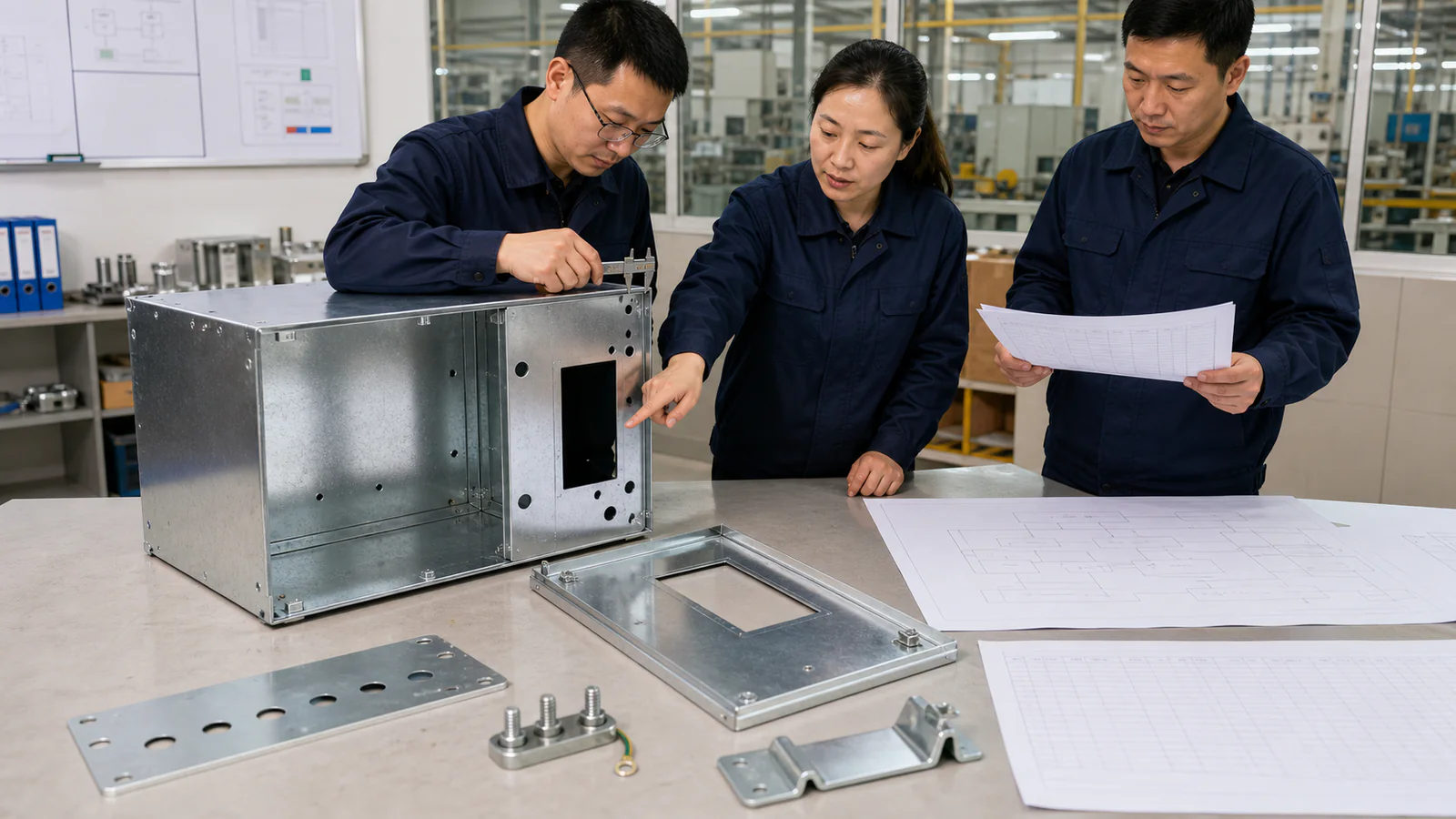
Control Plan = What You Actually Check in Production
If PFMEA says a failure matters, the Control Plan should show how the production process controls it.
- HMI cutout: released laser program; first-off measurement; functional template where applicable.
- Door opening: post-weld squareness; defined datum measurement; trial fit.
- Ground stud: fixture; position measurement; post-coating thread/mask inspection.
- PEM hardware: controlled part number; kitting; visual/functional inspection.
A Control Plan should answer: What gets checked, how, when and what happens if it fails? “QC inspection” in every row is not a Control Plan. It is a placeholder that became comfortable.
PPAP Requirements Need to Come From the Customer
PPAP is widely used in automotive supply chains, but the exact submission level, forms, dimensional format, capability data, sample quantity, material reporting, and customer portal depends on the actual customer and program.
Therefore the RFQ should say something like: PPAP Level 3 required according to customer specification XYZ Rev D if that is genuinely the requirement. That is better than: “Automotive PPAP required.”
The first instruction can be quoted. The second creates emails. Lots of emails.
First Article and PPAP Are Related—but Not Identical
A First Article Inspection can verify that an initial production-intent enclosure meets drawing-defined characteristics. PPAP may cover a wider production approval package.
For an enclosure supplier:
FAI asks: Did this part meet the drawing?
Production approval asks: Can this manufacturing process repeatedly produce the approved part under the agreed customer requirements?
One good box is encouraging. Production needs slightly more evidence than encouragement.

Define CTQs Around Machine Integration
This page focuses on how to select customer-flow-down CTQs. Possible control-box CTQs might include: machine-frame mounting pattern, HMI cutout position, mounting plate location, VFD cooling-unit interface, gland plate, grounding stud, door opening geometry, or selected structural bracket.
Do not designate every dimension as special. If everything is special, nothing is special. A 900 mm cabinet can easily contain hundreds of dimensions. Your control plan does not need to become War and Peace with calipers.
VFD Heat Is the OEM’s Thermal Design—Cutouts Are the Fabricator’s Job
MSTFAB can manufacture fan openings, filter cutouts, louver panels, cooling-unit cutouts, heatsink interface panels, and mounting brackets.
The machinery OEM determines VFD heat load, airflow, fan capacity, cooling architecture, and thermal testing. Once the cooling interface is frozen, the sheet metal quality plan controls the mechanical geometry.
MSTFAB controls those features. We do not promise that a rectangle in steel will cool a 15 kW drive by positive thinking.
EMC Is Also a System Requirement, Not a Powder-Coating Claim
The OEM may define mechanical EMC-supporting features such as conductive seam interfaces, bonding studs, masked contact areas, panel overlap, conductive gasket land, and cable-entry geometry.
MSTFAB can fabricate those features. The OEM owns electromagnetic architecture, cable shielding, grounding scheme, electrical component selection, and completed EMC testing.
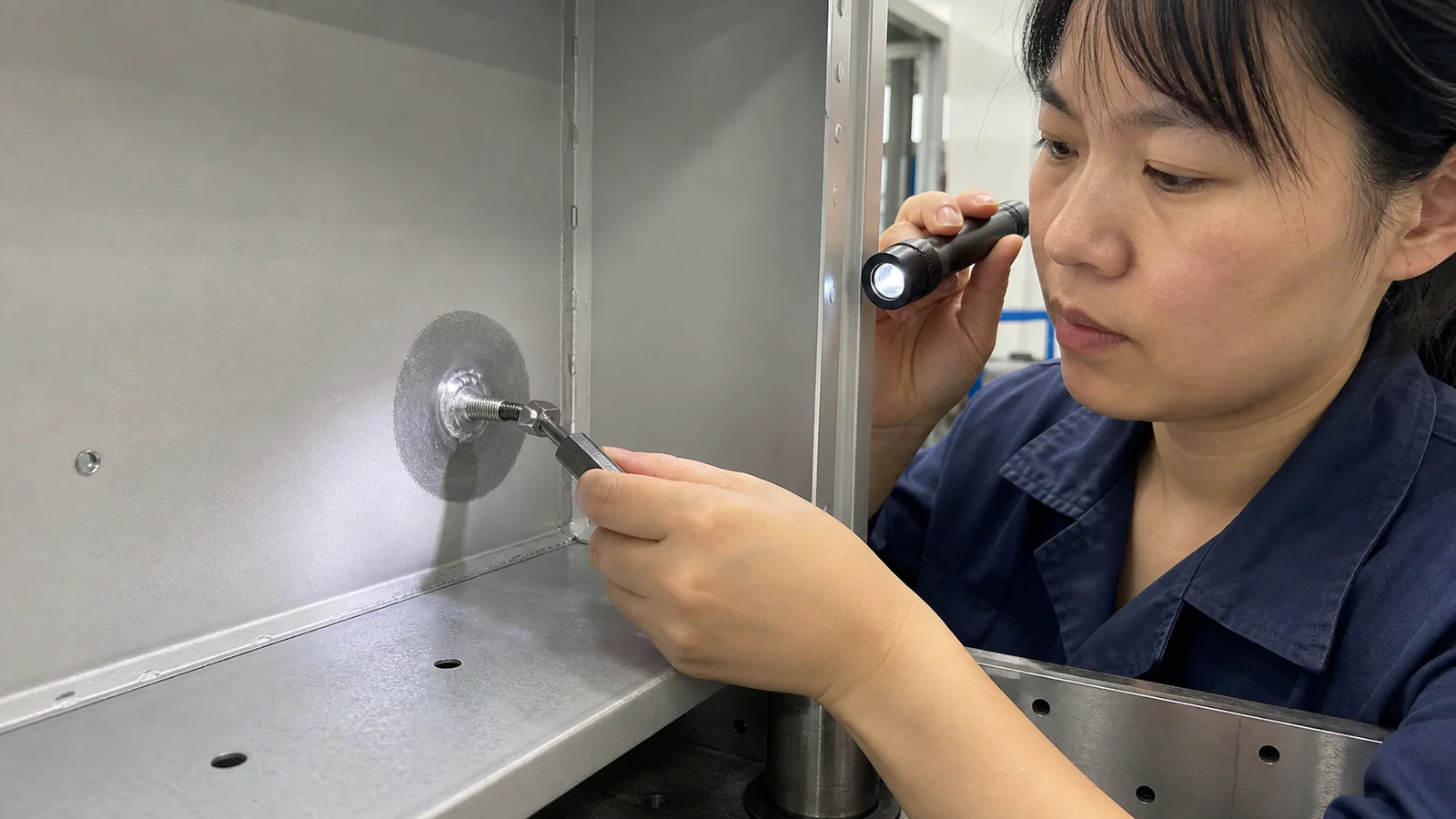
Vibration Requirements Need to Become Mechanical Requirements
Machinery vibrates. What matters is how the buyer translates vibration risk into sheet metal requirements.
Potential features can include reinforced mounting bosses, thicker mounting plate, gussets, welded brackets, lockable hardware interfaces, and restricted unsupported spans. The customer defines the structural requirement.
Do not write: “IATF vibration-resistant enclosure.” IATF is not a vibration rating. A certificate has never stopped a cabinet from shaking.
Galvanized Steel Is a Material Choice, Not an Automotive Quality Grade
Your drawing should not simply say: IATF galvanized steel because that is not a useful material designation.
Specify as required: material standard, grade, thickness, zinc coating, surface condition, finish, and acceptable equivalent. Quality-system language and material science should remain separate. They get along better that way.
Material Certificates Should Follow the Real Customer Requirement
For a normal galvanized machinery enclosure, the appropriate evidence depends on drawing requirement, customer flow-down, material risk, source, and quality plan.
Good QA asks: What risk are we controlling? Then chooses the evidence.
MSA Applies to Measurements That Matter
If the customer identifies a critical HMI opening or mounting pattern, measurement quality matters. MSA is one of AIAG’s automotive Core Tools for evaluating measurement-system quality.
But do not write: “Gauge R&R required on every enclosure dimension.” That is rarely useful. Risk first. Spreadsheet second.
SPC Should Be Used Where Repeated Data Can Tell You Something
For a repeat machinery-control-box program, SPC might be useful on characteristics such as repeated flange dimension, critical mounting-hole position, important enclosure depth, or controlled door gap.
Charting five prototypes does not suddenly create a statistically mature process. Sometimes the correct tool is: inspect the five prototypes carefully.
The Most Important Control Is Often Revision Control
Typical machinery project: Rev A (prototype), Rev B (HMI changed), Rev C (VFD moved). Now purchasing reorders 100 boxes. Which revision goes to laser cutting?
A filename such as: CONTROL_BOX_FINAL_NEW_USE_THIS_2.stp has cultural significance across engineering departments worldwide. It still should not run production.
Tooling and Fixture Changes Can Matter Even When CAD Does Not Change
The product drawing may remain Rev E while production changes: bending tool, welding fixture, welding sequence, subcontract coating route, or hardware installation process.
Could that affect a CTQ? Yes. Metal has an inconvenient habit of noticing manufacturing changes that CAD does not know occurred.
Define Customer Notification Triggers Before Production
Not every tiny operational adjustment needs customer approval. But important changes should not be invisible.
A useful flow is: Supplier proposes change → risk reviewed → customer approval → drawing updated → FAI resubmission → production release. That is substantially cheaper than a meeting titled “URGENT.”
Nonconformance Needs a Controlled Disposition
Suppose an HMI cutout is 1.2 mm outside tolerance. What should not happen automatically? “We enlarged it until the HMI fit.”
Maybe that repair destroys bezel seating, gasket land, or cosmetic alignment. An experienced technician can fix many things. That does not make every fix an approved engineering change.
Corrective Action Should Attack Recurrence
Common repeat defect: HMI opening wrong. Weak response: “Operator reminded.”
Corrective action should improve the process that generated the defect. Otherwise “operator reminded” eventually becomes the most heavily used sentence in the quality system. The operator deserves better. So does the customer.
Automotive Core Tools Are Useful Because They Connect
The real value is not owning six separate manuals. It is connecting them.
That is much more powerful than: “We have PPAP.” PPAP is not a folder. It is part of a system. Folders are merely where systems go to become PDFs.
First Article Should Be a Production-Intent Part
Do not approve a sample manufactured through a process the supplier cannot use in production.
Otherwise: Prototype passes and Production fails while both teams sincerely claim nothing changed. Quite a trick. Very expensive.
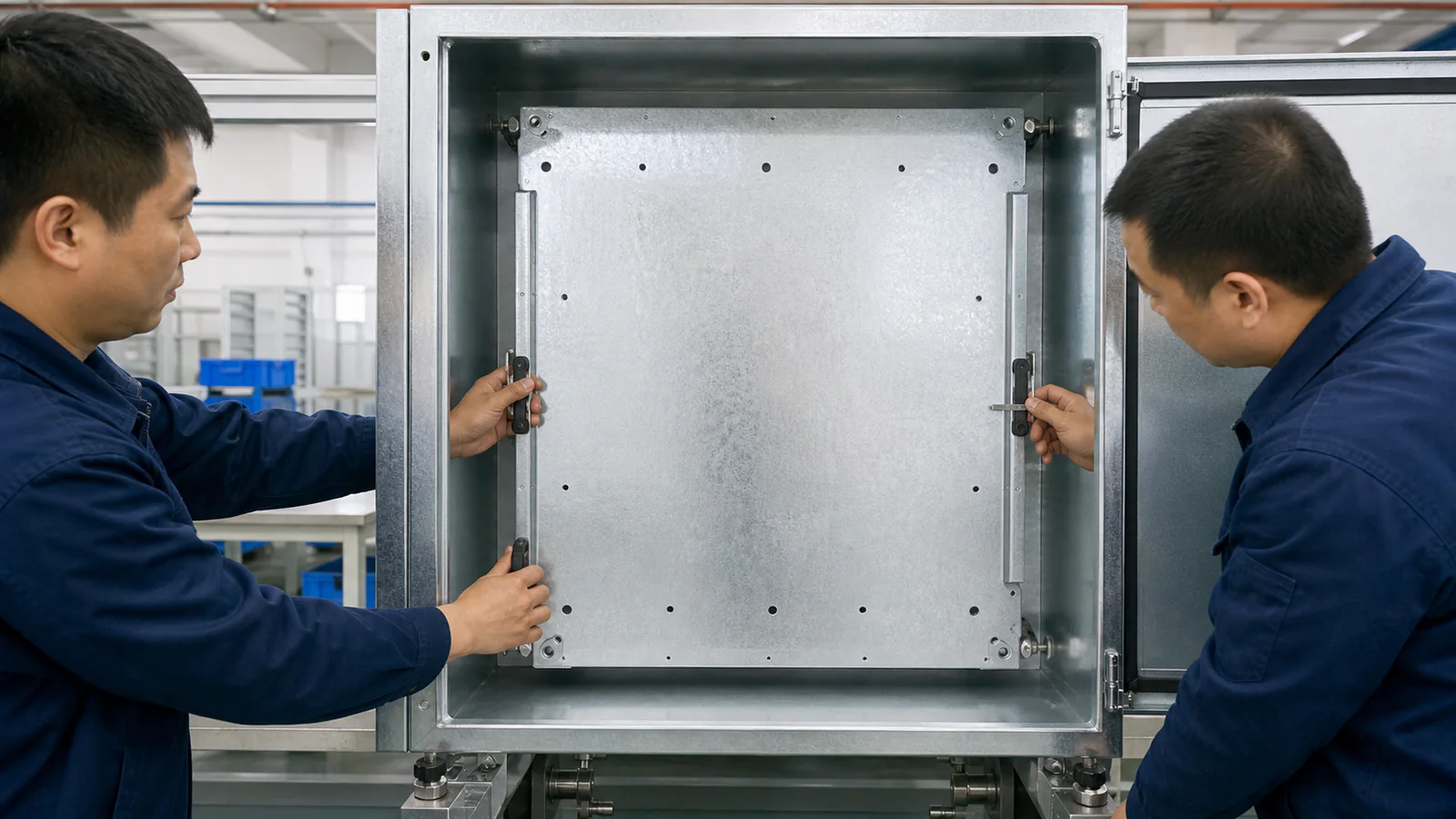
Create a Practical Production Release Matrix
For an automotive machinery control-box program with customer quality flow-down, use a matrix like this:
| Release Item | Buyer Defines | Sheet Metal Supplier Provides |
|---|---|---|
| Product definition | PN / Rev / CAD | Controlled production copy |
| CTQs | Functional requirements | Measurement results |
| Special characteristics | Customer designation | Control-plan integration |
| Material | Grade/thickness/coating | Approved purchasing evidence |
| HMI/device interfaces | Component geometry | Fabricated/measured interface |
| Mounting plate | Layout/loads | Mechanical fit |
| Cooling cutouts | Thermal design | Correct metal opening |
| Grounding features | Electrical architecture | Mechanical stud/mask |
| First article | Acceptance requirement | FAI record |
| PPAP | Customer level/forms | Required submission evidence |
| Change control | Approval triggers | Notification |
What MSTFAB Manufactures
For machinery and automation OEM drawings, MSTFAB can fabricate: galvanized steel control box bodies, doors, covers, HMI panels, mounting plates, cable-entry plates, cooling/fan panels, internal brackets, reinforcement parts, grounding studs, PEM nuts and studs, machine mounting brackets, and structural sheet metal assemblies.
What MSTFAB Does Not Supply
MSTFAB does not normally supply under this scope: PLC, HMI electronics, VFD, servo drive, breaker, contactor, terminal block, safety PLC, control wiring, harness, electrical engineering, PLC programming, EMC testing, energized validation, or machine commissioning.
MSTFAB fabricates the metal shell and drawing-defined mechanical parts.
Buyer Red Flags
“The machine goes into an automotive plant, so IATF is automatically mandatory.”
Too broad. Confirm actual IATF eligibility and customer contractual flow-down.
“Our IATF certificate means this machinery box is an IATF-certified product.”
No. IATF 16949 concerns the automotive quality-management system.
“Every project needs full Level 3 PPAP.”
Ask for the customer’s actual submission requirement.
“The HMI cutout moved, but it still looks okay.”
The HMI may have an opinion.
RFQ Checklist for an Automotive Machinery Control Box
Send: STEP/STP + controlled PDF + galvanized steel specification + thickness + finish + quantity + machine-interface requirements + applicable customer quality flow-down.
Request a Custom Machinery Control Box Shell Quote
Custom sheet metal fabrication only. No PLC. No VFD. No wiring. No software. No finished machinery control system.
 WeChat Contact
 WhatsApp Me Directly