⚡ Direct Answer: How Does Vendor-Managed Inventory (VMI) Work for Custom Sheet Metal?
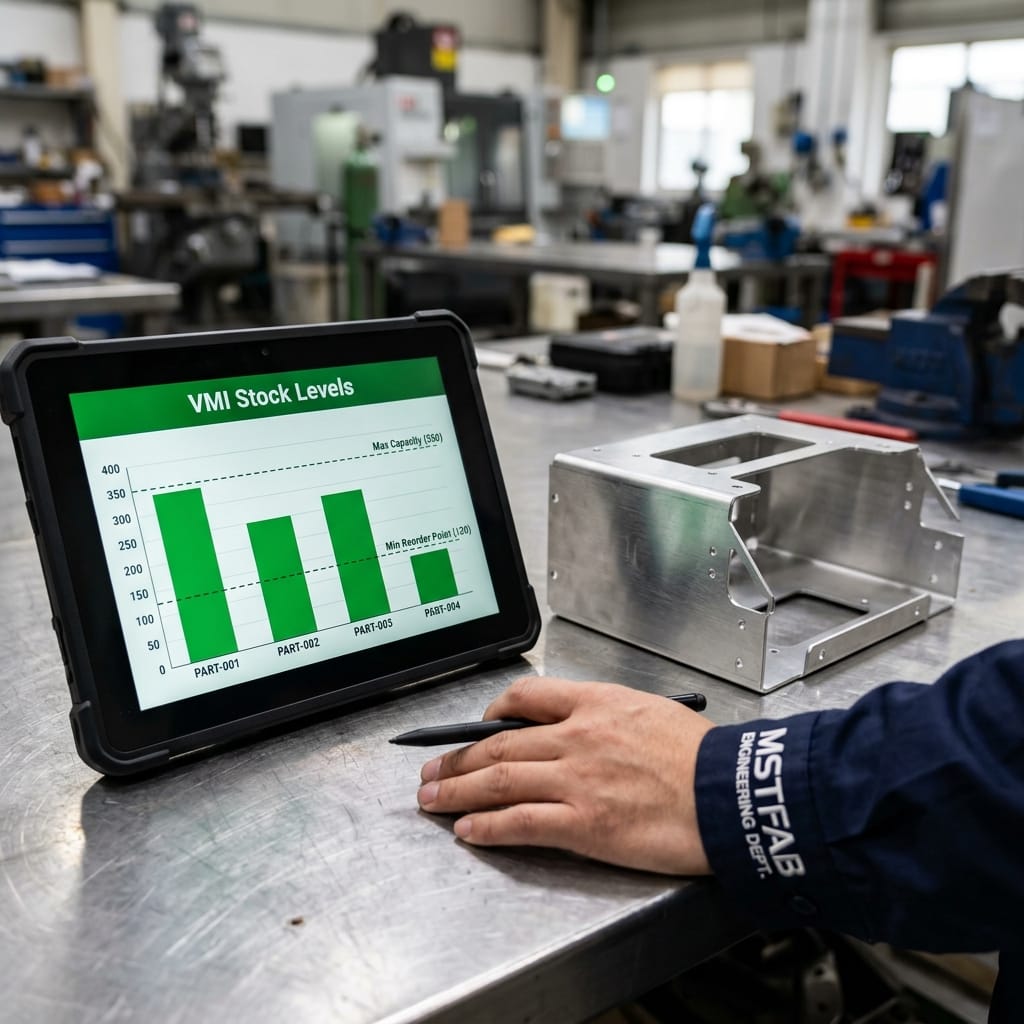
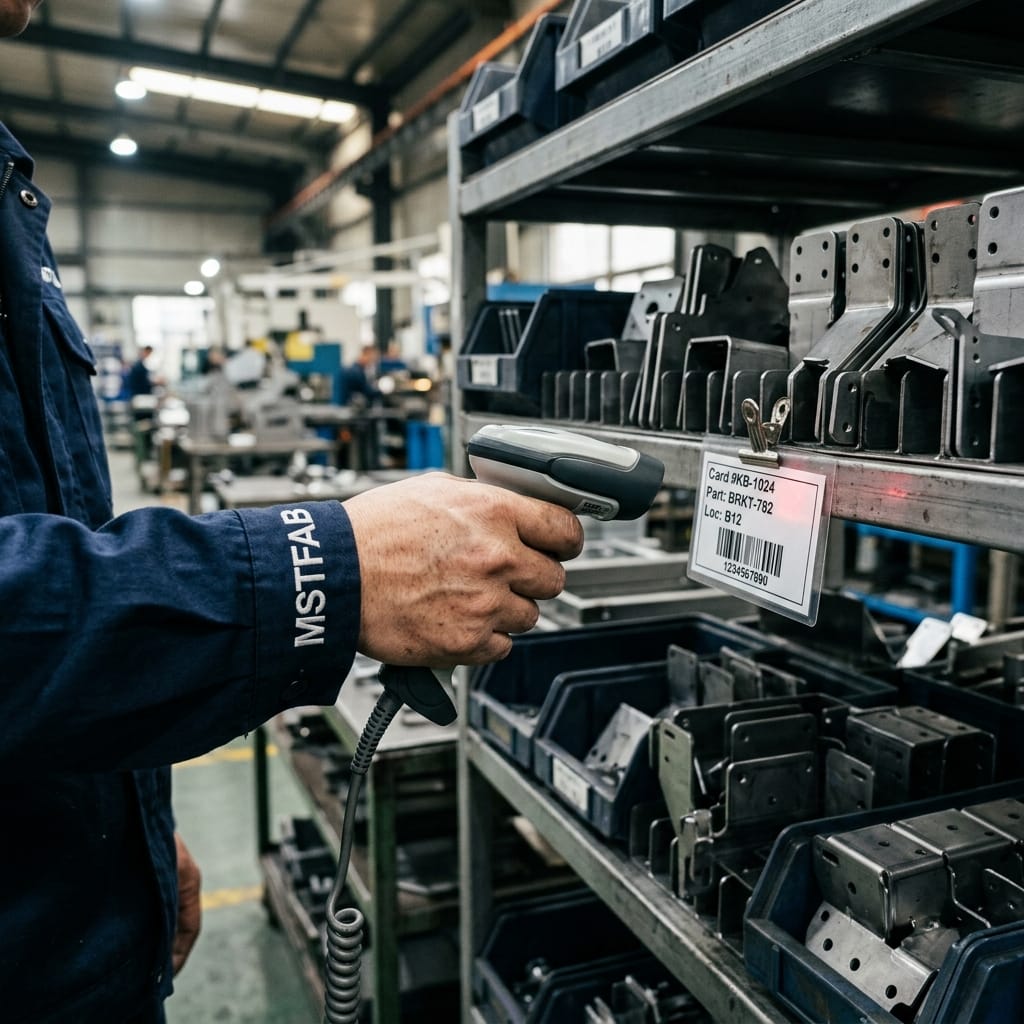
Vendor-Managed Inventory (VMI) for custom sheet metal fabrication is a collaborative supply chain model where the fabricator assumes full responsibility for maintaining pre-agreed stock levels (Min-Max inventory buffers) of finished chassis, brackets, or sub-assemblies at the customer’s assembly plant or an adjacent third-party logistics (3PL) warehouse. A best-practice sheet metal VMI system operates through 4 core mechanisms: 1) Min-Max Boundary Triggers: The fabricator monitors stock electronically via daily EDI/API data or Kanban scans; when stock drops to the “Min” threshold, an automatic replenishment production run is triggered; 2) Consignment Stock Ownership: Inventory remains the legal financial property of the fabricator until the OEM physically pulls the parts onto the active assembly line, converting inventory carrying costs from fixed balance-sheet debt to variable consumption; 3) Dedicated Factory Capacity Reservation: The fabricator reserves monthly CNC laser cutting and brake bending machine hours to guarantee fast replenishment; and 4) Clawback & Obsolescence Clauses: If the OEM modifies the CAD drawing or cancels the product line, the OEM agrees to purchase pre-produced finished parts and committed raw stock within agreed contractual shelf-life windows (typically 60 to 90 days).
Managing dozens of unique sheet metal part numbers across fluctuating production schedules frequently results in either costly assembly line stockouts or cash trapped in excess warehouse inventory. For industrial OEMs operating high-mix assembly lines, implementing a Vendor-Managed Inventory program with MSTFAB delivers 100% on-time part availability while removing inventory burden from your working capital.

VMI Governance & Responsibility Matrix
A transparent operational division of duties is the cornerstone of a successful sheet metal VMI relationship:
| Governance Domain | OEM Customer Responsibility | Fabricator Responsibility (MSTFAB) |
|---|---|---|
| Demand Forecasting | Provide rolling 6-month demand forecast updated monthly | Align raw coil orders and machine capacity to forecast trends |
| Buffer Stock Sizing | Define Min stock (e.g. 2 weeks) and Max stock (e.g. 6 weeks) | Fabricate and maintain physical inventory within Min-Max limits |
| Stock Ownership & Billing | Pay invoices on standard net terms upon physical pull from hub | Finance holding costs of unconsumed buffer inventory |
| Engineering Changes (ECO) | Provide minimum 45-day advance notice of CAD drawing revisions | Exhaust current buffer or implement rework plan; requalify FAI |
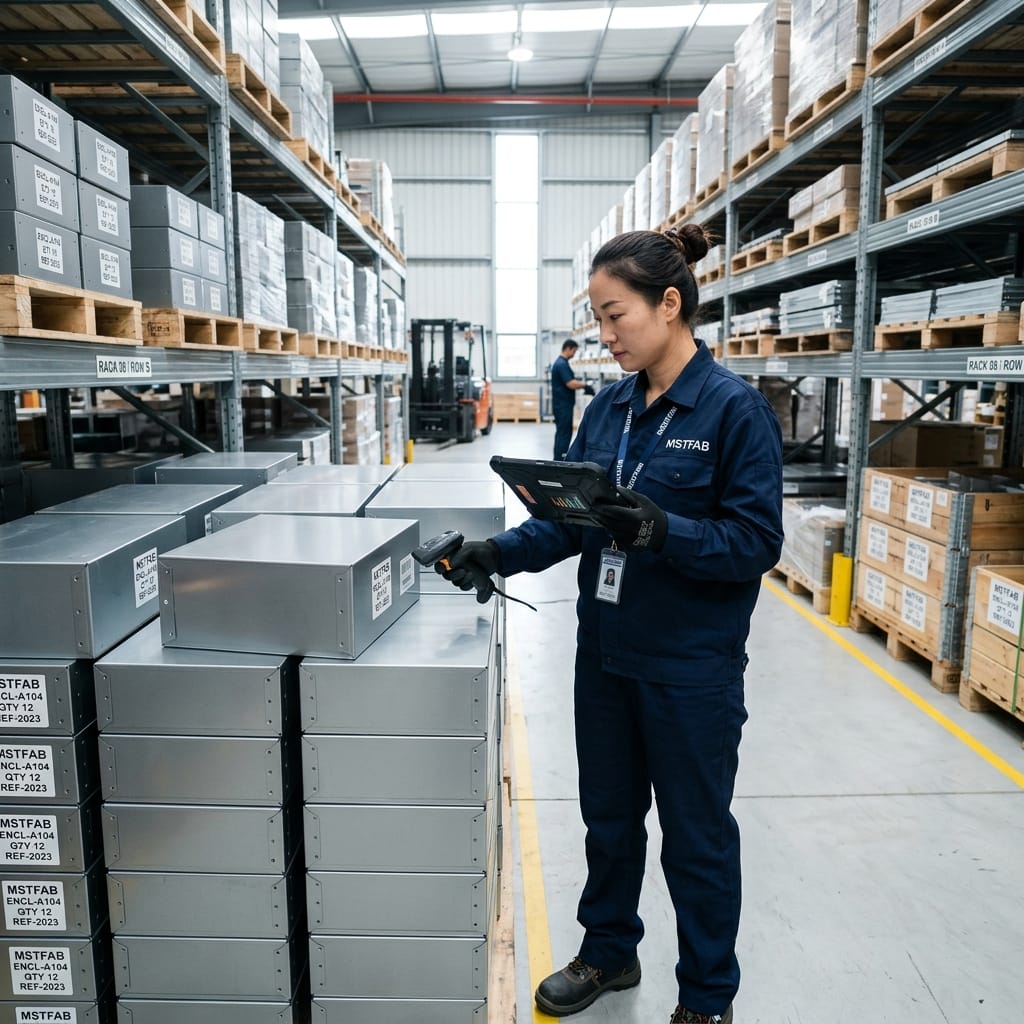
| Physical Warehousing | Provide clean, dry bin storage space at factory or regional hub | Deliver in returnable custom dunnage totes or reinforced crates |
Key Advantages of Sheet Metal VMI for Procurement Leaders
Implementing VMI delivers substantial strategic and balance-sheet benefits:
- Working Capital Liberation: By delaying payment until parts are consumed on the assembly floor, OEMs free up significant cash flow otherwise tied up in static sheet metal inventory.
- Elimination of Stockout Costs: Having pre-staged parts on-site or at a regional hub ensures zero assembly line down-time, even when unexpected demand spikes occur.
- Volume Pricing with Small-Batch Cash Flow: The fabricator produces parts in cost-effective batch sizes (e.g. 500 units), capturing volume discounts on raw metal and setup fees, while the customer pays for parts in small daily releases (e.g. 20 units).
- Streamlined Purchasing Administration: Eliminates dozens of individual RFQs, purchase orders, and receiving dock matching workflows every month.


Streamline Your Vendor Managed Sheet Metal Inventory Procurement & Production
MSTFAB provides end-to-end custom precision sheet metal fabrication, full material traceability (EN 10204 3.1 MTRs, XRF PMI), and flexible supply chain agreements (Blanket POs, VMI, Frameworks). Request a DFM review and instant quote within 24 hours.
Frequently Asked Questions (FAQ)
What is the typical “Min-Max” duration set in sheet metal VMI?
For domestic or near-shore supply, a Min of 2 weeks of average consumption and a Max of 6 weeks is standard. For cross-border programs involving ocean transit, we typically establish a regional hub buffer of 4 weeks Min and 8 weeks Max, backed by raw material stock reserved at our manufacturing plant.
How does the “Clawback Clause” protect the fabricator from obsolete inventory?
Because custom sheet metal parts have no secondary commercial market, a clawback clause establishes that if stock remains unpulled for longer than an agreed aging window (e.g. 90 days) or if the customer obsoletes the part number via an engineering revision, the customer is contractually obligated to purchase the remaining inventory at the agreed unit contract price.
Can VMI be implemented for high-mix low-volume (HMLV) programs?
Yes, through “Semi-Finished VMI”. Rather than keeping 50 different variations of fully powder-coated enclosures, MSTFAB laser cuts and bends standardized inner chassis blanks in volume, storing them as bare-metal WIP. When the customer releases an order with specific color or cutouts, final punching and powder coating is executed in just 3 to 5 days.
 WeChat Contact
 WhatsApp Me Directly