What are the top questions OEM buyers must ask a Chinese sheet metal manufacturer?
OEM buyers should vet prospective Chinese sheet metal manufacturers with 10 mission-critical technical questions: (1) Will senior manufacturing engineers conduct a 3D CAD DFM review before price finalization? (2) Which processes are performed 100% in-house vs. subcontracted? (3) How do you verify raw material thickness, mill heat lots, and MTR authenticity? (4) What linear and angular tolerances can you realistically hold per ISO 2768-mK on formed parts? (5) How do you prevent weld heat distortion on large frames? (6) What metrology equipment (CMM, laser scanners) and FAI reports do you provide? (7) How are surface coating adhesion and salt spray hours tested? (8) What is your engineering change order (ECO) revision control protocol? (9) What export crating standards (ISPM-15, VCI desiccant) do you employ? and (10) What are your communication response SLAs for time-zone collaboration?
Sourcing custom sheet metal fabrications from China provides significant cost efficiencies and agile scaling capabilities for global OEMs. However, selecting a vendor solely based on an attractive quotation without vetting technical capabilities introduces catastrophic project risks: delayed product launches, severe weld warping, dimensional drift, or unannounced material downgrades. Asking targeted, technically rigorous questions quickly separates true engineering-led contract manufacturers from low-capability middlemen.
The 10 Essential Vetting Questions for OEM Buyers
1. “Do You Provide Written DFM Feedback Before Tooling or PO Approval?”
A capable fabricator does not blindly quote unmanufacturable drawings. Ask whether their engineering team analyzes 3D CAD models (STEP format) for press brake bend interference, hole-to-bend distance clearances, and laser cutting heat accumulation. A premier supplier submits an itemized DFM proposal highlighting potential manufacturing risks and proposing cost-saving geometry adjustments within 48 hours.

2. “Which Processes Are Performed In-House vs. Subcontracted?”
Outsourcing bending, robotic welding, or powder coating adds transit latency, markup costs, and divided quality accountability. Verify that core operations—CNC laser cutting, CNC press brake forming, PEM hardware insertion, TIG/MIG welding, and automated powder coating—are executed under one roof on company-owned equipment.
3. “How Do You Validate Raw Material Traceability and Alloy Grades?”
Material substitution is a real risk among discount suppliers—substituting grade 201 for 304 stainless steel or using inconsistent recycled aluminum coils. Ask for sample Mill Test Reports (MTR) with matching heat lot numbers and inquire whether they maintain handheld XRF alloy spectrometers to inspect incoming sheet shipments.
4. “What Press Brake Tolerances Can You Realistically Guarantee?”
Unqualified suppliers will claim they can hold ±0.05 mm everywhere. Experienced sheet metal engineers know that springback and coil thickness variations make holding ±0.05 mm across multi-bend enclosures impractical without custom stamping dies. A reputable fabricator will state realistic capabilities: ±0.1 mm on laser cut profiles, ±0.2 mm on single press brake bends, and ±0.3–0.5 mm on cumulative formed assemblies per ISO 2768-mK.
5. “How Do You Control Thermal Distortion in Welded Frames?”
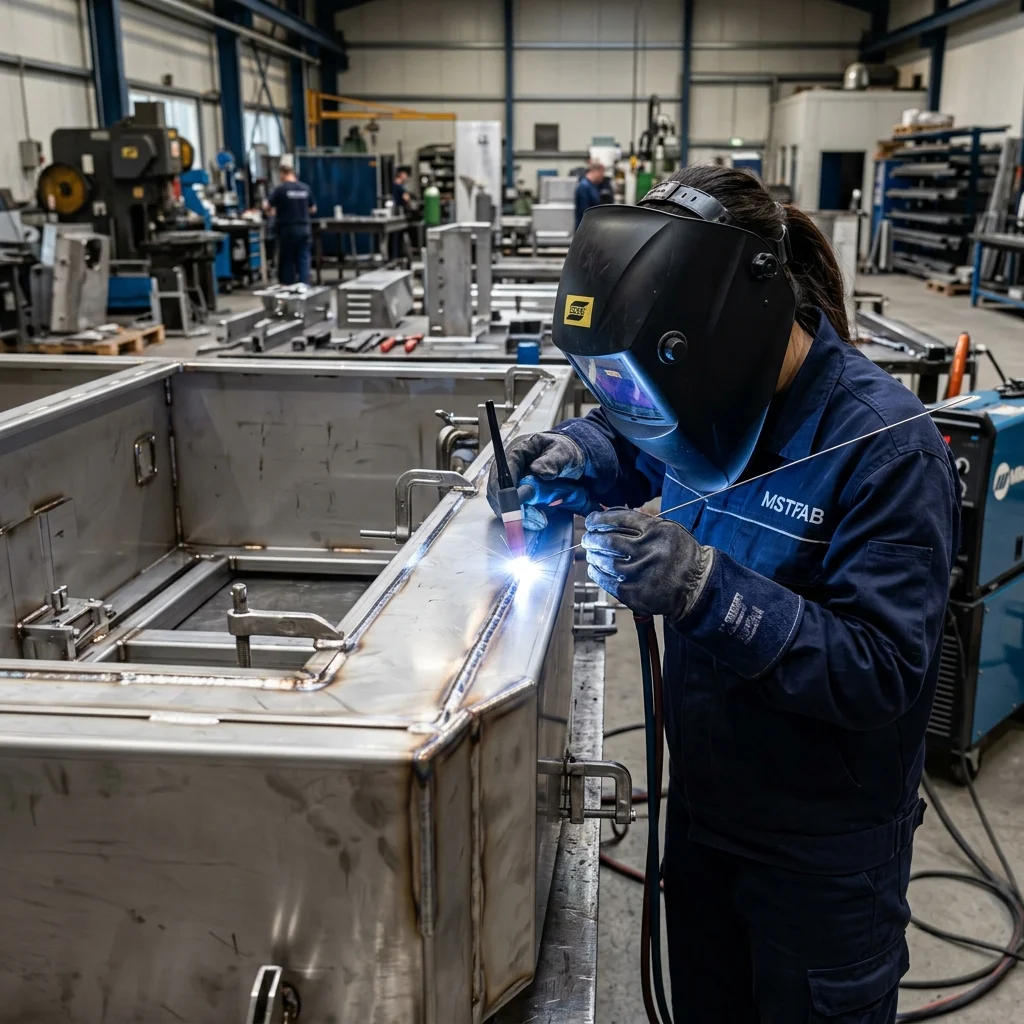
Ask specifically about welding fixturing. High-end fabricators use modular 3D welding tables (Demmeler or Siegmund), pneumatic clamping jigs, and sequenced skip-welding techniques to balance heat distribution and keep diagonal squareness within ±1.0 mm. If they weld freehand on steel plates without fixtures, your frames will arrive twisted.
6. “What Inspection Metrology and Documentation Accompany Shipments?”
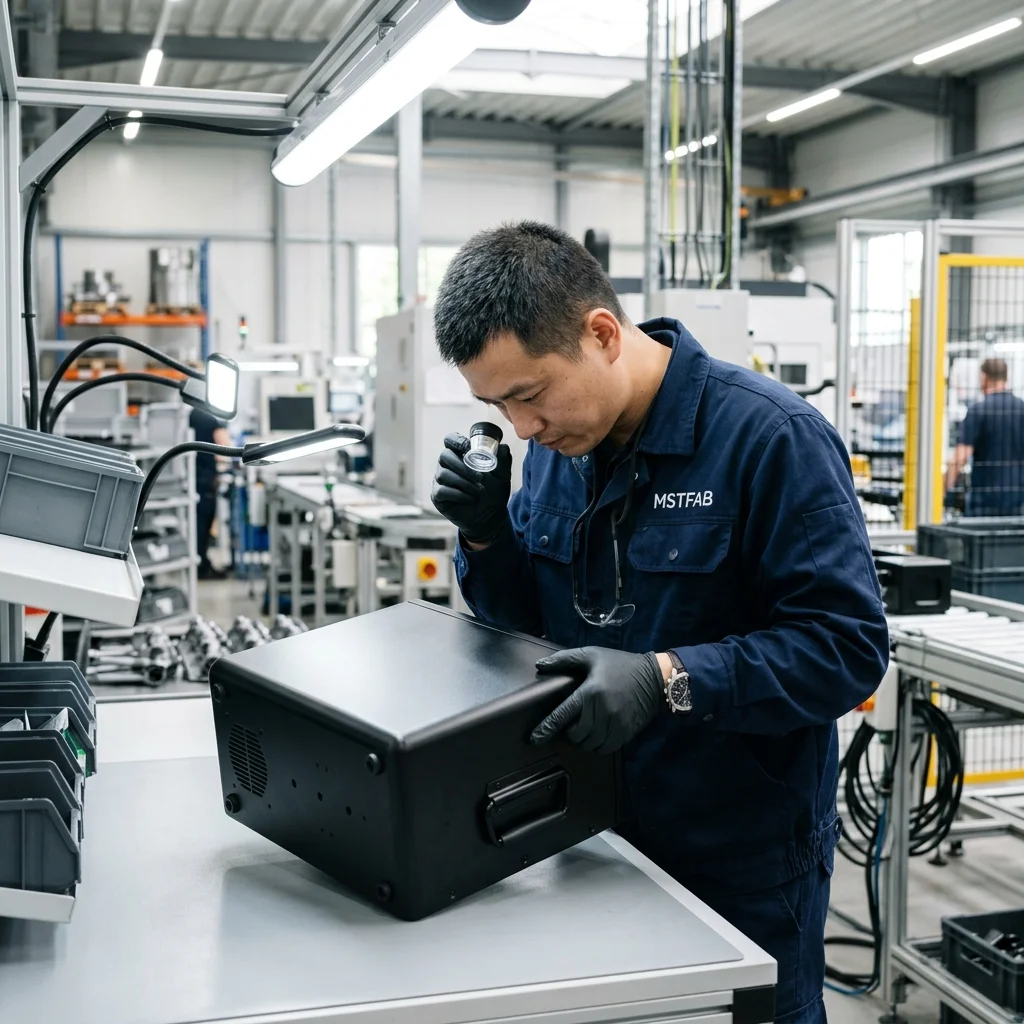
Demand transparency: Ask to see an actual First Article Inspection Report (FAIR). Confirm they possess bridge coordinate measuring machines (CMM), optical laser blank scanners (such as Virtek LaserQC), digital height gauges, and calibrated torque testers for PEM inserts. Require a signed inspection certificate with actual measured dimensions prior to container release.

7. “How Do You Validate Powder Coating Quality and Adhesion?”
Surface finishing must withstand harsh industrial and outdoor environments. Inquire about their chemical pretreatment wash stages (degreasing, phosphating or zirconium conversion). Confirm they perform cross-hatch adhesion testing (ASTM D3359), dry-film thickness (DFT) checks, and 500-to-1000 hour salt spray testing (ASTM B117).
8. “What Is Your Engineering Change Order (ECO) Management Process?”
Hardware designs evolve rapidly during NPI. Ask how drawing revision changes are propagated to the shop floor. Top-tier contract manufacturers maintain centralized ERP/PLM systems where superseded CAM laser nests and press brake programs are immediately archived to prevent cutting old revisions.
9. “What Packaging and Moisture Protection Standards Do You Use?”
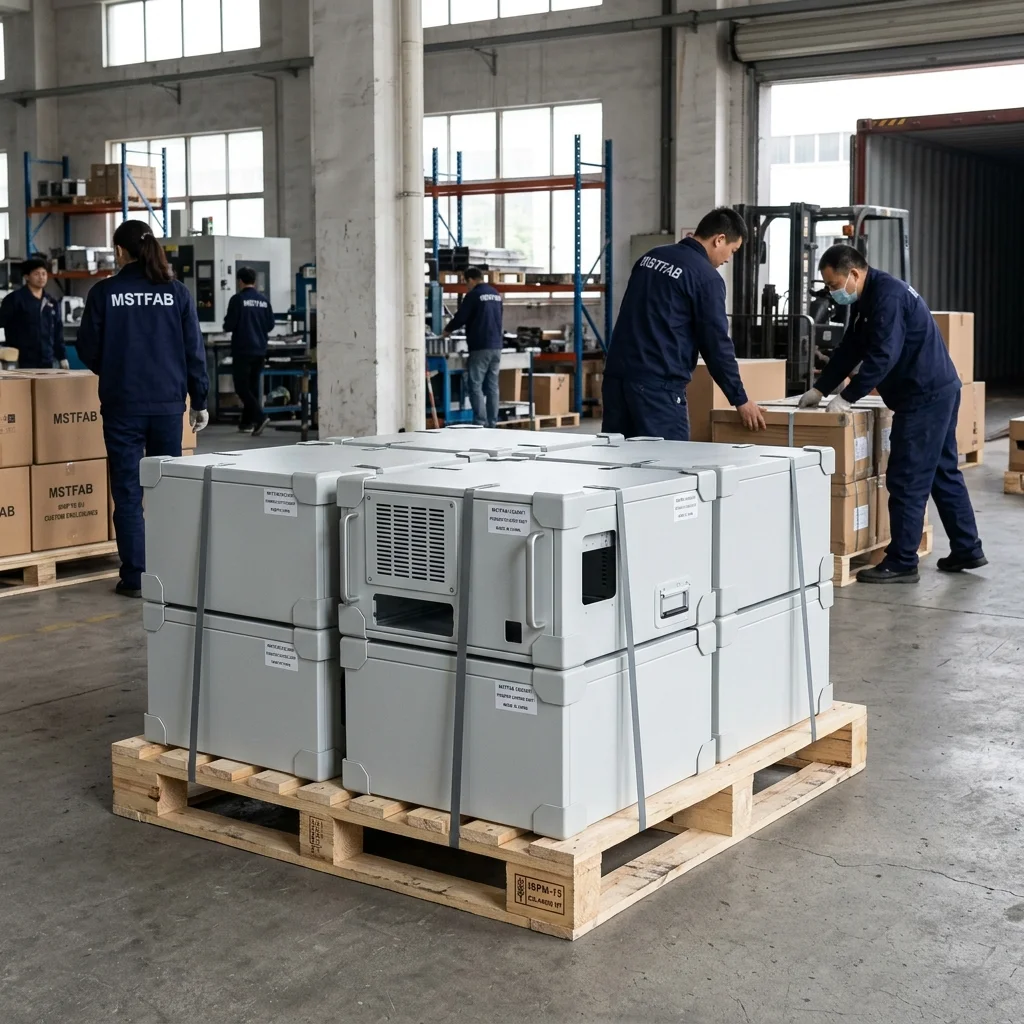
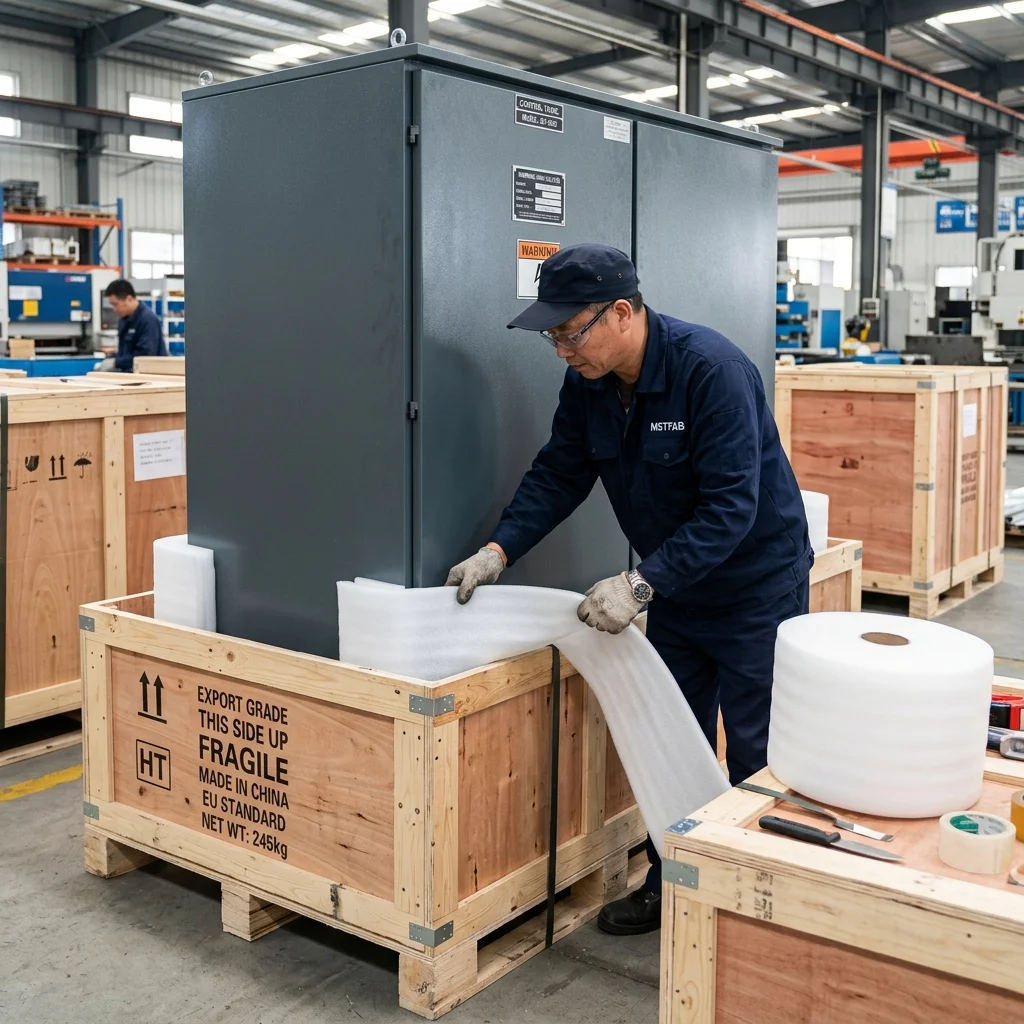
Ask to see photographs of recent export packaging. Parts must be wrapped in protective PE film, separated by custom EPE foam inserts, and secured in ISPM-15 heat-treated timber crates with moisture-absorbing desiccants and VCI barrier bags to prevent maritime salt air corrosion.
10. “What Are Your Dedicated Account Management and Communication SLAs?”
Time-zone differences can either stall or streamline projects. Ask who will be your direct point of contact: a sales clerk or a qualified bilingual project engineer? Confirm their communication SLAs for RFQ turnarounds, ECO reviews, and 8D corrective action reports in case quality discrepancies arise.
China Sheet Metal Supplier Vetting Scorecard
Evaluate prospective manufacturing partners using the comprehensive audit scorecard below:
| Audit Dimension | Tier-One Manufacturer Standard (MSTFAB) | Job Shop / Middleman Red Flag | Audit Verification Method |
|---|---|---|---|
| 1. DFM Capability | Written 3D CAD analysis within 48h with bend simulation | Quotes blindly; “no problem” without reviewing prints | Submit drawing with deliberate bend interference flaw |
| 2. In-House Integration | Laser, punch, bending, robotic welding & powder coating in-house | Outsources bending, welding, or finishing to untracked 3rd parties | Live video walkthrough of operating production lines |
| 3. Material Traceability | Certified MTRs with heat lot match + XRF spectrometry | Generic material certs; unverified alloy composition | Request sample MTR package from active production run |
| 4. Metrology & Quality | Bridge CMM, Virtek scanner, full AS9102 FAIR reports | Manual calipers only; verbal quality assurances | Review sample ballooned FAI report and calibration logs |
| 5. Welding Distortion | Modular 3D fixturing tables, Demmeler clamps, AWS welders | Freehand tacking on warped floor; excessive weld twist | Inspect welding fixtures in operation via video audit |
| 6. Export Packaging | ISPM-15 plywood crates, custom foam cradles, VCI bags | Flimsy cardboard cartons with direct metal-to-metal contact | Request photos of crating and container loading standards |
Audit MSTFAB Against Your Sourcing Checklist
MSTFAB welcomes comprehensive technical audits from international OEM procurement teams. With high-power CNC fiber lasers, 8 multi-axis press brakes, certified robotic welding cells, in-house conveyorized powder coating, and a dedicated CMM quality lab, we meet the highest global manufacturing standards. Contact our bilingual engineering team today.
 WeChat Contact
 WhatsApp Me Directly