What must buyers verify before approving a sheet metal material substitution?
Before approving any raw material substitution, buyers must verify four non-negotiable technical gates: (1) mechanical equivalency via certified Mill Test Reports (yield, tensile, and elongation), (2) bend formability and minimum radius compatibility to prevent tensile cracking, (3) chemical composition impact on weldability (carbon equivalency) and corrosion resistance, and (4) certified regulatory compliance including RoHS 3, REACH, and flammability certifications.
Global supply chain volatility, regional mill allocations, and lead-time constraints often force sheet metal fabricators to propose material substitutions. A supplier might ask to replace 5052-H32 aluminum with 6061-T6, swap cold rolled commercial steel (ASTM A1008 CS Type B) with electro-galvanized sheet (SECC), or switch between European, American, and Asian grade designations (such as SPCC versus DC01). While suppliers may characterize these as “drop-in equivalents,” an engineering-led qualification process is crucial to prevent mechanical failures during forming or environmental breakdown in service.
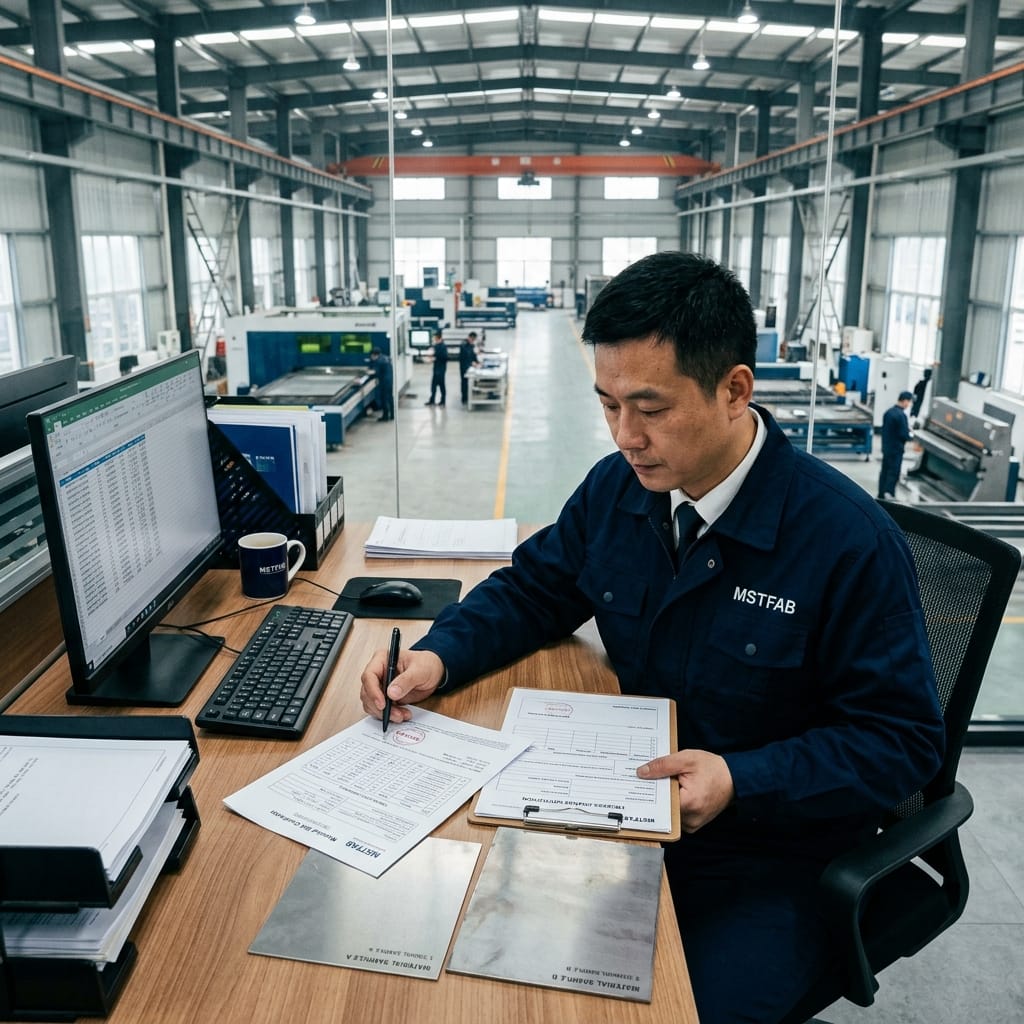
The 4 Critical Verification Gates for Material Substitution
Gate 1: Mechanical Tensile & Elongation Limits
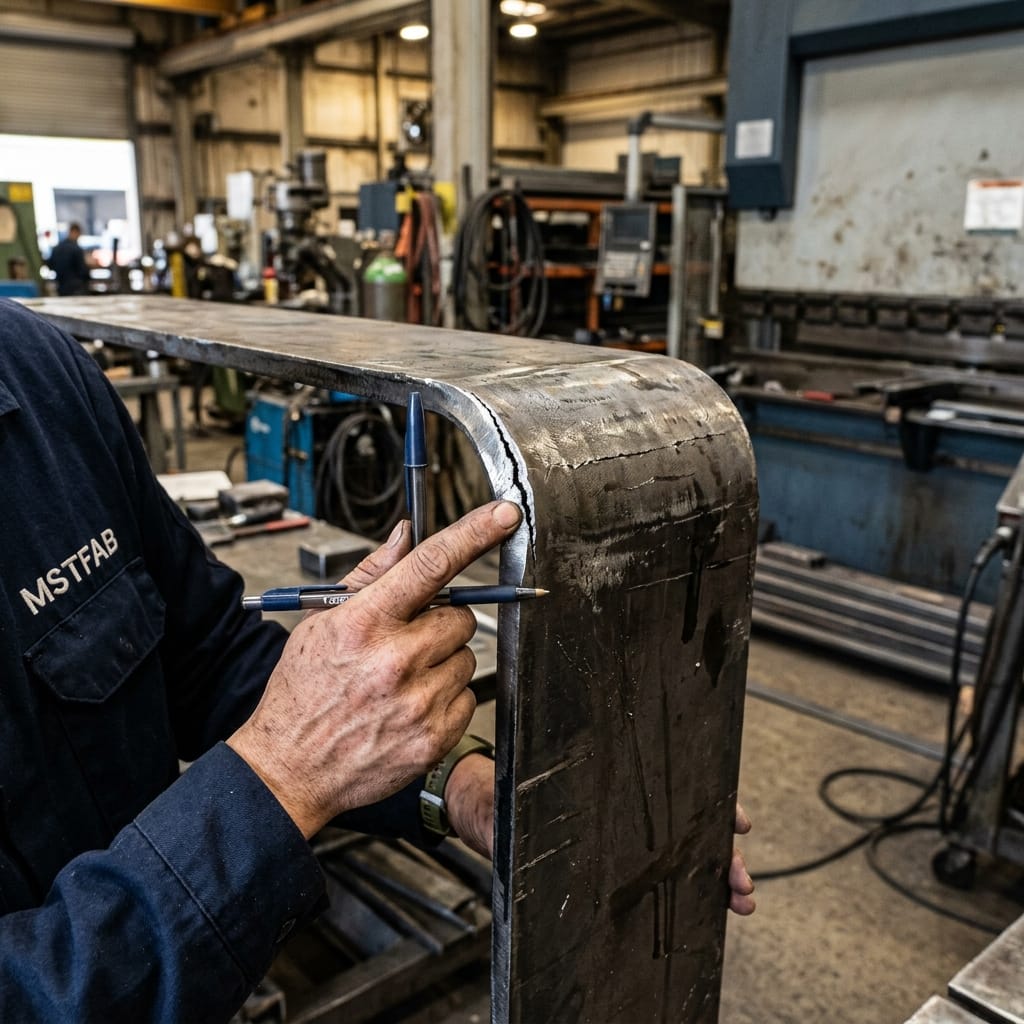
Nominal material names do not guarantee identical forming behavior. Yield strength determines press brake tonnage requirements and springback angle compensation. If a substitute alloy features a higher yield strength, standard press brake bend programs will under-bend the flange, causing out-of-square chassis corners. Elongation percentage is equally vital: if an alternative grade offers only 10% elongation compared to the specified alloy’s 18%, tight inside bend radii (≤ 1.0× material thickness) will develop severe micro-cracks along the outer tensile fibers.
Gate 2: Formability, Grain Direction & Minimum Bend Radii
Sheet metal has distinct longitudinal (with-grain) and transverse (cross-grain) mechanical properties. Certain alloys, such as 6061-T6 aluminum, possess high yield strength (276 MPa) but poor formability, demanding an inside bend radius of at least 2.5× to 3.0× thickness to avoid fracturing. Substituting 6061-T6 into a tooling setup engineered for 5052-H32 (which tolerates 1.0× thickness radius) will result in split bend lines across 100% of production parts.
Gate 3: Weldability & Carbon Equivalency (CE)
In welded sheet metal assemblies and chassis enclosures, material chemistry dictates structural integrity. For steels, the Carbon Equivalent formula:
CE = %C + %Mn / 6 + (%Cr + %Mo + %V) / 5 + (%Ni + %Cu) / 15
Must remain below 0.40% to guarantee sound resistance spot welds and TIG/MIG joints without preheating. Substituting a cheaper commercial steel with higher residual carbon or manganese results in brittle martensite formation in the Heat-Affected Zone (HAZ), leading to catastrophic weld detachment under vibration or impact.

Gate 4: Pretreatment Chemistry & Coating Adhesion
Switching from bare cold rolled steel (CRS) to electro-galvanized (SECC) or hot-dip galvanized (SGCC) sheet metal radically alters surface chemistry. Zinc-coated materials require specialized acid-etch or zinc-phosphate conversion chemistries before powder coating. If a supplier applies standard iron-phosphate wash solutions over galvanized sheet, the cured powder paint will experience complete interfacial adhesion loss within months of deployment.
Common Sheet Metal Substitutions & Engineering Trade-Offs
The table below summarizes common material substitution scenarios encountered in global precision manufacturing and their mandatory technical evaluations:
| Specified Material | Proposed Substitute | Primary Driving Factor | Engineering & Manufacturing Risk | Mandatory Qualification Protocol |
|---|---|---|---|---|
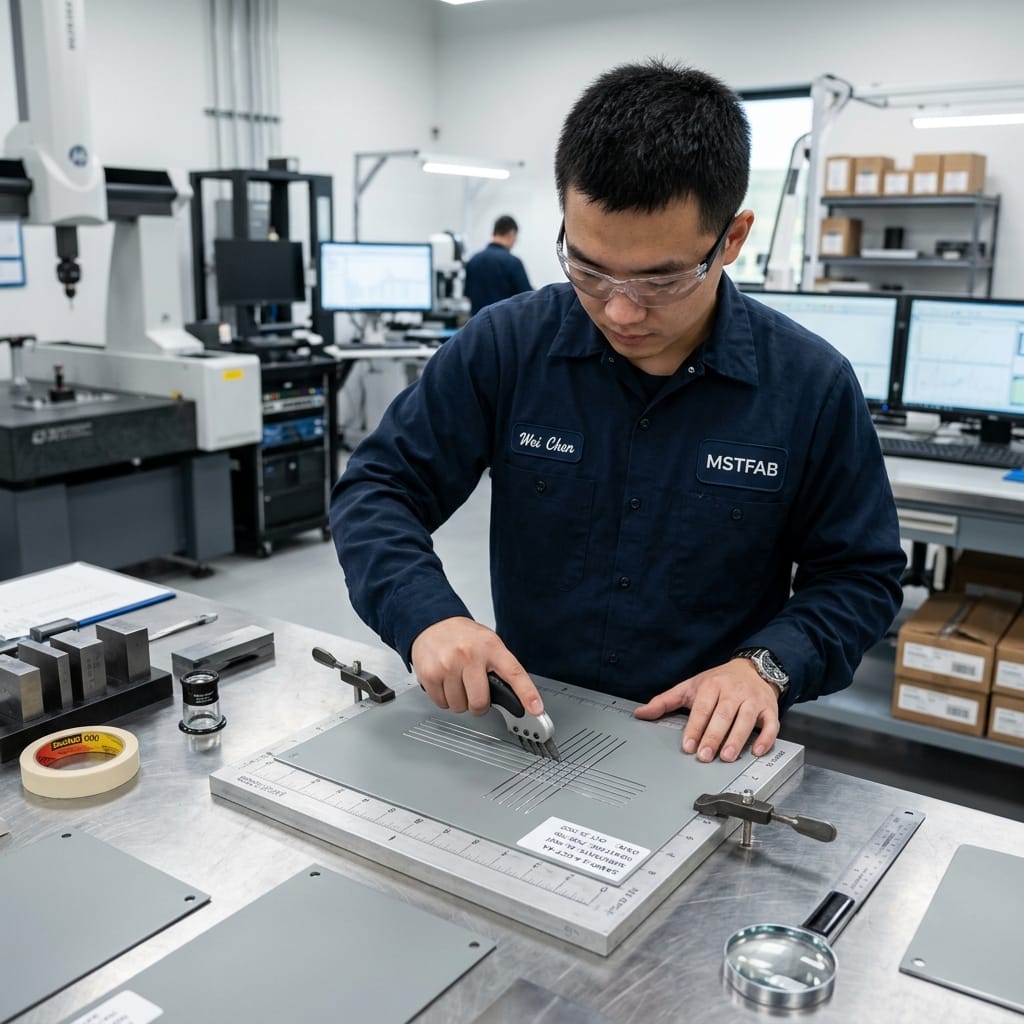
| AL 5052-H32 | AL 6061-T6 | Local inventory availability | High crack risk; requires larger bend radius (2.5t vs 1.0t) | 180° bend coupon test, CMM dimensional audit of springback |
| ASTM A1008 CRS | JIS G3141 SPCC | Asian supply chain standard | Moderate; SPCC allows broader carbon/manganese tolerances | MTR tensile audit, verify chemical composition ≤ 0.12% C |
| 304 Stainless Steel | 201 Stainless Steel | Significant raw material cost reduction | Severe pitting corrosion; nickel replaced by manganese | Positive Material Identification (PMI/XRF), ASTM B117 salt spray |
| SECC (Electro-Galv) | SGCC (Hot-Dip Galv) | Shorter mill lead-times | Zinc spangle causes orange peel texture on smooth powder coat | Coating thickness test, Class A surface gloss comparison |
| AL 5052-H32 | AL 5754-H111 | European automotive standard | Very Low; 5754 offers exceptional corrosion resistance & ductility | 5-piece FAI verification of hole diameters and bend springback |
Regulatory Compliance & Certification Tracking
Never sign off on a material change based solely on mechanical performance. Hardware products destined for medical, industrial, or consumer tech markets must satisfy strict global environmental directives. The supplier must deliver:
- RoHS 3 (EU 2015/863): Testing confirmation for 10 restricted substances (lead, cadmium, mercury, hexavalent chromium, PBB, PBDE, and phthalates).
- REACH (EC 1907/2006): Verification that Substances of Very High Concern (SVHC) do not exceed 0.1% by weight.
- UL94 Flammability & Conflict Minerals: CMRT declarations confirming raw ores originate from non-conflict certified smelters.

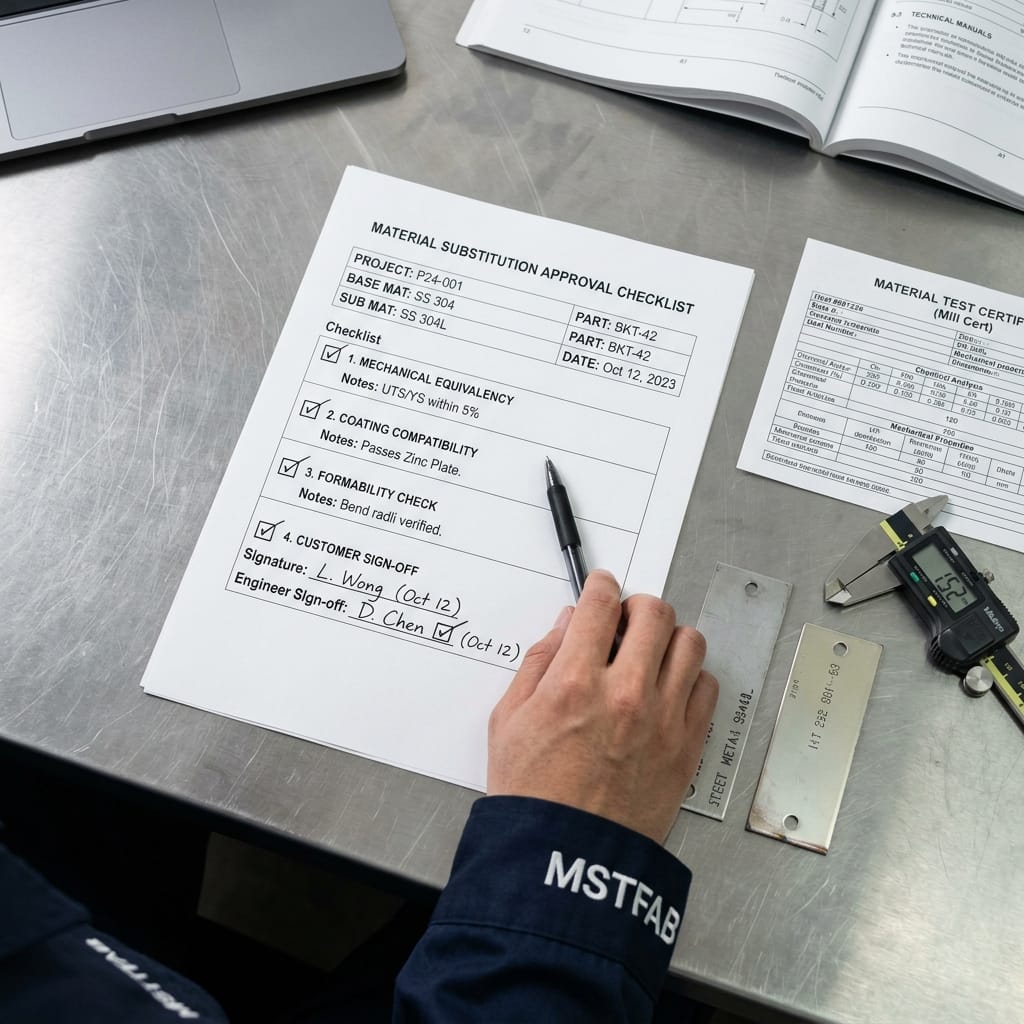
Need Certified Material Equivalency & DFM Review?
MSTFAB maintains robust direct-mill relationships across premier aluminum, stainless steel, and galvanized coil producers. Our metallurgists and manufacturing engineers evaluate yield strength, forming bend radii, and surface coatings to guarantee zero defect risk when optimizing material selections. Contact our engineering team today.
 WeChat Contact
 WhatsApp Me Directly