Transportation and ITS Sheet Metal Enclosures
Traffic Control Enclosure Shell Fabrication
MSTFAB fabricates empty roadside cabinets and console shells to buyer drawings. Send the revision, material and cutouts; your team installs controls and validates the system.
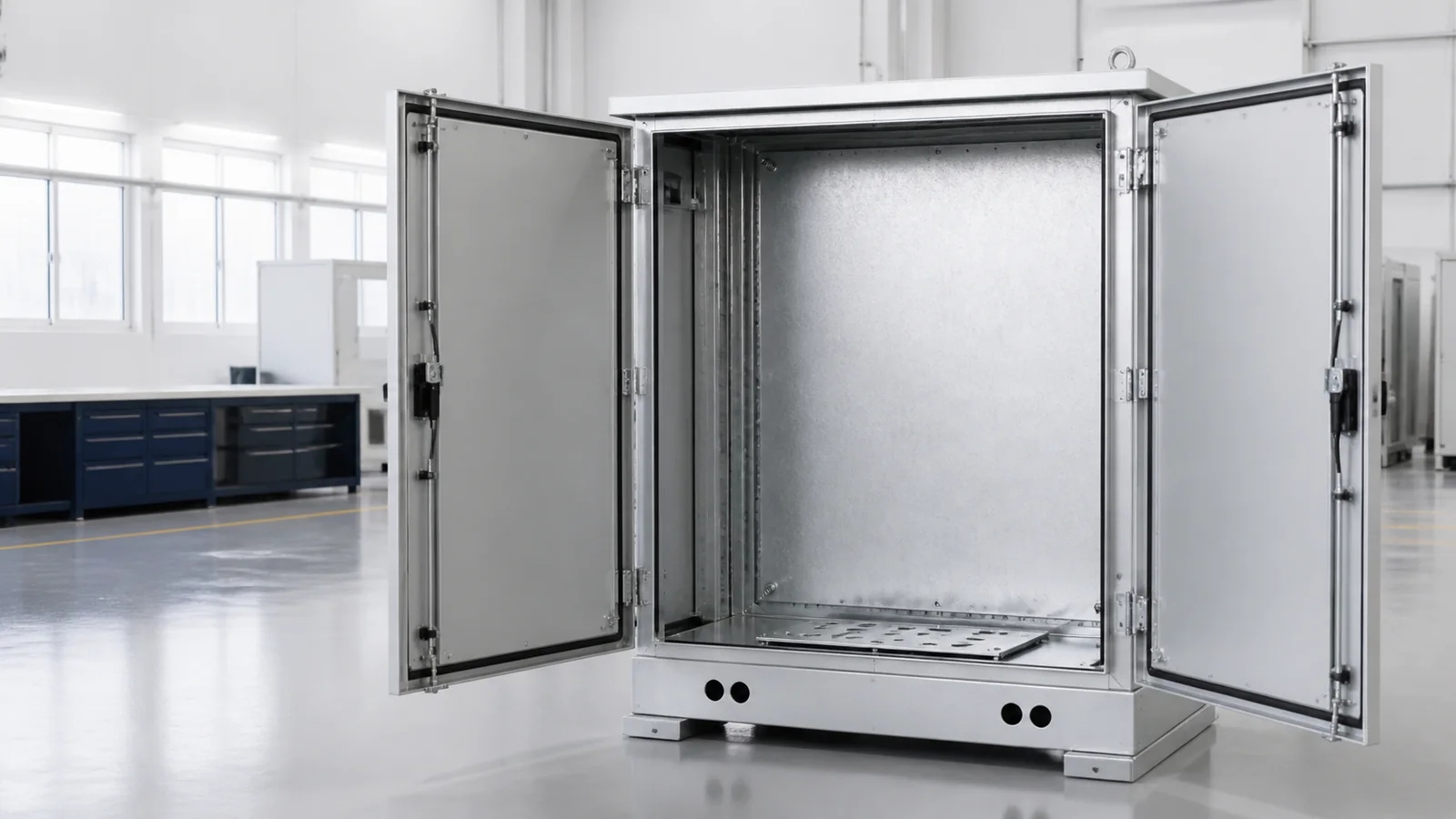
Empty Shell Fabrication
Cabinet bodies, doors, mounting plates, brackets and mechanical interfaces manufactured from your drawings.
Outdoor Cabinet Support
Material, formed sealing lands, drainage features, ventilation cutouts and specified finish are reviewed against the released drawing.
Engineering Review
DFM checks for cutouts, cable entry, bend feasibility, door fit and mechanical assembly risk.
Export Packaging
Protective packing for cabinet geometry, coating surfaces, doors and hardware.
Empty Traffic Control Enclosure Shells for Transportation and ITS OEMs
Traffic-control OEMs need metalwork that gives buyer-installed equipment a stable, serviceable home. MSTFAB fabricates empty sheet metal shells for signal cabinets, roadside enclosures, ITS cabinets and operator consoles. We do not supply controllers, wiring, traffic signals or finished control systems.
Traffic Control Enclosure Types We Manufacture
Each empty shell is fabricated around buyer-defined mounting, cable-entry, service, sealing-land and installation interfaces.
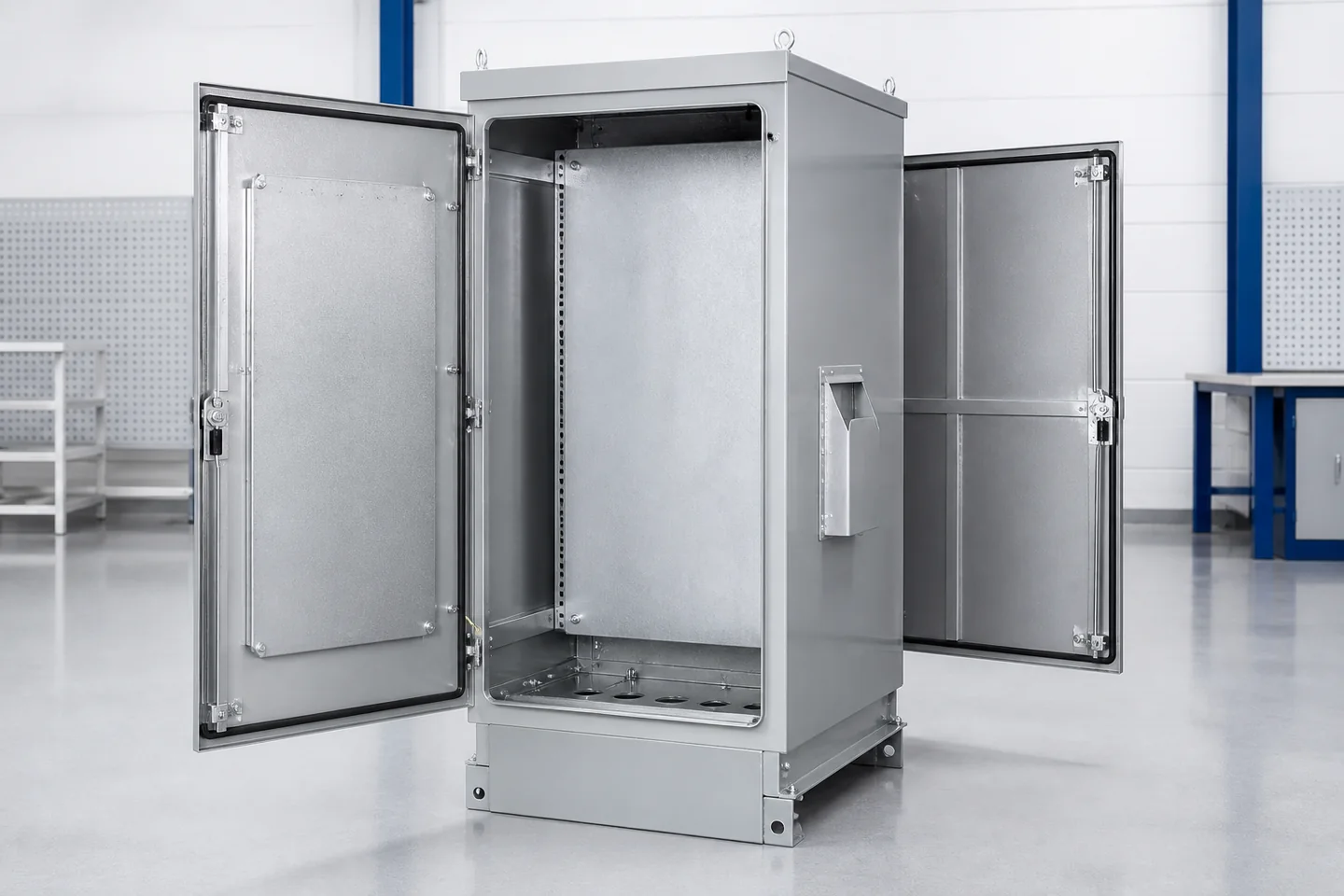
Empty traffic-signal cabinet shells provide the buyer-defined mechanical space for later electrical integration.
Traffic Signal Control Cabinets
We fabricate front and rear doors, mounting plates, cable-entry openings, louvers, grounding-stud locations, lock interfaces and gasket lands to your drawings.
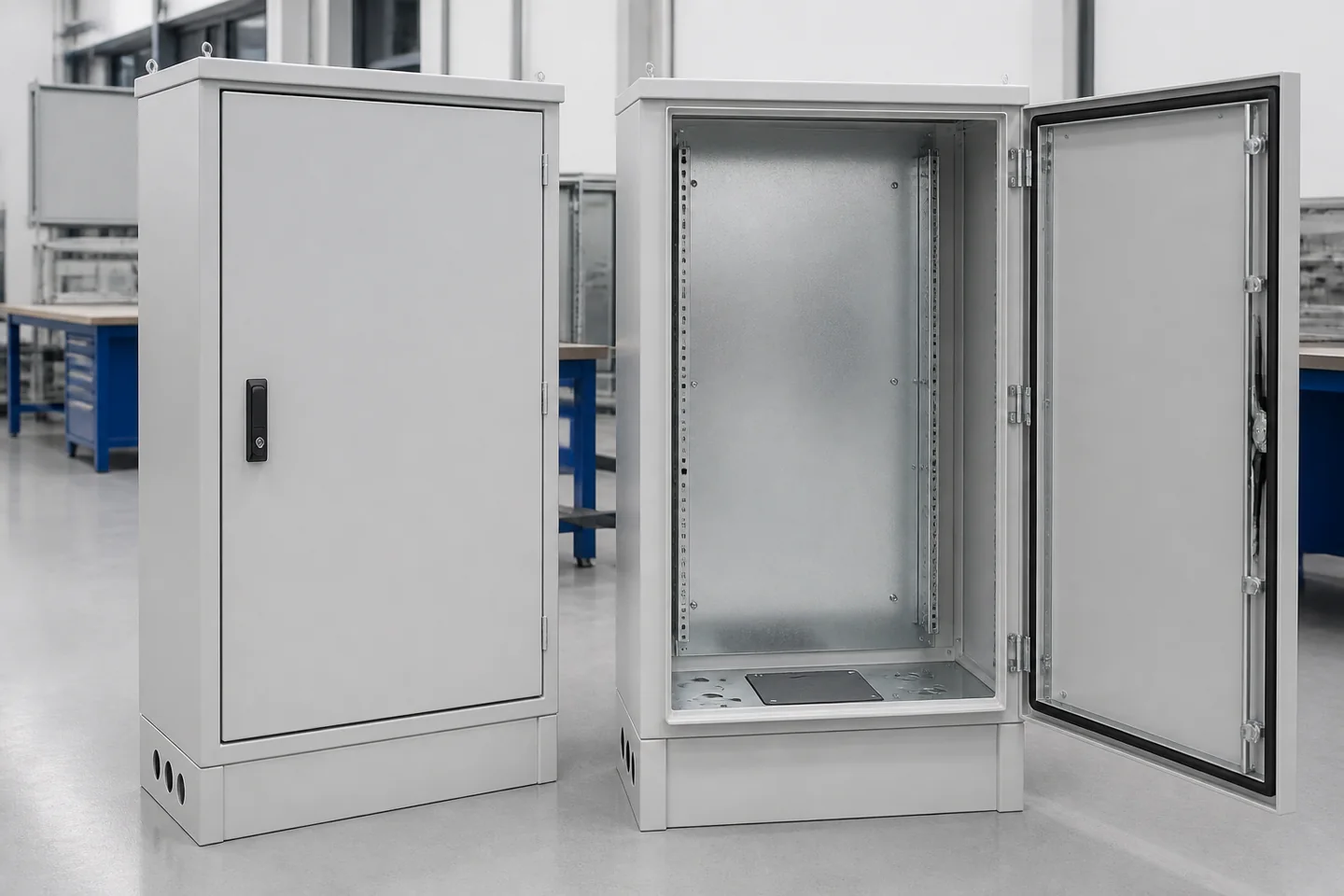
Empty roadside enclosure shells can be fabricated for highway, intersection, tunnel, bridge and infrastructure projects.
Roadside Control Enclosures
We manufacture buyer-defined drainage features, sealing lands, reinforced mounting points and specified outdoor coating systems. Final environmental validation remains with the OEM.
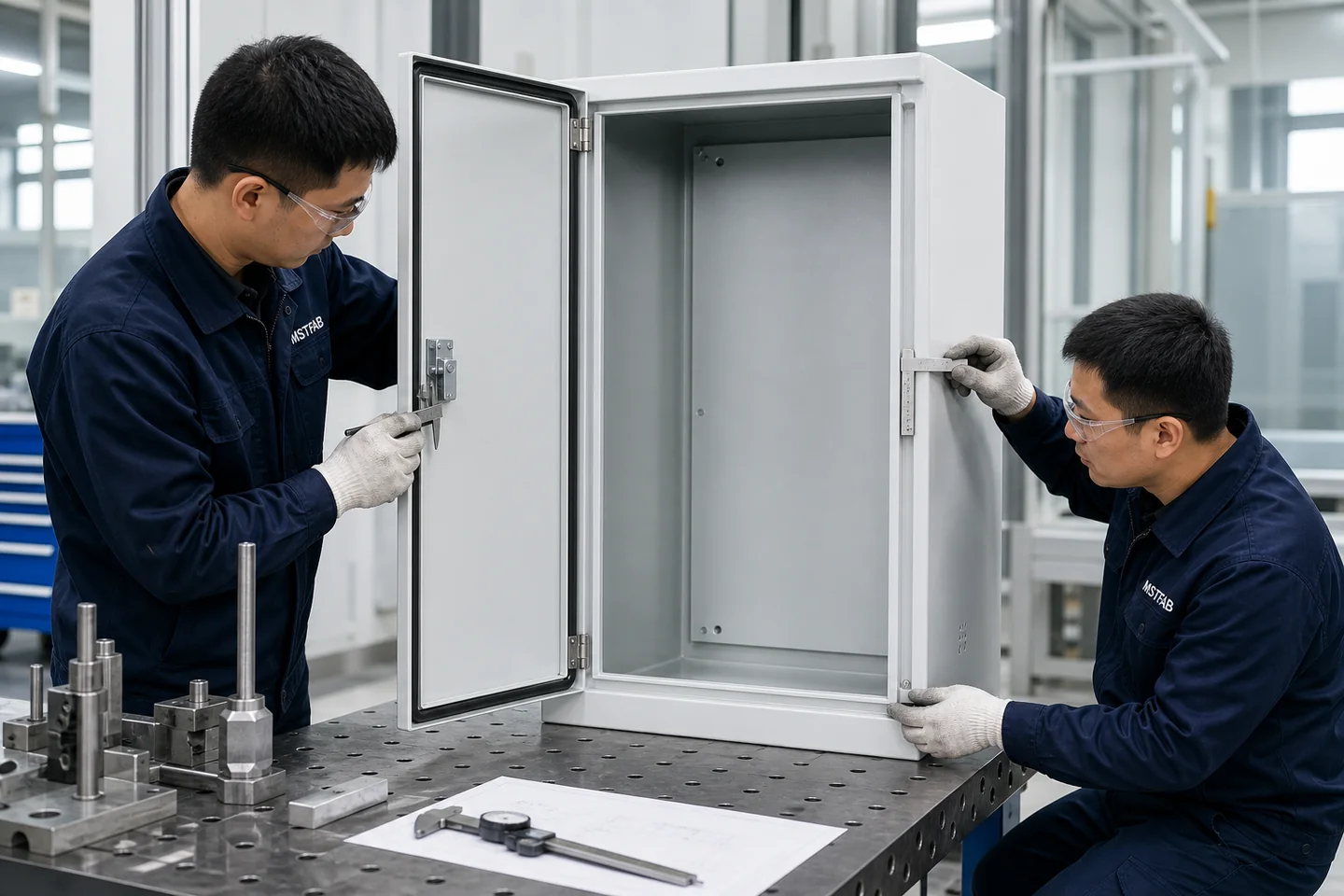
Empty ITS cabinet shells provide mechanical space for buyer-installed monitoring, sensor and communications equipment.
ITS Cabinets
Buyer-defined mounting plates, shelves, partitions, cable-routing brackets, service panels and connector cutouts can be fabricated into the shell.

Parking and toll enclosure shells need accurate display openings, reader cutouts, lock interfaces and service panels.
Parking and Toll Control Boxes
Precise blank cutouts and powder-coated surfaces help public-facing empty metal housings assemble cleanly during the buyer’s later integration.
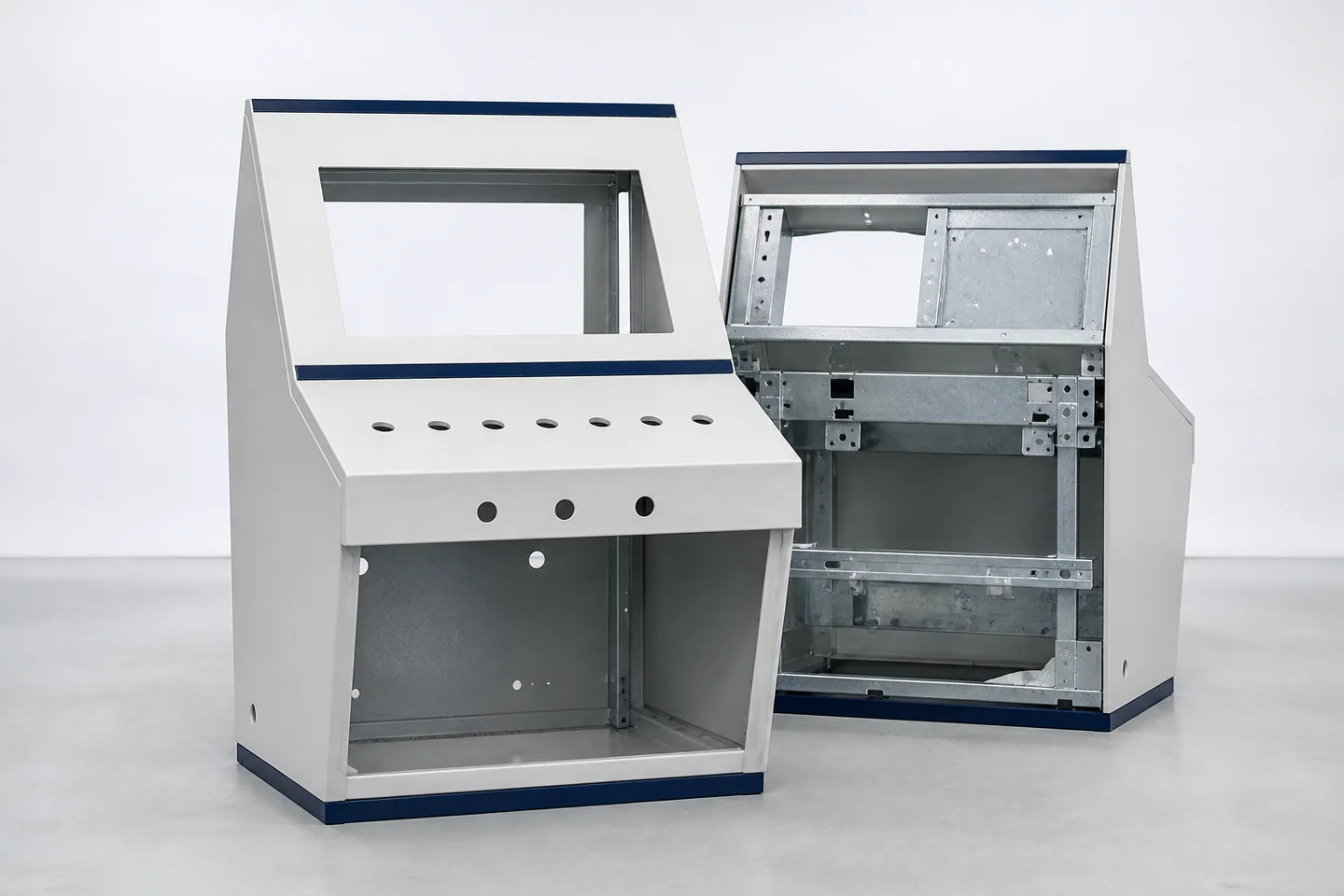
Empty operator-console shells support later OEM integration for control rooms, tunnel systems and monitoring centers.
Operator Console Enclosures
We fabricate sloped front panels, blank HMI cutouts, keyboard-panel metalwork, rear access panels, internal cable brackets and reinforced structures around your drawings.
Empty Operator Console Sheet Metal Shells
An operator-console shell is different from a standard cabinet: the sheet metal must place buyer-defined HMI and control cutouts correctly while preserving access, panel stiffness and the removal path for later integration.
Common applications include traffic control rooms, highway monitoring centers, tunnel operation systems, transit control stations, utility control rooms and smart city command centers.
Sheet Metal Manufacturing Capabilities for Traffic Enclosure Shells
Reliable traffic enclosure shell production depends on accurate cutting, repeatable bending, controlled welding, durable surface treatment, mechanical hardware assembly and inspection before export packaging.
Laser cutting creates cabinet panels, ventilation slots, cable entries and blank buyer-defined component openings.
Precision Laser Cutting
Clean edges improve cutout fit, downstream bending, shell assembly consistency and final visual quality.

CNC bending forms cabinet bodies, folded edges, doors, console panels and internal brackets.
CNC Bending and Forming
Bending accuracy helps control door alignment, gasket compression, waterproof grooves and ergonomic console angles.
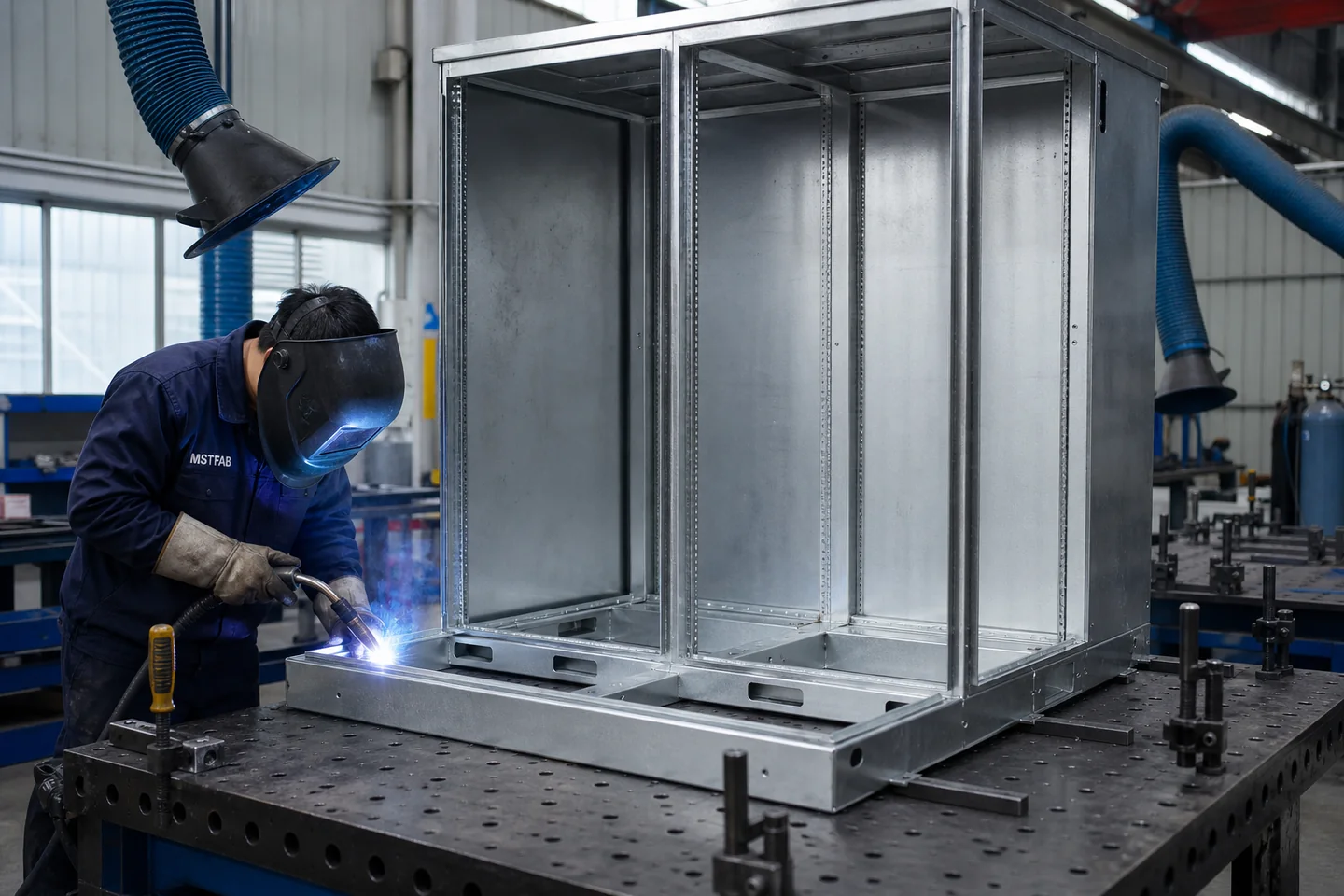
Traffic cabinets and operator consoles may require spot, TIG, MIG, stud or structural welding.
Welding and Shell Assembly
Fixture control and welding sequence reduce distortion across frames, bases, reinforced corners and mounting structures.

Outdoor roadside cabinets require coating adhesion, corrosion resistance and color consistency.
Finishing Coordination
Qualified long-term partners may complete drawing-specified pretreatment and coating. MSTFAB reviews masking, appearance and inspection points with the approved shell design.

Buyer-approved hinges, locks, handles, gaskets, mounting plates and other mechanical shell hardware can be installed before shipment.
Mechanical Hardware Assembly
Mechanical shell assembly can reduce downstream fitting work. Electrical devices, wiring and functional testing remain with the buyer or integrator.
Traffic Enclosure Sheet Metal Fabrication Support
MSTFAB supports laser cutting, CNC bending, welding, approved mechanical hardware installation, shell inspection and export-ready packaging; specified finishing may be coordinated through qualified long-term partners for transportation enclosure and operator-console metalwork.

Engineering Considerations for Roadside Control Enclosures
When sourcing a traffic-control enclosure shell, buyers should evaluate the mechanical details that affect installation, later integration, service and field reliability.
Outdoor Protection
Review cabinet structure, sealing, drainage, material and coating together for rain, dust, heat, humidity and roadside pollution.
Cable-Entry Interfaces
We fabricate buyer-defined cable holes, gland plates, routing brackets and separation panels. Cable selection, routing and wiring remain outside our scope.
Service Access
Door opening direction, removable panels and shell clearances should preserve the buyer-defined service envelope for later-installed equipment.
Ventilation Cutouts
Louvers, fan/filter cutouts, covers and mounting patterns are fabricated to the buyer’s thermal design. MSTFAB does not size or validate the cooling system.
Mounting and Foundation
Pole-mounted, wall-mounted, floor-standing and base-mounted designs need matching brackets and bottom structures.
Security and Packaging
Locks, reinforced doors, hidden fasteners and export packing protect field reliability and shipment quality.
Materials and Finishes for Traffic Control Cabinets
Material selection affects strength, corrosion resistance, weight, appearance and cost. The correct material depends on indoor or outdoor use, climate, installation method and service requirements.
| Material or finish | Engineering profile | Typical application |
|---|---|---|
| Cold rolled steel | Stable forming performance and good surface quality after powder coating. | Indoor control boxes, operator consoles and equipment housings. |
| Galvanized steel | Improved corrosion resistance with cost and durability balance. | Roadside control boxes and transportation equipment cabinets. |
| Stainless steel | Higher corrosion resistance for humid, coastal or harsh environments. | Outdoor infrastructure and corrosion-sensitive control enclosures. |
| Aluminum | Lightweight and naturally corrosion-resistant. | Transportation equipment housings and console panels where weight matters. |
| Outdoor powder coating | Durable color, surface protection and professional appearance after proper pretreatment. | Traffic control cabinets, roadside enclosures and operator consoles. |
Quality Control Process for Traffic Control Enclosures
Quality control starts before production and continues through every fabrication step. For OEM buyers, repeatability is more important than a single good sample.
DFM Review
Bending feasibility, hole spacing, cutout position, welding structure, gasket design and coating blind spots are checked before production.
First Article Inspection
Laser cutting, bending angle, door fit, hardware position, panel alignment and visible surfaces are reviewed before batch release.
Dimensional Check
Repeatable hole positions, mounting plates, cabinet geometry and console panel angles are checked against drawings.
Surface and Shell Assembly Inspection
Powder coating, gasket fit, locks, hinges, brackets, mounting plates and export packaging are inspected before shipment.
RFQ Checklist for a Fast Quote
Clear RFQ details reduce assumptions around shell structure, buyer-defined protection targets, finish, mechanical hardware and export packaging.
| RFQ detail | What to provide |
|---|---|
| Drawings or CAD files | 2D drawings, STEP/STP files, overall size, door layout and blank component cutouts. |
| Material and thickness | Cold rolled steel, galvanized steel, stainless steel, aluminum or carbon steel with target thickness. |
| Application environment | Indoor or outdoor use, roadside exposure, coastal risk, humidity, dust, vibration and buyer-defined IP/NEMA target. |
| Finish and color | Powder coating, RAL color, anti-corrosion coating, anodizing, brushing or other surface requirements. |
| Mechanical shell hardware | Buyer-approved hinges, locks, handles, gasket details, mounting plates, gland-plate openings, ventilation cutouts and service panels. |
| Buyer-supplied equipment envelopes | Cutout drawings and keep-outs for displays, controls, connectors, wiring and cooling hardware installed later by the buyer. |
| Packaging | Export packing requirements for cabinet geometry, coating protection, door alignment and shipment route. |
Related OEM resources
Related Enclosure Decisions
Choose the closest next reference for the drawing you are preparing.
ROADSIDE DESIGN
Roadside cabinet interfaces
Check door access, rain paths, mounting and service clearance before releasing the cabinet.
OUTDOOR SHELLS
Weather-exposed metalwork
Compare gasket lands, cable entries and corrosion planning for outdoor shell orders.
OPERATOR CONSOLES
Human-interface housings
Review sloped panels, HMI cutouts and service access for an empty console shell.
FAQ: Traffic Control Enclosure Manufacturer
It is the fabricated metal cabinet body, doors, mounting plates and mechanical interfaces that house equipment installed later by the OEM or integrator.
Yes. MSTFAB manufactures drawing-defined empty sheet metal shells from STEP files and controlled drawings. We do not supply controllers, wiring, software or completed traffic-control systems.
Common options include cold rolled steel, galvanized steel, stainless steel and aluminum. The OEM should select material and finish for the actual environment and finished-product requirements.
Yes. We fabricate buyer-approved sealing lands, drainage features, ventilation cutouts and mounting interfaces. Specified coating can be coordinated with qualified long-term partners. The OEM owns final environmental testing and rating claims.
Yes. We fabricate empty console bodies, sloped panels, blank HMI and button cutouts, rear service panels and mechanical brackets. Displays, controls and wiring are not included.
Yes. We laser cut blank openings from the buyer’s component drawings. The buyer selects, installs and validates the HMI, switches and other devices.
Yes. Drawing-specified pretreatment, powder coating and RAL colors can be coordinated with qualified long-term partners. Confirm masking, corrosion exposure and inspection requirements in the RFQ.
Send STEP/STP and dimensioned PDF drawings, revision, material, thickness, finish, quantities, mechanical hardware, cutout data, CTQs, inspection requirements and packaging needs.
Yes. We provide protective packing for empty shell geometry, coating, doors, protruding hardware and international shipment.
No. MSTFAB is a build-to-print sheet metal fabricator. Controllers, terminal blocks, breakers, wiring, software, signals and completed-system validation remain with the buyer or integrator.
Start your project
Ready to Source an Empty Traffic Enclosure Shell?
Upload your STEP model, controlled drawing, material, thickness, finish, mechanical hardware and quantity. We will review the metalwork and return fabrication feedback for the empty shell.
 WeChat Contact
 WhatsApp Me Directly