Quick Answer: A “special process” is any manufacturing step whose result you cannot fully verify by inspecting the finished part — you have to control the inputs and the process instead. For sheet metal, the two big families are heat treatment (stress relief, annealing, hardening) and surface finishing (plating, powder coat, anodize, passivation). Both are almost always outsourced to sub-tier shops you never see, and both fail invisibly: a part can look perfect and still be under-cured, lightly plated, or wrongly tempered. Effective supplier special process control means a contractual flow-down (name the sub-tier, pass your spec down, reserve audit rights), qualified sub-tiers (Nadcap where relevant), a written process spec with measurable acceptance, first-article approval, in-process monitoring (furnace profiles, bath titration, cure profiles), a per-batch process cert, and verification at receiving. Outsourced surface finishing and heat treat are where silent defects are born — treat them as a class, not as afterthoughts.
What “Special Process” Means
The term sounds like jargon, but the definition is practical and brutal: a special process is one whose output cannot be fully confirmed by inspecting the product afterward. You can measure a cut part and know if it’s right. You cannot look at a plated or heat-treated part and know if the invisible work underneath was done correctly.
- A powder-coated part can look flawless and still be under-cured and under-adhered.
- A plated part can shine and still be too thin — or, on hard steel, embrittled and about to crack.
- A heat-treated part can be dimensionally perfect and still be soft, brittle, or distorted inside.
Because the defect hides, you don’t control the result — you control the recipe: the bath, the furnace, the cure, the bake, the process cert. That shift — from inspect-the-part to control-the-process — is the whole game of supplier special process control.
The Two Big Families
Heat treatment changes the metal’s internal structure — its hardness, strength, stress state. In sheet metal it shows up as stress relief (after welding or machining), annealing (soften for forming), normalizing, hardening-plus-temper (for wear or strength), and solution treatment for some alloys.
Surface finishing changes the surface — protection and appearance. It spans plating (zinc, nickel, chrome, tin), powder coating, anodizing, passivation (stainless), e-coat, and liquid paint. Both families share one ugly trait: the part leaves your fabricator, gets transformed at a sub-tier, and returns looking done. The danger is what you can’t see.
Why Outsourced Special Processes Are the Blind Spot
Three things stack up:
- The relay. Your fabricator rarely does these in-house; they’re sent to specialists. You audit the runner, not the relays.
- The sub-tier wall. Without a flow-down clause, you can’t name or audit the shop that actually did the work.
- The invisible result. Even with the part in hand, standard inspection can’t prove the process was right — you need hardness tests, thickness gauges, salt spray, or a process cert.
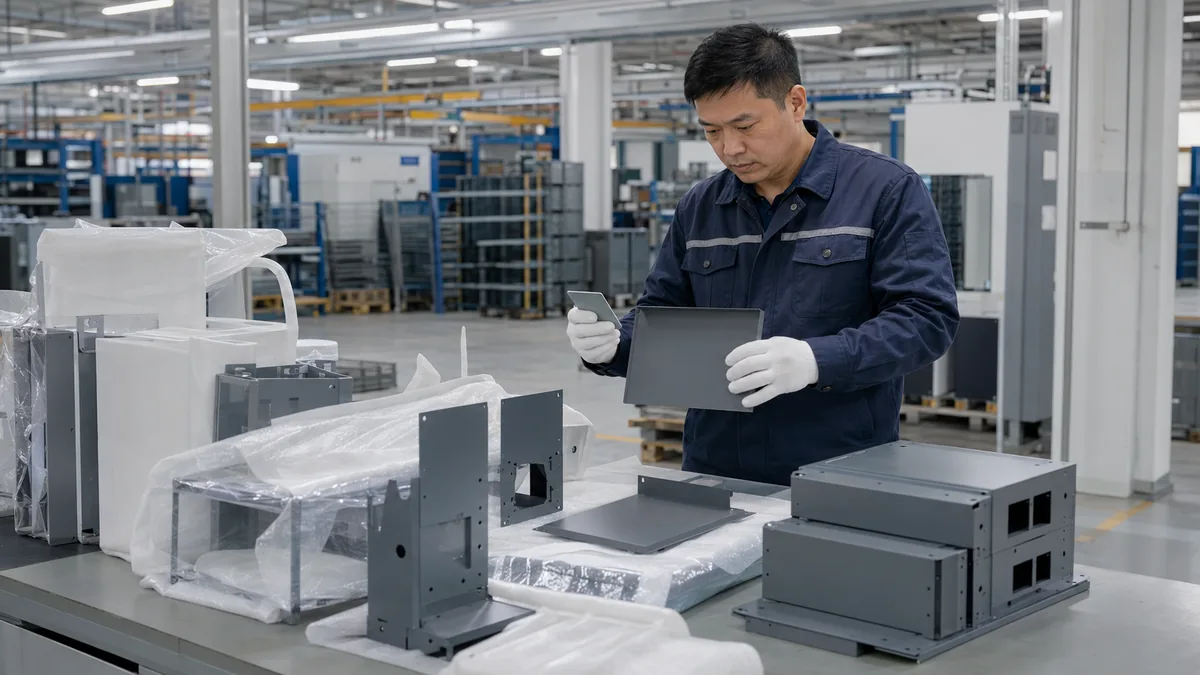
Heat Treatment: What Buyers Must Know
This is the family most buyers under-spec, because its result is the least visible.
- Know the operation. Stress relief removes residual stress. Annealing softens. Hardening-plus-temper gives strength.
- Furnace control is the process. Require a pyrometry survey and a temperature uniformity survey (TUS) proving the furnace holds the spec across its working volume.
- Quench matters. The cooling medium (oil, water, air) drives the transformation. Wrong quench = distortion or cracking.
- Verify with hardness. The one external tell is hardness. Checked per lot at defined points.
Surface Finishing: The Family
The shared truths buyers must know for plating, powder, and anodize:
- Pretreatment is destiny. A wipe is not pretreatment.
- Thickness is measurable. Powder in mils, plating in micrometres; check with a gauge.
- Cure / bake is the hidden variable. Powder needs an oven profile; hard steel plating needs a hydrogen-relief bake.
- A process cert, not a CoC. Each finish should return a per-batch cert stating thickness, class, cure/bake, and result.
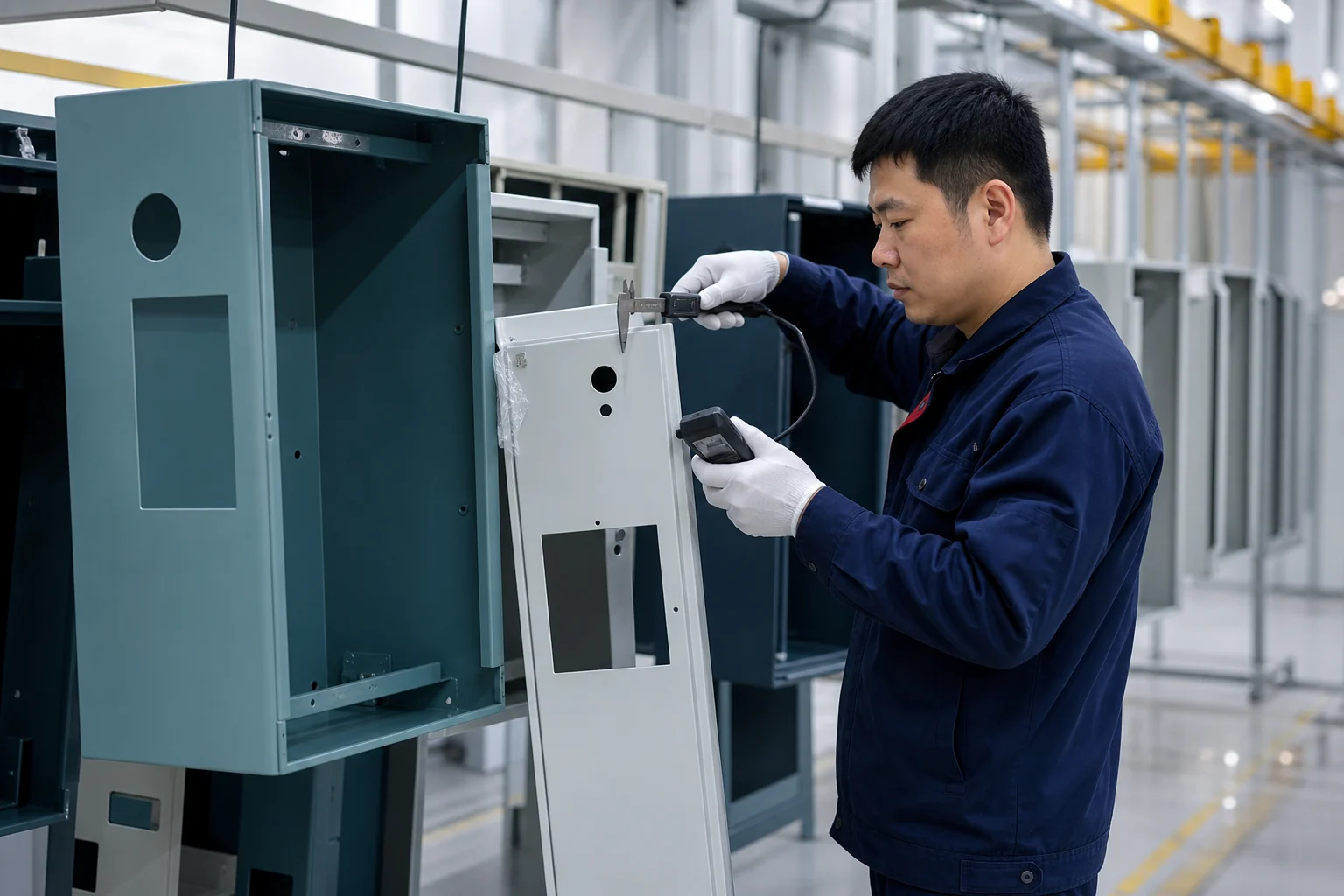
The Special-Process Control Framework
Here is the unified method that wraps heat treat and all finishing. Use it as a class:
- Flow-down (contractual). Name every special-process sub-tier; pass your spec down.
- Sub-tier qualification. Approve the shop before use (e.g. Nadcap for aerospace).
- Written process specification. Not “heat treat it.” The exact operation, standard, temperatures, thickness, corrosion hours.
- First-article approval (FAI). Before production, verify furnace profile, hardness, thickness map, and salt-spray.
- In-process monitoring. Furnace pyrometry, bath titration, cure profiling.
- Per-batch process cert. Evidence of what was actually done.
- Receiving verification. Hardness on heat-treated lots, thickness/adhesion on finishes.
MSTFAB Trust & Quality Verification Table
| Special Process Control | Standard Fabricator Practice | MSTFAB Standard | Buyer Benefit |
|---|---|---|---|
| Sub-Tier Visibility | “Black box” routing; changes sub-tiers randomly | Named, pre-approved sub-tier list for all heat-treat & finishing | No silent process drift; accountable supply chain |
| Heat Treat Verification | Trusts the sub-tier’s CoC without physical checks | Mandatory incoming Rockwell hardness check per lot | Zero risk of receiving brittle or under-tempered brackets |
| Process Documentation | Accepts a generic “Conforms to drawing” stamp | Requires per-batch Process Certs (TUS records, cure profiles, bake times) | Definitive, traceable proof that the hidden process occurred |
| Finishing QA | Visual scratch check only | Mil-thickness gauge + Cross-cut adhesion tests upon receipt | Coating won’t flake off in the field six months later |
How This Ties to Your Quality Agreement
None of this sticks without a contract behind it. The quality agreement should contain a flow-down clause binding sub-tiers, a requirement for written process specs and per-batch process certs, and a change-control clause covering process and sub-tier changes. Without the agreement, every control is a polite request. With it, a missing cert is a defined breach.
One-Page Special-Process Control Checklist
- [ ] Every special-process sub-tier named and approved?
- [ ] Flow-down clause in quality agreement?
- [ ] Written process spec with measurable acceptance (temp/thickness)?
- [ ] Sub-tier qualified (Nadcap/equivalent, bath/furnace control)?
- [ ] FAI approved: furnace/cure profile + hardness/thickness + cert?
- [ ] In-process monitoring (pyrometry, titration) evidenced?
- [ ] Per-batch process cert (not CoC) returned?
- [ ] Receiving verification: hardness / thickness / adhesion / visual?
- [ ] Change-control notified and re-approved?
FAQ
What is a special process and why can’t I just inspect the result?
A special process is any step whose outcome you cannot fully confirm by examining the finished part. Heat treatment and surface finishing are the classic examples: a part can look perfect yet be under-cured, too thinly plated, embrittled, or wrongly tempered. Standard receiving inspection can’t prove those hidden states, so you must control the inputs and demand process certs.
Why are outsourced heat treatment and finishing such a blind spot?
Your fabricator usually relays these to specialist sub-tiers you never audit. Without a contractual flow-down, you can’t even name those sub-tiers. The result is invisible, so subcontracted processes fail silently and surface only as field or warranty failures.
What should I specify for outsourced heat treatment?
Name the exact operation and standard with cycle temperatures and the required hardness. Require a pyrometry survey and temperature uniformity survey (TUS) proving the oven holds spec. Verify each lot with hardness testing. “Make it hard” is not a spec.
How is surface finishing controlled as a special process?
Specify pretreatment, a measurable thickness checked with a gauge, the cure or bake (oven profile for powder; hydrogen-relief bake for plating), and a per-batch process cert stating what was actually done. Verify at receiving with thickness and adhesion checks.
How do I make special-process control stick with my supplier?
Put it in the quality agreement. Require a flow-down clause that names each sub-tier, binds them to your spec, and reserves your audit rights. Mandate written process specs and per-batch process certs. Without the agreement, every control is just a request.
 WeChat Contact
 WhatsApp Me Directly