From high-precision medical diagnostic console faces, industrial HMI operator touchscreens, and telecommunications rack doors to aerospace avionics covers, specialized EV battery access shields, and automated machinery enclosures, custom sheet metal panels define both the structural integrity and aesthetic identity of capital equipment. In modern agile manufacturing, original equipment manufacturers (OEMs) frequently face product introduction cycles where production volumes range from 10 to 500 units per batch. For these production runs, investing 30,000 to100,000+ in dedicated stamping dies is economically unviable and technically restrictive. As an ISO 9001:2015 and ISO 13485:2016 certified low-volume custom sheet metal panels supplier, MSTFAB delivers rapid soft-tooling manufacturing—combining high-speed fiber laser cutting, precision CNC press brake forming, automated hardware insertion, and Class A architectural finishing with zero hard-tooling NRE investments.
Table of Contents
- 1. The Economics of Low-Volume Manufacturing: Soft Tooling vs. Stamping Dies
- 2. Material Selection & Metallurgy: Aluminum, Stainless Steel, Carbon Steel, and Pre-Galvanized
- 3. Precision Laser Blanking: High-Pressure Nitrogen, Fine Perforations, and Cutout Geometries
- 4. CNC Press Brake Forming: Eliminating “Oil-Canning”, Dynamic Crowning, and Non-Marking Dies
- 5. Specialized Panel Geometries: Hemmed Safety Edges, Stiffener Ribs, and Offset Joggles
- 6. Hardware Insertion & Joining: Clinch Fasteners (PEM), CD Stud Welding, and Corner Blending
- 7. Class A Surface Finishing: Powder Coating, Anodizing, Graining, and Silk Screening
- 8. Critical DFM Rules for Precision Sheet Metal Panels
- 9. Quality Metrology: CMM Probing, Optical 3D Scanning, and FAI Documentation
- 10. Comprehensive Engineering Data Matrices and Sourcing Benchmarks
- 11. Real-World OEM Case Studies: Low-Volume Production Successes
- 12. Frequently Asked Technical Questions (40 Detailed Engineering Q&As)
1. The Economics of Low-Volume Manufacturing: Soft Tooling vs. Stamping Dies
In high-mix, low-volume (HMLV) capital equipment sectors—such as medical robotics, analytical laboratory instruments, high-voltage switchgear, and semiconductor fabrication equipment—annual production volumes rarely justify progressive hard stamping dies. A progressive stamping die set for a 600 mm x 800 mm equipment door typically requires 12 to 16 weeks of toolmaking lead time and 45,000 to90,000 in non-recurring engineering (NRE) capital. Furthermore, if field validation or regulatory compliance demands a 5 mm shift in a connector cutout, the entire stamping die must be recut or scrapped.
The Flexible Soft-Tooling Paradigm
MSTFAB solves this economic bottleneck through automated soft-tooling fabrication:
- Zero Hard-Tooling NRE: Blanks are cut directly from raw sheet coil or plate using CNC fiber lasers, and formed using multi-axis CNC press brakes with standard segmented universal tooling. Digital CAD/CAM programming replaces expensive dedicated steel dies.
- Immediate Engineering Revision Agility: Design revisions (such as updating an HDMI port to USB-C, adding cooling louver rows, or altering mounting hole pitch) are implemented in software in minutes, with zero physical tooling modifications and zero scrap tooling expense.
- Compressed Time-to-Market: While hard stamping requires 3 to 4 months of die construction and debugging, MSTFAB manufactures, inspects, and ships First Article Inspection (FAI) pilot runs of finished sheet metal panels within 5 to 7 working days.

Figure 1: MSTFAB precision manufacturing: comprehensive batch inspection of low-volume custom sheet metal control panels and equipment access covers.
2. Material Selection & Metallurgy: Aluminum, Stainless Steel, Carbon Steel, and Pre-Galvanized
The performance, weight, flexural rigidity, and corrosion resistance of a custom panel depend fundamentally on alloy selection. MSTFAB stocks a broad inventory of certified sheet metals to meet diverse OEM specifications:
1. Aluminum Panels (Alloy 5052-H32 & 6061-T6)
Aluminum is the premier material for mobile electronics, aerospace consoles, medical carts, and telecommunications panels where weight reduction and natural corrosion resistance are paramount:
- 5052-H32: Density of 2.68 g/cm3 (one-third that of steel). Highly ductile, allowing tight inside bend radii without cracking. Resists marine salt spray and provides excellent thermal dissipation for heat-generating electronic drivers.
- 6061-T6: Provides high yield strength (275 MPa) for structural door panels and mounting plates, though requiring generous bend radii (R >= 2.5 * T).
- Aesthetic Versatility: Aluminum accepts fine bead blasting, architectural clear or colored sulfuric anodizing (MIL-A-8625 Type II), and conductive chemical conversion coatings (MIL-DTL-5541 Class 3).
2. Stainless Steel Panels (AISI 304 & 316L)
For sanitary medical processing equipment, food and beverage packaging machinery, and harsh marine washdown panels, austenitic stainless steel provides impervious corrosion resistance and hygienic cleanability:
- Surface Finish: Available in pristine mill finishes (#2B matte) or pre-grained directional satin (#4 sanitary brushed grain with 180-240 grit finish) protected with heavy-duty laser-protective vinyl film.
- Passivation: All fabricated stainless panels undergo automated citric or nitric acid chemical passivation (ASTM A967) to dissolve free surface iron particles and restore the natural chromium-oxide passive film.
3. Cold-Rolled Carbon Steel (SPCC / ASTM A1008)
When high flexural stiffness and structural rigidity per dollar are required, cold-rolled sheet steel is the industry benchmark. Featuring a high modulus of elasticity (E = 205 GPa) and smooth Class A surface texture, it serves as the ideal foundation for multi-stage zinc phosphating and electrostatic powder coating on industrial automation cabinets and machinery guards.
4. Pre-Galvanized Steel (SECC / ASTM A653 G90)
Pre-galvanized sheet provides sacrificial cathodic protection against rust without requiring expensive post-fabrication dipping. Electro-galvanized (SECC) is favored for tight-tolerance IT server sub-rack panels, while G90 continuous hot-dip is specified for outdoor utility and HVAC equipment panels.

Figure 2: Laser blanking precision: CNC fiber laser cutting complex connector cutouts, cooling vents, and mounting hole arrays in aluminum panel blanks.
3. Precision Laser Blanking: High-Pressure Nitrogen, Fine Perforations, and Cutout Geometries
MSTFAB utilizes high-power CNC fiber laser cutting systems (6 kW to 20 kW) to transform flat sheet stock into finished panel blanks with absolute geometric accuracy (+/- 0.05 mm):
- High-Pressure Nitrogen Cutting (18 to 25 bar): Nitrogen assist gas mechanically expels molten metal without thermal oxidation, leaving a 100% oxide-free, brilliant silver edge on stainless steel, aluminum, and carbon steel. Powder coating and paint adhere permanently to nitrogen-cut edges without secondary mechanical descaling.
- Intricate Connector Cutouts: Our laser optics easily produce complex D-sub miniature cutouts, RJ45 ports, USB-C slots, IEC power inlet sockets, and circular Mil-Spec circular connector patterns with razor-sharp corner radii and zero thermal taper.
- Perforated Ventilation Grids: Instead of purchasing expensive pre-perforated sheet that deforms during forming, MSTFAB lasers custom hexagonal, round, or slotted ventilation arrays directly into the panel blank, leaving solid perimeter margins that maintain structural panel flatness.
- Laser Micro-Tabs & Dynamic Nesting: CAD/CAM algorithms nest multi-part batches onto standard 1500 mm x 3000 mm sheets, optimizing raw material yield (> 82%) and utilizing microscopic break-away tabs that ensure scratch-free sheet handling.
4. CNC Press Brake Forming: Eliminating “Oil-Canning”, Dynamic Crowning, and Non-Marking Dies
Large, flat sheet metal panels present unique mechanical forming challenges. Due to residual rolling stresses from the steel mill, thin panels (T = 1.0 mm to 2.0 mm) with large unsupported surface areas are highly prone to “oil-canning”—an out-of-plane elastic buckling wave where the panel center pops in and out under minor pressure. MSTFAB eliminates oil-canning and guarantees panel flatness through four manufacturing controls:
1. Active Dynamic Hydraulic Crowning Beds
When bending a 1,000 mm to 2,500 mm long panel flange, the press brake ram and lower bed naturally deflect in opposing directions under high bending tonnage. Without compensation, the flange angle will be tight (e.g. 90 deg) at the ends but loose (e.g. 92.5 deg) in the center. MSTFAB press brakes feature multi-cylinder dynamic hydraulic crowning that continuously arches the lower bed upward in real time, matching ram deflection and guaranteeing consistent 90.0-degree angles (+/- 0.20 deg) across the entire panel width.
2. Real-Time Laser Angle Sensor Compensation
Optical laser sensors project onto the bent panel during stroke execution, tracking the developing angle and automatically adjusting punch bottom dead center to compensate for material thickness variations and coil yield strength swings.
3. Non-Marking Polyurethane Tooling
Cosmetic front panels cannot tolerate horizontal witness lines, die scuffs, or tool galling caused by steel-on-steel friction. MSTFAB lines V-die entry shoulders with 80-micron elastomeric polyurethane film and utilizes hardened, mirror-polished punches, preserving pristine Class A cosmetic surfaces for medical and audio equipment.
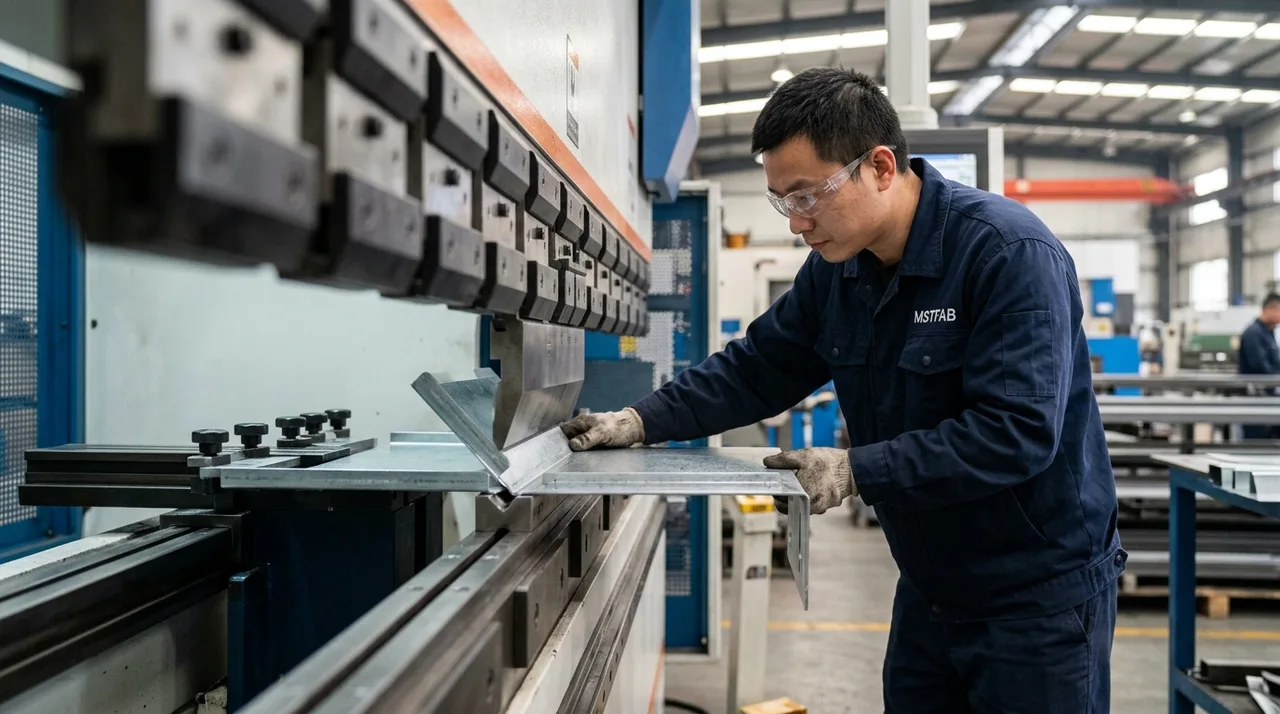
Figure 3: Multi-axis CNC bending: precision forming of panel perimeter flanges and return lips using segmented punch tooling with dynamic deflection compensation.
5. Specialized Panel Geometries: Hemmed Safety Edges, Stiffener Ribs, and Offset Joggles
To maximize rigidity, eliminate operator injury hazards, and ensure seamless cabinet integration, precision panels incorporate specialized formed features:
1. Hemmed Safety Edges (180-Degree Folds)
Hemming folds the outer edge of a sheet metal flange back onto itself by 180 degrees. This accomplishes three critical engineering objectives:
- Operator Safety: Eliminates razor-sharp raw cut edges on equipment access doors, preventing cuts during routine maintenance.
- Perimeter Stiffness: Doubles the material thickness along the panel perimeter, drastically increasing resistance to torsional racking and edge deflection.
- Aesthetic Finished Look: Presents a clean, rounded cosmetic boundary that matches molded plastic or die-cast enclosures. MSTFAB forms flat closed hems on thin steel and teardrop hems (R = 0.5 * T) on aluminum to prevent outer-fiber cracking.
2. Embossed Stiffener Ribs and Hat-Channel Stiffeners
To eliminate oil-canning on large access panels (such as 800 mm x 1200 mm machinery doors) without increasing sheet thickness (which would add excessive we), MSTFAB forms diagonal cross-embossed “X” stiffener ribs or CNC-punched longitudinal stiffener channels. These geometric features increase the area moment of inertia (I) by 300% to 500%, allowing a lightweight 1.2 mm panel to match the flexural rigidity of a 2.5 mm flat plate. For extreme structural loads, we spot-weld or structural-adhesive bond lightweight hat-channel stiffeners to the interior panel face.
3. Offset Step Joggles for Flush Inset Mounting
When an equipment door or access panel must sit perfectly flush with the surrounding cabinet frame, MSTFAB utilizes dedicated joggle tooling to form a two-bend Z-shaped offset step equal to material thickness T plus gasket thickness in a single downward machine stroke, ensuring absolute flange parallelism.
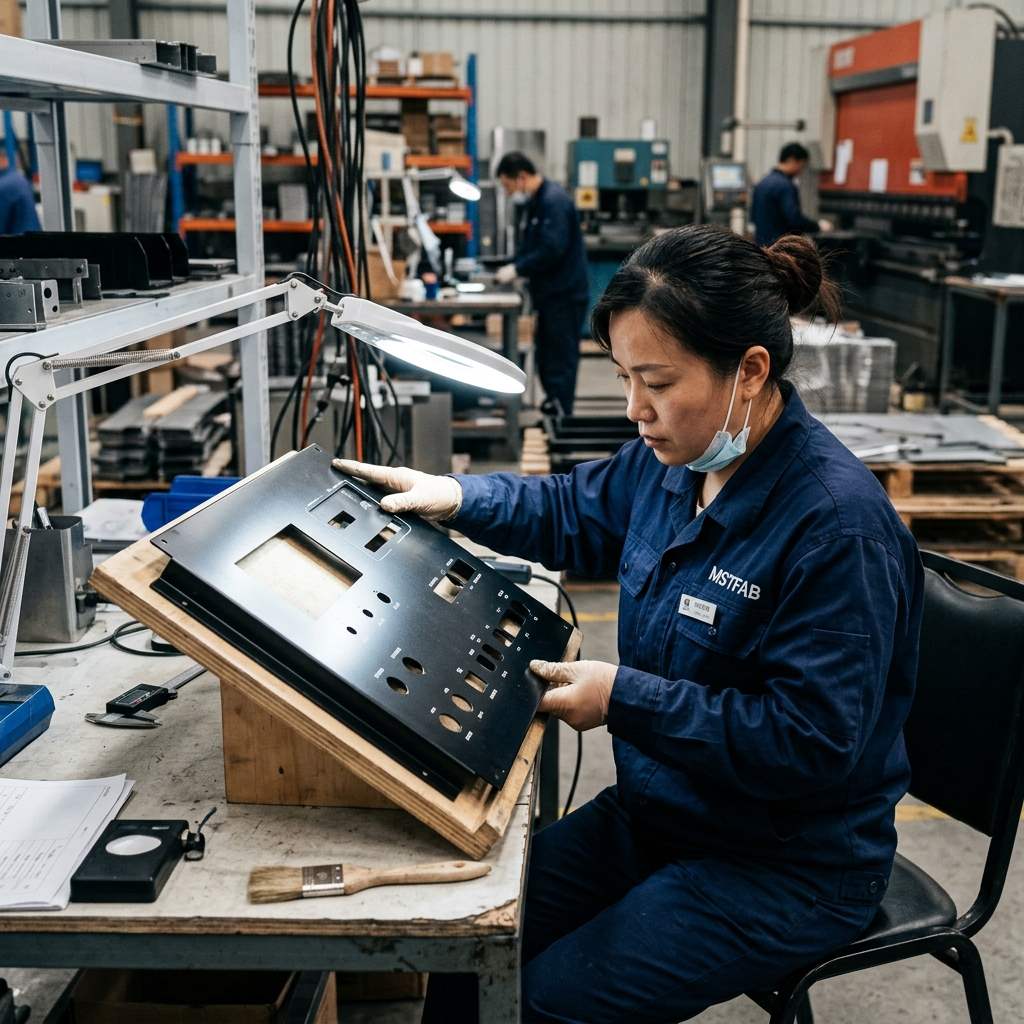
Figure 4: Turnkey finishing: Class A electrostatic powder coated aluminum control panel with captive PEM hardware and precision multi-color silk-screened graphics.
6. Hardware Insertion & Joining: Clinch Fasteners (PEM), CD Stud Welding, and Corner Blending
Modern equipment panels require clean, rapid mechanical assembly with internal PCB modules, display screens, and cabinet frames:
1. Automated Self-Clinching Hardware Insertion (PEM Fasteners)
MSTFAB operates multi-station automated Haeger hydraulic insertion presses equipped with automated bowl feeders and optical force-displacement monitoring. We install:
- Threaded Standoffs (Blind and Thru-Hole): For mounting internal circuit boards, LCD displays, and cooling fans with precise stand-off heights (3 mm to 30 mm). Blind standoffs leave the exterior cosmetic face completely smooth and unblemished.
- Self-Clinching Threaded Studs: Rigid mounting posts for ground wire eyelets, sub-chassis brackets, and hinge attachments.
- Captive Quarter-Turn Fasteners: Spring-loaded turn-locks for tool-free, rapid-access maintenance panels.
2. Capacitor Discharge (CD) Stud Welding
For applications where exterior cosmetic appearance is paramount (Class A front panels), clinch hardware may leave a minor indentation on thin sheets. MSTFAB utilizes CD stud welding, discharging a high-energy electrical capacitor through the stud tip in 3 to 5 milliseconds. The instantaneous arc fuses the stud base to the rear sheet face without burning through, blistering paint, or creating discoloration on the front face.
3. TIG Corner Welding and Seamless Cosmetic Blending
When panel flanges bend to form 4-sided trays or door lids, the corner joints must be sealed against dust and moisture ingress. MSTFAB welders execute precision autogenous AC TIG or fiber laser corner seams, followed by pneumatic blending using fine-grit abrasive ceramic blending discs. After powder coating, the welded corners appear completely monolithic—as if molded or die-cast from a single piece of metal.
7. Class A Surface Finishing: Powder Coating, Anodizing, Graining, and Silk Screening
Surface finishing is where low-volume manufacturing often stumbles, as commercial coaters impose exorbitant minimum lot charges. MSTFAB operates integrated, in-house finishing lines optimized for rapid batch changeovers:
1. Electrostatic Powder Coating
Our automated and manual powder coating booths handle small batches (10 to 500 panels) with full RAL and Pantone color matching. We offer:
- Formulations: High-durability architectural TGIC-free polyester, impact-resistant epoxy-polyester hybrids, and chemical-resistant polyurethane.
- Textures: Smooth gloss, satin matte, fine micro-texture (which hides handling fingerprints), and heavy orange-peel textures.
- Pretreatment: Multi-stage chemical conversion wash ensuring 5B cross-hatch adhesion (ASTM D3359) and 1,000+ hour salt spray resistance.
2. Architectural & Decorative Anodizing
For aluminum control panels, sulfuric acid anodizing (MIL-A-8625 Type II) produces an ultra-hard, scratch-resistant oxide film (10 to 20 microns thick). MSTFAB provides clear satin, jet black, and custom dyed colors with hydrothermal nickel acetate sealing.
3. Directional #4 Brushed Graining
Stainless steel and aluminum panels are processed through automated wet wide-belt graining machines to establish an unbroken, uniform longitudinal brushed grain texture, followed by ultrasonic cleaning and laser-protective film masking.
4. Precision Silk Screening & Laser Etching
We provide turnkey graphic labeling directly on coated or anodized panels. Using high-adhesion two-component epoxy inks, our silk screening department prints multi-color logos, functional dial graduations, LED indicator legends, and UL/CE electrical ratings with razor-sharp 0.10 mm line resolution. For permanent, tamper-proof serial numbers and QR codes, we utilize high-contrast fiber laser etching.

Figure 5: Export-grade packaging: finished custom panels separated by low-tack protective films and secured in custom high-density CNC foam cells inside wooden crates.
8. Critical DFM Rules for Precision Sheet Metal Panels
To avoid manufacturing delays and reduce unit production costs, mechanical design engineers should apply the following Design for Manufacturability (DFM) rules when modeling custom panels:
Rule 1: Minimum Flange Length (L_min)
To ensure panel flanges bridge across the press brake V-die shoulders without slipping during forming:
L_min >= 4 * T + R
Rule 2: Minimum Distance from Hole Edge to Bend Tangent (D_min)
Holes, connector cutouts, and PEM clinch holes located in the plastic bend zone will distort into ovals. Maintain:
D_min >= 2.5 * T + R
If a cutout must extend across the bend line, incorporate a rectangular relief notch in the flat blank or post-cut using our 5-axis 3D laser system.
Rule 3: Corner Relief Notch Geometry
When adjacent perimeter flanges bend to form a 4-sided tray or box cover, incorporate rectangular or circular relief notches at the corner intersection to prevent material bunching and sheet tearing:
Relief Width (W) >= T + 0.5 mm, Relief Depth (D) >= R + T
9. Quality Metrology: CMM Probing, Optical 3D Scanning, and FAI Documentation
MSTFAB enforces strict quality assurance protocols certified under ISO 9001:2015 and ISO 13485:2016 for medical equipment:
- First Article Inspection (FAI) per AS9102 / ISO 9001: Complete ballooned drawing inspection packages detailing 100% of blueprint dimensions, GD&T geometric characteristics, thread pitch verification, and raw material mill test reports (MTRs).
- Zeiss Bridge Coordinate Measuring Machine (CMM): Automated touch-trigger probing verifies multi-axis hole true positions (+/- 0.025 mm), flange perpendicularity, and overall panel envelope dimensions.
- Optical 3D Blue-Light Scanning (Zeiss / GOM ATOS): Captures full 3D surface scans of large panels, generating color-coded deviation heatmaps that expose subtle out-of-plane twist, bow, or oil-canning across large surface areas.
- Paint Adhesion & Coating Thickness: Digital eddy-current and magnetic induction coating thickness testing (ASTM B499) combined with cross-hatch tape adhesion testing (ASTM D3359 Method B, rating 5B required).
10. Comprehensive Engineering Data Matrices and Sourcing Benchmarks
The following engineering data matrices summarize tooling trade-offs, material properties, and manufacturing capabilities for low-volume sheet metal panels:
Table 1: Soft Tooling (Laser + CNC Brake) vs. Hard Stamping Dies Comparison
| Manufacturing Parameter | MSTFAB Soft Tooling (Laser + CNC Brake) | Traditional Hard Stamping Dies | OEM Economic Impact |
|---|---|---|---|
| Tooling NRE Investment | 0 (Zero Hard Tooling) | 35,000 – 95,000+ | Massive upfront capital savings for low-volume runs |
| Initial Prototype Lead Time | 5 to 7 Working Days | 12 to 18 Weeks | Compresses product introduction timeline by 90% |
| Economic Batch Size | 5 to 1,000 units | 10,000 to 500,000+ units | Lowest total unit cost for pilot and bridge production |
| Design Change Flexibility | Instant (Software CAD update) | Extremely Costly / Tool Scrapping | Zero-risk design evolution between batch revisions |
| Dimensional Precision | +/- 0.10 mm to +/- 0.15 mm | +/- 0.05 mm to +/- 0.08 mm | Easily satisfies high-precision electronics & medical GD&T |
Table 2: Panel Material Selection & Mechanical Properties
| Material & Temper | Density (g/cm3) | Yield Strength (MPa) | Flexural Rigidity (E) | Corrosion Defense | Recommended Panel Application |
|---|---|---|---|---|---|
| Aluminum 5052-H32 | 2.68 | 195 | 70 GPa | Excellent (Marine/Atmospheric) | Medical consoles, airborne avionics, lightweight doors |
| Stainless Steel 304 | 8.00 | 240 | 193 GPa | Outstanding (Acid/Washdown) | Food processing, pharmaceutical, cleanroom operator panels |
| Cold-Rolled Steel SPCC | 7.85 | 210 | 205 GPa | Requires Powder Coat | Heavy industrial machinery doors, automation HMI enclosures |
| Electro-Galvanized SECC | 7.85 | 220 | 205 GPa | Sacrificial Zinc Layer | IT server racks, telecommunication sub-racks, audio chassis |
11. Real-World OEM Case Studies: Low-Volume Production Successes
Case Study 1: Surgical Robot Multi-Display Operator Console Faceplate
- Application: Ergonomic primary control panel housing twin 4K touchscreens, emergency stop switches, and joystick controls for a surgical robotic workstation.
- Production Volume: 25 units per quarter (total annual volume: 100 units).
- Material: 2.0 mm Aluminum 5052-H32 with high-precision fiber laser cutting, polyurethane V-die press brake forming, 28 blind stainless steel PEM standoffs, fine bead blasting, and medical-grade Class A antimicrobial white powder coating.
- Customer Problem: Previous sheet metal vendor caused horizontal die marks across the front face that telegraphed through the white powder coat, and loose clinch studs stripped during screen assembly.
- MSTFAB Solution: Deployed non-marking urethane die films and mirror-polished punches, completely eliminating tool witness scuffs. Installed PEM Type SP stainless clinch standoffs on an automated Haeger press with calibrated insertion load limits.
- Results: 100% cosmetic yield with zero tool marks. FAI dimensional report approved on the first submission, cutting customer time-to-market by 8 weeks.
Case Study 2: Cleanroom Pharmaceutical Packaging Machine Interlock Access Doors
- Application: Large 750 mm x 1100 mm hinged access doors with double safety glass windows for an aseptic vial-filling cleanroom line.
- Production Volume: 40 door sets (total 80 panels).
- Material: 1.5 mm AISI 304 Stainless Steel with pre-grained #4 directional satin finish (Ra < 0.6 um), perimeter teardrop hemming, autogenous TIG corner welds, and citric acid chemical passivation (ASTM A967).
- Customer Problem: Doors suffered severe 4.2 mm diagonal oil-canning bow across the center face, preventing perimeter silicone gaskets from sealing tightly and failing cleanroom differential pressure tests.
- MSTFAB Solution: Re-engineered panel with calibrated perimeter closed return lips and subtle embossed stiffening ribs. Deployed active dynamic hydraulic crowning on our press brake to guarantee uniform flange angularity.
- Results: Diagonal out-of-plane bow cut to < 0.60 mm across the entire 1.1-meter panel. Sealed doors passed strict ISO 14644-1 Class 5 cleanroom air leakage testing.
Case Study 3: High-Current EV Fleet Charging Station Front Service Door
- Application: Weatherproof NEMA 3R / IP55 front service door featuring dual intake louvers, RFID reader cutout, and 3-point latching hardware.
- Production Volume: 150 units pilot run.
- Material: 2.0 mm Pre-Galvanized Steel (ASTM A653 G90) with high-pressure nitrogen laser cutting, formed louvers, and architectural textured dark gray powder coating.
- Customer Problem: The OEM faced a58,000 hard stamping die quote with a 16-week lead time, which threatened to delay their public utility pilot deployment.
- MSTFAB Solution: Manufactured all 150 doors using CNC fiber laser blanking and multi-axis press brake forming. Produced custom louver slats using single-hit CNC turret tools.
- Results: First production pilot lot of 150 units delivered in just 14 working days, saving the OEM $58,000 in upfront tooling capital.
12. Frequently Asked Technical Questions (40 Detailed Engineering Q&As)
Q1: What defines “low-volume” sheet metal panel manufacturing at MSTFAB?
Low-volume manufacturing typically spans batch sizes from 5 to 500 units per order. We specialize in agile soft-tooling fabrication (laser cutting and CNC press brake forming) that eliminates all hard-tooling stamping die investments while maintaining production-grade tolerances.
Q2: What causes “oil-canning” on sheet metal panels and how does MSTFAB prevent it?
Oil-canning is elastic buckling where a large, flat panel pops inward and outward under minor pressure. It is caused by residual mill stresses, thermal laser heating, and lack of flexural stiffness. We prevent it by forming perimeter hems, adding embossed stiffener ribs, optimizing grain direction, and using active press brake crowning.
Q3: How do non-marking press brake dies protect cosmetic panels?
Non-marking polyurethane die inserts and 80-micron elastomeric die films eliminate direct steel-on-steel friction contact as the sheet slides into the V-die, completely preventing tool galling, scratch marks, and die witness lines on Class A panels.
Q4: What is the typical lead time for low-volume custom sheet metal panel prototypes?
Precision laser-cut, CNC-formed, hardware-installed, and powder-coated panel prototypes typically ship within 5 to 7 working days from CAD approval, complete with full First Article Inspection measurement reports.
Q5: What are the advantages of hemming the perimeter of a sheet metal panel?
Hemming (folding a 180-degree edge back onto the sheet) eliminates sharp knife-edges for operator safety, doubles the perimeter material thickness to prevent torsional twist, and presents a premium, rounded cosmetic boundary.
Q6: How do blind self-clinching standoffs (PEM) preserve cosmetic front surfaces?
Blind standoffs (e.g. PEM Type B) are pressed into a closed pocket or through-hole from the rear, locking into the undercut ring without penetrating or deforming the front face, leaving the exterior cosmetic surface 100% smooth.
Q7: Why is high-pressure nitrogen assist gas used for laser cutting panel blanks?
High-pressure nitrogen (18 to 25 bar) mechanically expels molten metal without thermal oxidation, leaving an oxide-free, shiny silver edge. Powder coating and paint adhere permanently without secondary mechanical edge descaling.
Q8: What dimensional tolerances can be held on custom formed sheet metal panels?
On precision CNC press brakes equipped with laser angle compensation and dynamic crowning, MSTFAB holds linear flange dimensions within +/- 0.12 mm and angular tolerances within +/- 0.25 degrees.
Q9: Can MSTFAB apply multi-color silk screening and branding directly onto finished panels?
Yes. Our in-house graphics department provides precision multi-color silk screening using high-adhesion two-component epoxy inks, pad printing, and high-contrast fiber laser etching for logos, schematics, and dial markings.
Q10: What is capacitor discharge (CD) stud welding and when is it preferred over clinch studs?
CD stud welding discharges an electrical capacitor in 3 to 5 milliseconds to weld threaded studs to the rear panel face. It is preferred when panels are very thin (T < 1.2 mm) and where clinch hardware would leave visible witness marks on the front face.
Q11: How do you verify surface flatness on large sheet metal equipment doors?
We use optical 3D blue-light scanning (Zeiss ATOS) to generate full 3D color-coded deviation heatmaps against the nominal CAD model, supplemented by precision dial indicator sweeps on granite surface plates.
Q12: What is the minimum recommended distance from a hole to a panel bend line?
To prevent plastic hole stretching and oval distortion during bending, maintain a minimum distance of D_min >= 2.5 * T + R between the edge of the hole and the inside bend tangent line.
Q13: Why is 5052-H32 aluminum preferred over 6061-T6 for formed electronic panels?
5052-H32 has superior elongation (12-18%) and allows tight inside bend radii (R = 1.0 * T) without cracking. 6061-T6 has lower ductility (~8%) and is prone to cracking along the bend line unless generous radii (R >= 2.5 * T) are used.
Q14: How does MSTFAB ensure color and gloss consistency across low-volume powder-coated batches?
We use calibrated digital spectrophotometers (delta E < 0.8) and 60-degree gloss meters, maintain strict oven cure time-temperature logging, and source powder exclusively from premium certified manufacturers.
Q15: What corner relief notch geometry is recommended for 4-sided panel trays?
Rectangular or circular relief notches should have a minimum width and depth of W, D >= T + R + 0.5 mm at the intersection of adjacent flanges to prevent material bulging and tearing.
Q16: Can MSTFAB supply panels with welded and blended corners that appear monolithic?
Yes. We execute autogenous TIG or fiber laser corner welding, followed by pneumatic blending using fine-grit ceramic abrasives to create seamless, continuous unibody corner transitions.
Q17: What surface finish is standard for stainless steel pharmaceutical panels?
Pre-grained #4 directional satin finish (Ra < 0.6 um) protected with heavy-duty laser-grade protective film, followed by ASTM A967 chemical passivation to maximize cleanability and corrosion resistance.
Q18: What is an offset step joggle and why is it used on equipment doors?
A joggle forms two opposing bends in close proximity to create a Z-shaped offset equal to material thickness. It allows an access door to sit flush with the surrounding cabinet frame while accommodating perimeter gasket compression.
Q19: How do embossed stiffener ribs increase panel rigidity without adding weight?
Embossed ribs increase the section modulus (Z) and area moment of inertia (I) by 300% to 500%, allowing engineers to use thinner sheet metal (e.g. 1.2 mm instead of 2.5 mm) while matching identical bending rigidity.
Q20: What quality management certifications does MSTFAB hold for panel fabrication?
MSTFAB is certified under ISO 9001:2015 and ISO 13485:2016, guaranteeing strict quality controls, calibrated measurement tools, and full raw material heat lot mill test report (MTR) traceability.
Q21: How do you package custom sheet metal panels to prevent freight scratching?
Panels receive low-tack protective PE film, are packed into custom CNC-routed high-density polyethylene foam cell trays inside sealed vapor barrier bags with desiccant, and secured in ISPM-15 certified wooden crates.
Q22: Can MSTFAB form ventilation louvers directly on the press brake?
Yes. We utilize specialized multi-station louver forming tools that shear and form louver slats in a single downward machine stroke, providing convection cooling without expensive stamping dies.
Q23: What is the minimum flange length required when forming sheet metal panels?
The standard minimum flange length is L_min >= 4 * T + R to ensure the sheet metal securely bridges across both shoulders of the press brake V-die opening.
Q24: How does chemical conversion coating (MIL-DTL-5541) benefit aluminum panels?
Chem-film passivates aluminum, providing corrosion resistance while preserving low electrical surface resistance (< 5000 uOhm/in2) for EMI/RFI grounding continuity, and serving as a primer for powder coat.
Q25: What is the difference between air bending and bottoming for panel flanges?
Air bending contacts the sheet at three points without bottoming in the die, requiring lower tonnage and allowing angle adjustment by punch depth. Bottoming forces the sheet into full die contact, giving higher angular repeatability at higher tonnage.
Q26: Can MSTFAB apply continuous-bead foam gaskets directly onto panels?
Yes. We operate automated CNC formed-in-place foam gasketing (FIPFG) polyurethane dispensing systems, applying continuous watertight and dustproof seals (IP65 / IP66) directly onto panel door perimeters.
Q27: How does material rolling grain direction affect panel forming quality?
Bending perpendicular to the rolling grain direction allows tightest bend radii and minimizes cracking risk. Bending parallel to the grain aligns tensile stresses with grain boundaries, increasing cracking tendency by up to 40%.
Q28: What is First Article Inspection (FAI) and what documentation does MSTFAB provide?
FAI is a formal verification confirming that initial production units meet all blueprint requirements. We provide AS9102/ISO 9001 ballooned drawings, CMM dimensional logs, coating thickness reports, and material mill test certificates.
Q29: How do you verify paint adhesion on powder-coated panels?
We perform cross-hatch tape adhesion testing per ASTM D3359 Method B, cutting a 6×6 lattice grid through the paint and applying pressure-sensitive tape. Panels must achieve a 5B rating (zero flaking or detachment).
Q30: Can captive quarter-turn latching hardware be installed by MSTFAB?
Yes. We install spring-loaded quarter-turn cam latches, push-to-close latches, and keyed locks into pre-cut panel openings, delivering fully assembled doors ready for cabinet installation.
Q31: What is the maximum panel size MSTFAB can laser cut and CNC form?
Our fiber laser cutting tables handle sheet stock up to 1500 mm x 3000 mm (5 ft x 10 ft), and our multi-axis CNC press brakes provide bending lengths up to 3100 mm with up to 170 tons of forming capacity.
Q32: How does electro-galvanized SECC steel compare to cold-rolled SPCC for panels?
SECC has a thin (1.5-7.5 um) electroplated zinc coating that provides sacrificial corrosion protection without paint, whereas SPCC is bare cold-rolled steel that will rust quickly unless powder coated.
Q33: Can MSTFAB perform secondary CNC milling on formed panel flanges?
Yes. We mount formed panels into custom vacuum or modular fixtures on our 4-axis and 5-axis CNC machining centers to mill precision O-ring grooves, chamfered connector ports, and tight-tolerance bores (+/- 0.012 mm).
Q34: How do you prevent galvanic corrosion when mounting stainless steel screws to aluminum panels?
Use zinc-nickel plated carbon steel screws or stainless steel fasteners isolated with non-conductive UV-stable nylon or EPDM washers to break electrical conductivity and eliminate galvanic current.
Q35: What 3D CAD formats are required when requesting a quotation for custom panels?
We accept 3D STEP (AP214/AP242), IGES, and SolidWorks CAD models, accompanied by 2D PDF engineering drawings specifying tolerances, alloy grade, grain direction, and surface finish specifications.
Q36: How can an OEM submit an RFQ for low-volume custom sheet metal panels to MSTFAB?
Upload your 3D CAD files and drawing packages through our secure RFQ portal. Our DFM engineering team will review your panel geometries, optimize blank nesting and forming parameters, and return a comprehensive quotation within 24 to 48 hours.
Q37: How does MSTFAB handle engineering design revisions (ECNs) between low-volume production batches?
Because soft-tooling relies entirely on digital CAD/CAM programming (laser cutting and CNC press brake forming) rather than physical stamping dies, implementing engineering change notices (ECNs) requires zero tooling recuts. We update the digital nest, modify press brake backgauge programs, and update revision-controlled inspection drawings immediately. Old revisions are archived, and the updated revision enters production seamlessly with zero scrap tooling costs.
Q38: What are the best practices for grounding and EMI gasket landing surfaces on painted panels?
Powder coating is a dielectric electrical insulator. For panels requiring RF shielding or electrical grounding, MSTFAB applies precision high-temperature polyimide (Kapton) masking tape or silicone gaskets over ground stud landings and gasket perimeter flanges prior to powder coating. Alternatively, on aluminum panels, we apply clear conductive trivalent chem-film (MIL-DTL-5541 Class 3) across the entire panel and selectively powder coat only exterior cosmetic faces.
Q39: Can MSTFAB incorporate custom transparent acrylic or polycarbonate windows into sheet metal doors?
Yes. We precision CNC laser-cut optical-grade transparent polycarbonate (Lexan) or cast acrylic windows, apply perimeter gasket seals or 3M VHB structural acrylic adhesive tape, and secure the windows into formed panel flanges using internal sheet metal retaining frames or captive stainless steel hardware.
Q40: What are the cost and performance trade-offs between laser-cutting perforated ventilation arrays versus using separate perforated inserts?
Laser-cutting ventilation patterns (hexagonal or round perforation arrays) directly into the parent panel blank eliminates secondary part numbers, spot-welding labor, and seam overlap crevices where dirt and moisture collect. For low-volume production (10 to 500 units), direct laser cutting is significantly more cost-effective, while separate welded inserts are only considered if the open area ratio exceeds 60% and causes excessive laser thermal distortion.
Partner with MSTFAB for Precision Low-Volume Custom Sheet Metal Panels
Eliminate hard-tooling die expenses, panel oil-canning, and surface cosmetic scuffs. Partner with MSTFAB for ISO 9001 and ISO 13485 certified sheet metal panel fabrication—backed by nitrogen laser cutting, non-marking CNC press brake forming, automated PEM hardware insertion, and Class A architectural finishing. Contact our engineering team today for a comprehensive DFM review and quotation.
 WeChat Contact
 WhatsApp Me Directly