Laser Cutting vs Waterjet vs Plasma: Sheet Metal Selection Guide
Laser, abrasive waterjet and plasma can produce metal profiles, but they do not leave identical edges or impose identical production requirements. Choose a process against the material, geometry and delivered-part requirements rather than a universal ranking for precision, speed or price.
Quick answer: evaluate laser cutting for detailed sheet metal profiles; evaluate abrasive waterjet when avoiding a thermal heat-affected zone is a controlling requirement; evaluate plasma for electrically conductive metal when the proposed system can meet the specified edge and feature quality. Confirm the actual grade, thickness, tolerances and secondary operations before choosing. No process name alone guarantees an acceptable part.
Compare the three processes or compare finished-part cost.
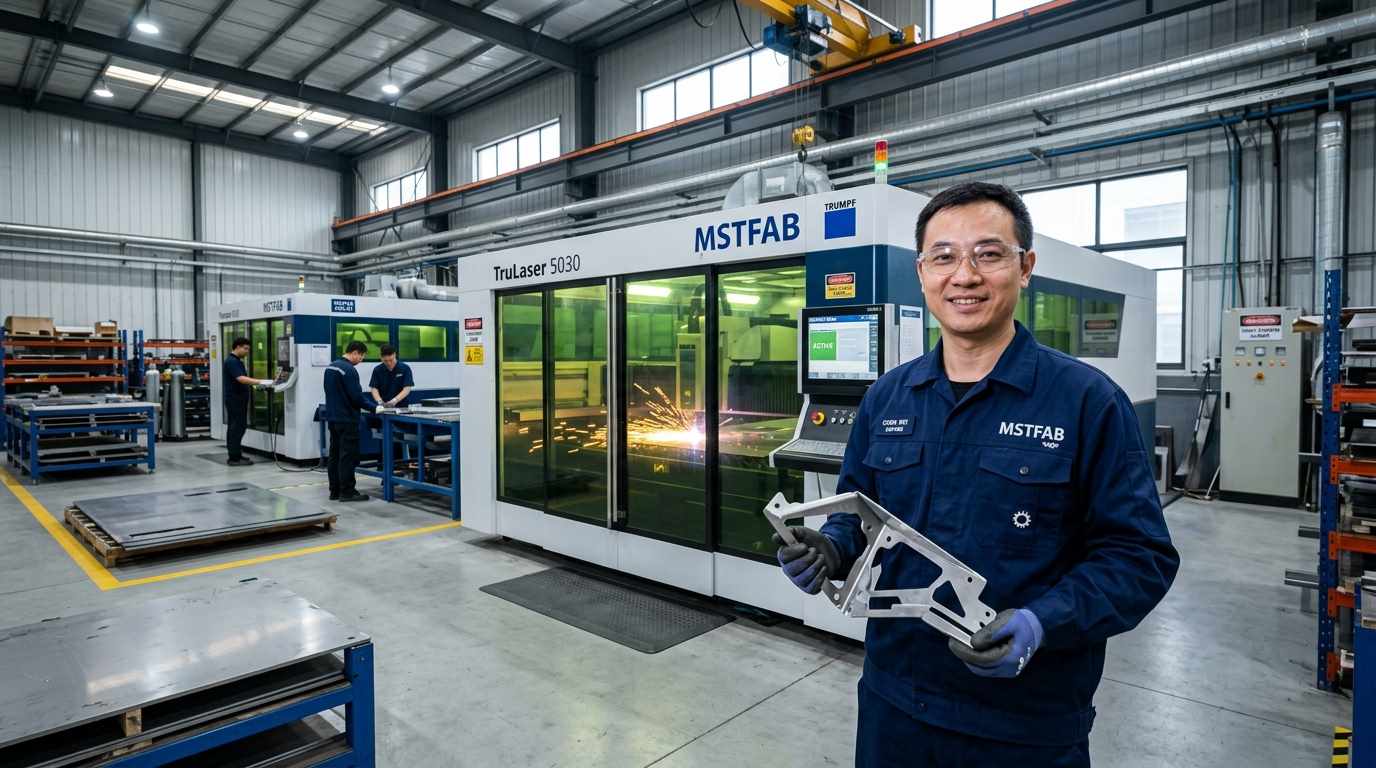
Laser vs Waterjet vs Plasma: Selection Table
| Process | When to evaluate it | What to confirm |
|---|---|---|
| Laser cutting | Detailed sheet profiles, slots and cut blanks that will subsequently be formed or assembled. | Grade and thickness, feature capability, assist gas, edge condition, heat effects and any required cleanup. |
| Abrasive waterjet | A drawing or application restricts thermal effects from cutting, or material suitability favors abrasive erosion. | Cut-face taper, striations, critical geometry, piercing constraints and any later machining or cleaning. |
| Plasma cutting | Conductive metal profiles for which the available plasma system and production route meet the drawing. | System type, hole quality, edge angularity, dross, heat effects and finishing allowance. |
This is a process-selection guide, not a published capacity table for MSTFAB. Waterjet or plasma availability, production location and subcontracting arrangements must be explicitly confirmed in a quotation.
What Changes at the Cut Edge?
Laser: gas and settings matter
Laser cutting is a thermal process. TRUMPF explains that cutting speed and gas conditions affect the result, including roughness and burr formation. An edge should not be described as automatically burr-free because a laser produced it. Ask whether the proposed cut condition is suitable for the subsequent weld, coating, handling or visible surface requirement.
For a formed enclosure blank, check slots, small holes, internal corners and narrow webs against the proposed process. The machine’s headline positioning specification is not the same as an acceptance tolerance for every feature on a finished part.
Waterjet: no cutting HAZ does not mean no checks
Abrasive waterjet removes material with a water-and-abrasive stream rather than melting it. OMAX describes this cold-cutting mechanism as avoiding a thermal heat-affected zone from the cut. That advantage does not establish that every edge is square, smooth or dimensionally acceptable.
Agree the required cut-face condition and inspect critical features. A precision mating face may still need machining. Avoid treating a demonstration on one material and thickness as evidence that another part will meet the same requirement.
Plasma: distinguish the system before judging quality
Plasma cuts electrically conductive metals. Hypertherm distinguishes conventional and high-definition technologies, so describing all plasma cutting as rough work or unsuitable for thinner sheet is misleading. Assess the proposed system, material and feature requirements together. Specify acceptable dross, edge angularity and any cleanup or machining rather than relying on a general process label.
Compare Tolerances at the Same Production Stage
A cut blank and a formed, welded or coated component are different inspection conditions. Identify whether a tolerance applies immediately after cutting or after the full manufacturing route. Do not compare one supplier’s as-cut profile claim with another supplier’s finished assembly requirement.
- Profile and holes: state the reference geometry, critical locations and required hole condition. Separate locating holes from features that will be drilled, reamed or tapped later.
- Edge and flatness: define what is functional, visible or safety-related. Identify edge treatment and measurement condition where relevant.
- Thermal restrictions: put application-specific restrictions on the drawing or purchase specification; do not assume that an unqualified request for a clean edge communicates them.
Which Cutting Process Costs Less?
There is no reliable universal price order for laser, waterjet and plasma. Compare quotations using the same material grade, thickness, drawing revision, quantity and delivery scope. Cutting time is only one component; setup, material utilization, consumables, edge treatment, secondary machining, inspection and packing may change the delivered cost.
A cheaper blank is not a cheaper component if it needs unquoted rework. Conversely, paying for an unnecessarily restrictive edge condition may add work without improving the actual function. Ask suppliers to identify exclusions and explain how their proposed route meets the specified requirements.
Two Selection Examples
Illustrative enclosure bracket: a detailed blank with slots and subsequent bends is a reason to evaluate laser cutting. Check the small features, burr direction and bend-related requirements together. This is a selection example, not a guaranteed tolerance or production case.
Illustrative heat-restricted plate: if the specification prohibits a thermal cutting HAZ, abrasive waterjet is worth evaluating. Still check taper, critical faces and downstream operations. For a conductive plate without that restriction, compare a suitable plasma route rather than rejecting it solely by process name.
Frequently Asked Questions
Is laser cutting always more accurate than waterjet or plasma?
No. Achievable feature quality depends on the actual system, material, thickness, geometry and settings. Compare verified results against the same drawing requirements, not universal tolerance figures assigned to each process.
Does waterjet cutting eliminate all finishing work?
No. Avoiding a thermal cutting HAZ does not guarantee the specified taper, surface condition or mating geometry. Cleaning, edge treatment or machining may still be required.
Can plasma cut nonconductive materials?
Plasma requires an electrically conductive workpiece. Do not assume it is suitable for a nonconductive material simply because laser or waterjet can process that material under an appropriate setup.
Technical References
Process background: TRUMPF: laser cutting; OMAX: waterjet cutting of steel and aluminum; Hypertherm: types of plasma; Hypertherm: plasma attributes. Manufacturer examples describe their technologies, not MSTFAB’s equipment or promised capabilities.
Review Your Sheet Metal Cutting Requirements
For a project involving MSTFAB laser cutting services, send the drawing revision, grade, thickness, quantity, critical features and required finishing. Request confirmation of the proposed route and delivered condition before placing an order.
 WeChat Contact
 WhatsApp Me Directly