How can hardware procurement teams qualify a second sheet metal supplier without disrupting ongoing production?
Hardware teams qualify a secondary sheet metal supplier with zero production downtime by executing a non-disruptive 4-stage pipeline: (1) commissioning off-line “Shadow Orders” (small 10-to-20-piece prototype builds tested exclusively in R&D fitment labs), (2) evaluating Level 3 PPAP / First Article Inspection Reports (FAIR) with 100% CMM verification, (3) launching a controlled Split Production Pilot (e.g., 90% primary / 10% secondary) routed to dedicated assembly cells, and (4) scaling to an active 70/30 volume allocation once process capability (Cpk ≥ 1.33) is established.
Qualifying a secondary sheet metal fabricator while volume production runs at full throttle feels like changing a jet engine mid-flight. Sourcing managers worry that splitting purchase orders will trigger primary supplier retaliation, or that subtle differences in press brake bend deductions between two vendors will cause mounting bracket fitment failures on the assembly line. Following an isolated “Shadow Order” qualification protocol eliminates production risk while establishing true supply chain redundancy.

The 4 Non-Disruptive Second-Source Qualification Gates
Gate 1: The Off-Line “Shadow Order”
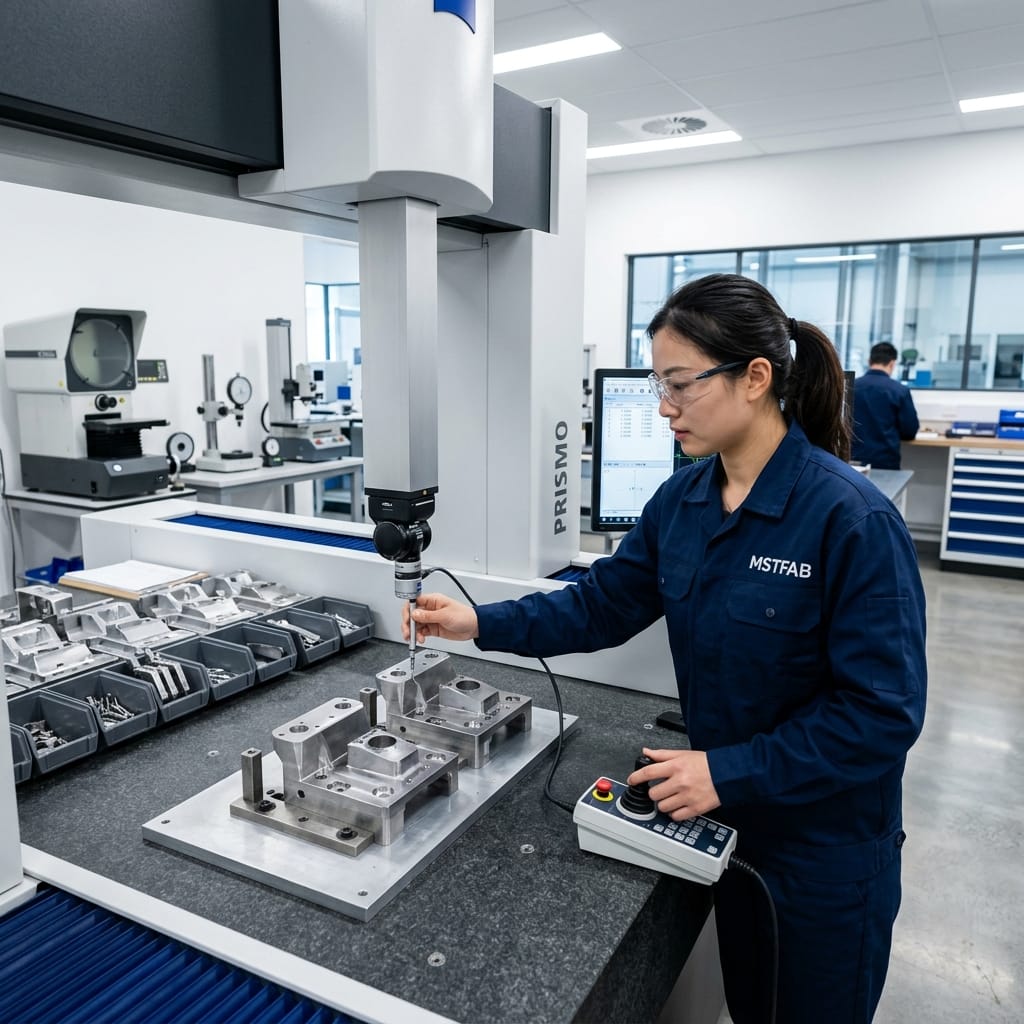
Never introduce unverified candidate parts directly to the main production floor. The secondary fabricator receives master 3D CAD (STEP) and 2D GD&T drawings to produce an initial 10-piece “Shadow Order.” These parts are inspected exclusively in the engineering metrology lab on a coordinate measuring machine (CMM) and dry-fitted to golden assembly fixtures to verify flange clearances.
Gate 2: Pilot SKU Selection (Low Risk, High Ins)
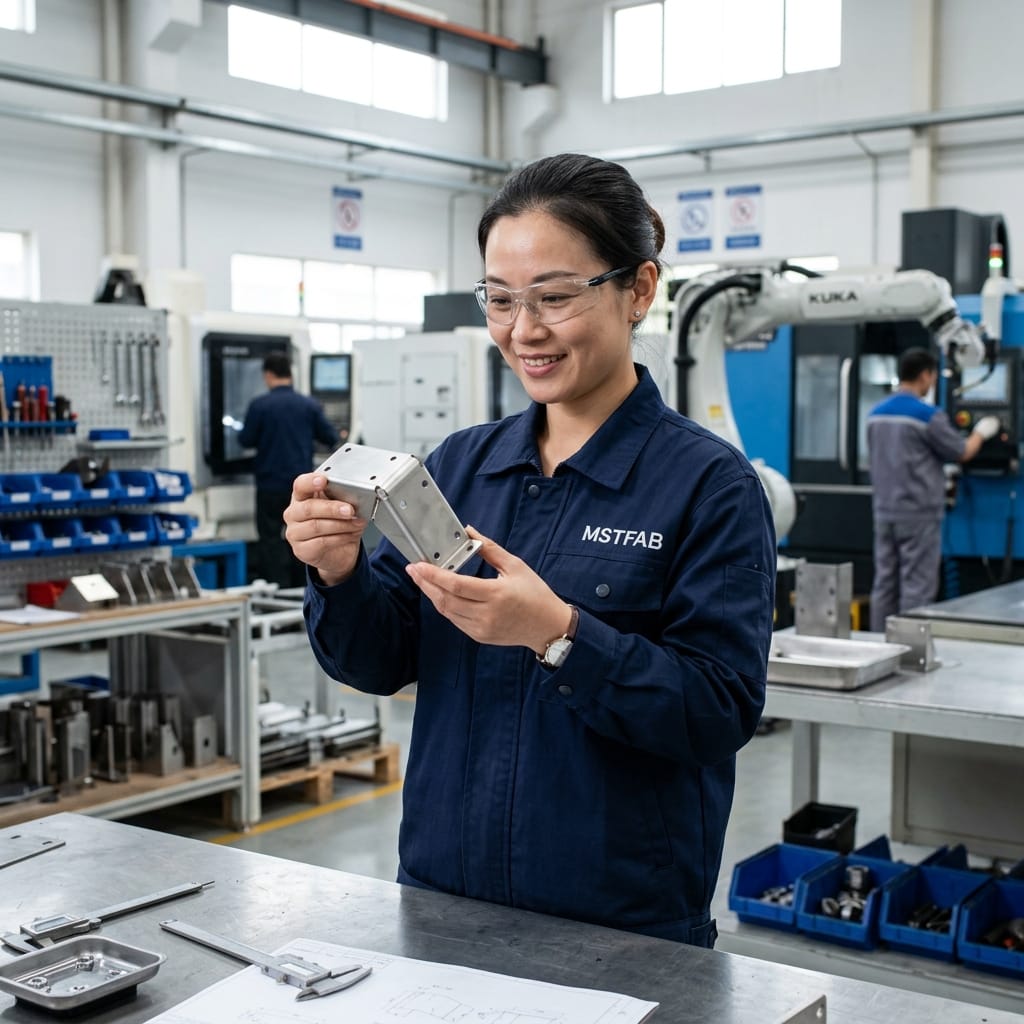
Begin qualification with a moderately complex part – such as an internal chassis bracket or power supply mounting tray – rather than the highly visible Class A front bezel or a complex 50-part welded frame. A pilot SKU reveals the fabricator’s laser cut-edge finish, punch hole circularity, and press brake angular repeatability without putting front-line product cosmetics at risk.
Gate 3: Controlled 90/10 Split Production
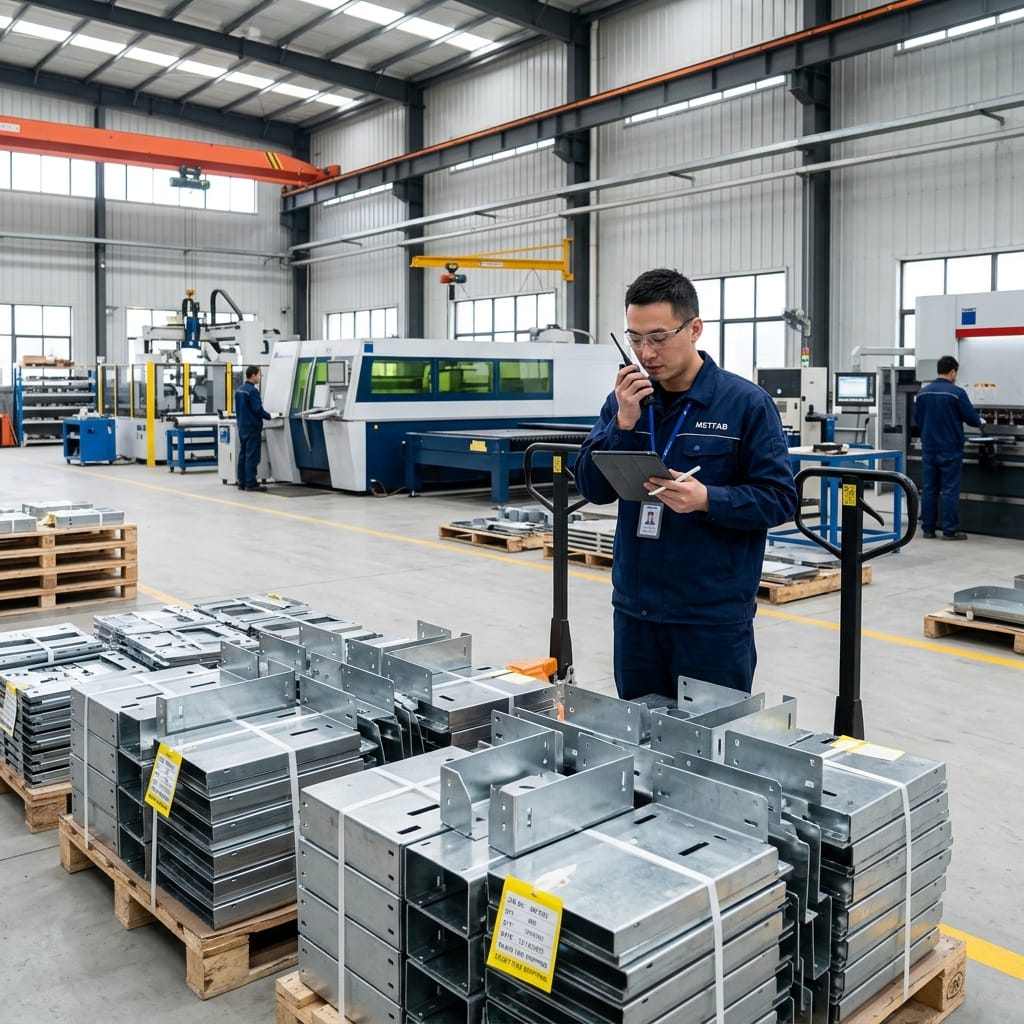
Once Level 3 FAIR is approved, issue a 10% volume trial purchase order while the incumbent continues supplying 90%. Route the secondary supplier’s parts to a designated assembly station or specific manufacturing shift with dedicated quality technicians. This controlled containment ensures that if subtle tolerance stack-ups occur, they are isolated to a single line without halting plant throughput.
Gate 4: Safe-Launch Incoming Gating
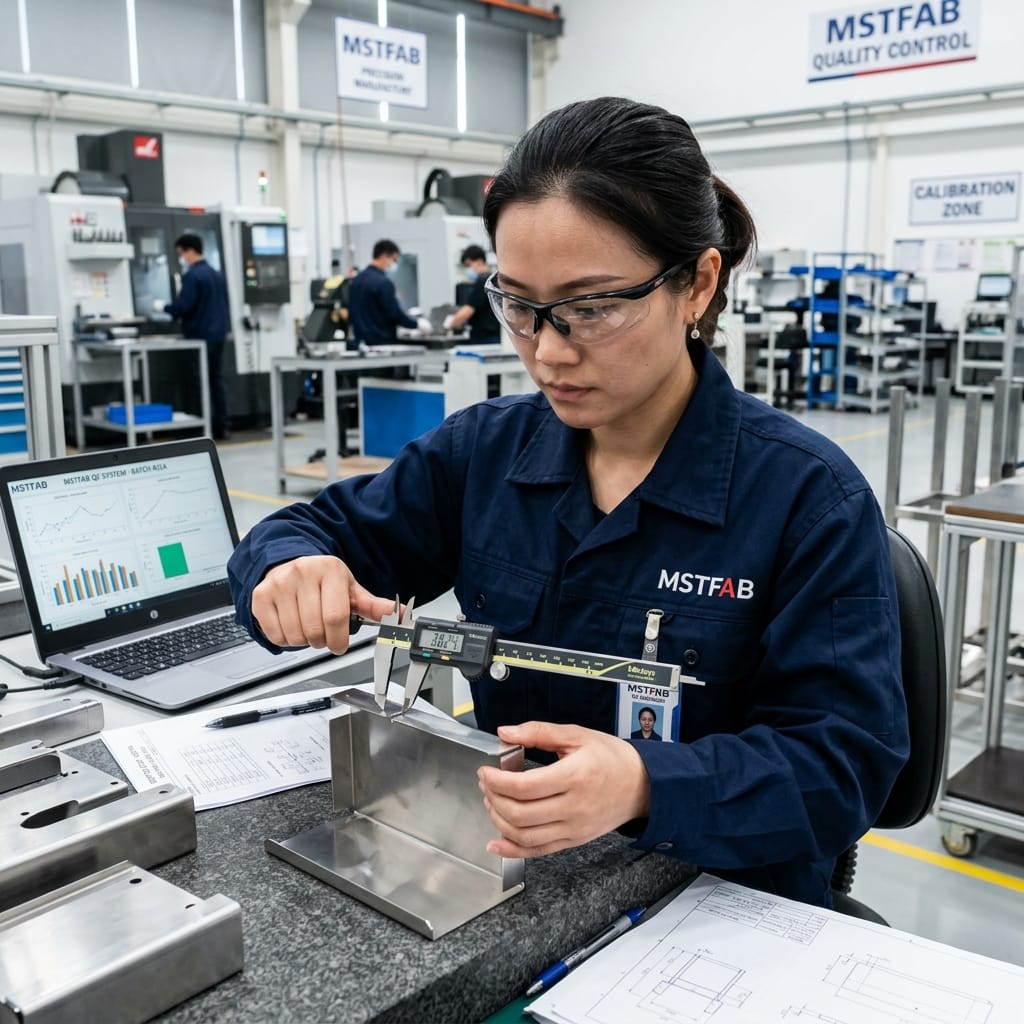
Apply ANSI/ASQ Z1.4 General Inspection Level II Tightened sampling to the secondary fabricator’s first three volume shipments. Perform 100% checks on critical hole centers, PEM stud push-out force, and powder coat cross-hatch adhesion before releasing parts into general assembly bins.
Second-Source Qualification Stage-Gate Matrix
The table below summarizes the qualification gates, sample sizes, and exit criteria for onboarding a secondary sheet metal supplier:
| Qualification Stage | Sample Quantity | Test Environment | Evaluation Standard | Progression Gate |
|---|---|---|---|---|
| 1. Shadow Prototype | 10 to 20 pcs | Off-line R&D / Metrology lab | 100% CMM report to GD&T print | Zero floor disruption; lab fit check |
| 2. Production Tooling Pilot | 50 pcs (Volume machines) | Dedicated line trial run | Level 3 PPAP / FAIR sign-off | Cpk ≥ 1.33 across all CTQ features |
| 3. Controlled 90/10 Split | 10% of monthly volume | Single assembly line / shift | First Pass Yield ≥ 98.5% | Zero assembly halt NCRs over 30 days |
| 4. Active 70/30 Dual Run | 30% ongoing recurring volume | General production stream | OTIF ≥ 98.0%, Defect PPM ≤ 500 | FULL APPROVED VENDOR (AVL) |

Qualify MSTFAB as Your Zero-Downtime Secondary Fabricator
MSTFAB routinely handles seamless secondary qualification for global technology OEMs. We provide rapid shadow prototype builds, comprehensive CMM Level 3 PPAP reports, and dedicated capacity buffers to support split production schedules. Contact our engineering team today to review your candidate prints.
 WeChat Contact
 WhatsApp Me Directly