AUSTRALIA EV CHARGER CABINET INPUTS
An EV charger cabinet for Australia should be released against a real site package: equipment heat, solar exposure, coastal or inland environment, dust and water paths, wind and mounting loads, cable interfaces, service access and the applicable compliance plan.
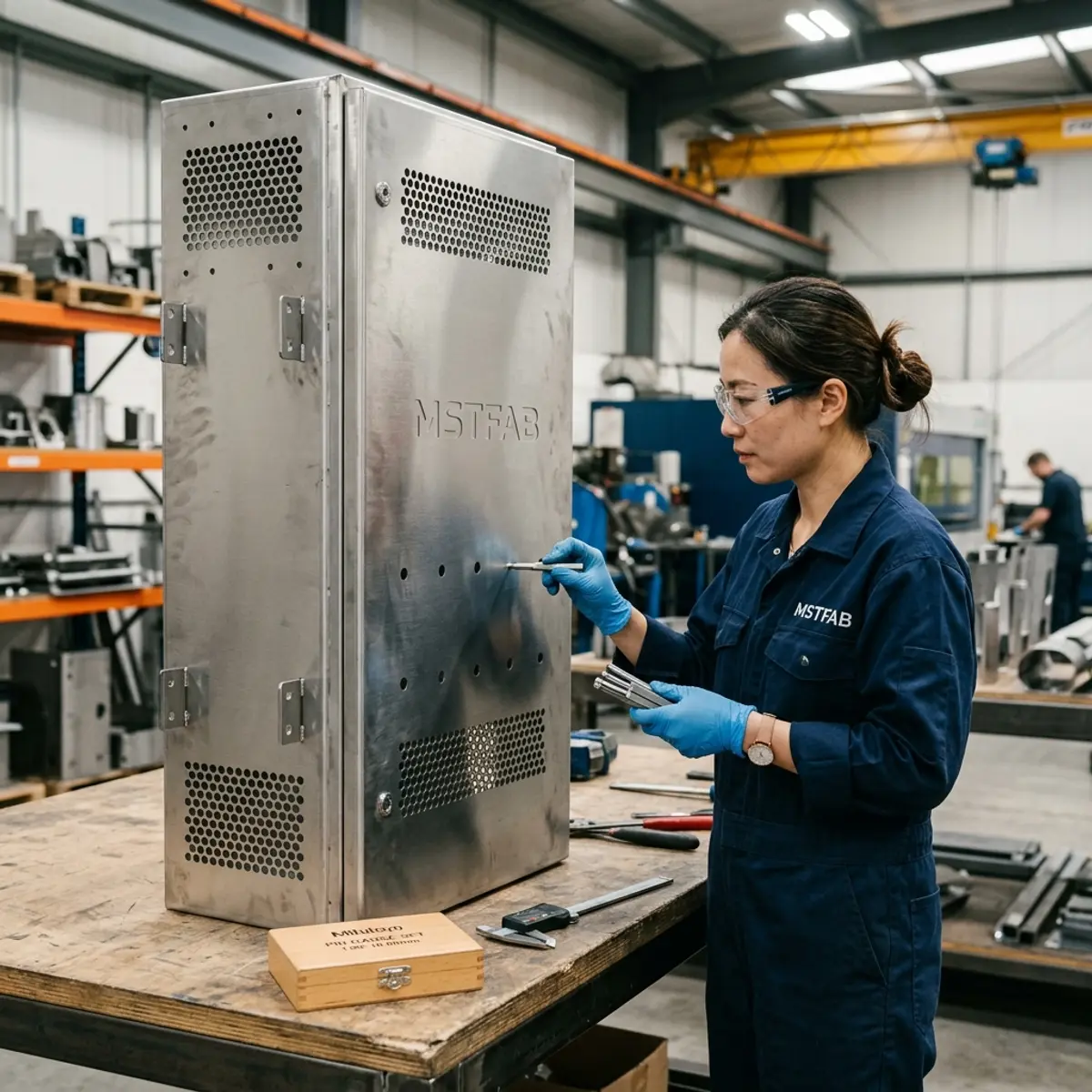
Build the Australia Site Input Sheet
| Project input | Mechanical effect | Owner |
|---|---|---|
| Location and exposure | Material, pretreatment, coating, sun shield and water-management details | Buyer site and product team |
| Thermal loads | Selected cooler, fan, exchanger, vent or sealed interface | Buyer thermal engineer |
| Wind and mounting | Base, anchors, frame, panel stiffening and door restraint | Qualified project engineer |
| Compliance target | Gasket lands, glands, access and tested sample configuration | EVSE product owner and responsible certification party |
Select Material and Finish From Exposure
Aluminum, stainless steel and coated steel can each be appropriate in the right project. Choose from corrosion exposure, structural loads, weight, galvanic interfaces, appearance, repair method and maintenance plan. “Marine grade” is not a substitute for an alloy designation, drawing detail and approved finish route.
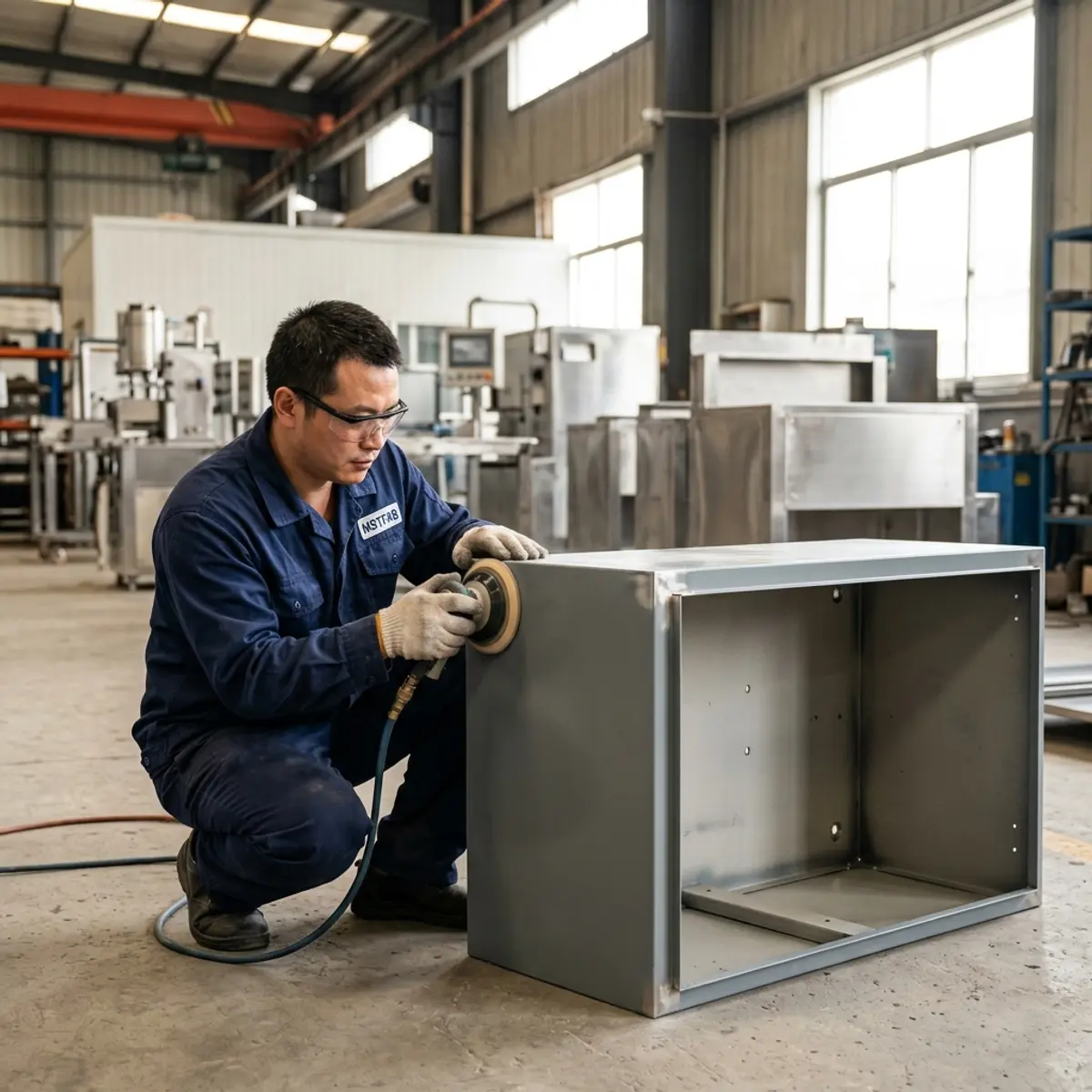
Control Doors, Cooling and Cable Interfaces
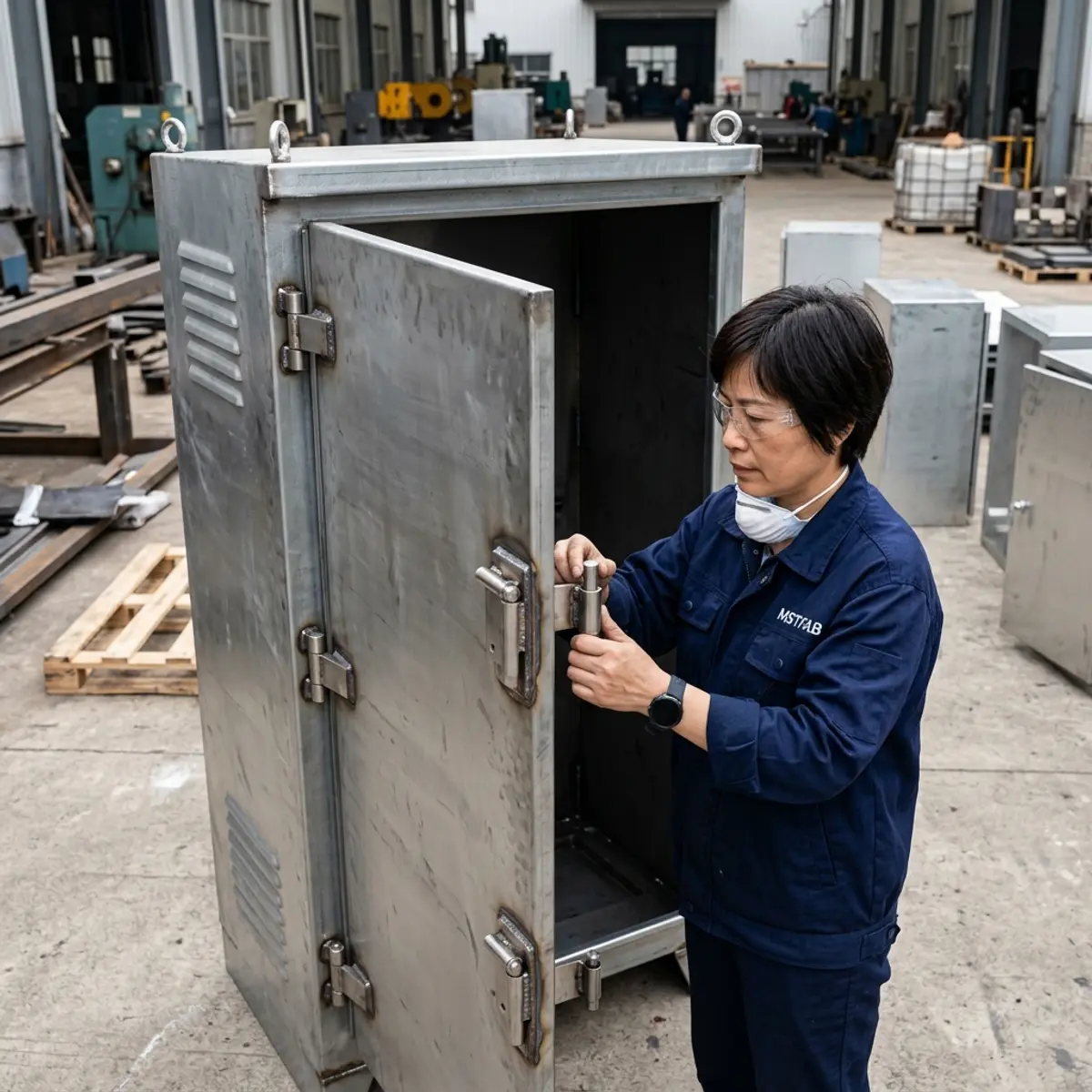
Provide selected component models and define cutouts, fasteners, connector projections, gasket compression, drain paths, hinge clearances and removal sequence. Confirm whether doors can be restrained during service and whether gland plates remain removable after the charger hardware is installed.
Buyer Trust Table
| Supplier phrase | Evidence to request | Buyer value |
|---|---|---|
| “Australian grade” | Site inputs, material designation and project specification | Removes a non-technical label |
| “Coastal resistant” | Exposure category, finish route and buyer acceptance evidence | Connects corrosion control to the site |
| “Heat proof” | Thermal loads, selected hardware, interface drawing and validation owner | Separates metalwork from thermal performance |
| “Wind resistant” | Design loads, mounting details and responsible engineering review | Defines the structural basis |
Australia EV Cabinet RFQ Checklist
- Installation region and site type
- Coastal or corrosive exposure
- Ambient and solar assumptions
- Equipment heat and mass
- Cooling hardware selected
- Wind and mounting loads
- Cable and connector interfaces
- Service and door sequence
- Target rating and test owner
- Finish and packing evidence
Frequently Asked Questions
Does MSTFAB certify EV charging equipment for Australia?
No. MSTFAB fabricates the agreed empty cabinet shell. The EVSE OEM and its responsible Australian compliance team own completed-equipment certification.
Is aluminum always the best coastal choice?
No. Alloy, loads, galvanic contacts, finish, repair and maintenance all matter. Select the material from the project specification.
Can one cabinet serve coastal and inland sites?
Possibly, but only after the buyer confirms that the same exposure, thermal, structural, service and compliance assumptions are acceptable.
Send the Site Package With the Cabinet Drawings
Share the empty-shell files, Australia site inputs, selected interfaces, loads, finish and inspection requirements.
 WeChat Contact
 WhatsApp Me Directly