How do advanced manufacturing processes defeat warpage, oil-canning, and hole misalignment in custom industrial sheet metal panels?
Eliminating warpage and misalignment in industrial panels requires mitigating internal stress through precision hydraulic roller leveling (eliminating coil curvature and thermal cutting stresses), balancing dense ventilation cutouts with laser micro-tab stabilization, forming continuous 4-sided return flanges or spot-welding internal hat stiffeners to elevate section modulus, holding punch/laser hole pitch within ±0.05 mm, and verifying surface flatness (≤ 1.0 mm/m) and reveal gaps (2.0 ± 0.5 mm) on precision granite inspection tables prior to powder coating.
1. The Engineering Challenge: Flatness & Alignment in Large Sheet Metal Panels
Industrial metal panels—including machine cladding, electrical enclosure front doors, architectural infill panels, and instrumentation fascia—are large-aspect-ratio sheet metal structures. They must span wide structural openings while maintaining pristine surface flatness, crisp perimeter reveals, and absolute hole alignment with internal sub-frames.
Because sheet metal exhibits low bending stiffness in thin gauges (typically 1.2 mm to 3.0 mm), large panels are intensely sensitive to residual mechanical stresses. Punching thousands of ventilation perforations, thermal laser cutting of large HMI cutouts, or uneven brake forming releases asymmetric internal tension within the cold-rolled sheet. The result is oil-canning (visible popping and bulging of the sheet surface) and curling that prevents doors from sealing against perimeter gaskets.
2. Managing Residual Stresses: Laser Cutting vs. CNC Turret Punching
The manufacturing method chosen to generate panel cutouts directly governs internal panel stress:

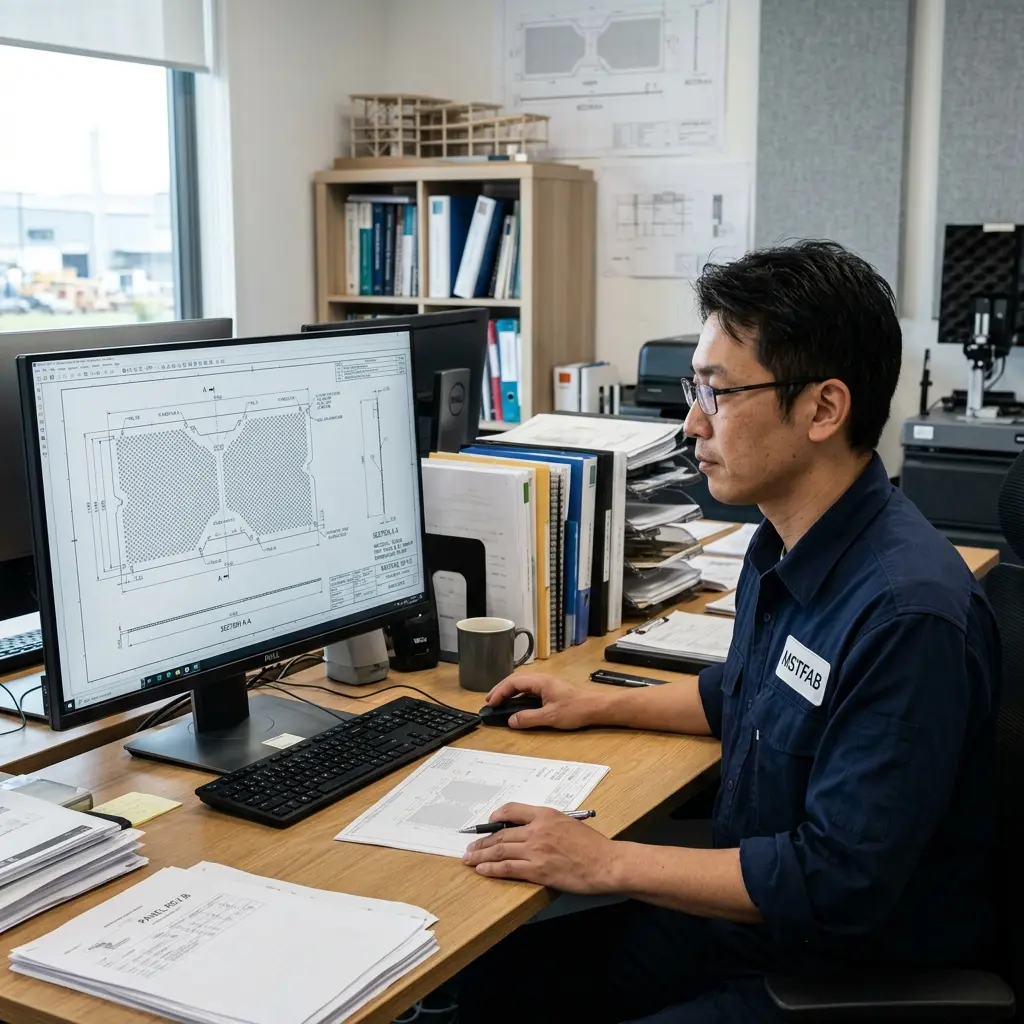
- Thermal Laser Stress Mitigation: When cutting dense arrays of ventilation slots, the continuous thermal energy of the laser beam heats the metal locally, causing localized thermal expansion. If cut in a tight raster sequence, the heat accumulates in one rant, warping the panel like a potato chip. MSTFAB deploys distributed leapfrog cutting algorithms that jump across the panel, allowing previous cut zones to cool before cutting adjacent holes.
- Mechanical Punching Stresses: In high-speed CNC turret punch operations, the punch tool compresses the sheet metal locally during every stroke, inducing compressive plastic deformation that expands the sheet surface. In heavily perforated panels (e.g., > 40% open area), this compressive strain bows the panel upward.
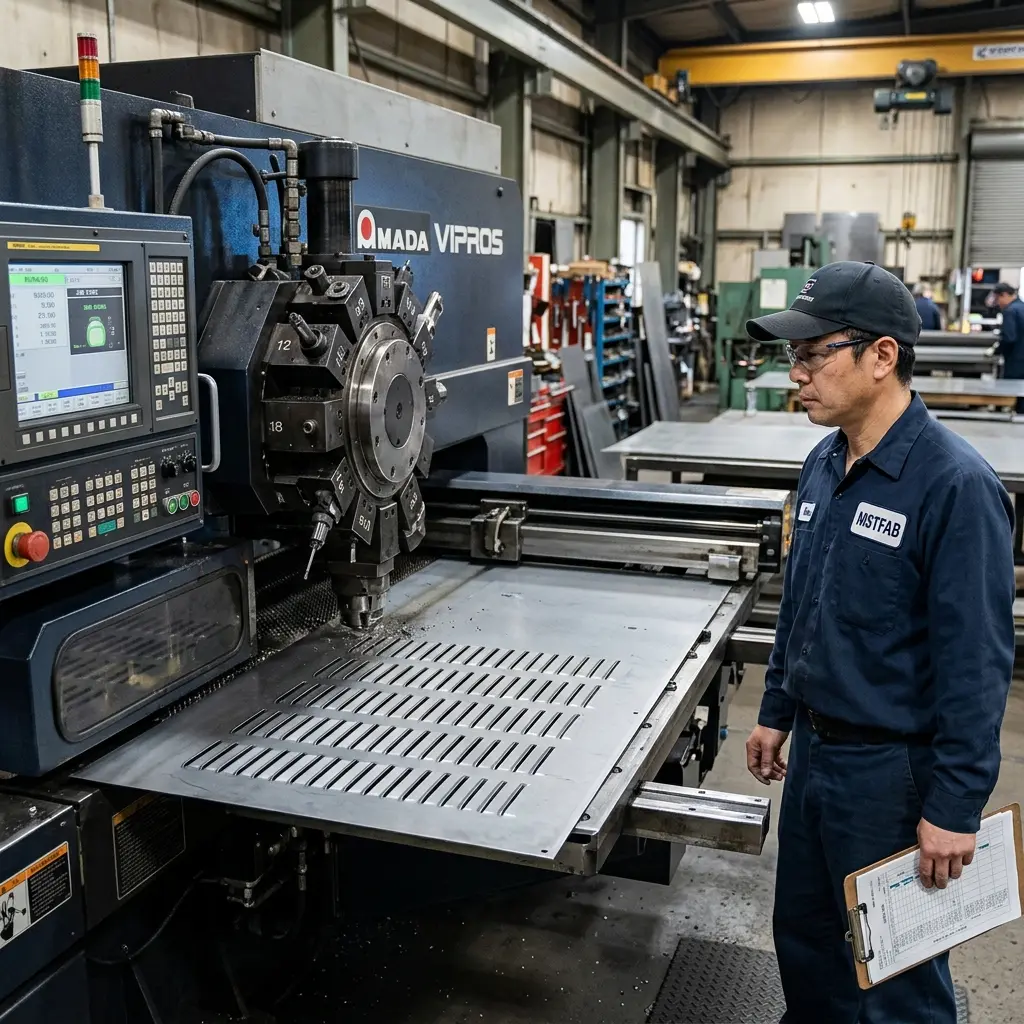
- Precision Roller Leveling: To achieve absolute flatness on perforated panels, MSTFAB passes blanks through a high-precision multi-roll hydraulic part leveler (such as an ARKU EcoMaster). Nineteen precision rollers flex the sheet back and forth with diminishing amplitude, equalizing internal tensile and compressive residual stresses and delivering dead-flat sheet blanks (≤ 0.5 mm/m deviation).
3. High-Precision Instrument & Connector Cutouts
Control panels house sophisticated human-machine interfaces (HMIs), emergency stop switches, digital displays, and multi-pin mil-spec circular connectors. Tight cutout dimensions and chamfered clearances are essential to ensure that O-rings seat properly to achieve IP65 or NEMA 4 ratings.

4. CNC Bending of Long Return Flanges & Stiffeners
Forming long flanges (exceeding 1500 mm to 3000 mm) across thin sheet metal panels requires dynamic press brake control. Because press brake side frames and ram cylinders deflect under tonnage, uncompensated machines produce a “canoe effect”—where the bend angle is correct at the ends (e.g., 90°) but opens up to 92° or 93° in the center.

MSTFAB utilizes multi-axis CNC press brakes equipped with real-time hydraulic dynamic crowning and laser angle sensors. The system continuously measures bend angles at multiple points along the flange length and modulates bed crowning cylinders dynamically, holding bend angle consistency within ±0.25° over the entire panel span.
5. Flatness Verification on Precision Surface Plates
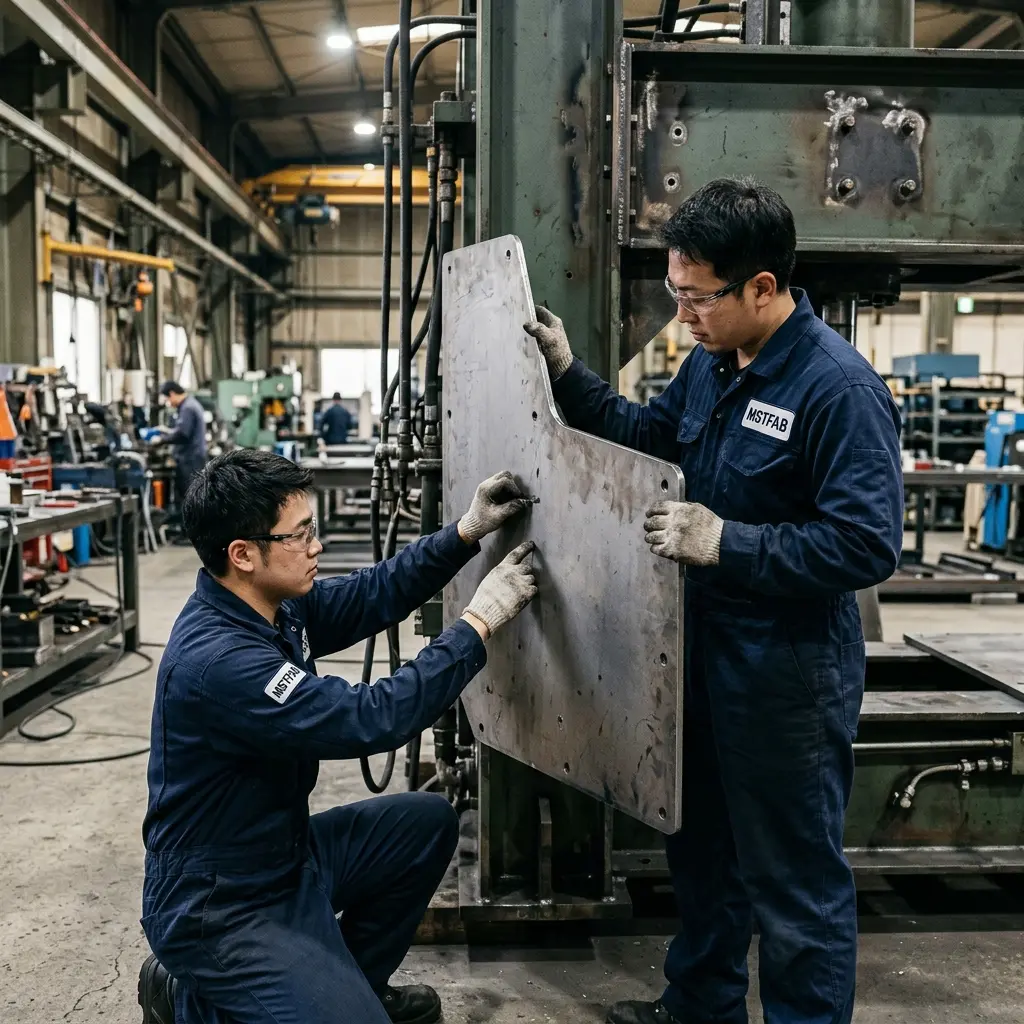
Every formed panel is audited on Grade A granite inspection surface plates before downstream operations. Using precision dial indicator height gauges and digital depth micrometers, inspectors map surface flatness deviations across the entire panel face.

6. Hardware Installation, Edge Deburring & Trial Fit-Up
Self-clinching standoffs and grounding studs are pressed into pre-formed panels using hydraulic insertion systems with automatic feed bowls. To ensure flawless operator ergonomics and avoid sharp edge injuries, all exterior folded edges undergo precision vibratory deburring and manual edge polishing.


Before batch painting, representative production panels undergo comprehensive trial fitting against structural machine frames, validating door reveals, hinge swing freedom, and latch engagement.
7. Panel Manufacturing Specification & Quality Matrix
MSTFAB manufactures custom industrial panels to tight international quality standards:
| Panel Quality Parameter | Standard Specification | Inspection Tooling | Target Acceptance Limit |
|---|---|---|---|
| Overall Surface Flatness | ASTM A480 / ISO 2768-m Flatness | Granite surface plate & feeler gauges | ≤ 1.0 mm per 1000 mm panel span |
| Perimeter Reveal Gap | Frame-to-panel nominal reveal | Taper gap gauges / optical calipers | 2.0 mm ± 0.5 mm uniform clearance |
| HMI Cutout True Position | ASME Y14.5 Position Boundary | CMM arm / optical vision system | Ø 0.25 mm relative to panel datum |
| Formed Return Flange Angle | ISO 2768-f Angular Precision | Digital protractor / laser angle probe | 90° ± 0.35° across entire length |
| Edge Safety & Deburring | UL 1439 Sharp Edge Probe | Tape edge probe tester | 100% burr-free; rounded edge radius ≥ 0.2 mm |
| Powder Coating Finish | ISO 2808 / ASTM D3359 Method B | Magnetic DFT gauge & cross-hatch | 75–100 μm DFT; Class 5B cross-hatch pass |
Need Dead-Flat, Precision Industrial Metal Panels?
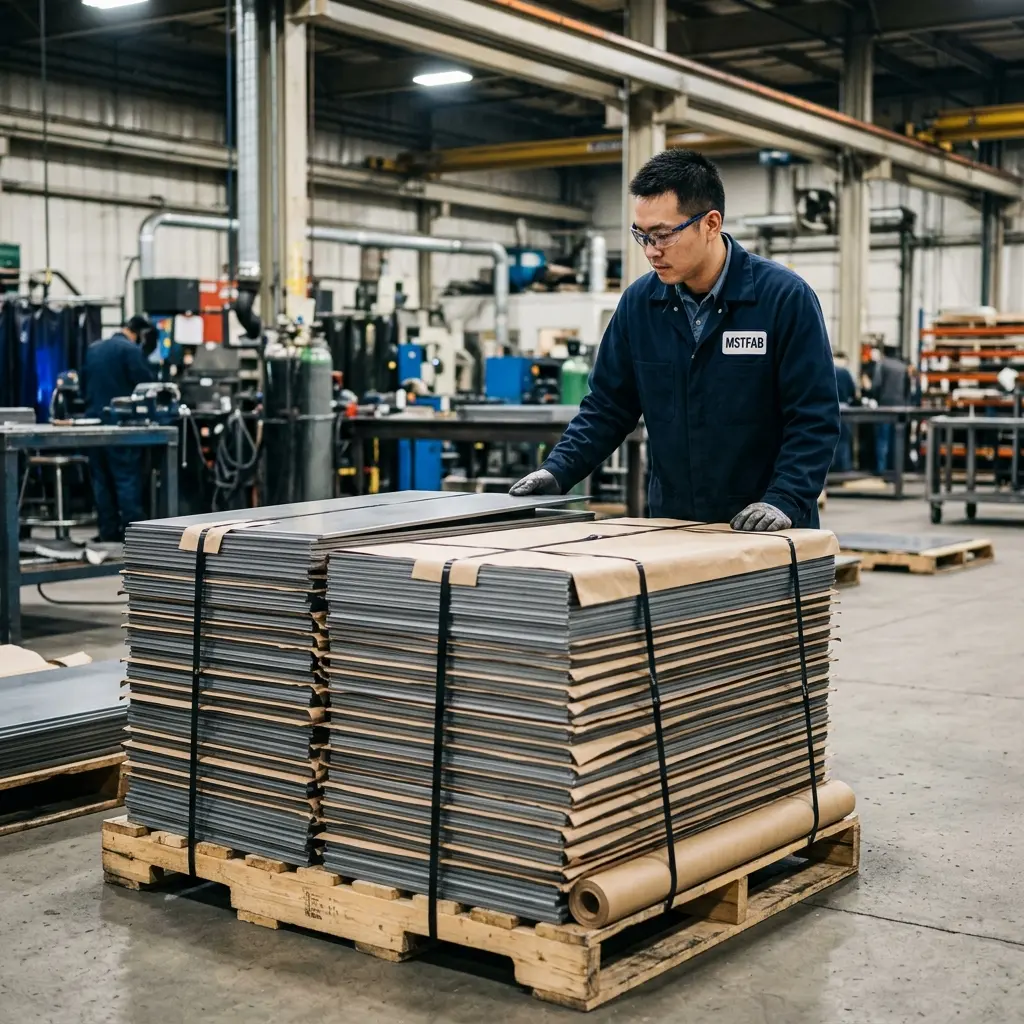
MSTFAB manufactures custom industrial panels with zero oil-canning. Benefit from precision roller leveling, fiber laser cutting, dynamic crowning press brake forming, and durable architectural powder coating.
 WeChat Contact
 WhatsApp Me Directly