What engineering standards govern sheet metal fabrication for outdoor EV DC fast charging cabinets?
OEM sheet metal fabrication for outdoor Electric Vehicle (EV) charging cabinets is governed by six rigorous engineering requirements: (1) Robust environmental ingress protection meeting NEMA 3R, NEMA 4, or IP54/IP55 standards with continuous Formed-In-Place (FIP) polyurethane foam gasketing, (2) High-efficiency thermal ventilation louvers with internal rain baffles and stainless mesh filters engineered for forced-air power module cooling without water penetration, (3) Heavy-gauge structural base frames (3.0 mm–4.0 mm structural steel plinths) designed to anchor securely to concrete pads and support 300kW+ power converter modules, (4) Precision modular sub-rack rails and liquid-tight bottom gland plates for heavy DC power cables, (5) Continuous seam TIG welding on sloped roof caps to prevent standing water pooling, and (6) High-durability anti-corrosion finishing (hot-dip galvanizing or zinc-rich primer + UV-resistant architectural powder coating rated for 1500+ hours ASTM B117 salt spray in coastal C5-M environments).
Electric vehicle charging infrastructure operates 24/7 in extreme outdoor environments: exposed to direct solar radiation, driving rain, freezing snow, road de-icing salts, and coastal humidity. An EV fast charger cabinet is not merely a cosmetic cover; it is a vital structural and thermal enclosure that protects 400V–1000V DC power electronics, liquid-cooling manifolds, and high-frequency communication controllers. Sourcing empty EV cabinet shells requires an OEM partner capable of delivering heavy structural rigidity paired with precise mechanical seals.

Core Manufacturing Disciplines for EV Charging Cabinets
1. Laser Cutting Ventilation Louvers and Display Cutouts
EV DC fast chargers generate intense internal heat during 150kW–350kW charging cycles. CNC fiber lasers cut intricate intake and exhaust ventilation patterns directly into door and side panels. Openings are engineered with internal labyrinth rain baffles and washable stainless steel mesh filters that prevent wind-driven rain and insects from reaching internal electronics.

2. Heavy Steel Base Plinths and Structural Bending
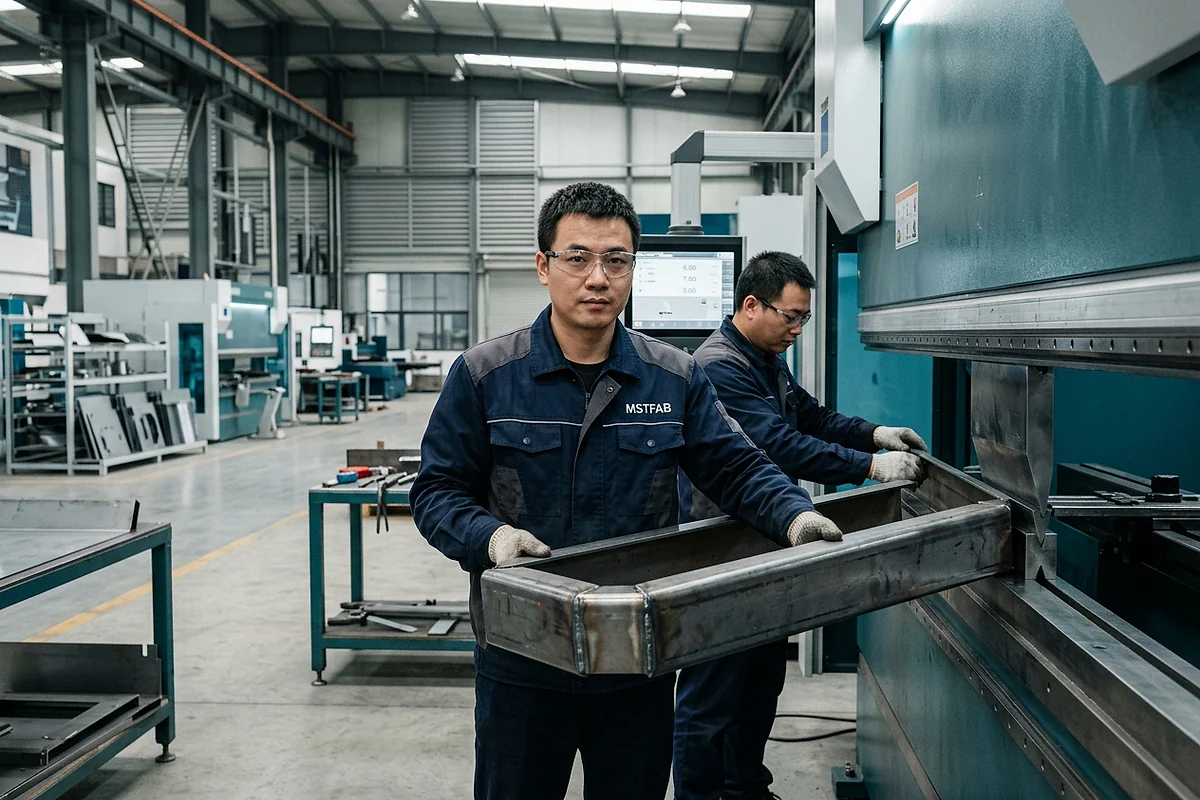
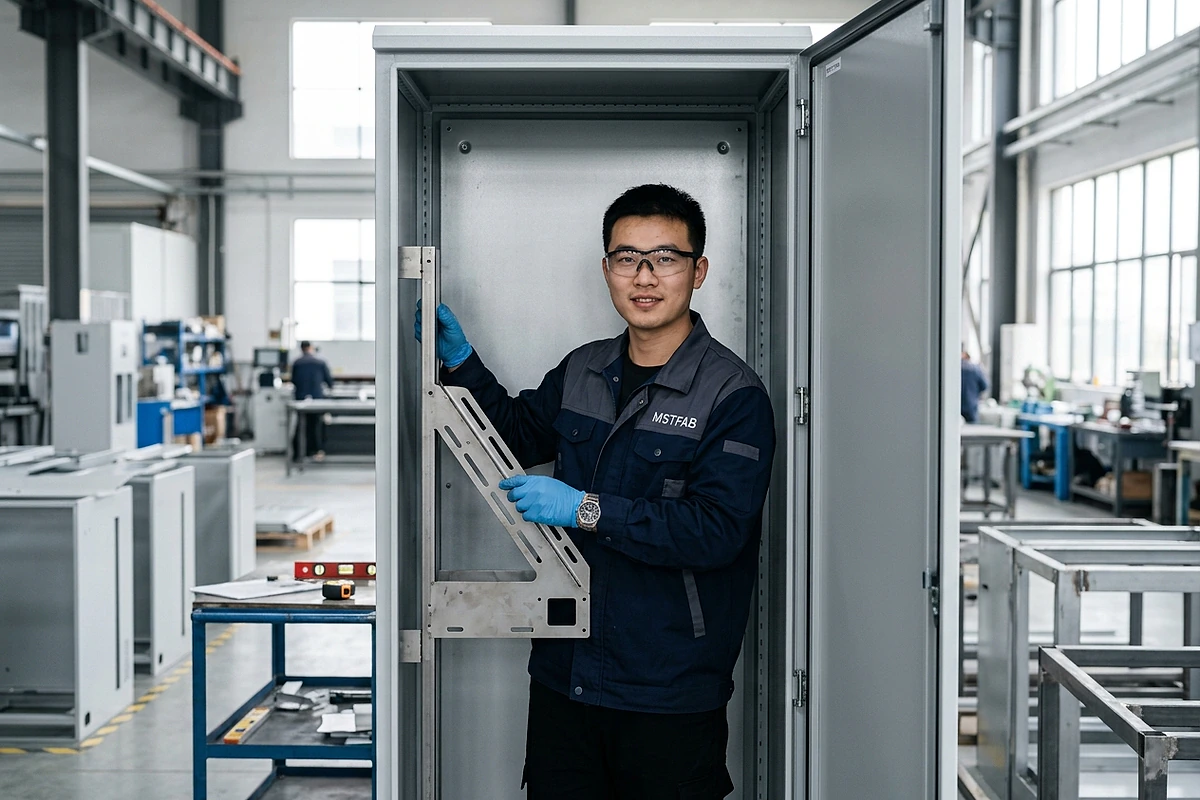
The cabinet base plinth must bear the static weight of internal power modules (often exceeding 500 kg) and resist overturning wind shear forces. MSTFAB folds 3.0 mm–4.0 mm structural steel plates on 320-ton CNC press brakes, incorporating reinforced slotted anchor holes for direct bolting to concrete foundations.
3. Continuous TIG Seam Welding on Sloped Roofs
To prevent rainwater from pooling on top of the cabinet, EV enclosures feature sloped, overhang roofs with integrated drip gutters. Certified TIG welders execute continuous external seam welds, grinding them smooth to Cosmetic Class A standards to ensure seamless paint coverage and zero leak paths.

4. Cable Entry Gland Plates and Gasket Sealing
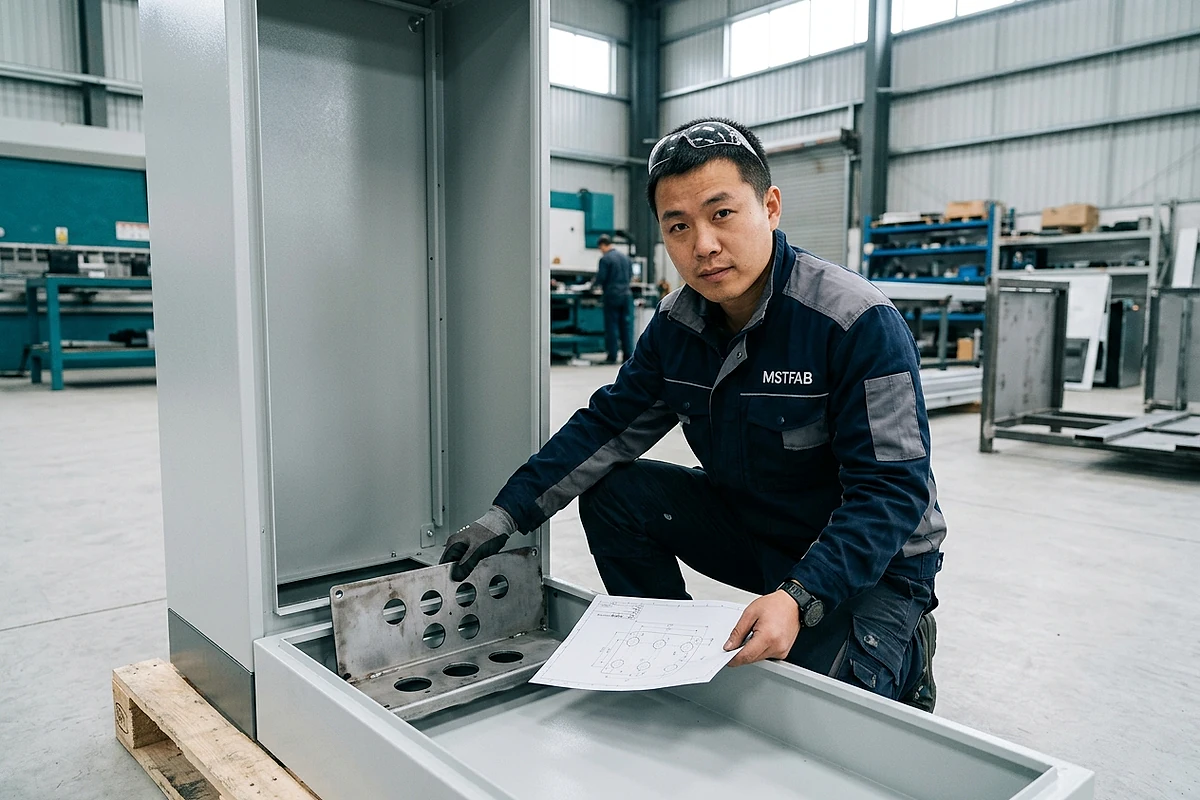
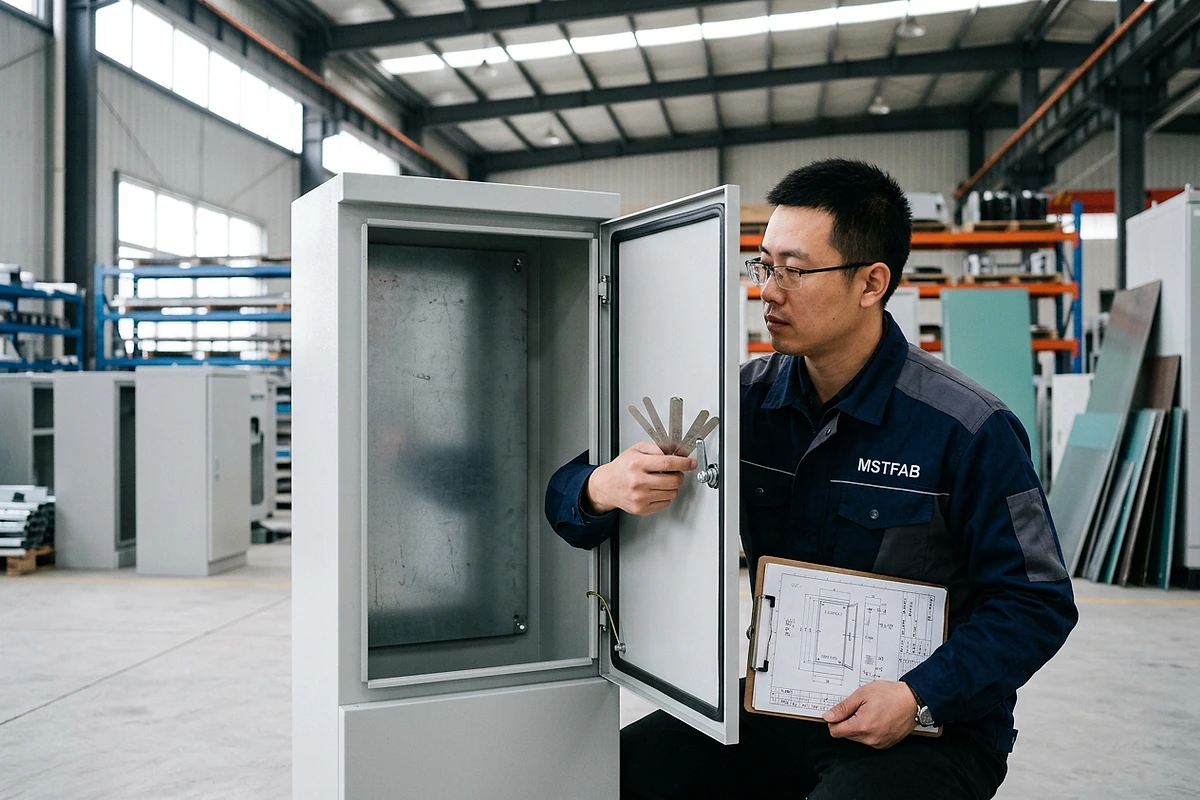
Massive 4/0 AWG or 150 mm² copper power cables enter through the cabinet base. Removable aluminum gland plates feature heavy industrial compression cord grips. Cabinet doors feature continuous Formed-In-Place (FIP) polyurethane foam gaskets and 3-point compression latching rods that ensure uniform sealing along the entire perimeter.


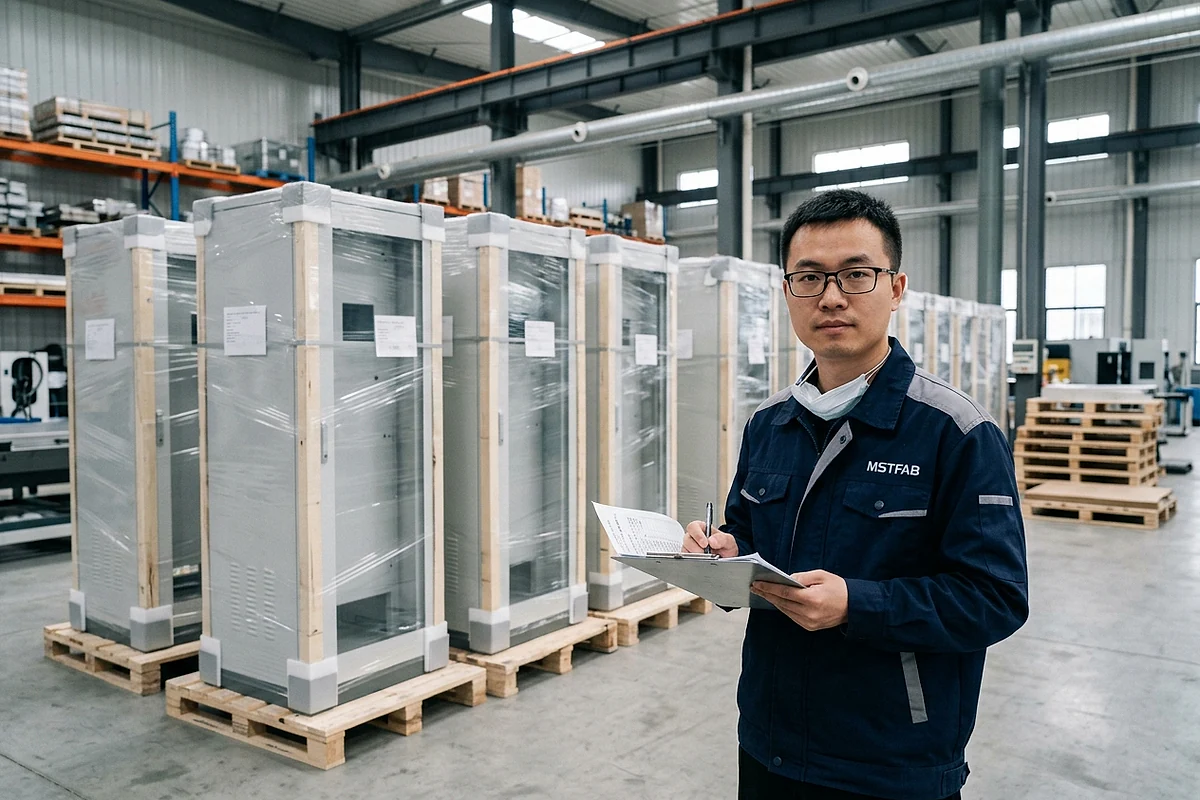
EV Charger Cabinet Engineering Specifications
The technical matrix below outlines critical design requirements for outdoor EV charging enclosures:
| Cabinet Sub-system | Material & Gauge | Engineering Specification Standard | Critical Quality Inspection Metric |
|---|---|---|---|
| Outer Shell & Doors | AL 5052-H32 / Galvanneal (2.0–2.5 mm) | NEMA 3R / 4X; IEC 60529 IP54/IP55 | FIP gasket chalk test; water nozzle spray test |
| Base Plinth Frame | Structural Carbon Steel Q355B (3.0–4.0 mm) | Hot-dip galvanized (ASTM A123) | Anchor hole center diagonal ±1.0 mm |
| Ventilation Louvers | AL 5052 with 304 SS mesh screen | Internal labyrinth water trap baffles | Airflow velocity CFM ≥ 90% nominal |
| Internal Mounting Rails | 2.0 mm SGCC Galvanized Steel | EIA-310-E compatible sub-rack grid | Trial fit of 50 kg power module slide rails |
| Exterior Finish | Epoxy Primer + Polyester Topcoat | ISO 12944 Category C5-M Marine | 1500-hour ASTM B117 salt spray report |
Scale Your EV Charging Enclosure Production with MSTFAB
MSTFAB is a premier contract manufacturer of custom sheet metal cabinets for commercial EV fast chargers and power conversion systems. With automated fiber laser cutting, precision robotic press brakes, certified TIG welding cells, and conveyorized C5-M powder coating lines, we deliver turnkey outdoor cabinets that meet NEMA 3R/4X standards. Contact our EV engineering team today.
 WeChat Contact
 WhatsApp Me Directly