
Quick answer
A sheet metal prototype is a build-to-print sample made with the same processes intended for production — laser cutting, CNC bending, hardware insertion, welding and finishing — so you can check fit, assembly and manufacturability before ordering volume. Choose a prototype supplier by giving every candidate the same drawing revision, material, quantity, finish and critical dimensions, then compare their DFM questions, what the price includes, the inspection evidence they offer and a confirmed ship date. For suitable parts with clear drawings, a typical planning window is about 7–15 working days after requirements are confirmed.
This guide is written for OEM engineers and buyers who need a metal sample that answers a real engineering question. It covers what a sheet metal prototype should prove, how it is made, what drives lead time and cost, how to compare suppliers and how to move an approved prototype into pilot and repeat production without starting the argument again.
Scope note: MSTFAB (Guangzhou Maisituo Sheet Metal Manufacturing Co., Ltd.) fabricates drawing-defined sheet metal parts, welded assemblies and empty enclosure shells. Electronics, wiring, software and finished-product certification remain with the OEM unless a quotation explicitly states otherwise.
What Is a Sheet Metal Prototype — and What Should It Prove?
A sheet metal prototype is not just a part that looks like the CAD model. Its job is to answer a specific question before money is committed to a larger order. Decide which question it must answer, because that decision changes material, finish, inspection and price.
| Prototype type | What it proves | Material & finish | Typical evidence |
|---|---|---|---|
| Fit sample | Overall size, bend orientation, mounting holes, connector openings and clearance to mating parts. | Intended grade and thickness; bare metal is often acceptable if you say so. | Critical-dimension check and photos of the trial fit. |
| Functional prototype | Assembly, hardware access, door and hinge movement, service clearance and weld squareness. | Intended material, real PEM hardware part numbers, functional finish. | Measurements tied to drawing datums, hardware and fit checks. |
| Production-intent first article | That the planned production route can make the released drawing. | Production material, route, hardware and the approved finish. | First-article report on agreed critical features, finish approval. |
| Pilot run | That the approved result repeats across a small controlled batch, including finish handling and packing. | Same as production. | Sampling plan, traceability, closed deviations, packing approval. |
If the purpose is fit, do not spend a week debating a showroom finish. If the purpose is customer approval, do not ship raw steel and call it close enough. Label each sample for what it is, so a fit-only mockup is never mistaken for a production approval.
Sheet metal prototype vs 3D printing vs machining
| Question | Cut-and-formed sheet metal | 3D printed (plastic or metal) | CNC machined from block |
|---|---|---|---|
| Validates bends, reliefs and flat pattern? | Yes — the real forming process | No | No |
| Real wall thickness, stiffness and weight? | Yes, with the intended gauge | Approximate | Usually different |
| PEM hardware, welds and powder coat? | Yes, as in production | Limited | Possible, different route |
| Best use | Any part that will be produced as sheet metal | Early shape and ergonomics checks | Thick or solid features, not formed shells |
How a Sheet Metal Prototype Is Made
A fast prototype needs a clear route from files to approval. Each step below is where a supplier either catches a problem cheaply or passes it on to you expensively.
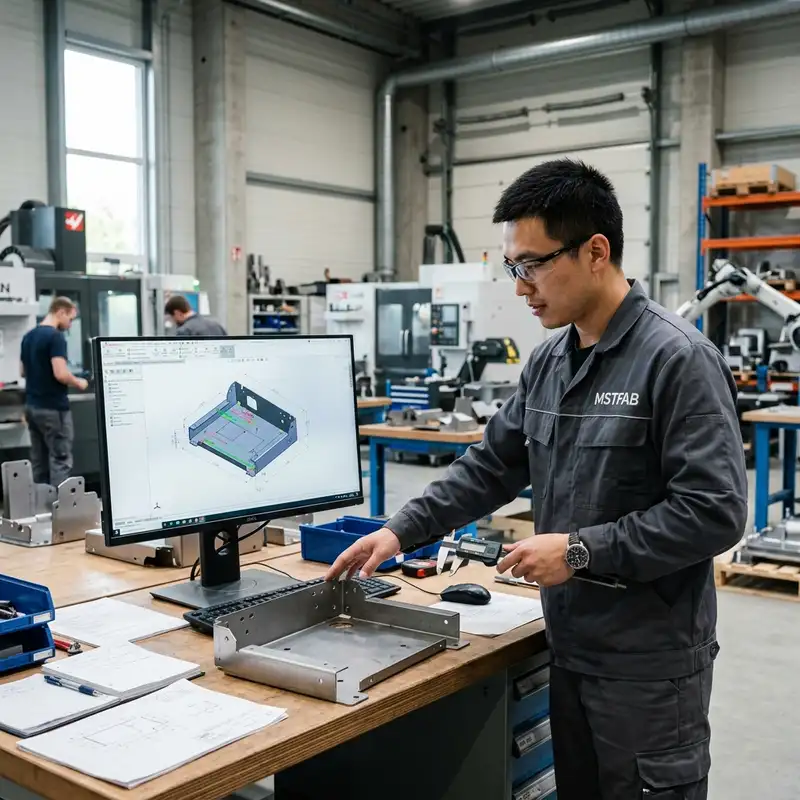
- CAD and drawing review (DFM): confirm one revision across the STEP model and the 2D PDF; check bend radius, flange length, hole-to-bend distance, tool access, weld access, hardware clearance and coating buildup. A useful review produces decisions, not a thumbs-up.
- Laser cutting: profiles, holes, slots, louvers and connector openings are cut without hard tooling, so flat features can change between EVT, DVT and PVT builds.
- CNC bending: flanges, doors, covers and chassis walls are formed on a press brake with a programmed bend sequence. Bend lines should run across the rolling grain where cracking is a risk.
- Hardware insertion: self-clinching nuts, studs and standoffs should use the intended production part numbers so access, thread engagement and clearance are real.
- Welding and assembly: TIG, MIG or spot welding depending on material and joint; fixture and weld sequence control squareness and fit.
- Finishing: powder coating, plating, anodizing or brushed finishes as specified, with masked threads, grounding points and gasket lands defined on the drawing.
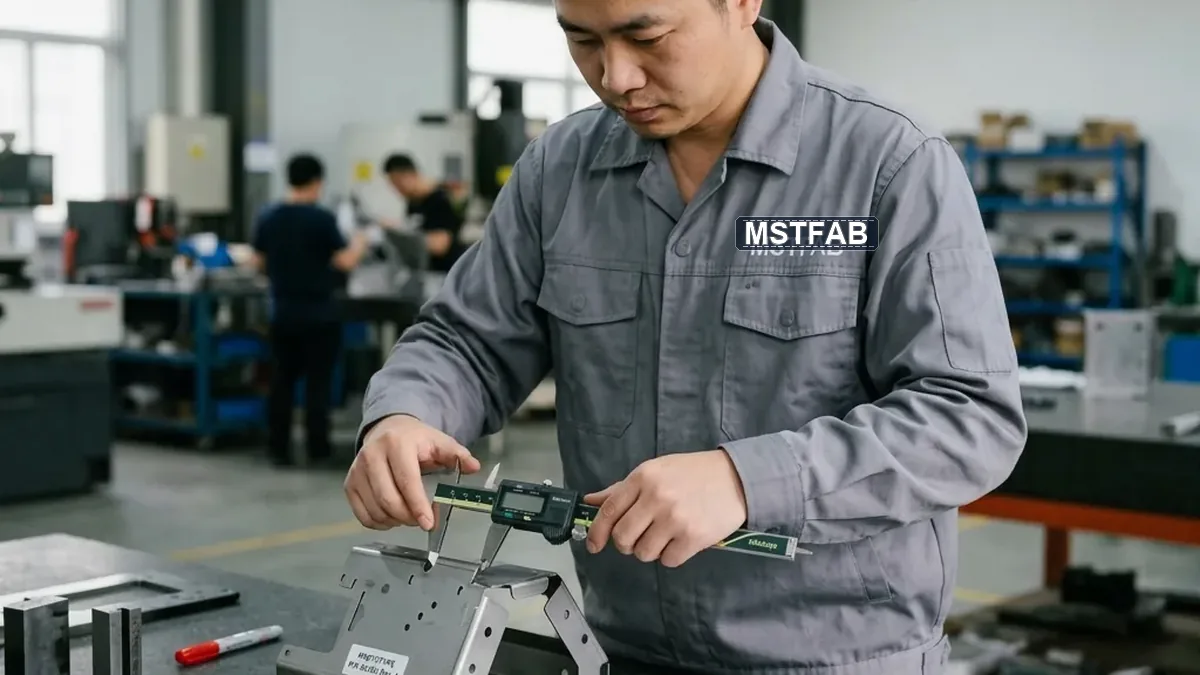
- Inspection and trial fit: measure the features that control function — datums, hole positions, door gaps, internal clearance and visible surfaces.
- Protective packing: a dented corner can invalidate an otherwise useful fit test, so packing should match the part and finish.
Sheet Metal Prototype Lead Time: What Drives the Schedule
For straightforward prototypes using available material, standard tooling and clear drawings, MSTFAB commonly plans around 7–15 working days of factory time after material, quantity, finish and inspection requirements are confirmed. Simple cut-and-bend parts can move sooner; complex welded housings, special materials or custom finishes take longer. This is a planning range, not a universal promise — ask for a project-specific date.
| Usually faster | Usually needs more time |
|---|---|
| Brackets, panels, covers, trays and mounting plates | Large welded frames with tight squareness or door gaps |
| Common grades and thicknesses in stock | Uncommon alloys, nominated stock or special thicknesses |
| Existing press brake tooling and accessible bends | Fully blended cosmetic welds on visible faces |
| Bare metal or standard powder colors | Custom color matching, detailed masking or outside testing |
| One controlled revision, questions answered quickly | Files that disagree, or waiting for buyer-supplied components |
Factory completion, international freight, customs and local delivery are different clocks. Say whether your required date means “leaves the factory” or “arrives at your facility.” For a stage-by-stage breakdown, see the sheet metal prototype and production lead time guide.
What Determines Sheet Metal Prototype Cost
Most sheet metal prototypes do not need hard tooling, so the cost is driven by setup, material and labor rather than dies. Two quotes are only comparable when they cover the same scope. Ask each supplier to separate one-time charges from per-part cost.
| Cost item | One-time or per part? | How to keep it under control |
|---|---|---|
| Engineering review & programming | One-time | Send a matching STEP + PDF so nothing has to be redrawn or guessed. |
| Material | Per part (plus minimum sheet usage) | Use common grades and gauges unless the test needs something special. |
| Bending setups | Mostly one-time | Standardize inside bend radii so bends can share tooling. |
| Welding & fixtures | Fixture one-time, labor per part | State where welds may stay visible; blending every weld adds hours. |
| Hardware | Per part | List exact part numbers; ask about availability before release. |
| Finishing | Often a minimum lot charge | For fit-only samples, accept bare metal and approve the finish later. |
| Inspection report | One-time | Mark only the dimensions that control function as critical. |
| Packing & freight | Per shipment | Compare express and economy options against the real need date. |
For worked examples on enclosure samples, read the sheet metal prototype cost guide. If you are comparing a sample price with a volume price, the prototype quote vs production quote article explains why the unit prices differ.
How to Choose a Sheet Metal Prototype Supplier
Ask for evidence, not adjectives. Send every candidate the same package and compare the answers side by side.
| What to evaluate | Good evidence | Weak answer |
|---|---|---|
| 1. DFM depth | Specific questions about bend sequence, tool access and holes near bends, with proposed changes for your approval. | “No problem, we can make it.” |
| 2. Revision control | Drawing number and revision shown on the quote, order review and inspection record. | “We use the latest file.” |
| 3. Material & finish | Confirms grade, temper and thickness; flags any substitution, masking and finish sample needs. | “Similar material is fine.” |
| 4. Quote transparency | Separates setup, material, finishing, inspection and shipping; states what repeats on a reorder. | One lump-sum number. |
| 5. Inspection | Agreed critical features, measuring method and report format. | “Our tolerance is always very tight.” |
| 6. Path to production | Explains which tools, fixtures and steps change between sample, pilot and repeat order. | “The sample looked fine.” |
| 7. Schedule | A confirmed ship date with approval milestones, separate from transit time. | “Very fast.” |
What to Send for a Sheet Metal Prototype Quote
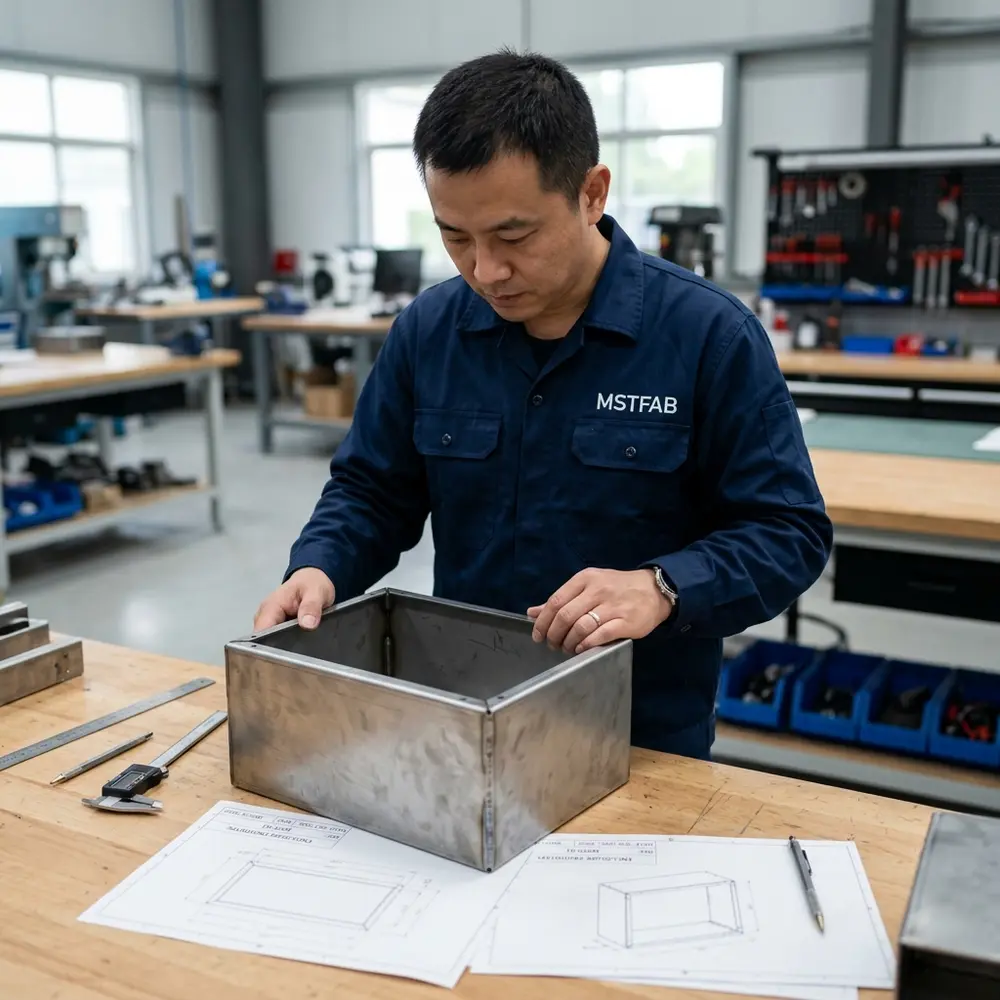
- 3D STEP/STP and a 2D PDF drawing: the model defines geometry; the drawing carries critical dimensions, tolerances, threads, datums and finish. Both must show the same revision — state which controls if they disagree. DXF/DWG can help for flat profiles but cannot show bend direction.
- Material and thickness: grade, temper and gauge, plus whether substitution is allowed for this stage.
- Hardware list: self-clinching nut, stud and standoff part numbers and installation side.
- Cosmetic faces and finish: visible faces, color and texture, gloss, masked threads, grounding points and gasket lands.
- Quantity and purpose: how many pieces, what the sample must prove, and the expected pilot and repeat quantities.
- Evidence required: first-article measurements, material certificates, photos or fit checks — inspection belongs in the quote, not in a surprise email later.
- Date and destination: factory-completion or arrival date, shipping method and delivery address.
Make the Prototype Production-Intent
A prototype that only looks like the CAD model can give false confidence. If corners are hand-fitted with a grinder, a softer alloy is used to avoid cracking, or pre-treatment is skipped before painting, the problems appear later as cracked flanges, misaligned holes and flaking paint. Unless the purpose is an early geometry check, ask for:
- The intended material grade and temper — for example 5052-H32 aluminum rather than a softer alloy that bends more easily.
- Bend lines oriented to the rolling grain the same way production nests will be.
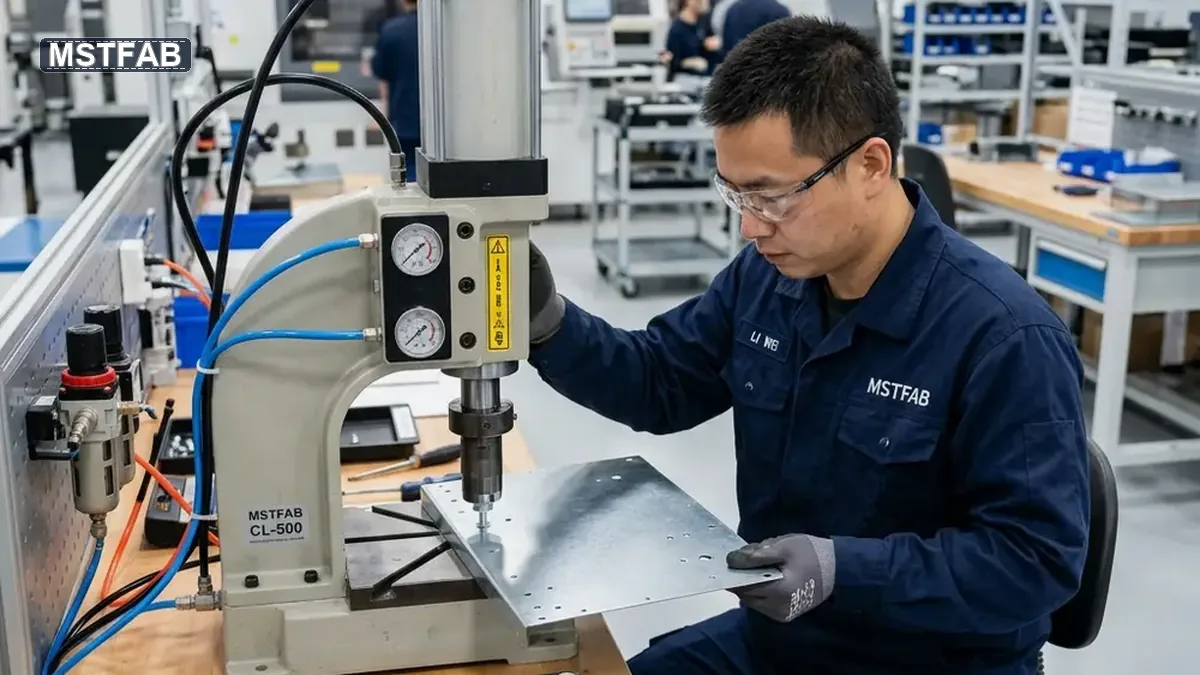
- Pressed self-clinching hardware instead of tack-welded nuts or loose fasteners.
- The real finish route including pre-treatment when finish, grounding or corrosion matter to the test.
From Prototype to Pilot Run to Repeat Production
Prototype feedback only has value when it reaches controlled documents. These six gates give buyer and supplier a common language for what is ready and what is still open.
| Gate | Decision | Evidence before moving on |
|---|---|---|
| 1. RFQ review | Which revision, material, quantity and finish are being priced? | Matching STEP + PDF and a list of open questions. |
| 2. DFM decisions | Can the cut, bend, weld and hardware route make the critical interfaces? | Agreed changes for bend access, datums, weld sequence and coating allowance. |
| 3. Prototype build | Built on the agreed route? | Any controlled deviation recorded. |
| 4. First-article review | Does the part fit and meet the drawing? | Critical-feature measurements, fit check, appearance standard. |
| 5. Pilot run | Does the result repeat across a small batch? | Sampling plan, traceability, finish and packing checks. |
| 6. Release | Is the revision frozen? | Deviations closed, evidence required for each repeat order defined. |
Before a pilot or repeat order, confirm the 3D model and 2D drawing show the same released revision, approved DFM changes are in the buyer-controlled package, and future changes have an owner and effective date. The prototype revision control guide and the pilot run checklist go deeper, and the sheet metal inspection workflow explains how checks carry into production.
Get a Sheet Metal Prototype Quote
Upload your STEP and PDF files with quantity, material, finish and critical features, and tell us what the sample must prove. An engineer reviews the files, lists DFM questions and confirms price, inspection scope and ship date for your project.
Frequently Asked Questions About Sheet Metal Prototypes
How long does a sheet metal prototype take?
For suitable parts with clear drawings and available material, about 7–15 working days of factory time after requirements are confirmed is a typical planning range. Simple cut-and-bend parts can be faster; complex welding, special material, custom finishes or detailed reports add time. Freight and customs are extra.
Do sheet metal prototypes need tooling?
Usually not hard tooling. Laser cutting and standard press brake tooling cover most prototype geometry. Special forms, deep draws or welding fixtures for complex assemblies may add one-time costs, which should be listed separately in the quote.
What files should I send for a prototype quote?
A STEP or STP model plus a controlled 2D PDF drawing is the strongest combination. Add material, thickness, quantity, critical dimensions, hardware part numbers, finish and revision. If you only have a STEP or DXF, a preliminary review can identify what is missing.
How does sheet metal prototyping compare to 3D metal printing?
A cut-and-formed prototype validates bend geometry, installed hardware, welds and assembly fit when production will use sheet metal. A printed part can check an early shape, but it does not validate the sheet metal process, electrical bonding or finish performance.
Should the prototype use the production material?
Whenever material behavior affects forming, welding, corrosion, weight or fit, yes. A substitute may be reasonable for an early geometry check, but the deviation and its limits should be written down and approved.
Is a first article the same as a pilot run?
No. A first article checks an initial part against the released drawing. A pilot run tests whether the production route repeats that result across a controlled batch. Simple parts may only need a first article; welded, cosmetic or multi-interface assemblies often justify both.
How many prototypes should I order?
There is no universal number. Count the units needed for fit trials, destructive tests, finish approval and customer samples, then ask for quantity breaks — one-time setup costs mean a few extra pieces often cost little more.
 WeChat Contact
 WhatsApp Me Directly