SMALL-BATCH PRESS BRAKE SOURCING
Small-batch CNC press brake bending is economical when the drawing works with available tooling, bend setups are controlled and the first article is approved before the rest of the lot runs. A low quantity does not make setup work disappear; it simply gives that work fewer parts to hide behind.
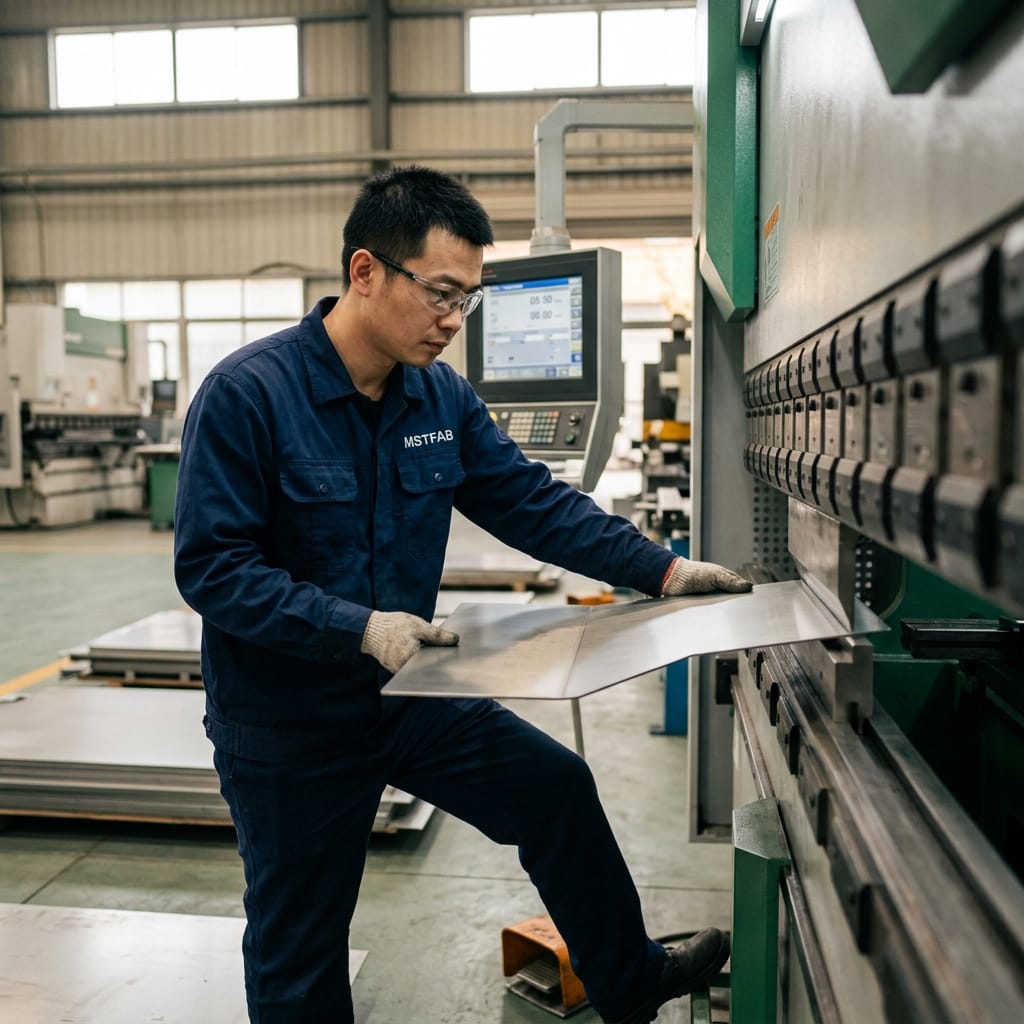
Understand the Cost Before Chasing the Piece Price
Programming and setup
Backgauge positions, bend sequence, tooling and trial pieces are prepared for the job.
Tool changes
Multiple radii, hems, offsets or restricted access can add setups even when the batch is small.
Handling
Large panels, cosmetic surfaces and repeated rotations may need more operator time and protection.
Inspection
Drawing-specific angle, flange and datum checks should be priced as evidence, not assumed from a machine label.
Release Bend Data That a Shop Can Use
Define material grade, thickness, grain direction where relevant, inside bend radius, bend angle, flange dimensions and the relationship between holes and bend lines. If a formed dimension is critical, mark its datum and measurement condition. The supplier can then review springback, tool access and likely distortion before metal reaches the brake.
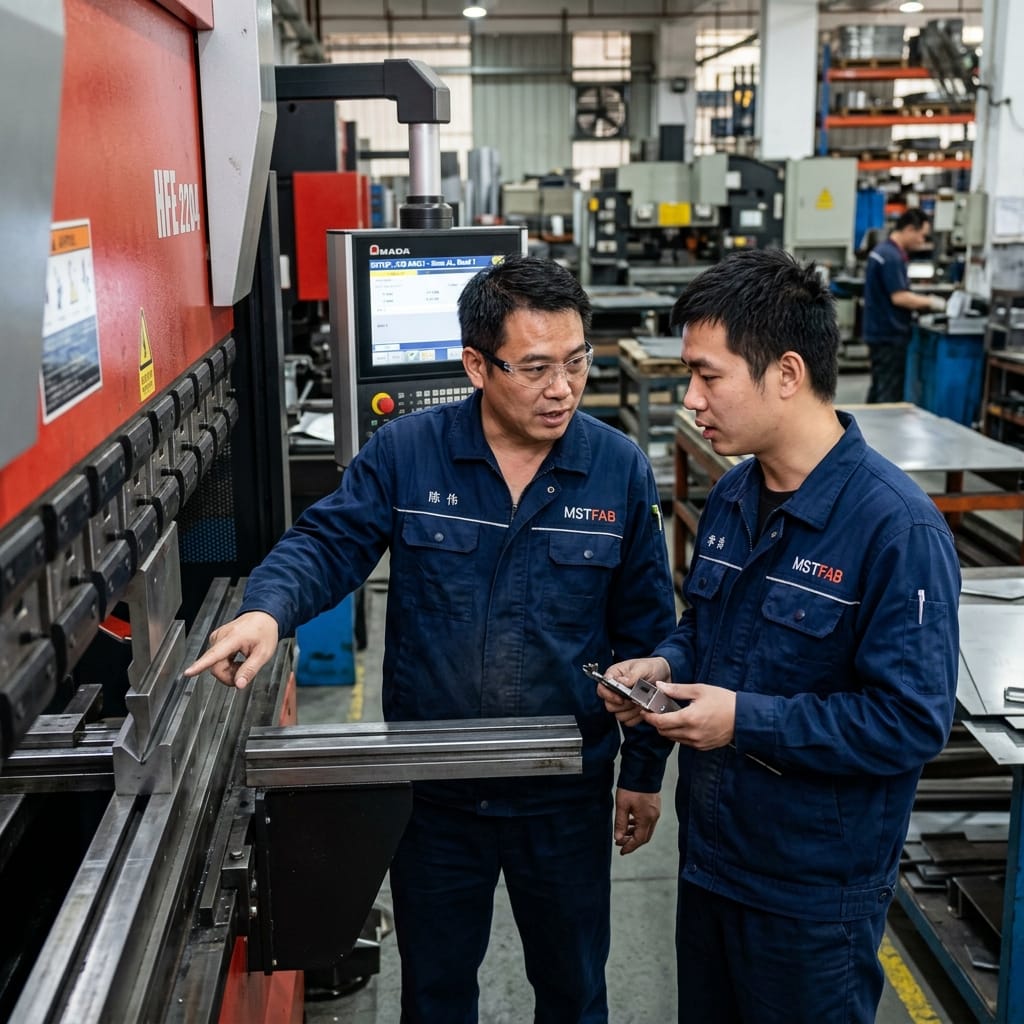
Use a First Article to Freeze the Setup
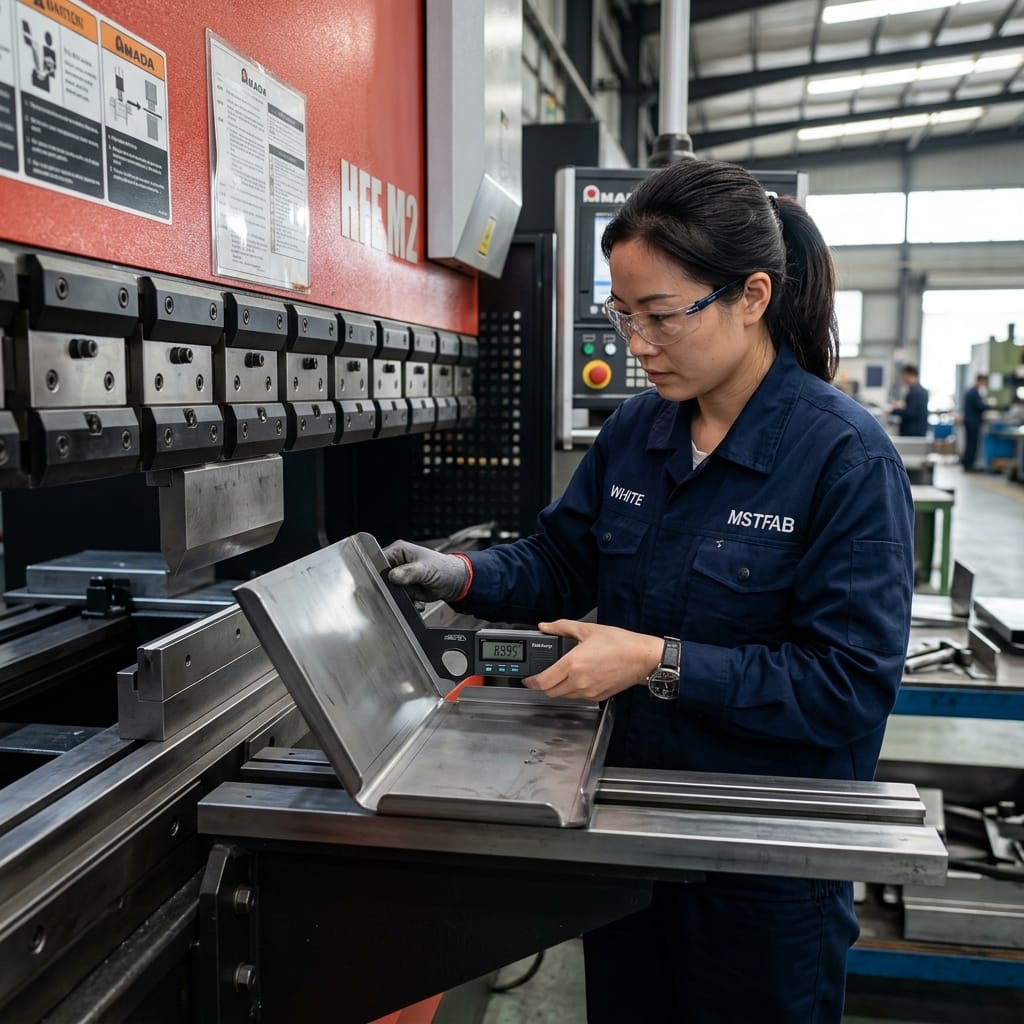
Measure the first representative part against the released drawing and record any approved deviation. Check bend angle, flange length, hole movement, twist, surface damage and fit with a mating sample when one is available. After approval, keep the program, tooling reference and revision connected to the repeat order.
Buyer Trust Table
| Supplier phrase | Evidence to request | Buyer value |
|---|---|---|
| “No tooling cost” | Named standard punch and die or quoted special tooling | Makes setup assumptions visible |
| “Tight bending tolerance” | Drawing CTQ, gauge or measurement method and first-article result | Links capability to the real geometry |
| “Small batches welcome” | Quantity breaks, setup charge and repeat-order basis | Separates unit price from one-time work |
| “Material verified” | Purchase specification and agreed lot documentation | Avoids an unsupported material claim |
Small-Batch Bending RFQ Checklist
- 3D formed model and controlled 2D drawing
- Material grade and thickness
- Inside radii and bend directions
- Critical formed datums marked
- Cosmetic faces identified
- Prototype and repeat quantities
- Special tooling disclosed
- First-article method agreed
- Finish and masking specified
- Packing protects formed edges
Frequently Asked Questions
Does standard tooling mean there is no setup charge?
No. A standard tool may avoid custom-tool manufacture, but programming, setup, trials and inspection can still be required.
Can the supplier choose the bend radius?
The supplier can propose a manufacturable radius, but the buyer should approve any change that affects fit, strength, appearance or downstream assembly.
What makes a useful small-batch trial?
Use the production material, representative tooling, released revision and agreed measurement method. Record deviations before the balance runs.
Quote the Setup With the Parts
Send the bend drawings, material, quantity, CTQs and finish for a practical small-batch review.
 WeChat Contact
 WhatsApp Me Directly