
Where Sheet Metal Curling Makes Sense
Curled edges are not decoration. For OEM enclosures, cabinets, chassis and industrial panels, sheet metal curling can protect operators, reduce cable abrasion and add stiffness without welding extra reinforcement parts.
The procurement question is not whether curling looks premium. The real question is whether it reduces risk in handling, service access, vibration, sealing or assembly.
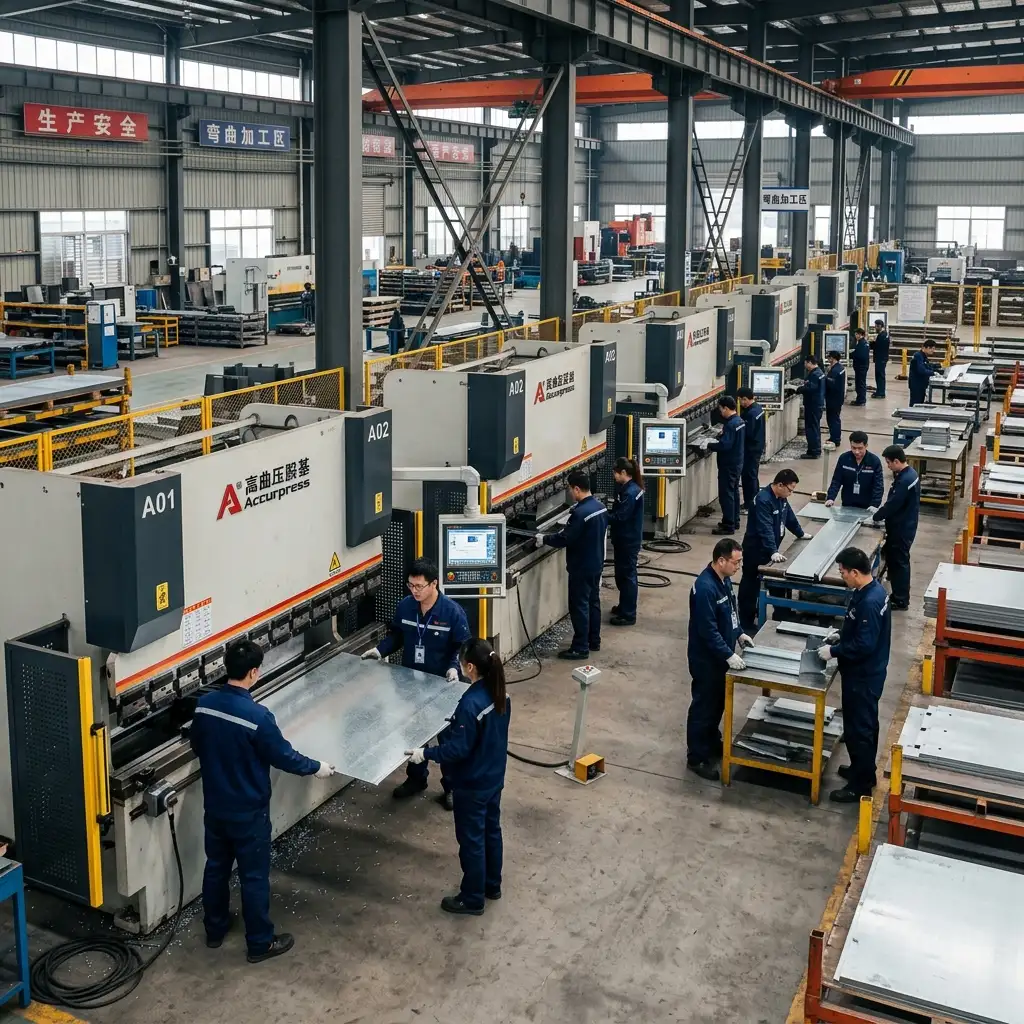
Why serious buyers specify curled sheet metal edges.
A curled edge earns its cost when it prevents injuries, protects wiring, improves panel stiffness or helps a visible product feel engineered instead of simply folded.
Safer handling
Rounded edges reduce the blade-like risk created by exposed laser-cut sheet metal parts during assembly and field service.
Stronger panels
A curl changes the edge geometry, helping large covers, cabinet doors and access panels resist flexing.
Cleaner assembly
Curled edges can reduce cable abrasion, glove tearing and cosmetic complaints when products are handled repeatedly.
Where curled edges justify the extra forming step.
This table is how an OEM buyer can decide whether curling is a useful engineering feature or just unnecessary cost.
| Application | Procurement Risk Without Curling | Why Curling Helps | DFM Check Before Quotation |
|---|---|---|---|
| Medical and aesthetic equipment | Sharp internal edges can cut gloves, hands or cable insulation during service. | Creates safer access areas and a more finished enclosure feel. | Confirm stainless grade, radius, polishing or brushing requirement and visible-edge quality. |
| EV charger and battery cabinets | Large covers and service panels can flex, feel weak or expose sharp cable paths. | Adds edge stiffness and improves technician safety around power-module service areas. | Review sealing path, powder coating thickness, cable clearance and outdoor corrosion protection. |
| Telecom cabinets and server rack parts | Fiber, copper cables and harnesses can abrade against raw sheet metal edges. | Protects cable routing channels and improves serviceability in dense equipment spaces. | Check hole-to-curl distance, rack rail clearance, grounding points and ventilation geometry. |
| High-vibration industrial chassis | Flat sheet metal covers can vibrate, fatigue or feel unstable near motors and automation systems. | Increases edge rigidity and reduces flexing on guards, covers and machine panels. | Validate thickness, mounting points, bend sequence and whether welded reinforcement is still needed. |
| Food equipment and handling panels | Operators and cleaners touch panels frequently, so exposed edges create safety and cleaning risks. | Improves handling safety, edge strength and clean product presentation. | Confirm SUS304/SUS316, smooth finish, cleaning access and radius feasibility. |
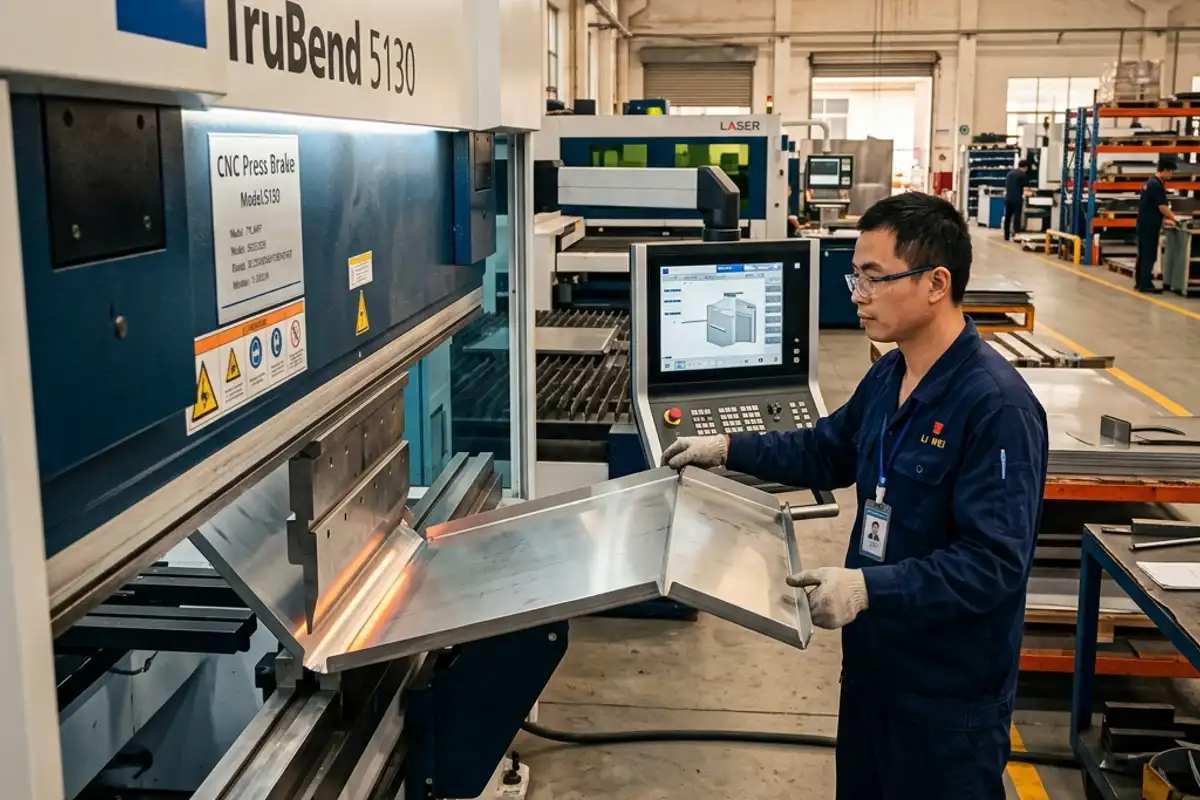
A sharp edge is a small detail until it becomes a warranty problem.
Laser-cut sheet metal can look clean on a drawing but still behave like a thin blade in real production. It can cut assembly workers, damage insulation, make service panels feel cheap and create rework when the customer asks for extra deburring after the first shipment.
For procurement teams, curling is attractive when it removes that risk with one controlled forming feature instead of relying on manual edge finishing across every batch.
OEM applications where curling makes practical sense.
The best curled-edge decisions are tied to function: safety, stiffness, cable protection, service access and long-term durability.
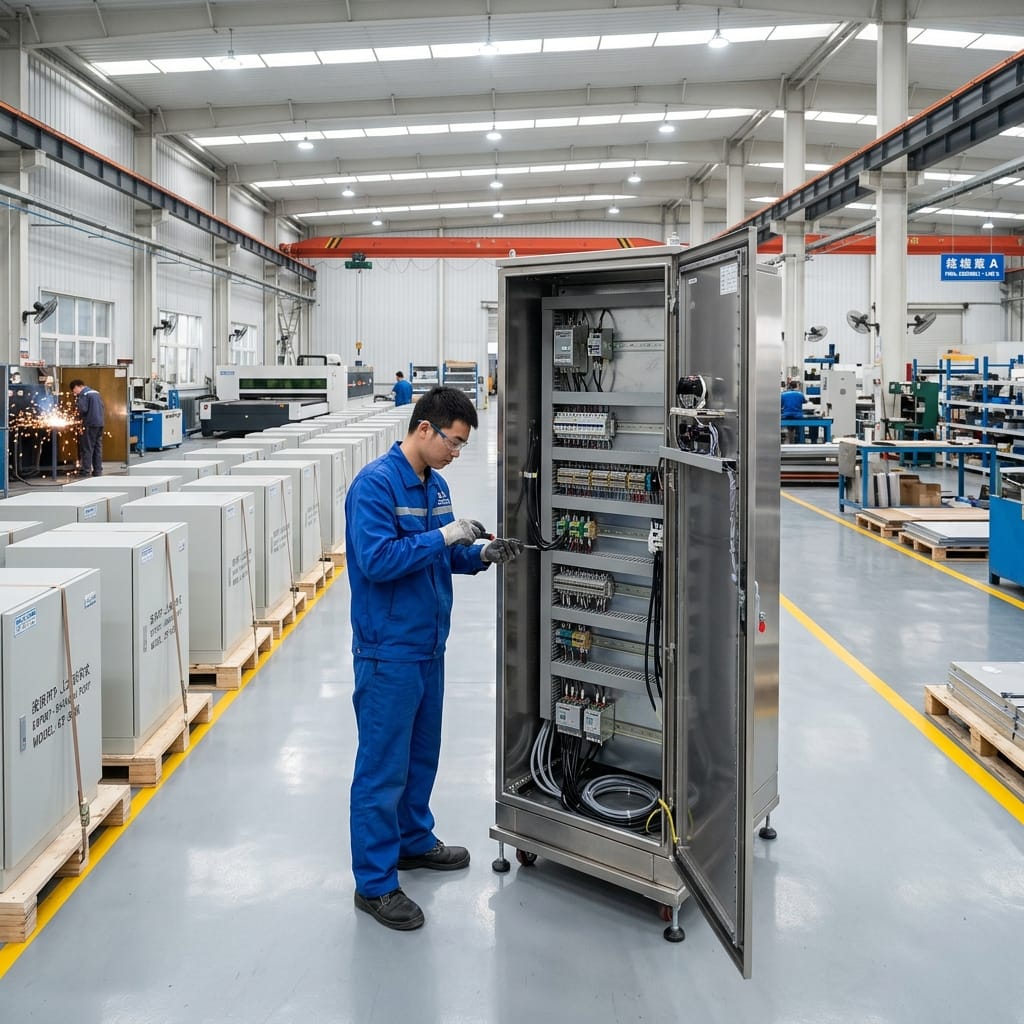
Medical and instrument housings
Curled edges can protect gloves, cables and technician access points inside clean equipment enclosures.

EV charger and BESS panels
Large outdoor panels benefit when curled edges add stiffness without increasing sheet thickness.
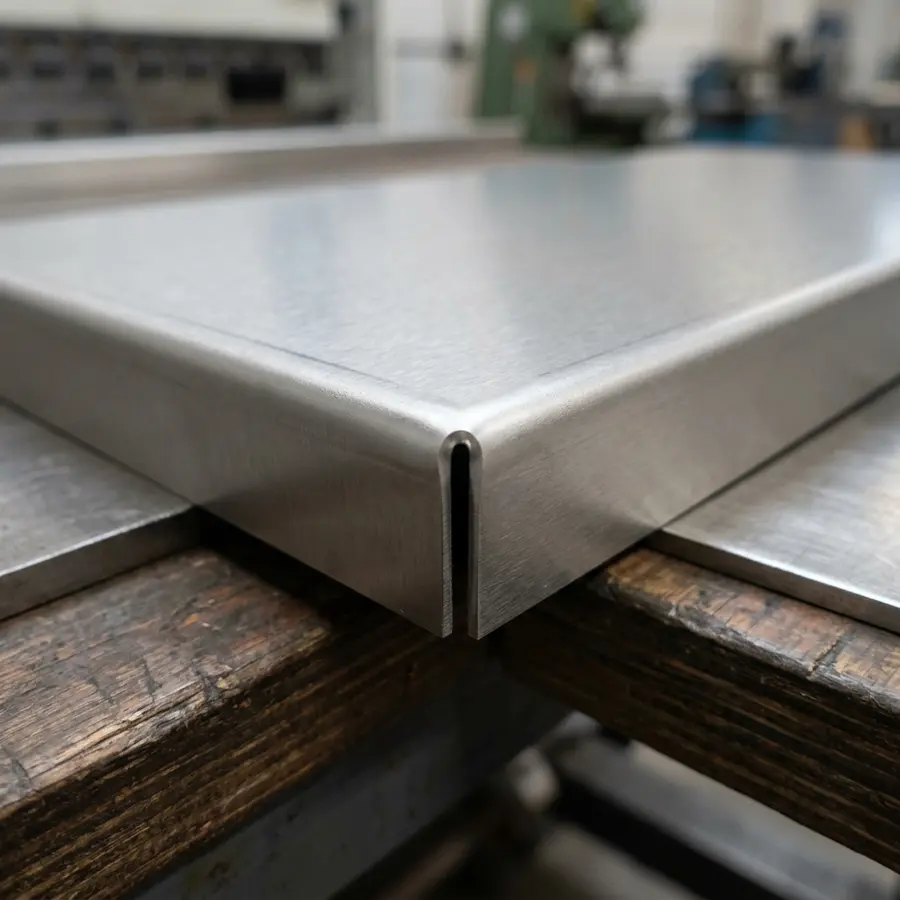
Telecom cable-routing areas
Rounded service edges help protect fiber optics, copper cables and harnesses from vibration abrasion.
Operator control stations
Panels handled daily by operators should feel safe, rigid and professionally finished.

Food and washable equipment
Formed edges need to support cleaning, corrosion protection and consistent surface finishing.
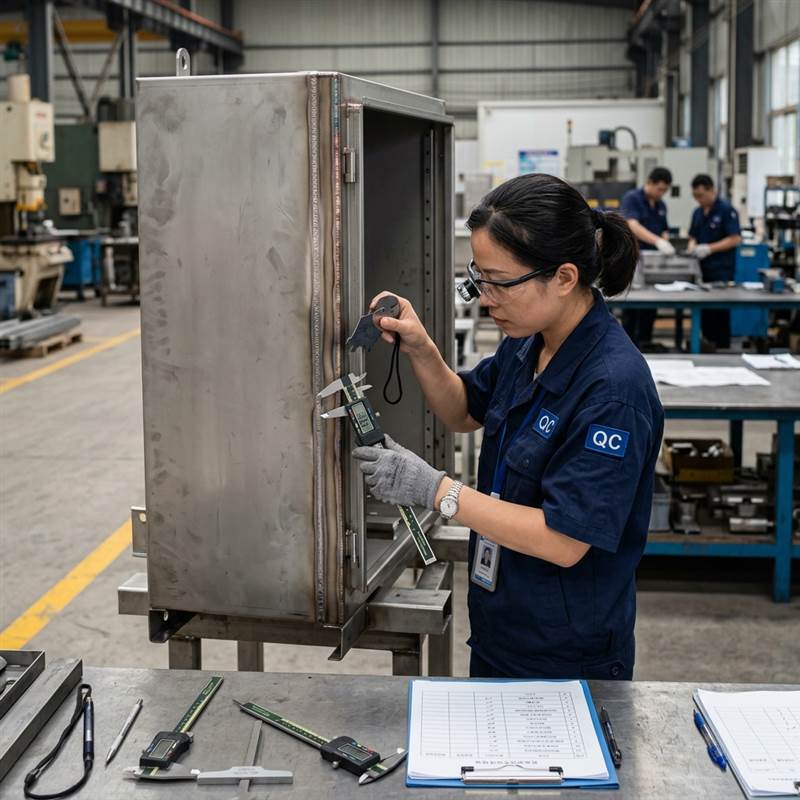
Inspection before batch production
A curled edge should be checked for radius, flatness, coating coverage and nearby feature distortion.
Curling is valuable, but it should not be specified everywhere.
Curling adds forming steps, tooling constraints and design checks. For hidden brackets, low-cost internal plates or edges that are never touched, standard deburring may solve the requirement at lower cost.
Procurement rule: ask the factory where curling reduces risk. A supplier that recommends curled edges on every part is probably selling process time, not engineering value.
The curl has to be manufacturable before it can be useful.
- Material grade and hardness affect curl radius.
- Thickness controls tooling and forming force.
- Holes, louvers and slots need enough distance from the curled edge.
- Tool access must be checked against nearby bends or welded features.
- Powder coating, brushing, polishing or plating must cover the curled edge consistently.
We manufacture the metal structure; you keep control of the product system.
MSTFAB supports custom sheet metal enclosures, chassis, cabinets, panels and brackets based on customer drawings or samples. For curled edges, our team reviews material selection, curl radius feasibility, hole clearance, tooling access, bending sequence, welding interaction and surface finishing before production.
We focus on the physical sheet metal architecture. We do not design your internal electronics, software or proprietary system. You provide the product requirements; we help manufacture the metal structure that protects and supports them.
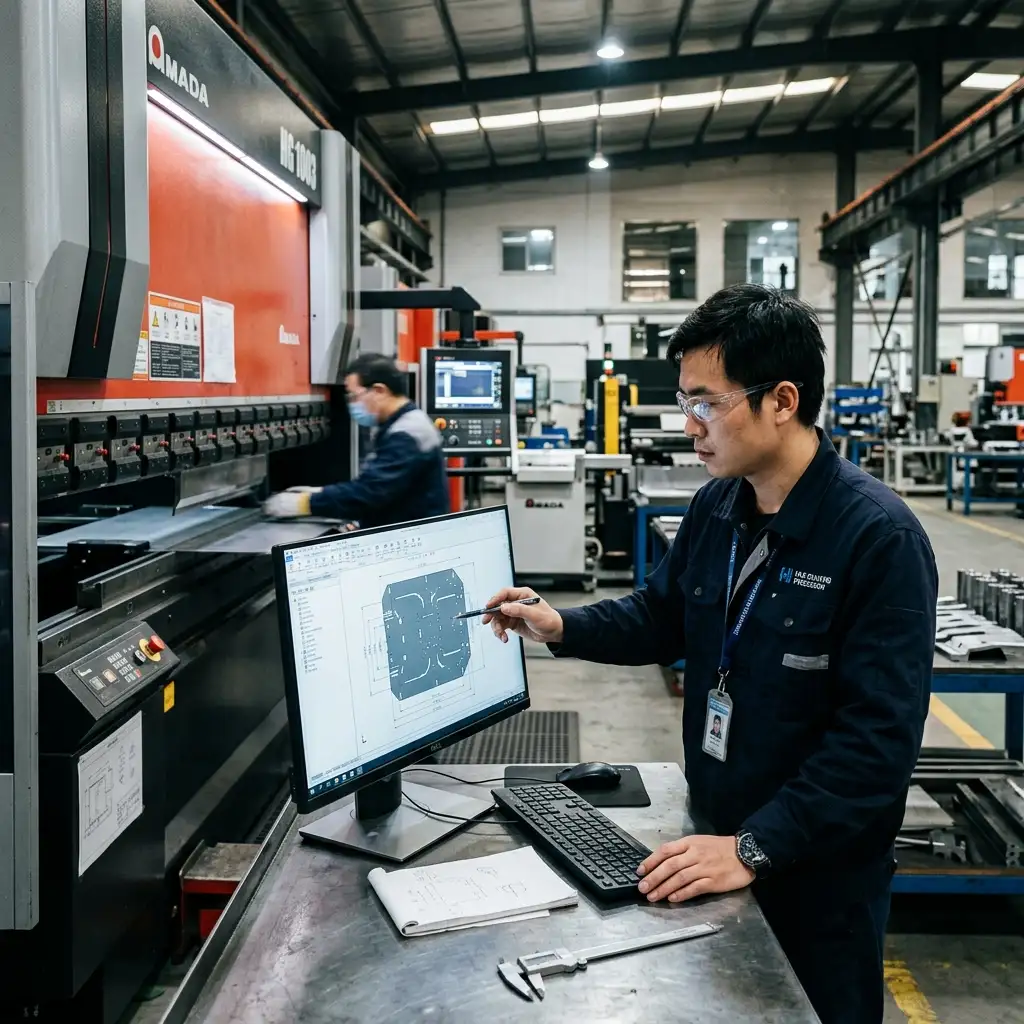
Related MSTFAB manufacturing pages for buyer research.
These pages help buyers compare curled edge requirements with bending, enclosure, EV charger and rack cabinet manufacturing needs.
Sheet Metal Bending Service
CNC press brake bending capability for formed panels, flanges and enclosure structures.
Industrial Enclosure Manufacturing
Custom metal enclosures for automation, power distribution and industrial control systems.
EV Charger Enclosures
Outdoor sheet metal housings where edge safety, sealing and panel rigidity matter.
Server Rack Cabinet Fabrication
Rack structures and cable-friendly panels for telecom and data communication projects.
Products Overview
Explore custom sheet metal enclosure, cabinet and chassis fabrication options.
Factory Photos
See actual Chinese factory production scenes, inspection and export preparation.
Questions buyers ask before specifying sheet metal curling.
Use these answers to decide whether curled edges are suitable for your enclosure, cabinet or sheet metal part.
What is sheet metal curling?
Where is sheet metal curling commonly used?
Does curling make sheet metal stronger?
Can stainless steel be curled?
When is curling not worth the extra cost?
What files should I send for a curled edge DFM review?
Send your curled edge drawings for a factory-direct DFM review.
Upload STEP, DXF, DWG or PDF files. MSTFAB will review material, thickness, curl radius, nearby cutouts, finish and production feasibility before quotation.
 WeChat Contact
 WhatsApp Me Directly