
What key qualifications define an exceptional sheet metal fabrication supplier for heavy industrial projects?
A premier industrial sheet metal supplier excels across five critical manufacturing competencies: (1) Heavy-gauge processing power capable of laser cutting and press brake forming structural carbon steels, stainless alloys, and aluminum plates up to 20 mm, (2) Rigorous welding fixture design and AWS D1.1 / D1.2 certified welders to prevent heat-induced thermal distortion on large equipment frames, (3) Robust GD&T quality metrology using coordinate measuring machines (CMM) and laser trackers to control diagonal squareness and coplanarity across multi-meter chassis, (4) In-house surface finishing engineered for harsh environments (1000+ hour ASTM B117 salt-spray resistant powder coating and heavy zinc galvanizing), and (5) Engineered ISPM-15 export packing that guarantees complex structural assemblies arrive job-site ready without mechanical damage.
Industrial machinery, power distribution systems, mining hardware, and automation infrastructure operate under extreme physical demands. Unlike lightweight consumer electronics brackets, industrial sheet metal fabrications require thick-gauge structural stability, continuous load-bearing welds, strict environmental sealing (NEMA 4X / IP66), and repeatable dimensional accuracy across massive frames. Sourcing for industrial projects demands a manufacturing partner equipped to handle structural scale without sacrificing micrometer-level precision.
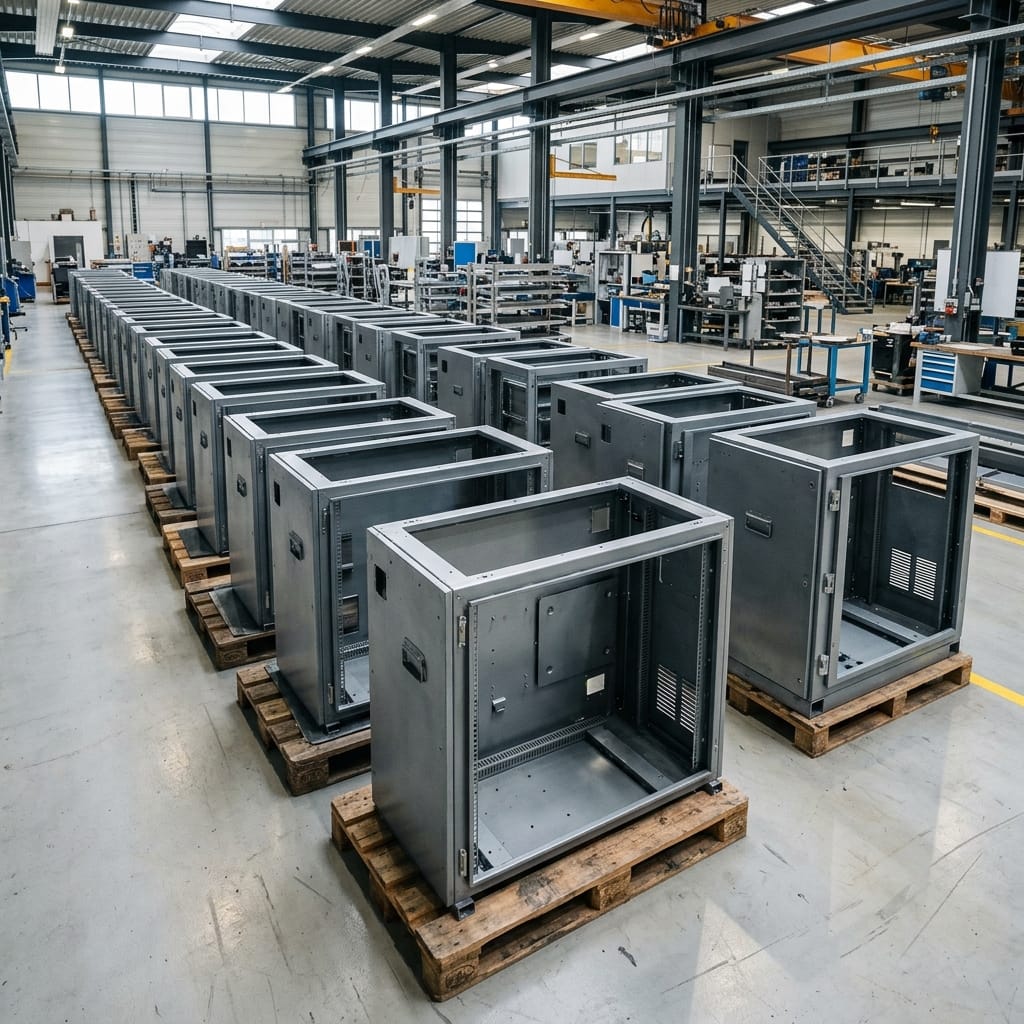
Core Pillars of Industrial-Grade Sheet Metal Fabrication
1. Pre-Production DFM for Heavy Structural Assemblies
Industrial sheet metal parts involve complex interplay between thick plate bending allowances and weld shrinkage. Skilled manufacturing engineers use finite element analysis (FEA) and 3D CAM unfolding tools to calculate true bend deduction values based on specific steel mill heats. They implement self-locating tab-and-slot geometries that lock plates into position before welding, reducing the need for costly external jigs and guaranteeing dimensional repeatability.
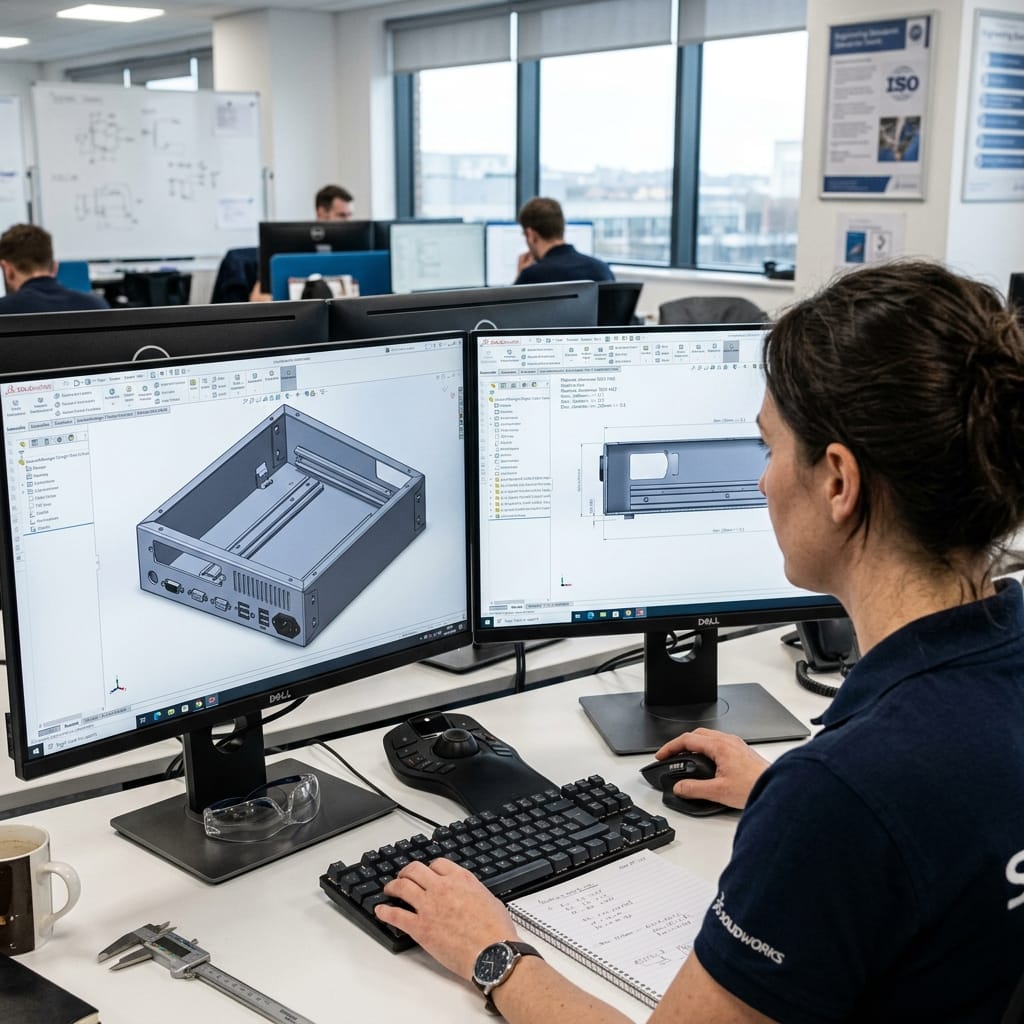
2. Fixture-Controlled Welding & Distortion Management
Thermal distortion is the primary nemesis of industrial enclosures and frames. When long seam welds are deposited along an equipment chassis, uncontrolled heat input induces angular distortion and bow. Top fabricators counteract this through dedicated heavy-duty clamping fixtures, sequenced skip-welding patterns, and robotic pulsed-MIG/TIG systems that minimize heat-affected zones (HAZ). Welders hold active AWS D1.1 certifications, ensuring full penetration and defect-free structural integrity.
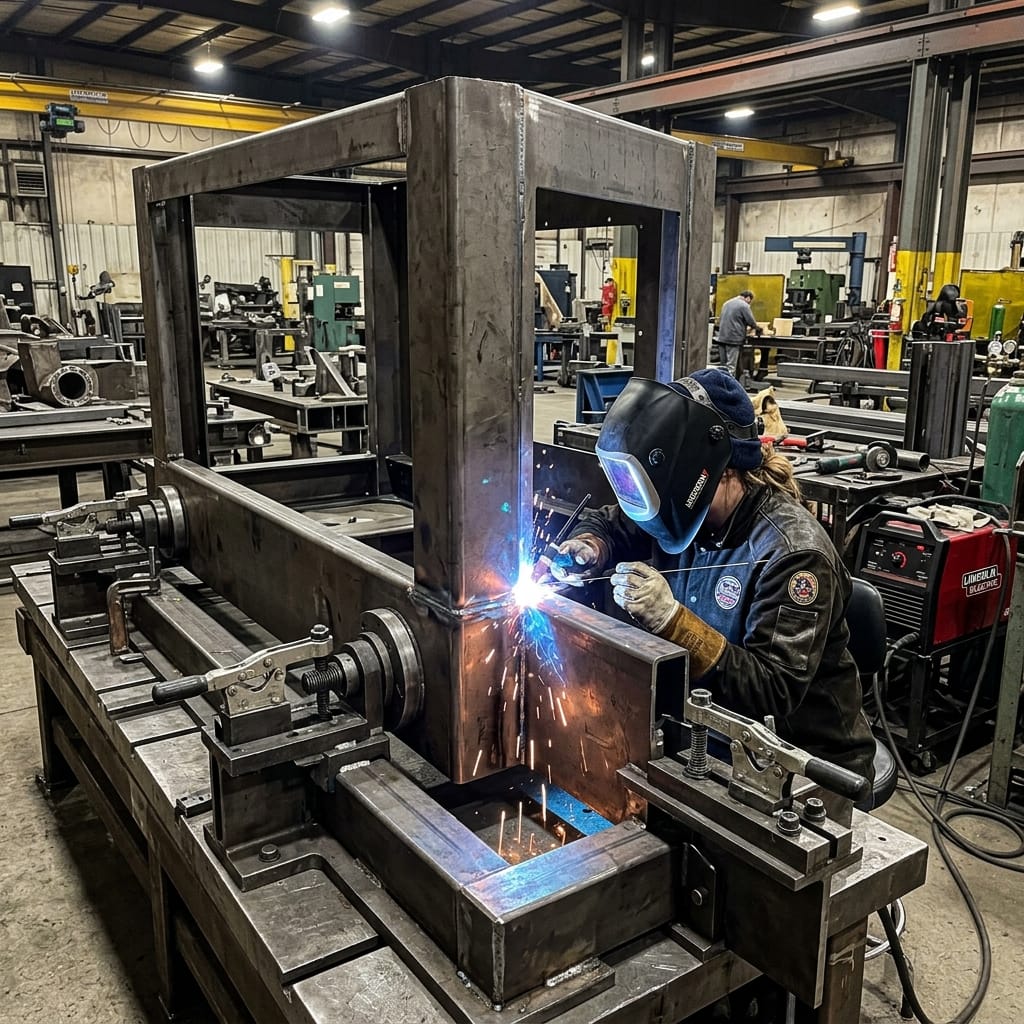
3. Strict Metrology: Diagonal Squareness & Coplanarity Verification
Industrial equipment enclosures must interface seamlessly with internal sub-racks, busbars, and precision automation slides. Quality technicians verify overall frame squareness by measuring cross-corner diagonals, ensuring deviations remain below ±1.0 mm over 2-meter spans. Laser trackers and coordinate measuring machines inspect mounting hole patterns and door flange coplanarity, guaranteeing proper NEMA environmental gasket sealing without field adjustment.
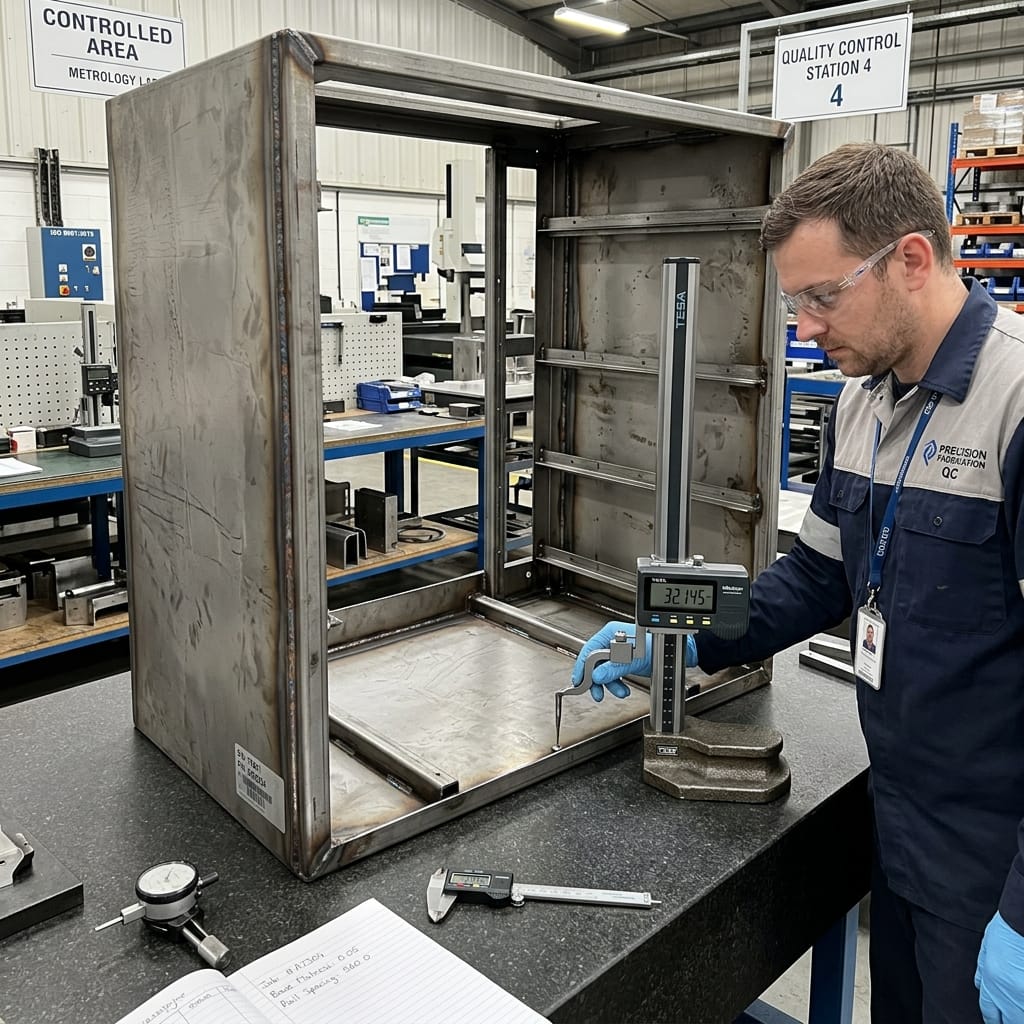
4. Batch-to-Batch Repeatability across Annual Blanket Releases
A good industrial supplier does not just build one flawless prototype; they sustain uniform quality across thousands of production units. Achieving process capability index values of Cpk ≥ 1.33 requires CNC equipment calibration, documented standard operating procedures (SOPs), and automated ERP material tracking that logs every coil heat lot, press brake operator, and paint batch.
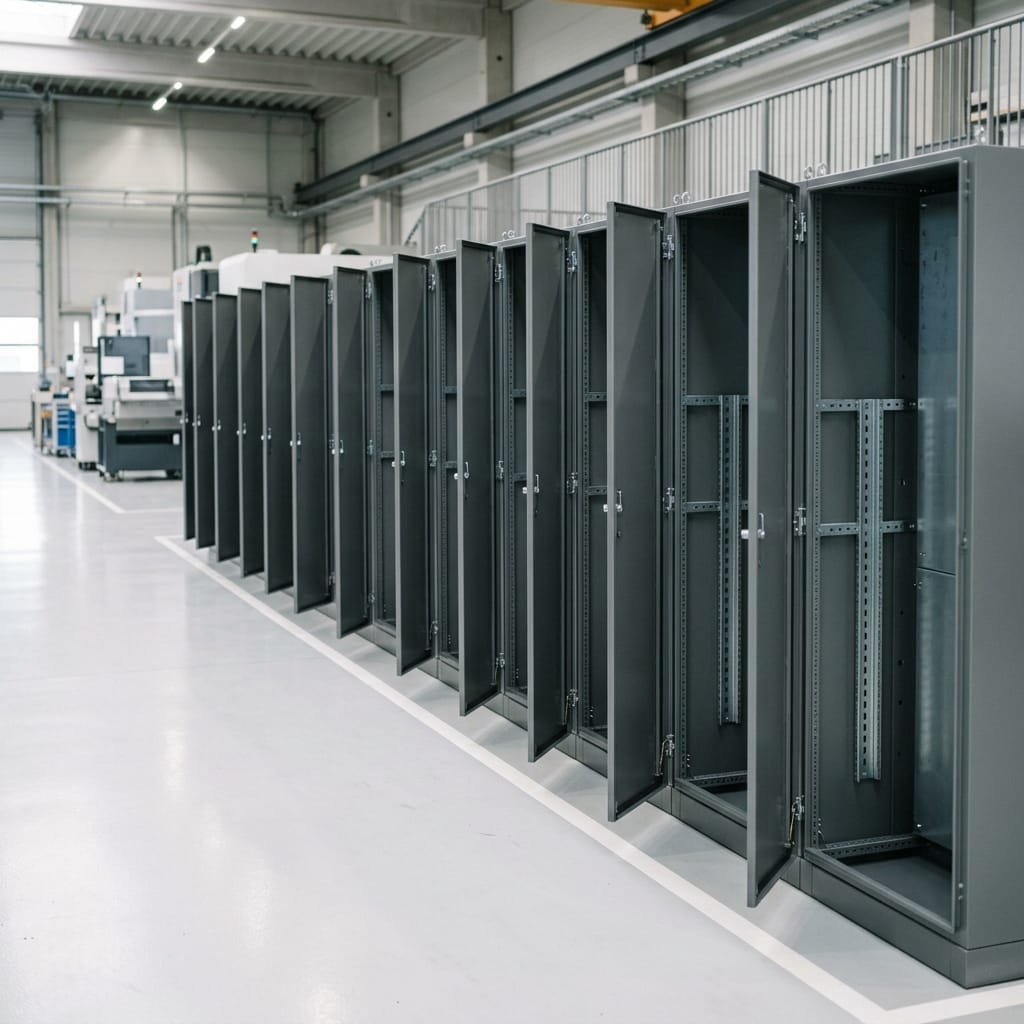
5. Heavy-Duty Export Crating & Anti-Corrosion Protection
Large industrial chassis and painted cabinets are susceptible to transit damage from container movement, forklifts, and oceanic humidity. Professional fabricators build custom ISPM-15 certified timber crates with internal high-density polyethylene foam cradles, corner cushioning, and vapor-corrosion inhibitor (VCI) bagging with industrial desiccants to eliminate condensation corrosion during international maritime transit.
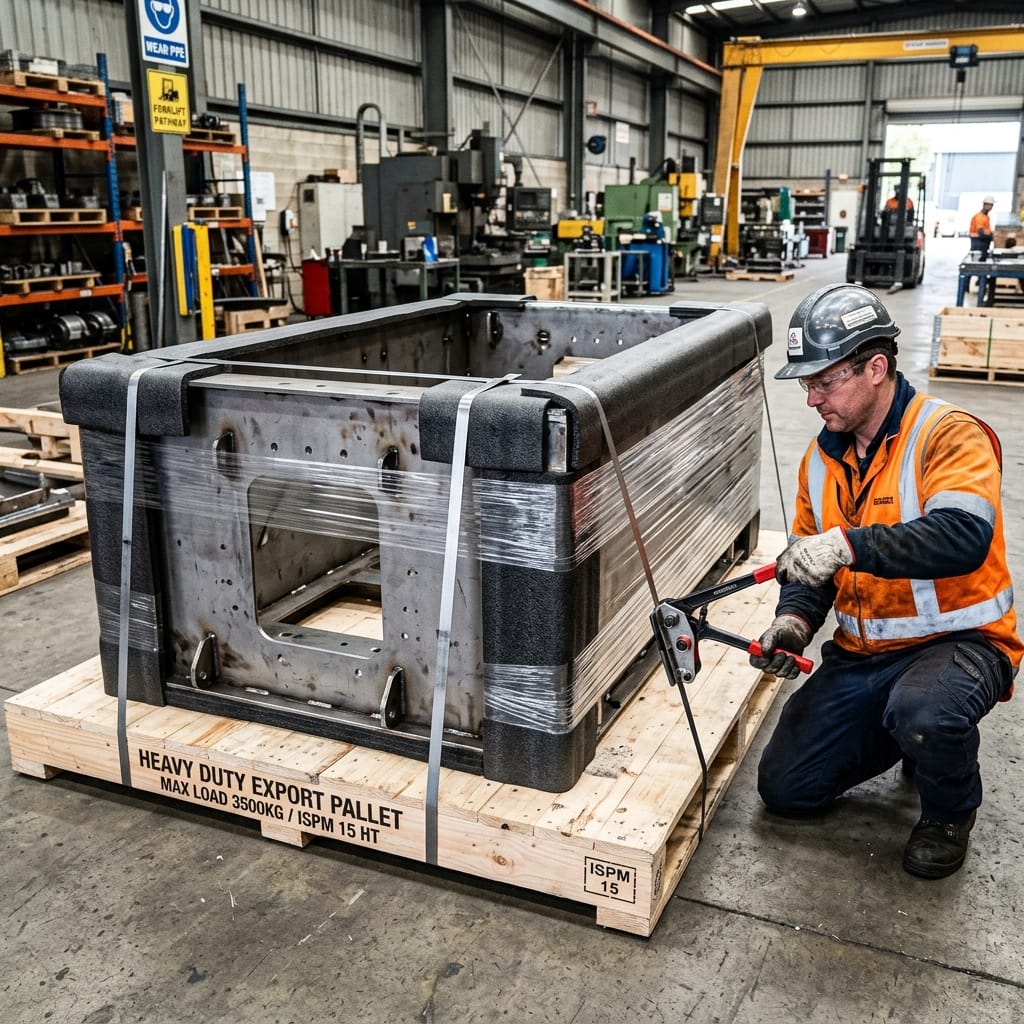
Industrial Sheet Metal Supplier Comparison Matrix
Evaluate potential fabrication partners against standard commercial shops versus industrial-grade manufacturing standards:
| Capability Dimension | Standard Job Shop | Industrial Project Specialist (MSTFAB) | Engineering & Operational Impact |
|---|---|---|---|
| Laser Cutting Power | 2kW to 4kW (Max 6 mm plate) | 12kW to 20kW Fiber (Up to 25 mm plate) | Dross-free high-speed cutting in heavy structural carbon & stainless plate |
| Bending Capacity | 100-ton / 2.5-meter bed | 320-ton / 4.0-meter bed with dynamic crowning | Forms long structural channels and heavy plate without center angle variation |
| Welding Fixturing | Ad-hoc manual tacking without jigs | Dedicated modular Demmeler 3D tables & jigs | Guarantees frame squareness within ±1.0 mm and eliminates weld twisting |
| Metrology & Inspection | Tape measures & hand verniers | Bridge CMM, FARO arms, laser scan QC | Full ballooned GD&T FAI reports and electronic inspection data packages |
| Finishing Resistance | Basic spray paint (240h salt spray) | Automated 5-stage pre-treat + powder (1000h+ ASTM B117) | Resists industrial chemical exposure, UV degradation, and outdoor weathering |
| Packaging Standard | Standard shrink wrap on open skids | Custom ISPM-15 plywood crates + VCI barriers | Zero transit denting, surface scratching, or maritime corrosion |
Partner with an Industrial Sheet Metal Specialist
MSTFAB provides complete manufacturing execution for heavy industrial enclosures, welded machinery frames, and critical electrical equipment. With 12kW-20kW high-power fiber lasers, heavy-tonnage CNC press brakes, AWS-certified welding cells, and comprehensive metrology inspection, we handle your most demanding structural programs. Contact our engineering team for a project review.
 WeChat Contact
 WhatsApp Me Directly