
The Short Answer
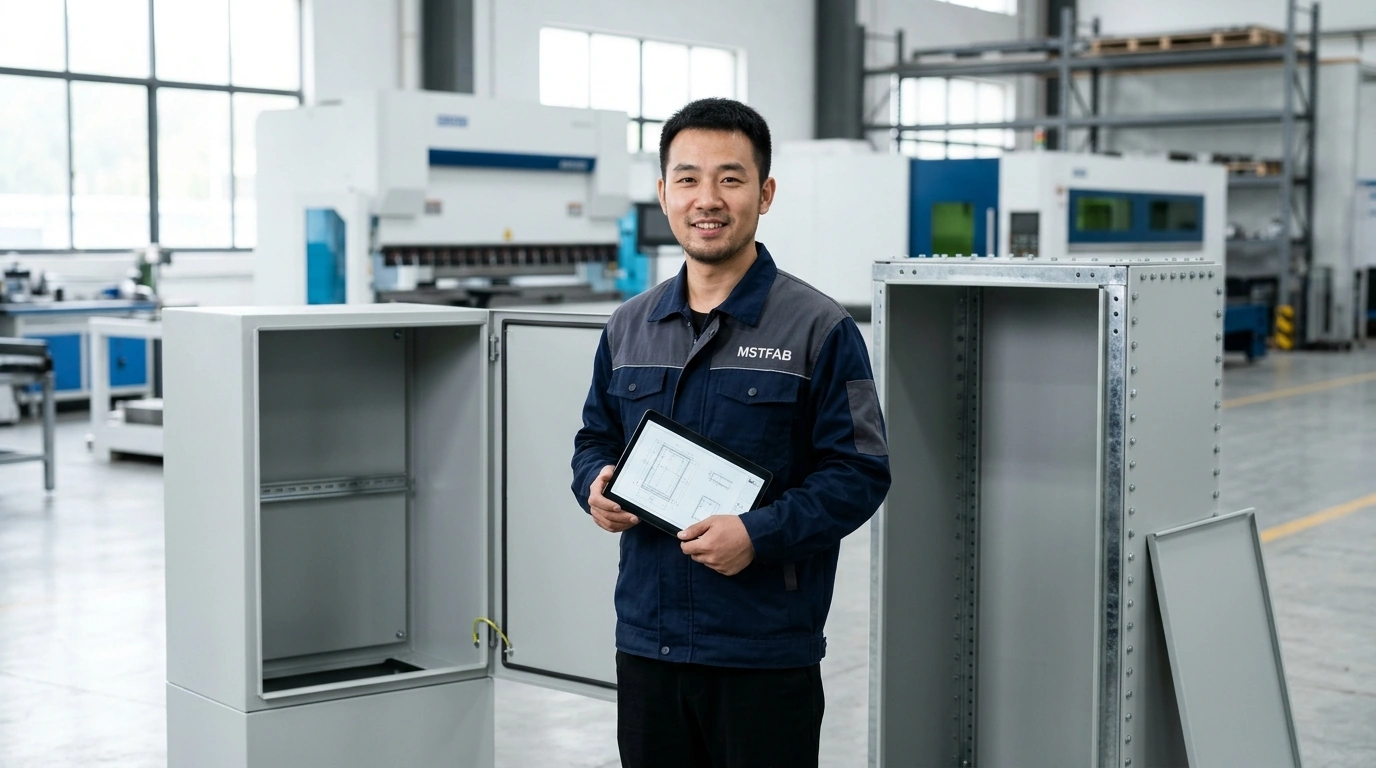
Choose a welded sheet metal enclosure when continuous corner seams, liquid resistance or frame stiffness matter more than flat-pack shipping or panel-by-panel replacement. Choose a bolt-together enclosure when modular assembly, field access, mixed finishes or lower freight volume outweigh the cost of extra hardware and joint gaskets. Hybrid designs—a welded structural frame with removable bolted skins—often balance both priorities when specified clearly on the released drawings.
Explore this guide
01 / Architecture Selection
Match the enclosure joint strategy to service, sealing and shipping priorities.
Welded and bolt-together enclosures solve different mechanical problems. A welded unibody shell creates a continuous load path and eliminates panel-to-panel fastener seams, making it practical for washdown, outdoor or high-load cabinets. However, once welded, the shell occupies its full cubic volume through finishing, packing and freight.
A bolt-together enclosure breaks the cabinet into formed panels joined by self-clinching nuts, rivet nuts, structural bolts or latches. Individual panels are easier to coat on compact racks, pack flat on pallets and replace in the field, provided the cumulative hole-to-bend tolerances and gasket compression paths are controlled.
Welded Unibody
Continuous or stitch-welded seams provide high torsional stiffness and direct corner sealing, best suited for fixed-envelope industrial cabinets.
Modular Bolt-Together
Separate formed panels reduce freight cube, simplify internal subassembly access and allow mixed materials or finishes within one assembly.
Hybrid Frame & Skins
A welded frame carries structural loads and mounting rails while bolt-on doors, roofs and side covers provide service access and replaceable cosmetics.
Design tip: decide early whether the enclosure ships assembled or knocked down. Converting a welded cabinet into a bolted kit after prototype release requires redesigning return flanges, corner reliefs and fastener clearances.
02 / Sealing and Stiffness
Continuous welds simplify liquid exclusion, while bolted seams need controlled gasket lands.
When an enclosure faces hose-directed water, wind-driven rain or oil mist, every mechanical seam becomes a potential leak path. Welded corner joints reduce the number of gasketed interfaces to the access doors and cable entry plates, whereas bolted housings must seal or shed water along every panel intersection.
- Welded seam specification: state whether corners require full-penetration continuous welds for dust and water exclusion or stitch welds for dry indoor structural use.
- Bolted labyrinth flanges: design overlapping drip flanges and uniform fastener spacing so foam-in-place or die-cut gaskets compress evenly without bowing thin sheet between bolts.
- Torsional deflection: account for cabinet weight on uneven floors or wall mounts; welded corners resist racking directly, while bolted frames rely on return bends and fastener preload.
When sourcing custom industrial enclosure shells, remember that the sheet metal fabricator controls seam integrity, flange flatness and gasket-land geometry, while final ingress testing of the populated equipment remains the OEM’s responsibility.
03 / Forming and Welding
Control heat distortion on welded shells and bend stack-up on bolted kits.
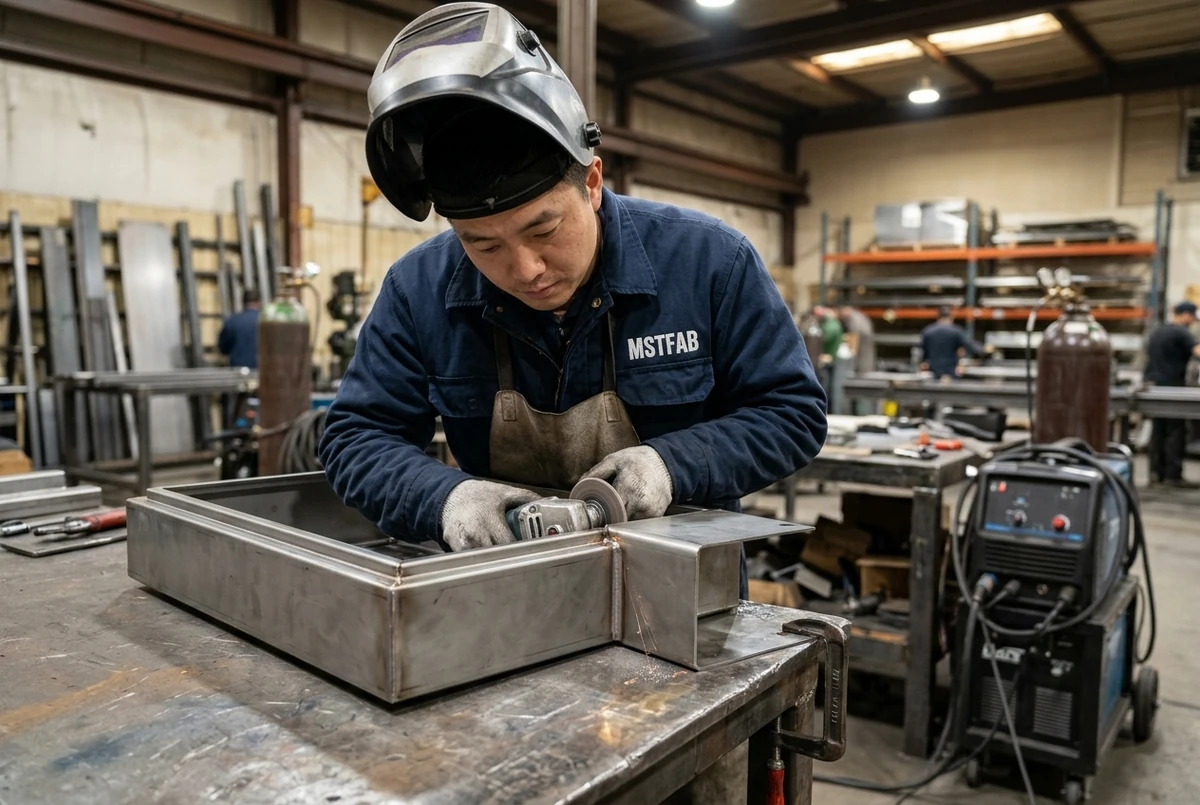
Each construction method shifts manufacturing risk to a different workstation. On a welded cabinet, localized heat input along thin sheet edges can pull side panels out of flat or twist door openings if clamping fixtures and weld sequence are not managed.
- Specify realistic sheet thickness and return flanges around door openings to resist thermal pull during TIG or MIG welding.
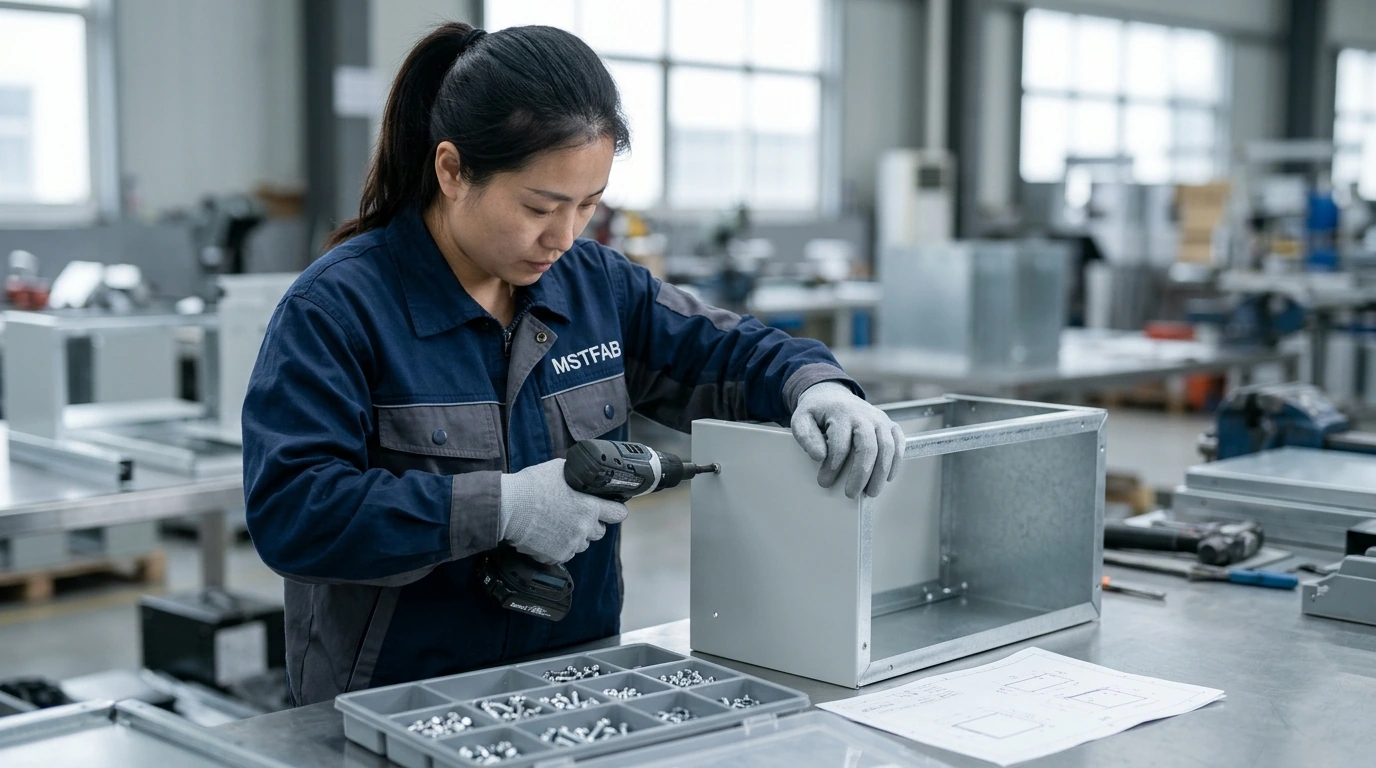
- On bolt-together panels, reference mounting holes to functional bend datums so multi-panel hole patterns align without forced prying.
- Include trial-fit assembly in the first-article plan for bolted kits to verify that corner flanges, PEM hardware and access doors mate cleanly.
Balancing precision CNC press brake bending with controlled sheet metal welding services prevents costly rework before the enclosure enters the coating line.
04 / Fasteners and Finishing
Specify hardware retention, powder coat build and grounding across joints.
Bolted enclosures depend on repeatable fastener installation and controlled coating thickness at mating flanges. If powder coat accumulates inside threads or over grounding pads, assembly torque becomes inconsistent and electrical continuity between panels degrades.
- Self-clinching hardware: call out exact stud, nut or standoff part numbers, installation side and minimum distance to adjacent bends so press tooling seats flush.
- Coating thickness allowance: account for 60–100 µm per coated face where sliding panels, hinge barrels or telescopic rails engage after surface treatment.
- Bonding and grounding: define masked bare-metal pads, conductive conversion coatings or dedicated grounding studs so bolted panels maintain low-resistance continuity.
- Weld-zone pretreatment: remove weld scale, spatter and sharp burrs before pretreatment so powder coating adheres uniformly across welded corners.
Clear drawing callouts for hardware orientation and masking boundaries prevent assembly bottlenecks when panels reach your integration line.
05 / Buyer Control Matrix
Align structural, sealing and logistics requirements before releasing tooling.
Use this procurement matrix to confirm critical manufacturing controls with your enclosure supplier before production begins.
06 / Inspection Handoff
Verify welded frame squareness and bolted panel interchangeability.
Inspection criteria should reflect how the enclosure is built. For welded cabinets, focus on overall envelope dimensions, mounting-hole datums, door-frame squareness, hinge alignment and weld-seam appearance after grinding.
For bolt-together enclosures, individual panel checks should be paired with a periodic trial assembly. Measuring each flat flange in isolation may miss a cumulative bend-angle deviation that only appears when six panels are bolted into a closed box.
Define which features are critical to quality on the drawing and agree on whether inspection takes place before or after powder coating.
Explore sheet metal quality control and inspection workflows →
07 / Freight and Release
Compare assembled crate volume against flat-pack assembly labor.
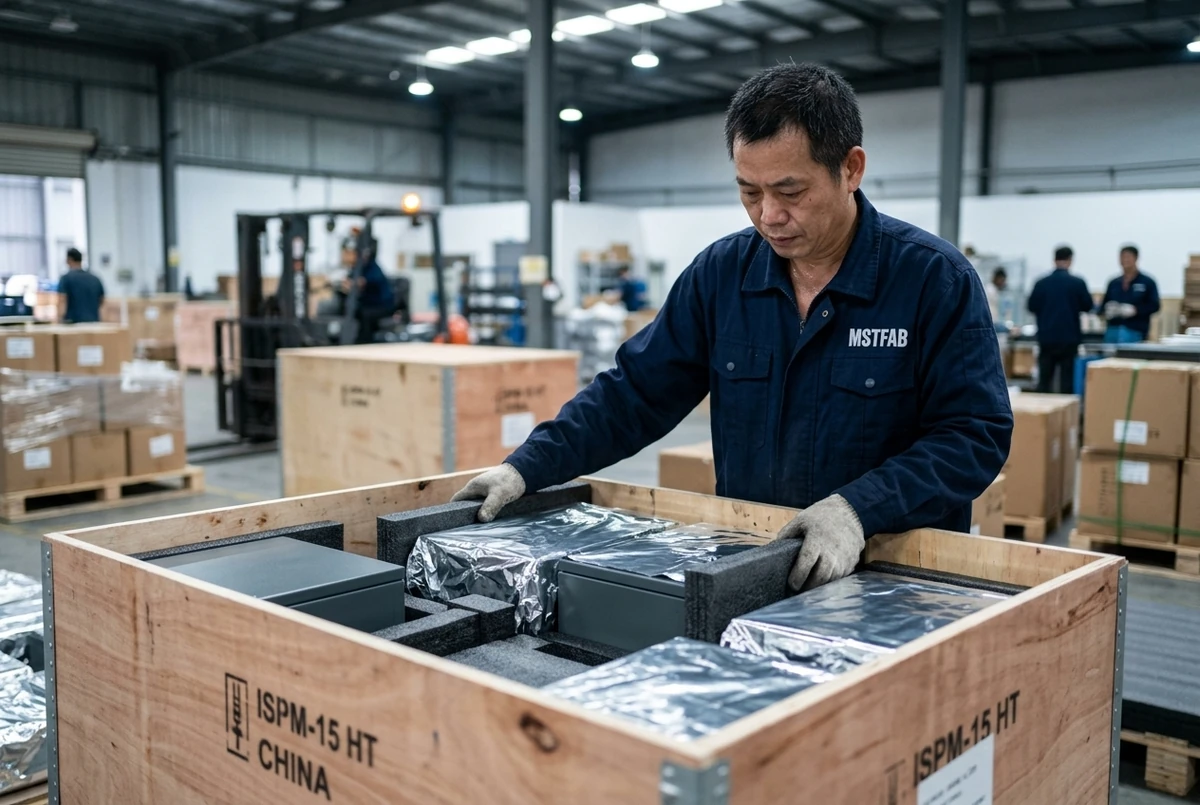
Shipping an empty welded cabinet overseas means paying freight on internal air volume and building rigid export crates that prevent forklift or stacking damage. However, the cabinet arrives ready for immediate subplate and component installation.
Flat-packing a bolt-together enclosure can reduce shipping volume substantially, protecting painted panels between foam sheets on compact pallets. Balance that freight saving against the technician time and torque verification required at your assembly facility, and confirm wood-packaging compliance per IPPC ISPM 15 guidelines.
Manufacturing scope: MSTFAB fabricates custom sheet metal enclosure shells, frames, panels and mechanical hardware assemblies to customer drawings. Electrical wiring, active thermal equipment and system-level ingress certification remain the buyer’s responsibility.
08 / Ready-to-Review RFQ
Include eight specification details when quoting welded or bolted enclosures.
- 3D STEP assembly & 2D PDFsInclude both the complete enclosure assembly and individual part drawings.
- Joint construction calloutSpecify continuous weld, stitch weld, spot weld or mechanical fastener locations.
- Material grade and thicknessState exact cold-rolled steel, galvanized, stainless or aluminum alloy by part.
- Hardware bill of materialsList self-clinching nuts, studs, hinges, latches and who supplies them.
- Surface finish & maskingDefine powder coat color, texture, gloss and masked grounding areas.
- Critical mating datumsHighlight subplate mounts, door gaps, rack rails and connector cutouts.
- Trial-fit expectationsConfirm whether knocked-down kits require factory test-assembly before packing.
- Delivery & packing formatSpecify assembled vs flat-packed delivery, batch quantities and destination.
Clear joint, finish and packing specifications allow our engineering team to compare welded and bolted cost structures accurately during DFM review.
Buyer questions on welded vs bolt-together enclosures
Is a welded enclosure cheaper to manufacture than a bolt-together design?
At low volumes, bolt-together enclosures often have lower welding and grinding labor, though they add laser-cut flanges and hardware insertion. Once freight is included, flat-packed bolted enclosures frequently achieve a lower landed cost for large cabinets, while compact enclosures may favor simple welded shells.
Can a bolt-together enclosure be used outdoors?
Yes, if designed with sloped roofs, overlapping drip channels, sealed fasteners and compressed gaskets. However, for heavy washdown or standing water exposure, a continuously welded shell reduces the number of seam interfaces that must be maintained over time.
How do you prevent thin welded panels from warping?
Engineers add return flanges or stiffening ribs, select appropriate sheet thickness, clamp parts in rigid welding fixtures and use controlled TIG, MIG or laser welding sequences to limit heat input.
Can MSTFAB ship bolt-together enclosures pre-assembled or flat-packed?
Yes. We can trial-assemble the first unit to verify fitment and then ship production batches either fully assembled in crates or flat-packed with protective separators according to your purchase order.
Why choose a hybrid welded-frame enclosure with bolted panels?
A welded frame provides rigid load-bearing corners for heavy transformers, batteries or rack rails, while bolt-on side and rear covers allow open access during wiring and easy panel replacement if scratched.
How much clearance should I leave between bolted panels that will be powder coated?
Provide sufficient gap at overlapping flanges and hinge points to accommodate 60–100 µm of powder coating per surface, or specify masking on tight sliding interfaces.
Technical references
The following standards provide industry reference frameworks for enclosure design, welding and dimensional tolerancing:
Send your enclosure drawings for a joint and DFM review.
Share your STEP assembly and 2D PDF drawings with target quantities and shipping preferences. MSTFAB will review weld access, bend stack-up and finishing options before quotation.
Upload Enclosure Drawings for Quote →
Have a question first? caroline@mstfab.com
 WeChat Contact
 WhatsApp Me Directly