
What OEM Buyers Should Check Before Ordering Tractor Fenders
Tractor fenders and metal panels are not decorative farm machine clothing.
They protect operators, reduce mud spray, shield mechanical areas, cover engine sections, protect wiring and hydraulic lines, and help the tractor survive real field work. And that field work is not gentle.
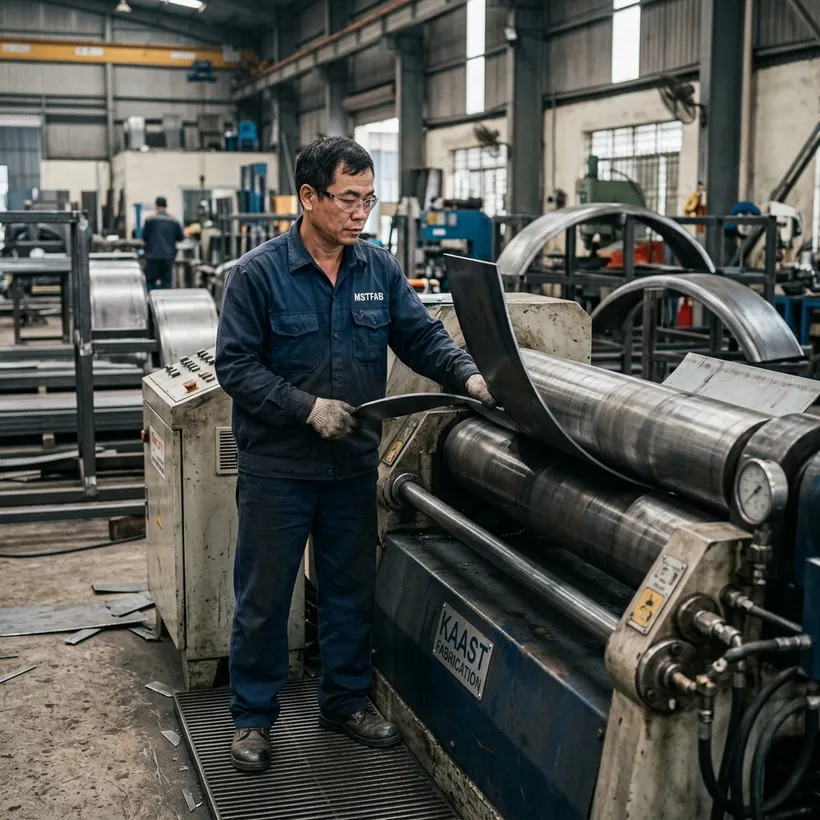
Our technicians operating heavy-duty CNC rolling machines to form precise, sweeping curves for steel tractor rear fenders.
Tractor panels deal with mud, vibration, stones, water, fertilizer residue, sunlight, rough transport, and service repairs that often happen when the machine should already be running.
At MSTFab, we manufacture custom tractor fenders and metal panels based on customer STEP files, 2D PDF drawings, physical samples, or project requirements. For OEM buyers and replacement part suppliers, the real sourcing question is not only “Can you make this?” but “Will this panel fit correctly, resist vibration, survive corrosion, and arrive ready for assembly without field rework?”
Because a cheap tractor fender that rattles, rusts, cracks, or does not fit is not cheap. It is downtime wearing powder coating.
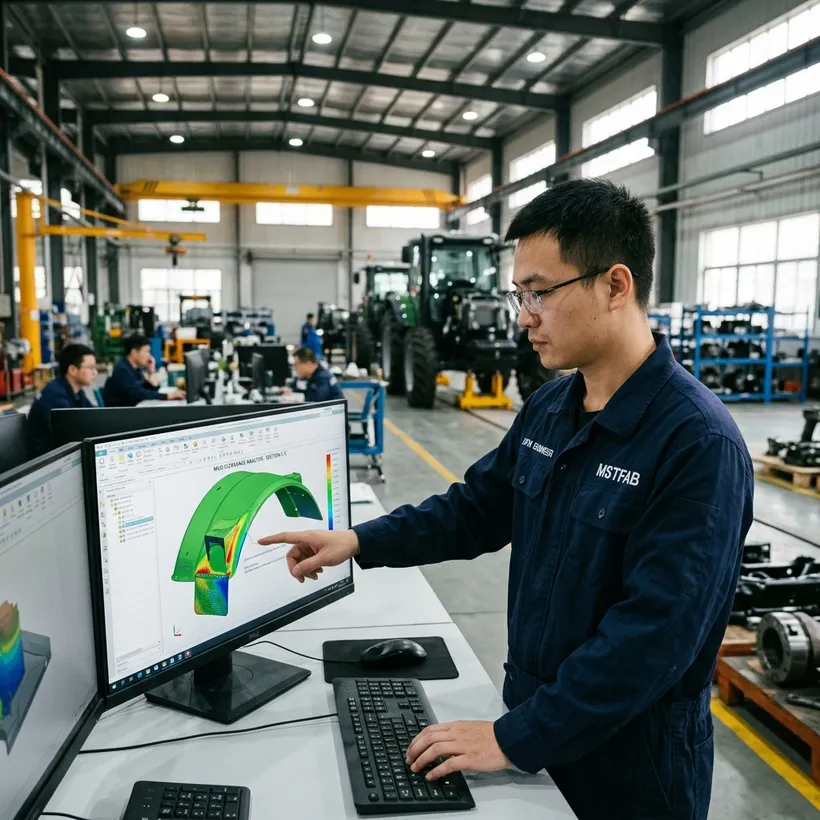
A DFM engineer running a structural review on the mud clearance and drainage path of a custom tractor fender.
1. Mud, Stones, and Field Impact Are Real Problems
Tractor fenders and mud shields are constantly exposed to gravel, crop residue, and debris thrown from tires. A sleek fender that traps mud behind it is not a good fender. It is a mud storage accessory. The tractor already collects enough dirt—the panel should not help.
| Pain Point | Cheap Job Shops (The Nightmare) | MSTFab Engineering Standard |
|---|---|---|
| Rattling Fenders | Large flat sheet metal areas with no reinforcement. They shake violently. | Stiffened return flanges and welded gussets built-in to shatter vibration waves. |
| Mud Storage | Closed corners trap wet mud, leading to hidden rust within months. | Optimized drainage paths designed for easy field washdown. |
| Fitment Failures | Tire clearance is ignored. The fender rubs against the tire under heavy load. | Rigorous 3D CAD tire clearance checks and test fixture verification before batch production. |
2. Welding Reinforcement Ribs
Large panels vibrate. The solution is not always “make it thicker.” Sometimes better structure—like formed ribs, return flanges, and TIG welded gussets—is the real solution. Heavy and wrong is still wrong. Just harder to install.
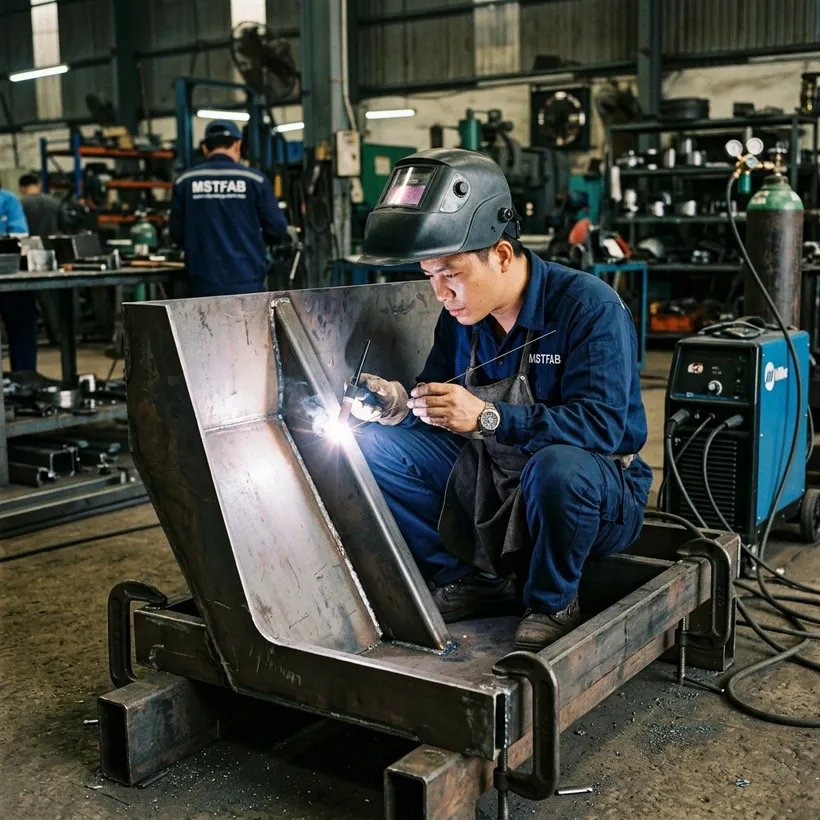
Precisely TIG welding internal structural reinforcement ribs to prevent vibration fatigue on large tractor side panels.
3. Fitment and Tire Clearance
For tractor fenders, a 3 mm mismatch may not sound dramatic in the office, but in the field, it can stop installation entirely.
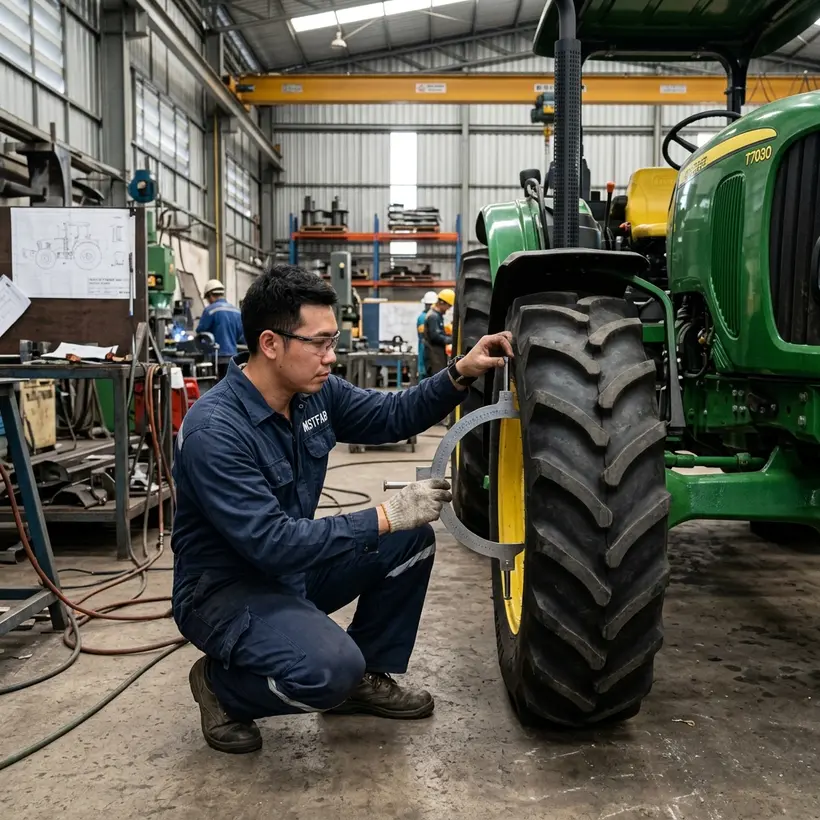
Using a master test fixture to meticulously verify tire clearance and mounting hole alignment before releasing the part for coating.
The flat pattern is not the final part. The installed tractor fender is the final part. The bolt either goes in, or it does not.
4. Powder Coating is Not Magic Paint
Many tractor panels use powder coating. But paint sprayed over dirty metal chips instantly. A replacement panel that arrives with a beautiful color but scratched corners is still a problem—it just looks bad in a very specific RAL shade.
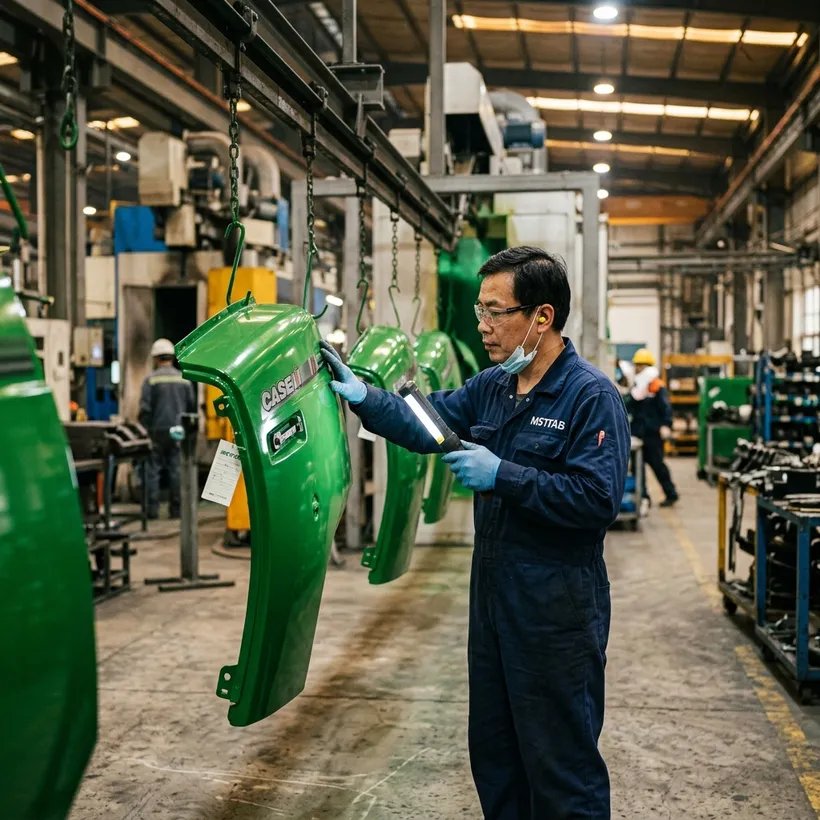
Applying heavy-duty, UV-resistant powder coating to ensure the tractor fender survives sunlight, rain, and fertilizer residue.
Rust rarely starts where the product photo was taken. It starts where nobody inspected carefully: laser-cut edges, mounting slots, and weld seams.
5. Export Packaging Matters
Whether you are sourcing replacement tractor fenders or shipping OEM panels to the USA or Australia, packaging is part of quality control. A large, curved fender that leaves the factory perfect but arrives bent is just a logistics problem shaped like a piece of metal.
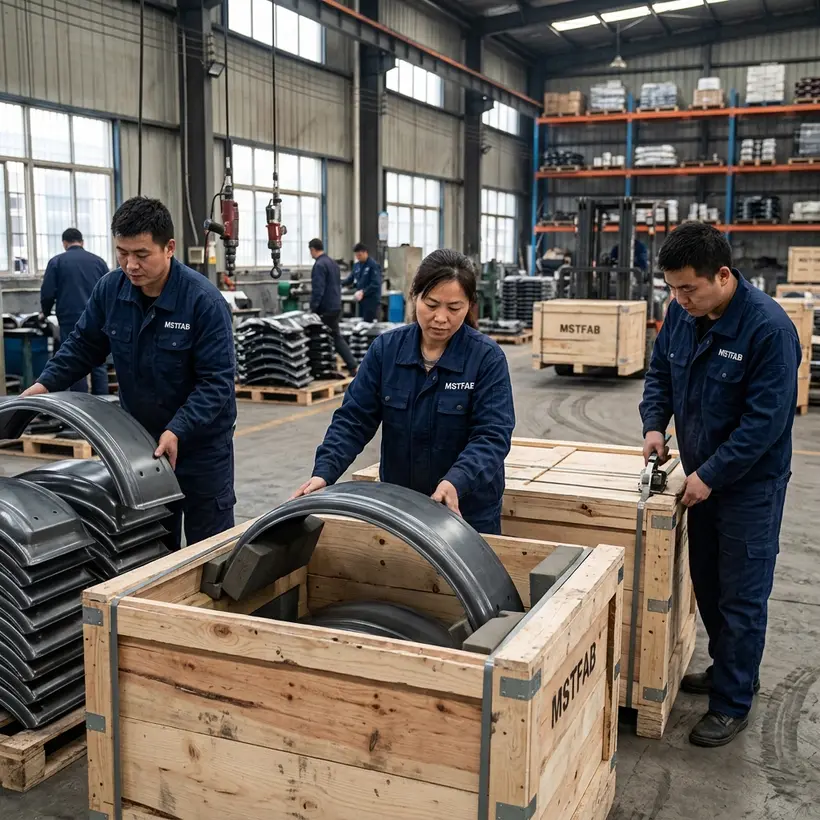
Carefully packing irregularly shaped, curved tractor fenders into robust wooden crates with custom foam inserts to prevent metal-to-metal abrasion.
Stop Guessing. Start Engineering Armor.
If your RFQ only says “tractor fenders, please quote fast,” your supplier has to guess. And guessing is not procurement—it’s a fast way to create field complaints.
Send us your native 3D STEP files or old sample photos for a highly predictable DFM quote today.
Explore Our Core Capabilities
Discover our full range of agricultural manufacturing services at our core product hub: Custom Agricultural Sheet Metal Parts Fabrication
Related agricultural OEM check: Before releasing tractor brackets, guards, panels or welded assemblies for production, review MSTFAB’s custom tractor metal parts fabrication risk matrix for vibration, corrosion, fitment, welding, coating and RFQ file checkpoints.
sheet metal welding services
MSTFAB provides TIG and MIG sheet metal welding services for structural assemblies, cabinets, frames and OEM metal components.
 WeChat Contact
 WhatsApp Me Directly