
Material selection guide for unpopulated cabinet shells
Stainless steel vs carbon steel PLC cabinets is first a sheet metal shell decision, not an electrical component decision. The right choice depends on corrosion exposure, cleaning method, finish risk, fabrication route and lifecycle expectations.
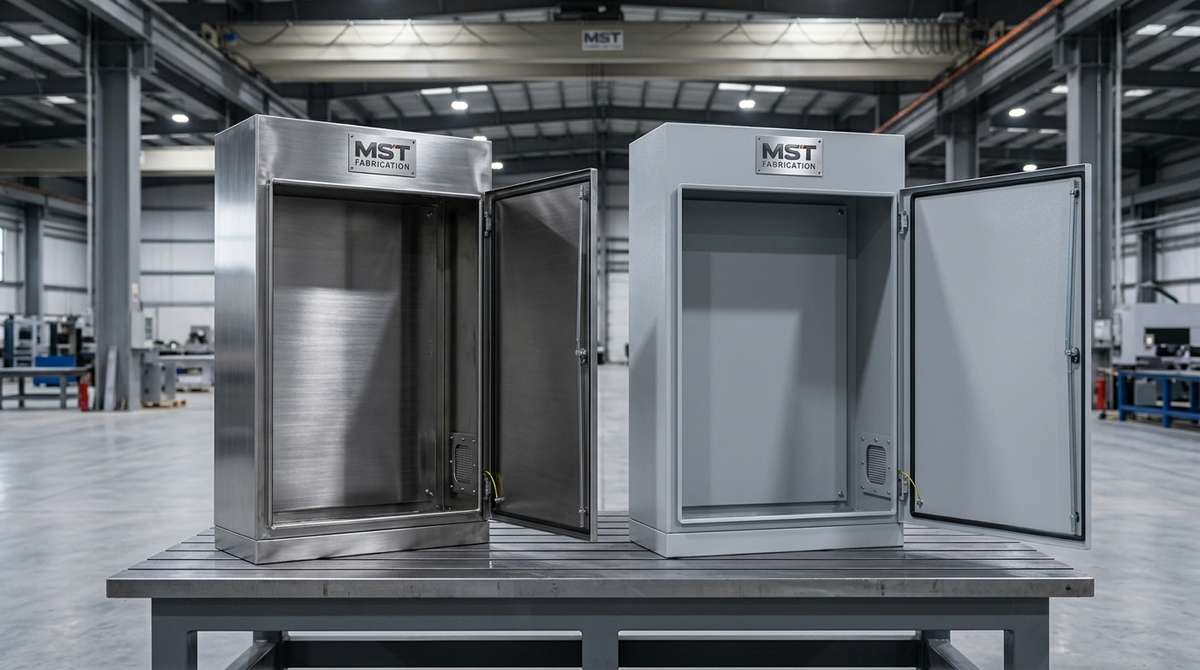
MSTFAB manufactures custom PLC enclosure shells from customer drawings. The automation integrator selects and installs the PLC, power supply, terminal blocks, cooling equipment and wiring after receiving the empty enclosure. Keeping that boundary clear prevents a surprisingly common RFQ problem: asking a sheet metal fabricator to quote an electrical system it does not build.
Choose powder-coated carbon steel when:
The cabinet is indoors or sheltered, coating damage can be controlled, budget matters, and the project benefits from predictable forming and a broad choice of powder-coat colors.
Choose stainless steel when:
The shell faces washdown, coastal air, chlorides, chemicals, high humidity or frequent cleaning, and corrosion resistance must not depend only on an intact coating film.
A practical six-step material decision workflow
Do not begin with “stainless is premium” or “carbon steel is cheaper.” Begin with how the cabinet shell will actually be used. A sensible review moves from environment to manufacturing evidence.
- 1. Map the environment: Indoor, outdoor, sheltered, washdown, coastal, chemical and high-humidity locations create very different corrosion loads.
- 2. Define the exposure: List water, salt, cleaning chemicals, airborne contamination, temperature cycling and the likelihood of field scratches.
- 3. Select grade and finish: Confirm SPCC, SECC, SGCC, 304 or 316L together with coating, brushed grain, passivation and cosmetic requirements.
- 4. Review the process route: Laser cutting, bending, welding and finishing behave differently across grades and can change door flatness and visual quality.
- 5. Lock interface drawings: Mark HMI cutouts, cable entries, mounting studs, hinge positions, grounding points and dimensions that mate with other equipment.
- 6. Approve first article: Check shell squareness, door gap, hole position, finish, mounting-plate fit and packaging before authorizing a repeat batch.
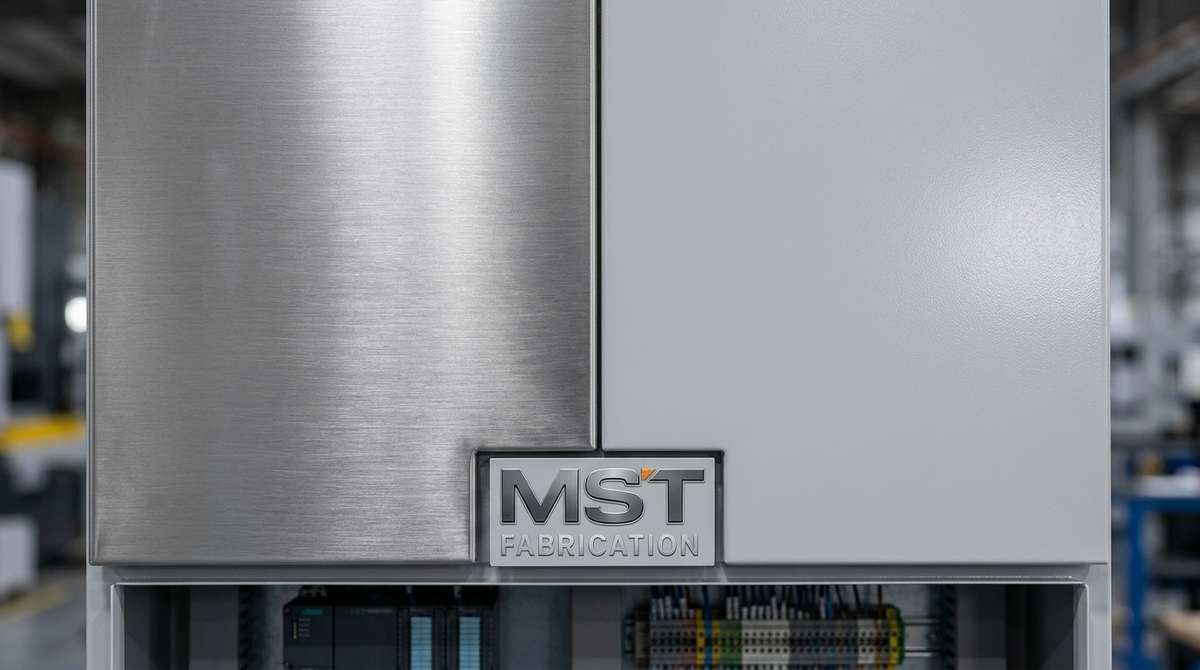
Stainless vs carbon steel PLC cabinet shell comparison
| Buyer question | Powder-coated carbon steel | 304 or 316L stainless steel |
|---|---|---|
| Typical use | Indoor or sheltered industrial cabinets where coating condition can be managed. | Washdown, coastal, humid or chemically aggressive environments. |
| Corrosion strategy | Pre-treatment plus powder coating, with attention to cut edges, threads, masking and field damage. | Corrosion resistance comes primarily from the alloy; surface finish and weld treatment still matter. |
| Common drawing callout | SPCC for coated indoor work; SECC or SGCC where a zinc-coated substrate is specified. | 304 for many industrial and washdown uses; 316L where chlorides or aggressive chemicals justify it. |
| Forming behavior | Generally predictable to form and easier to control for routine cabinet work. | Higher springback and work hardening require bend allowance and tooling review. |
| Weld appearance | Welds can be dressed before coating; coating hides normal color variation. | Heat tint, distortion and grain restoration remain visible unless the finish route is specified and controlled. |
| Thermal note | Carbon steel generally transfers heat more readily than stainless, but cabinet geometry and heat load still govern thermal design. | Lower thermal conductivity can matter, yet the enclosure fabricator does not size the finished control system cooling without integrator data. |
| Main cost drivers | Coating system, pretreatment, color, texture, masking, cabinet size and batch quantity. | Grade, thickness, weld length, distortion control, surface grain, passivation and cosmetic inspection. |
Carbon steel PLC shells: coating is part of the design
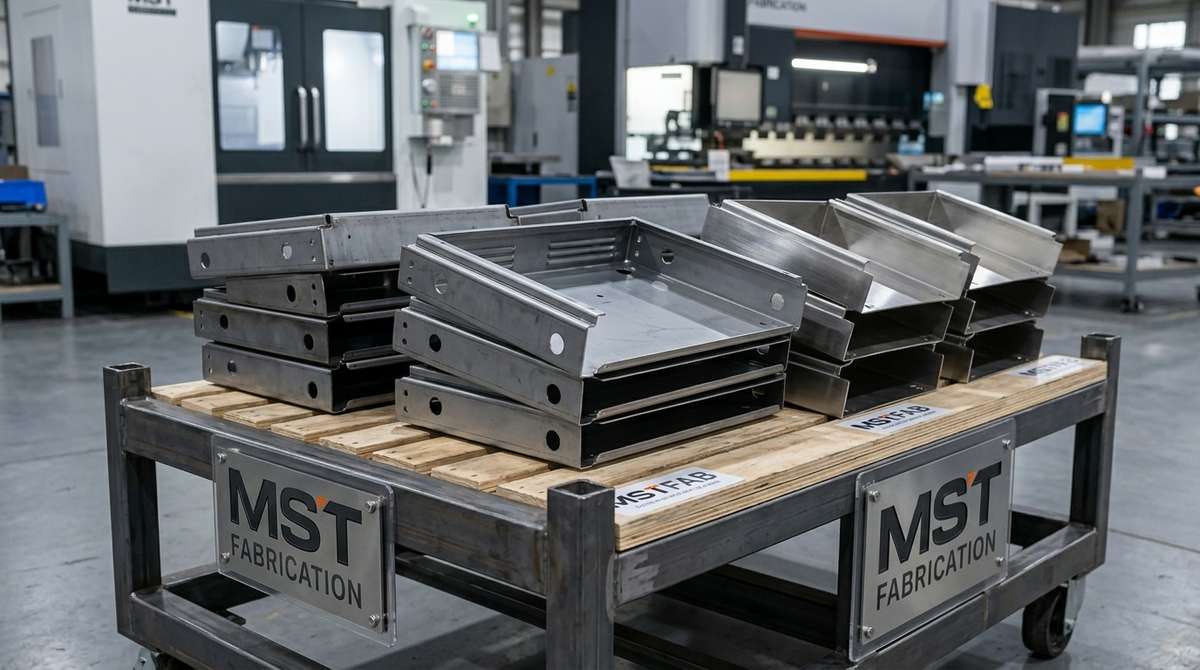
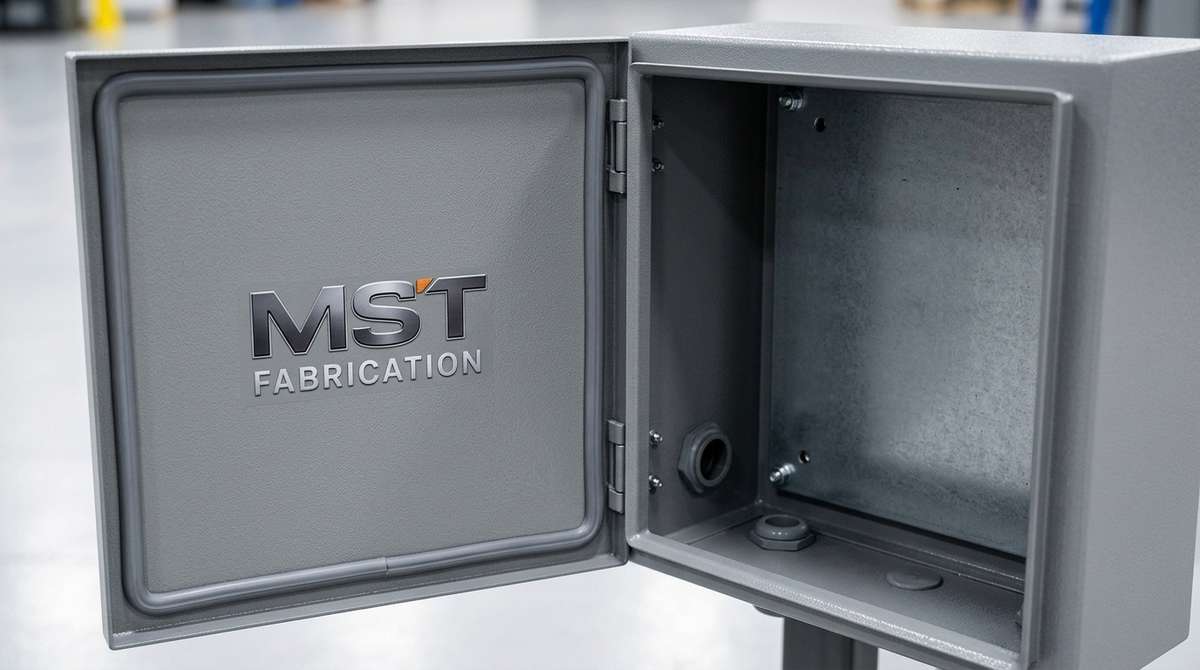
Carbon steel remains a practical choice for many industrial control cabinet shells. It is available, structurally efficient and well suited to laser cutting, CNC bending, welding and powder coating. The catch is simple: corrosion performance depends on the complete coating system, not the color name in the purchase order.
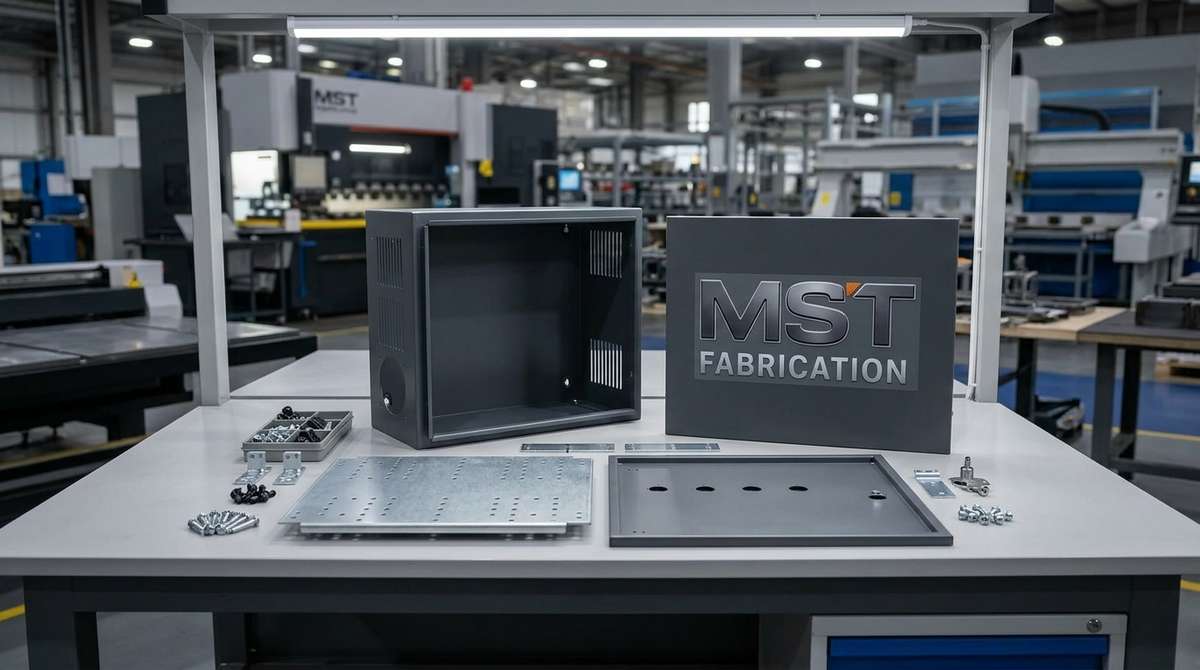
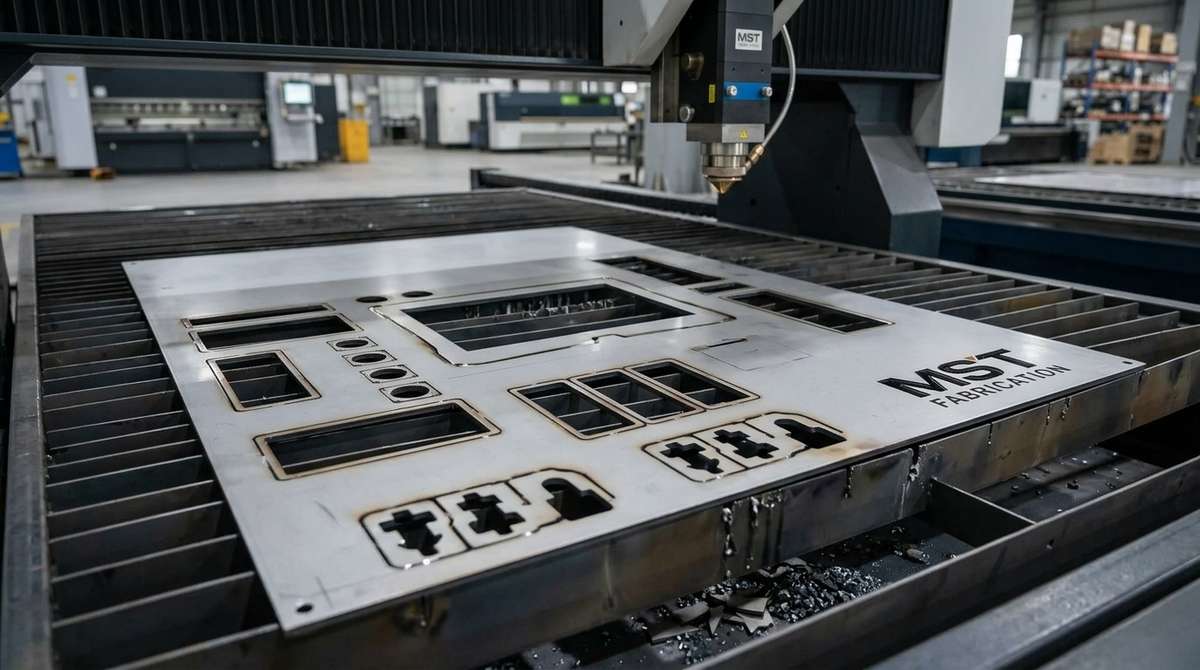
Laser-cut openings must account for downstream bending and coating. HMI windows, fan openings and cable entries located too close to bend lines can distort. For powder-coated shells, tight door gaps also need coating build considered before the first part is released.
Stainless steel PLC shells: grade and finish both matter
Stainless steel removes the dependence on a paint film, but it does not remove engineering decisions. 304 is common for industrial, food-equipment and general washdown environments. 316L is usually considered where chloride exposure, coastal air or aggressive cleaning chemistry raises the corrosion risk. The buyer should specify the actual grade rather than writing only “stainless.”
Visible stainless shells also need a finish definition. Brushed grain direction, protected cosmetic faces, weld discoloration limits, grinding transitions and contamination control affect the result. Carbon-steel dust embedded during handling can create rust spots on an otherwise sound stainless surface, which is a particularly annoying way to turn a premium material into a complaint.
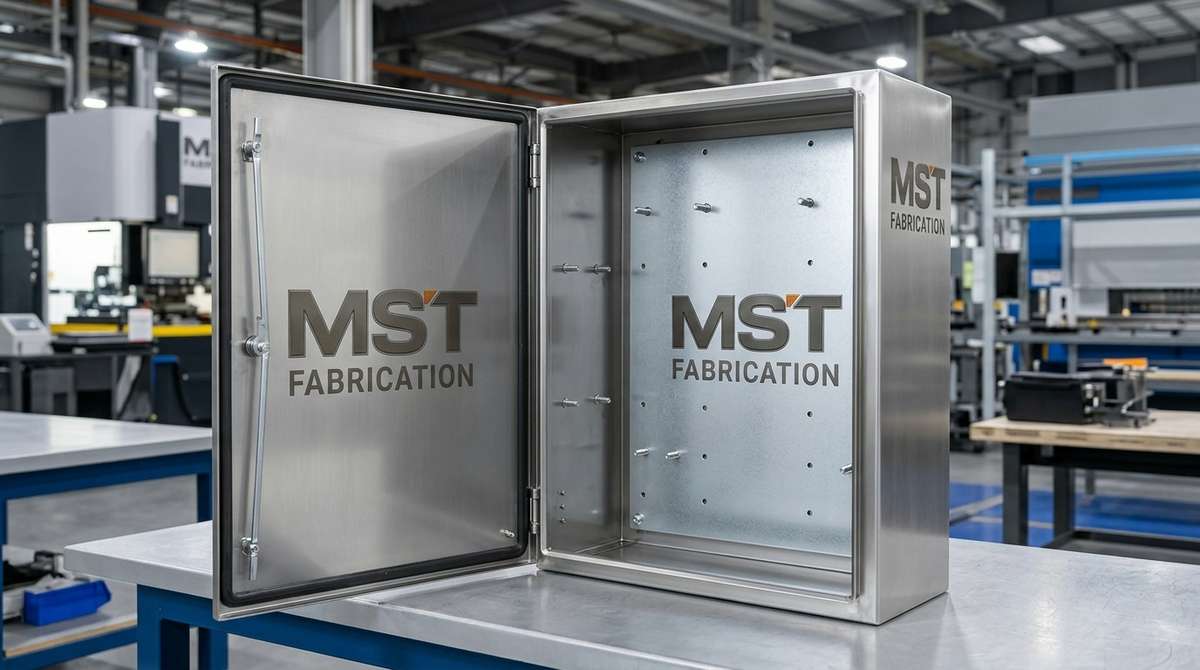
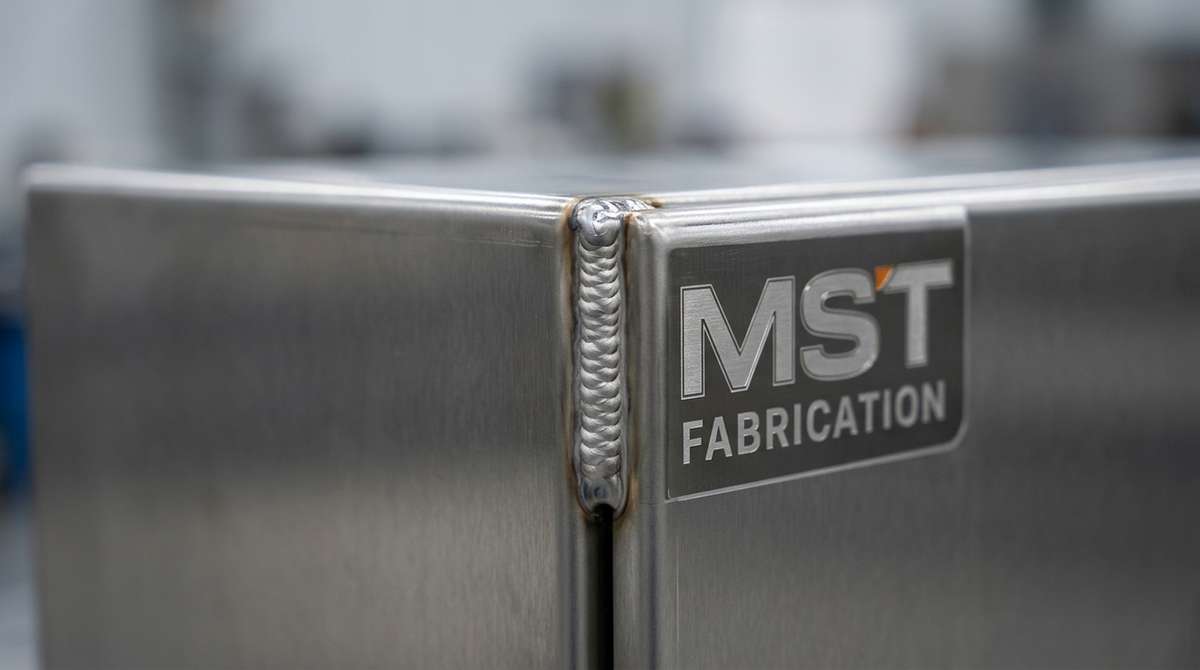
For sealed stainless cabinets, welding sequence and heat input influence squareness and door alignment. Post-weld finishing should restore the specified surface without thinning corners or rounding critical sealing edges. Learn more about custom stainless steel enclosure fabrication.
DFM checks that prevent cabinet-shell rework
Material selection will not rescue a drawing with impossible tooling access, a mounting plate that cannot be installed or a door that collides after finishing. A focused DFM review should settle these six points before cutting.
- Thickness and reinforcement: Confirm whether the shell needs folded returns, ribs, channels or a plinth instead of simply increasing sheet thickness.
- Cutout-to-bend distance: Protect HMI, vent and cable-entry geometry from stretch or movement near press-brake tooling.
- Door and gasket geometry: Review return flanges, hinge alignment, compression, corner continuity and coating build where applicable.
- Mounting interfaces: Mark studs, PEM hardware, rails, mounting plates and mating surfaces with realistic access for installation and inspection.
- Visible surfaces: Identify A-surfaces, brushed-grain direction, allowable weld dressing and areas that require protective film.
- Revision and quantity: State prototype quantity, pilot quantity, expected repeat volume and drawing revision so the process can scale sensibly.
Related process references: sheet metal bending services, sheet metal fabrication with powder coating, and the sheet metal fabrication tolerance guide.
What should be checked on the first article?
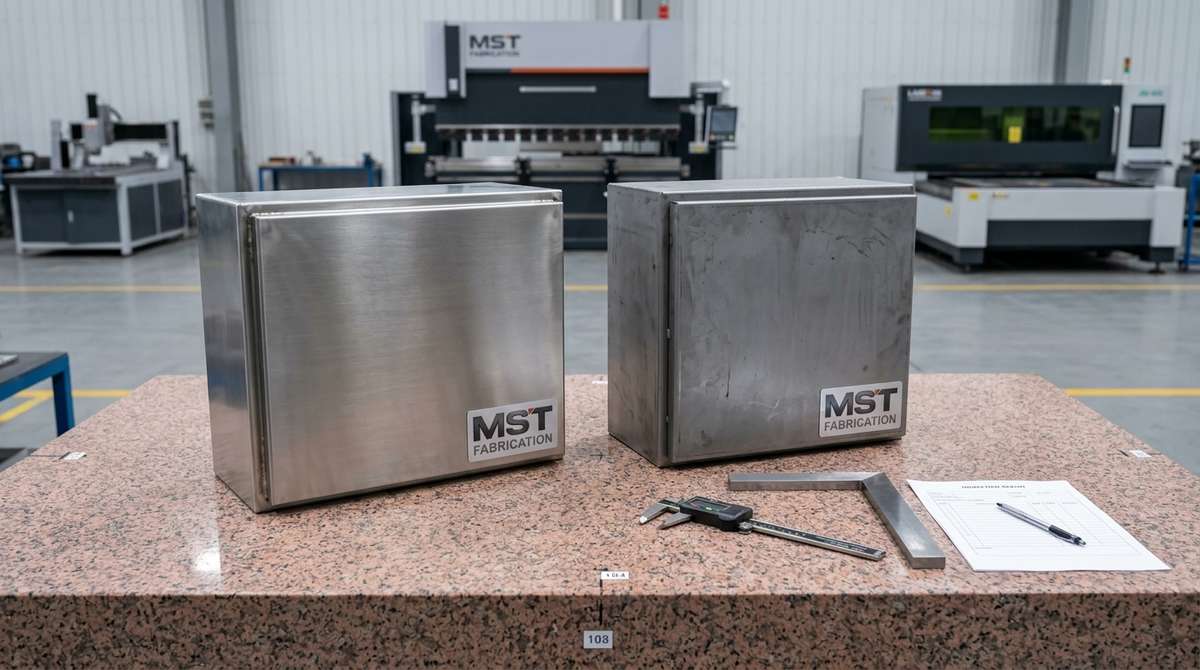
| Inspection point | Fabrication check | Buyer confirmation |
|---|---|---|
| Outer size and squareness | Overall dimensions, diagonals and flatness at mounting interfaces. | Fits the allocated machine or line space. |
| Door alignment | Gap consistency, hinge movement, latch engagement and gasket contact geometry. | Opening direction and service clearance are correct. |
| Cutout position | HMI, gland, fan and conduit openings checked against the controlled 2D drawing. | Component interface dimensions match the integrator design. |
| Mounting plate | Plate fit, stud locations, removable access and critical hole patterns. | Electrical layout can be installed later without shell rework. |
| Finish | Color or grain, gloss/texture, masking, weld dressing and visible-surface acceptance. | Cosmetic sample and environment specification are approved. |
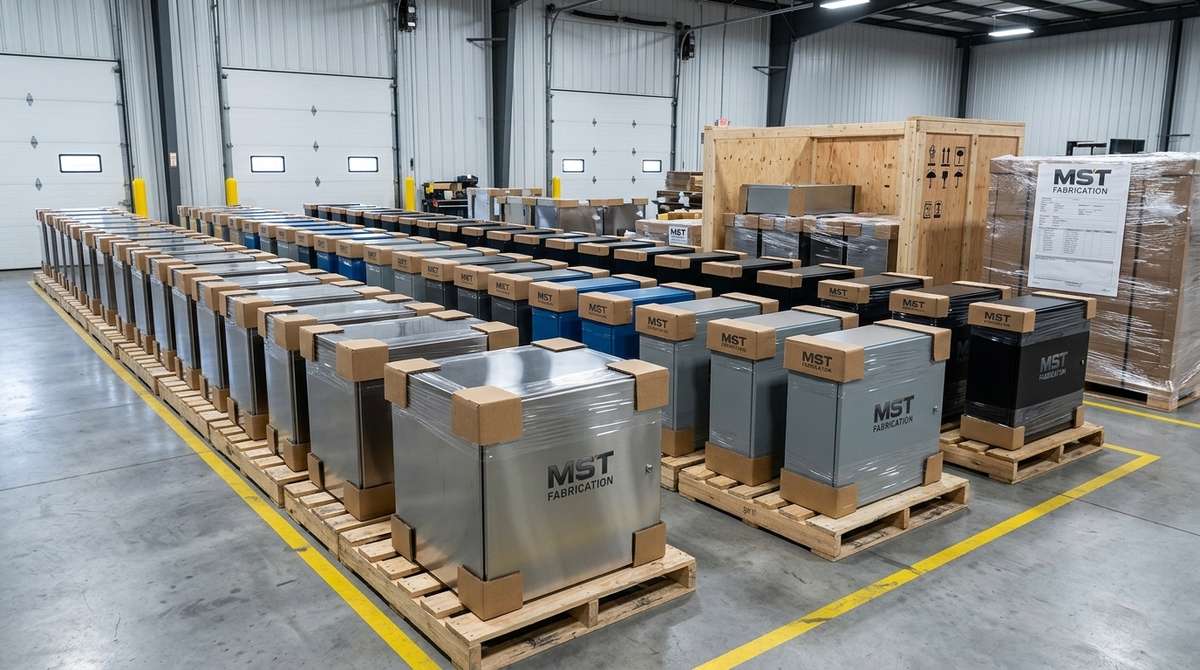
| Packaging | Door restraint, corner protection, surface separation and moisture protection. | Pack format suits the shipment and unloading method. |
Who supplies what?
MSTFAB fabricates the metal enclosure shell
- Laser-cut and bent cabinet body and doors
- Mounting plate, brackets, plinth and sheet metal accessories
- Welded studs and specified hardware fit-up
- Powder coating or stainless surface finishing
- Dimensional inspection and export protection
The OEM or integrator defines the control system
- PLC, drives, power supplies and electrical components
- Wiring, cable routing and electrical assembly
- Thermal load and cooling-equipment selection
- System-level IP/NEMA validation and compliance
- Final electrical testing and control-panel certification
For grade, sealing, welding, finish and inspection decisions specific to stainless shells, use the stainless steel electrical cabinet applications guide.
Frequently asked questions
Is stainless steel always the better PLC cabinet material?
No. Stainless is useful where corrosion exposure justifies the grade and finishing work. For a controlled indoor installation, a properly specified powder-coated carbon steel shell can be the more practical choice.
Can powder-coated carbon steel be used outdoors?
It can be suitable for some sheltered or moderate outdoor conditions when substrate, pretreatment, powder system, edge protection and maintenance are defined. Coastal, chloride-rich or aggressive washdown conditions may justify stainless instead.
What is the difference between 304 and 316L for enclosure shells?
Both are common stainless grades, but 316L generally offers better resistance where chlorides or aggressive chemicals are present. The correct choice depends on actual exposure, cleaning chemistry and lifecycle requirements.
Does MSTFAB supply a complete wired PLC cabinet?
No. MSTFAB supplies the unpopulated sheet metal enclosure shell and specified metal accessories. PLCs, wiring, electrical integration and final control-panel certification remain with the OEM or system integrator.
What files help with a reliable enclosure quote?
Send a 3D STEP file and controlled 2D PDF with material, thickness, finish, quantities, critical dimensions, weld notes, visible surfaces and packaging requirements. DXF files can support flat-pattern review but should not replace assembly drawings.
 WeChat Contact
 WhatsApp Me Directly