
Ordering stainless steel parts sounds refreshingly simple. Stainless doesn’t rust, it looks expensive, and everybody has heard of 304. Then the first shipment arrives: the brackets are 304 when the drawing said 316, the brushed panels have grain running in three different directions, and the weld corners are wearing a lovely golden-blue heat tint nobody asked for.
This page is for OEM buyers and engineers choosing a custom stainless steel sheet metal parts supplier for production—not just for one pretty sample. It covers what to define, what to inspect, and what a fabricator should and should not decide on your behalf.
Quick answer: A custom stainless steel sheet metal parts supplier should confirm the exact 304 or 316 grade, then control finished bend geometry, post-weld dimensions, installed hardware and surface finish against the released drawing. The OEM defines the operating environment and corrosion requirements; the fabricator manufactures the buyer-approved stainless steel parts.
The purchasing question is simple: can the supplier repeatedly make the approved stainless part without losing material control, assembly fit or surface appearance?
Scope note: MSTFAB manufactures drawing-based stainless steel sheet metal parts and mechanical assemblies through laser cutting, CNC bending, welding, hardware installation, mechanical assembly, inspection and export packing. Project-specific finishing may involve qualified long-term partners. We do not select your operating environment, certify corrosion performance or validate your finished equipment.
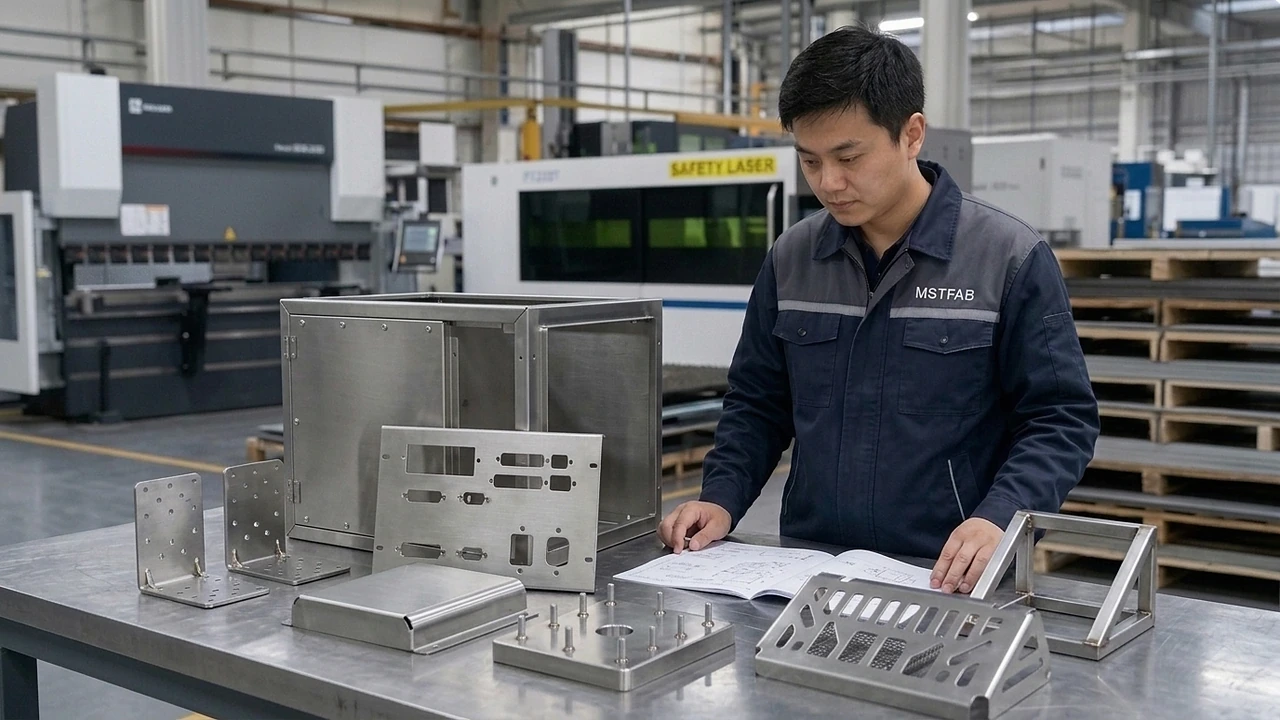
304 or 316? Start With the Buyer Requirement
A drawing should not simply say “Stainless Steel.” That is a material family, not a purchasing instruction.
| Grade | Typically considered for | Who decides |
|---|---|---|
| 304 | General industrial fabricated parts where corrosion resistance, durability and appearance matter | OEM, based on product specification |
| 316 | Environments that need greater corrosion resistance, such as some coastal, marine, humid, washdown or chemical-exposure applications | OEM, based on the actual operating environment |
| Other grade | Only when named on the drawing or purchase specification | OEM, in writing |
For grade-specific detail, see our pages on SS304 sheet metal fabrication and SS316 metal fabrication. Two rules apply to both:
- A supplier should never quietly swap 316 for 304 because it is cheaper or easier to source.
- Procurement should not specify 316 everywhere just because it sounds more premium.
The OEM defines the environment. The drawing defines the material.
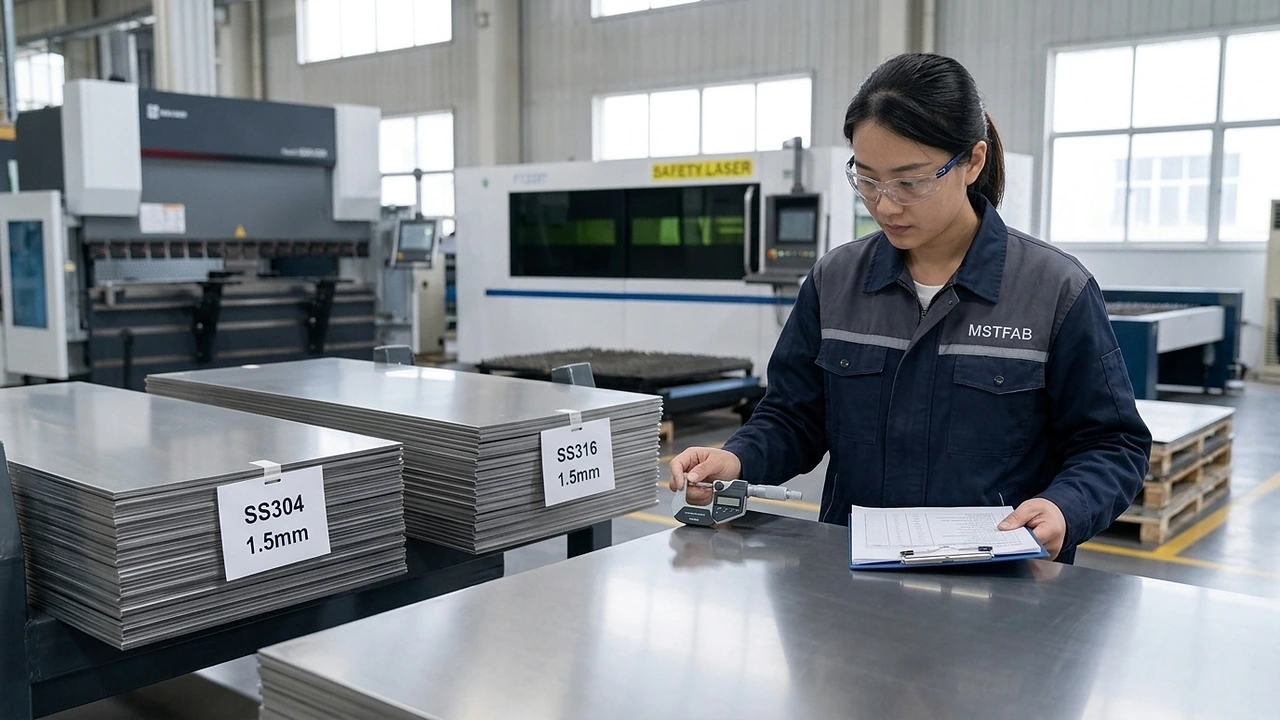
Stainless Parts Are More Than Enclosures
Stainless enclosures get most of the attention, but most OEM stainless spend goes into the smaller parts around them:
| Part type | Typical buyer concern |
|---|---|
| Mounting brackets | Hole position, bends, load interface |
| Equipment panels | Cutouts, flatness, cosmetic surface |
| Covers | Fit, bends, visible finish |
| Mounting plates | Hole patterns and hardware |
| Machine guards | Mounting interface and geometry |
| Frames | Welding distortion and squareness |
| Chassis parts | Component interfaces |
| Welded assemblies | Final post-weld geometry |
11 Checks Before You Release a Stainless Part to Production
1. Control Finished Bend Geometry, Not Just the Flat Blank
A correct laser-cut blank does not guarantee a correct finished part. What you actually install is the flange height, bend angle, hole-to-bend position, overall formed width and the relationship between mounting faces. Stainless also springs back more than mild steel, so bend radius, bend sequence, minimum flange length and tooling access all need attention.
The laser cutter sees the flat blank. Your assembly team sees the finished bracket. Inspect what they see.
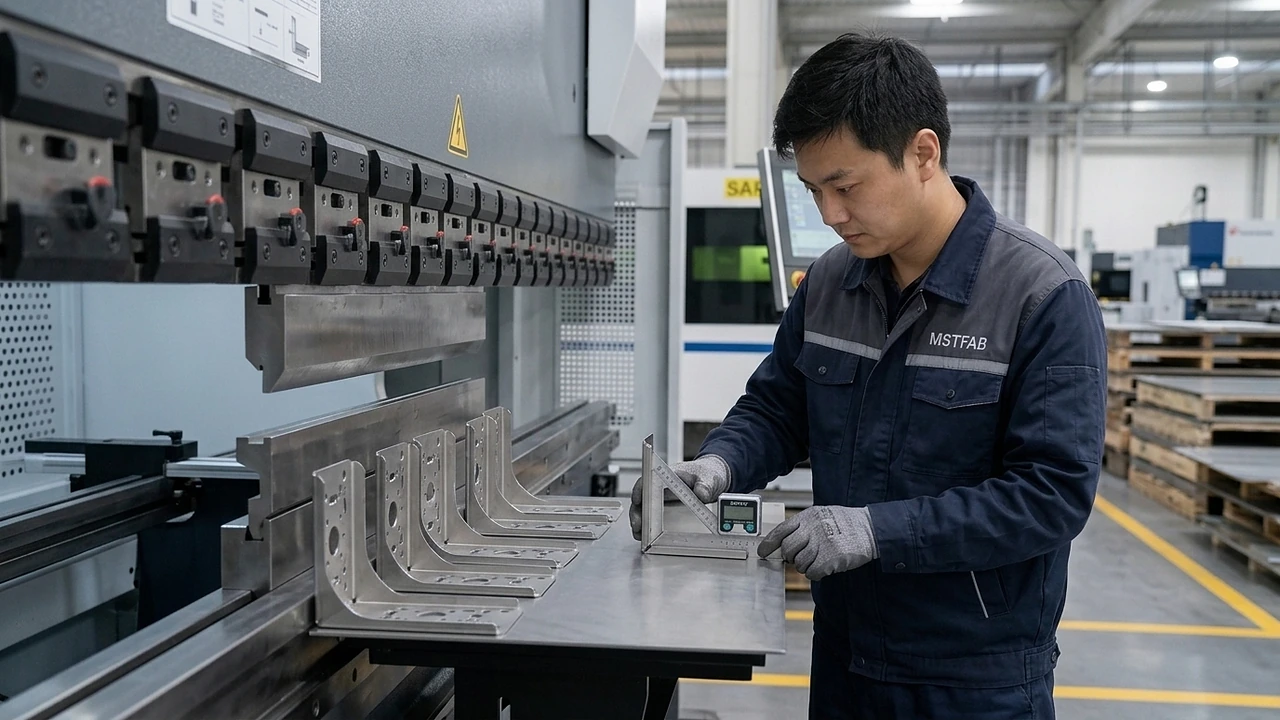
2. Mark the CTQs Instead of Tightening Everything
A stainless bracket may carry fifteen dimensions. Perhaps three control fit. Mark those three as CTQs and let the rest use general tolerances.
| Feature | Treatment |
|---|---|
| Hole pattern | Critical (CTQ) |
| Mounting flange | Critical (CTQ) |
| Component clearance | Critical (CTQ) |
| Hidden non-functional edge | General tolerance |
Over-tolerancing every feature adds setup, correction, inspection and rejection cost without making the equipment any better. A drawing should explain what matters, not show off how many decimal places CAD can display.
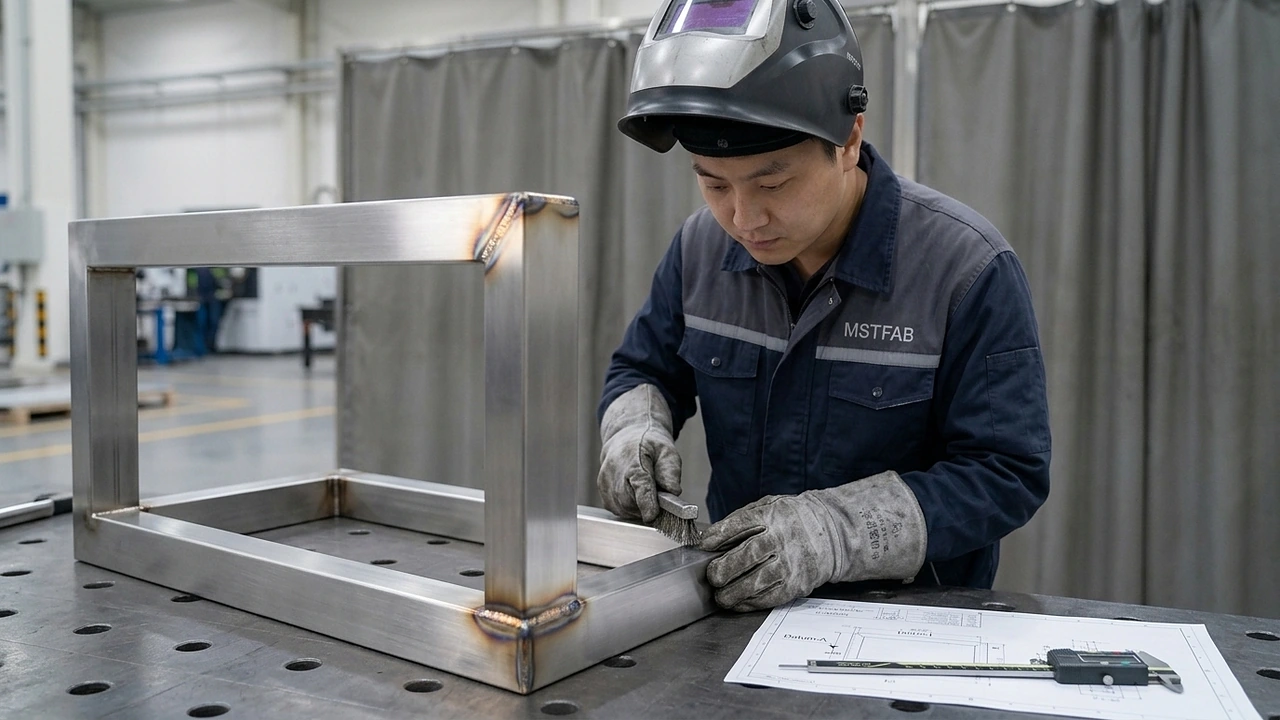
3. Expect Welding to Change Geometry and Appearance
Stainless frames, brackets, housings and supports are often welded, and welding can shift squareness, flatness, bracket positions and hole relationships. It also changes local surface appearance and leaves heat-tinted areas.
For important welded parts, define which dimensions must pass after welding. “Mounting holes relative to Datum B after welding” is far more useful than proving the bracket was perfect before it met the frame.
4. Define Weld Cleanup Properly
“Clean weld” is a wish, not a specification. Depending on the part, the real requirement might be spatter removal, grinding, blending, brushing, polishing or a project-specific post-weld treatment. It also depends on whether the surface is hidden, functional, cosmetic or exposed to a corrosion-sensitive environment.
Grade traceability, corrosion considerations and cosmetic acceptance are covered in more depth in our stainless steel buyer checks.
5. Control Visible Stainless Surfaces
Stainless is often chosen because the metal itself stays visible. That is a different quality problem from a hidden powder-coated bracket. For visible parts, specify the visible face, brushing direction, finish requirement, acceptable weld blending and handling protection.
When several brushed panels meet on one machine, grain direction becomes an assembly-level requirement. A perfectly dimensioned panel with the wrong brush direction still looks wrong next to its neighbour.
Stainless resists corrosion. It remains impressively vulnerable to fingerprints, scratches and careless handling.
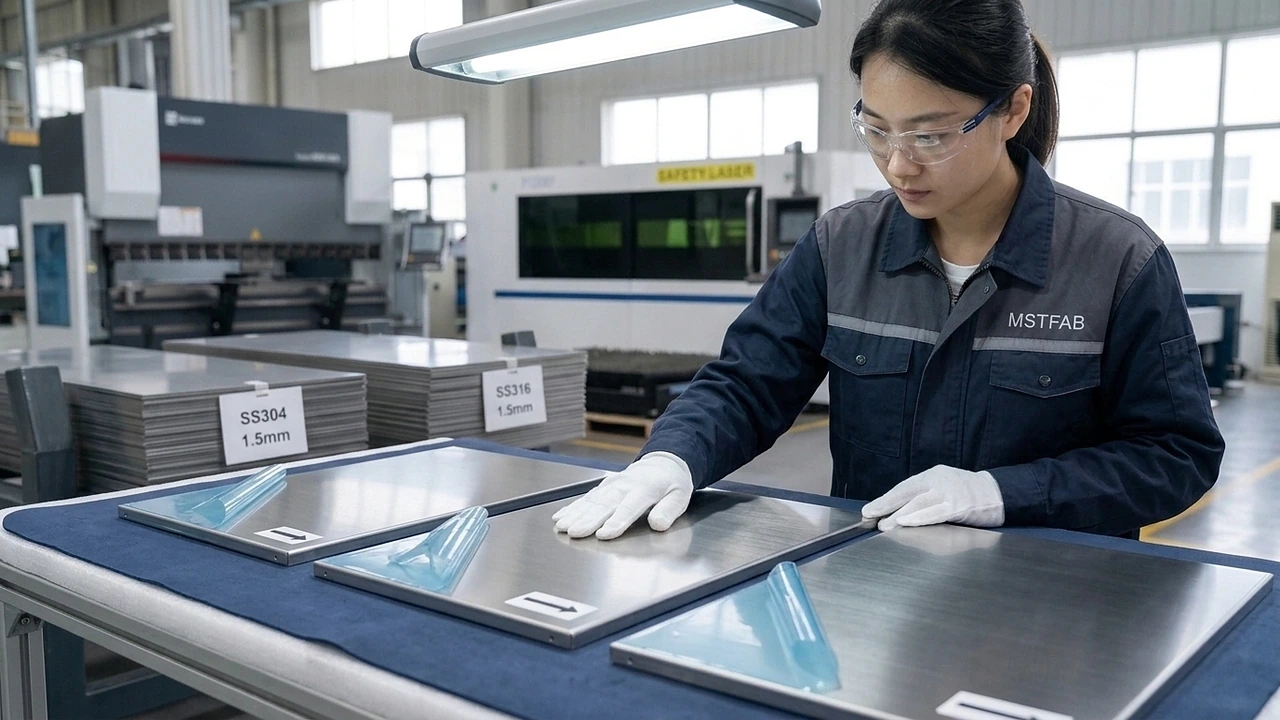
6. Protect Cosmetic Surfaces Through the Whole Route
Surface damage does not wait for the packing station. It can happen at every step:
For a cosmetic OEM part, surface quality is not decoration added after dimensional inspection. It is part of the acceptance requirement.
7. Specify Hardware Completely
Stainless parts may carry PEM nuts, studs, rivet nuts, weld nuts, threaded inserts or standoffs. Define the part number, thread, material, quantity, installation side and location. The supplier should check that hardware against the sheet thickness, stainless grade and manufacturing sequence.
- Put on the drawing: hardware part number, material, thread, side and position.
- Ask for evidence: first-article confirmation of hardware type, side and orientation.
- Red flag: “Install standard M5 hardware.” “Standard” is a lovely word until Supplier A and Buyer B turn out to have different standards.
8. Do Not Specify Passivation Everywhere by Default
Some stainless projects require passivation or another post-fabrication treatment. That does not mean every bracket needs it. If you require passivation, name the applicable specification and any records or testing you expect. Otherwise keep it project-specific.
The same goes for brushing, polishing and other treatments: require them because the application needs them, not because a website needed another keyword.
9. Approve Both Fit and Finish at First Article
A useful first article for a new stainless part verifies material, thickness, critical dimensions, bend geometry, hardware, welded geometry and cosmetic finish.
| Part | Useful FAI focus |
|---|---|
| Bracket | Hole pattern + bend angle |
| Panel | Cutouts + cosmetic grain |
| Cover | Mating fit + appearance |
| Frame | Squareness + mounting interfaces |
| Mounting plate | Hole positions + hardware |
| Welded assembly | Final post-weld geometry |
One perfect sample is useful. A process that makes the next 100 parts the same way is more useful.
10. Keep Repeat Orders on the Same Material and Finish Baseline
For recurring parts, preserve the approved baseline:
If you change 304 to 316, brushed to polished, or move a hole, update the controlled documentation. Do not run the next order from an old PDF, a new STEP and an email saying “same finish as before.” The steel does not receive the email.
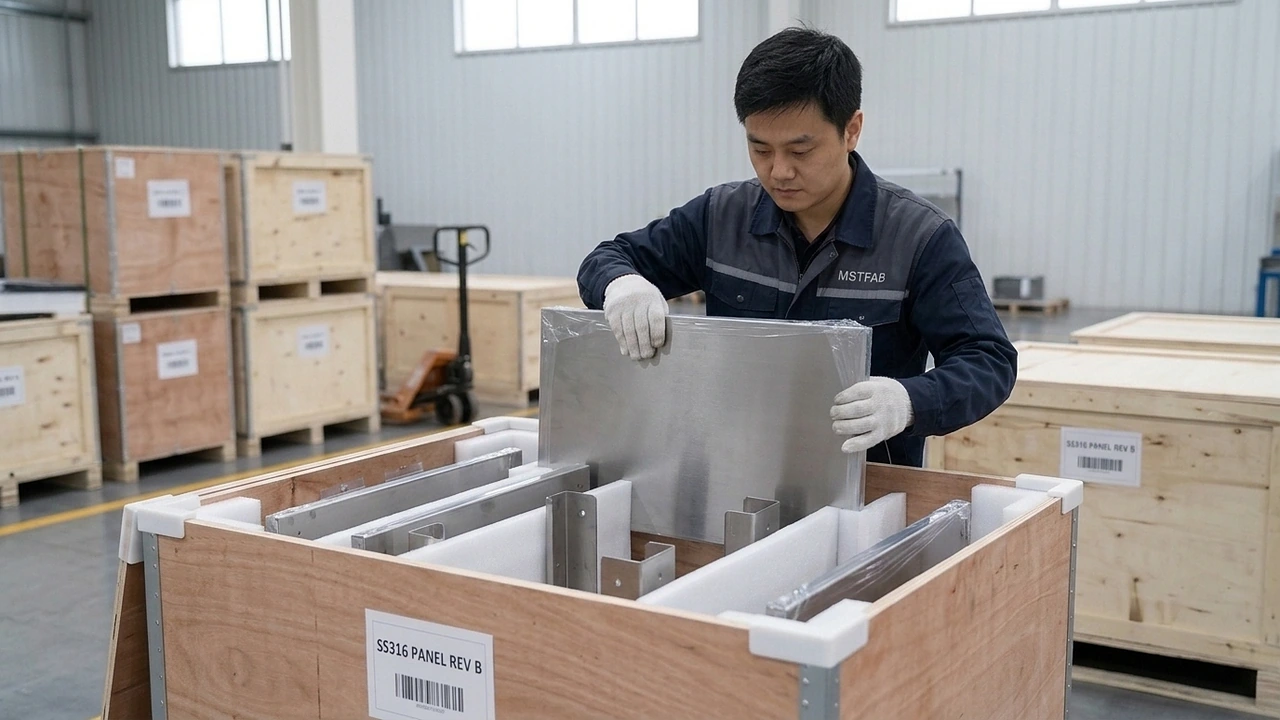
11. Pack Visible Stainless for Export
A stainless panel can pass every dimensional and cosmetic check and still arrive overseas scratched. Depending on the project, packing may include surface film, separators, foam, edge protection, individual wrapping and controlled stacking.
A beautiful brushed panel that arrives looking like it fought the pallet loses most of the benefit of being beautiful.
Trust Table: Who Controls What on a Stainless Project
Clear ownership prevents most stainless disputes before they start. Here is how responsibility splits between your team and ours, and what evidence you can ask for.
| Item | MSTFAB controls | Evidence you can request | Owner |
|---|---|---|---|
| Operating environment & grade selection | Flags missing or unclear grade before quoting | Written grade confirmation in the quote | OEM |
| Material & thickness | Uses the specified grade and thickness; no substitution without written approval | Material certificates where specified on the order; thickness checks | MSTFAB |
| Finished bend geometry | Bend angles, flange heights, hole-to-bend positions | Measured CTQs on first article | MSTFAB |
| Post-weld geometry | Agreed CTQs measured after welding | Post-weld measurement results | MSTFAB |
| Weld cleanup & finish | Cleanup and brushing to the defined requirement | First-article photos of welds and visible faces | MSTFAB to OEM definition |
| Hardware | Part number, side and orientation per drawing | FAI hardware check | MSTFAB |
| Packing | Surface protection and labeling | Pre-shipment packing photos | MSTFAB |
| Corrosion performance & final equipment validation | Not in fabricator scope | — | OEM |
What to Send for a Stainless Steel Parts RFQ
- STEP/STP model and controlled PDF
- Material grade: 304, 316 or another approved specification
- Thickness and quantity
- Functional CTQs
- Bend requirements
- Welding requirements
- Installed hardware
- Cosmetic and visible surfaces
- Brushing or polishing requirement
- Any required post-weld treatment
- Inspection requirements
- Packaging requirements
A useful note to paste into your RFQ:
“Please confirm stainless grade, finished bend geometry, post-weld CTQs, hardware, cosmetic finish and inspection scope before quotation. Do not substitute material or finish without written approval.”
That is much easier to price accurately than “Stainless steel parts, please quote.”
What MSTFAB Manufactures
MSTFAB is the international brand of Guangzhou Maisituo Sheet Metal Manufacturing Co., Ltd., a drawing-based sheet metal manufacturer producing brackets, panels, chassis, enclosures and welded assemblies from customer-controlled drawings. Our route covers laser cutting, CNC bending, welding, mechanical assembly, inspection and export packing, with project-specific finishing confirmed per order. For the full process list and how to submit drawings, see our custom sheet metal fabrication services.
For stainless projects, the mechanical scope can include brackets, panels, covers, mounting plates, guards, chassis parts, empty equipment housings and welded assemblies. The OEM defines the operating environment, corrosion requirement, grade, product function, structural requirements, CTQs and final validation. MSTFAB manufactures the buyer-approved mechanical stainless steel parts.
Frequently Asked Questions
Can MSTFAB manufacture stainless steel parts other than enclosures?
Yes. We make stainless brackets, panels, covers, mounting plates, guards, cabinet parts and welded structures as well as enclosures, all from customer drawings.
Is 316 always better than 304?
No. 316 can offer advantages in more corrosion-sensitive environments, but the right choice depends on the actual application and your specification. Specifying 316 where 304 is sufficient adds cost without adding value.
Should stainless welded parts be inspected after welding?
Yes, whenever welding can affect important geometry. Critical mounting positions, flatness, squareness and mating interfaces should be checked in the finished welded condition.
Should brushing direction be specified?
For visible brushed parts, yes. Identify the cosmetic surfaces and the grain direction wherever consistency matters, especially when panels sit side by side.
Does every stainless steel part need passivation?
No. Treat passivation as a project-specific requirement based on the application and your specification, and name the standard if you need it.
What files should I send?
A STEP/STP model plus a controlled PDF is the practical starting point, together with material grade, thickness, quantity, finish and CTQs. We also accept DXF/DWG and PDF drawing packages.
Send the Drawing, Name the Grade
Share your STEP and PDF with the stainless grade, thickness, CTQs and finish. Our engineers will confirm bend geometry, weld and cleanup requirements, hardware and inspection scope before quoting—and flag anything that should stay your decision, not ours.
Email: caroline@mstfab.com
 WeChat Contact
 WhatsApp Me Directly