
Choosing a stainless steel laser cutting manufacturer in China can feel wonderfully simple until the parts arrive with scratches, sharp edges, mystery material grades, or a box that looks like it had a long argument with international shipping. Stainless steel is beautiful, durable and corrosion resistant, but it is also very honest. If the supplier cuts corners, the surface will usually tell on them.
This guide is written for overseas OEM buyers, contractors, wholesalers and industrial equipment companies sourcing custom stainless steel parts from China. We will explain what to check before choosing a supplier, how to avoid common purchasing traps, and why the cheapest quote is not always the cheapest outcome. A little humor is included because nobody should have to read about burrs with a straight face.
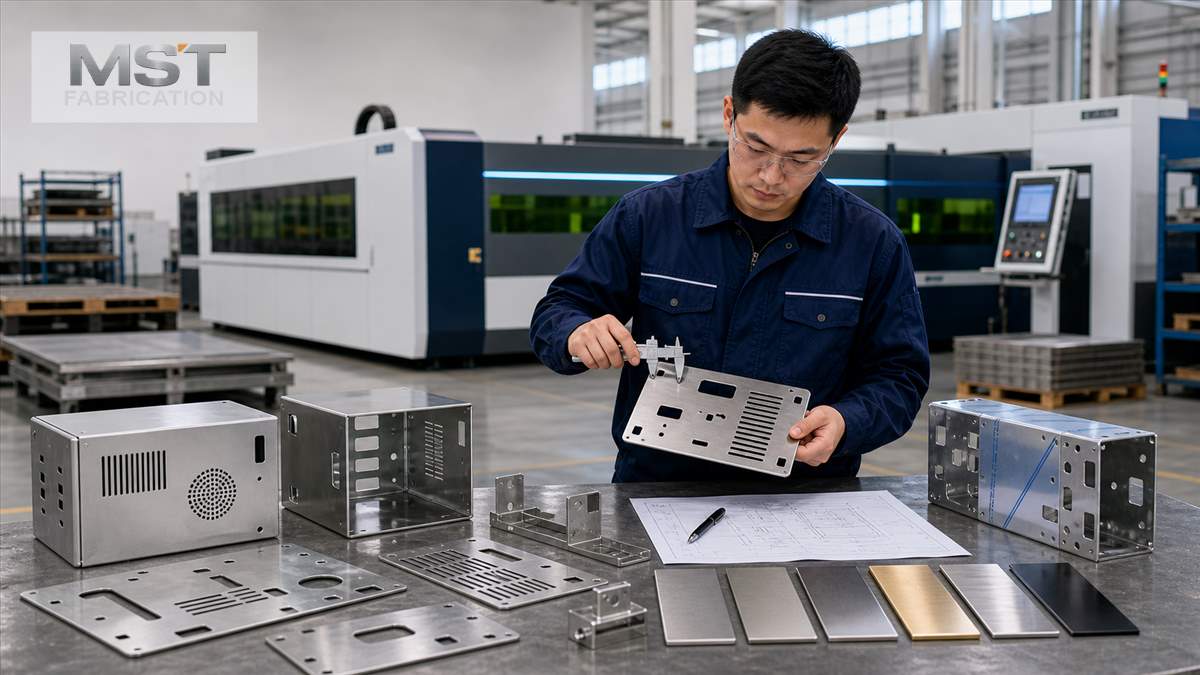
What Is Stainless Steel Laser Cutting?
Stainless steel laser cutting uses a focused laser beam to cut stainless steel sheets into custom profiles, holes, vents, slots, covers, brackets, panels and enclosure parts. For OEM buyers, it is widely used in industrial equipment, medical devices, food processing equipment, electrical cabinets, architectural parts, machine covers and custom sheet metal assemblies.
Compared with many traditional cutting methods, laser cutting offers clean geometry, repeatable accuracy, flexible design changes and good production speed. If you need related production capability, visit MSTFAB’s Laser Cutting services page.
Why Overseas Buyers Source Stainless Steel Laser Cutting From China
China has a mature sheet metal supply chain with fiber laser machines, CNC bending, welding, surface treatment, material sourcing and export packaging support. For overseas buyers, the attraction is not only price. The real value is production flexibility, capacity and the ability to combine several processes under one roof.
- Cost control: efficient material purchasing and production capacity can reduce unit cost.
- Flexible production: prototypes, small batches and larger OEM runs can be handled by one supplier.
- Process integration: laser cutting can connect with bending, welding, finishing and assembly.
- Export experience: experienced factories understand packaging, documentation and overseas shipping requirements.
The warning is simple: China has many suppliers, but not all suppliers are equal. The right factory saves time. The wrong factory gives your purchasing team a new hobby called “damage control.”
Common Buyer Pain Points
1. The Stainless Steel Grade Is Not Clearly Confirmed
304 and 316 stainless steel are not the same. 304 is common, cost-effective and suitable for many industrial uses. 316 offers stronger corrosion resistance, especially for marine, chemical, medical or harsh environments. If the grade is unclear, the quote may look nice but the application may suffer later.
Buyers should confirm material grade, thickness, surface finish and whether material certificates are required. If corrosion resistance matters, do not let “stainless steel” become a vague bucket. Stainless steel is not one magic material. It is a family, and some family members handle salt and chemicals better than others.
For more material comparison, you can review our guide on SUS304 vs SUS316 stainless steel.
2. Visible Surfaces Get Scratched
Stainless steel often has visible surfaces, brushed texture or protective film. During cutting, stacking, bending and packing, careless handling can create scratches. A small scratch on a hidden bracket may be acceptable. A scratch on a front panel looks like it brought its own spotlight.
Before production, mark cosmetic surfaces clearly. Confirm whether protective film is needed, how parts should be stacked, and how visible surfaces should be inspected. This is especially important for medical housings, food equipment, decorative panels and customer-facing enclosures.
3. Edge Quality Is Treated Too Casually
Laser-cut stainless steel edges may need deburring, edge rounding or brushing depending on the application. Sharp edges can cut hands, damage cables, scratch other parts or make assembly unpleasant. If the part is handled often, edge quality is not optional.
Buyers should specify whether the part needs light deburring, visible edge finishing, safety edge rounding or special surface treatment. For related finishing options, see MSTFAB’s surface treatment services.
4. The Part Is Laser Cut Correctly But Bends Poorly
Many stainless steel parts are not finished after cutting. They also need CNC bending, welding, hardware installation or assembly. Stainless steel can be stronger and less forgiving than mild steel, so bend radius, grain direction, hole position and relief cuts matter.
If a laser-cut blank will be formed later, the supplier must review the cutting and bending process together. MSTFAB connects laser cutting with CNC sheet metal bending so the flat part can become a usable finished component, not a shiny puzzle.
5. Export Packaging Is Underestimated
Stainless steel parts can be heavy, sharp-edged and scratch-sensitive. Poor packaging can damage edges, rub visible surfaces or bend thin panels during shipping. Nobody wants a premium stainless steel part to arrive looking like it fought the container and lost.
For overseas orders, confirm foam protection, film protection, carton strength, pallet layout, moisture prevention and label requirements before shipment. Packaging is not exciting, but replacement shipments are much less exciting.
What To Check Before Choosing A Stainless Steel Laser Cutting Manufacturer In China
- Material control: can the supplier confirm 304, 316 or other stainless steel grades with documentation if needed?
- Laser cutting capability: can they handle your thickness, hole sizes, slots and edge requirements?
- Engineering support: do they review DFM risks before cutting?
- Downstream process: can they support bending, welding, finishing, hardware and assembly if required?
- Surface protection: can they protect brushed, polished or customer-facing stainless surfaces?
- Inspection: do they check dimensions, edge quality, visible surfaces and sample approval?
- Export experience: do they understand overseas packaging and shipping requirements?
What Buyers Should Send For An Accurate Quote
A good stainless steel quote needs more than a product photo and the words “please quote urgently.” That message can start a conversation, but it cannot control material, tolerance or surface quality. Manufacturing likes details. It is needy that way.
- 2D drawings with dimensions, tolerances and revision number
- 3D files such as STEP, STP or SolidWorks files
- Material grade, such as 304, 316 or 430 stainless steel
- Material thickness and surface type, such as brushed, polished or protective film
- Quantity for prototype, first batch and expected annual demand
- Deburring, edge rounding, brushing or finishing requirements
- Whether the parts need bending, welding, PEM hardware or assembly
- Critical cosmetic surfaces and export packaging requirements
How MSTFAB Supports Overseas OEM Buyers
MSTFAB supports overseas OEM buyers with custom sheet metal fabrication in China, including stainless steel laser cutting, CNC bending, welding, surface treatment, inspection and export packaging. For stainless steel projects, we focus on material confirmation, edge quality, visible surface protection and downstream manufacturability.
- DFM review: checking small holes, narrow slots, bend relief, edge distance and process risk.
- Precision cutting: producing stainless panels, covers, brackets, vents and enclosure components.
- Process planning: connecting cutting with bending, welding, finishing and assembly.
- Inspection: checking key dimensions, visible surfaces and edge requirements before shipment.
- Export packaging: protecting stainless steel parts during international transport.
You can also review our factory photos to see the workshop environment, machines and production setup.
Final Thoughts
A reliable stainless steel laser cutting manufacturer in China should do more than cut metal. The right partner helps buyers confirm material grade, protect visible surfaces, control tolerances, plan bending and finishing, inspect the parts and package them for overseas delivery.
If your project includes stainless steel panels, brackets, covers, enclosures, machine parts or equipment housings, MSTFAB can review your drawings and help identify risks before production starts. It is always cheaper to fix a drawing than to explain a scratched stainless steel batch after it crosses the ocean.
Need stainless steel laser-cut sheet metal parts?
Send MSTFAB your drawings, stainless steel grade, thickness, finish requirement and quantity. Our team can review material, laser cutting, bending, surface protection and export packaging before quotation.
MSTFAB provides precision sheet metal laser cutting services for OEM panels, brackets, enclosures and custom metal parts.
 WeChat Contact
 WhatsApp Me Directly