
Stainless steel EV charger cabinets sound like finished charging stations, which is exactly where many sourcing pages go off the rails. MSTFAB’s work is simpler, clearer, and frankly less magical: we fabricate the stainless steel sheet metal enclosure, cabinet shell, door panels, brackets, mounting plates, and housing parts to your drawings. We do not build complete EV chargers. No charging module. No software. No payment system. No pretending a metal box has become an electrical product just because someone added a heroic headline.
Quick answer: A stainless steel EV charger cabinet enclosure is the mechanical sheet metal housing used by an OEM or system integrator to protect the charger electronics they supply. MSTFAB can fabricate 304 or 316 stainless steel enclosure shells, doors, side panels, gland plates, mounting plates, brackets, hinges, and welded cabinet frames from your 2D drawings and STEP files. The buyer or integrator remains responsible for electrical design, charging components, cable assemblies, software, testing, and final product certification.
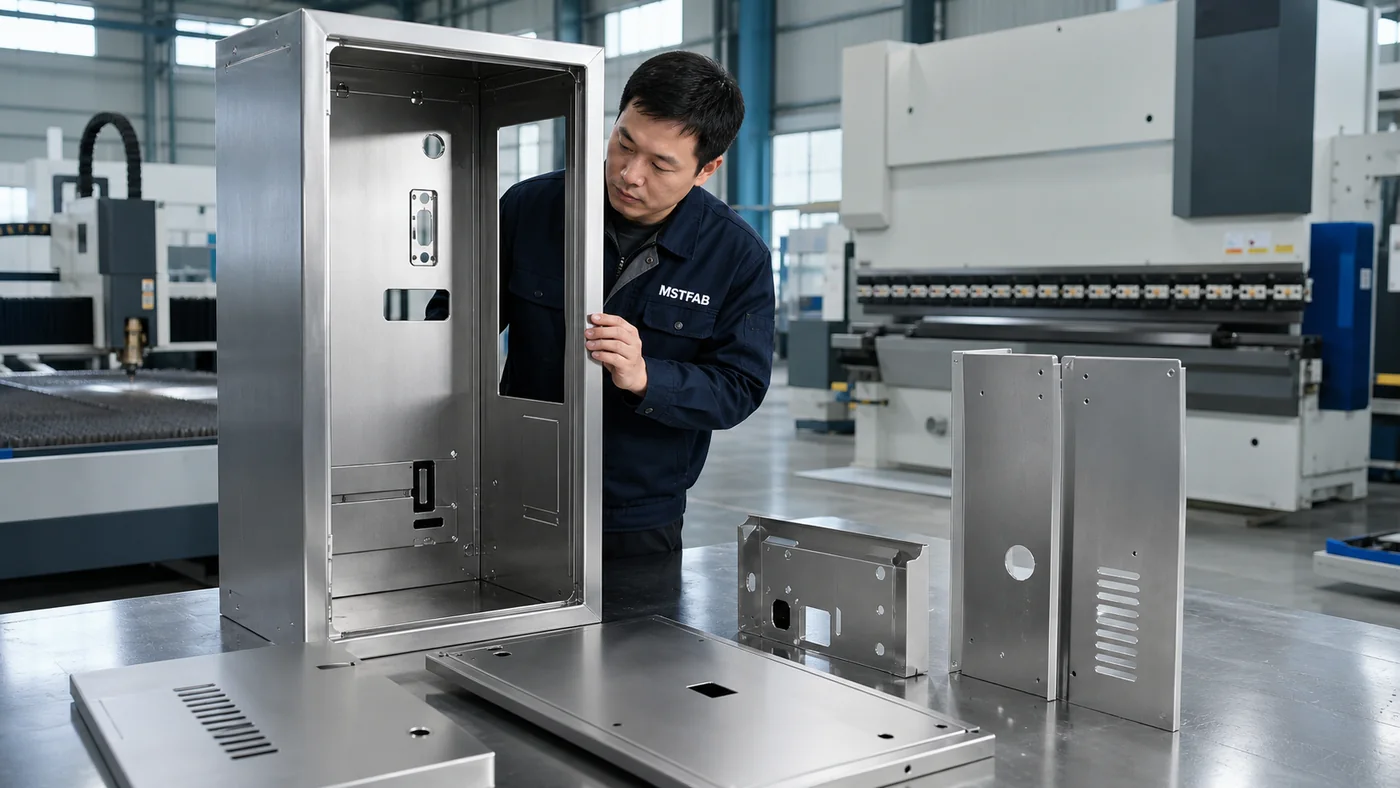
Scope First: We Make the Cabinet Enclosure, Not the Finished Charger
This matters for trust. If a supplier says it can make “EV chargers” but only has sheet metal equipment, buyers should feel their eyebrows move. Sheet metal fabrication supports the charger product; it is not the charger product.
MSTFAB fabricates: stainless cabinet shells, doors, side panels, internal mounting plates, cable gland plates, rain hoods, brackets, welded frames, hinge/latch areas, ventilation panels, and protective packaging.
MSTFAB does not supply: charging modules, PCBs, power electronics, charging guns, cables, screens, payment systems, software, firmware, complete charger assembly, or final EV charger certification.
We can manufacture the mechanical enclosure toward your drawing, gasket design, hardware plan, and project requirements. Final IP, NEMA, UL, CE, IEC, or charger-system certification must be validated by the OEM or system integrator after the complete electrical product is assembled.
What Stainless Steel Enclosure Parts Can Be Fabricated?
For EV charging projects, the stainless enclosure usually includes more than one shiny box. A good RFQ breaks the cabinet into parts, because each part has different tolerance, finish, weld, and packaging risks.
| Sheet Metal Part | Typical Function | Buyer Risk | What to Confirm |
|---|---|---|---|
| Outer cabinet shell | Protects the charger assembly from weather, impact, and handling | Warped shell, poor door fit, visible scratches | Flatness, weld sequence, brushed direction, packing method |
| Door and access panels | Allow service access and protect internal modules supplied by the OEM | Gasket gap, hinge misalignment, latch mismatch | Hinge holes, latch datum, gasket groove, panel flatness |
| Mounting plates | Hold electrical modules, rails, or DIN hardware designed by the buyer | Hole mismatch and poor grounding contact | Critical hole tolerance, grounding pads, PEM insert locations |
| Cable gland plates | Provide openings for cable routing defined by the charger designer | Wrong cutout size or burrs near cable entries | Cutout drawing, deburring, edge radius, sealing area |
| Vent panels and rain hoods | Support airflow and weather protection for the final system design | Poor slot consistency, water path issues | Slot pattern, drainage path, filter/bracket interface |
| Internal brackets and rails | Support OEM-supplied electrical subassemblies | Stack-up error in assembly | Mating dimensions, tolerance table, PEM or threaded hardware |
304 vs 316 Stainless: Choose by Environment
For most indoor or sheltered outdoor charger cabinets, 304 stainless steel is the normal starting point. It gives good corrosion resistance, a clean industrial look, and strong sheet metal performance. For coastal, chemical, high-humidity, or salt-exposed sites, 316 stainless steel may be worth the extra cost because chloride exposure is where 304 can start losing arguments.
The painful buyer mistake is specifying 316 “just in case” for every project, or using 304 in a coastal project and acting surprised when the environment sends feedback. If you need a broader material comparison, see 304 vs 316 Stainless Sheet Metal: Fabrication and Corrosion Guide.
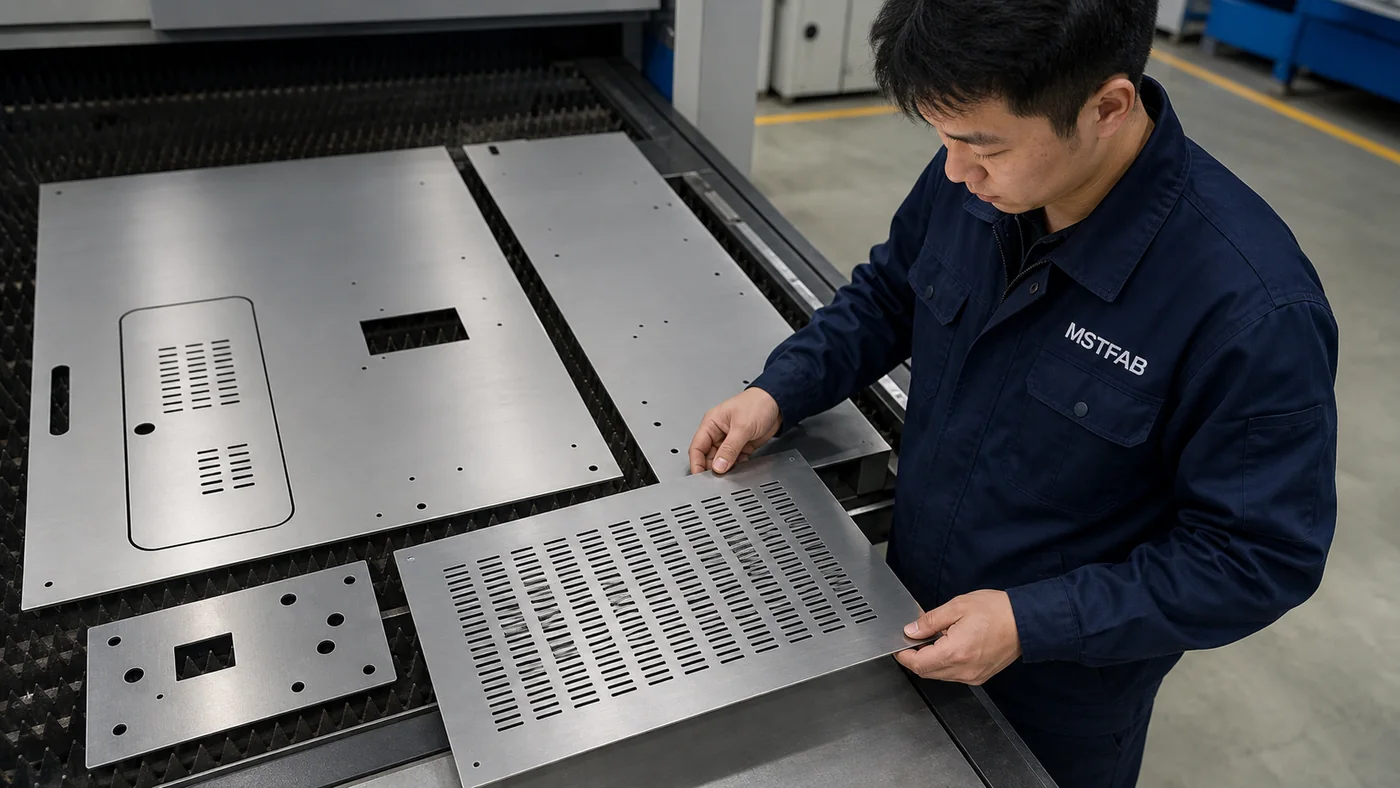
Laser Cutting: Cutouts Decide Assembly Pain
EV charger cabinet enclosure panels often need display windows, service openings, ventilation slots, hinge holes, cable gland holes, and mounting features. That does not mean MSTFAB supplies the display or cable. It means we cut the stainless steel panel to your drawing so your supplied components have somewhere accurate to live.
Before production, confirm corner radii, burr direction, slot width, hole-to-edge distance, and whether any openings need cosmetic edges. A badly placed cutout is a tiny detail until your gasket refuses to seal. Then it becomes the whole meeting.
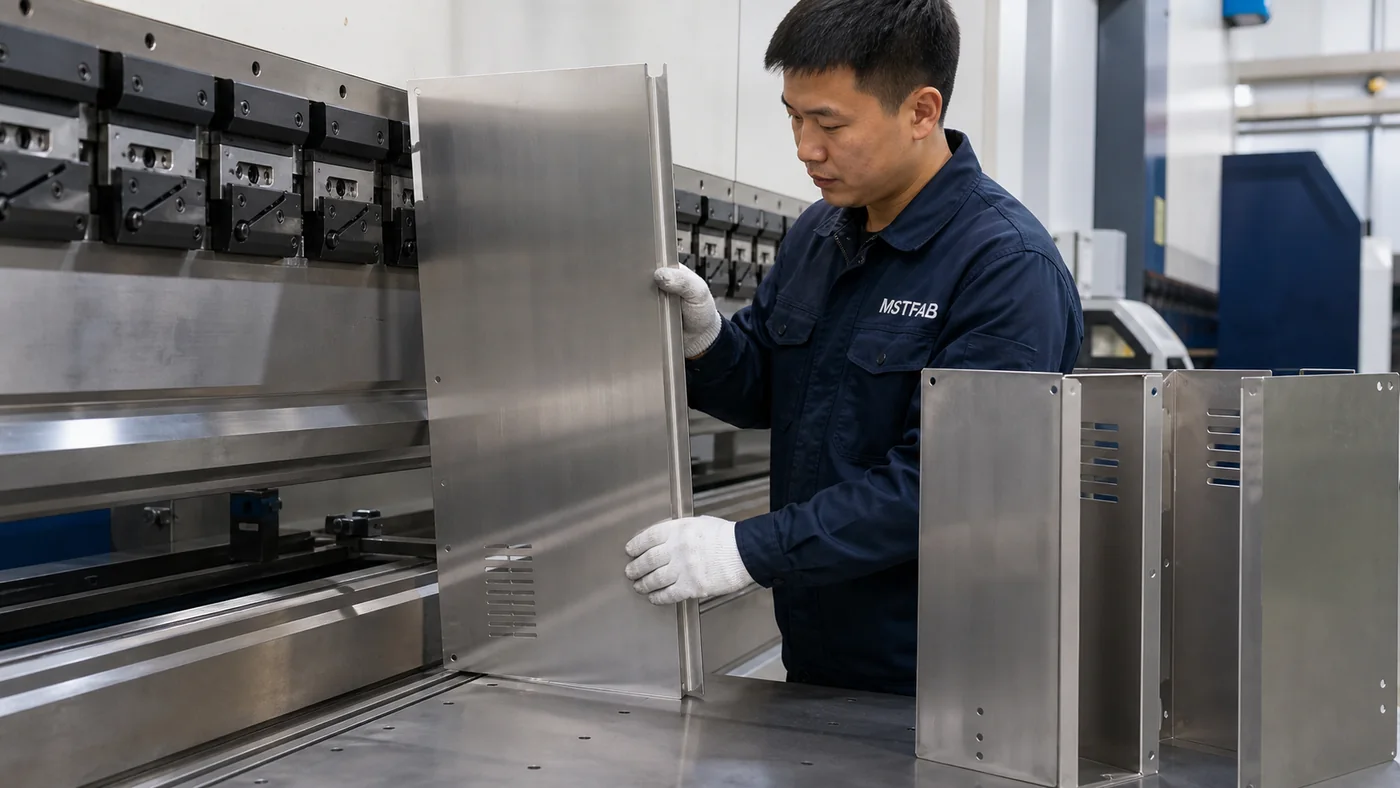
CNC Bending: Stainless Looks Premium, But It Fights Back
Stainless steel is strong, attractive, and slightly dramatic under a press brake. It work-hardens more than mild steel and needs controlled tooling, bend radius, grain direction, and scratch handling. Tall cabinet doors and side panels also make flatness more important because a little bow becomes very visible once the door meets the frame.
Good drawings should call out bend direction, critical dimensions after bending, and cosmetic surface requirements. For general enclosure fabrication context, see custom metal enclosure box fabrication.
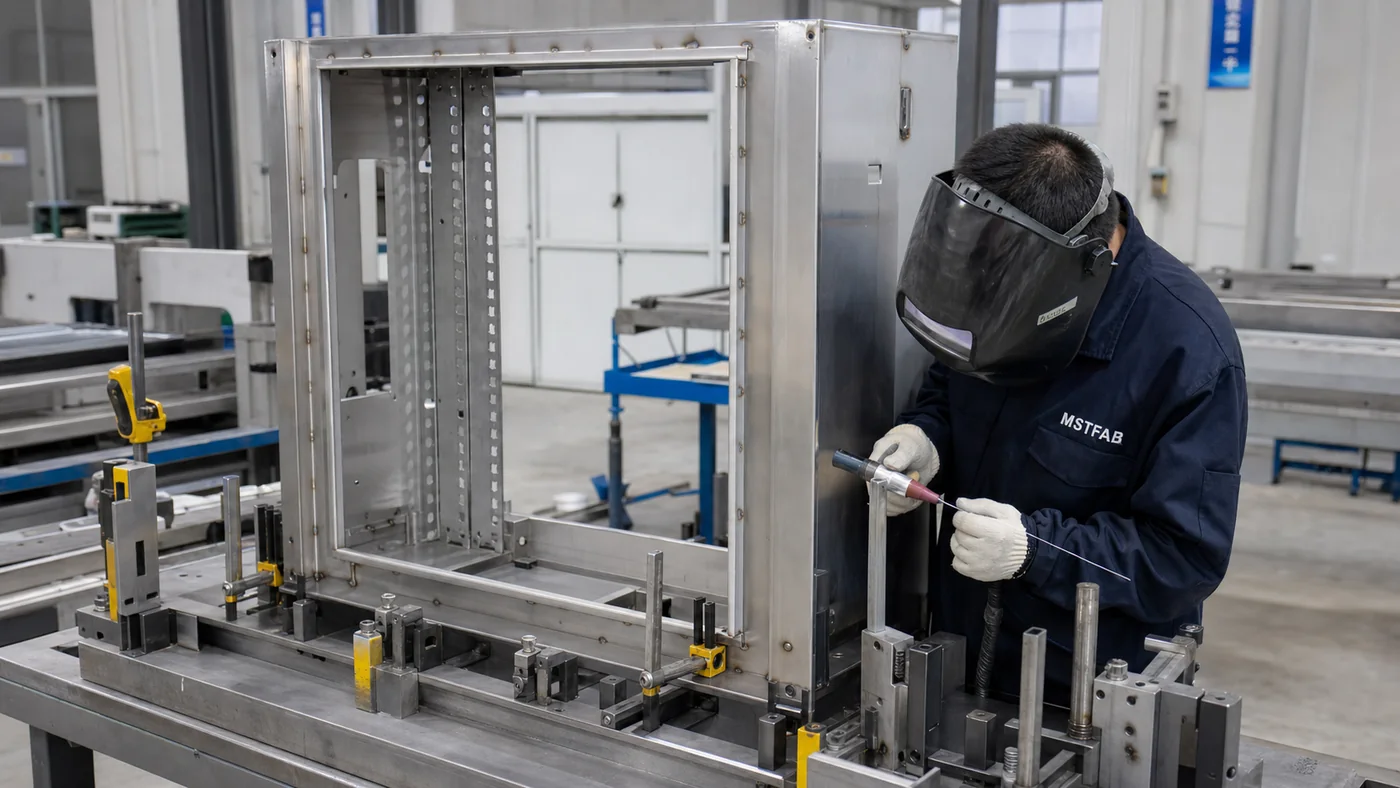
Welding and Assembly: Keep the Box Square
Welding stainless cabinet shells requires fixture control. Heat moves metal; stainless is not shy about it. Door frames, hinge lines, gasket faces, and mounting rails need a defined sequence so the finished enclosure stays square enough for the OEM’s later assembly work.
The buyer should ask how the supplier controls distortion: tack sequence, fixture design, intermittent welds where possible, inspection points, and post-weld cleaning. If the answer is “we just weld it,” that is not a process. That is a weather forecast.
Inspection: The Trust Part Buyers Can Actually Check
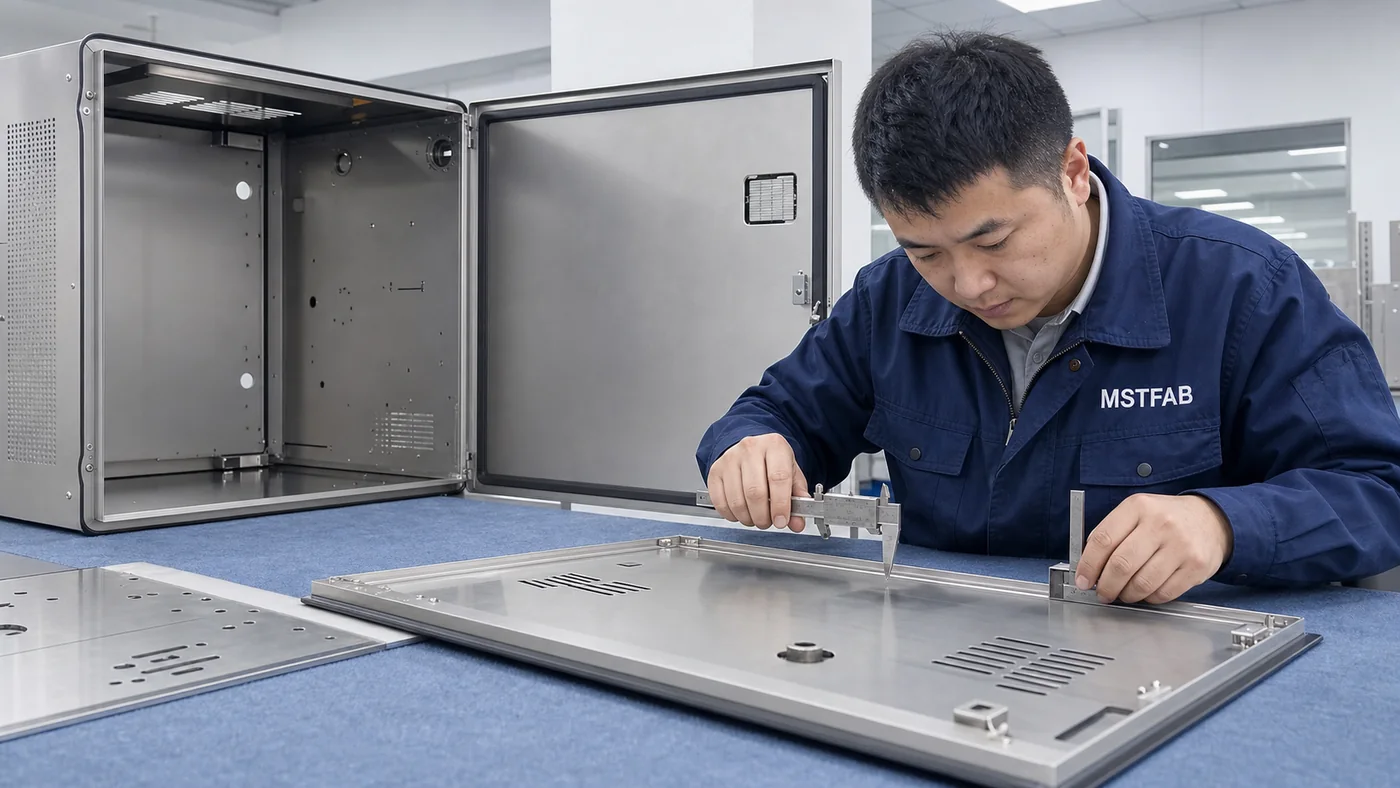
A stainless EV charger cabinet enclosure is not judged only by shiny surfaces. Buyers care about repeatable fit: doors close, hinges line up, gasket faces stay flat, mounting holes match the electrical plate, and visible surfaces arrive without dents or scratches.
For tighter fit questions, use Sheet Metal Tolerances Explained for OEM Buyers. Do not tighten every dimension out of fear; define critical features and let the non-critical ones breathe.
| Buyer Concern | Fabrication Check | Evidence to Ask For | Why It Matters |
|---|---|---|---|
| “Will it fit my charger assembly?” | Critical mounting holes, datum control, bracket position | First article photos, inspection report, marked critical dimensions | Prevents module and cable routing mismatch |
| “Will the door seal?” | Door flatness, gasket groove, hinge/latch alignment | Flatness check, hinge/latch trial fit, gasket face inspection | Supports the buyer’s enclosure protection target |
| “Will stainless arrive scratched?” | Surface protection, brushing direction, handling rules | Protective film, packing photos, cosmetic standard agreement | Stainless is premium until the crate teaches it new scratches |
| “Will welding warp the shell?” | Fixture, tack sequence, weld length, inspection after welding | Fixture photos, assembly check, squareness measurement | Warped shells create door gaps and assembly headaches |
| “Is the supplier overselling?” | Clear scope statement: sheet metal enclosure only | Quote line items for metal parts, no charger electronics claims | Protects buyers from confusing fabrication with finished product supply |
Surface Finish and Packaging: Stainless Needs Discipline
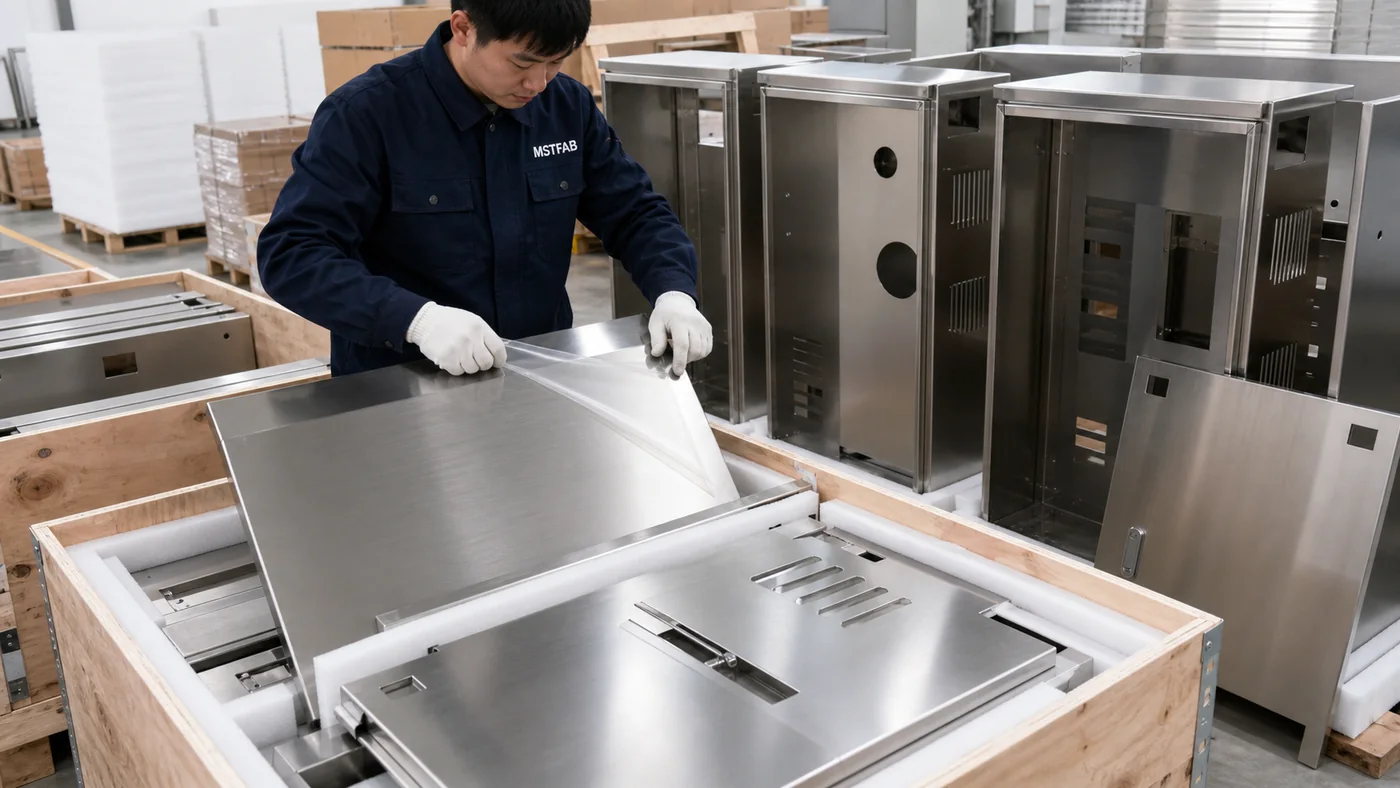
Brushed stainless looks clean, but it is also honest. It shows wrong grain direction, handling marks, grinder scars, and careless packing. If the cabinet is customer-facing, define brushing direction, film protection, acceptable scratch level, weld cleaning, and passivation requirements before production.
Packaging is not decoration either. Large stainless panels need film, foam separators, corner protection, and crates that stop the parts from polishing each other during transport. A beautiful panel packed badly is just expensive scrap with a tracking number.
What to Send for a Real RFQ
A serious stainless EV charger cabinet enclosure quote needs more than “can you make this cabinet?” Send the details upfront so the supplier does not guess. Guessing is fast until it becomes rework.
- 2D drawings with dimensions, tolerances, bend notes, and critical features.
- STEP files for enclosure geometry and assembly review.
- Material grade: 304, 316, or buyer-approved equivalent.
- Thickness for each part, especially door, frame, and mounting plate.
- Finish requirement: brushed, passivated, polished, powder coated, or bare.
- Hardware list: hinges, locks, PEM inserts, standoffs, handles, gasket parts if supplied.
- Cosmetic surface standard and grain direction for visible panels.
- Packing requirement for domestic or export delivery.
- Scope note confirming sheet metal enclosure parts only, not a complete charger.
Red Flags in Stainless EV Charger Cabinet Sourcing
- The supplier talks about finished EV charger performance but only quotes sheet metal parts.
- The quote says “stainless steel” but does not name 304 or 316.
- No one asks about gasket faces, hinge alignment, or door flatness.
- The drawing has cable holes but no edge or sealing requirement.
- Brushed finish is specified but grain direction and protective film are not.
- Welded cabinet shells are quoted with no fixture or distortion plan.
- Packaging is missing for visible stainless surfaces.
Key Takeaways
- MSTFAB fabricates stainless steel EV charger cabinet enclosures and sheet metal parts, not complete charging stations.
- 304 works for many projects; 316 is stronger for coastal, chemical, or chloride-heavy environments.
- Critical buyer risks are fit, sealing faces, welding distortion, finish scratches, and packaging damage.
- Final electrical design, charger assembly, software, and product certification remain with the OEM or system integrator.
- A clear RFQ saves time because it removes the expensive guessing game.
Frequently Asked Questions
Does MSTFAB manufacture complete EV chargers?
No. MSTFAB manufactures custom sheet metal enclosure parts to buyer drawings. We do not supply charger electronics, charging cables, software, payment systems, complete charger assembly, or final EV charger certification.
What stainless steel grade should I use for an EV charger cabinet enclosure?
304 stainless steel is common for many indoor or sheltered outdoor cabinet enclosures. 316 stainless steel is better for coastal, chemical, humid, or chloride-heavy environments. The right choice depends on the installation environment and project budget.
Can MSTFAB build an enclosure for IP or NEMA requirements?
We can fabricate the mechanical enclosure according to your drawing, gasket design, hardware plan, and dimensional requirements. Final IP, NEMA, UL, CE, or complete charger-system certification must be tested and approved by the OEM or system integrator after full assembly.
What makes stainless EV charger cabinet fabrication difficult?
Stainless steel requires careful bending, scratch control, weld distortion management, cosmetic finish discipline, and protective packaging. Tall cabinet doors and gasket faces also need tighter control than ordinary internal brackets.
What files are needed for a quote?
Send 2D drawings, STEP files, material grade, thickness, finish, quantity, hardware list, critical tolerances, cosmetic requirements, and packing expectations. Also confirm that the scope is sheet metal enclosure fabrication only.
Need Stainless EV Charger Cabinet Enclosure Parts?
Send MSTFAB your drawings, STEP files, material grade, finish, quantity, and scope notes. We will review the sheet metal enclosure risks before quoting, and we will not pretend an empty cabinet shell is a finished charging station. Refreshing, isn’t it?
 WeChat Contact
 WhatsApp Me Directly