
⚡ Direct Answer: How to Evaluate a Stainless Steel Cabinet Manufacturer?
Selecting a world-class stainless steel electrical cabinet manufacturer requires vetting across 7 critical technical dimensions: 1) Authentic raw material sourcing (AISI 304 vs. 316L with 2–3% Molybdenum); 2) Continuous pulse TIG and laser seam welding with zero carbide precipitation; 3) Chemical passivation per ASTM A967 to restore the chromium-oxide passive barrier; 4) Seamless robotically dispensed polyurethane foam gaskets (FIPFG) delivering certified NEMA 4X / IP66 ingress protection; 5) Precision CNC press brake forming with active angle feedback; 6) 3-point stainless steel vault latching; and 7) Automated CMM First Article Inspection reports.
The 7-Dimension Stainless Steel Manufacturer Evaluation Scorecard
| Evaluation Dimension | High-Risk Subcontractor Indicator | MSTFAB World-Class Benchmark |
|---|---|---|
| 1. Alloy Integrity & Traceability | Substitutes low-nickel 201 series; no mill certs. | 100% verified 304 (18/8) or 316L (with 2.5% Mo); verified with XRF PMI spectrometer. |
| 2. Weld Seam Quality | Discolored, heat-tinted welds; heavy distortion; porous beads. | Inert gas purged pulse TIG/laser seams; 100% full-penetration with zero burn-through. |
| 3. Post-Weld Passivation | Manual wire brushing leaving embedded iron particles. | Full immersion or spray citric/nitric acid passivation per ASTM A967 with copper sulfate test verification. |
| 4. Environmental Sealing | Glued rubber strips with cut corner gaps that leak. | Robotic CNC continuous poured polyurethane gasket (FIPFG); certified NEMA 4X / IP66. |
| 5. Surface Grain & Cosmetics | Wavy, uneven hand-scratched grain; visible grinding swirls. | Uniform automated #4 directional satin brushed finish (Ra 0.4–0.8μm); laser protective PVC film kept intact. |
| 6. Mechanical Hardware | Zinc-plated carbon steel screws that rust in salt air. | 100% 316 stainless steel hinges, captive quarter-turn latches, and internal blind PEM standoffs. |
| 7. Dimensional Verification | Spot checks with tape measures; door binding issues. | Automated CMM dimensional scan checking flange flatness, door gaps, and diagonal squareness to ±0.2mm. |
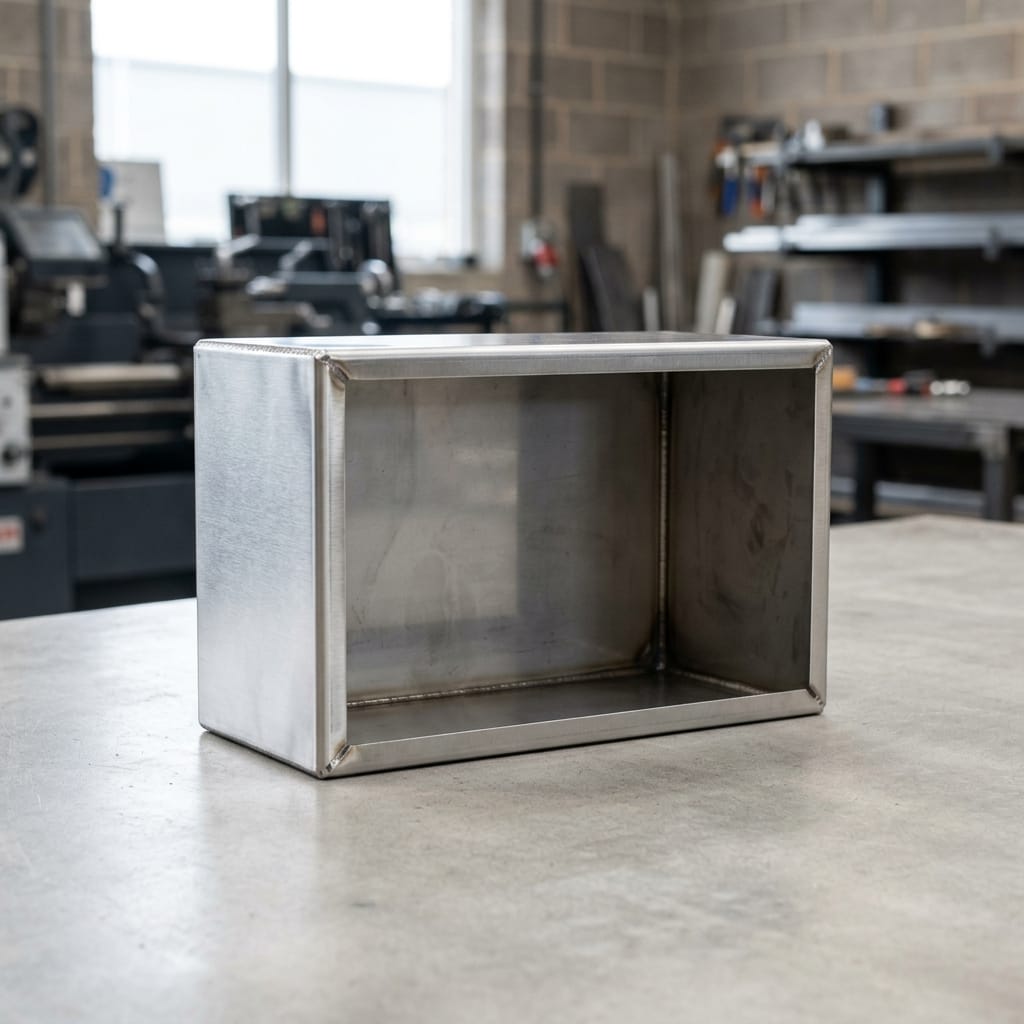
Why Chemical Passivation is Mandatory for Stainless Steel Cabinets
Even high-grade 304 or 316 stainless steel can develop surface rust spots within weeks of deployment in coastal marine or chemical plant environments if not properly passivated.
During CNC laser cutting, press brake bending, and handling on steel tool tables, microscopic free iron particles from cutting slag and tooling dies embed into the stainless steel surface. These free iron particles rust rapidly in ambient humidity, initiating localized pitting attack. MSTFAB applies an automated ASTM A967 chemical passivation treatment that completely dissolves free iron and accelerates the formation of an enriched, contiguous chromium-oxide (Cr2O3) barrier layer.
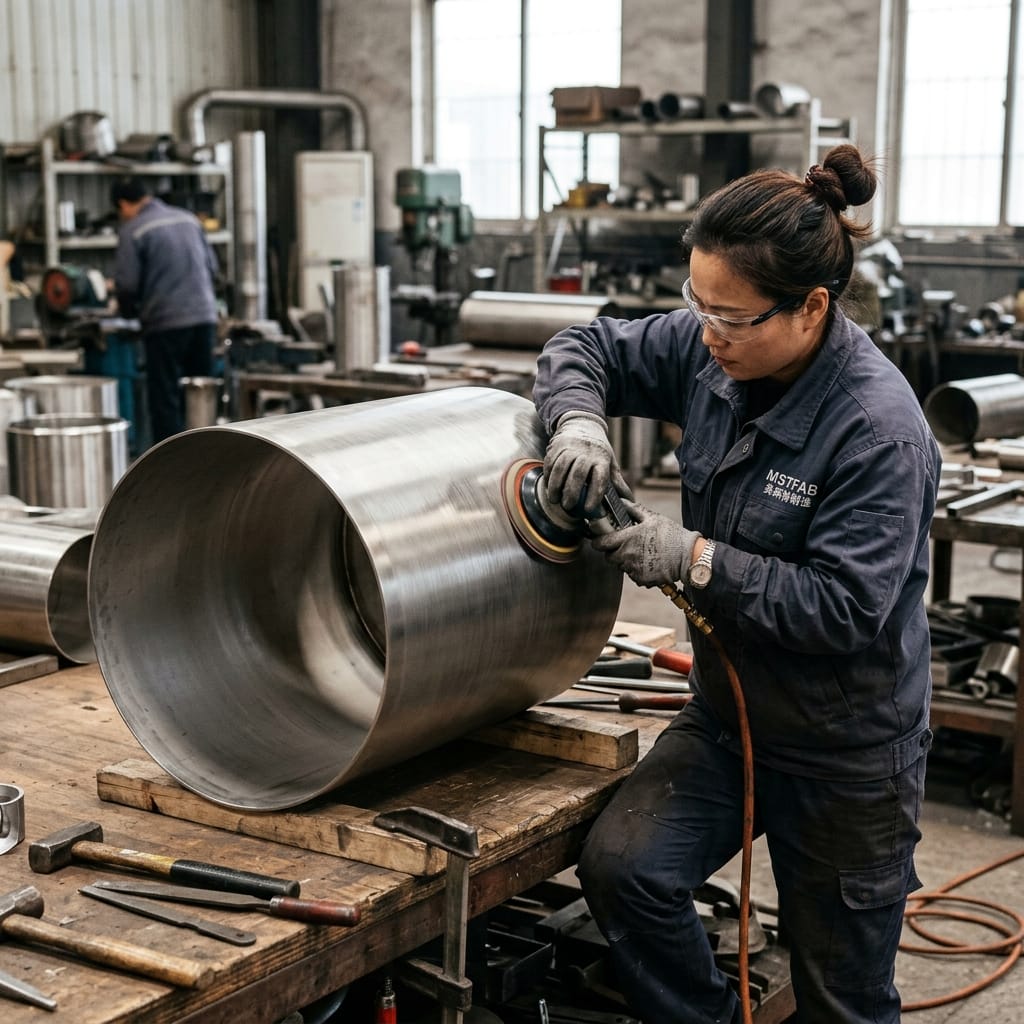
Partner with an Elite Stainless Steel Cabinet Manufacturer
Trust MSTFAB for NEMA 4X 304 and 316 stainless steel electrical cabinets. Flawless surface grain, certified passivation, and fast turnaround.
Frequently Asked Questions on Stainless Steel Cabinets
When is 316 stainless steel required over 304 stainless steel?
While 304 stainless steel is suitable for indoor food processing and general washdown environments, 316 stainless steel is strictly required within 5 miles of coastal salt air, offshore marine platforms, and chemical wastewater plants due to its 2.0%–3.0% molybdenum content that stops chloride pitting.
Can MSTFAB fabricate sanitary sloped-roof electrical enclosures?
Yes. We routinely manufacture sanitary food-grade enclosures with a 20° to 30° sloped roof that sheds washdown liquids, prevents personnel from placing tools on top of the cabinet, and complies with 3-A Sanitary and EHEDG standards.
 WeChat Contact
 WhatsApp Me Directly