
Stainless steel casting parts can be useful for complex shapes, fluid channels, valve bodies, pump parts, and components that are difficult to build from flat metal.
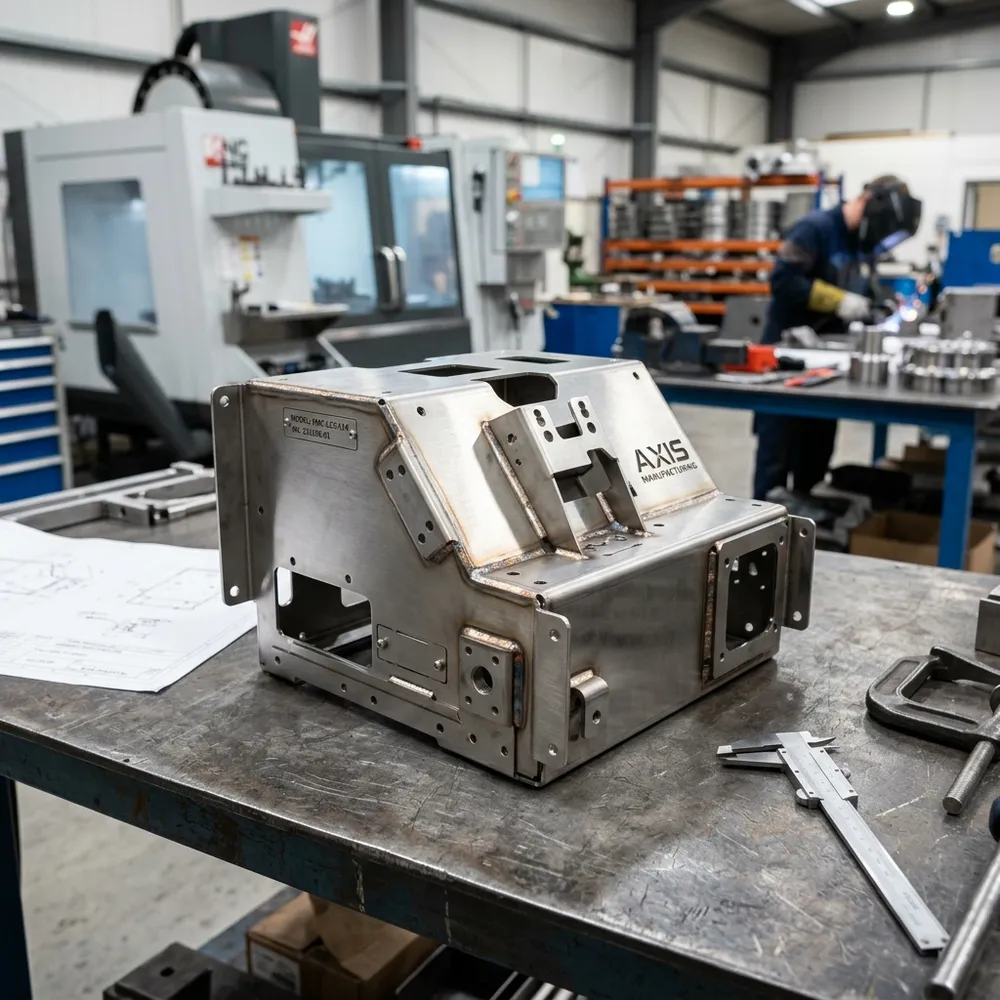
For many OEM equipment projects, buyers choose casting because the part looks complex in CAD. Then the real problems begin: tooling cost, long sample lead time, hidden porosity, rough surface finish, secondary machining, and expensive design changes.
That does not mean casting is bad. It means casting should be used for the right reason.
If the part is mainly a structural bracket, equipment chassis, enclosure support, mounting frame, cabinet base, protective housing, or welded structure, a precision sheet metal assembly may be a better option.
MSTFAB focuses on custom sheet metal fabrication. We do not pour liquid metal or manufacture raw castings. But if your stainless steel casting part can be redesigned as a laser-cut, CNC-bent, welded, and machined sheet metal assembly, we can help review the structure and provide a practical manufacturing solution.
Why Stainless Steel Castings Can Become Expensive
Casting looks attractive because it can create complex shapes in one piece. But for OEM buyers, the total cost is not only the unit price.
You also need to consider:
- Tooling cost
- Mold modification cost
- Prototype lead time
- Casting defect risk
- Secondary machining
- Surface finishing
- Inspection requirements
- Design change flexibility
- Minimum order quantity
- Final assembly fit
A casting project can be very efficient after the design is stable and the volume is high. But during product development, casting can become slow and expensive if the design is still changing.
That is why buyers should ask one simple question before paying for tooling:
Does this part truly need to be cast, or can it be built as a precision sheet metal assembly?
Common Problems with Stainless Steel Casting Parts
1. Hidden Porosity
Casting involves molten metal filling a mold and cooling into shape. During cooling, shrinkage or gas can create internal voids if the process is not controlled properly.
The problem is simple: the outside of the casting may look acceptable, but the inside may not be fully solid.
Hidden porosity can create problems when the part is:
- Tapped
- Machined
- Loaded under stress
- Welded later
- Used as a structural support
- Exposed to vibration
For critical parts, porosity inspection may be required. That adds cost and time.
2. Secondary Machining Cost
Raw castings usually cannot be installed directly into an OEM assembly.
They often need CNC machining for:
- Flat mating surfaces
- Mounting holes
- Threaded holes
- Bearing areas
- Sealing surfaces
- Critical dimensions
- Assembly interfaces
This is where many “cheap” castings become less cheap.
The casting price may look attractive, but after tooling, machining, inspection, and finishing, the final usable custom metal part may cost much more than expected.
3. Tooling Makes Design Changes Expensive
Casting usually requires a mold.
Once the mold is made, the design becomes less flexible. If your engineering team needs to move a hole, change wall thickness, adjust a boss, or improve mounting clearance, the mold may need modification.
That can create:
- Extra cost
- Longer lead time
- Delayed testing
- Slow design iteration
- Supplier negotiation problems
For early-stage OEM projects, this can be painful.
Sheet metal fabrication is more flexible because many changes can be made by updating the laser cutting and CNC bending files, without building a new casting mold.
4. Surface Finish May Still Need Work
A stainless steel casting surface is usually not as clean as a laser-cut, bent, or polished sheet metal surface.
Depending on the project, the casting may require:
- Grinding
- Polishing
- Shot blasting
- CNC machining
- Passivation
- Surface inspection
- Cosmetic finishing
For visible OEM equipment parts, this should be considered before choosing casting.
If the final product needs a clean, modern, industrial appearance, sheet metal fabrication may sometimes provide a better surface path.
When Stainless Steel Casting Makes Sense
Casting is still the right choice for many applications.
It may be suitable when the part has:
- Complex 3D geometry
- Internal channels
- Fluid flow passages
- Thick irregular shapes
- Complex bosses and ribs
- High-volume stable design
- Shapes that are difficult to weld or form
- Parts such as pump bodies, valve bodies, impellers, or fittings
If the function depends on a complex solid shape, casting may be necessary.
A good manufacturing decision is not “casting is bad” or “sheet metal is better.”
The correct question is: Which process fits the geometry, quantity, tolerance, cost, and application?
When Sheet Metal Assemblies May Be a Better Option
Many parts that are originally designed as castings can be redesigned as precision sheet metal assemblies.
This may work well for:
- Equipment chassis
- Mounting frames
- Heavy-duty metal brackets
- Cabinet bases
- Structural supports
- Protective housings
- Stainless steel covers
- Machine guards
- Enclosure frames
- Welded support structures
- Industrial equipment shells
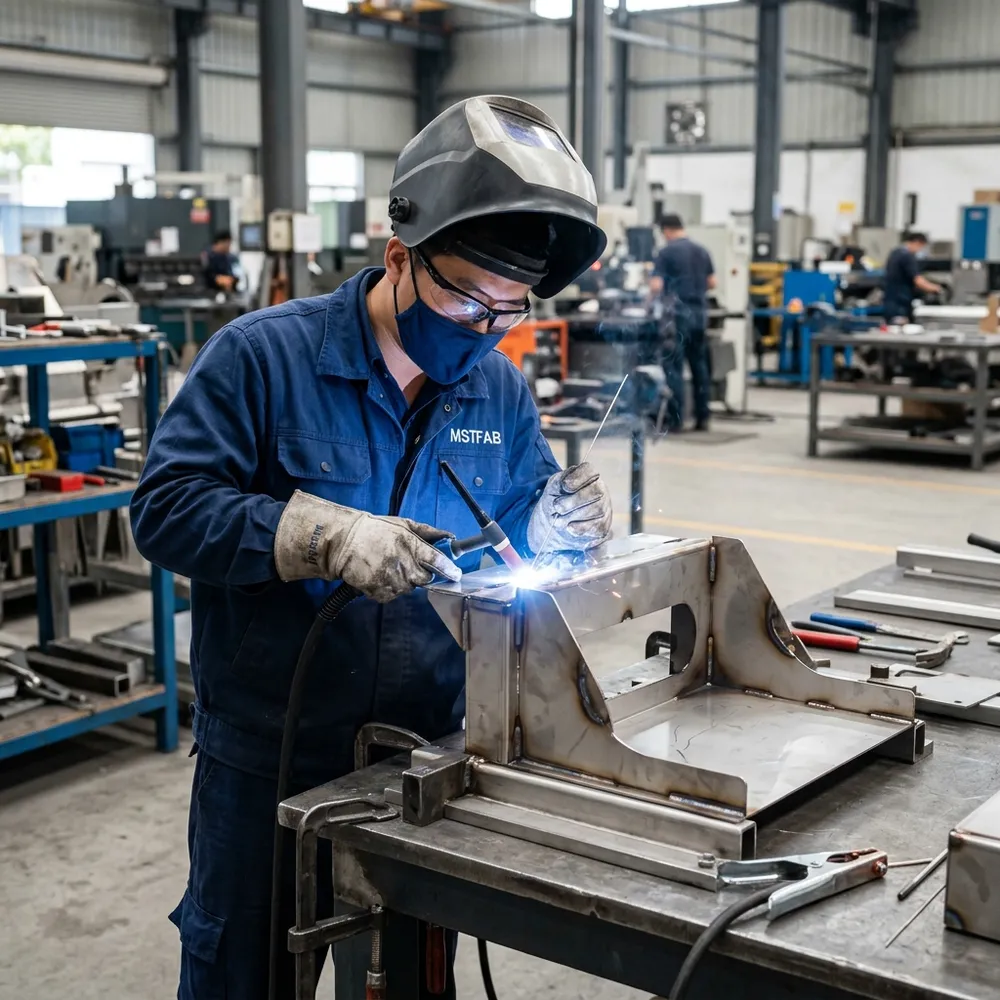
Instead of casting one heavy solid part, the structure may be built from laser-cut plates, CNC-bent sections, welded brackets, and machined inserts.
This can reduce tooling cost and improve flexibility during development.
Casting vs Sheet Metal Assembly Comparison Table
| Feature | Stainless Steel Casting | Sheet Metal Assembly |
|---|---|---|
| Tooling Cost | High (requires expensive molds) | Very Low (uses standard laser/bending tools) |
| Prototype Lead Time | Long (weeks to months) | Fast (days to weeks) |
| Design Change Flexibility | Poor (requires mold modifications) | Excellent (update CAD and CNC files) |
| Porosity Risk | High (hidden internal voids possible) | None (uses solid rolled metal sheets) |
| Ideal Application | Pump bodies, complex fluid channels, small solid nodes | Chassis, frames, brackets, structural supports, bases |
Benefits of Sheet Metal Assemblies
No Casting Mold Required
Sheet metal fabrication does not require a casting mold.
For prototypes, small batches, or designs that may change, this can save time and cost. A design update can often be handled by revising the CAD file, flat pattern, bend plan, or welding fixture.
Better Design Flexibility
Sheet metal assemblies are easier to adjust during product development.
You can change:
- Hole positions
- Mounting bracket layout
- Thickness
- Bend angles
- Reinforcement ribs
- Cable clearance
- Component mounting points
- Surface finish
- Assembly method
This is useful for OEM equipment where the internal layout may still be changing.
Lower Weight Through Hollow Structures
Casting often creates solid or thick sections.
Sheet metal can create strong hollow structures using bends, flanges, ribs, welded frames, and gussets.
A well-designed sheet metal assembly can provide strength without unnecessary weight. For cabinets, enclosures, machine frames, and equipment supports, geometry often matters more than mass.
Cleaner Assembly Integration
Sheet metal assemblies can include features that support final assembly:
- Mounting holes
- PEM nuts
- Threaded inserts
- Welded nuts
- Brackets
- Cable routing openings
- Access panels
- Gasket areas
- Hardware mounting points
These features can be planned before fabrication, reducing drilling, grinding, and rework later.
Stainless Steel Sheet Metal Materials
If a casting can be converted into a sheet metal assembly, material selection still matters.
SUS304 Stainless Steel
SUS304 is commonly used for general stainless steel fabrication. It offers good corrosion resistance and is suitable for many industrial, medical, food equipment, and enclosure applications.
SUS316 Stainless Steel
SUS316 may be selected for more demanding environments, such as coastal, chemical, marine, or high-corrosion applications.
Thickness Selection
Common sheet thickness depends on strength, size, structure, and application. A sheet metal assembly may use different thicknesses in different areas to balance weight, strength, and cost.
For example:
- Thinner panels for covers
- Thicker plates for mounting areas
- Reinforced brackets for load-bearing points
- Welded frames for structural strength
Good design uses material where it matters.
Design for Manufacturability Review
Before replacing a casting with a sheet metal assembly, DFM review is important.
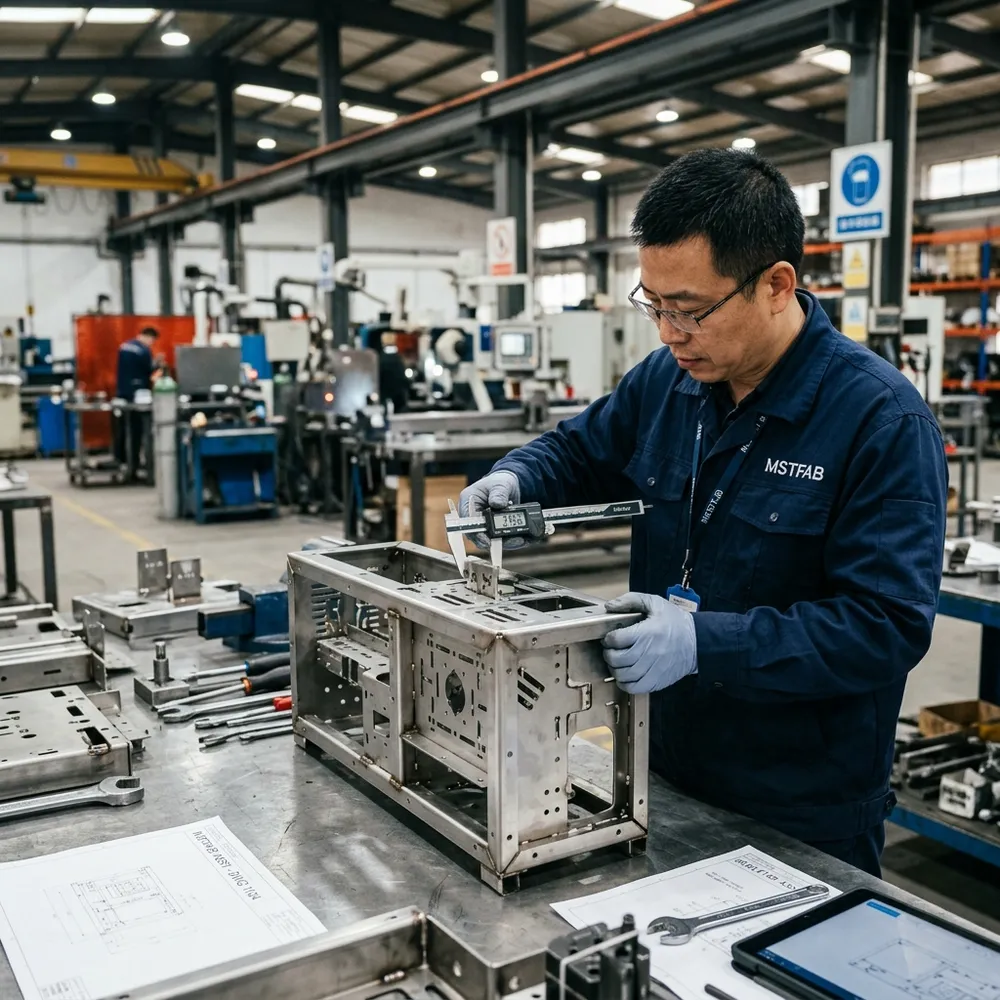
A review may check:
- Whether the casting geometry can be split into sheet metal parts
- Material thickness selection
- Bend radius and bend feasibility
- Welding structure
- Load-bearing areas
- Mounting hole accuracy
- Assembly sequence
- Surface finish requirements
- Tolerance requirements
- Machining needs after welding
- Cost and lead time comparison
A good DFM review can help determine whether the redesign is practical. Sometimes casting is still the right process. Sometimes sheet metal is the smarter choice.
The point is to decide before paying for expensive tooling.
Example: Casting vs Sheet Metal Assembly
A heavy stainless steel equipment support may look like a casting candidate at first.
But if the part mainly needs to support weight, connect to a cabinet, and provide mounting holes, it may be redesigned as:
- Laser-cut stainless steel plates
- CNC-bent side sections
- Welded gussets
- Machined bushings or inserts
- Ground or polished visible surfaces
- Passivated or brushed stainless finish
The final part can be strong, lighter than a solid casting, easier to modify, and faster to prototype.
That is the kind of manufacturing review that can save a project from unnecessary tooling cost.
Quality Control for Sheet Metal Alternatives
If a casting is redesigned as a sheet metal assembly, quality control should focus on both structure and fit.
Typical inspection items include:
- Material confirmation
- Cutting dimension inspection
- Hole position inspection
- Bend angle inspection
- Welding quality inspection
- Flatness inspection
- Machined insert fit
- Surface finish inspection
- Assembly fit check
- Packaging inspection
For structural assemblies, weld quality, fixture control, and hole alignment are especially important.
Clear Manufacturing Scope
MSTFAB focuses on custom sheet metal fabrication and metal structure manufacturing.
We manufacture physical metal structures, including:
- Stainless steel sheet metal assemblies
- Welded brackets
- Equipment chassis
- Cabinet frames
- Mounting structures
- Enclosure parts
- Protective housings
- Machine covers
- Structural supports
- Custom metal parts
We do not manufacture raw stainless steel castings.
We do not pour liquid metal.
We do not require customer software, internal circuit design, protected electronic schematics, source code, or proprietary system logic.
Our scope is the physical sheet metal structure or component based on customer drawings and project requirements.
This keeps the project boundary clear and helps protect customer intellectual property.
What to Send for Review
If you are considering stainless steel casting parts but want to evaluate a sheet metal alternative, please send:
- 3D STEP file
- 2D PDF drawing
- Current casting design, if available
- Material requirement
- Quantity
- Load-bearing requirement
- Critical dimensions
- Surface finish requirement
- Application environment
- Assembly method
- Target cost or production stage
Our engineering team can review whether the part is suitable for precision sheet metal fabrication or whether casting remains the better option.
Request a Manufacturing Review
Before paying for a casting mold, it may be worth checking whether the part can be made as a stainless steel sheet metal assembly.
For the right geometry, sheet metal fabrication can reduce tooling cost, shorten development time, improve design flexibility, and simplify assembly.
Send us your drawings or project requirements.
We will review the structure and provide practical manufacturing feedback based on material, geometry, quantity, finish, and application.
A good manufacturing decision should not start with habit. It should start with engineering.
Request a Manufacturing Review
Can your stainless steel casting be replaced with a precision sheet metal assembly? Send us your drawings for a technical DFM review to reduce tooling costs and lead times.
Frequently Asked Questions
Are stainless steel casting parts always necessary?
No. Stainless steel castings are useful for complex solid shapes, fluid channels, valve bodies, pump parts, and high-volume stable designs. But many brackets, frames, chassis, and enclosure parts can sometimes be redesigned as sheet metal assemblies.
What are the common problems with stainless steel castings?
Common issues may include tooling cost, long lead time, hidden porosity, rough surface finish, secondary machining cost, and expensive mold changes.
Can sheet metal replace stainless steel casting parts?
In some cases, yes. Structural supports, brackets, chassis, cabinet bases, and enclosure frames may be converted into laser-cut, bent, welded, and machined sheet metal assemblies.
What is the benefit of sheet metal compared with casting?
Sheet metal can reduce tooling cost, improve design flexibility, shorten prototype lead time, and allow easier changes during product development.
Do you manufacture stainless steel castings?
No. MSTFAB focuses on custom sheet metal fabrication and welded metal structures. We do not pour liquid metal or manufacture raw castings.
What files are needed for review?
A 3D STEP file and 2D PDF drawing are recommended, along with material, quantity, load requirement, finish, application environment, and critical dimensions.
sheet metal welding services
MSTFAB provides TIG and MIG sheet metal welding services for structural assemblies, cabinets, frames and OEM metal components.
 WeChat Contact
 WhatsApp Me Directly