
Custom Stainless Steel Agricultural Hoppers Built for Corrosive Farm Environments
Stainless steel agricultural hoppers are used when ordinary painted steel may not be enough.
They are often selected for equipment that handles grain, seed, feed, fertilizer, pellets, powders, washdown conditions, humid storage, chemical-adjacent environments, or corrosion-sensitive agricultural materials.
A stainless steel hopper may look simple. A few angled panels. A discharge outlet. Some welded seams.
Until the material does not flow.
The outlet does not align.
The weld distorts the hopper body.
The internal edge catches seed or feed.
The mounting holes do not match the frame.
The buyer has to grind, drill, or repair a part that should have arrived ready for assembly.
That is not stainless steel hopper fabrication. That is expensive metal creating avoidable rework.
MSTFAB manufactures custom stainless steel agricultural hoppers from customer STEP files, 2D PDF drawings, DXF files, samples, or project requirements. Our fabrication support can include DFM review, laser cutting, CNC bending, welding, grinding, deburring, stainless steel brushing, polishing, passivation review, inspection, prototype support, batch production, and export-ready packaging.
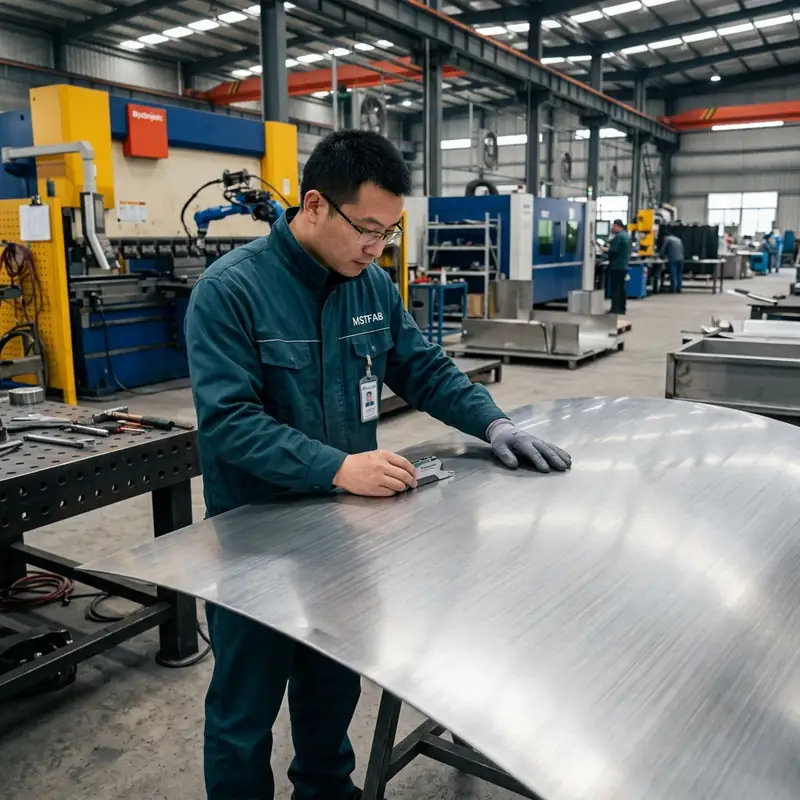
What Are Stainless Steel Agricultural Hoppers?
A hopper is not just a box with a hole. It controls material flow. It controls discharge direction. It affects cleaning. It affects corrosion performance. It affects mounting accuracy.
Stainless Steel Hopper Parts We Can Fabricate
MSTFAB supports custom stainless steel hopper fabrication for agricultural equipment applications, including:
- Stainless steel grain hoppers & Seed hoppers
- Stainless steel feed hoppers & Fertilizer hoppers
- Conveyor hoppers & Discharge hoppers
- Trailer-mounted stainless steel hoppers
- Hopper body panels & Outlet parts
- Welded hopper assemblies
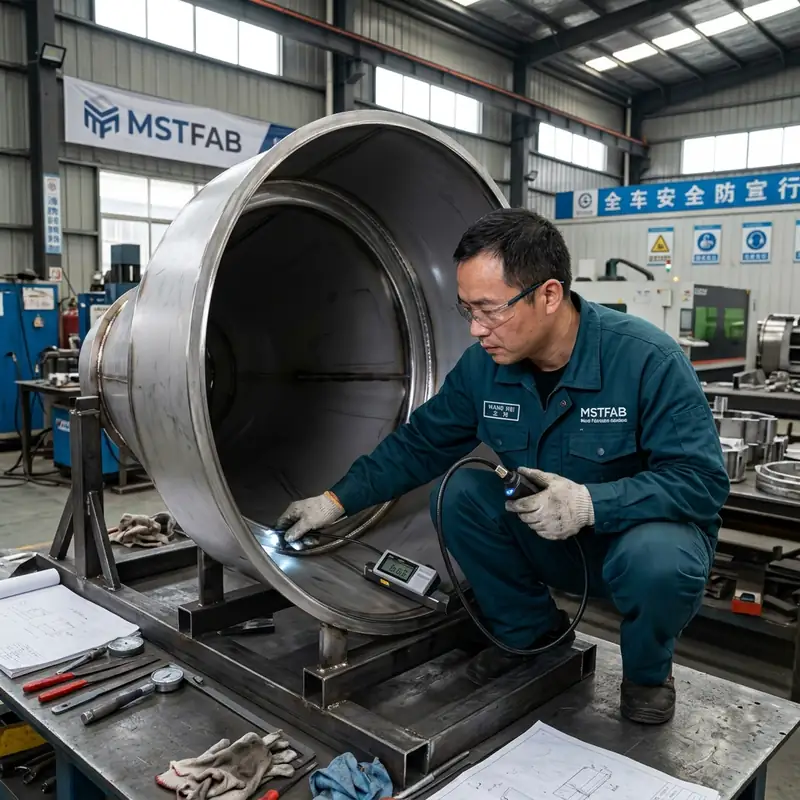
Different hoppers have different risks. A grain hopper needs smooth flow and stable mounting. A seed hopper needs internal edge control. A feed hopper may need cleaning access and surface finish review. A fertilizer hopper needs stronger corrosion review.
One stainless steel hopper design does not solve every agricultural material. Material flow has opinions. Usually strong ones.
Stainless Steel 304 vs Stainless Steel 316
Stainless Steel 304
Stainless steel 304 is commonly used for agricultural hoppers where good general corrosion resistance is required. It is a practical option for many grain, seed, and feed hoppers.
Stainless Steel 316
Stainless steel 316 is often considered when stronger corrosion resistance is required, especially in more aggressive environments like fertilizer hoppers, chemical-adjacent equipment, or washdown-heavy applications.
Stainless steel is corrosion-resistant. It is not invincible. Fertilizer, cleaning chemicals, trapped moisture, poor weld cleanup, and bad drainage can still create problems.
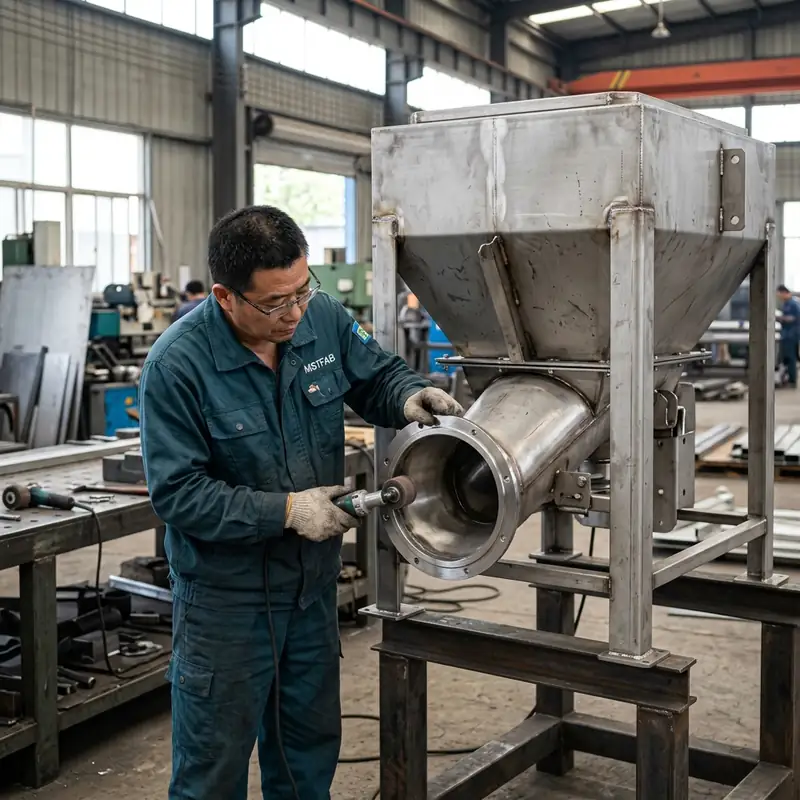
The Real Cost of Poor Stainless Steel Hopper Fabrication
A low quote can look attractive during sourcing. Then the parts arrive.
Poor stainless steel agricultural hoppers can cause incorrect hopper angles, poor material flow, weld distortion, rough internal edges, wrong stainless steel finish, and corrosion around poorly cleaned weld zones.
That is not cost saving. That is cost relocation.
The supplier’s quote looks cheaper, but your assembly team pays the difference with tools, labor, lost time, and frustration.
For agricultural equipment, rework is not a small issue. Feed handling does not become more patient because a hopper outlet is wrong. Fertilizer does not become gentle because the material selection was cheap.
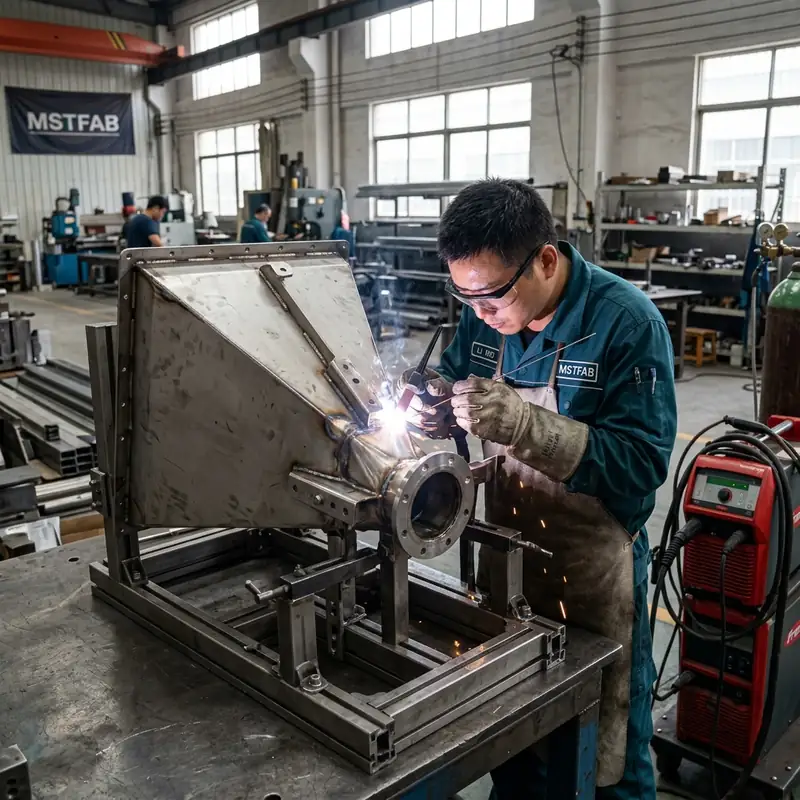
DFM Review Before Fabrication
DFM means Design for Manufacturability. For stainless steel agricultural hoppers, DFM review helps identify production risks before the hopper becomes expensive.
A hopper with large panels may distort during welding. A bend angle error may affect material flow. A rough internal edge may damage seed or hold residue. A stainless steel finish may be damaged if packaging is poor.
A design issue found before production is a drawing update. A design issue found after shipment is rework, delay, and a supplier problem. DFM review is not paperwork. It is how you keep the field from becoming your test lab.
Internal Surface, Edge Safety, and Cleaning
A sharp internal edge is not a small defect. It is a small defect with a talent for catching seed, holding residue, cutting bags, damaging hands, and creating customer trust problems.
A hopper should feel like a finished component. Not like a stainless steel trap with a discharge opening.
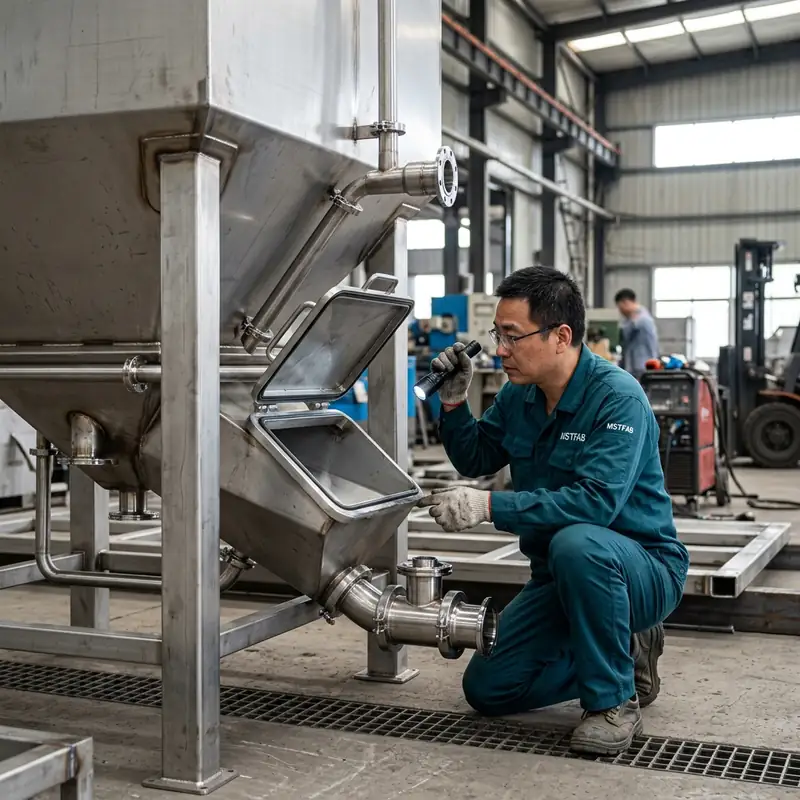
Stainless steel performs best when design and fabrication also support corrosion resistance. Poor drainage, trapped residue, aggressive chemicals, contaminated tools, rough weld zones, and wrong hardware can still create problems. Stainless steel is strong. It is not magic.
| Stainless Hopper Risk | The Cheap “Job-Shop” Approach | The MSTFAB DFM-Led Approach |
|---|---|---|
| Weld Seam Contamination | Welds stainless steel with the same tools used for carbon steel. The embedded iron particles rust immediately in humid farm environments. | Uses dedicated stainless-only tooling, meticulous weld cleanup, and passivation to ensure 100% rust-free integrity. |
| Internal Weld Spatter | Leaves rough weld seams and spatter inside the hopper. Seed and feed get trapped, rotting and contaminating the next batch. | Performs internal weld grinding and polishing to ensure a completely smooth, sanitary flow path with zero dead zones. |
| Fertilizer Pitting Corrosion | Suggests cheap 304 material for aggressive fertilizer hoppers. The fertilizer eats through the steel within two seasons. | Properly advises the use of 316 stainless steel for chemical/fertilizer contact to guarantee a decades-long service life. |
| Discharge Misalignment | Inaccurate CNC bending twists the lower outlet. You have to force the connecting conveyor using a crowbar during assembly. | High-precision laser cutting and digital bending ensure the outlet geometry perfectly matches your mating equipment drop-in ready. |
| Surface Scratches (Shipping) | Stacks beautiful brushed stainless panels together with no foam. They arrive looking like they were dragged across a concrete floor. | Applies protective laser film during cutting and uses heavy-duty layer separation to guarantee a flawless premium finish upon delivery. |
Why Choose MSTFAB for Stainless Hoppers?
MSTFAB is a custom sheet metal fabrication manufacturer in Guangzhou, China, supporting overseas OEM buyers with drawing-based manufacturing.
Clear Manufacturing Scope and IP Protection: We manufacture the physical stainless steel agricultural hoppers, sheet metal panels, covers, brackets, outlet parts, transition parts, and welded structures. We do not design complete grain handling systems or fertilizer spreading systems. This keeps the project boundary clear and helps protect customer intellectual property.
Request a Stainless Steel Hopper Quote
If you need stainless steel agricultural hoppers, grain hoppers, seed hoppers, feed hoppers, fertilizer hoppers, or washdown conveyor hoppers, send us your STEP and PDF drawings.
Explore Our Core Capabilities
Discover our full range of agricultural manufacturing services at our core product hub: Custom Agricultural Sheet Metal Parts Fabrication
sheet metal welding services
MSTFAB provides TIG and MIG sheet metal welding services for structural assemblies, cabinets, frames and OEM metal components.
 WeChat Contact
 WhatsApp Me Directly