
The Short Answer
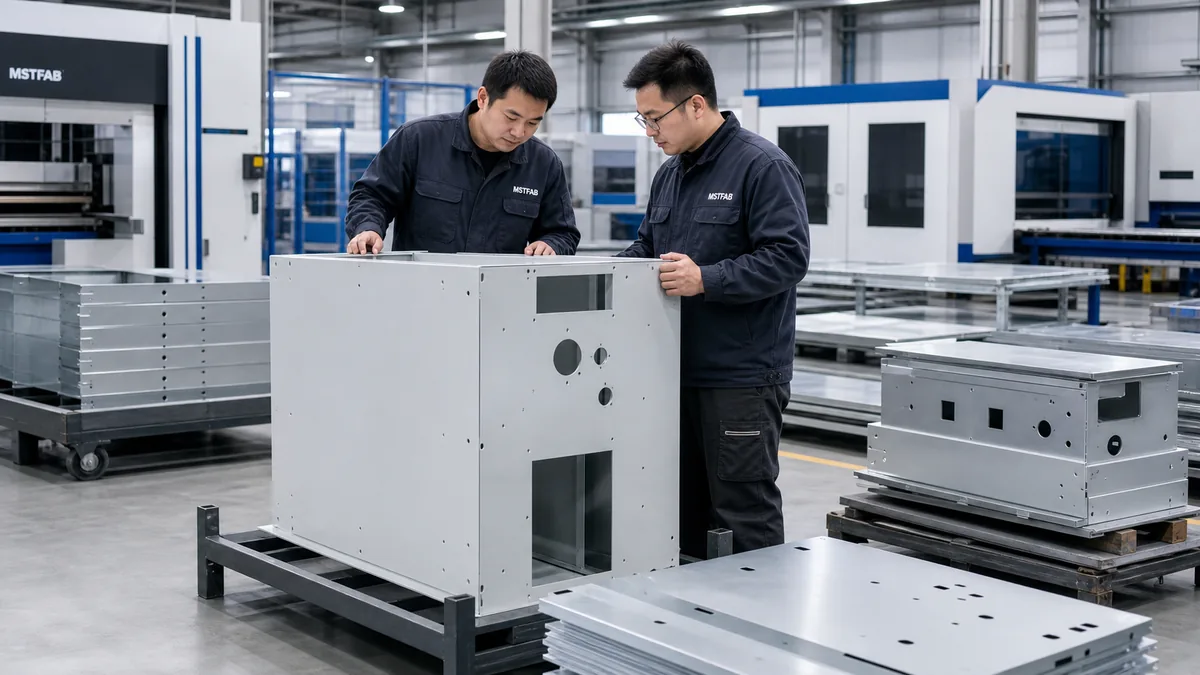
Reliable smart energy enclosure manufacturing depends on translating your 3D STEP and 2D PDF drawings into weather-resistant, structurally rigid sheet metal shells without dimensional drift. For solar inverters, EV charging pedestals, power conversion cabinets, and battery storage racks, OEM buyers should verify outdoor material grades, rain-hood and louver forming, fixture-controlled welding, corrosion-resistant powder coating, and First Article Inspection (FAI) before batch release.
Explore this guide
01 / Drawing-First Scope & DFM
Start smart energy enclosure sourcing with a structured DFM review.
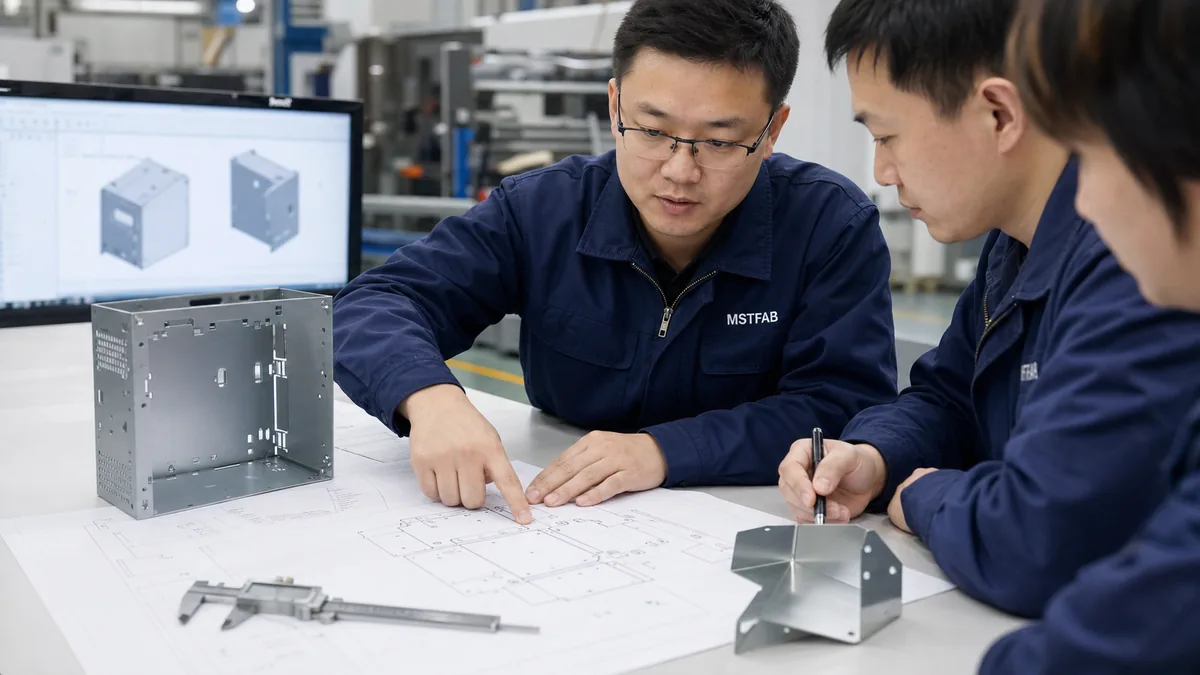
Smart energy equipment—including commercial solar inverters, EV charging stations, power distribution units, and battery storage cabinets—packs heavy power electronics and thermal management hardware into compact sheet metal footprints. Minor flat-pattern or bend-deduction errors quickly cause heat-sink interference or door sealing leaks.
Applying DFM design rules for sheet metal parts before cutting the first blank ensures your mechanical housing is optimized for repeatable series production.
Build-to-print metalwork (Included)
Custom empty enclosure shells, weather hoods, louvered doors, internal battery/inverter mounting trays, busbar support brackets, heat-shield baffles, and installed mechanical fasteners.
Pre-production DFM check
Engineering validation of bend relief cutouts, minimum flange lengths, hole-to-bend distances, weld seam accessibility, and gasket compression ledges against your 3D STEP and 2D PDF.
OEM system scope (Excluded)
Battery cells, BMS boards, power inverters, high-voltage cabling, active cooling chillers, and final powered product testing or regulatory certification.
Clear responsibility split: MSTFAB manufactures the custom sheet metal enclosure shell and internal mechanical brackets strictly to your drawings, while the OEM retains full ownership of electrical integration and system-level compliance.
02 / Outdoor Material Selection
Match sheet metal grades to coastal, rooftop, and industrial environments.
Unlike indoor office electronics, smart energy enclosures routinely face UV radiation, driving rain, thermal cycling from -30°C to +55°C, and coastal salt fog. Selecting the right base metal and temper on the drawing prevents field corrosion and structural fatigue.
- 5052-H32 aluminum alloy: Ideal for wall-mount solar inverter housings, lightweight EV charger skins, and heat-dissipating shrouds—offering crack-free CNC bending and high natural corrosion resistance.
- 304 and 316L stainless steel: Specified for coastal, marine, and harsh industrial energy cabinets where long-term rust resistance and structural strength are mandatory.
- Galvanized and zinc-coated steel (SGCC / DX51D+Z / SECC): Widely used for internal component subplates,din-rail channels, and partition baffles that require unpainted grounding continuity and corrosion protection.
- Cold-rolled and structural carbon steel (SPCC / Q235B / Q355B): Used for heavy floor-standing energy cabinets and battery rack frames when paired with zinc-rich primer and exterior-grade polyester powder coating.
Consult our sheet metal material selection guide to balance raw material cost, weight, weldability, and environmental durability.
03 / Core Fabrication Controls
Control fiber laser cutting, CNC bending, fixture welding, and PEM hardware.
A long machine list means very little if processes are not synchronized around enclosure tolerances. Smart energy housings combine large exterior skins with dense internal mounting brackets that must align without forced fitting.
- High-power fiber laser cutting with nitrogen assist gas delivers oxide-free edges on stainless, aluminum, and painted carbon steel panels so coatings adhere tightly to cut perimeters.
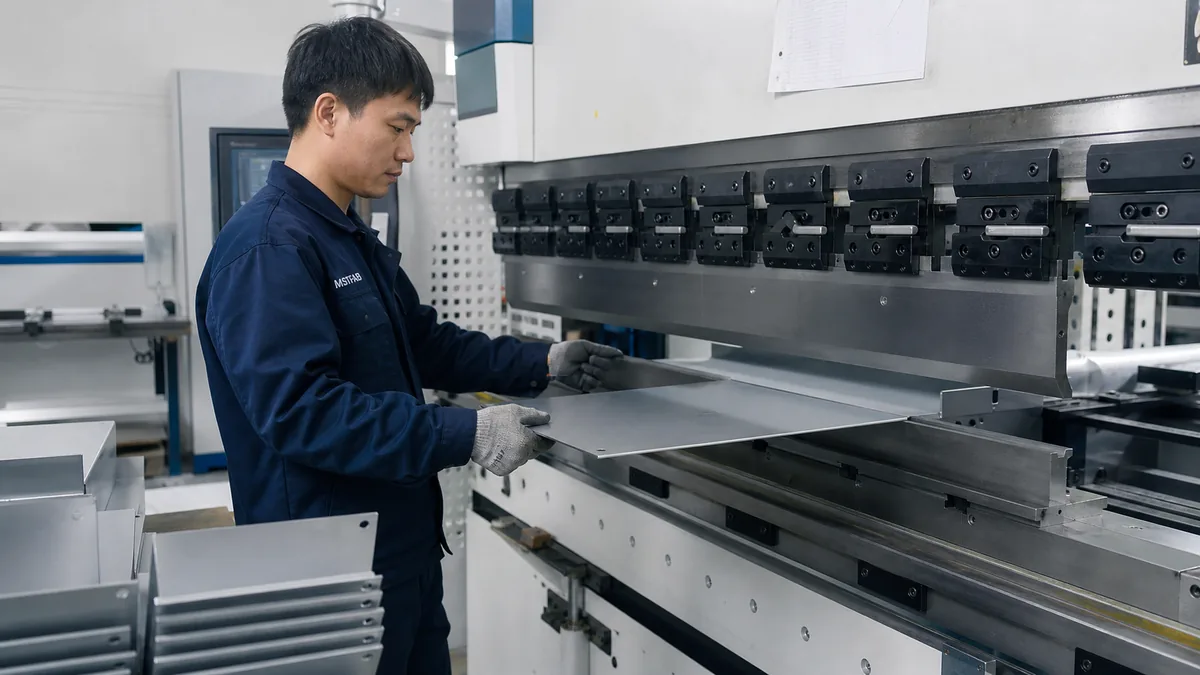
- Multi-stage CNC press brake forming with precision tooling produces consistent rain-drip lips, gasket return flanges, and ventilation louvers across repeat production lots.
- Fixture-clamped TIG, MIG, and laser welding controls thermal distortion on tall cabinet frames while keeping exterior roof and corner seams watertight.
- Hydraulic installation of self-clinching nuts, standoffs, and blind studs (PEM hardware) provides high torque and push-out resistance for mounting PCBs, busbar insulators, and access covers.
Keeping laser cutting, forming, hardware insertion, and welding under one roof eliminates inter-shop tolerance stack-up and keeps lead times predictable.
Learn how to evaluate a sheet metal quote and avoid hidden subcontracting costs →
04 / Finishing and Weather Sealing
Specify outdoor powder coating, masking zones, and sealing geometry clearly.
Most outdoor enclosure warranty complaints start at cut edges, weld seams, or unmasked grounding pads. Your RFQ and 2D drawing should treat surface preparation and sealing interfaces as measurable engineering requirements.
- Pre-treatment and edge conditioning: Mechanical deburring removes sharp laser edges before parts undergo multi-stage degreasing and conversion pre-treatment so powder coatings wrap evenly over corners.
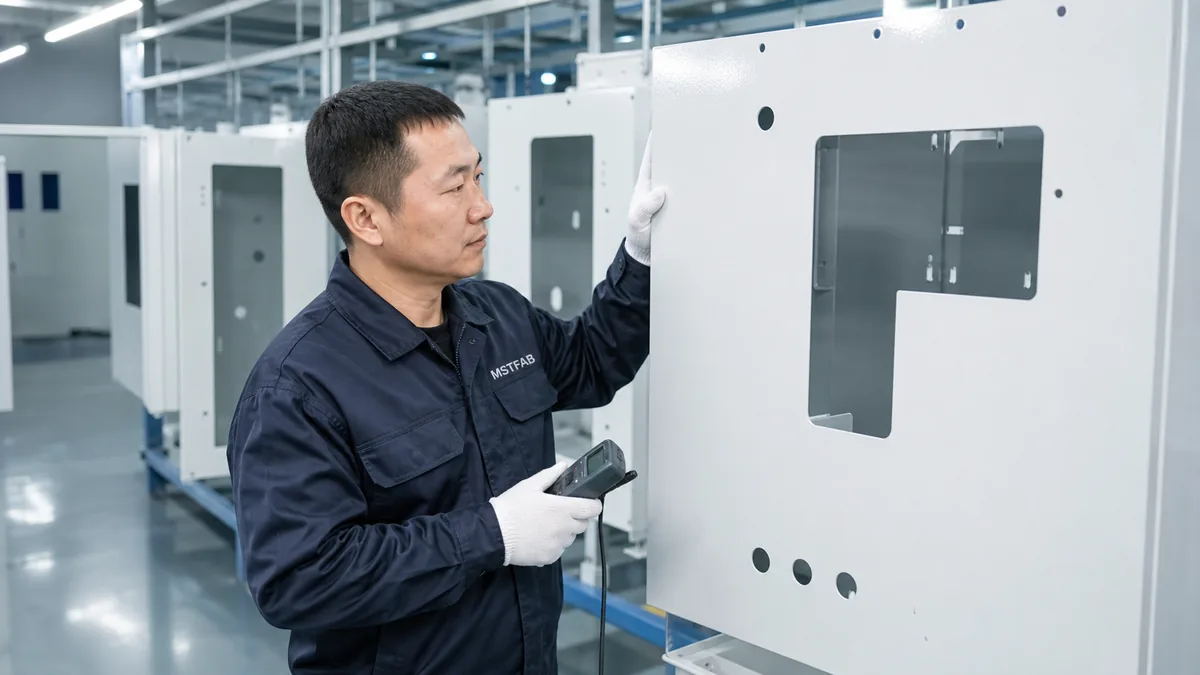
- UV-stable outdoor powder coating: Specify exterior-grade polyester powder systems (or dual-coat zinc-primer + topcoat for severe environments) with target dry-film thickness in microns.
- Precision masking of grounding and EMI zones: High-temperature silicone plugs and die-cut tapes keep welded earth studs, busbar mounts, and conductive gasket tracks free of insulating paint.
- Gasket ledges and rain-hood returns: Formed sloped roof hoods, hemmed door knife-edges, and louver water baffles work together with customer-specified gaskets to shed rainwater.
Use our sheet metal fabrication quote checklist to document coating thickness, salt-spray targets, and masking locations upfront.
05 / Buyer Verification Matrix
Audit five manufacturing checkpoints before releasing smart energy enclosure lots.
Use this verification table to align your engineering and procurement teams on what must be confirmed and documented before shipment.
06 / Inspection Handoff
Verify dimensional accuracy and trial assembly with First Article Inspection.
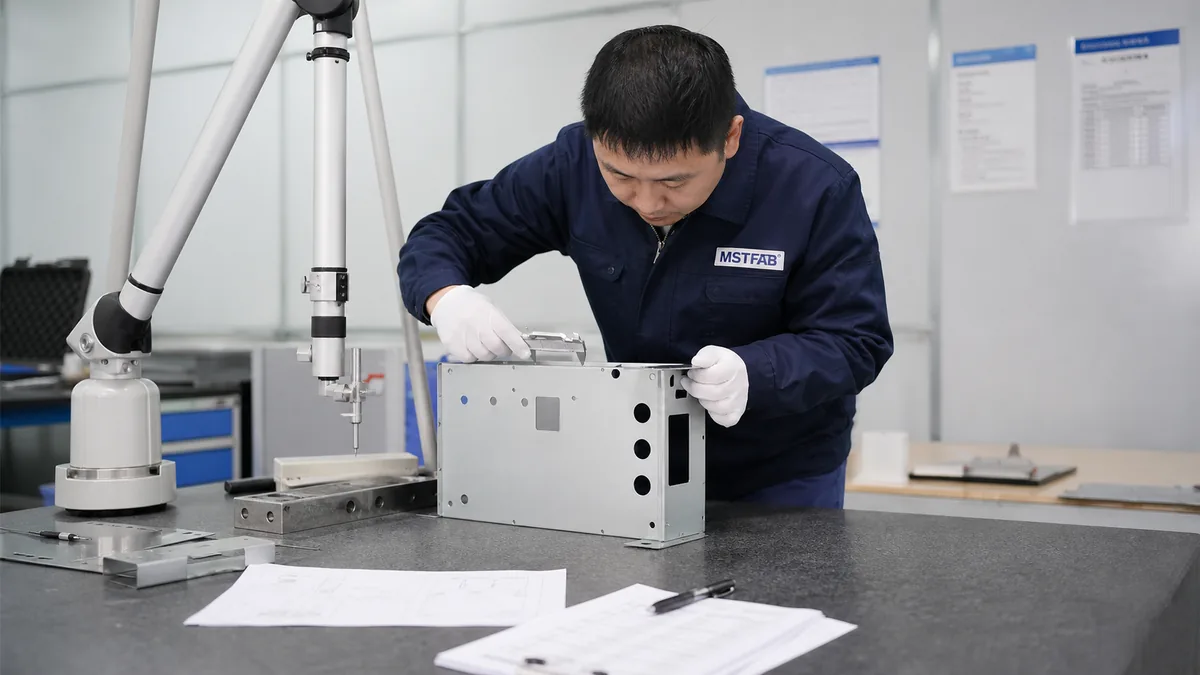
Smart energy enclosures contain tightly packed internal shelves, airflow ducts, and door-mounted interfaces where a 1.5 mm cumulative bend shift can block module insertion.
Before releasing volume production, our quality team performs a full First Article Inspection (FAI) against your ballooned 2D drawing—measuring flat laser cutouts, formed flange angles, PEM hardware locations, coating thickness, and full mechanical trial assembly.
Operating under ISO 9001 quality management controls, we compile the measured FAI report, material certificates, and inspection photos so your engineering team can approve the build with confidence.
Read our guide to sheet metal quality control, FAI, and dimensional inspection →
07 / Packing and Release
Protect finished energy enclosures and brackets during global ocean freight.
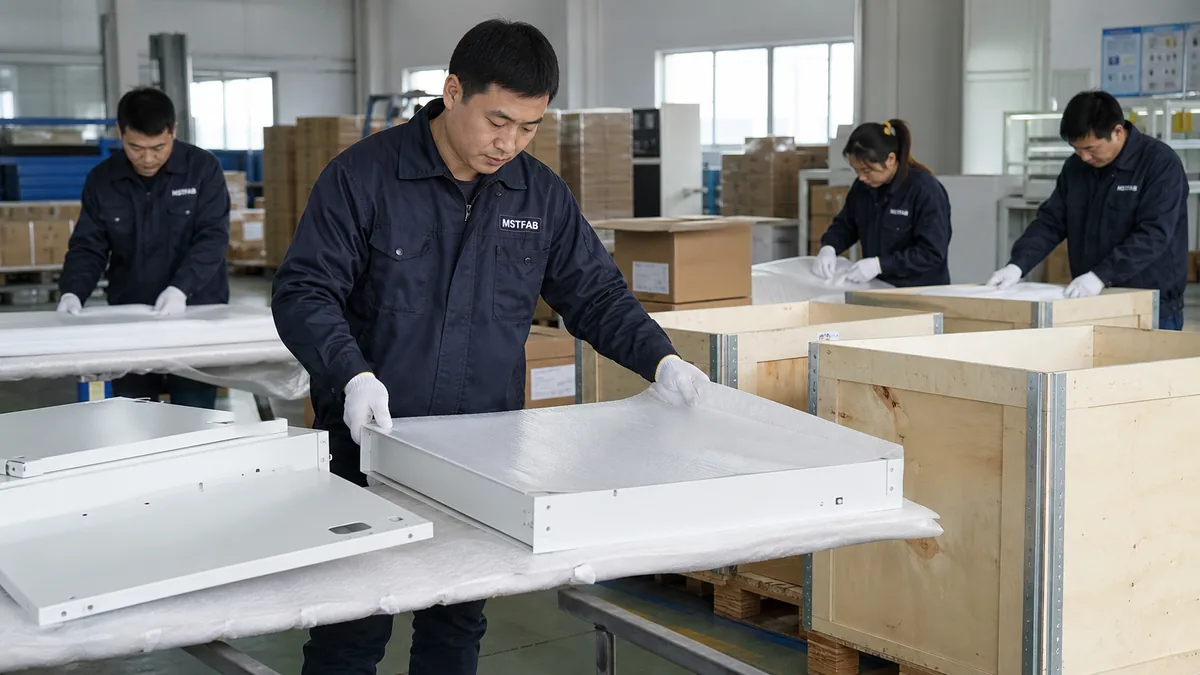
Cosmetic EV charger pedestals and powder-coated inverter housings can be ruined by carton chafing, condensation, or forklift damage during international transit. Export packaging must be engineered as part of the manufacturing route.
Our export packaging workflow uses protective surface film, custom pearl-cotton foam dividers, VCI moisture barriers with desiccant packs, and fumigation-free ISPM-15 plywood crates with clear part-number and revision labeling.
Manufacturing scope: MSTFAB manufactures custom build-to-print sheet metal enclosure shells, mounting trays, and brackets to customer drawings under ISO 9001 quality controls. Battery modules, power electronics, electrical wiring, and end-product certification remain the responsibility of the OEM.
08 / Ready-to-Review RFQ
Include eight engineering details in your smart energy enclosure RFQ.
- 3D STEP assembly and part filesSupply 3D STEP models for the complete enclosure shell, doors, internal trays, baffles, and brackets.
- 2D PDF drawings with tolerancesInclude critical mounting hole datums, general tolerance standard, thread sizes, and weld symbols.
- Material grade and sheet thicknessSpecify exact alloy and gauge for each BOM item (such as 2.0 mm 5052-H32, 1.5 mm SUS304, or 2.0 mm SPCC).
- Fastener and hardware scheduleList all PEM nuts, standoffs, studs, weld studs, hinges, and compression latches with part numbers.
- Louver and cutout geometryProvide dimensions for cooling louvers, fan cutouts, cable gland plates, and display windows.
- Outdoor coating and masking specCall out primer + powder coat system, RAL color, texture, film thickness, and masked grounding pads.
- Gasket and sealing interface notesIndicate door return-flange dimensions and whether mechanical gasket strips are to be supplied.
- Prototype and batch volumesState initial FAI sample quantity, recurring batch release volumes, and export destination.
Providing a complete 3D/2D drawing package and BOM lets our engineering team confirm louver/bend tooling and return an itemized quote within 24 to 48 hours.
Smart energy enclosure manufacturing questions from OEM buyers
Do you manufacture finished, powered smart energy equipment or battery systems?
No. MSTFAB is a build-to-print sheet metal fabrication manufacturer. We produce custom empty sheet metal enclosure shells, EV charger housings, inverter chassis, battery rack frames, and internal mounting brackets strictly to customer drawings. All electrical components, battery cells, wiring, and system-level certifications are handled by the OEM.
What sheet metal parts can MSTFAB fabricate for smart energy projects?
We fabricate complete mechanical enclosure BOMs—including welded floor-standing cabinet frames, weather hoods, louvered doors, removable cable gland plates, galvanized internal mounting subplates, heavy-duty battery module trays, aluminum heat-sink shrouds, and copper/steel busbar support brackets.
Which material is best for an outdoor EV charger or solar inverter enclosure?
For wall-mount solar inverters and lightweight outdoor pedestals, 5052-H32 aluminum with powder coating offers high corrosion resistance and low weight. For heavy floor-standing energy cabinets, 304 or 316L stainless steel (or zinc-primed + outdoor polyester powder-coated carbon steel) provides high structural rigidity and weather durability.
How do you prevent weld distortion on large energy cabinet frames and doors?
We design interlocking tab-and-slot joints where appropriate, clamp assemblies into rigid modular welding fixtures, use balanced TIG/MIG or laser welding sequences, and verify diagonal frame squareness and door gap uniformity before surface coating.
How do you verify quality before shipping an export container of enclosures?
Every new project goes through a formal First Article Inspection (FAI) where we measure all drawing dimensions, verify hardware torque/push-out, test coating thickness and adhesion, and perform a full mechanical trial assembly of doors and internal trays before releasing batch production.
Can you support both initial prototype samples and recurring batch production?
Yes. Using high-speed fiber lasers and CNC press brakes rather than hard stamping dies allows us to build 1-to-10 piece engineering prototypes quickly and then scale seamlessly into 50-to-2,000+ piece recurring production batches.
Technical references
Reference these international standards when specifying general sheet metal tolerances, metallic corrosion protection, and quality management systems.
Send your smart energy enclosure drawings for a DFM review and quote.
Upload your 3D STEP models, 2D PDF drawings, and batch quantities. MSTFAB will verify manufacturability and return a detailed, itemized quotation.
Request an Energy Enclosure Quote →
Have a question first? caroline@mstfab.com
 WeChat Contact
 WhatsApp Me Directly