
SMART ENERGY CABINET INTERFACES
A smart energy cabinet shell for EV infrastructure must connect four mechanical systems before fabrication: the HMI and user-access zone, buyer-selected cooling equipment, cable and power-entry routing, and the base or plinth that transfers cabinet loads to the installation.
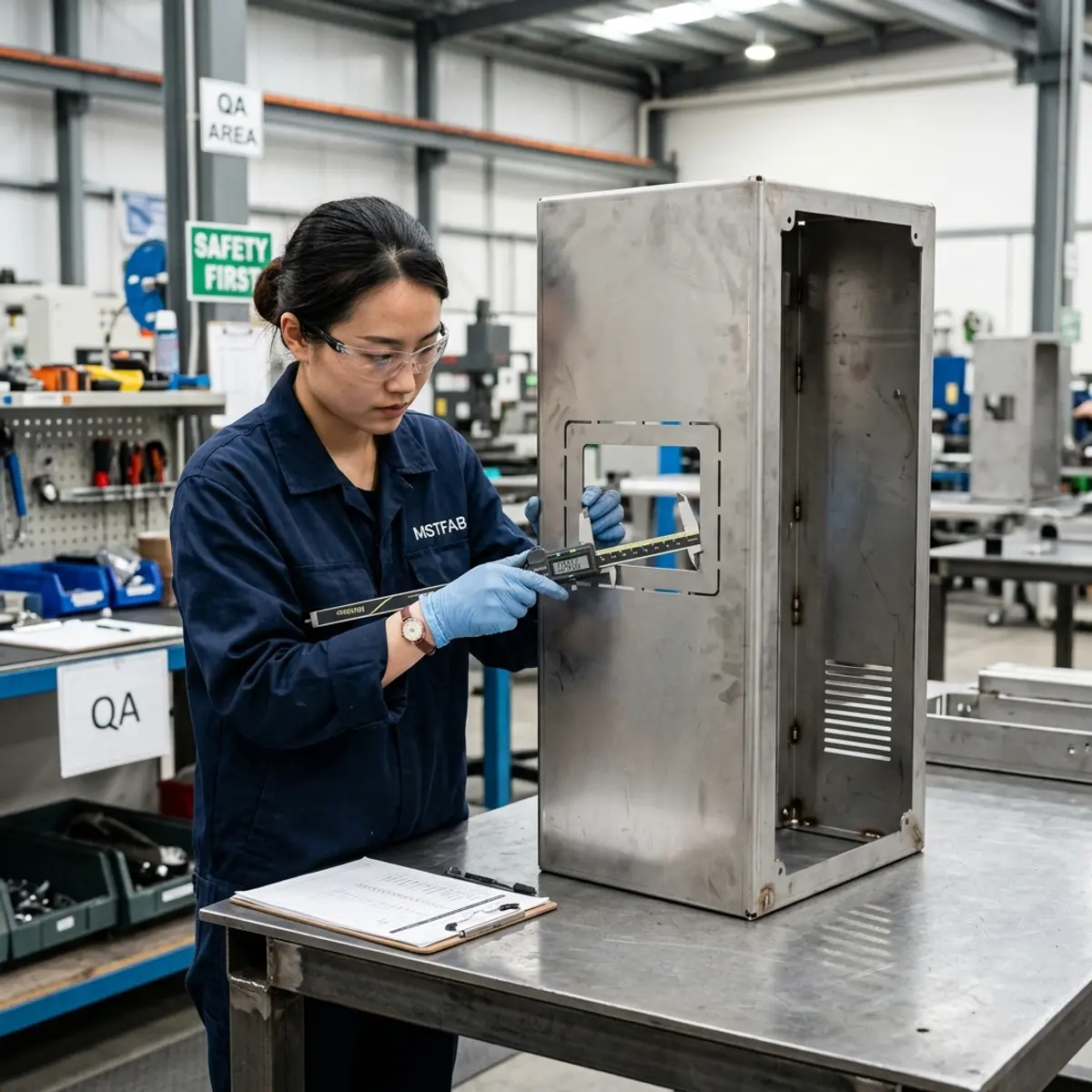
Freeze the HMI Interface Before Cutting the Door
Define the display or bezel part number, opening, corner radii, gasket or adhesive land, stud pattern, visible gap, touch clearance and rear keep-out envelope. Check the finished door because forming, welding and coating can change the relationship between the opening and mounting features.
Design Cooling Openings Around Selected Components
The buyer’s thermal engineer should define heat load, ambient conditions, airflow path and selected cooling hardware. The enclosure drawing can then control cutouts, studs, duct or plenum interfaces, filter replacement path, condensate provisions and service clearance. A fan opening does not prove thermal performance.
| Interface | Drawing input | Finished check |
|---|---|---|
| HMI | Approved component, opening, mount, seal and keep-out | Fit, flushness, access and visible gap |
| Cooling | Selected hardware, opening, fasteners and service route | Mechanical fit and unobstructed access |
| Cable entry | Gland plate, connector, bend space and strain relief | Alignment, edge condition and tool access |
| Base or plinth | Loads, anchors, level condition, lift and routing zones | Datums, flatness and trial fit |
Connect the Base Frame to Installation and Transport
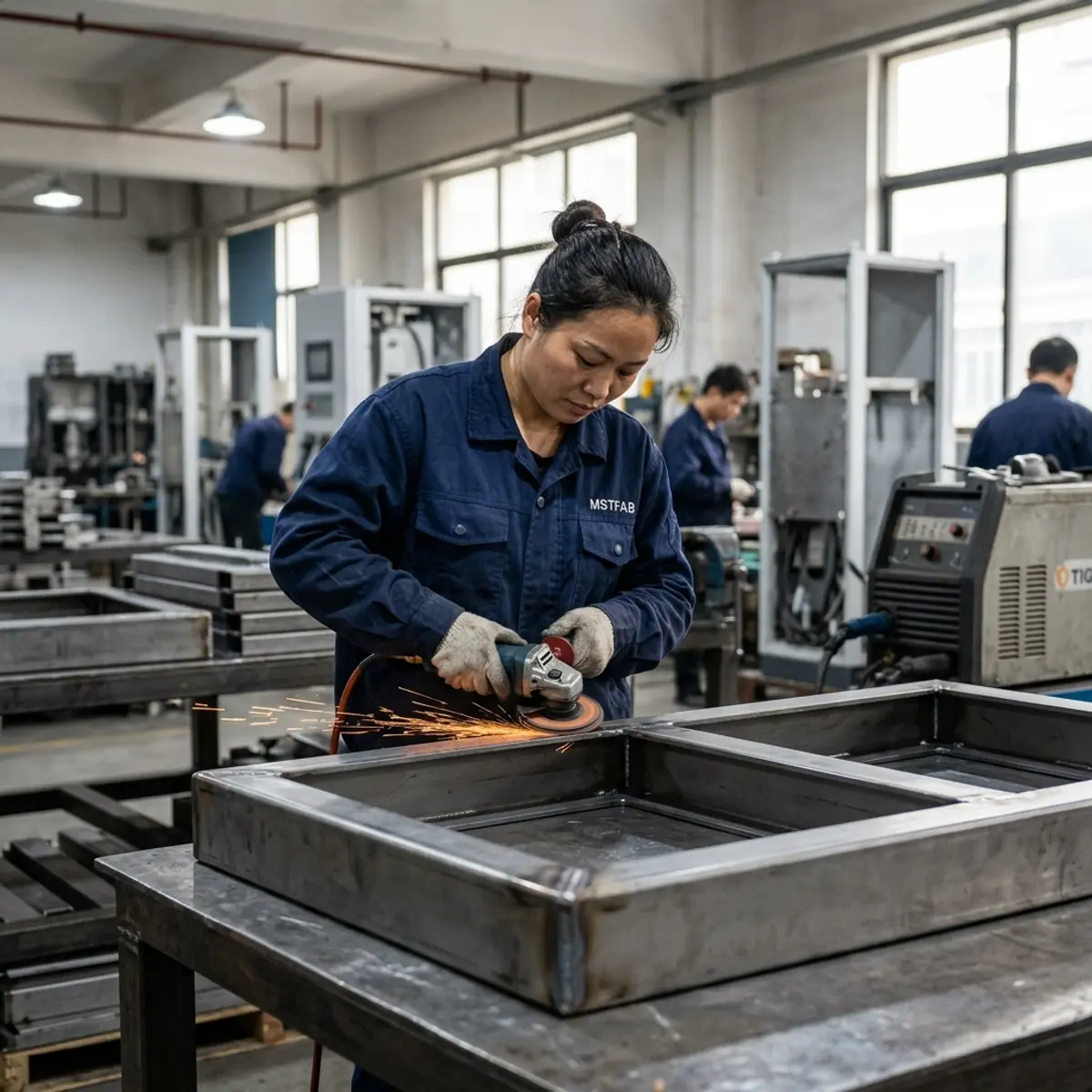
State the cabinet mass and center-of-gravity information supplied by the system owner, anchor pattern, leveling method, forklift or lifting provisions and cable entry through the base. Structural decisions must follow the buyer’s load cases and installation condition rather than a fixed plate-thickness rule.
Buyer Trust Table
| Supplier statement | Evidence to request | Buyer value |
|---|---|---|
| “HMI fits” | Controlled component drawing and finished-door fit check | Protects the user interface and seal land |
| “Thermal ready” | Selected cooling hardware and mechanical interface inspection | Confirms fit without claiming system cooling performance |
| “Weatherproof” | Target standard, completed configuration and responsible validation | Avoids unsupported enclosure-shell claims |
| “Long life” | Exposure, material, finish, maintenance and test basis | Replaces a fixed lifetime promise with reviewable inputs |
Smart Energy Cabinet Interface Checklist
- Complete cabinet and equipment-envelope model
- HMI component and seal interfaces controlled
- Cooling hardware selected by the buyer
- Airflow and service routes shown
- Cable entries and bend space defined
- Base loads and anchor pattern supplied
- Lift, transport and installation conditions stated
- Grounding provisions and masks detailed
- CTQs and first-article fit checks agreed
- System validation owner named
Frequently Asked Questions
Can MSTFAB design the complete EV charging station?
No. MSTFAB fabricates the approved empty metal enclosure and mechanical parts. The charger OEM owns the electrical, thermal, software and certification design.
Does a welded cabinet guarantee watertight performance?
No. Performance depends on the complete configuration, penetrations, doors, gaskets, hardware, installation and applicable verification.
How should the HMI opening be inspected?
Use the approved component interface, functional datums and finished condition. Include mounting and service access, not only the opening width and height.
Review All Four Interfaces Before Fabrication
Send the HMI, cooling, cable and base interface package for a cabinet-shell quotation review.
Release checks for smart energy cabinet interfaces
| Review stage | What to confirm | Evidence or acceptance |
|---|---|---|
| Interface review | Locate HMI, cooling-unit, cable-entry and base-mounting features. | Use the buyer-approved component drawings and controlled revision. |
| Mechanical fit | Review tool access, removal paths and the finished coating condition. | Agree critical measurements and any mechanical trial assembly. |
| Scope handoff | Separate fabricated metalwork from cooling and electrical equipment. | Assign performance validation and retain approved interface changes. |
Inspection methods, sampling, tolerances, certificates and any additional testing must be agreed in the drawing, quality plan and quotation. These examples are not blanket MSTFAB equipment, certification or performance guarantees.
 WeChat Contact
 WhatsApp Me Directly