
Short version: sheet metal welding is where flat parts become useful assemblies. It is also where bad planning turns a nice drawing into a banana-shaped bracket. Nobody orders bananas from a welding supplier.
Sheet metal welding services are used when custom OEM parts need strength, structure and reliable assembly. Many projects cannot stop at cutting and bending. Brackets, frames, cabinets, guards, chassis parts, enclosures and equipment structures often need TIG welding, MIG welding, spot welding, grinding, finishing and inspection before they are ready for the buyer’s assembly line.
For overseas buyers, the risk is not only the weld bead. The real question is whether the final welded assembly still fits the drawing after heat, grinding, coating and export shipping. MSTFAB supports welded sheet metal parts based on customer drawings, material grade, tolerance, weld notes, visible-surface requirements and packaging needs.
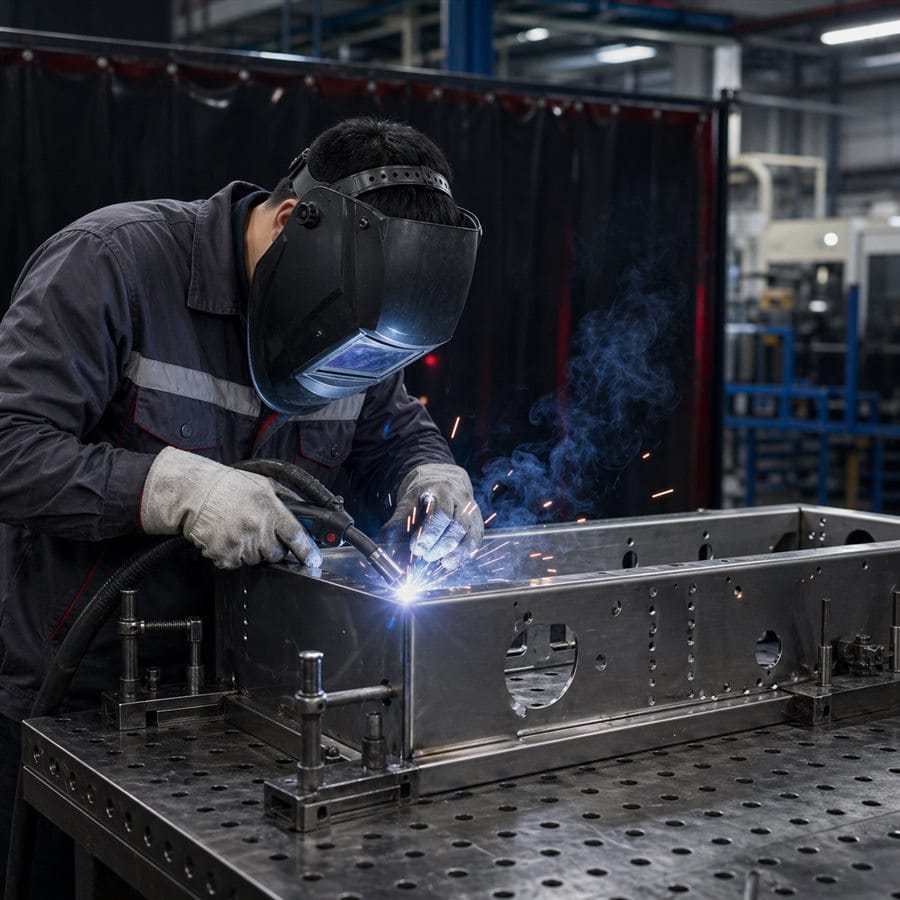
Reviewed by MSTFAB Manufacturing Engineering Team. Last updated: June 30, 2026. Focus: welded brackets, frames, cabinets, guards, chassis parts, enclosure assemblies, welding distortion control, inspection and export packaging for international buyers.
Need production capability? This article focuses on sheet metal welding quality checklist for oem assemblies. For manufacturing scope, process capability and drawing-based quotation support, review MSTFAB’s sheet metal welding services.
Why welding quality matters for OEM sheet metal parts
Welding joins sheet metal parts into a stronger structure, but it also adds heat, shrinkage and surface work. If the supplier only thinks about making the parts stick together, the buyer may receive a welded assembly with shifted holes, warped panels, poor coating appearance or doors that refuse to close. Doors are stubborn when tolerances are ignored.
- Welded frames and support structures need strength and squareness.
- Cabinets and enclosures need clean corners, aligned doors and controlled gaps.
- Visible equipment panels need grinding and surface preparation before coating.
- Export parts need packaging that protects coating, threads, corners and assembled geometry.
For a full production route, MSTFAB can connect welding with custom sheet metal fabrication service, custom laser cutting services manufacturer support and CNC bending service before welding begins.
Buyer pain points MSTFAB reviews before welding
Distortion
Thin sheets, long frames and large panels can move during welding. We review fixtures, sequence and critical dimensions before production.
Strength
Load-bearing brackets, guards and support frames need clear weld notes, material selection and joint design.
Appearance
Visible welds need grinding, sanding or controlled finish requirements. The drawing should mark cosmetic surfaces.
Coating
Weld marks and poor grinding can show after powder coating. Surface preparation should be part of the welding plan.
Inspection
Hole positions, flatness, squareness and assembly fit should be checked after welding, not only before welding.
Shipping
Large welded assemblies need packaging that protects shape, coating and corners during international transport.
Sheet metal welding methods we support
| Process | Best used for | Buyer note |
|---|---|---|
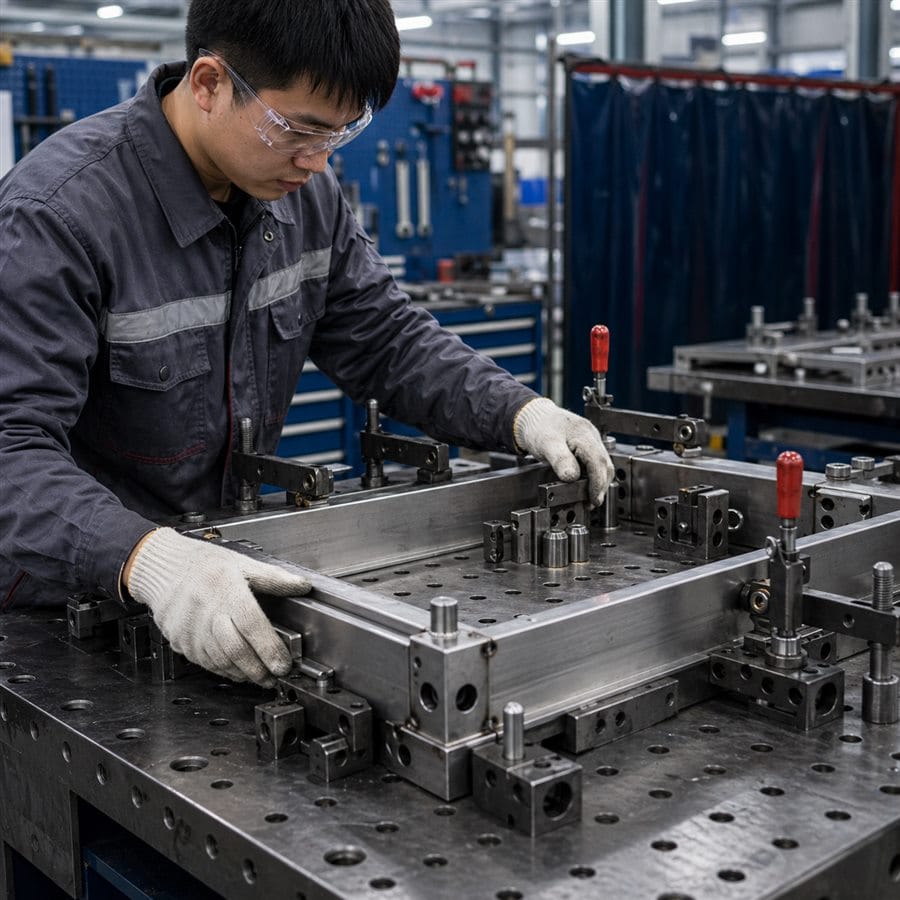
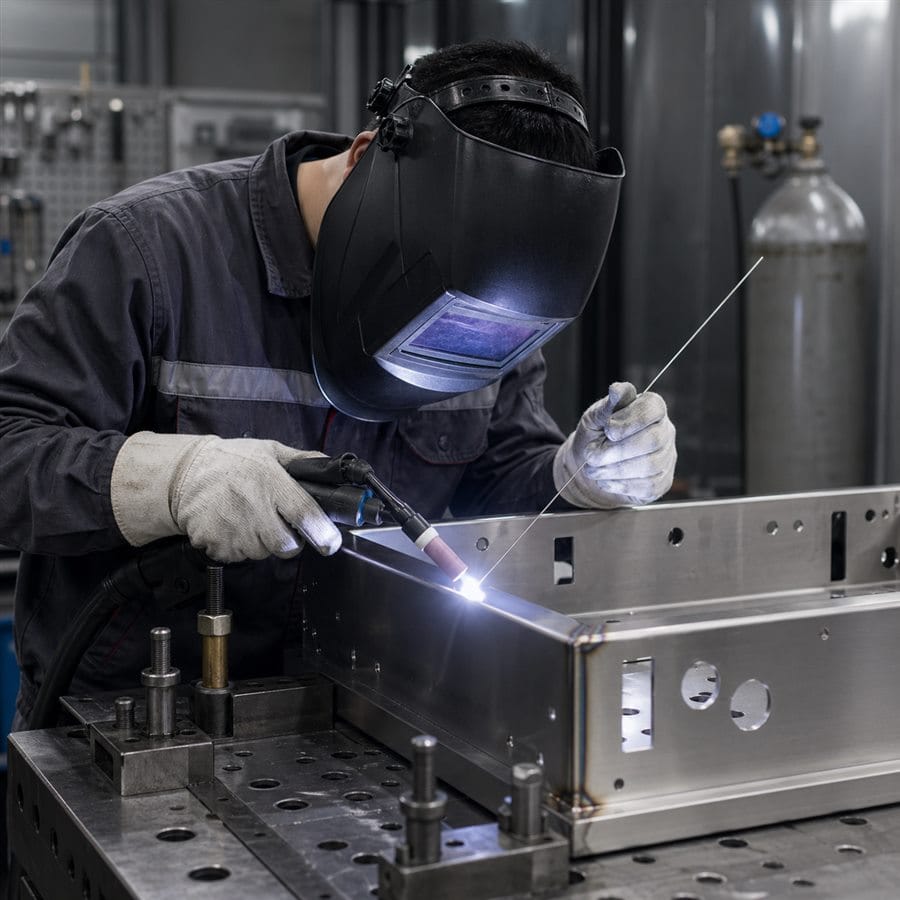
| TIG welding | Stainless steel, aluminum, thin sheet metal and visible assemblies. | Cleaner control, but slower than MIG. Good for parts where appearance and heat control matter. |
| MIG welding | Carbon steel frames, guards, brackets, cabinet structures and industrial components. | Strong and efficient for production welding, with fixture planning to control distortion. |
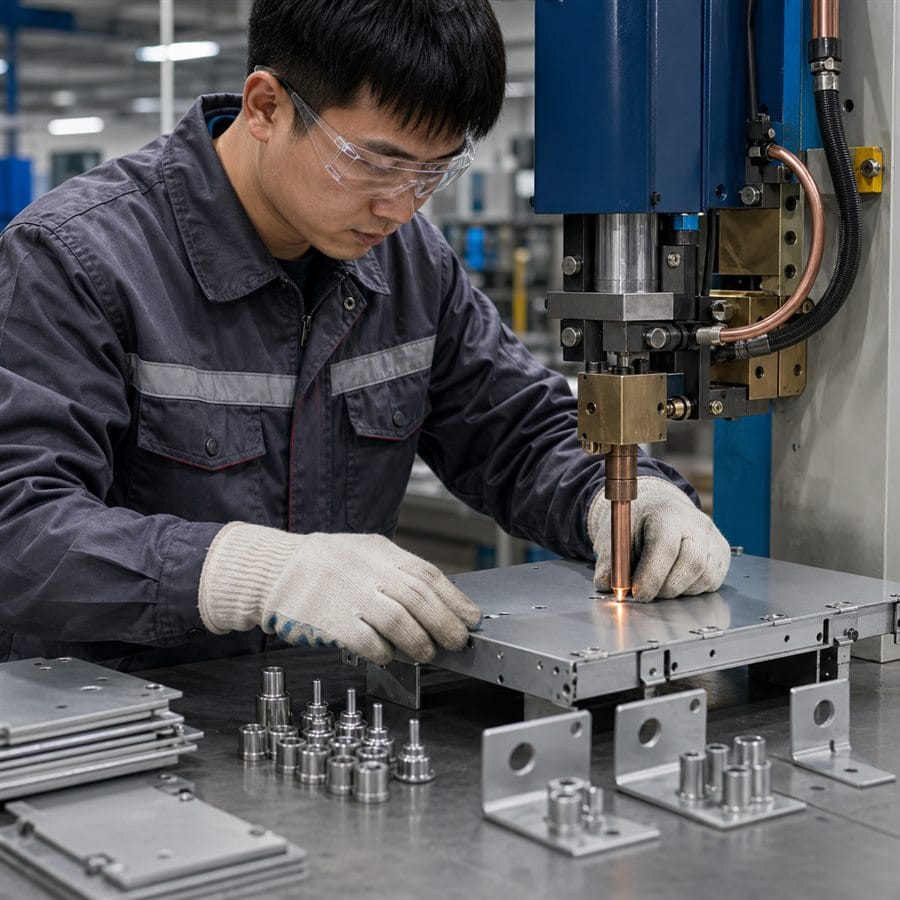
| Spot welding | Overlapping panels, covers, brackets and cabinet components. | Useful when continuous welding is unnecessary or would add too much heat. |
| Riveting and hardware assembly | PEM fasteners, rivet nuts, studs, hinges, locks and mechanical fastening. | Sometimes the best weld is no weld. Mechanical fastening can reduce heat risk and simplify service access. |
Materials for welded sheet metal parts
Different materials behave differently during welding. A good supplier should ask about material grade, thickness, joint design, surface finish and final environment before quoting. If nobody asks those questions, that is not efficiency. That is suspense.
| Material | Common welded parts | Manufacturing consideration |
|---|---|---|
| Carbon steel / mild steel | Frames, brackets, guards, cabinets and support structures. | Strong and cost-effective. Often paired with carbon steel laser cutting services and powder coating. |
| Stainless steel | Clean panels, corrosion-resistant equipment, visible covers and industrial housings. | Requires heat control, surface protection and careful grinding. See stainless steel sheet metal fabrication service. |
| Aluminum | Lightweight frames, equipment housings and custom components. | Needs proper joint design and welding control. Some assemblies may use riveting instead. See aluminum sheet metal fabrication service. |
| Galvanized steel | Outdoor cabinets, equipment panels and corrosion-conscious parts. | Welding can damage zinc near the weld area. Plan cleaning, coating or protection after welding. See galvanized steel laser cutting services. |
Complete fabrication around welding
Welding rarely lives alone. Most OEM welded parts need cutting, bending, hardware, grinding, surface finishing, inspection and packing. Keeping these steps under one manufacturing workflow reduces coordination time and helps catch problems before they travel across an ocean in a very confident cardboard box.
- Laser cutting and CNC punching for flat blanks, holes and cutouts.
- CNC bending for flanges, channels, brackets and enclosure panels.
- TIG welding, MIG welding, spot welding and mechanical fastening.
- Grinding, deburring and surface preparation before coating.
- powder coating sheet metal parts for corrosion resistance and appearance control.
- dimensional inspection report support for critical dimensions.
- first article inspection before batch production when needed.
- export packaging for larger welded assemblies and coated surfaces.
Welding design review before production
A good welded assembly starts before the welder picks up the torch. MSTFAB can review drawing details that affect strength, deformation, finish and assembly fit.
| Review item | Why it matters | What buyers should provide |
|---|---|---|
| Weld locations | Controls strength, appearance and heat input. | Mark weld length, location and critical joints on drawings. |
| Critical dimensions | Welding can shift holes, panels and frame geometry. | Identify hole positions, flatness, squareness and assembly dimensions. |
| Cosmetic surfaces | Grinding and weld marks may remain visible after finishing. | Mark visible sides, acceptable weld appearance and finish level. |
| Surface finishing | Coating quality depends on weld cleanup and surface preparation. | Confirm powder coating, brushing, passivation or protective film needs. |
| Packing method | Welded assemblies can be heavy, awkward and easy to scratch. | Share handling requirements, final use, coating sensitivity and shipping method. |
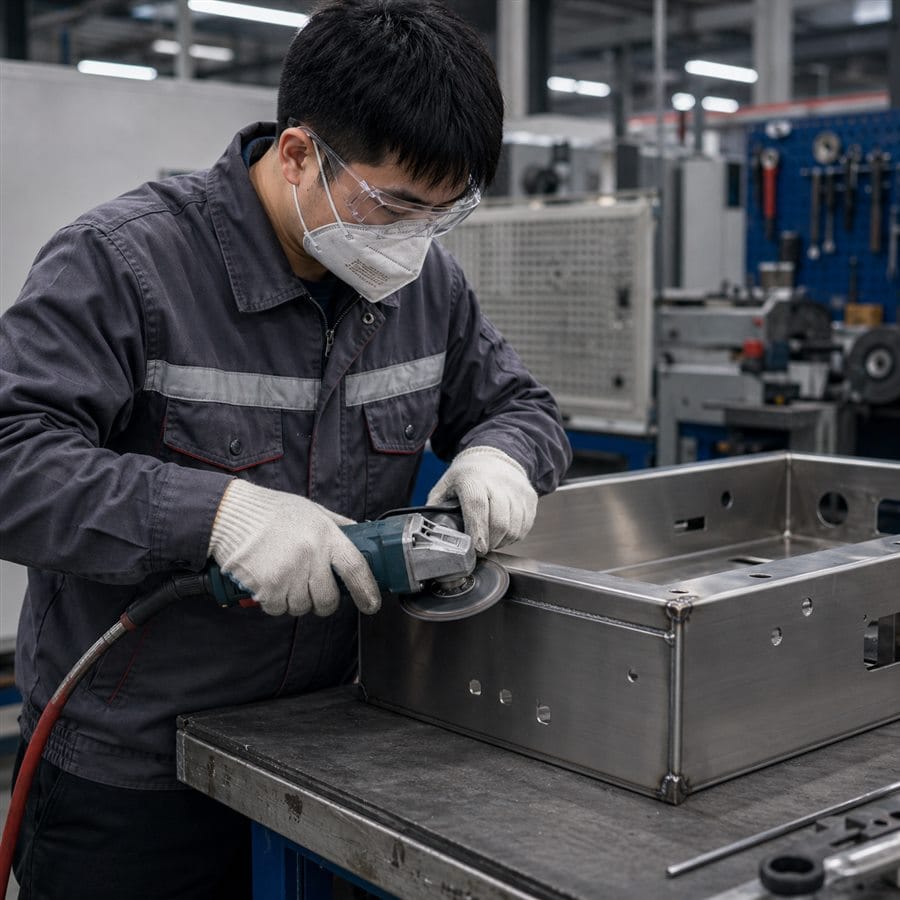
Quality inspection for welded sheet metal parts
Inspection should match the purpose of the part. A hidden support bracket and a visible stainless steel enclosure do not need the same inspection package, but both need clear acceptance criteria.
- Material and thickness verification before fabrication.
- Weld position, continuity and appearance checks.
- Flatness, squareness and hole position inspection after welding.
- Thread, insert and hardware checks before finishing.
- Coating inspection if the welded part is powder coated.
- Packaging inspection before shipment.

What buyers should send for an accurate welding quote
- 2D drawings in PDF format.
- DXF or DWG files for cutting profiles.
- STEP or STP files if available.
- Material grade, thickness and quantity.
- Weld locations, weld length or weld symbol requirements if specified.
- Load-bearing areas and critical dimensions.
- Cosmetic surface requirements and grinding notes.
- Surface finish, coating, inspection and packaging requirements.
FAQ: sheet metal welding services
Can MSTFAB supply welded assemblies instead of loose cut parts?
Yes. We can provide welded brackets, frames, enclosures, cabinets, guards, chassis parts and OEM sheet metal assemblies based on customer drawings.
Can you control welding deformation?
We review welding sequence, fixture support, material thickness and inspection points before production. Welding always adds heat, but planning keeps it from becoming a mystery project.
Do you support welding plus powder coating?
Yes. Weld grinding, deburring and surface preparation can be planned before powder coating so the finished part looks intentional, not rescued.
Can you provide inspection reports?
Yes. For critical welded parts, buyers can request dimensional inspection, first article inspection and photo documentation before shipment.
Need welded sheet metal parts that fit after welding, coating and shipping?
Send your drawings, material grade, quantity, weld requirements and finishing notes. MSTFAB will review the production route and return practical feedback before quoting.
For projects requiring consistent, repeatable welds across production batches, learn more about our robotic welding capabilities and how fixture-based automation improves weld quality for OEM sheet metal assemblies.
 WeChat Contact
 WhatsApp Me Directly