
One good enclosure sample is encouraging. A supplier for ongoing OEM production needs to show how the approved design is carried into normal cutting, bending, welding, finishing, inspection and packing. That is a supplier-selection question, not a promise that every future part will be identical.
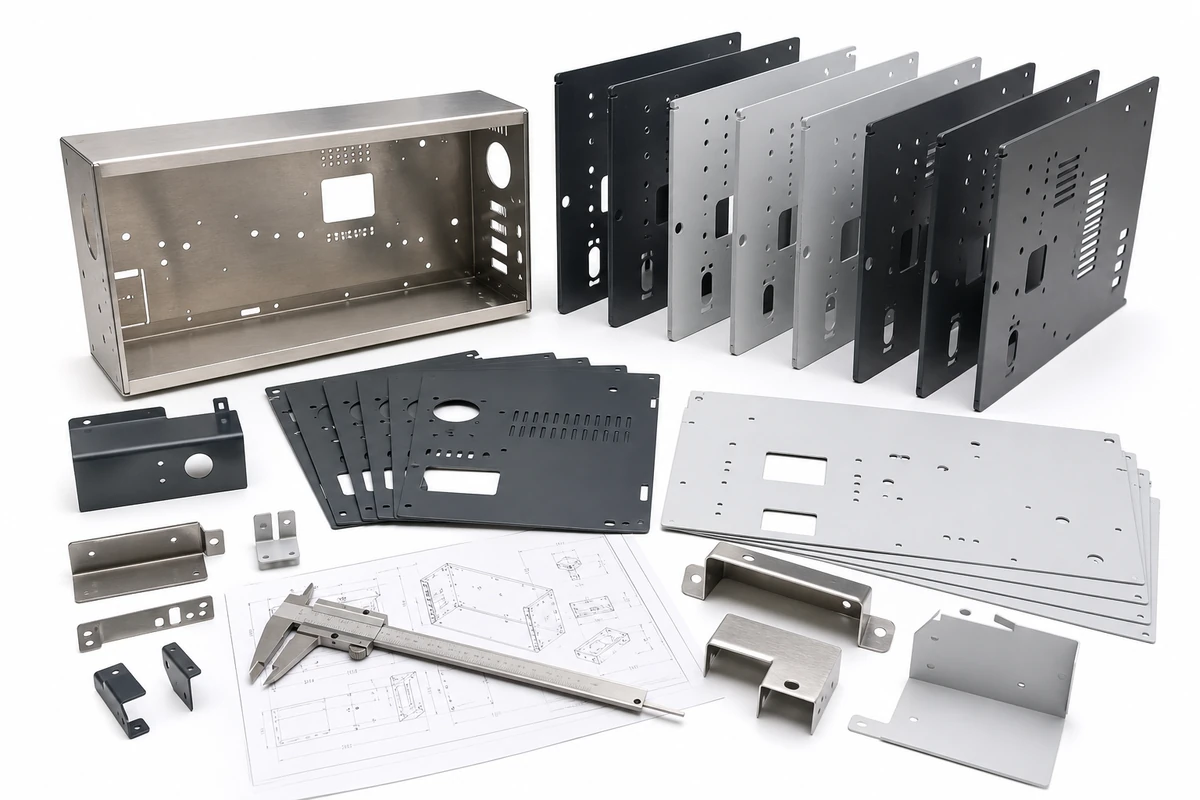
Use This Scorecard Before Awarding Repeat Production
For a custom shell, panel or bracket, start with the buyer-approved drawing and the characteristics that affect assembly. Ask the supplier to explain its intended production route and show what it will record at each risk point. A glossy factory brochure is not a measurement plan.
| Control point | Buyer question | Useful evidence to agree |
|---|---|---|
| Drawing and revision | How will the current 2D/3D files reach the shop floor? | Approved revision, change log and obsolete-file control |
| Material | How are grade, thickness and substitutions handled? | Order-specific identification and incoming check scope |
| Cut and bend setup | Which hole patterns, flanges or bend sequences control fit? | Setup notes and first-piece or in-process readings |
| Weld and hardware | Which interfaces can shift or become hidden? | Fixture, thread and post-weld fit checks |
| Finish and appearance | What sample, masking and partner route are approved? | Finish reference, return check and visible-face criteria |
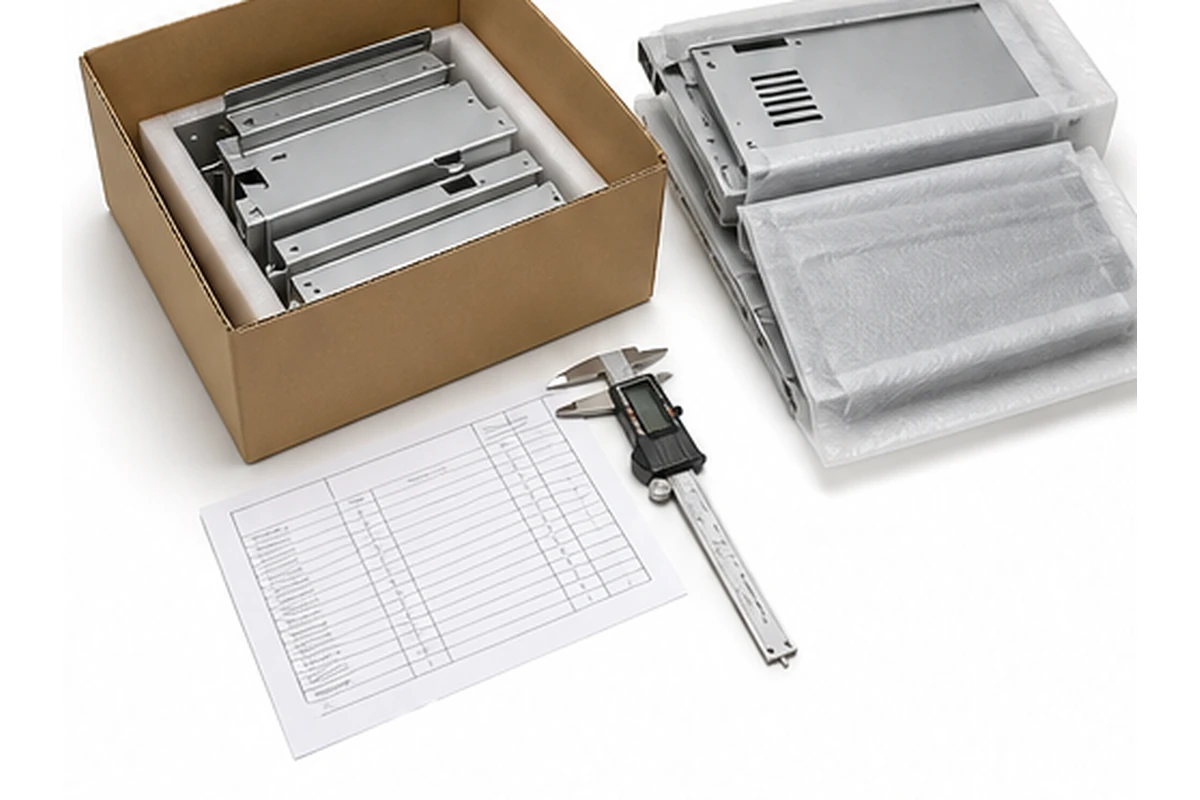
| Lot release | What is checked before the shipment leaves? | Current-lot inspection and packing evidence tied to the revision |
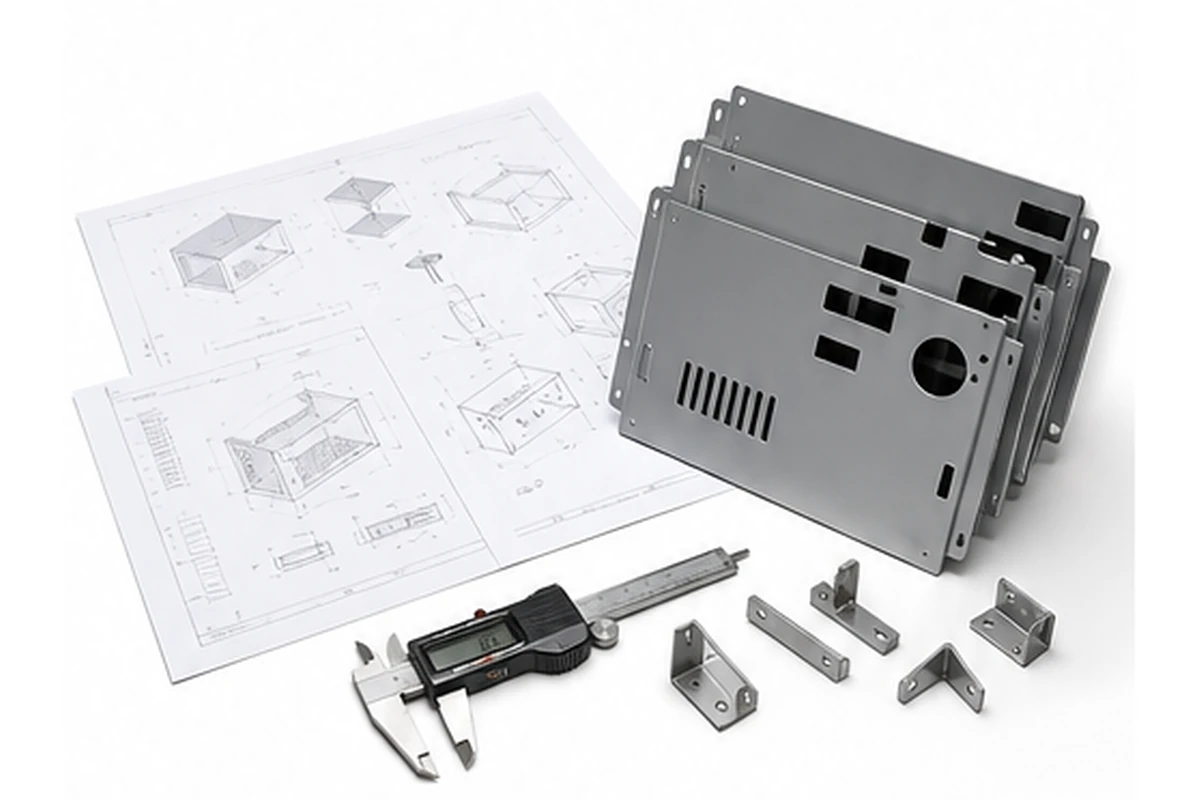
Distinguish a First Article From Normal Production
A first article checks an agreed initial sample. It does not by itself represent tool wear, later material lots, another operator, a changed fixture or a different finish route. Ask which features will be checked during the intended production pace and what happens when a result approaches a limit.
The right amount of evidence depends on feature risk, volume and buyer requirements. There is no universal sample count or Cpk threshold for every enclosure. For a deeper statistical plan, use the production repeatability validation guide. This page stays focused on selecting and briefing a supplier.
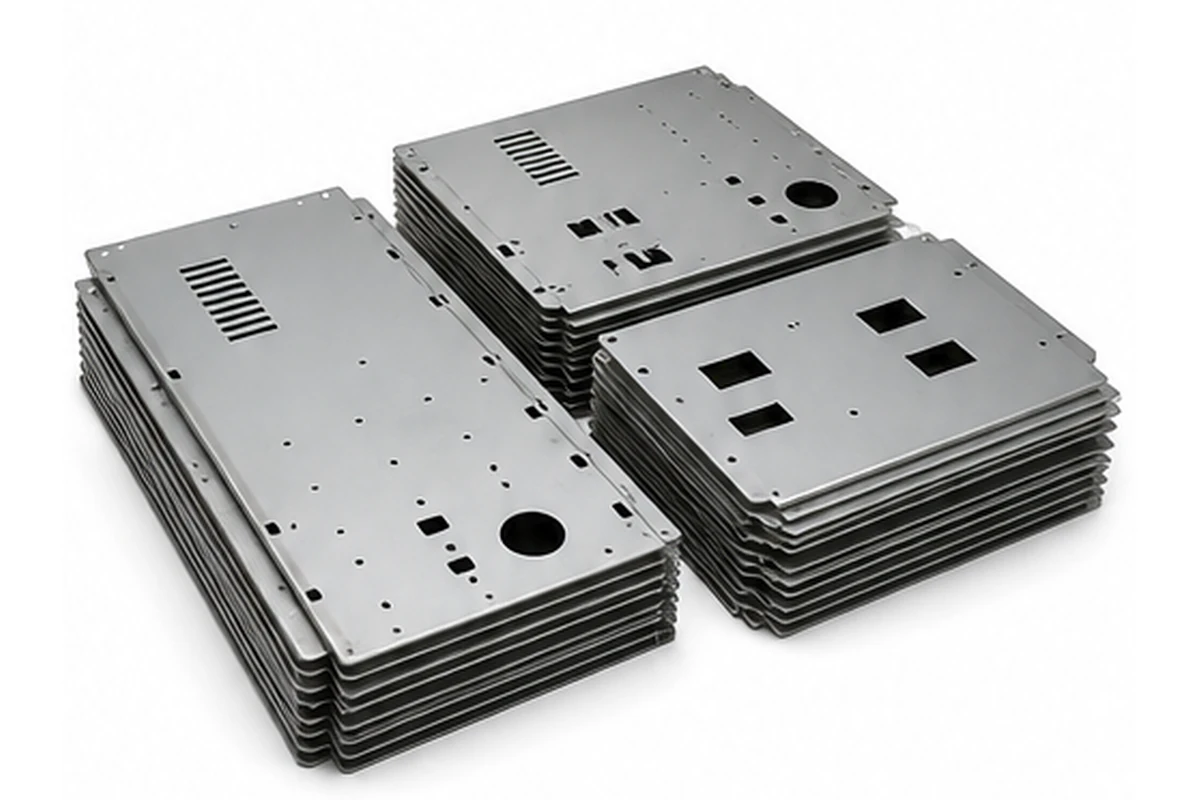
Check the Steps That Can Move a Critical Feature
Cutting and forming
Hole location on a flat blank may be easy to verify; the same hole’s position relative to a formed flange can be harder. Ask how the part is located after bending and which measurements are taken in the finished state. Different material thicknesses, grain direction or tooling can change the result.
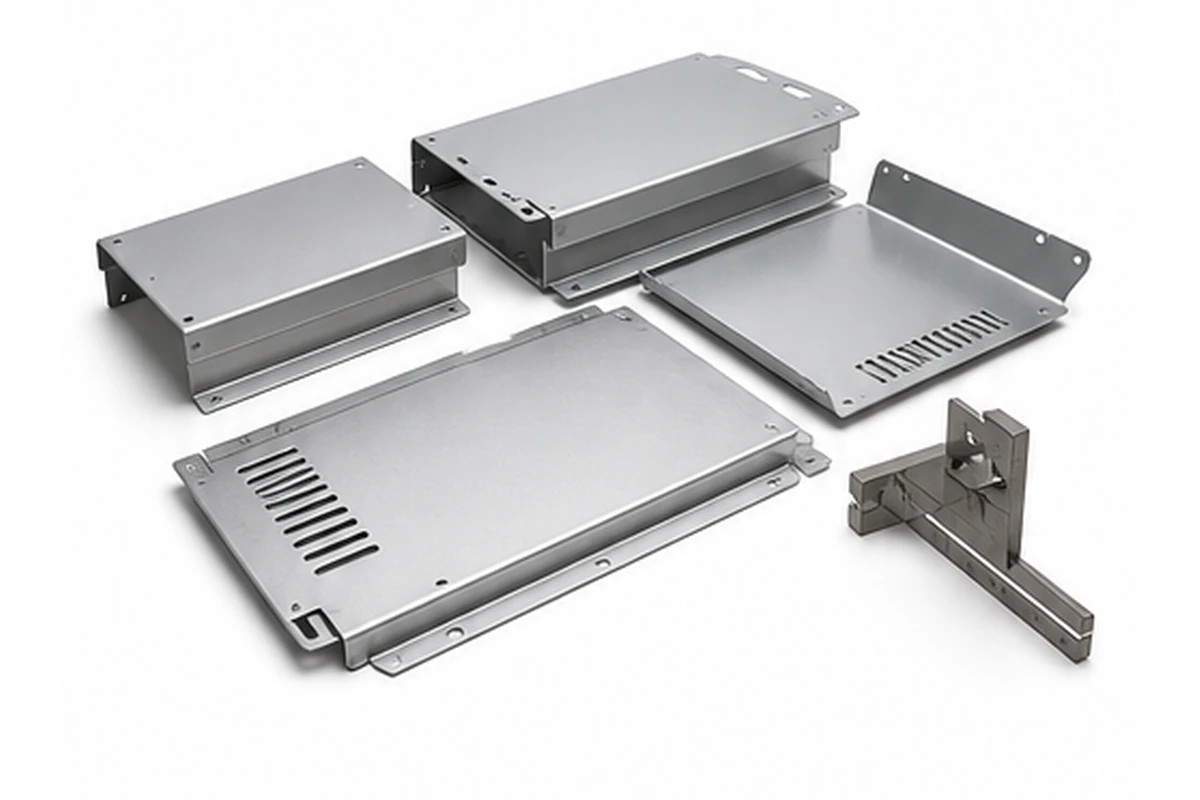
Welds, hardware and assembly fit
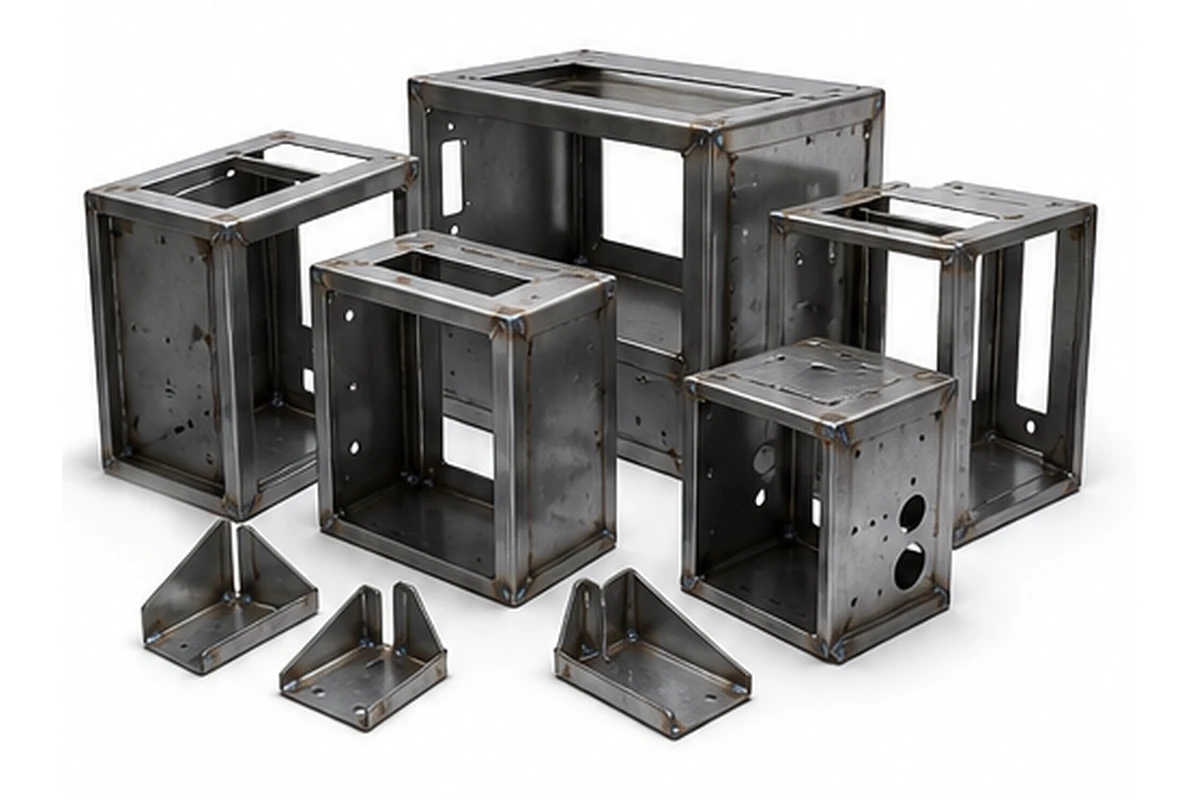
Fixtures help repeat a weld or insert location, but they do not remove the need for a check. Specify which frame openings, threads, hinge points and mounting interfaces matter. A check before welding cannot prove the same feature still fits afterward.
Finish and surface reference
Define visible faces, color, gloss, texture, masking and any approved sample. Surface treatment such as powder coating may be carried out by established partners; ask how the approved route, handoff and return inspection are controlled. “Same as last time” is not a finish specification.

Small Hardware Can Stop a Large Assembly
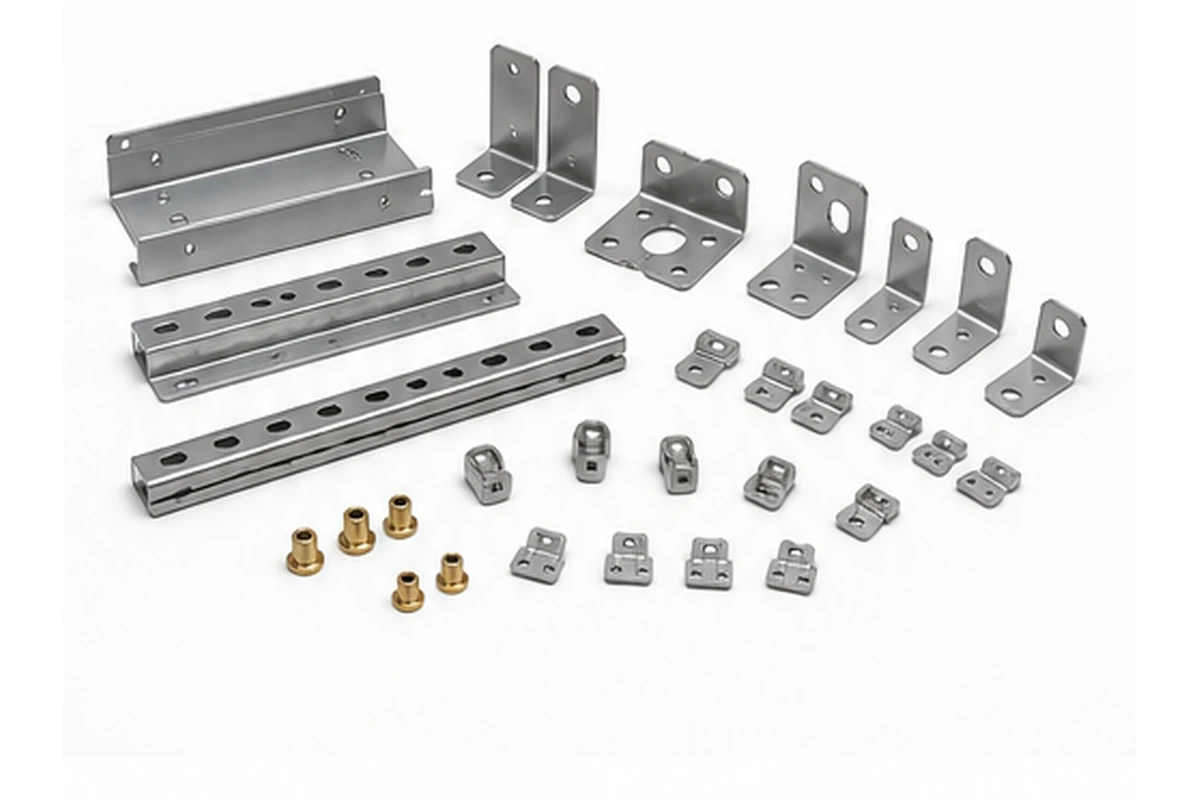
For inserts, studs, rail strips and hinge plates, the buyer should provide hardware model and mating details. The supplier should confirm material thickness, prepared hole, installation direction and post-installation check. A threaded insert in the wrong corner is a small part with a large talent for delaying an assembly line.
What Happens After the Supplier Is Approved?
When the first production route is approved, keep the process baseline and agree when changes need buyer review. For each new order, reconfirm revision, material, finish, inspection scope and delivery. The recurring-order handoff guide covers that post-award routine.
Frequently Asked Questions
Does one approved sample prove future lots will match?
No. It establishes an initial reference. Normal production still needs defined process, inspection and change-control evidence.
Should every feature receive the same inspection frequency?
No. Choose frequency and method from function, process risk, lot size and the buyer’s quality agreement.
Can a supplier make parts from STEP and DXF files alone?
The files help define geometry, but a dimensioned drawing or written specification is still needed for material, tolerances, finish, hardware and acceptance criteria.
Compare a Supplier Against Your Part
Send the latest STEP/STP model, PDF drawing, DXF/DWG data where relevant, quantity, critical features and finish requirements. MSTFAB can review a feasible production and evidence package for your specific mechanical part.
 WeChat Contact
 WhatsApp Me Directly