
Sheet Metal Cover Plate Fabrication Supplier
A sheet metal cover plate fabrication supplier manufactures custom metal cover plates used to protect, close, cover, access, or service equipment assemblies. Cover plates are widely used in electrical cabinets, control boxes, industrial machinery, telecom equipment, power distribution systems, EV charger enclosures, battery cabinets, medical equipment housings, automation devices, and OEM products.
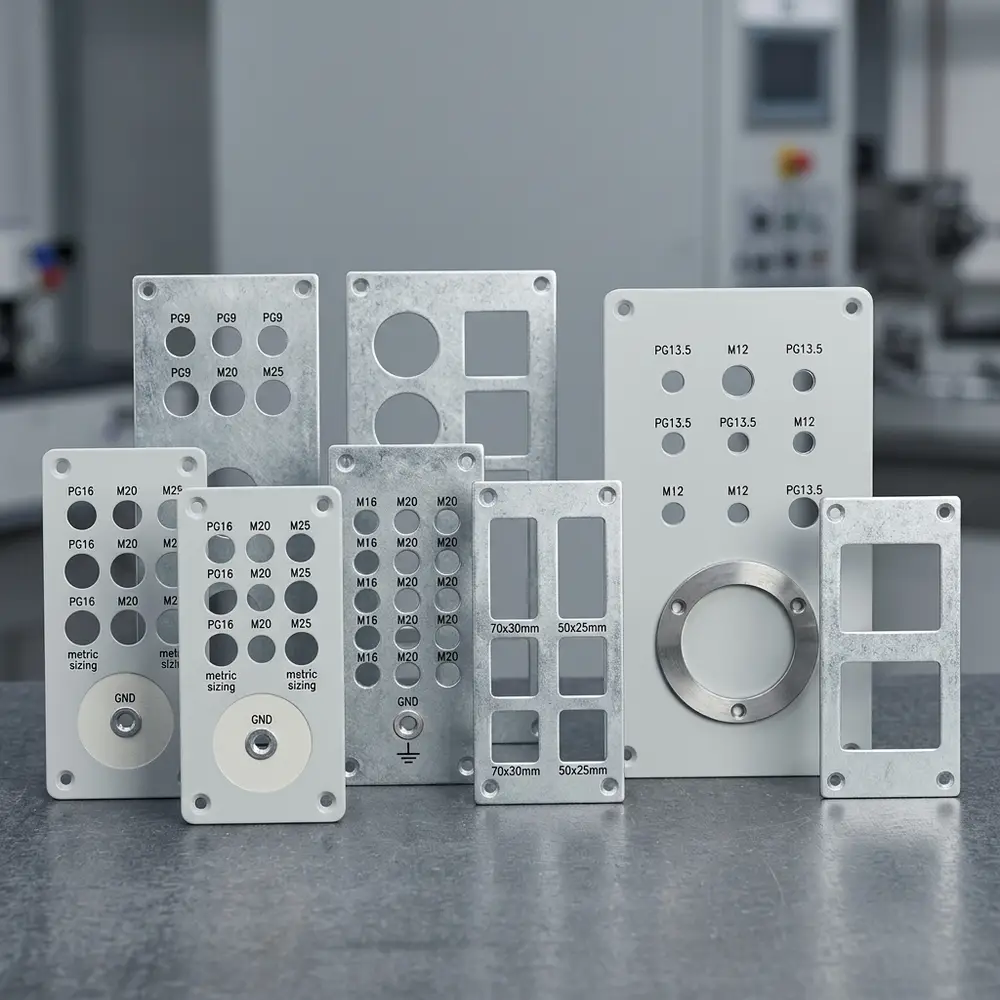
If it does not fit, the final product cannot be closed properly. If the edges are sharp, it can damage cables or injure installers. If the visible surface is scratched, it can fail appearance inspection. If coating blocks screw holes, assembly becomes rework. A simple-looking cover plate can still create expensive assembly problems.
MSTFAB manufactures custom sheet metal cover plates according to customer STEP/STP files, PDF drawings, and DXF/DWG patterns. We support steel, stainless steel, galvanized steel, and aluminum to fabricate access doors, gland plates, ventilation covers, and protective plates with high-precision processes.
For assemblies requiring airflow and thermal protection, sourcing from an experienced custom louvered sheet metal panel supplier guarantees that formed louvers shedding water and dust line up perfectly with your fans and internal electronics.
During the machine build phase, sourcing from a specialized supplier of sheet metal fabrication for automation equipment ensures that robot guards, cable brackets, motor mounts, and sensors align flawlessly on your main assembly frame.
For custom clean power setups, sourcing from a specialized supplier of sheet metal components for renewable energy systems ensures that solar inverter enclosures, heavy battery trays, and EV charger casings survive harsh outdoor environments.
During the electrical planning phase, sourcing precise custom metal parts for industrial control systems helps electrical engineers line up DIN rails, HMI screen bezels, and cable gland ports without filing down metal in the field.
During mechanical design iterations, sourcing precise components from a supplier of sheet metal parts for robotics manufacturers ensures that AGV shells, sensor brackets, and robotic arm guards fit together cleanly without extra field grinding.
For mobile setups exposed to high dynamic loads, partnering with a supplier of metal fabrication for transport refrigeration equipment ensures that condenser frames and evaporator housings endure severe road shock.
During the structural design review of the main frame, sourcing specialized fabricated metal parts for commercial machinery ensures that heavy motor plates, front door panels, and internal base plates align perfectly.
During the device housing review, consulting a specialist in custom sheet metal for laboratory equipment helps ensure that delicate display bezels, PCB pillars, and chemical-resistant finishes align seamlessly.
During the cabinet frame design phase, consulting a specialist in sheet metal parts for smart locker manufacturers ensures that multiple door clearances, latch positions, and weather seals align perfectly.
During the thermal cabinet design phase, consulting a specialist in custom metal fabrication for HVAC equipment helps optimize fan shroud tolerances, ventilation louvers, and condensate drain channels.
Material Selection for Sheet Metal Cover Plates
Material selection determines a cover plate’s strength, weight, corrosion performance, appearance, and fabrication budget. MSTFAB helps you review the options to find the best fit:
| Material Grade | Common Applications | Benefits | Trade-offs |
|---|---|---|---|
| Cold Rolled Steel (SPCC/DC01) | Indoor electrical enclosure access plates, machine guard covers, terminal plates. | Cost-effective, flat surface, excellent powder coating adhesion. | Needs painting or powder coating to prevent moisture corrosion. |
| Galvanized Steel (SGCC/SECC) | Internal enclosure mounting plates, outdoor utility covers, cable gland plates. | Sacrificial zinc layer provides rust protection. Cut edges resist corrosion. | Industrial finish is not highly cosmetic; requires care during welding. |
| Stainless Steel (SS304/SS316) | Food equipment doors, cleanroom control plates, marine environment covers. | Excellent corrosion protection. Strong, durable, cosmetic brushed finish. | Higher material cost; requires dedicated tooling to prevent contamination. |
| Aluminum (5052/6061) | Instrument access covers, lightweight rack plates, battery housing doors. | Lightweight (one-third the weight of steel), naturally corrosion-resistant. | 5052 forms easily; 6061 is stronger but requires generous bend radii to prevent cracking. |
Laser Cutting Cover Plate Profiles and Connector Openings
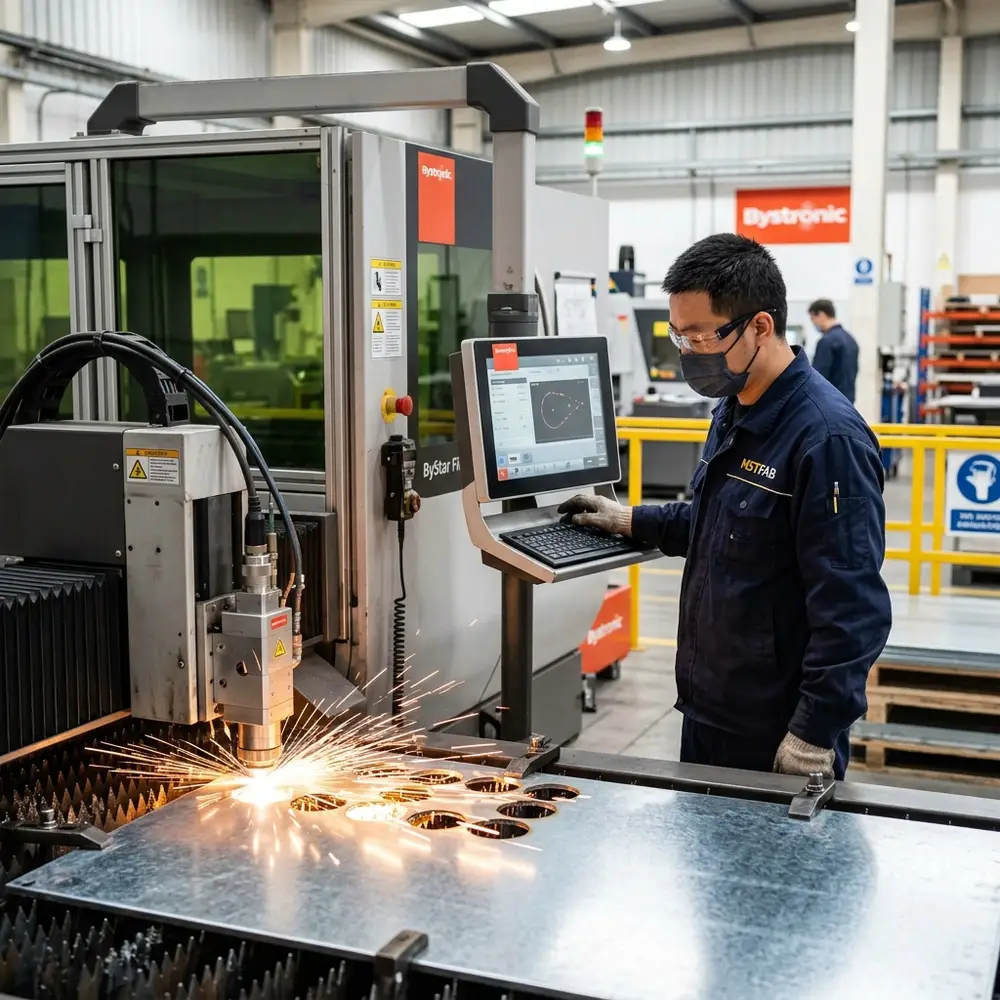
Laser cutting is used to produce cover plate blanks, screw holes, switch cutouts, ventilation patterns, and access windows. MSTFAB uses CNC fiber lasers to achieve clean cuts with tight dimensional accuracy, preventing thermal distortion on thin sheet metal plates.
CNC Bending for Flanges and Return Edges
Many custom cover plates require formed flanges or return edges to increase structural stiffness, hide raw cut edges, or create mounting lip details. Standard L-shaped, U-shaped, and multi-bend covers require precise flange alignment. MSTFAB uses CNC press brakes to control bend angles and springback, ensuring the cover plates mount flush against enclosures or frames.
Hole-to-Bend Distance Controls
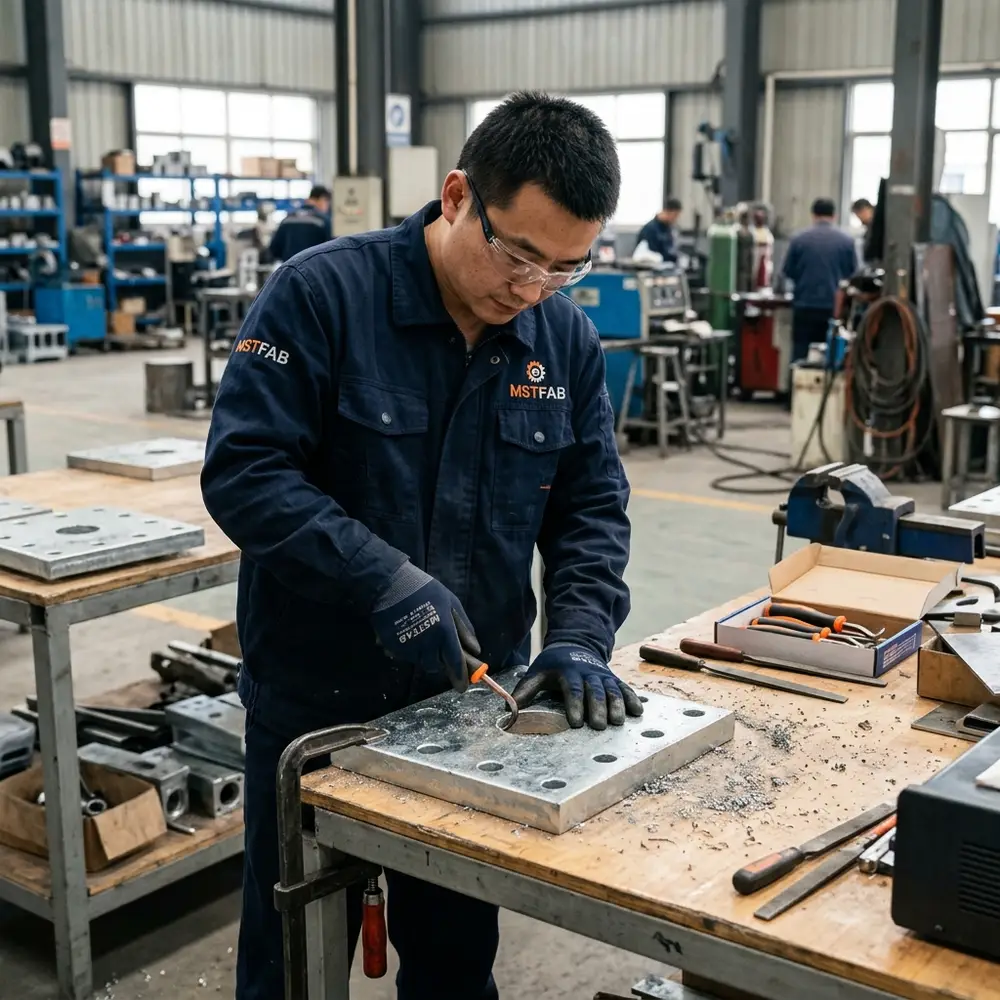
A common design issue is placing mounting holes, display cutouts, or switch openings too close to the bend tangent line. During bending, material stretching pulls the hole out of round, distorting it and preventing buttons or hardware from fitting. During our Design for Manufacturability (DFM) reviews, MSTFAB’s engineering team highlights these risks. We recommend adjustments like adding bend relief slots or moving holes away from bend lines to maintain dimensional integrity.
Flatness Control across Large Cover Plates
Flatness is critical for door panels, front cover plates, and mounting plates. Flat cover plates can warp during laser cutting due to internal sheet stress, or during powder coating due to thermal cycles. Dense ventilation slot patterns can also cause oil-canning. MSTFAB controls flatness by choosing flat raw stock, optimizing laser cutting paths to distribute heat, and using levelers to keep the plates flat before downstream forming or finishing.
To manufacture small electronic boxes and power supply frames, check out our methods as a fabricated metal box manufacturer for electronics.
PEM Hardware and Threaded Inserts
Custom sheet metal cover plates frequently require installed hardware to mount circuit boards, displays, or doors. MSTFAB presses self-clinching PEM nuts, studs, or standoffs into pre-punched holes before finishing. We control the insertion force to lock the hardware securely, preventing it from spinning or pushing out when screws are tightened during assembly.
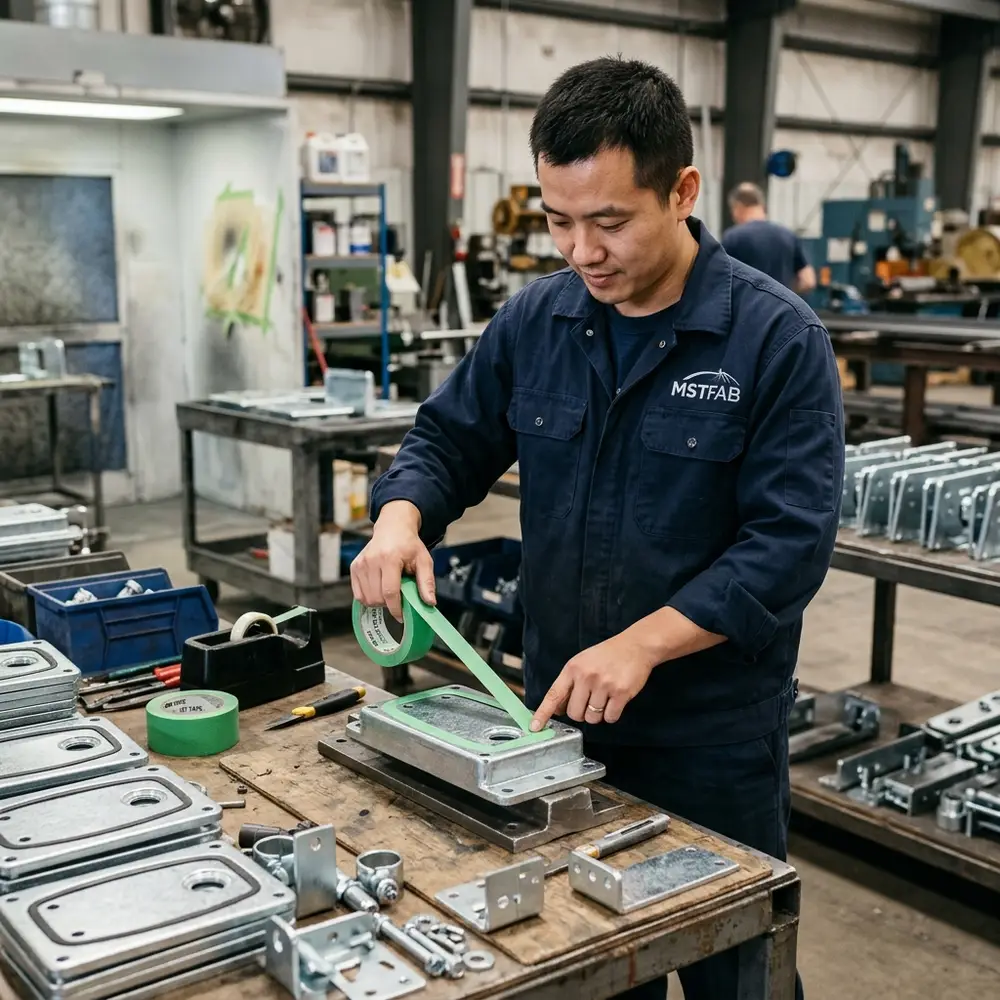
Surface Finishing and Thread Protection
Appearance and protection are both critical for exterior cover plates. We offer powder coating for steel plates, brushing or polishing for stainless steel plates, and anodizing for aluminum plates. For electrical grounding paths, we apply high-temperature silicone plugs and masking tape to protect threads and grounding pads from paint buildup, ensuring clean contact after baking.
Quality Inspection and Flatness Verification
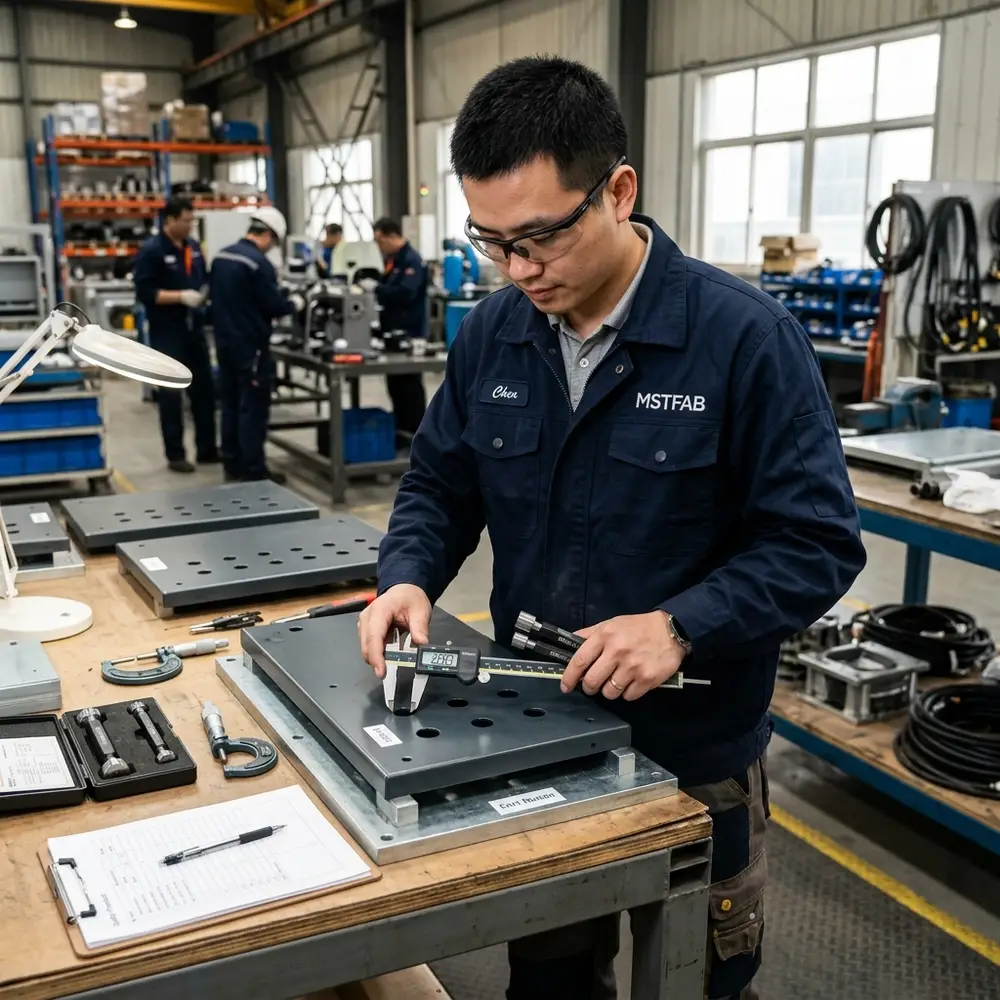
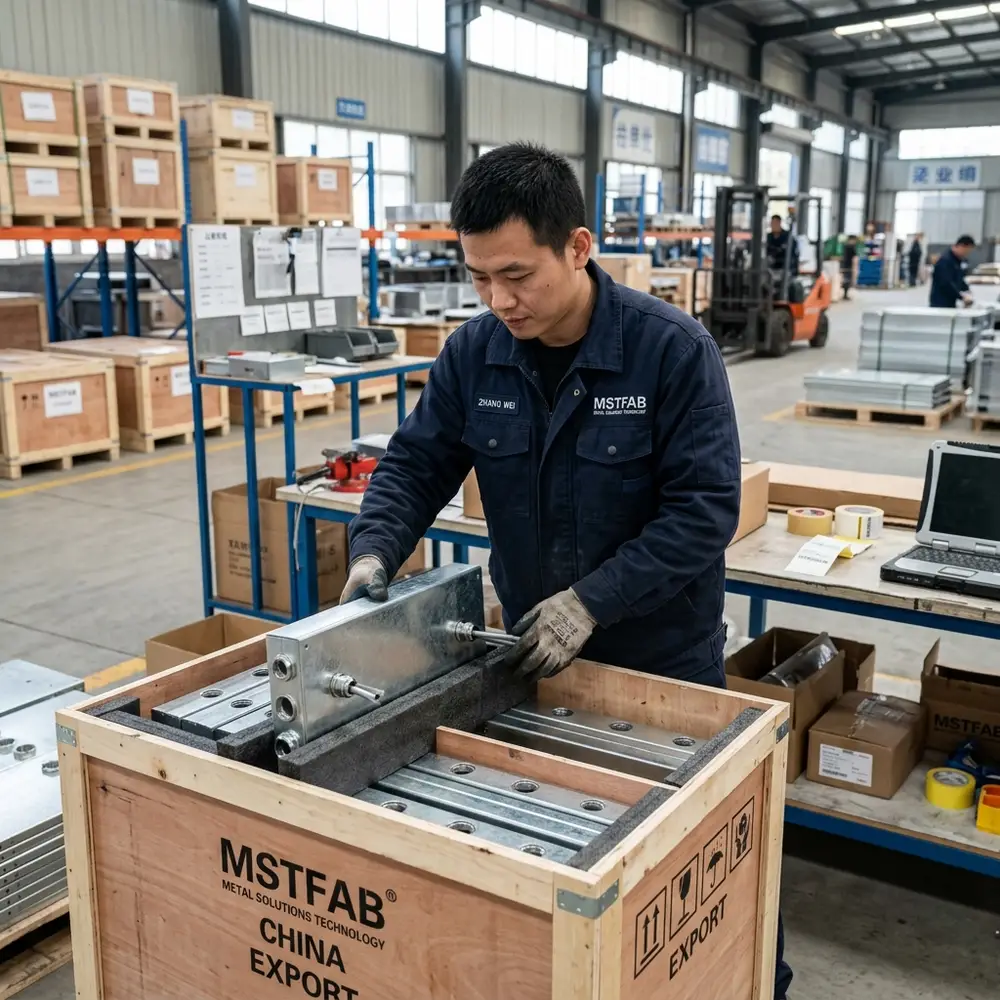
Every batch of cover plates undergoes rigorous dimensional and visual inspection. Inspectors measure hole positions, flange lengths, and flatness on a granite surface plate. Controlling these critical features ensures that your assembly line receives cover plates that fit on the first try, avoiding field rework.
Trust Comparison: Standard Metal Shop vs. MSTFAB Cover Plates
| Feature | Standard Metal Shop | MSTFAB Cover Plate Fabrication |
|---|---|---|
| Plate Flatness | Warped cover plates from internal stress or dense cutouts are ignored, leading to door alignment issues. | Monitors material stress and uses mechanical levelers to maintain flatness across large cover plates. |
| Hole Alignment | Hole centers shift during uncalibrated bending, forcing workers to drill holes wider during assembly. | CNC laser cutting ensures hole positions are held within ±0.1mm, ensuring parts align with frames. |
| Edge Safety | Leaves sharp laser-cut edges; workers suffer injuries and cables get cut during wiring. | All cover plate edges are deburred and rounded to deliver smooth, hand-safe surfaces. |
| Thread Integrity | Taps thin plates directly, leading to stripped threads under standard torque. | Installs self-clinching PEM hardware or rivet nuts to provide strong, load-bearing threads. |
| Grounding Masking | Coats grounding points with paint, requiring manual scraping during installation. | Uses high-temperature masking caps to protect grounding studs and pads from paint buildup. |
| Packaging & Shipping | Piles cover plates loose on pallets, causing scratches, dents, and paint chips during transit. | Applies protective film and uses foam separators to keep cover plates scratch-free and ready for assembly. |
Prototype to Repeat Batch Production
We support both prototype and batch production. Prototype runs allow customers to test component fit and load-bearing performance before committing to large volumes. Once a cover plate design is approved, we lock the CNC laser programs and press brake tooling layouts, ensuring the 500th cover plate is identical to the first approved sample.
For heavy structural mounting foundations and internal mounting plates, check out our methods as a custom sheet metal base plate manufacturer.
When fabricating complete enclosures that house motors or electrical blocks, read about our manufacturing as a metal equipment housing manufacturer.
Request a Custom Cover Plate Quote
Send MSTFAB your drawings and cover plate requirements. Our engineering team will review sheet thickness, bend angles, hole spacing, hardware sizes, and finish options to prepare a manufacturability quote.
Upload Cover Plate Drawings →Frequently Asked Questions
What is custom sheet metal cover plate fabrication?
Custom cover plate fabrication uses laser cutting, CNC bending, hole punching, welding, and surface treatment to produce custom mounting hardware. For a complete look at our services, explore our laser cutting, bending, welding, and assembly supplier capabilities.
What materials can be used for custom sheet metal cover plates?
Common options include cold rolled steel (for cost and strength), galvanized steel (for rust protection without paint), stainless steel (for food/medical use), and aluminum (for lightweight parts). Read more about sheet metal fabrication material selection.
Why is flatness critical for door and access cover plates?
If a door cover plate warps, hinges will bind, seals will not compress evenly, and the latch may fail to close. We monitor flatness to ensure doors seal flush. Learn more about our custom sheet metal enclosure fabrication capabilities.
Can sheet metal cover plates include PEM nuts or studs?
Yes. Self-clinching PEM hardware provides strong threads in thin sheet metal. Studs and nuts are pressed in using controlled tonnage. Read more about PEM hardware installation and threaded inserts.
How do you protect grounding points during powder coating?
We apply heat-resistant silicone plugs to threaded holes and cover grounding pads with masking tape, keeping threads clean and paint-free. Read more about sheet metal fabrication with powder coating.
Can custom cover plates be welded?
Yes. Heavy-duty cover plates often require welded gussets or reinforcing plates. We use welding fixtures to control thermal warping. Learn more about our welded metal frame fabrication supplier services.
What is the minimum hole-to-bend distance for a cover plate?
To avoid hole distortion, holes should be located at least 2 to 2.5 times the material thickness away from the bend tangent line. Read our sheet metal bending design guidelines.
How do you prevent cover plates from bending during transport?
Cover plates can warp under weight or vibration. We wrap cover plates individually in foam and pack them in heavy-duty boxes or crates. Read about our sheet metal subcontract manufacturing supplier options.
What files are needed for a custom cover plate quote?
We recommend sending a 3D STEP/STP file for shape, a 2D PDF drawing for tolerances and thread details, and DXF files for laser cutting. Read about sheet metal fabrication drawing requirements.
Does MSTFAB provide IP ratings or UL certification?
MSTFAB manufactures cover plates to match approved customer drawings. IP sealing verification, electrical certification, and compliance are the customer’s engineering team’s responsibility. Learn more about custom metal fabrication with final assembly.
MSTFAB manufactures custom sheet metal enclosures, electrical cabinets, control boxes and industrial metal housings for OEM buyers.
 WeChat Contact
 WhatsApp Me Directly