
The Short Answer
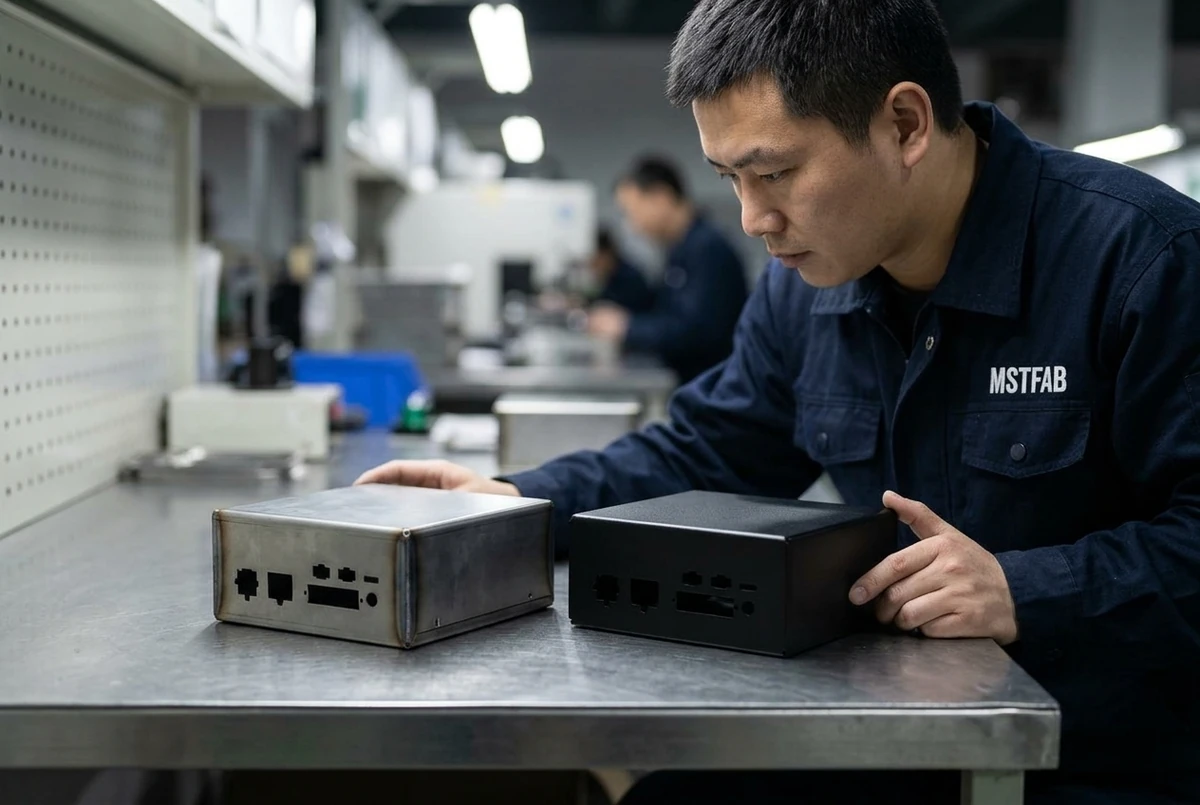
Powder-coated steel enclosures arrive pretreated and cured with a protective polymer film for immediate assembly, whereas raw steel enclosures are supplied uncoated when the buyer performs downstream welding, custom modification or in-house painting. Specify on your 2D PDF drawing whether dimensions apply before or after coating, which grounding studs and EMI flanges require masking, and how uncoated steel must be protected against flash rust during transit.
Explore this guide
01 / Supply State Decision
Choose the delivery condition that matches your downstream workflow.
Most OEM buyers order carbon steel enclosures fully powder-coated so cabinets can move straight to sub-plate wiring and final integration. However, ordering raw (uncoated) steel shells makes sense when the buyer plans to weld additional brackets at their own facility, integrate the shell into a larger welded frame or run the part through an existing captive paint line.
Comparing unit quotes between raw and powder-coated steel requires looking beyond the spray-booth charge: raw carbon steel begins oxidizing as soon as it is exposed to humid air or sea freight unless temporary rust protection and post-receipt cleaning are planned.
Powder-Coated Steel Shell
Cleaned, pretreated, masked and electrostatically coated to the specified RAL color and texture; ready for hardware and electrical integration.
Raw Cold-Rolled / Pickled Steel
Supplied bare for customer-side welding or captive finishing; requires light protective oiling or VCI barrier packaging during transit.
Pre-Galvanized / Plated Sub-Parts
Internal mounting plates and brackets often use galvanized or zinc-plated steel to maintain unpainted electrical conductivity.
Hybrid approach: many industrial cabinets combine a powder-coated exterior shell with an unpainted galvanized or zinc-plated internal sub-plate for grounding.
02 / Dimensional Allowances
Account for powder film buildup on doors, hinges and cutouts.
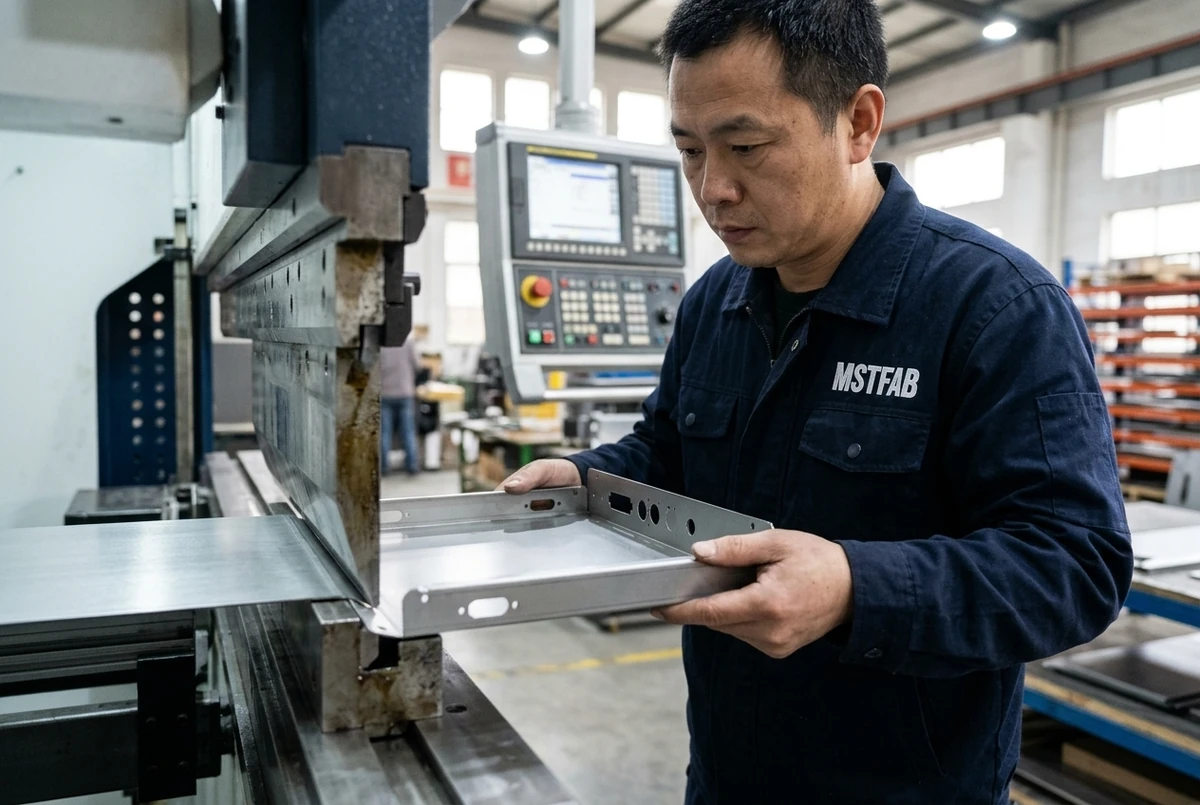
A cured powder coating typically adds 60 µm to 100 µm (0.0024 in. to 0.004 in.) of film thickness per coated surface—and textured or two-coat systems can add more, especially along sharp panel edges. If a CAD model is drawn with zero clearance between a flush inset door and its frame, the painted door will bind.
- Door and cover gaps: design sufficient perimeter clearance in the bare metal geometry so opposing coated edges do not rub when hinges swing.
- Hinge pins and latch cams: size mounting holes so standard hinges, quarter-turn locks and gland plates seat cleanly after coating.
- Pre- vs. post-coating dimensions: state clearly on the 2D PDF drawing whether tight cutout tolerances apply before or after surface finishing.
See our custom industrial enclosure manufacturing guide for door gap and gasket channel design details.
03 / Pretreatment and Masking
Specify pretreatment chemistry and bare-metal grounding zones.
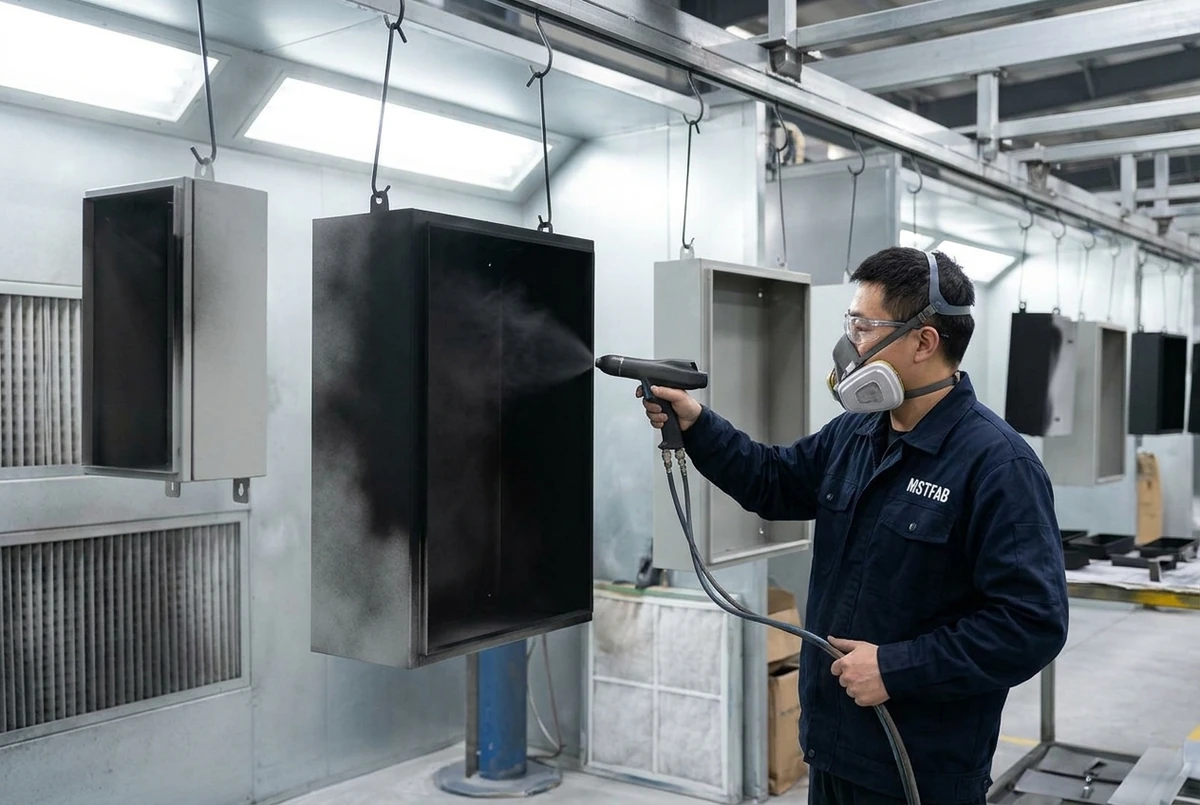
Powder coating durability depends heavily on what happens before the powder is sprayed. Mill scale, laser oxide, cutting oil and weld spatter must be removed, and conductive grounding points must be masked with high-temperature plugs or tape.
- Specify the required surface preparation and pretreatment suitable for indoor dry rooms vs. outdoor or damp industrial environments.
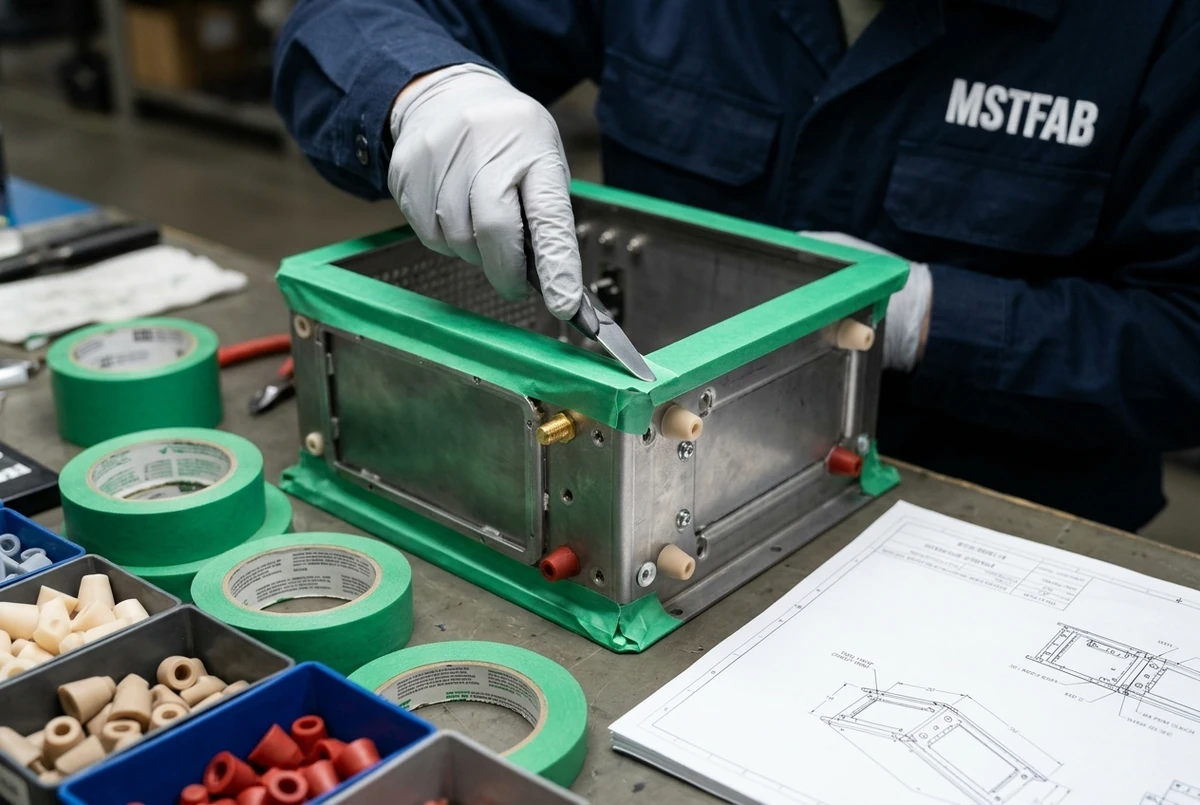
- Call out high-temperature silicone plugs/caps on all tapped holes, PEM nuts and M6/M8 copper-plated or steel grounding studs.
- Dimension any bare conductive frame rails where EMI gaskets or unpainted sub-plates make electrical contact.
Leave nothing implied: a 2D masking view showing exact plug locations and bare ring diameters prevents costly thread chasing or paint scraping on your assembly line.
04 / Raw Steel Transit Protection
Do not ship bare carbon steel across ocean freight without a rust-prevention plan.
Freshly laser-cut, bent and sanded SPCC or Q235 mild steel has an active bare surface that can develop surface rust within days in high humidity or inside a condensing sea container. Agree on how raw parts will be protected and how your team will clean them upon arrival.
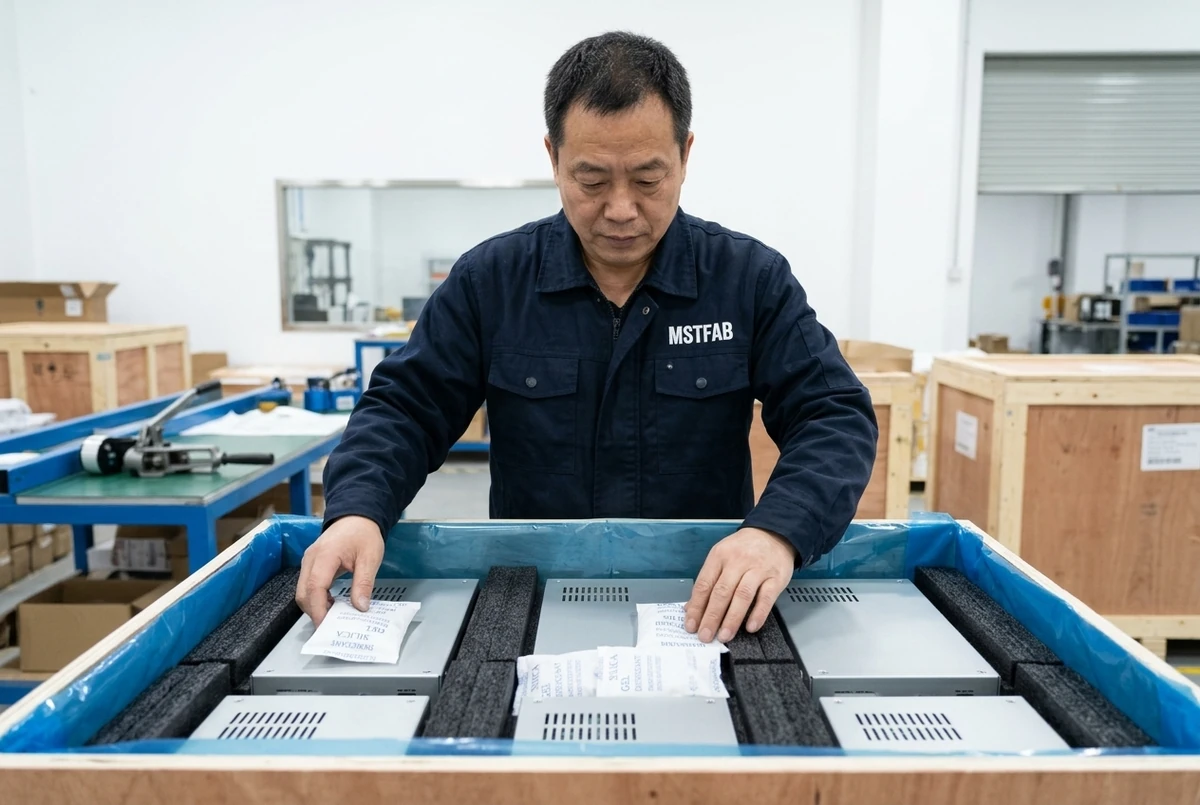
- Dry VCI packaging: wrap bare steel enclosures in volatile corrosion inhibitor (VCI) film with desiccant packs when oil residue is undesirable before welding.
- Light rust-preventive oil: apply a removable protective oil film when parts will pass through an alkaline wash stage at the buyer’s facility.
- Glove handling: prevent bare-hand sweat prints on freshly sanded weld corners, which otherwise etch rust patterns into raw steel.
- Weld-spatter & oxide removal: confirm whether laser oxide edges and weld discoloration should be dressed at the factory or at your plant.
If your team wants zero rust risk during storage without full topcoat painting, ask whether a weldable primer, e-coat or pre-galvanized substrate is appropriate for the application.
05 / Buyer Control Matrix
Align finish, masking and packing controls before production starts.
Use this matrix to compare and specify the technical handoff for powder-coated versus raw steel enclosure orders.

06 / Inspection Handoff
Verify dimensional fit, coating thickness and thread cleanliness.
On powder-coated enclosures, first-article inspection should verify both mechanical assembly (door swing, latch engagement, sub-plate stud alignment) and finish quality (dry film thickness, color/texture match, cross-hatch adhesion where specified, and clean masked threads).
On raw steel enclosures, inspection focuses on bare dimensional accuracy, diagonal squareness, weld seam dressing and complete freedom from flash rust prior to VCI sealing.
Documenting these checks on the first article prevents surprises when a container load of enclosures reaches your integration floor.
07 / Packing and Release
Match the export packaging to the surface condition of the steel.
Powder-coated enclosures require soft foam corner blocks, stretch wrap and rigid separation so cured textured finishes do not abrade under vibration. Raw steel enclosures require sealed moisture barriers, VCI emitters and desiccant bags inside the crate.
For international shipments, confirm pallet and crate construction against IPPC ISPM 15 wood-packaging rules.
Manufacturing scope: MSTFAB manufactures custom sheet metal enclosure shells, doors and internal mounting plates in both raw and finished states. Electrical wiring, active thermal management and system-level NEMA/IP certification of the buyer’s finished equipment are outside standard scope.
08 / Ready-to-Review RFQ
Provide eight details when quoting raw or powder-coated steel enclosures.
- 3D STEP assemblyEnclosure body, doors, sub-plates and removable gland plates.
- 2D PDF drawingsCritical dimensions, door clearances, weld dressing notes and tolerances.
- Steel grade & thicknessSPCC, Q235, SPHC or galvanized steel with nominal gauge per part.
- Delivery surface stateRaw bare steel (oiled or dry VCI) vs. full powder-coated finish.
- Powder specificationRAL color, gloss level, surface texture and indoor/outdoor resin type.
- Masking mapLocations of all grounding studs, PEM threads and bare bonding rails.
- Hardware & gasketsHinges, locks, studs and gasket requirements included in the mechanical scope.
- Quantities & packingPrototype vs. batch volume, VCI or foam packing and destination port.
Defining the surface state, masking map and transit protection upfront ensures your enclosures arrive ready for immediate welding or electrical integration.
Powder-coated vs. raw steel enclosure questions from OEM buyers
When does it make sense to buy raw steel enclosures instead of powder-coated ones?
Buy raw steel only when you need to perform additional welding, grinding or structural modification at your own facility, or when you operate an in-house paint line that coats the complete assembled machine in one pass.
How much clearance should I leave around an inset door for powder coating?
Because powder coating adds roughly 0.06 mm to 0.10 mm per face (plus edge wrap), engineers typically design 1.5 mm to 2.0 mm nominal perimeter clearance per side on sheet metal doors to accommodate both forming tolerances and paint buildup.
How do you keep raw steel enclosures from rusting during sea freight?
Raw carbon steel enclosures should be handled with clean gloves, sealed inside VCI (volatile corrosion inhibitor) poly bags with desiccant packs—or coated with an agreed removable rust-preventive oil—and crated in dry packaging.
Should internal mounting sub-plates be powder-coated or zinc-plated?
Many OEMs specify galvanized steel, zinc-plated steel or chromate-treated aluminum for the internal backplate so DIN rails and drive chassis have a continuous conductive ground plane without scraping paint.
What happens if powder coat gets onto grounding studs or PEM nut threads?
Cured powder coat acts as an electrical insulator and blocks fastener threads. All grounding studs and threaded inserts should be masked with high-temperature silicone caps or plugs prior to spraying.
Can you supply a powder-coated sample plaque before coating the full enclosure batch?
Yes. Reviewing an approved color and texture sample plaque—or specifying an exact commercial powder code—is the most reliable way to align visual expectations before batch production.
Technical references
These test methods describe standard industry practices for evaluating dry film thickness and coating adhesion on steel substrates.
Send your enclosure drawings for a raw or coated quote.
Share your STEP assembly, 2D PDF prints, finish specification and batch quantities. MSTFAB will review your DFM and masking requirements before quotation.
Have a question first? caroline@mstfab.com
 WeChat Contact
 WhatsApp Me Directly