
One-stop sheet metal fabrication services should give an OEM buyer one controlled route from drawing review to export packing. They should not simply put five suppliers into one email thread and call it integration.
For a custom enclosure project, the commercial value is simple: one released revision, one project owner and one inspection plan across the empty cabinet body, doors, panels, mounting plates, brackets, finish and shipment kit. Six vendors do not create six times the control. Sometimes they create six versions of who owns the problem.
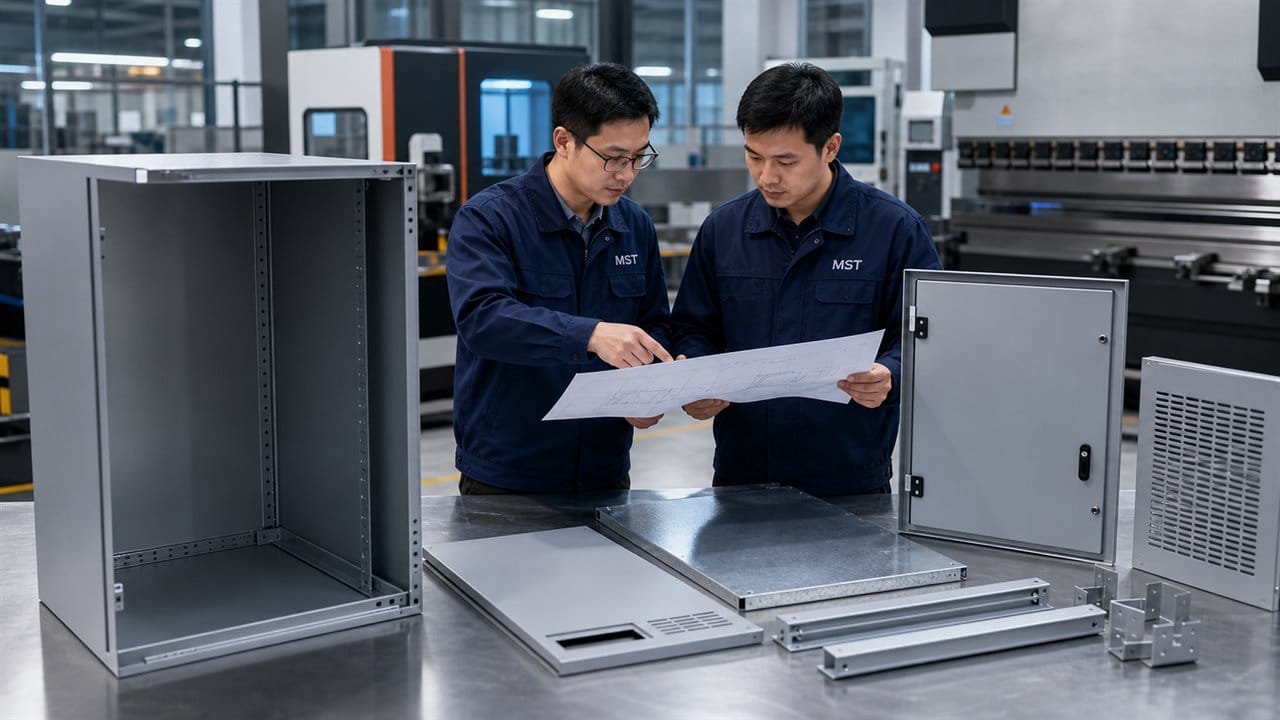
MSTFAB’s normal supply boundary
Included when specified: empty sheet metal enclosure bodies, doors, mounting plates, gland plates, bases, rails, brackets, welded frames, mechanical hardware, surface finishing, inspection, kitting and export protection made from customer drawings.
Normally excluded: breakers, busbars, wiring, batteries, PCBs, displays, software, energized testing and final product certification. These remain with the buyer or qualified system integrator unless a separate written scope says otherwise.
What One-Stop Fabrication Actually Means
For procurement, one-stop means one supplier remains accountable for the manufacturing route and the interfaces between processes. It does not require every operation to sit beneath the same physical roof. A specialist finish may be completed by an approved partner, but the quoting supplier should still control the drawing revision, purchase requirement, acceptance standard and delivery.
A credible full-service sheet metal fabrication supplier should tell you which operations are in-house, which are externally controlled, who approves deviations and what evidence arrives with the shipment. “Do not worry” is kind. It is not a control plan.
The Buyer Problems One Managed Workflow Can Reduce
- Revision drift: cutting uses Rev C, welding follows an old PDF and coating follows an email screenshot.
- Hidden handoff time: parts wait for transport, incoming inspection or a free production slot at the next supplier.
- Geometry loss: a correct flat panel becomes a wrong assembly after bending or weld distortion.
- Finish arguments: the coater receives no clear visible-surface, masking or texture requirement.
- Mixed responsibility: each vendor says the problem started one process earlier.
- Packing damage: approved cosmetic parts rub together for three weeks at sea.
The goal is not fewer supplier names for its own sake. The goal is fewer uncontrolled interfaces and faster answers when a decision is needed.
When One-Stop Sheet Metal Fabrication Is a Good Fit
Buyers searching for an OEM sheet metal enclosure manufacturer in China usually benefit from one managed workflow when the project combines several processes or several parts that must fit together.
- Prototype-to-production sheet metal enclosure programs with controlled engineering changes
- Low-volume metal cabinet fabrication where setup cost matters but repeatability still matters more
- Powder-coated metal enclosures with cosmetic panels, masks and purchased hardware
- Welded frames or cabinets where door fit depends on cutting, bending and weld sequence
- Export projects shipped as labeled kits for the buyer’s later assembly
- OEM programs that need first-article evidence before scheduled repeat releases
If the order is one simple flat bracket with no finish, a complex one-stop route may add little value. Good sourcing matches control to risk, not fashion to a purchase order.
Start with an RFQ That Can Survive Production
| RFQ input | What it controls | Buyer check |
|---|---|---|
| 3D STEP or STP model | Overall geometry and flat-pattern review | Confirm the released revision |
| 2D PDF drawing | Tolerances, datums, threads, welds and CTQ features | Do not hide critical notes only in email |
| Material and thickness | Strength, forming, welding, finish and cost | State the grade, not only “steel” |
| Hardware and BOM | PEM inserts, hinges, locks, gaskets and bought-out parts | Give part numbers where fit matters |
| Finish requirement | Color, texture, gloss, coating, masking and cosmetic standard | Use RAL/Pantone or an approved sample |
| Prototype and batch quantity | Setup, nesting, tooling and release strategy | Separate first order from annual forecast |
| Inspection plan | Reports, gauges, sampling and acceptance evidence | Identify critical dimensions before the first article |
| Kitting and packing | Labels, part protection and receiving efficiency | Define individual, kit or assembled shipment |
Use the practical checklist in what files are needed for a sheet metal fabrication quote before asking suppliers to compare prices.
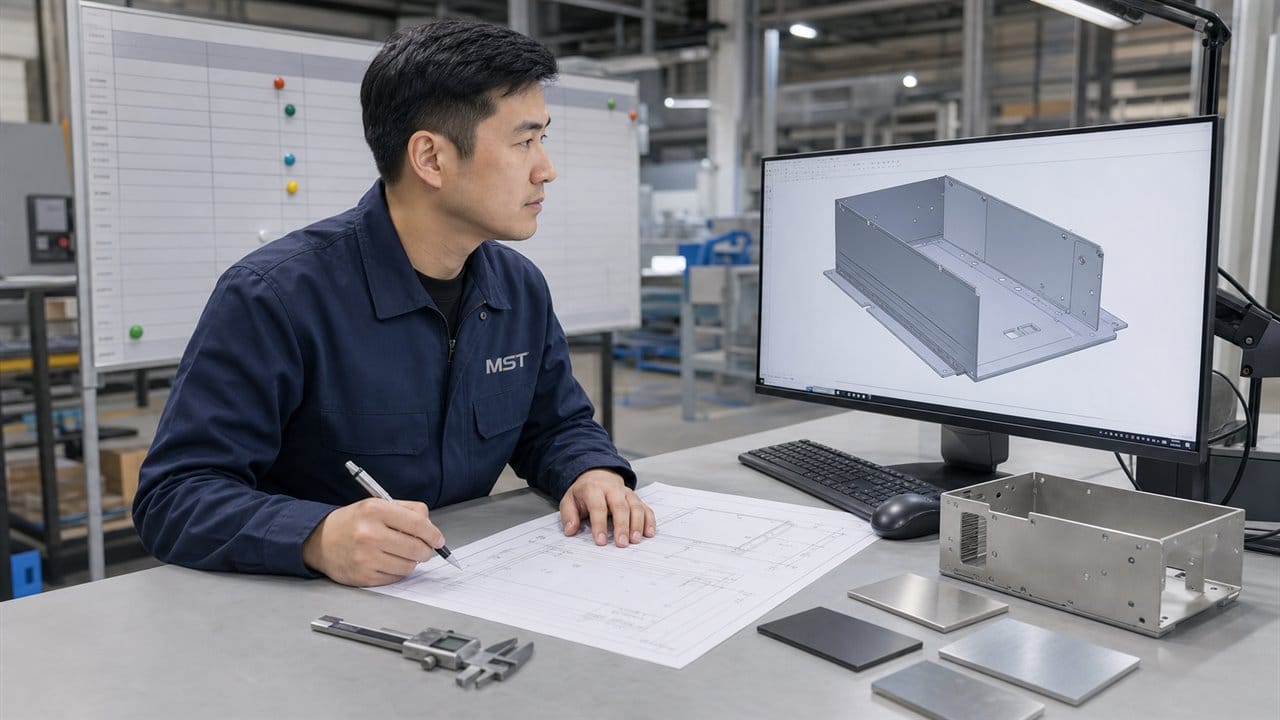
The One-Stop Enclosure Manufacturing Workflow
1. Material verification and project release
The route should begin only after the drawing, material, finish, hardware and quantity agree. Material grade and thickness are checked against the purchase requirement. It is cheaper to stop a wrong sheet here than to discover it after coating.
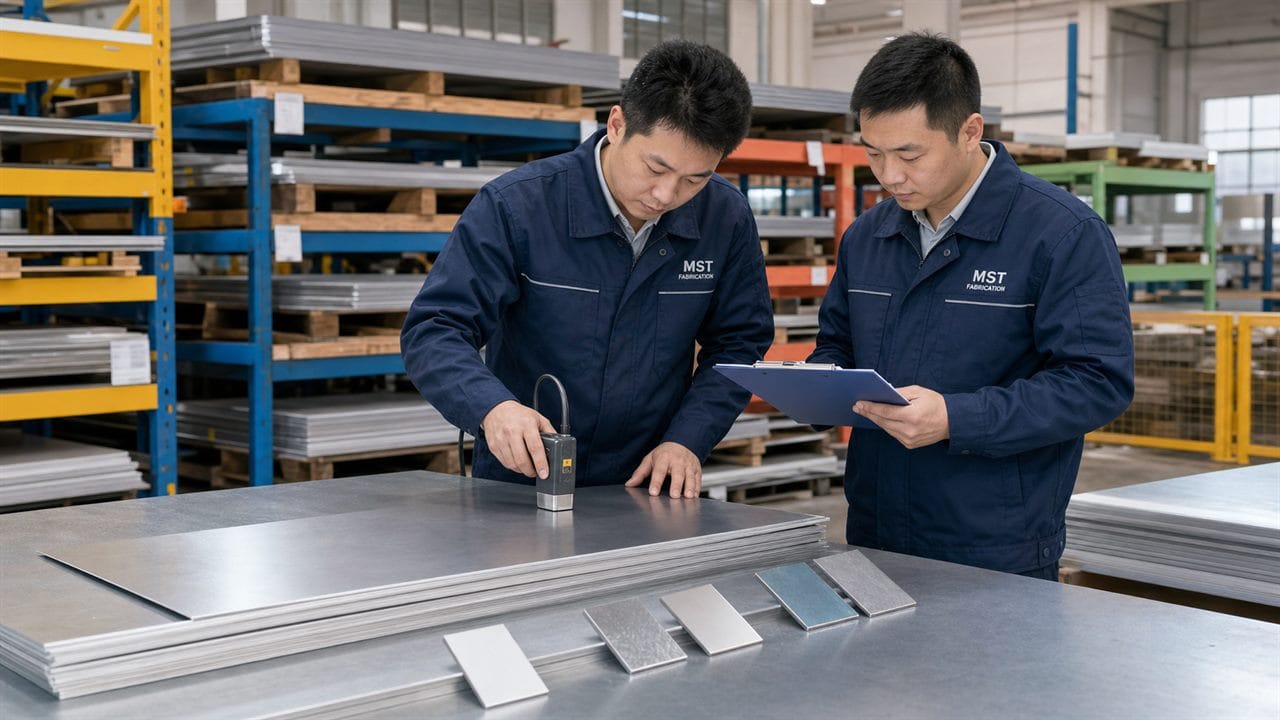
2. Laser cutting and flat-pattern control
Fiber laser cutting creates doors, mounting plates, vents, cable entries, panels and brackets. DFM checks should catch narrow webs, tiny slots and holes too close to bends before the laser makes the mistake quickly and accurately.
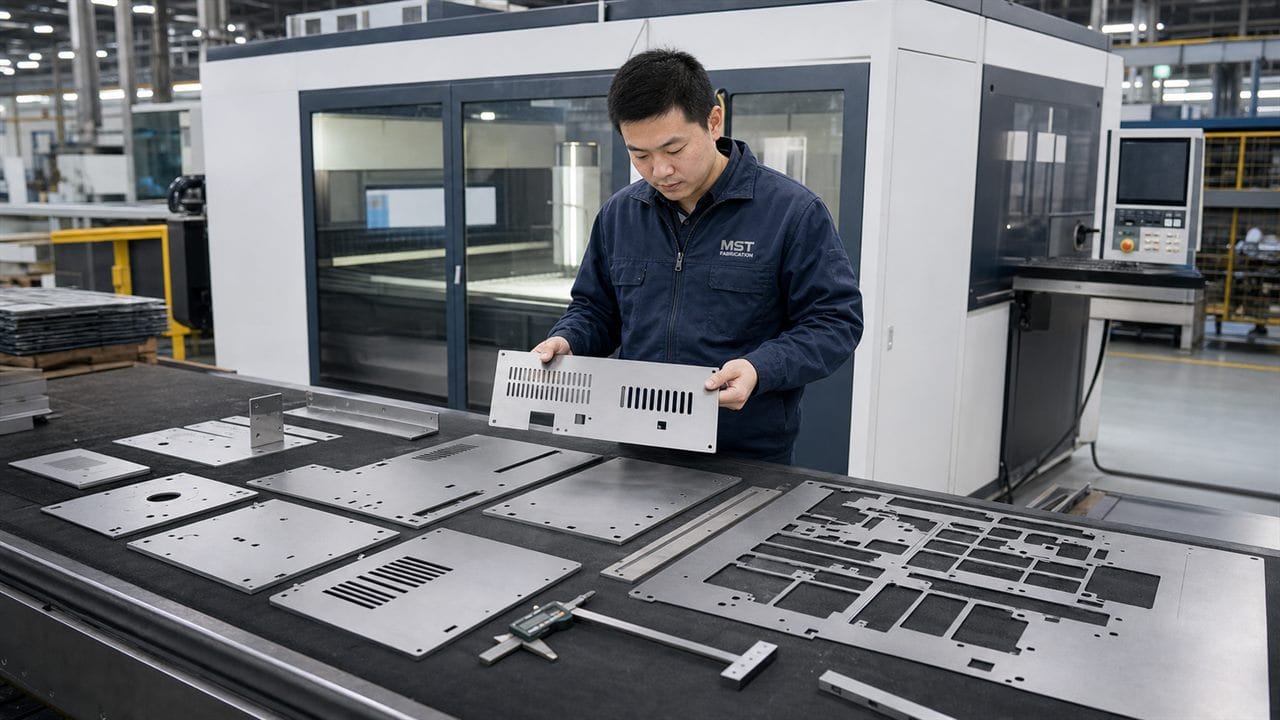
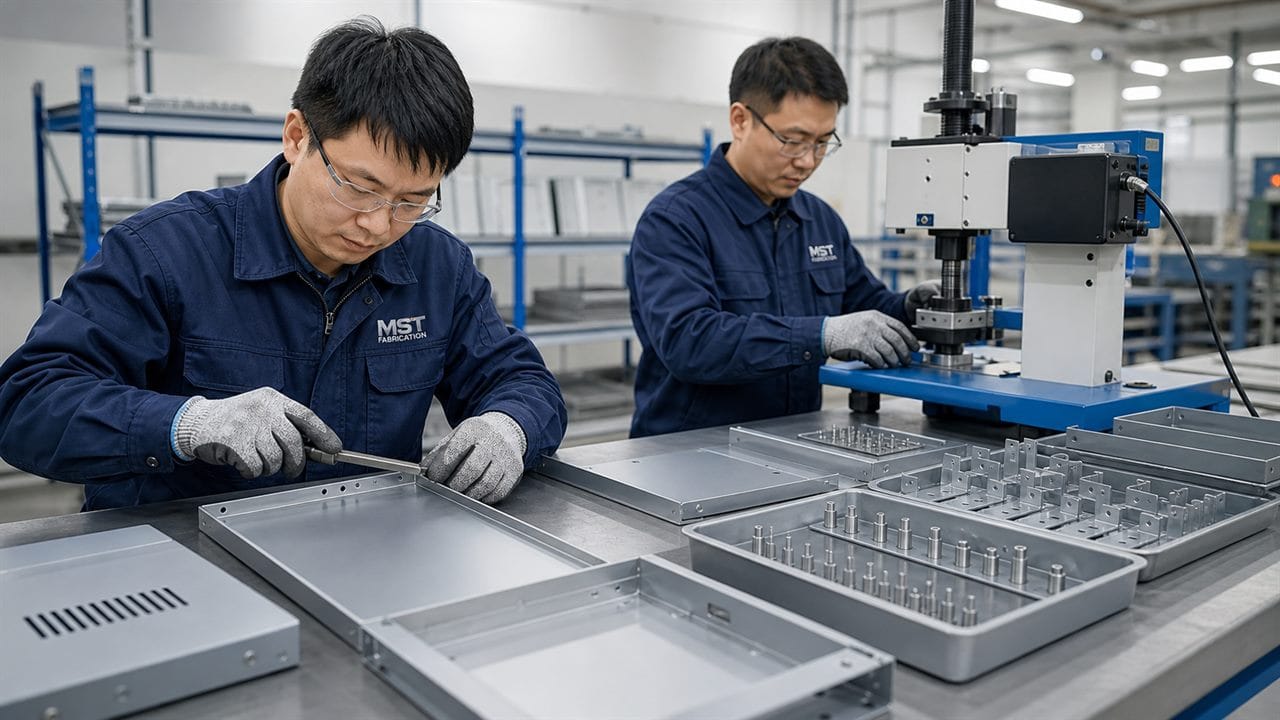
3. Deburring and mechanical hardware
Edges are finished and specified PEM nuts, studs or standoffs are inserted with controlled hole size, direction and press force. Hardware should be checked before the next process makes access difficult.
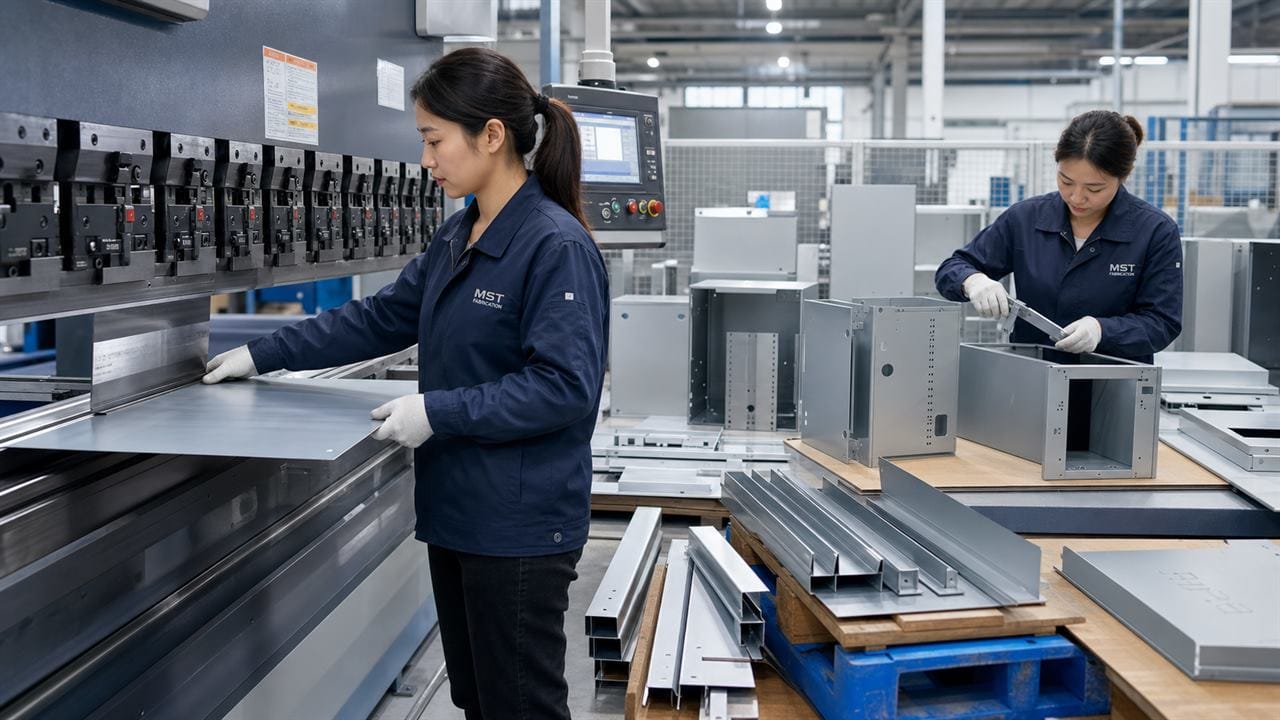
4. CNC bending and forming
CNC sheet metal bending turns flat parts into bodies, doors, channels and brackets. Tooling, bend allowance, grain direction and sequence affect flange position and enclosure squareness.
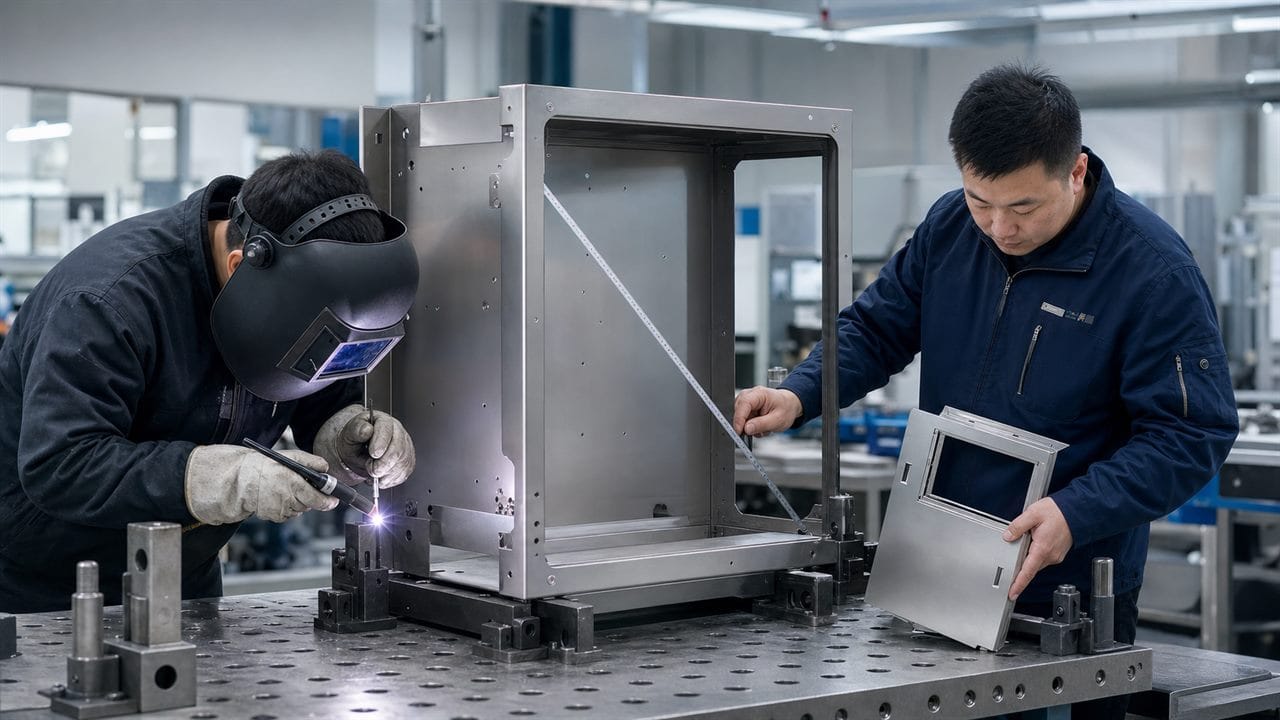
5. Welding, fit-up and distortion control
Sheet metal welding joins frames, seams and reinforcements. Fixtures, tack sequence, heat input and in-process measurement protect the door opening and diagonal size. Powder coat is durable; it is not a dimensional repair kit.
For process-specific engineering checks, see integrated sheet metal cutting, bending and welding.
6. Powder coating and surface finishing
Powder-coated sheet metal fabrication needs an agreed pretreatment, color, texture, coating thickness, grounding mask and cosmetic standard. Visible surfaces should have one approved reference, not three opinions under different lights.
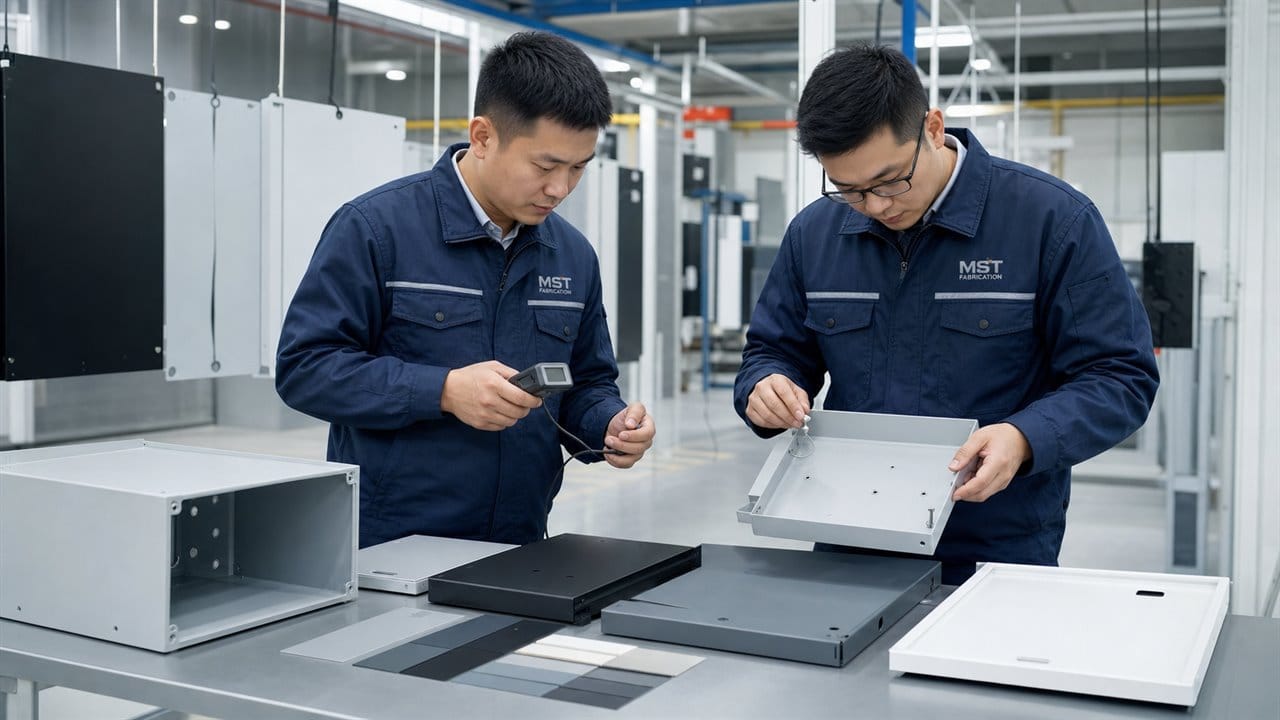
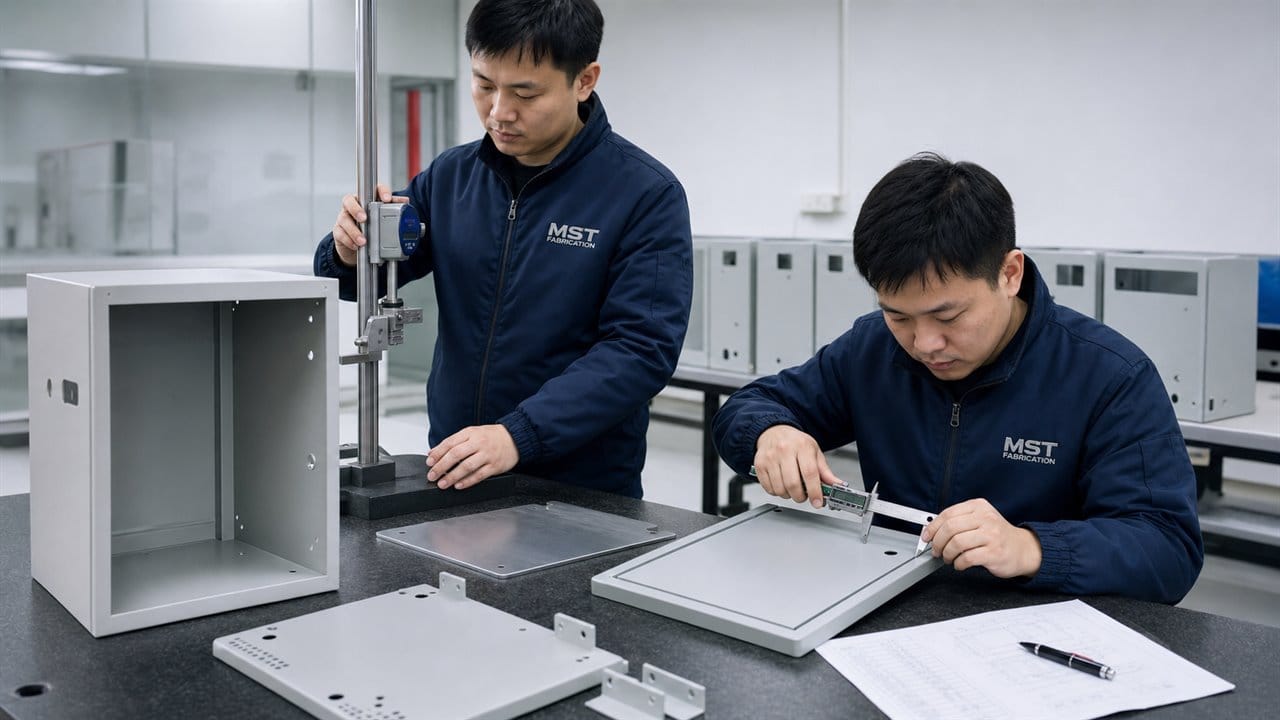
7. First article and batch quality control
The first-article report connects measured results to the released revision. Sheet metal fabrication quality control should then carry critical dimensions, door fit, hardware and appearance into batch inspection.
8. Kitting and export packing
Empty enclosure bodies, doors, panels and brackets are labeled and protected with film, foam and corner guards. Packing photos and kit lists help the buyer receive the same project that QC approved. The job is not complete when it leaves the inspection table; it is complete when the crate opens without metal confetti.

Where One-Stop Suppliers Still Fail
| Failure point | Typical symptom | Evidence to request |
|---|---|---|
| Revision control | Prototype and batch use different files | Released drawing number on traveler and report |
| Process handoff | Hole position or door gap changes after forming or welding | In-process check at the affected operation |
| External finish control | Wrong color, mask or texture | Approved sample and incoming finish inspection |
| Purchased hardware | Substitute part does not fit | Manufacturer, part number and approved alternative |
| Batch release | Good first article, unstable repeat parts | Control plan and batch sampling record |
| Packing | Acceptable parts arrive scratched | Packing standard and pre-dispatch photos |
What Changes Price and Lead Time
A one-stop quote is not automatically cheaper line by line. It should reduce hidden coordination cost, duplicated inspection, transport between suppliers and rework risk. The total changes with:
- Material grade, thickness and sheet utilization
- Part size, bend count and tooling access
- Weld length, fixtures and cosmetic grinding
- Hardware sourcing and mechanical assembly
- Finish type, masking and visible-surface standard
- Tolerance, inspection records and sample plan
- Prototype quantity, batch size and repeat forecast
- Kitting, labeling and export protection
Compare quotations against the same scope. A supplier who excludes hardware, finish inspection and export packing may look cheaper because the missing work has moved to your desk.
Trust Evidence for an Overseas OEM Buyer
| Evidence | What it demonstrates | When it matters |
|---|---|---|
| Current quality certificate | A defined management framework exists | Supplier qualification |
| DFM comments tied to revision | Manufacturing risk was reviewed before cutting | Before prototype release |
| Material record | The ordered grade and thickness entered production | Before and during production |
| First-article report | Critical interfaces match the released drawing | Before batch approval |
| Finish reference and checks | Color, texture, masks and appearance share one standard | Before coating the batch |
| Final report and packing photos | The inspected project was protected for shipment | Before dispatch |
A certificate is useful. Project records show how the system touched your actual order. For deeper supplier checks, read the OEM RFQ, DFM and QC guide for contract enclosure fabrication.
Questions Procurement Teams Ask
Does one-stop mean every process is physically in-house?
Not always. The useful requirement is one accountable supplier controlling the drawing, purchase requirement, acceptance standard and delivery. Ask which operations are in-house and how approved external processes are controlled.
Can MSTFAB support prototypes and repeat production?
Yes. Prototype and pilot quantities can validate geometry, hardware and finish before repeat production. Approved changes must be released into the next revision before the batch starts.
What files are needed for an accurate quote?
Send a STEP or STP model plus a controlled 2D PDF. Add material, thickness, finish, hardware, quantity, critical tolerances, inspection and packing requirements.
Can the shipment arrive as a project kit?
Yes. Empty enclosure bodies, doors, mounting plates, brackets and mechanical hardware can be labeled and packed as agreed kits to simplify receiving and later assembly.
Does MSTFAB provide fully wired cabinets or electrical certification?
Not under the normal sheet metal fabrication scope. MSTFAB supplies the empty mechanical enclosure and specified metal parts. Electrical design, components, wiring, programming, energized testing and final product certification remain with the buyer or qualified integrator unless separately agreed in writing.
How should buyers compare one-stop fabrication quotes?
Compare the same revision, quantity, material, hardware, finish, inspection and packing scope. Read exclusions before comparing totals. The cheapest quote is sometimes simply the shortest quote.
Send one drawing package, not five partial stories
Share your STEP model, 2D drawing, material, finish, quantity and critical checks. MSTFAB will review the empty sheet metal enclosure and mechanical project scope before quoting.
MSTFAB’s sheet metal fabrication services page summarizes the factory processes and the RFQ inputs required for each route.
 WeChat Contact
 WhatsApp Me Directly