
OEM buyers are not looking for a generic metal box. They need an enclosure shell that fits the approved assembly, keeps door and panel geometry repeatable, and arrives ready for their electrical or mechanical integration. MSTFAB manufactures empty custom sheet metal enclosure shells, doors, panels, backplates, brackets, and welded frames from customer drawings.
As an OEM sheet metal enclosure manufacturer in Guangzhou, China, MSTFAB supports drawing review, laser cutting, CNC bending, welding, PEM hardware insertion, powder coating, dimensional inspection, and export packaging. Projects can start from STEP, STP, DXF, PDF drawings, or an approved sample.
MSTFAB Supply Scope: Sheet Metal Enclosure Fabrication
Included: empty enclosure bodies, doors, side and rear panels, mounting plates, cable gland plates, ventilation panels, rain covers, bases, brackets, hinges, locks, gasket channels, surface finishing, inspection, and export protection according to agreed drawings.
Not included in the normal scope: breakers, busbars, terminals, batteries, PCBs, wiring, electrical design, panel wiring, programming, energized testing, final product certification, or site commissioning. The customer or qualified system integrator installs and validates those items.
This guide helps engineering and procurement teams evaluate an enclosure factory before prototype or batch production. For direct service information, review custom sheet metal enclosure fabrication, metal enclosure box fabrication, and files needed for an enclosure quotation.
What Makes an OEM Sheet Metal Enclosure Different?
An OEM sheet metal enclosure is made for a specific product, brand, assembly process, installation method, and production requirement. It is not a standard catalog enclosure. A standard enclosure may work when the internal layout is simple and flexible. OEM equipment usually is not flexible. The enclosure may need:
- Custom size and custom door structure
- Custom hinge and lock positions
- Custom internal mounting plates and cable entries
- Custom ventilation openings and display cutouts
- Custom grounding points and gasket contact surfaces
- Custom powder coating colors and logos
OEM buyers care about more than the first sample. They care about whether the approved sample can be repeated in production. The 1st enclosure must fit; the 20th enclosure must fit; the 200th enclosure must still fit. A sample made with heroic manual correction is not manufacturing; it is a magic trick. Magic tricks do not scale. OEM enclosure manufacturing must be designed for repeatability from the beginning.
OEM Sheet Metal Enclosures We Manufacture
Electrical Enclosures
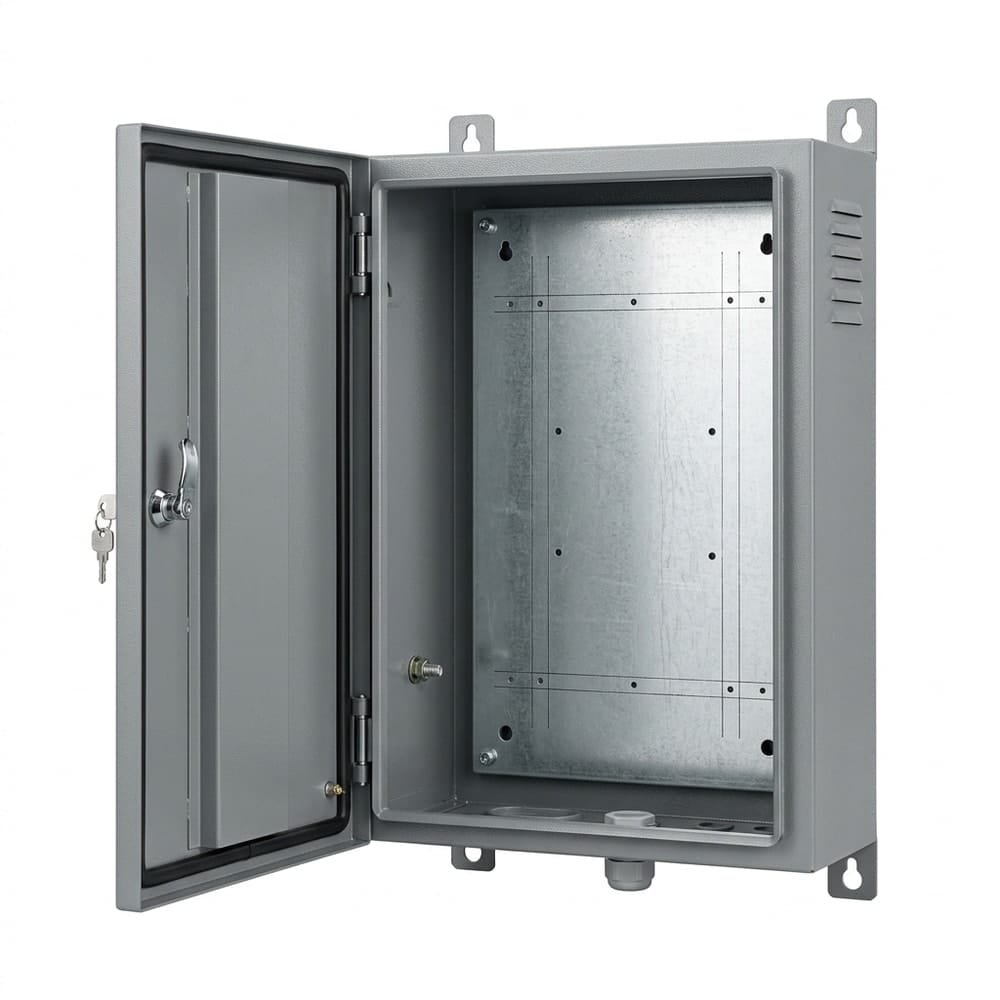
Electrical enclosures are used to protect wiring, terminals, switches, relays, breakers, electrical modules, and control components. Common fabrication details include the enclosure body, front door, internal mounting plate, cable entry holes, grounding points, door hinges, locks/handles, and gasket contact surfaces. Electrical enclosure fabrication must control cable entry accuracy, safe edge treatment, grounding areas, door alignment, and coating thickness. A grounding point covered beautifully with powder coating is not useful—it is a decorative problem. Read more in custom electrical enclosure fabrication services and what is electrical enclosure fabrication.
Related: custom electrical enclosure fabrication · sheet metal electrical enclosure manufacturer · wall mount electrical enclosure
Control Cabinet Enclosures
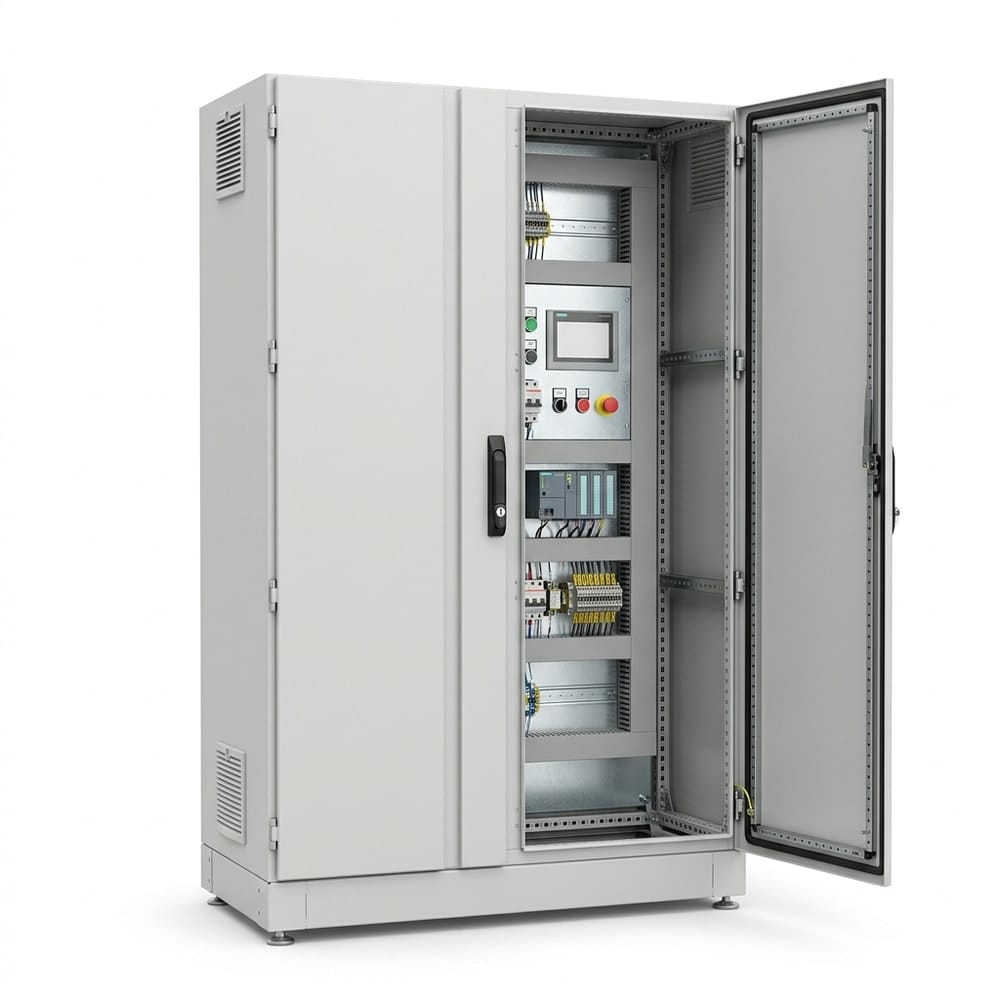
Control cabinets are used in automation equipment, machinery systems, PLC control units, production lines, and electrical control applications. They require floor-standing or wall-mounted cabinet structures, internal mounting plates, cable entry plates, door and lock assemblies, fan/filter cutouts, hinge reinforcement, grounding areas, and powder coating. A control cabinet with inaccurate mounting holes turns the buyer’s assembly team into a drilling department. Good OEM control cabinet fabrication should make wiring, installation, maintenance, and repeat assembly easier. Learn more in control cabinet enclosure fabrication, PLC enclosure fabrication, and HMI enclosure manufacturing.
Related: custom control cabinet sheet metal fabrication · PLC enclosure fabrication · industrial control enclosure manufacturer
Telecom and Network Enclosures
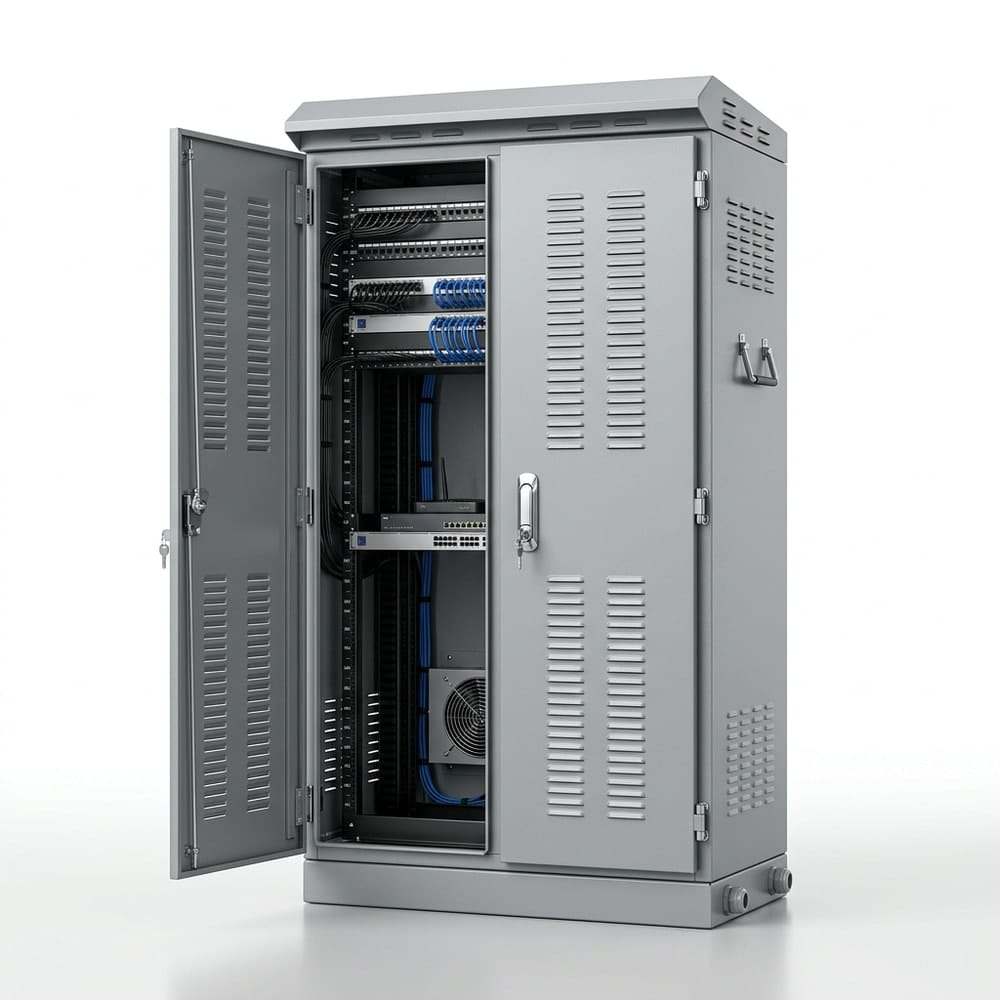
Telecom and network equipment often requires custom metal cabinets and enclosures for rack-mounted devices, power modules, cable routing, UPS systems, and outdoor communication equipment. Important fabrication details include rack mounting structures, cable routing holes, ventilation openings, door and lock alignment, internal mounting rails, and outdoor coating protection. Telecom equipment does not like messy metalwork; cables need space, air needs to move, doors need to close, and components need accurate mounting points. Check custom telecom sheet metal enclosures for details.
Related: telecom sheet metal enclosure fabrication · custom telecom cabinet manufacturer · outdoor telecom enclosure fabrication
EV Charger Enclosures
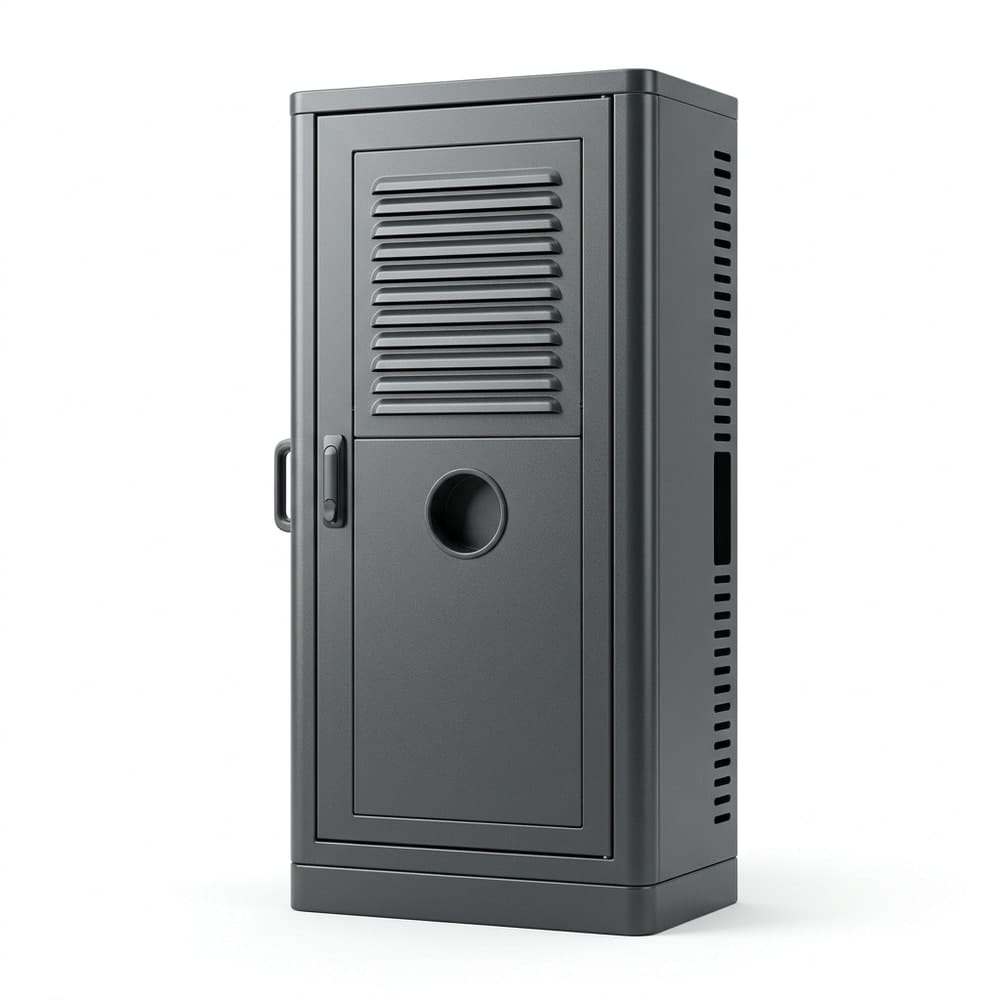
EV charger enclosures are used for AC chargers, DC chargers, wall-mounted chargers, pedestal chargers, outdoor charging cabinets, and charging equipment housings. They require cable entry accuracy, display cutouts, door sealing surfaces, lock and hinge areas, internal mounting plates, ventilation openings, outdoor powder coating, and scratch-resistant packaging. A scratched EV charger enclosure is not just a surface defect; it is brand damage before installation. For EV charging products, the enclosure is part of the customer experience. For EV charger options, see custom EV charger enclosure and outdoor EV charger enclosure.
Related: EV charger enclosure fabrication · IP65 EV charger enclosure · custom EV charger enclosure
Battery Storage Enclosures
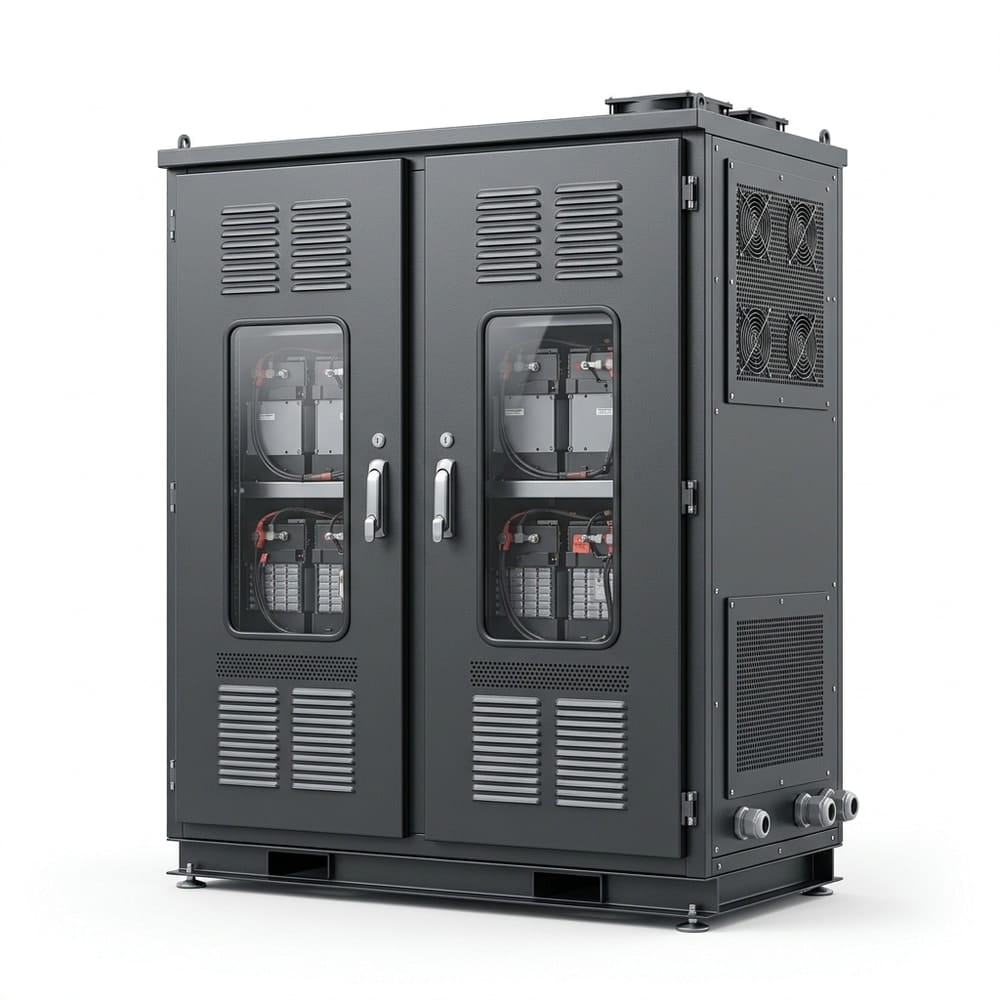
Battery storage enclosures are used in energy storage systems, solar battery systems, backup power systems, and industrial energy equipment. We manufacture the physical sheet metal enclosure according to customer drawings. Battery system design, BMS design, thermal calculation, electrical safety, and final certification must be confirmed separately by the customer or qualified engineering party. A hole is not a thermal strategy; good enclosure fabrication supports the engineering plan, it does not replace it. Read more in battery storage enclosure fabrication.
Related: battery storage enclosure fabrication · solar battery enclosure manufacturer · UPS battery cabinet fabrication
Outdoor Equipment Enclosures

Outdoor OEM equipment enclosures must handle rain, dust, humidity, UV exposure, temperature changes, public installation, and shipping damage. They may require rain lips, sloped covers, gasket contact surfaces, cable entry protection, drainage details, ventilation covers, stainless steel, galvanized steel, or aluminum options, and outdoor-grade powder coating. Outdoor use is not gentle. Rain does not read your drawing notes, and dust does not care about your brand color. If the enclosure has poor drainage, weak coating, or exposed edges, the field will find out.
Related: outdoor OEM equipment enclosures · outdoor electrical enclosure fabrication · weatherproof metal enclosure manufacturer
OEM Enclosure Parts and Structures We Can Fabricate
An OEM sheet metal enclosure is usually made from multiple fabricated parts that must fit together accurately. MSTFAB can manufacture parts such as:
- Enclosure bodies, front doors, rear panels, side panels, top covers, and bottom plates
- Internal mounting plates, cable entry plates, ventilation panels, louver panels, and fan guard panels
- Display cutout panels, door reinforcement plates, hinge brackets, and lock mounting plates
- Grounding plates, gasket contact surfaces, wall mounting brackets, and floor mounting bases
- Removable access panels and welded enclosure frames
A buyer may see one enclosure, but a manufacturer sees a system of sheet metal details. If one panel is wrong, the whole enclosure becomes difficult to assemble; if one hinge area is wrong, the door looks cheap; if one internal mounting plate is wrong, the buyer’s components do not fit. OEM enclosure quality is built from these details.
Materials for OEM Sheet Metal Enclosures
Choosing the right material depends on strength, weight, and environment:
- Carbon Steel: Strong, cost-effective, and commonly used for powder coated enclosures, electrical cabinets, control boxes, industrial housings, and equipment cabinets. Carbon steel usually needs surface protection for outdoor, humid, or corrosive environments. Raw steel and outdoor weather are not friends; they are the beginning of a rust story.
- Galvanized Steel: Offers better corrosion resistance than plain carbon steel and is often used for internal mounting plates, electrical cabinet panels, semi-outdoor enclosures, and outdoor enclosure components. Important review points include cut edge protection, weld zone protection, powder coating compatibility, surface preparation, exposed hole edges, and coating adhesion. Galvanized steel is useful, but it is not magic; if cut edges and welded zones are ignored, corrosion can still find them.
- Stainless Steel (304/316): Used when corrosion resistance, washdown use, premium appearance, or harsh environments matter. Important review points include stainless steel grade, brushed or polished finish, weld cleanup, surface scratch protection, passivation requirements, and packaging protection. Stainless steel is corrosion-resistant, but it is not invincible; poor weld cleanup, trapped moisture, aggressive environments, contaminated surfaces, and bad packaging can still create problems.
- Aluminum: Useful when lightweight construction, corrosion resistance, or easier installation is important. Important review points include aluminum grade, bend radius, welding method, surface scratch protection, powder coating pretreatment, and galvanic corrosion risk when contacting other metals. Aluminum is not lightweight steel; it bends differently, welds differently, scratches more easily, and needs careful forming review. Treating aluminum like steel is how nice CAD becomes annoying samples.
Surface Finishing for OEM Metal Enclosures
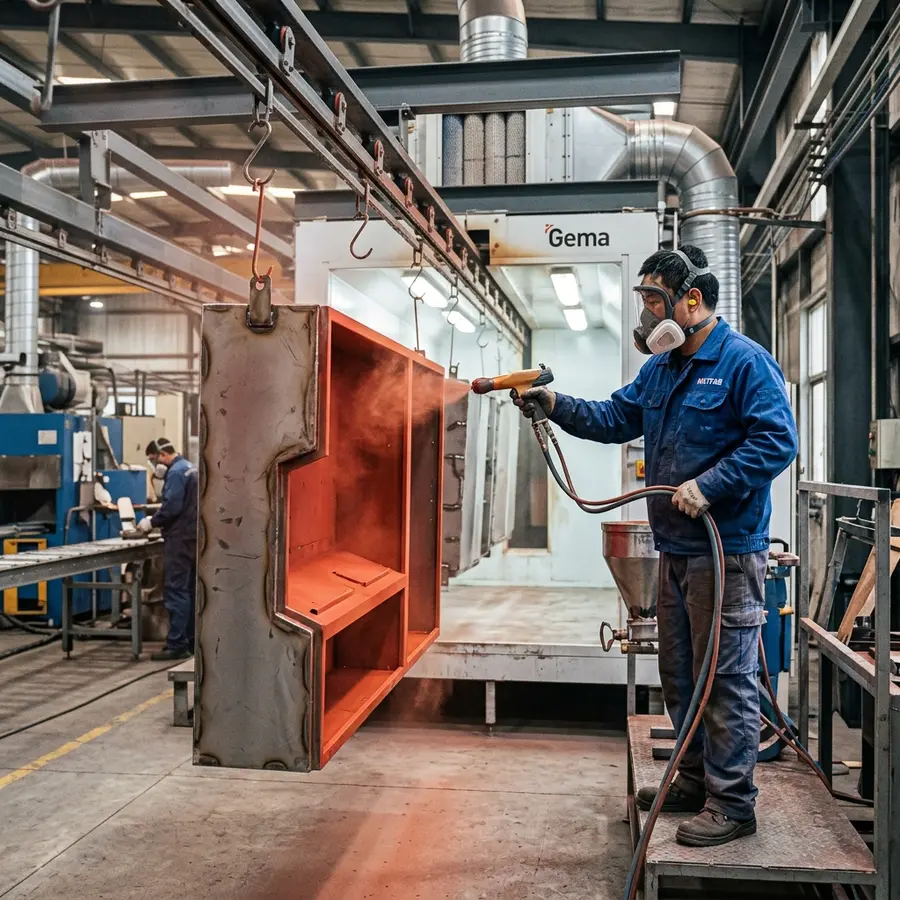
Surface finish affects appearance, corrosion resistance, assembly, and customer perception. Common finishing options include powder coating, outdoor-grade powder coating, wet painting, galvanizing, brushed stainless steel, polished stainless steel, passivation, aluminum surface treatment review, sandblasting, and grinding/polishing. Powder coating is one of the most common finishes for OEM sheet metal enclosures. Important powder coating details include surface pretreatment, edge condition, weld cleanup, coating thickness, color or RAL code, gloss level, texture requirement, masking for holes, threads, and grounding points, and packaging after coating. Powder coating adds thickness, and that affects assembly. A door may close differently after coating, a threaded hole may need masking, a grounding point may need bare metal contact, and a tight mounting hole may become too tight. A part that fits before coating may not fit after coating if coating thickness is ignored—that is not a coating defect, it is a planning defect.
What OEM Buyers Should Include in an Enclosure RFQ
Searches such as “OEM sheet metal enclosure manufacturer,” “custom electrical enclosure supplier China,” or “prototype to production metal enclosure fabrication” usually lead to the same practical question: can the factory quote the drawing accurately and repeat the approved enclosure without workshop improvisation? Use this RFQ table to compare suppliers on the same basis.
| Common buyer requirement | Information to send | What MSTFAB reviews |
|---|---|---|
| Custom OEM sheet metal enclosure | STEP or STP model, 2D drawing, material grade, thickness, critical dimensions, and revision | Bend feasibility, hole-to-bend clearance, welding access, hardware positions, and inspection points |
| Prototype to production metal enclosure fabrication | Prototype quantity, batch quantity, annual demand, and target delivery schedule | First-article controls, fixture needs, repeat tooling, revision control, and batch traceability |
| Low-volume sheet metal enclosure manufacturing | Required quantity, cosmetic surfaces, hardware list, assembly scope, and packaging method | Setup cost, practical tooling route, inspection sampling, and export protection |
| IP54, IP65, or NEMA-style enclosure shell | Target standard, gasket path, door return, rain details, cable entries, drainage, and test responsibility | Fabrication features that support the target; formal certification remains a separately agreed test scope |
| Powder-coated metal enclosure supplier | RAL color, texture, gloss, pretreatment, masking map, cosmetic acceptance, and salt-spray requirement if applicable | Coating allowance, grounding masks, thread protection, edge coverage, and packing after finishing |
| China OEM enclosure export supplier | Destination, Incoterm, labeling, document needs, pallet or crate limits, and unloading method | Export packing, corner and surface protection, package size, and shipment photo records |
For faster quotation, also review sheet metal fabrication from STEP files and send the drawing package through the OEM enclosure RFQ form.
DFM Review for OEM Sheet Metal Enclosures
DFM means Design for Manufacturability. For OEM sheet metal enclosures, DFM review helps identify manufacturing, assembly, finishing, packaging, and batch repeatability risks before production starts. A practical DFM review may check material suitability, sheet thickness, bend radius, bend sequence, hole-to-bend clearance, enclosure squareness, door flatness risk, door gap control, panel stiffness, internal mounting plate accuracy, cable entry layout, display opening position, hinge and lock areas, grounding contact areas, gasket contact surfaces, welding distortion risk, ventilation opening layout, sharp edge risk around cable holes, powder coating thickness impact, masking requirements, surface finish requirements, packaging protection, and batch repeatability.
DFM is not paperwork. It is how buyers avoid turning a clean CAD model into an expensive metal argument. CAD has no burrs, no springback, no welding distortion, no coating thickness, and no forklift damage. Real manufacturing does. A design issue found before cutting is a drawing update; a design issue found after powder coating is rework, delay, and cost.
OEM Sheet Metal Enclosure Manufacturing Process
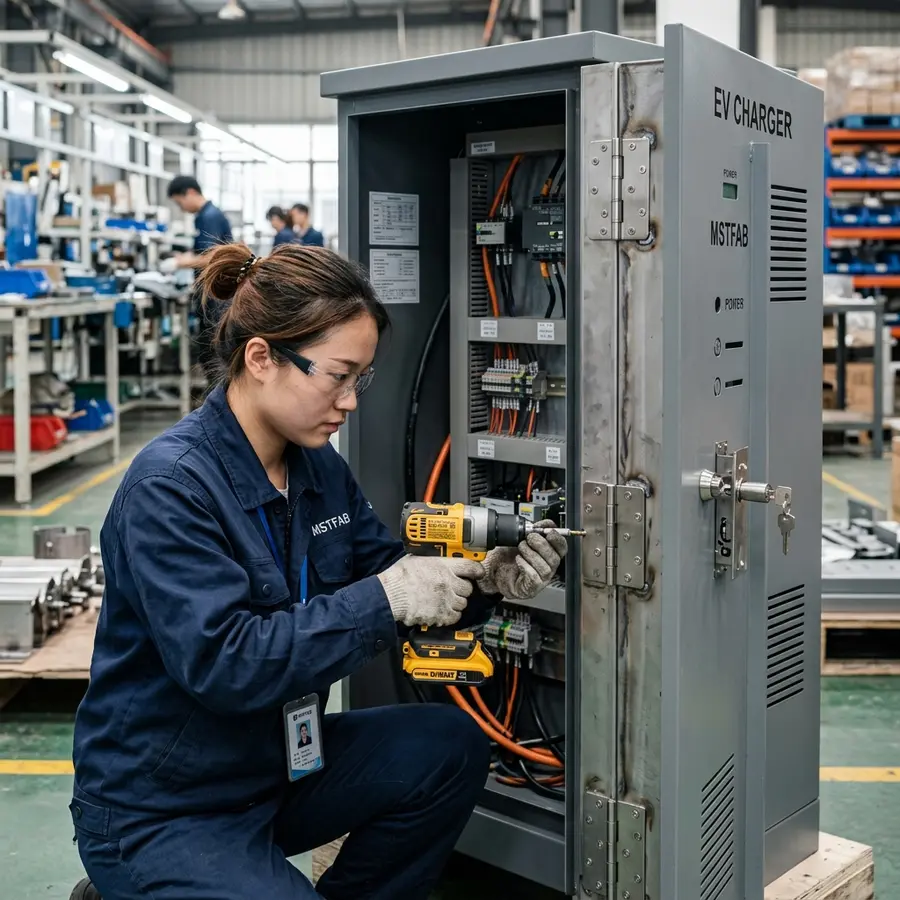
Every step in enclosure fabrication affects the next. Poor cutting affects bending; poor bending affects door gaps; poor welding warps the enclosure frame. We ensure complete process control from laser cutting services, CNC bending services, and welding to powder coating services. We supply custom sheet metal bending and welding parts that fit together without friction.
Prototype, First Article, Low Volume and Batch Production
OEM enclosure projects often move through several stages:
- Prototype Enclosures: Used for fit checking, design testing, customer samples, engineering review, and internal product validation.
- First Article Enclosures: Help confirm the final drawing revision, material, dimensions, finish, assembly fit, and packaging method before batch production.
- Low Volume Enclosures: Used for pilot production, trial orders, market testing, custom equipment projects, and early product launches.
- Batch Production Enclosures: Used for repeat OEM supply after the design and sample are approved.
One good prototype is useful, but the real goal is stable repeat production. The approved sample should not be a lucky accident. The 200th enclosure should still match the approved version. A sample made with heroic manual correction is not manufacturing; it is a magic trick. Magic tricks do not scale.
Revision Control and Scope Awareness
OEM projects often involve design updates. Small changes can affect cost, lead time, and production process. Common revision changes include new hole positions, changed mounting plate layout, new cable entry position, modified door structure, new hinge or lock design, different material thickness, different powder coating requirement, added ventilation opening, added grounding point, updated welding requirement, and packaging changes. Revision control is important because the wrong version can create expensive batch problems; an old drawing can produce new headaches. For OEM enclosure projects, the drawing revision number should be clearly confirmed before prototype, first article, and batch production. The supplier should know exactly which version is approved, and the buyer should know exactly which version is being manufactured. Clear revision control protects both sides.
Our scope is physical sheet metal enclosure manufacturing according to customer drawings and agreed specifications. We do not need your proprietary software, control logic, electrical circuit design, charging technology, telecom system design, battery management design, or complete machine operating principle unless those details directly affect enclosure dimensions, mounting, clearance, ventilation, or fabrication requirements. This boundary protects your intellectual property and keeps the manufacturing scope clear. You bring the product design; we build the sheet metal enclosure that supports it.
Quality Inspection and IP/NEMA Rating Scope
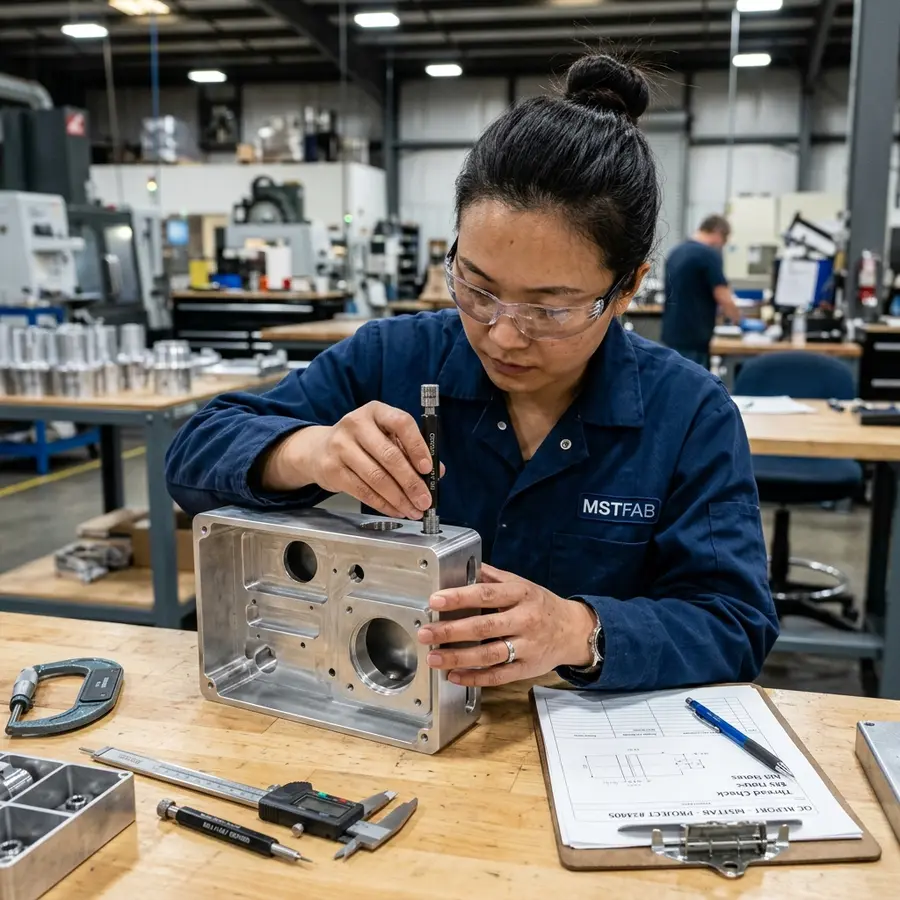
Inspection should verify finished enclosures against drawing specs. We check door gaps, cabinet squareness, coating thickness, and thread alignment. We verify threads after powder coating to ensure screws insert smoothly without stripping.
Many OEM sheet metal enclosures are designed for outdoor, dust-resistant, water-resistant, or industrial environments. Buyers may refer to IP-rated or NEMA-style enclosure targets. MSTFAB can fabricate enclosure structures according to customer drawings and specified requirements, including features such as door sealing surfaces, gasket contact areas, rain lips, cable entry plates, drainage details, ventilation covers, welded seams, powder coated finishes, and stainless steel or aluminum options. However, formal IP rating, NEMA rating, UL certification, CE compliance, electrical safety approval, and final product certification require proper testing and documentation. MSTFAB’s standard scope is physical sheet metal enclosure fabrication. We do not claim final electrical certification or enclosure rating certification unless a formal testing and documentation scope is separately confirmed. This distinction protects both sides.
Export Packaging Protection
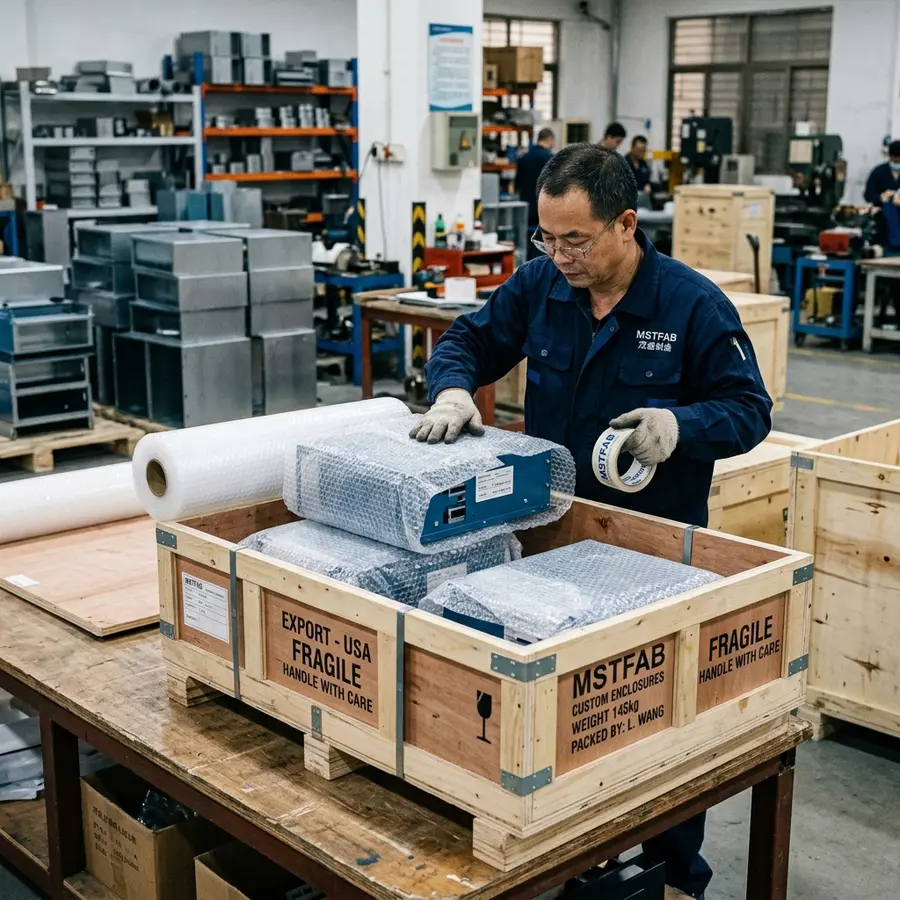
Packaging is the final quality step. A perfect enclosure that arrives scratched, dented, or chipped is no longer perfect—it is a customer complaint with forklift marks. We use protective film, thick corner foam, and custom wooden crates to protect your enclosures during shipping. For OEM equipment, appearance is not decoration; it is part of the product value.
Sourcing Comparison Matrix: Red Flag Factory vs. Reliable Partner
Before selecting a custom sheet metal enclosure manufacturer, review this checklist:
| Evaluation Parameter | Red Flag Factory | Reliable Partner (Like MSTFAB) |
|---|---|---|
| Hinge & Lock Fit | Doors bind or rattle; locks require force to turn due to poor bend control. | Door gaps, hinges, locks, and latch rods are checked against the approved drawing and first article. |
| Grounding Points | Powder coats the grounding studs, forcing the buyer to scrape paint during assembly. | Masks specified grounding studs and contact surfaces so the panel builder retains the required bare-metal contact areas. |
| Welding Quality | Uneven weld beads, heavy grinding marks, and frame distortion from heat. | Clean, uniform weld seams with dedicated jig tables to keep frames square and flat. |
| Thread Protection | Threaded holes are clogged with powder coating paint; screws strip during installation. | Masks or plugs all threaded holes before coating, then runs a tap to verify thread health. |
| Sealing Surfaces | Uneven flange surfaces that allow water and dust to bypass the door gasket. | Flanges are bent straight and flat, creating a continuous seal with the door gasket. |
| Crating & Packing | Cartons are stacked without pallets; enclosures arrive dented with scratched paint. | Wrapped in bubble film, protected by foam blocks, and packed in heavy-duty wooden crates. |
FAQs: OEM Sheet Metal Enclosure Manufacturer
What is the recommended sheet thickness for industrial cabinets?
Common projects may use 1.0mm to 1.5mm sheet for compact boxes and thicker material for large doors, floor-standing frames, bases, or loaded mounting plates. The correct thickness depends on enclosure size, unsupported span, mounting load, bend geometry, handling, vibration, and environment, so MSTFAB confirms it during DFM rather than applying one number to every cabinet.
How do you prevent powder coating paint from clogging grounding studs?
We apply high-temperature silicone masking caps to all grounding studs and threaded inserts before they enter the powder coating oven. This keeps the threads clean and conductive.
Can you match a specific paint color for our EV charger enclosures?
Standard RAL powder colors, gloss levels, and textures can be quoted. Custom color matching is confirmed against an approved sample and the coating supplier availability before production; a screen color alone is not a reliable finish standard.
Do you perform test-assembly before shipping?
Test fitting can be included in the agreed inspection plan. Depending on the project, MSTFAB checks a first article, a defined sampling quantity, or 100% of specified mechanical interfaces such as doors, mounting plates, hinges, locks, and removable panels before export packing.
custom sheet metal enclosure fabrication
MSTFAB fabricates empty custom sheet metal enclosure shells, doors, panels, brackets and welded frames for OEM buyers from approved drawings.
 WeChat Contact
 WhatsApp Me Directly