
Buyer summary
A NEMA Type 4X telecom enclosure project requires a defined protection requirement and evidence for the complete enclosure configuration. MSTFAB’s scope is drawing-based metal shells and mechanical interfaces. Material, seams, doors, seals and accessory openings must follow the approved design; electrical equipment, cooling performance and certification are not implied by fabrication.
Telecom Shell Interface Review
| Design area | Information to release | Evidence to agree |
|---|---|---|
| Corrosion protection | Material, finish and actual exposure conditions. | Applicable verification for the specified enclosure configuration. |
| Doors and seals | Gasket, latch, sealing faces and mounting details. | Mechanical checks and any separately agreed ingress verification. |
| Seams | Approved weld and joining details. | Drawing-specific weld acceptance; additional tests only if specified. |
| Grounding interfaces | Studs, contact zones and masking. | Electrical designer’s requirements and assigned test responsibility. |
| Cooling provisions | Buyer-selected component envelope and mounting cutouts. | Mechanical fit; thermal validation remains with the system owner. |
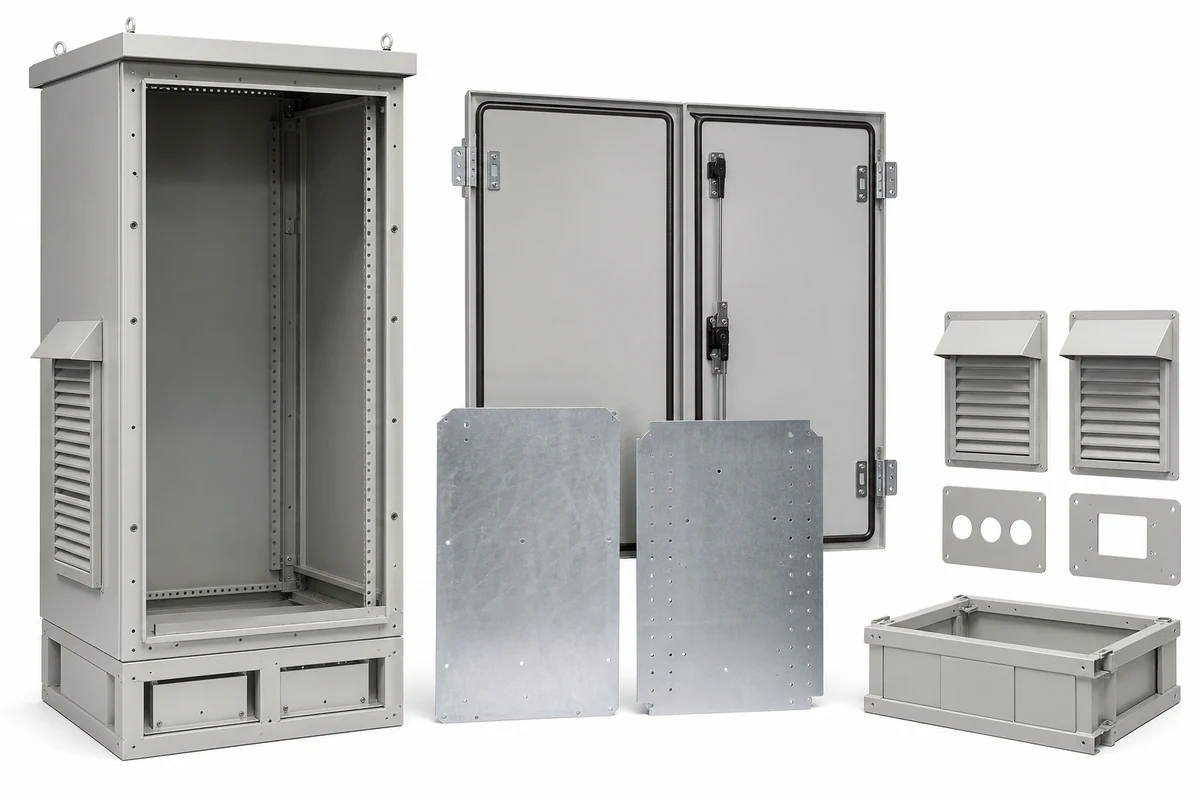
Material questions for a telecom shell
- Compare weight, stiffness, corrosion exposure, joining and finish needs for the actual material and thickness.
- 304, 316L and aluminum are not interchangeable specifications. Review the environment rather than declaring one grade mandatory for every coastal site.
Cooling and sealing interfaces
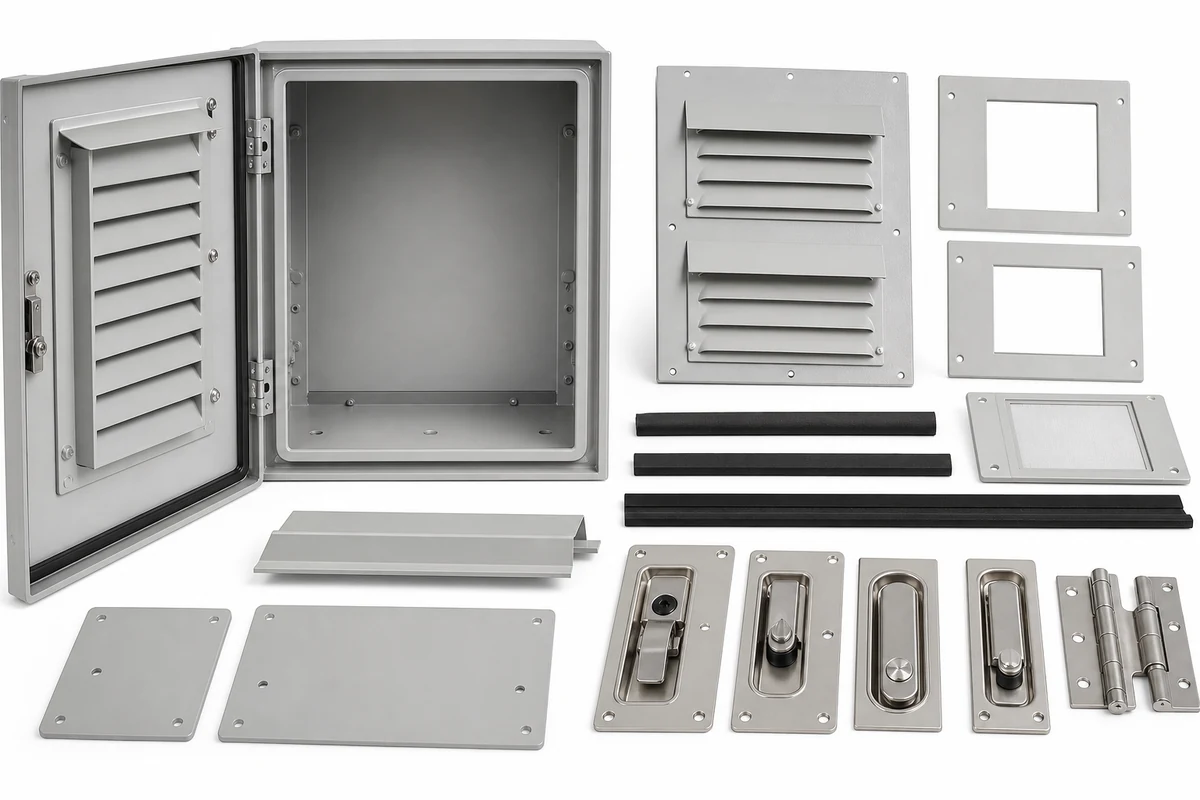
- Use the buyer-approved fan, filter, heat-exchanger or air-conditioner interface drawings.
- Accessories and openings can affect protection performance. Confirm that any required evidence covers the assembled configuration.
- Define solar-shield spacing, fasteners and service access on the drawing. Do not promise a fixed temperature reduction from a generic shield detail.
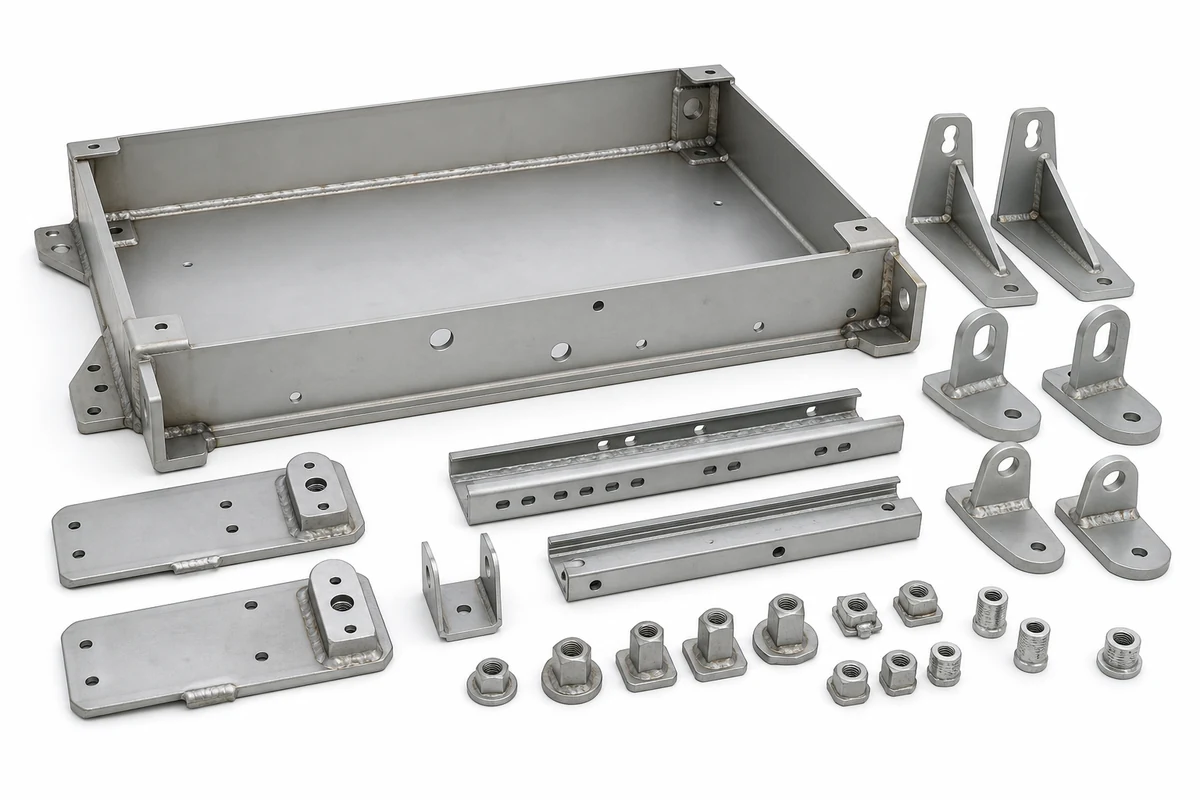
Mechanical evidence for a telecom shell project
| Review stage | What to confirm | Evidence or acceptance |
|---|---|---|
| Material and finish | Release grade, thickness, exposed surfaces and corrosion-control requirements. | Agree material documents and finish checks before purchasing. |
| Doors and interfaces | Check seams, sealing faces, latches and buyer-selected cooling cutouts. | Inspect the specified geometry; system-level protection needs separate verification. |
| Release and transport | Confirm hardware, masking, identification and surface protection. | Agree photos and reports; do not label a shell certified without supporting evidence. |
Inspection methods, sampling, tolerances, certificates and any additional testing must be agreed in the drawing, quality plan and quotation. These examples are not blanket MSTFAB equipment, certification or performance guarantees.
Review Your Drawing and Manufacturing Scope
Send the available drawings, material, quantity, finish and delivery destination. MSTFAB will clarify the mechanical fabrication scope, inspection requirements and timing for your project before quotation.
Buyer Questions
What distinguishes Type 4X from Type 4?
Both address specified environmental protection, while Type 4X additionally addresses corrosion resistance. Refer to the applicable standard and evidence for the actual configuration rather than converting an IP code or selecting a metal alone.
Who defines bonding and cooling acceptance?
The equipment designer defines electrical and thermal requirements. MSTFAB can review the specified mechanical provisions; tests, limits and records must be explicitly agreed.
 WeChat Contact
 WhatsApp Me Directly