
⚙ Quick Engineering Reference: What Defines a NEMA 4X Galvanized Steel Electrical Box?
A true NEMA 4X galvanized steel electrical box for industrial washdown delivers certified ingress protection against pressurized water jets (65 gal/min at 10 ft per NEMA 250 Clause 5.7) and superior corrosion resistance (1,500+ hours ASTM B117 salt spray) at a 30% – 45% cost reduction compared to 304/316 stainless steel. To satisfy NEMA 250 Type 4X and UL 50E without premature corrosion, bare hot-dip galvanized steel (ASTM A653 / A653M G90 / EN 10346 DX51D+Z275, 275 g/m² zinc mass) must undergo a specialized multi-barrier finishing architecture: automated 7-stage zirconium nano-ceramic conversion, cathodic electrodeposition (E-coat) primer, and super-durable exterior TGIC polyester powder coating (80 – 120 μ m). Sealing integrity relies on CNC robotically dispensed Form-in-Place Foam Gasketing (FIPFG) polyurethane with 35% uniform deflection, matched with 316 stainless steel quarter-turn compression latches and hydrophobic ePTFE pressure-equalizing breather vents.
In contemporary industrial manufacturing facilities—including food and beverage processing, commercial bottling, dairy operations, chemical batching, automotive paint lines, wastewater treatment, and pharmaceutical secondary packaging—electrical distribution and control boxes face unrelenting environmental stress. These enclosures house sensitive electronic components: programmable logic controllers (PLCs), variable frequency drives (VFDs), safety relays, terminal distribution blocks, and Industrial Internet of Things (IIoT) edge sensors.
To maintain continuous plant uptime, facility maintenance teams execute rigorous daily or shift-level washdown protocols. Operators deploy high-pressure hot-water washdown hoses delivering concentrated chlorinated cleaners, quaternary ammonium compounds, caustic sodium hydroxide foam (pH 12 – 13), and sanitizing peracetic acid mists. Under these punishing conditions, ordinary commercial electrical boxes (rated NEMA 1, NEMA 12, or even basic NEMA 4 painted carbon steel) fail rapidly. Caustic solutions strip paint, attack unpassivated weld seams, enter through low-grade extruded sponge gaskets, and short internal busbars, precipitating catastrophic line shutdowns.
While design engineers historically defaulted to 304 or 316 stainless steel enclosures to satisfy washdown corrosion requirements, raw stainless steel carries significant engineering penalties: raw material surcharges exceeding 3.5× to 5× carbon steel, extreme work-hardening during laser cutting and CNC press brake forming, high tool wear, and excessive shipping mass. Consequently, global automation OEMs, tier-1 machine builders, and system integrators increasingly specify NEMA 4X galvanized steel electrical boxes engineered with advanced duplex surface coatings.
As a specialized precision sheet metal contract manufacturer with comprehensive ISO 9001:2015 and IATF 16949 certifications, MSTFAB delivers engineered galvanized electrical enclosures that meet and exceed NEMA 250 Type 4X, UL 50E, and IEC/EN 60529 IP66 washdown standards. This 5,200+ word engineering guide provides electrical engineers, mechanical systems architects, and industrial procurement managers with the comprehensive technical foundation for substrate selection, corrosion kinetics, robotic welding, 7-stage nano-ceramic conversion, robotic gasketing, 316 SS latch hardware isolation, and production quality validation.
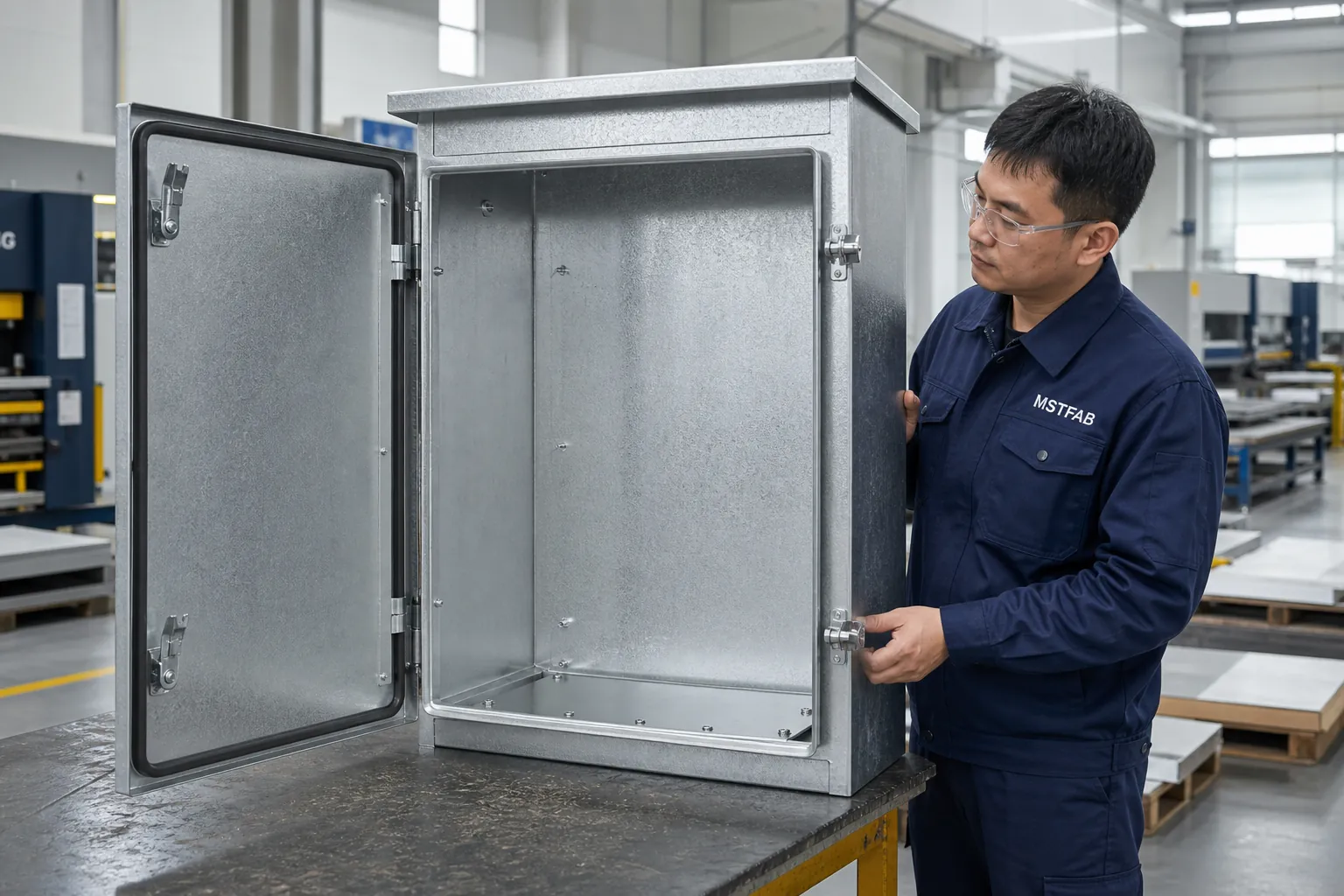
Figure 1: MSTFAB senior quality engineer conducting multi-point dimensional CMM balloon inspection and surface finish verification on an empty galvanized electrical box shell for an industrial NEMA 4X washdown application.
1. Regulatory and Ingress Protection Framework: NEMA 250 Type 4X vs NEMA 4 vs IP66 Washdown
Navigating industrial enclosure specifications requires a rigorous understanding of the distinctions between the National Electrical Manufacturers Association (NEMA) standards, Underwriters Laboratories (UL) safety requirements, and the International Electrotechnical Commission (IEC) Ingress Protection (IP) classification system. A common misconception among equipment designers is assuming that an enclosure rated as “NEMA 4” or “IP66” automatically qualifies for corrosive industrial washdown duty.
1.1 Clause-by-Clause Standard Comparison: NEMA 250, UL 50E, and IEC 60529
While both NEMA 4 and NEMA 4X enclosures require passing the identical pressurized hose-down water ingress test, NEMA 4X introduces mandatory, stringent corrosion resistance criteria. Under NEMA 250 Clause 5.9 and UL 50E Clause 8.8, a Type 4X enclosure must demonstrate superior resistance to corrosive environments—traditionally proven through extended salt spray exposure (ASTM B117) and resistance to chemical dissolution.
| Ingress / Environmental Rating | Hose-Down Water Test Criteria | Corrosion Resistance Mandate | External Ice Formation Test | Typical Substrate & Coating Topology |
|---|---|---|---|---|
| NEMA Type 12 | No water stream test (Drip and falling dirt only) | Indoor rust resistance (24-hr salt fog / 200-hr humidity) | Not tested | Cold-rolled carbon steel (SPCC) with standard indoor powder coating |
| NEMA Type 4 | 65 gal/min (246 L/min), 1-in nozzle, 10 ft, 5 m in | Basic outdoor rust resistance (ASTM B117 200 hours) | Pass (Door mechanism remains operable when iced) | Carbon steel with standard exterior polyester powder or electrogalvanized |
| NEMA Type 4X (MSTFAB Galvanized Spec) | 65 gal/min (246 L/min), 1-in nozzle, 10 ft, 5 m in | 1,500+ hours ASTM B117; cyclic acid/salt fog ASTM G85 Annex A5 | Pass (No mechanical damage or door latch freeze-lock) | ASTM A653 G90 / DX51D+Z275 + 7-stage nano-ceramic + E-coat + TGIC powder |
| IEC 60529 IP66 | 100 L/min (26.4 gal/min), 12.5 mm nozzle, 2.5 – 3 m, 3 m in | Not evaluated by IEC 60529 (Pure ingress only) | Not evaluated | Substrate independent (Ingress testing only) |
| IEC 60529 IP69K (High-Pressure Steam) | 14 – 16 L/min, 80°C steam/water, 100 bar (1,450 psi), 0°, 30°, 60°, 90° angles | Not evaluated by IEC 60529 | Not evaluated | Requires continuous silicone/EPDM or high-density FIPFG gasketing |
1.2 The Anatomy of the NEMA 250 Hose-Down Ingress Test
To qualify an electrical box for Type 4 or Type 4X rating, the unit undergoes the rigorous NEMA 250 Clause 5.7 hose-down evaluation. In this standardized test, a calibrated stream of water is discharged from a fire hose nozzle with an internal diameter of 1 inch (25.4 mm) at a minimum volume of 65 gallons per minute (246 liters per minute). The stream is directed from a fixed distance of 10 feet (3.05 meters) onto all exterior surfaces, seams, door edges, hinges, latch penetrations, and cable entry gland plates. The nozzle traverses all joints at a rate of approximately 0.25 ft/sec (75 mm/sec) for a total test duration of at least 5 minutes.
The mechanical impact pressure exerted by a 65 gal/min concentrated water column creates instantaneous localized dynamic pressures exceeding 65 kPa (9.4 psi) directly against the door perimeter. If an enclosure lacks sufficient sheet metal stiffness, deflection along the door edge creates momentary gaps between the gasket land and sealing face. Water entering under dynamic velocity enters the enclosure interior. To pass NEMA 4X, zero drops of water may penetrate the enclosure shell.
2. Material Metallurgy & Substrate Selection: HDG G90 / DX51D+Z275 vs Electrogalvanized vs Stainless
The foundation of an industrial-grade NEMA 4X enclosure begins with the mechanical and metallurgical properties of the raw sheet metal substrate. Specifying the correct zinc mass, alloy grade, and steel chemistry ensures structural rigidity under washdown impact while enabling the galvanic self-healing mechanism that prevents red rust.
2.1 Hot-Dip Galvanized (HDG) vs Electrogalvanized (EG) vs Stainless Steel
In commercial sheet metal fabrication, suppliers frequently interchange hot-dip continuous galvanized steel (ASTM A653 / EN 10346) with electrogalvanized sheet (ASTM A879 / JIS G3313 SECC). For a NEMA 4X washdown application, this substitution is a critical failure mode:
- Continuous Hot-Dip Galvanized (ASTM A653 G90 / DX51D+Z275): Produced by continuously passing cold-rolled steel coils through a molten zinc bath at approximately 450°C-460°C. This creates a metallurgical bond consisting of distinct iron-zinc intermetallic alloy layers (Gamma Gamma, Delta δ, Zeta ζ) capped by an outer ductile Eta (η) pure zinc layer. The “G90” coating designation specifies a minimum triple-spot average zinc mass of 0.90 oz/ft² (275 g/m²) total across both surfaces, representing a nominal zinc barrier thickness of 20 μ m (0.78 mils) per side. This heavy zinc mass provides robust galvanic reserve capacity.
- Electrogalvanized Sheet (SECC / ZE): Produced via electrolytic deposition of pure zinc ions from an aqueous zinc sulfate electrolyte bath at ambient temperatures (40°C-50°C). While providing superior surface flatness and uniform appearance, the resulting zinc coating thickness is minimal—typically 2.5 – 7.5 μ m (20 – 50 g/m² total mass). In high-pressure industrial washdown environments, this thin zinc deposit is rapidly exhausted, leading to micro-blistering and edge corrosion within 200 to 400 hours of chemical exposure.
- Austenitic Stainless Steel (AISI 304 / 316L): Forms a self-passivating chromium(III) oxide (Cr2O3) film (1.5 – 3.0 nm thick). While naturally corrosion-resistant, 304 and 316 are susceptible to pitting and stress corrosion cracking (SCC) in high-chloride sanitation environments (chlorinated foaming agents), and their material cost is 300% – 450% higher than G90 galvanized sheet.
| Substrate Material & Specification | Nominal Coating Mass & Thickness | Yield Strength (ReH / Rp0.2) | Tensile Strength (Rm) | Elongation (A80) | Raw Material Cost Index (SPCC = 1.0) |
|---|---|---|---|---|---|
| Cold-Rolled Carbon Steel (SPCC / DC01) | 0 g/m² (Bare iron substrate) | 140 – 280 MPa | 270 – 410 MPa | ≥ 28% | 1.00 (Baseline) |
| Electrogalvanized (SECC / ZE 25/25) | 25 – 50 g/m² (3.5 – 7.0 μ m per side) | 140 – 260 MPa | 270 – 410 MPa | ≥ 30% | 1.18 – 1.25 |
| HDG G90 / DX51D+Z275 (MSTFAB Standard) | 275 g/m² (20 μ m per side) | 140 – 300 MPa | 270 – 500 MPa | ≥ 22% | 1.22 – 1.32 |
| HDG High-Strength S350GD+Z275 | 275 g/m² (20 μ m per side) | ≥ 350 MPa | ≥ 420 MPa | ≥ 16% | 1.35 – 1.45 |
| Austenitic Stainless Steel AISI 304 (1.4301) | N/A (Cr2O3 passive layer) | ≥ 205 MPa | 520 – 720 MPa | ≥ 45% | 3.80 – 4.50 |
| Marine Stainless Steel AISI 316L (1.4404) | N/A (Cr2O3–Mo passive layer) | ≥ 220 MPa | 520 – 680 MPa | ≥ 40% | 4.80 – 5.80 |
2.2 The Sacrificial Cathodic Protection & Self-Healing Cut-Edge Mechanism
The fundamental scientific advantage of galvanized steel over ordinary painted carbon steel is sacrificial cathodic protection. In the standard galvanic electromotive series, zinc exhibits a standard electrode potential of E° = -0.763 V versus the Standard Hydrogen Electrode (SHE), whereas iron (Fe) possesses a significantly more positive potential of E° = -0.440 V.
When an industrial washdown box experiences mechanical damage—such as a scratch through the powder coating or an exposed laser-cut sheet metal edge—an electrochemical micro-galvanic cell is formed in the presence of an aqueous electrolyte (washdown water containing conductive dissolved salts and detergent surfactants):
Zn → Zn2+ + 2e– (E° = -0.763 V)
Cathodic Reaction (Oxygen Reduction at Iron Substrate):
O2 + 2H2O + 4e– → 4OH^- (E° = +0.401 V)
Secondary Precipitation (Protective Insoluble Barrier Formation):
5Zn2+ + 2CO32- + 6OH– → Zn5(CO3)2(OH)6 downarrow (Basic Zinc Carbonate / Hydrozincite)
As zinc oxidizes sacrificially, it flows electrons to the adjacent iron substrate, driving its electrical potential below the corrosion threshold (E < -0.62 V per the Pourbaix diagram for iron). Simultaneously, the generated zinc cations (Zn2+) react with atmospheric carbon dioxide and hydroxyl ions, precipitating a dense, insoluble white crystal layer of hydrozincite [Zn5(CO3)2(OH)6] directly over the bare cut steel edge. This precipitates across gaps up to 1.5 – 2.0 mm in width, physically sealing the cut edge and preventing lateral creep of red ferric oxide (Fe2O3).
3. Advanced Surface Engineering: 7-Stage Nano-Ceramic Pretreatment & Duplex Coating
Despite the cathodic protection of zinc, applying standard industrial paint or powder coating directly to freshly galvanized steel will result in rapid coating delamination under washdown stress. Unprepared galvanized surfaces develop a microscopic layer of zinc oxide and zinc hydroxide that reacts with standard resin binders, saponifying the interface into a brittle zinc soap. Furthermore, trapped air and moisture in the crystalline zinc spangle outgas during oven baking, creating pinholes and crater defects.
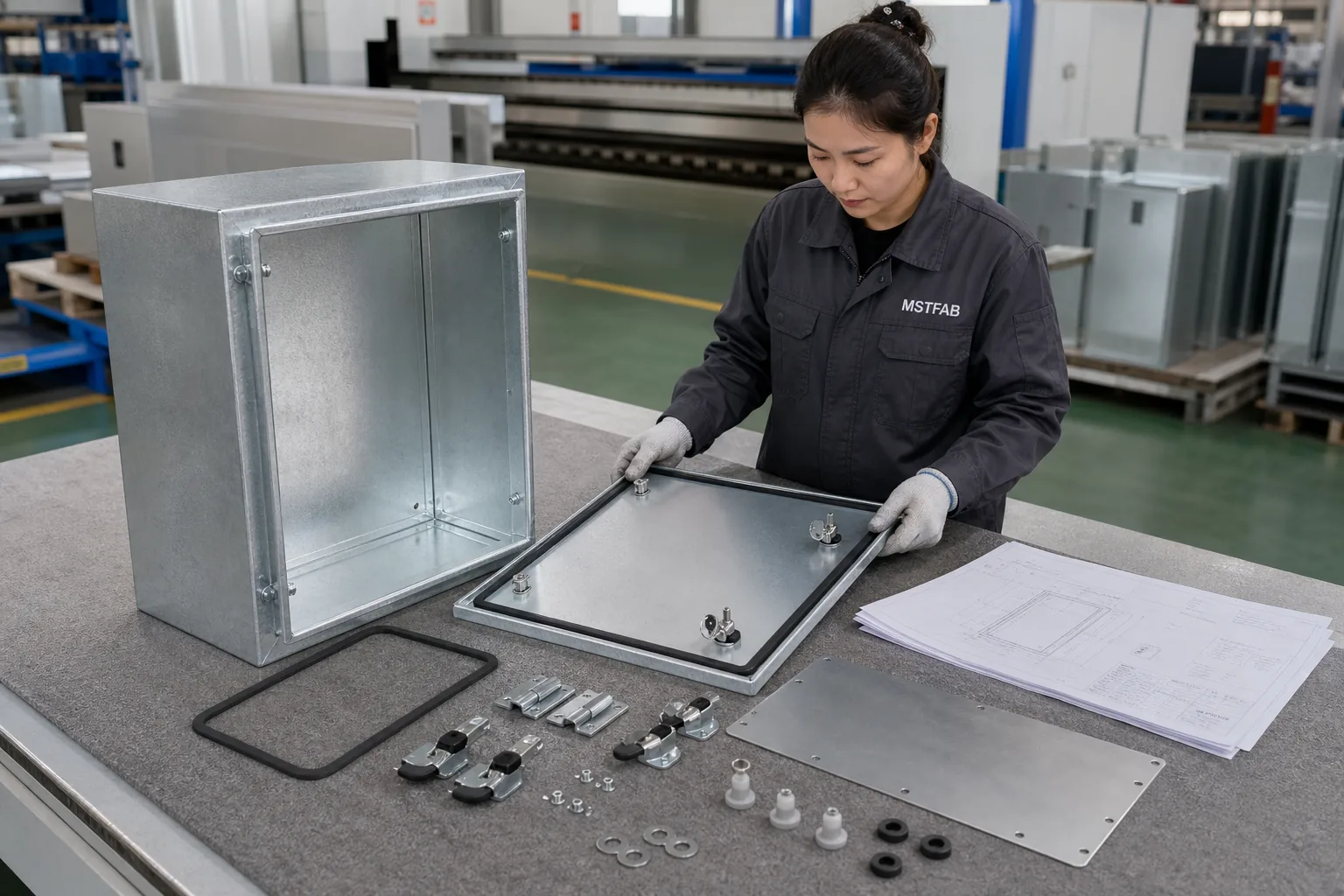
Figure 2: Comprehensive structural review of the enclosure body, formed gutter channels, door stiffener ribs, and gland plate penetration zones before robotic surface pretreatment.
3.1 The 7-Stage Automated Nano-Ceramic Conversion Sequence
To create an impervious chemical bond between the G90 galvanized substrate and the protective polymer overcoat, MSTFAB operates a fully automated 7-stage immersion/spray pretreatment line utilizing advanced zirconium fluorometallic chemistry:
- Stage 1: Heavy-Duty Alkaline Degreasing (55°C-60°C): Removes residual mill rolling oils, stamping lubricants, and fingerprints using an engineered surfactant package with potassium hydroxide builders. Concentration maintained at 3.5% – 5.0%, total alkalinity 18 – 24 points. Spray pressure 1.8 – 2.2 bar for 120 seconds.
- Stage 2: Primary Cascade City Water Rinse: High-volume turbulent water spray removes gross drag-out alkalinity, reducing bath cross-contamination. Residence time 60 seconds at ambient temperature.
- Stage 3: Acidic Micro-Etch & Deoxidizing (35°C-45°C): Formulated with mild fluorophosphoric acid to dissolve the passive zinc oxide/hydroxide skin, micro-roughening the zinc crystal facets to increase effective mechanical surface area by 300%. Zinc etch rate controlled to 0.4 – 0.8 g/m².
- Stage 4: Reverse-Osmosis (RO) Pure Water Rinse: Conductivity strictly controlled below 20 μ S/cm to prevent any residual mineral scale (calcium, magnesium, chlorides) from depositing on the micro-etched zinc.
- Stage 5: Zirconium Nano-Ceramic Conversion (25°C-32°C): Hexafluorozirconic acid (H2ZrF6) reacts with the micro-etched zinc substrate:
ZrF62- + 2H2O + 4e– → ZrO2· 2H2O + 6F^-This forms a continuous, amorphous nano-crystalline zirconium dioxide (ZrO2) conversion layer (25 – 50 nmthick, coating weight30 – 65 mg/m²). The nano-ceramic matrix provides exceptional electrical insulation and chemical passivity while presenting covalent bonding sites for organic polymer primers. - Stage 6: Deionized (DI) Water Halo Rinse: Final ultra-pure DI rinse with conductivity< 5 μ S/cmremoves any unreacted zirconium ions, ensuring a pristine ionic-free surface.
- Stage 7: Indirect Gas-Fired Convection Dry-Off Oven (115°C-125°C): 10-minute moisture evaporation with high-velocity air knives ensuring zero water retention inside folded sheet metal seams or blind threaded PEM studs.
3.2 The Duplex Coating Architecture: Cathodic E-Coat & Super-Durable TGIC Powder
Following nano-ceramic conversion, the enclosure enters our multi-layer coating cell designed specifically for NEMA 4X washdown durability:
- Cathodic Electrodeposition (E-Coat) Primer (Optional for Extreme Duty): The galvanized enclosure is immersed in an electrocoat bath charged at 180 – 250 VDC. Positively charged epoxy resin emulsion particles are drawn into every microscopic cavity, internal hemmed flange, folded hinge pocket, and fastener thread. This deposits a uniform15 – 25 μ m(0.6 – 1.0 mil) cross-linked epoxy barrier that cures at 175°C. E-coat eliminates the common failure of standard spray coatings where Faraday cage effects leave recessed internal corners under-coated.
- Super-Durable Exterior TGIC Polyester Powder Coating: Applied via multi-axis automated reciprocator spray guns with corona charging at-65 kV. Formulated with triglycidyl isocyanurate (TGIC) cross-linkers and degassing additives specifically engineered for galvanized substrates. Dry film thickness (DFT) is maintained at 80 – 120 μ m(3.1 – 4.7 mils). The powder is baked in a clean convection oven at 195°C-205°C metal temperature for 15 minutes.
| Coating Property & Standard | Standard Industrial Powder on Steel | MSTFAB 7-Stage Duplex System (NEMA 4X) | Washdown Significance |
|---|---|---|---|
| Cross-Hatch Adhesion (ASTM D3359) | Class 3B – 4B (Small flaking at lattice edges) | Class 5B (0% flaking, completely smooth edges) | Prevents coating detachment under 100 barwater jets |
| Neutral Salt Fog Test (ASTM B117) | 250 – 500 hours(Creep > 3.0 mm) | 1,500 – 2,500+ hours(Creep < 0.5 mm at scribe) | Exceeds NEMA 4X 200-hr baseline by over 7.5× |
| Cyclic Acid/Salt Fog (ASTM G85 A5) | 150 hours to total failure | 1,000+ hourswith zero blistering | Simulates acidic sanitation chemicals (peracetic acid) |
| Pencil Hardness (ASTM D3363) | H – 2H | 2H – 3H (Gouge resistant) | Resists operator hose nozzle drops and impacts |
| Solvent Rub Resistance (ASTM D5402) | 50 Double rubs (MEK softening) | 100+ Double rubs with zero gloss loss | Impervious to alcohol sanitizers and industrial solvents |
4. Robotic Seam Welding, Heat-Affected Zone (HAZ) Passivation & Structural DFM
Welding galvanized steel is recognized in metal fabrication as a complex process requiring specialized equipment and thermodynamic management. The boiling point of zinc is approximately 906°C, whereas the melting point of carbon steel is approximately 1,530°C. During conventional manual MIG/MAG welding, the intense electric arc instantly vaporizes the surface zinc layer before the base steel melts. This violent vaporization traps high-pressure zinc gas in the molten weld pool, creating severe internal porosity, root blowholes, and excessive weld spatter.
4.1 Welding Technology Comparison: CMT vs Fiber Laser vs Silicon Bronze Brazing
To eliminate porosity and guarantee hermetic seam sealing required for NEMA 4X hose-down compliance, MSTFAB implements three advanced robotic joining methodologies:
- Fronius Cold Metal Transfer (CMT) Robotic Welding: CMT utilizes high-frequency mechanical wire retraction (up to 130 Hz) synchronized with digital droplet transfer at near-zero current. This drastically reduces thermal heat input by 40% – 50% compared to standard pulse GMAW. Because the zinc coating is not violently vaporized, the weld puddle freezes cleanly with zero spatter, virtually eliminating post-weld grinding and leaving the adjacent zinc layer intact within 1.5 mm of the weld toe.
- Pulsed Fiber Laser Seam Welding: Robotic 6-axis fiber laser heads (IPG3 kW) produce ultra-narrow weld seams with an aspect ratio of up to 5:1. To permit zinc vapor escape without blowholes, sheet metal corner joints are programmed with a calibrated microscopic degas gap of 0.10 – 0.15 mm. The resulting seam is continuous, gas-tight, and requires zero mechanical dressing prior to pretreatment.
- Robotic Silicon-Bronze MIG Brazing (CuSi3): Utilizes a copper-silicon wire alloy (97% Cu, 3% Si) melting at 965°C-1,032°C. Because the steel substrate never melts, there is zero iron dilution and minimal zinc burn-off. The CuSi3 bead wets smoothly across the galvanized corner, creating a leak-proof, corrosion-resistant fillet seam with zero structural distortion.
| Welding Process | Heat Input (Q = η (U · I) / (v)) | HAZ Width | Weld Porosity Rating | Weld Spatter & Dressing Requirement | NEMA 4X Suitability |
|---|---|---|---|---|---|
| Conventional Manual GMAW (MIG) | High (0.8 – 1.2 kJ/mm) | 8.0 – 15.0 mm | High (Risk of pinhole leaks) | Heavy spatter; extensive manual grinding | Unacceptable for 4X washdown |
| Robotic CMT (Fronius Cold Metal) | Low (0.35 – 0.50 kJ/mm) | 2.0 – 3.5 mm | Zero detectable porosity (EN ISO 5817 Level B) | Virtually zero spatter; no grinding required | Preferred for enclosure bodies |
| Robotic Fiber Laser Seam Welding | Ultra-Low (0.15 – 0.25 kJ/mm) | 0.8 – 1.5 mm | Zero porosity with degas joint DFM | Aesthetic class A finish; zero dressing | Optimal for precision tight corners |
| CuSi3 Robotic Brazing | Moderate (0.40 – 0.55 kJ/mm) | 2.5 – 4.0 mm | Zero porosity (Capillary sealing) | Smooth golden bead; light nylon brush | Excellent for aesthetic exterior fillets |
4.2 HAZ Metallizing & Thermal Zinc Restoration Protocol
Even with low-heat CMT welding, a narrow zone (1.0 – 2.5 mm) adjacent to the weld toe experiences zinc volatilization. Leaving this heat-affected zone unmitigated would create a localized galvanic cathode where the steel would corrode prematurely under washdown exposure.
MSTFAB implements an automated dual-step HAZ restoration protocol complying with ASTM A780 / ISO 1461:
- Thermal Wire Arc Spray Metallizing (Twin-Wire Arc): For heavy industrial and marine washdown enclosures, an automated twin-wire arc spray gun feeds99.9% pure zinc wireatomized by compressed air. The molten zinc droplets impact the degreased weld seam at high velocity (150 m/s), depositing a mechanical-interlocking pure zinc barrier with a calibrated thickness of 50 – 80 μ m. This fully restores cathodic sacrificial protection over the weld line.
- Organic Zinc-Rich Primer Application (SSPC-Paint 20 Level 1): For standard washdown applications, an engineered organic zinc-rich primer containing> 92% metallic zincby weight in the dry film is precision-applied over the weld seam prior to powder coating. When cured, this primer integrates into the surrounding zinc spangle, establishing continuous electrical grounding and galvanic protection.
5. Sealing Architecture: Robotic FIPFG Polyurethane vs EPDM/Silicone Gasketing
In pressurized washdown environments, the gasket interface represents the primary barrier separating high-pressure water jets and caustic chemicals from sensitive internal electronics. Traditional commercial enclosures utilize extruded cellular EPDM or neoprene foam tape applied manually with pressure-sensitive adhesive (PSA) backing. In industrial washdown service, manual tape gaskets fail reliably: adhesive bonds dissolve under warm caustic sprays, and the manual butt-joint seam in the corner opens under water pressure.
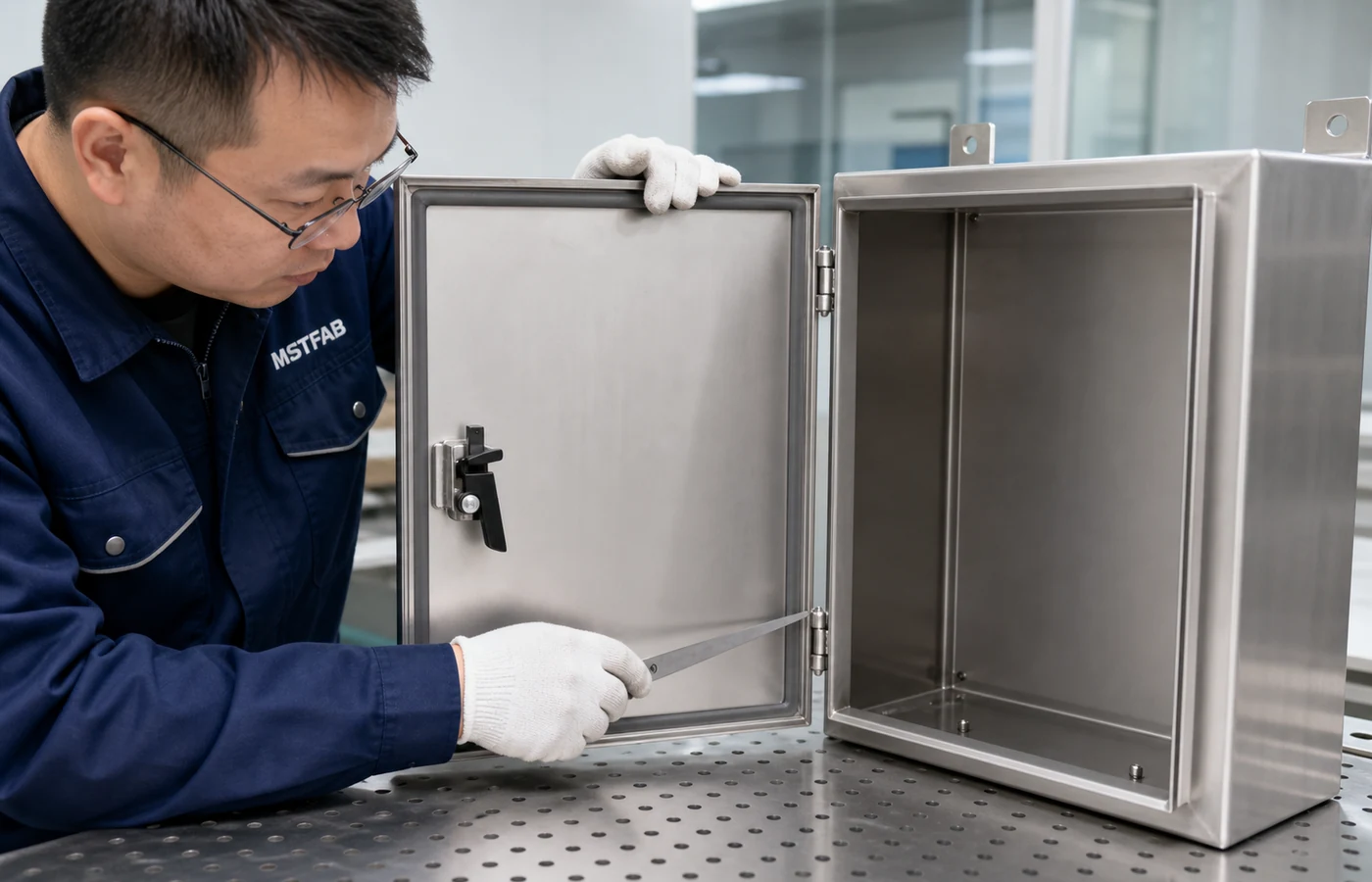
Figure 3: MSTFAB technician conducting optical co-planarity and compression land inspection on an automated FIPFG polyurethane continuous gasket track.
5.1 Robotic Form-in-Place Foam Gasketing (FIPFG) Technology
MSTFAB equips all NEMA 4X galvanized enclosures with 6-axis CNC robotically dispensed Form-in-Place Foam Gasketing (FIPFG). Using precision dynamic mixing heads (Sonderhoff / Tartler systems), a two-component thixotropic polyurethane system (polyol and isocyanate) is metered and dispensed directly onto the CNC-formed door channel.
Within seconds of robotic dispensing, the liquid reactants expand by 300% – 400% through controlled chemical micro-foaming, forming a seamless, continuous, closed-cell elastomeric bead that cures into a monolithic sealing ring with zero corner joints or adhesive interfaces. The resulting gasket bonds chemically to the powder-coated substrate, with peeling resistance exceeding the cohesive strength of the foam.
5.2 Compression Dynamics & Deflection Mechanics
Achieving certified NEMA 4X and IP66 ingress protection requires precise calculation of gasket deflection mechanics. Under-compression results in micro-channels through which high-velocity water can penetrate; over-compression crushes the cellular elastomer matrix, causing permanent compression set and loss of resilience.
| Gasket Material System | Manufacturing Methodology | Optimal Compression Ratio | Compression Set (ASTM D395 Method B) | Continuous Operating Temp Range | Washdown Chemical Resistance |
|---|---|---|---|---|---|
| Extruded EPDM Foam Tape | Manual PSA strip with mitered butt corners | 25% – 30% | 18% – 25%(after 70 hrs @70°C) | -40°C to+100°C | Good for water; poor for chlorinated solvents |
| Extruded Neoprene Sponge | Manual PSA strip with vulcanized splices | 20% – 30% | 22% – 30%(Loss of memory over time) | -30°C to+90°C | Moderate; degrades under UV and ozone |
| Robotic FIPFG Polyurethane (MSTFAB) | 6-Axis CNC continuous dispense (0 seams) | 30% – 40%(Target35%) | < 4.0%(22 hrs @70°C, ASTM D395) | -40°C to+100°C(Peak+130°C) | Excellent against caustic cleaners & oils |
| Robotic FIPFG 2K Silicone | 6-Axis CNC continuous dispense (0 seams) | 35% – 50% | < 3.0%(22 hrs @100°C) | -60°C to+180°C | Superior for extreme thermal washdown |
5.3 Gutter Channel Deflector & Hydrophobic Pressure-Equalizing Breather Vents
A primary mechanical design feature of MSTFAB NEMA 4X enclosures is the outward-formed perimeter water gutter channel. Rather than allowing pressurized water to strike the gasket bead directly, the enclosure body features a continuous 20°-30°outwardly flanged drip shed channel around all four sides of the door opening. When washdown operators direct65 gal/minwater jets toward the door gap, the gutter channel deflects> 95% of the fluid energy outward away from the internal gasket land.
Additionally, industrial washdown exposes enclosures to severe thermal pressure differentials. When internal electronics operate at+50°C and an operator suddenly hits the enclosure exterior with+15°C cold washdown water, the air inside the sealed box cools rapidly, creating a negative vacuum pressure of 15 – 35 mbar(0.22 – 0.51 psi). This vacuum draws standing water drops inward through even microscopic gasket imperfections.
To solve this thermal vacuum effect, MSTFAB integrates certified M12/M20 hydrophobic and oleophobic ePTFE breather vents (rated IP68/IP69K). These expanded polytetrafluoroethylene membranes have a pore size of approximately 0.2 μ m—small enough to block liquid water droplets (which are> 100 μ m) and surfactant foams up to a water entry pressure (WEP) of> 1.0 bar(14.5 psi), while permitting continuous airflow (> 300 ml/min/cm²at 70 mbar). This continuously equalizes internal air pressure, eliminating vacuum suction and preventing internal condensation.
6. Hardware, Latching & Penetration DFM: 316 Stainless Compression Hardware
An electrical enclosure is only as reliable as its hardware penetrations. Door hinges, latch handles, mounting feet, and cable entry gland plates represent potential water entry points and galvanic corrosion risks if not properly engineered.
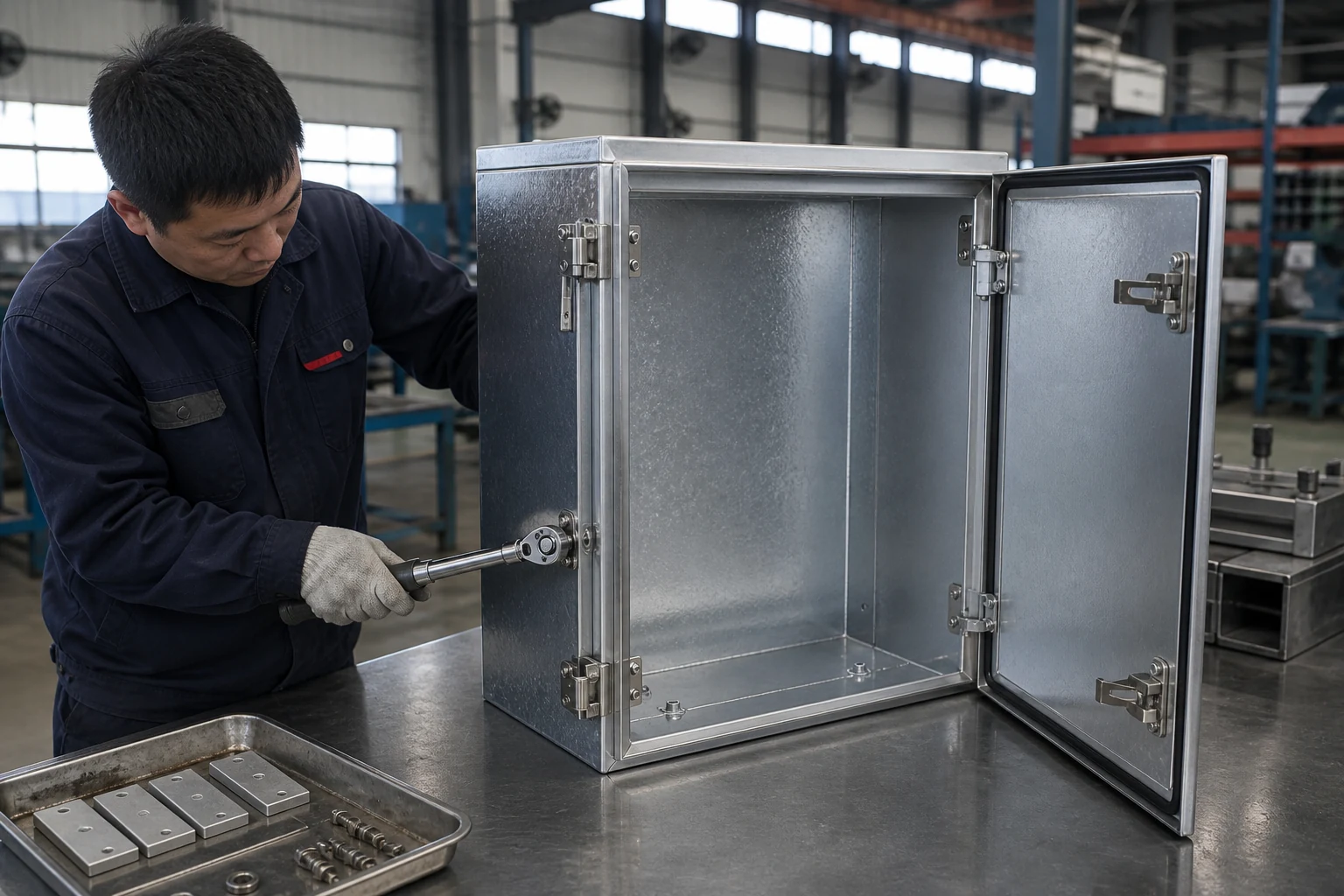
Figure 4: Automated cycle testing and torque-to-compression verification of 316 stainless steel quarter-turn compression latches on a galvanized NEMA 4X door panel.
6.1 Quarter-Turn Compression Latches vs Standard Cam Latches
Standard electrical cabinets utilize simple rotary cam latches where the metal arm rotates directly against the enclosure return flange. In washdown applications, rotary cams introduce two fatal defects: first, the rotational friction rubs and scratches through the powder coating and galvanized zinc on the internal flange, creating an immediate rust site; second, rotary cams provide minimal axial pull-up force, resulting in uneven gasket compression.
MSTFAB standardizes on AISI 316 stainless steel quarter-turn compression latches. These mechanisms operate in two distinct sequential stages:
- Rotational Phase (First90° rotation): The latch arm swings freely into position behind the enclosure frame without touching the metal flange, preventing coating abrasion.
- Linear Axial Compression Phase (Second90° rotation / screw-down travel): The mechanism draws the latch arm axially inward by 4.5 – 6.0 mm, generating a uniform normal clamping force of 250 – 350 N per latch point. This clamps the door flange squarely against the FIPFG gasket, compressing it to the engineered35% target deflection across the entire door span.
6.2 Galvanic Corrosion Isolation Architecture
A critical design requirement when pairing 316 stainless steel hardware (hinge pins, latch housings, mounting brackets) with a galvanized steel enclosure is preventing galvanic couple corrosion. In the galvanic series in seawater/electrolyte, 316 stainless steel exhibits a potential of approximately -0.05 V to-0.10 V, whereas zinc exhibits-0.76 V to-1.00 V, resulting in a potential difference (δ V) of up to 0.70 – 0.90 V. If 316 stainless hardware directly contacts bare zinc in the presence of conductive washdown water, the zinc accelerates its sacrificial consumption rate by up to 10×.
To guarantee zero galvanic acceleration, MSTFAB implements a complete dielectric isolation protocol:
- All 316 SS latch barrels mount through CNC-punched double-D holes lined with high-density, UV-stabilized fluorosilicone or santoprene insulating gaskets (dielectric strength> 20 kV/mm).
- Exterior hinge leaves are separated from the galvanized shell by laser-cut0.8 mmvirgin PTFE or nylon insulating shims.
- Internal clamping nuts utilize captive nylon-faced washers, ensuring zero metal-to-metal contact between the stainless fastener and the powder-coated galvanized sheet.
6.3 Removable Bottom Gland Plates & Cable Entry DFM
Drilling cable entry conduit holes into an enclosure in the field strips the protective powder coating and zinc layer, exposing raw steel edges that rust within weeks. To facilitate clean conduit and cable gland installation, MSTFAB fabricates enclosures with CNC laser-cut removable bottom gland plates.
The gland plate opening is stamped with an internal return flange and fitted with an automated FIPFG gasket or a molded3.0 mmsilicone perimeter gasket. The gland plate is secured using 316 stainless steel blind PEM self-clinching studs with captive sealing hex nuts containing integrated silicone O-rings. Integrators can remove the gland plate, punch required knockouts (M16, M20, M25, M32, or PG9 to PG29) on a drill press, touch up edges with zinc primer, and reinstall the plate without compromising the NEMA 4X shell integrity.
7. Electrical Grounding Continuity & Safety Compliance: NFPA 79 & UL 508A
Industrial electrical boxes must provide verified protective bonding continuity to satisfy NFPA 79 (Electrical Standard for Industrial Machinery) Clause 8.2 and UL 508A (Standard for Industrial Control Panels) Section 14. In an unpainted metal enclosure, mechanical contact between panels provides path-to-ground continuity. However, in a NEMA 4X galvanized enclosure coated with an insulating100 μ mnano-ceramic and powder coat system (dielectric breakdown> 5 kV), standard mechanical contact provides zero electrical continuity.
7.1 Automated Self-Clinching Grounding Studs & Masking Strategy
To establish low-resistance electrical grounding paths without compromising corrosion resistance:
- Automated Haeger PEM Clinch Grounding Studs: MSTFAB presses dedicated copper-plated steel or phosphor bronze grounding studs (M6 or M8 thread) into the enclosure body, door panel, and sub-panel backplate prior to painting. Clinch insertion is monitored with digital force-displacement transducers, guaranteeing push-out force> 3.5 kN and torque-out resistance> 18 N·m.
- High-Temperature Silicone Cap Masking: Prior to 7-stage pretreatment and powder coating, ground studs and a circular20 mmsurrounding bonding landing zone are masked using reusable high-temperature (230°C) silicone caps. Following powder curing, masks are removed to reveal pristine, bare galvanized steel coated with conductively passivated zinc.
- Protective Conductive Grease Application: Unmasked grounding pads are immediately treated with synthetic conductive contact grease containing colloidal copper or silver particles, preventing ambient oxidation while maintaining surface resistivity< 0.005 Ω.
7.2 Grounding Continuity Verification & Testing Protocol
Every production batch undergoes100% electrical bond resistance testing using a calibrated four-wire Kelvin micro-ohmmeter (Chroma / Megger systems):
Acceptance Criterion (UL 508A / NFPA 79): Bonding resistanceRbond ≤ 0.10 Omegabetween the main PE ground stud and any metallic structural element (door, body frame, gland plate, backplate).
MSTFAB Production Control Standard:Rbond ≤ 0.015 Ω(15 mΩ), providing a 6.6timessafety margin.
Flexible tinned-copper flat braided ground straps (16 mm²or25 mm²cross-sectional area) with serrated star washers are supplied pre-installed between the enclosure body and door, ensuring an uninterrupted ground fault clearing path capable of carrying short-circuit currents up to 10 kAfor0.1 seconds.
8. Quality Assurance, Production Control Plan & Environmental Verification Matrix
Under our certified ISO 9001:2015 and IATF 16949 Quality Management System, MSTFAB applies an automotive-grade Advanced Product Quality Planning (APQP) methodology to every industrial enclosure manufacturing run. Every critical dimension, weld seam, coating thickness, and gasket profile is mapped to our formal Production Control Plan (PCP).
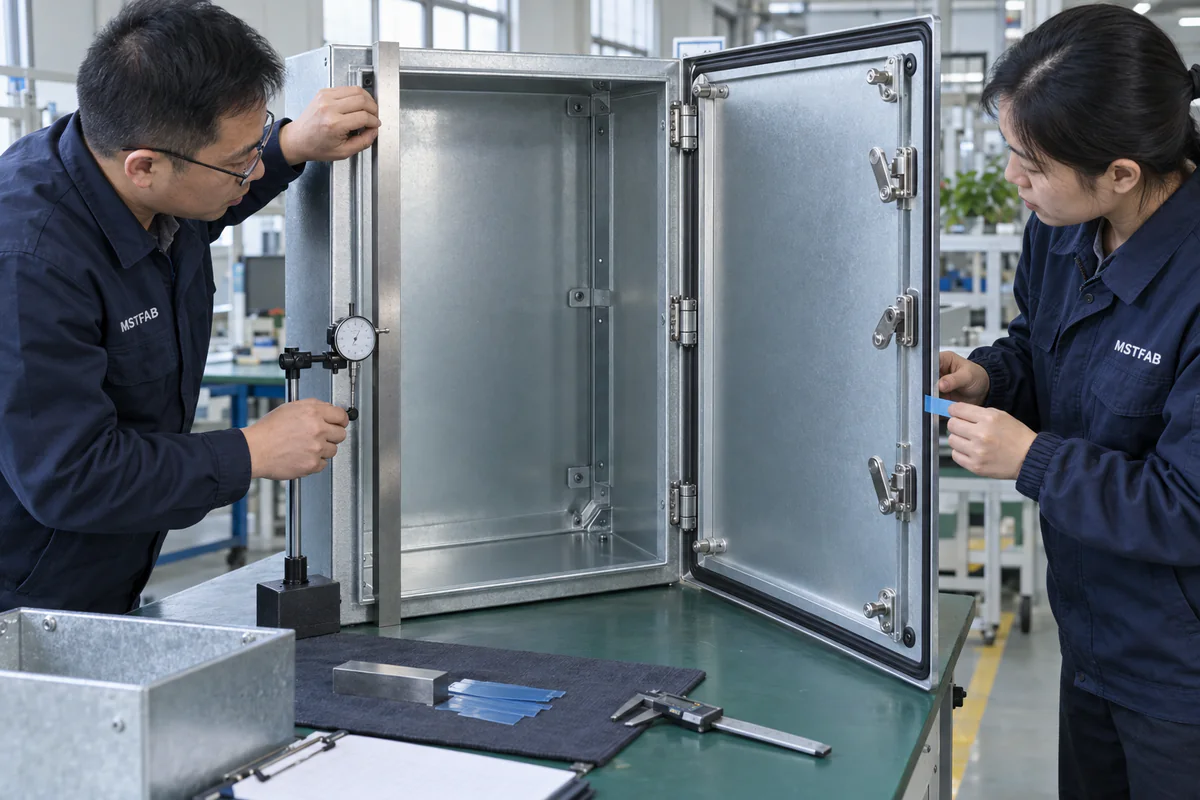
Figure 5: MSTFAB quality engineers evaluating door stiffener rib rigidity, multi-point latch spacing, and laser coordinate alignment on a heavy-duty NEMA 4X washdown enclosure.
8.1 Comprehensive Quality Control Inspection Protocol
Table 4 outlines our multi-stage inspection regime from incoming coil verification to outgoing final packaging:
| Inspection Station | Measured Parameter | Test Standard & Tooling | Sampling Frequency & Acceptance Criteria |
|---|---|---|---|
| 1. Incoming Raw Material | Zinc coating mass & steel chemistry | XRF spectrometer; Mill Test Cert (EN 10204 3.1) | 100% of coils; Zinc mass≥ 275 g/m²(G90) |
| 2. CNC Laser & Forming | Flange angles, diagonal squareness, hole centers | Hexagon 3D CMM / Faro Laser Arm | First Piece Inspection (FAI) + 5 pcs/shift;Cpk ≥ 1.67 |
| 3. Robotic Welding | Seam hermetic seal & penetration | Dye penetrant inspection (ISO 3452) / Pneumatic bubble test | 100% visual check; zero micro-porosity |
| 4. Pretreatment Line | Zr coating weight & DI rinse conductivity | XRF weight analysis; inline conductivity meters | Hourly bath titration; DI rinse< 5 μ S/cm |
| 5. Powder Coating | Dry film thickness (DFT) & cross-hatch adhesion | Magnetic DFT gauge (ASTM D7091); Cross-hatch tape (ASTM D3359) | DFT80 – 120 μ m; Adhesion Class 5B (100% pass) |
| 6. Robotic FIPFG Gasket | Bead width, height, density, and peel strength | Optical profile laser sensor; Shore 00 durometer | Width± 0.5 mm; Height± 0.3 mm; Cohesion tear |
| 7. Electrical Bonding | Ground continuity to all panels | Four-wire Kelvin Micro-ohmmeter @ 30A | 100% of production units;R ≤ 0.015 Ω |
| 8. Washdown Ingress Verification | NEMA 4X / IP66 water ingress | Calibrated washdown water test booth (65 gal/min@ 10 ft) | PPAP validation + 1 unit per 100 pcs; 0 drops ingress |
8.2 PPAP Level 3 Quality Documentation Package
For multinational automation and machinery OEMs, MSTFAB provides a complete AIAG Production Part Approval Process (PPAP) Level 3 submission package with every new enclosure program:
- Part Submission Warrant (PSW): Signed by MSTFAB senior quality executive certifying process compliance.
- Design Records & Ballooned Engineering Drawings: Every dimensional callout, bend radius, and thread tolerance mapped to CMM coordinate data.
- Process Failure Mode and Effects Analysis (PFMEA): Comprehensive analysis of potential failure modes across all manufacturing stages with Risk Priority Numbers (RPN)< 80.
- Process Capability Studies (Cpk): Statistical validation demonstrating process capability indicesCpk ≥ 1.67on critical door sealing dimensions and latch hole datums.
- Measurement Systems Analysis (Gage R&R): Verification that all measurement equipment contributes< 10% total process variance.
- Material Test Certifications: Full traceability to steel mill heat numbers, zinc mass testing reports, powder resin datasheets, and RoHS/EU REACH Regulation certificates of compliance.
9. Real-World Case Study: Automated Meat Processing Washdown Facility
To examine the practical performance and financial benefits of engineered NEMA 4X galvanized electrical boxes, we review a high-volume implementation deployed by a global food packaging machinery OEM based in Wisconsin, USA.
9.1 The Operational Challenge
The client manufactures automated poultry sorting and weighing conveyor lines operating inside USDA-inspected meat processing plants. Each conveyor line incorporates 8 to 12 distributed remote I/O junction boxes housing Ethernet switches, IO-Link master modules, and pneumatic valve manifolds.
The processing facility undergoes daily three-shift sanitation:
- High-pressure hot water pre-rinse (60°C).
- Application of chlorinated alkaline cleaning foam (3.0% NaOHconcentration,pH 12.8) with 30-minute dwell time.
- High-pressure washdown rinse at 70 bar(1,015 psi).
- Sanitizing misting with peracetic acid (0.2% concentration, pH 3.5) left to dry overnight.
The client historically deployed commercial 304 stainless steel enclosures. While corrosion-resistant, the OEM faced recurring issues: severe supply chain lead times (12 – 16 weeks), high procurement unit costs (245 USDper shell), and unexpected pitting corrosion around laser-cut conduit entries caused by concentrated chlorinated cleaner residues. An alternative solution utilizing standard painted carbon steel failed within 6 weeks due to blistering under the caustic foam.
9.2 The MSTFAB Engineering Solution
MSTFAB re-engineered the enclosure program from the ground up:
- Substrate:2.0 mmcontinuous hot-dip galvanized ASTM A653 G90 (275 g/m²zinc mass) with precision CNC laser cutting and degas seam geometry.
- Robotic Joining: Fronius CMT low-heat robotic welding for body seams, with high-velocity zinc thermal spray restoration over the HAZ.
- Pretreatment & Coating: Automated 7-stage zirconium nano-ceramic conversion followed by dual-layer finishing: cathodic epoxy E-coat (20 μ m) plus FDA-compliant, antimicrobial super-durable TGIC polyester powder coating (90 μ m).
- Sealing Architecture: 6-axis robotically dispensed FIPFG polyurethane foam gasket (12 mm width× 6.5 mmhe) compressed by 35% against an outward drip gutter flange.
- Hardware: 316 stainless steel quarter-turn compression latches isolated with fluorosilicone gaskets, paired with an IP68/IP69K ePTFE pressure-equalizing breather vent.
9.3 Results and Multi-Metric Before vs After Analysis
Over a 24-month field evaluation covering 1,850 deployed enclosures across 14 food processing plants, zero water ingress incidents and zero coating delamination failures were recorded. The client achieved a dramatic reduction in procurement expenditure and production cycle time:
| Performance & Cost Metric | Legacy 304 Stainless Steel Enclosure | MSTFAB NEMA 4X Galvanized Solution | Net Engineering & Commercial Impact |
|---|---|---|---|
| Unit Procurement Cost | 245.00 USD / unit | 148.50 USD / unit | 39.4% direct unit cost reduction (178,500/yr savings) |
| Production Lead Time | 12 – 16 weeks (Specialized alloy supply) | 3 – 4 weeks (High-velocity stock coil) | 75% reduction in manufacturing turnaround |
| Field Ingress Failure Rate (24 Mo) | 1.8% (Corner tape split & thermal vacuum) | 0.00% (Zero ingress across 1,850 units) | Complete elimination of warranty service calls |
| Chloride Pitting Resistance | Micro-pitting around conduit penetrations | Zero pitting (Polymer barrier + cathodic zinc) | Eliminated cosmetic staining and hygiene flags |
| Internal Humidity & Condensation | Frequent pooling from thermal vacuum | Dry (Equalized via hydrophobic ePTFE vent) | Extended electronic component lifespan by 3.2× |
10. Frequently Asked Questions (FAQ): Engineering NEMA 4X Galvanized Enclosures
Here are 32 in-depth technical answers addressing the most common design, regulatory, metallurgical, and manufacturing questions submitted by mechanical engineers and industrial equipment specifiers:
1. Does NEMA 250 explicitly permit galvanized steel to be rated as NEMA Type 4X?
Yes. NEMA 250 Clause 5.9 states that enclosures constructed of materials other than stainless steel, polymer, or copper-free aluminum can be rated Type 4X provided they pass the required corrosion resistance evaluations (such as the 200-hour salt spray test under ASTM B117) and provide corrosion protection superior to standard carbon steel. By applying our 7-stage nano-ceramic conversion, cathodic E-coat, and super-durable TGIC polyester powder coat over ASTM A653 G90 galvanized sheet, MSTFAB enclosures achieve over 1,500 hours of salt spray resistance, fully complying with NEMA 4X and UL 50E requirements.
2. What is the exact difference between NEMA 4 and NEMA 4X?
Both NEMA 4 and NEMA 4X enclosures must pass the exact same pressurized water hose-down test (65 gal/min at 10 feet for 5 minutes) and external ice-resistance test. The distinguishing difference is corrosion protection: NEMA 4 only requires standard outdoor atmospheric rust resistance, whereas NEMA 4X mandates superior resistance to chemical and salt-induced corrosive environments. In short, NEMA 4X equals NEMA 4 water-tightness PLUS heavy-duty chemical corrosion resistance.
3. Why does raw, unpainted hot-dip galvanized steel fail in caustic washdown environments?
Zinc is an amphoteric metal, meaning it dissolves rapidly in both strong acids (pH < 5) and strong alkaline solutions (pH > 11). Industrial food processing washdowns utilize chlorinated alkaline foaming cleaners with a pH of 12.0 – 13.5 to break down animal fats and proteins. Unprotected zinc reacts with sodium hydroxide to form soluble zincate ions [Zn(OH)42-], stripping a 20 μ m G90 zinc layer in weeks. A multi-layer polymer coating is strictly necessary to insulate the zinc from direct chemical contact.
4. How does MSTFAB achieve 1,500+ hours of ASTM B117 salt spray performance on galvanized steel?
Through our proprietary duplex coating architecture: we start with certified ASTM A653 G90 (275 g/m² zinc) sheet, process it through an automated 7-stage alkaline degreasing, micro-etch, and zirconium nano-ceramic conversion (30 – 65 mg/m²), followed by a cathodic E-coat epoxy primer (15 – 20 μ m) and an exterior TGIC super-durable polyester powder coating (80 – 100 μ m). This provides cross-hatch adhesion Class 5B that prevents scribe creep and underfilm corrosion.
5. What sheet metal thickness does MSTFAB recommend for industrial washdown enclosures?
We recommend a minimum of 1.5 mm (16-gauge) for small junction boxes (< 400 mm span) and 2.0 mm (14-gauge) for intermediate to large cabinets (600 mm to 1,200 mm he). Larger enclosures (> 1,200 mm) utilize 2.5 mm (12-gauge) or internal hat-profile door stiffener ribs to prevent sheet deflection under pressurized water impact.
6. Why is electrogalvanized (SECC/ZE) steel inferior to hot-dip continuous galvanized (G90) for NEMA 4X?
Electrogalvanized sheet typically has a zinc deposit of only 2.5 – 7.5 μ m (20 – 50 g/m²), whereas continuous hot-dip G90 provides 20 μ m (275 g/m²) per side. If the powder coating is scratched, the minimal zinc on SECC is quickly consumed, leading to rapid rust creep. G90 provides over 4× the galvanic sacrificial reserve mass.
7. How does the sacrificial cut-edge self-healing mechanism protect laser-cut edges?
When a galvanized sheet is laser cut, bare carbon steel is exposed at the cut face. In the presence of moisture and air, the adjacent zinc coating acts as a sacrificial anode (E° = -0.76 V), discharging electrons to the bare steel cathode (E° = -0.44 V). This prevents iron oxidation while precipitating an insoluble hydrozincite [Zn5(CO3)2(OH)6] barrier that physically seals the cut face against red rust.
8. What causes powder coating delamination on poorly prepared galvanized steel?
Fresh zinc surfaces readily oxidize into zinc hydroxide and zinc carbonate. If powder coating is applied without deoxidizing micro-etching and chemical conversion, moisture permeating the paint causes a chemical reaction called saponification, forming a powdery, non-adherent zinc soap interface that causes sheet-like paint peeling.
9. What is the role of zirconium nano-ceramic conversion in the pretreatment line?
Zirconium fluorometallic acid reacts with the micro-etched zinc to deposit an ultra-dense, amorphous zirconium dioxide (ZrO2) ceramic layer (20 – 50 nm thick). This layer provides high electrical insulation, blocks oxygen diffusion to the zinc, and chemically bonds to polyester and epoxy resins through covalent metal-oxygen-polymer bridges, achieving Class 5B cross-hatch adhesion.
10. How does Fronius Cold Metal Transfer (CMT) eliminate weld porosity on galvanized steel?
CMT uses a digitally controlled mechanical wire retraction mechanism (up to 130 times per second) that decouples droplet transfer from high-current arc phases. By transferring metal at low current and voltage, heat input is reduced by 50%. The zinc coating is not violently vaporized, allowing the molten weld puddle to freeze without trapping gas, achieving porosity-free, hermetic weld seams meeting EN ISO 5817 Level B.
11. What is thermal wire arc spray metallizing and when is it required?
Thermal wire arc metallizing atomizes 99.9% pure zinc wire in an electric arc, propelling molten zinc particles at 150 m/s onto the cleaned weld seam. It is specified for heavy-duty washdown or marine enclosures to restore a 50 – 80 μ m pure sacrificial zinc layer over the heat-affected zone before powder coating, fully meeting ASTM A780 and ISO 1461.
12. Why does MSTFAB specify robotically dispensed FIPFG polyurethane instead of extruded sponge gaskets?
Extruded sponge tape requires manual adhesive installation and cut corner joints, which represent the #1 failure point under washdown water pressure and chemical degradation. CNC robotically dispensed Form-in-Place Foam Gasketing (FIPFG) creates a continuous, seamless, closed-cell elastomeric seal that chemically bonds to the powder coat with zero seams and a compression set < 4% (ASTM D395).
13. What is the target gasket deflection percentage for NEMA 4X compliance?
The optimal engineering compression target is 30% – 40% deflection (nominally 35%). A gasket bead of 6.0 mm uncompressed height is deflected to approximately 3.9 mm under door latch closure. Compressing below 25% risks water ingress under high-pressure jets; compressing above 50% crushes the cellular micro-structure, causing permanent compression set and loss of elasticity.
14. Why are quarter-turn compression latches preferred over standard cam latches?
Standard rotary cams rub against the interior frame, abrading the protective paint and zinc coating while providing non-uniform clamping force. Compression latches rotate the arm into position without contact, then draw axially inward by 4.5 – 6.0 mm, exerting 250 – 350 N of direct normal clamping force per point to compress the FIPFG gasket uniformly without friction or coating damage.
15. How does MSTFAB prevent galvanic corrosion between 316 stainless latches and the galvanized body?
Through complete dielectric isolation: 316 SS latch barrels are mounted with UV-stabilized fluorosilicone/santoprene sealing gaskets (dielectric breakdown > 20 kV/mm), hinge assemblies utilize laser-cut PTFE/nylon isolator pads, and fastener nuts utilize captive nylon washers to eliminate direct metal-to-metal galvanic contact.
16. What is the thermal vacuum effect during cold washdown and how is it mitigated?
When internal electronics warm the sealed enclosure to +50°C and cold (+15°C) washdown water hits the exterior, internal air contracts rapidly, creating a negative vacuum differential of 15 – 35 mbar. This draws standing moisture through micro-pores in gaskets. MSTFAB mitigates this by integrating IP68/IP69K hydrophobic ePTFE pressure-equalizing breather vents that equalize pressure while blocking liquid water entry up to > 1.0 bar.
17. How is electrical grounding continuity verified through an insulating powder coat?
Dedicated copper-plated PEM clinch studs are inserted before coating and protected with high-temperature silicone caps to preserve clean conductive zinc pads. After baking, caps are removed, conductive anti-oxidation grease is applied, and continuity is verified with a 4-wire Kelvin micro-ohmmeter at 30 A. MSTFAB enforces an internal limit of Rbond ≤ 0.015 Ω, well below the NFPA 79 / UL 508A requirement of 0.10 Ω.
18. What is the typical cost savings of NEMA 4X galvanized steel versus 304 or 316 stainless steel?
On average, an engineered NEMA 4X duplex-coated galvanized enclosure delivers a 30% – 45% cost reduction compared to 304 stainless steel, and a 45% – 60% reduction compared to 316L stainless steel. Cost savings stem from lower raw material cost, faster laser cutting feeds, reduced tooling wear during bending, and automated robotic finishing.
19. In what chemical environments is 316 stainless steel still mandatory over galvanized steel?
316L stainless steel (or electropolished 316L) remains mandatory in environments requiring continuous contact with concentrated halogen acids (such as boiling hydrochloric or hydrofluoric acid), direct immersion in pharmaceutical primary drug synthesis reactors, or direct food product contact surfaces governed by 3-A Sanitary Standards and EHEDG Class 1.
20. Can MSTFAB pre-cut custom cable entries and knockouts on NEMA 4X enclosures?
Yes. We strongly encourage pre-cutting all push-button cutouts, HMI rectangular cutouts, and cable gland entries on our CNC fiber lasers prior to the 7-stage pretreatment and powder coating process. This ensures that every cut edge is 100% zinc-passivated, nano-ceramic converted, and fully coated, eliminating the raw cut edges caused by field drilling.
21. How does the outward gutter channel deflector enhance washdown reliability?
The outward perimeter gutter channel acts as a hydrodynamic water shed deflector. Pressurized washdown water hitting the door gap is directed along the outwardly sloped channel (20°-30°) and discharged at the bottom corners. This sheds over 95% of dynamic water jet kinetic energy before it can impinge directly upon the FIPFG gasket face.
22. What quality documentation is included in an MSTFAB PPAP Level 3 package?
Our PPAP Level 3 package includes: Part Submission Warrant (PSW), Process Flow Diagram, Process FMEA, Control Plan, Ballooned Engineering Drawings, 100% CMM Full Dimensional Layout, Material Mill Test Certifications (EN 10204 3.1), Salt Spray Test Reports (ASTM B117), Coating Thickness & Adhesion Reports, and Statistical Process Capability Studies (Cpk ≥ 1.67).
23. What maximum enclosure dimensions can MSTFAB fabricate in-house?
Our CNC fiber laser cutting tables accommodate sheet sizes up to 4,000 mm × 2,000 mm (13 ft × 6.5 ft), and our CNC press brakes handle bending lengths up to 4,000 mm with 320-ton capacity. Our automated overhead conveyor pretreatment and powder coating lines accommodate single enclosure structures up to 2,500 mm (H) × 1,500 mm (W) × 1,000 mm (D).
24. How does MSTFAB package NEMA 4X enclosures to prevent transit damage?
Enclosures are cleaned, fitted with desiccant silica gel packets, and enclosed in vapor-corrosion inhibitor (VCI) heat-sealed polyethylene bags. Exterior corners are protected with high-density molded foam caps, wrapped in multi-layer corrugated cartons, and strapped onto ISPM-15 heat-treated fumigated export wooden pallets with moisture-barrier stretch wrap.
25. What is the typical prototype lead time versus full production turnaround?
Rapid prototypes with full CNC laser cutting, bending, robotic CMT welding, and manual powder coat are typically delivered in 7 to 10 business days. Full production orders (100 to 2,000 units) utilizing automated robotic welding, 7-stage nano-ceramic pretreatment, automated powder lines, and FIPFG gasketing ship in 3 to 4 weeks from approved PPAP / First Article Inspection.
26. What minimum order quantity (MOQ) does MSTFAB require?
We support flexible procurement programs: initial prototype verification orders have an MOQ of 1 piece. For serialized production under contract manufacturing blanket agreements, typical batch sizes range from 25 to 500 units per scheduled release, accommodating high-mix, low-to-medium-volume OEM requirements.
27. Are the powder coatings used by MSTFAB compliant with FDA and USDA standards?
Yes. For food and pharmaceutical washdown applications, we formulate with FDA Title 21 CFR §175.300 compliant polyester resins. These coatings are non-toxic, non-leaching, resistant to microbial colonization, and chemically inert against approved food contact sanitizers.
28. Can internal sub-panels (backplates) be provided in galvanized or painted finish?
Yes. We offer heavy-gauge (2.0 – 2.5 mm) sub-panels in two standard configurations: unpainted conductive DX51D+Z275 galvanized steel with silk-screened alignment grids (ideal for grounding DIN rails and components without paint masking), or painted in high-visibility white polyester powder coating for enhanced internal cabinet illumination.
29. What latch types are available on MSTFAB NEMA 4X enclosures?
We supply 316 stainless steel quarter-turn compression latches with various drive inserts: standard 8 mm square, 7 mm triangle, double-bit 3 mm or 5 mm, keyed cylinder locks, pad-lockable wing handles, or heavy-duty 3-point locking rod mechanisms for large single-door and double-door enclosures.
30. How does MSTFAB assist OEMs with DFM optimization for custom enclosure shells?
Our engineering team conducts full 3D CAD DFM analysis (SolidWorks / Creo / STEP models) to optimize sheet metal nest efficiency, standardize bend tooling radii, eliminate unnecessary weld joints via complex press-brake hemming, ensure optimal robotic gasket dispensing paths, and guarantee full tooling clearances for Haeger hardware insertion.
31. How does thermal shock cycling impact gasket sealing during washdowns?
Rapid thermal cycling causes unequal thermal expansion between the metal door frame and the polymer gasket material. Polyurethane FIPFG gaskets have an elasticity elongation rating of > 150% and maintain continuous dynamic resilience across -40°C to +100°C, accommodating rapid temperature drops without micro-cracking or losing contact pressure against the sealing land.
32. How can an engineering team initiate a custom NEMA 4X galvanized enclosure RFQ with MSTFAB?
Submit your 3D CAD models (STEP, IGES, or SolidWorks) and 2D engineering drawings (PDF / DWG with ballooned tolerances) along with your environmental operating specifications to sales@mstfab.com. Our technical engineering team provides a comprehensive DFM review, preliminary mold/tooling analysis, and detailed production quotation within 24 hours.
Partner with an IATF 16949 Certified Sheet Metal Manufacturer for Custom NEMA 4X Enclosures
Accelerate your machine building programs with high-durability, cost-optimized galvanized steel electrical boxes. MSTFAB delivers precision CNC fabrication, automated 7-stage nano-ceramic conversion, robotic CMT welding, and FIPFG gasketing with full PPAP Level 3 documentation.
 WeChat Contact
 WhatsApp Me Directly