
Metal machine guard fabrication supplier for OEM equipment
Planning an RFQ? This guide focuses on industrial machine guard RFQ fit service access. For production capability, drawing review and quotation support, see MSTFAB’s industrial enclosure manufacturing.
Custom metal machine guards that fit the frame, protect the operator and still allow service access
MSTFAB fabricates custom metal machine guards, sheet metal safety panels, CNC bent machine covers, welded guard frames and powder coated guarding components from your drawings. We make the metal parts and assemblies. We do not sell the complete machine or certify the final safety system after installation.
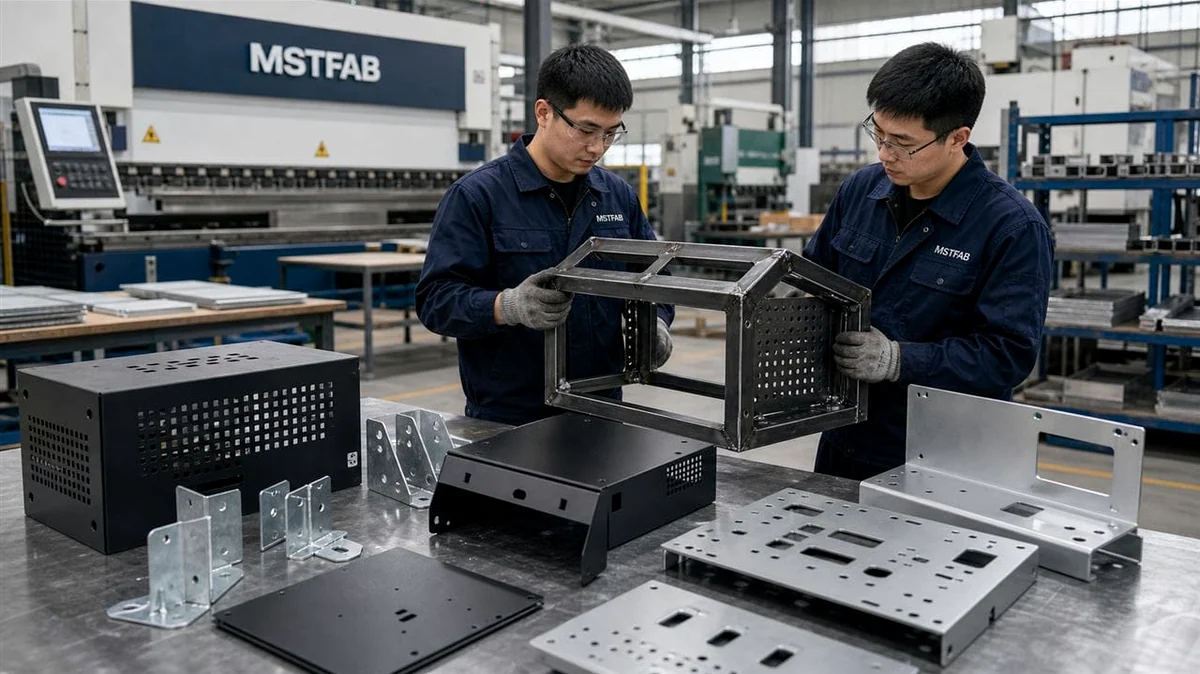
What MSTFAB supplies, and what we do not pretend to supply
MSTFAB is a custom sheet metal fabrication supplier. We manufacture the guard shell, panels, covers, brackets, welded frames, perforated guards and finished metal components that OEM equipment builders install on their machines.
Final machine safety validation, installation compliance, interlocks and risk assessment belong to the buyer, machine builder or system integrator. That clear scope keeps the project honest and avoids the classic purchasing surprise: “Wait, I thought that was included.”
Six buyer problems a good guard supplier should help prevent
Guard does not fit the machine frame
Mounting holes, tabs, slots and brackets need to match the real equipment interface, not a hopeful sketch.
Maintenance access is blocked
Access doors, removable panels, hinges and handle locations should support service without turning each repair into a wrestling match.
Sharp edges create handling risk
Deburring, hemmed edges, radius corners and protected cutouts matter where operators or technicians touch the part.
Vibration causes cracks or rattling
Material thickness, bend design, weld sequence, reinforcement and fastening points need practical review.
Finish chips or corrodes early
Powder coating, stainless steel, galvanized steel or aluminum should match the working environment and cleaning routine.
Painted guards arrive scratched
Machine guard panels often have visible surfaces, so packing, labels and separation matter more than a random carton.
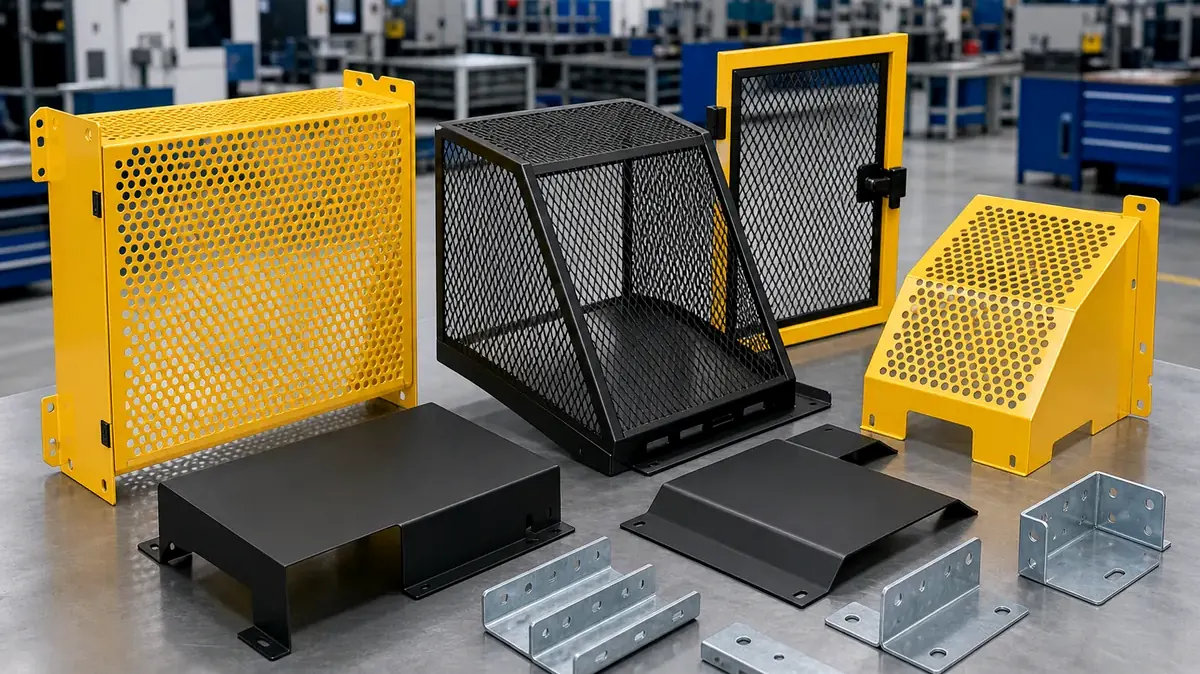
Common custom machine guard parts
Machine guarding is rarely one simple rectangle. OEM buyers often need a small family of sheet metal machine guards and accessories that assemble around belts, motors, conveyors, rollers, spindles, fans or moving fixtures.
- Perforated metal guards and vented sheet metal safety panels
- CNC bent machine covers, belt guards and removable access covers
- Welded guard frames, brackets, mounting tabs and reinforcement parts
- Powder coated guards, stainless steel covers and galvanized steel panels
- Prototype guard samples before repeat OEM production
Material and fabrication choices
| Choice | Typical use | Buyer note |
|---|---|---|
| Carbon steel + powder coating | Strong machine guards, belt covers, equipment panels and welded frames | Good cost-performance choice when coating durability and packing are controlled. |
| Stainless steel | Washdown areas, food-related equipment, chemical exposure and corrosion-sensitive guards | Confirm grade, surface finish, weld cleanup and visible surface expectations. |
| Aluminum | Lighter covers, access panels and guards where weight matters | Useful for serviceable panels; bend radius and surface protection still need review. |
| Galvanized steel | Cost-sensitive guard panels, brackets and covered industrial environments | Check welding and coating compatibility before production. |
| Perforated or slotted panels | Airflow, visibility, heat release and dust control around moving equipment | Hole pattern affects stiffness, safety distance, airflow and coating quality. |
| Welded frames and hardware | Rigid guards, hinged covers, handles, studs, PEM nuts and brackets | Fixture control and inspection points help prevent twist and assembly problems. |
Manufacturing route for custom metal machine guards
1. Drawing and risk review
We review material, thickness, bend sequence, mounting holes, access points, weld areas, finish and packing notes before production.
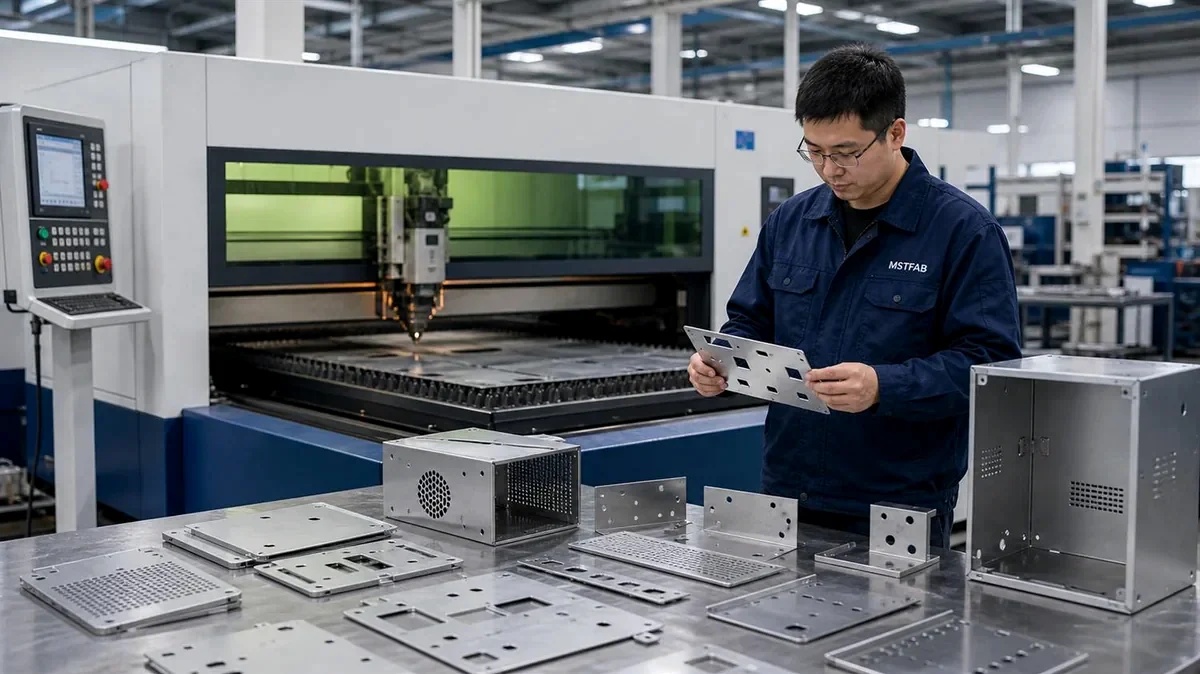
2. Laser cutting
Flat patterns, ventilation holes, mounting slots and perimeter profiles are cut from carbon steel, stainless steel, aluminum or galvanized steel.
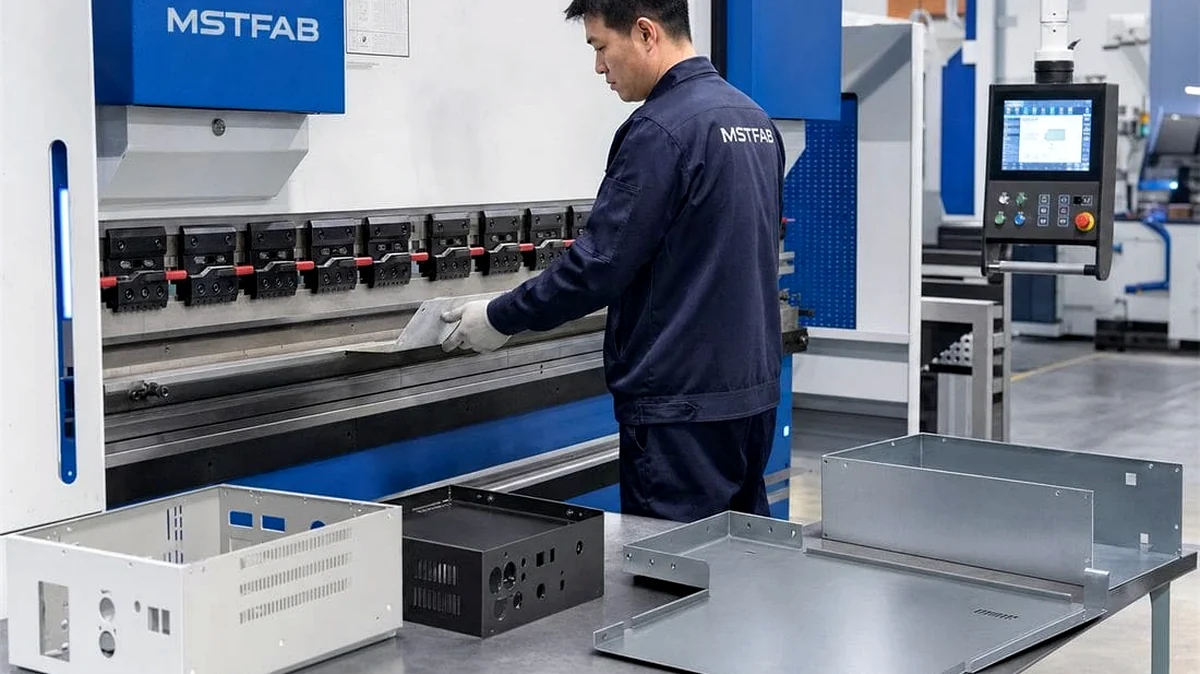
3. CNC bending
Flanges, offsets, covers and guard housings are formed with attention to hole-to-bend distance, inside dimensions and visible surfaces.
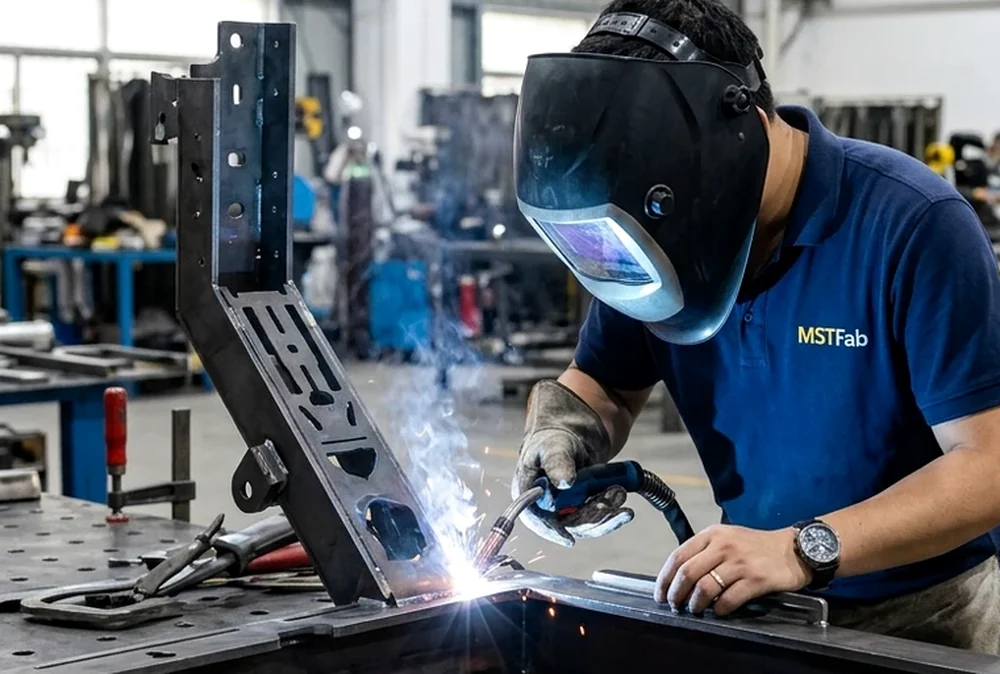
4. Welding and hardware
MIG/TIG welding, spot welding, hinges, handles, studs, PEM nuts and brackets can be added based on the drawing package.
5. Surface finishing
Powder coating, passivation, brushing, plating or galvanizing support can be selected around corrosion, appearance and handling needs.
6. Inspection and packing
Fit points, critical dimensions, coating appearance and export packaging are checked before shipment.
Inspection evidence OEM buyers can request
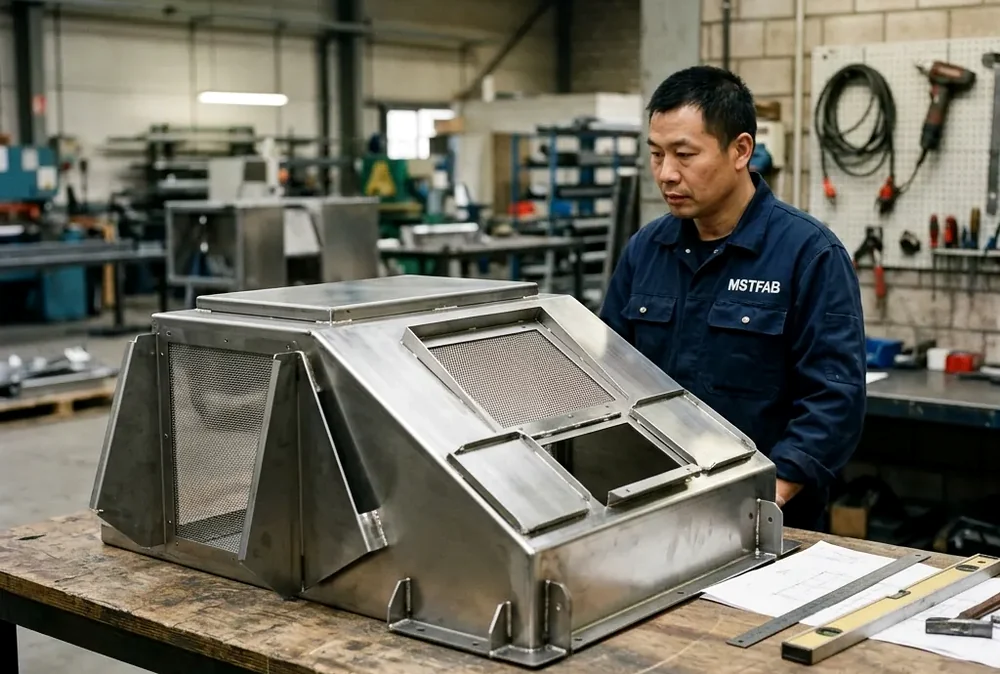
A metal machine guard fabrication supplier should be able to show practical evidence, especially when the guard has mating holes, hinges, visible powder coating, perforated sections or a welded frame.
- First article photos before batch production
- Critical hole and bracket dimension checks
- Bend angle and flange measurement photos
- Weld appearance and fixture confirmation when needed
- Powder coating color, texture and packing photos before shipment
For broader purchasing control, see the OEM metal parts ordering checklist.
Trust table for OEM machine guard buyers
| What to confirm | Why it matters | Useful evidence |
|---|---|---|
| Mounting interface | Machine guards fail quickly when holes, tabs or brackets miss the frame. | Interface drawing review, marked dimensions and sample fit photos. |
| Service access | Maintenance teams need removable panels, doors or covers in the right place. | Assembly drawing, hinge/handle notes and access clearance checks. |
| Edge condition | Sharp burrs create handling problems and poor buyer confidence. | Deburring requirement, edge photos and visible surface notes. |
| Finish durability | Powder coated machine guards can chip or corrode if the finish route is weak. | Color code, coating texture, masking notes and packing photos. |
| Repeatability | Batch two should fit like the approved sample, not start a new engineering adventure. | First article approval, inspection points and revision control. |
RFQ checklist for faster machine guard quotes
Files
- STEP or STP model
- 2D PDF drawing
- DXF or DWG flat file if available
Guard details
- Material and thickness
- Perforation or slot pattern
- Hinges, handles, brackets or hardware
Finish and inspection
- Powder coating color and texture
- Critical dimensions
- Visible surfaces and edge requirements
Production plan
- Prototype quantity
- First batch quantity
- Annual forecast and packing requirement
Plain buyer advice: if the guard must fit an existing machine frame, send the interface drawing. A beautiful guard that misses the mounting holes is still a beautiful problem.
FAQ: metal machine guard fabrication supplier
Does MSTFAB make finished machines or complete safety systems?
No. MSTFAB fabricates custom sheet metal machine guard components, covers, panels, welded frames and related metal parts from drawings. The buyer or integrator is responsible for the final installed safety system and compliance validation.
Can MSTFAB make prototype machine guards before a production order?
Yes. Prototype or first article production is often the best way to confirm fit, access, finish, packing and critical dimensions before repeat OEM production.
Which materials are common for custom metal machine guards?
Common choices include powder coated carbon steel, stainless steel, aluminum and galvanized steel. The best choice depends on strength, weight, corrosion exposure, cleaning, appearance and budget.
Can MSTFAB fabricate perforated metal guards?
Yes. MSTFAB can fabricate laser cut or perforated guard panels, vented covers and slotted sheet metal safety panels. Hole pattern, open area, stiffness and finish should be defined in the drawing.
What files help MSTFAB quote accurately?
Send STEP or STP models, 2D PDF drawings, DXF/DWG files, material grade, thickness, finish, quantity, annual forecast and any machine interface or service access requirements.
Related buyer resources
Sheet metal bending services
Sheet metal welding services
Sheet metal surface finishing guide
Custom metal parts for industrial equipment
Industrial metal fabrication services
Need custom sheet metal guards for OEM equipment?
Send drawings, material, finish, quantity and machine interface notes. MSTFAB will review the metal guard fabrication route and quote the custom part scope clearly.
 WeChat Contact
 WhatsApp Me Directly