
Metal laser cutting RFQ checklist
Metal Laser Cutting RFQ Checklist for OEM Sheet Metal Parts
Laser cutting looks simple from the buyer side: send a DXF, get parts. Lovely fantasy. In real sourcing, the quote depends on material grade, thickness, kerf, tolerance, edge quality, nesting, certificates and what happens after the flat blank leaves the laser bed.
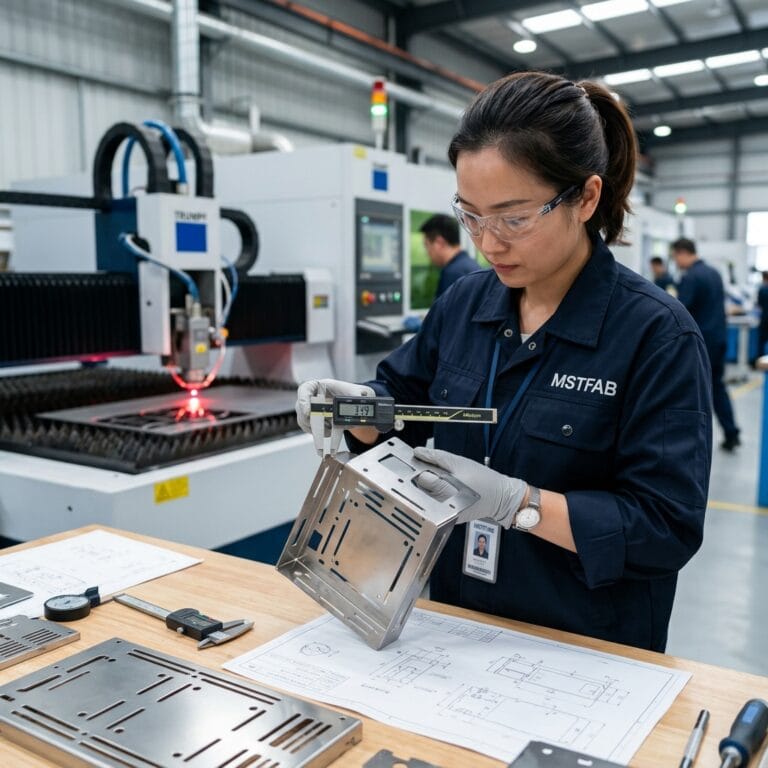
Quick answer: A metal laser cutting RFQ should specify exact material grade, sheet thickness, quantity, DXF/DWG files, STEP model, cut tolerance, edge quality, surface protection, certificate requirements and downstream operations such as bending, welding, PEM hardware, finishing and packing. MSTFAB manufactures custom laser-cut sheet metal parts, enclosure panels, brackets, covers and cabinet shell components. We do not supply finished electronics, chargers, batteries or complete assembled equipment.
What a laser cutting service actually does
A laser cutting service cuts flat sheet metal into profiles using a computer-controlled laser beam. The machine does not need hard tooling, which makes it excellent for prototypes, low-to-mid volume orders, enclosure panels, brackets, chassis parts, covers, mounting plates and ventilation cutouts.
The catch is that “laser cut it” is not a specification. If the RFQ is vague, the supplier must guess. And guessing is not quality control; it is just a future email thread wearing safety glasses.
Scope note: MSTFAB can cut, bend, weld, deburr, finish and pack sheet metal parts and enclosure shells according to buyer drawings. We do not deliver finished electrical cabinets, EV chargers, telecom systems or any product with installed electronics.
Start with a clean drawing package
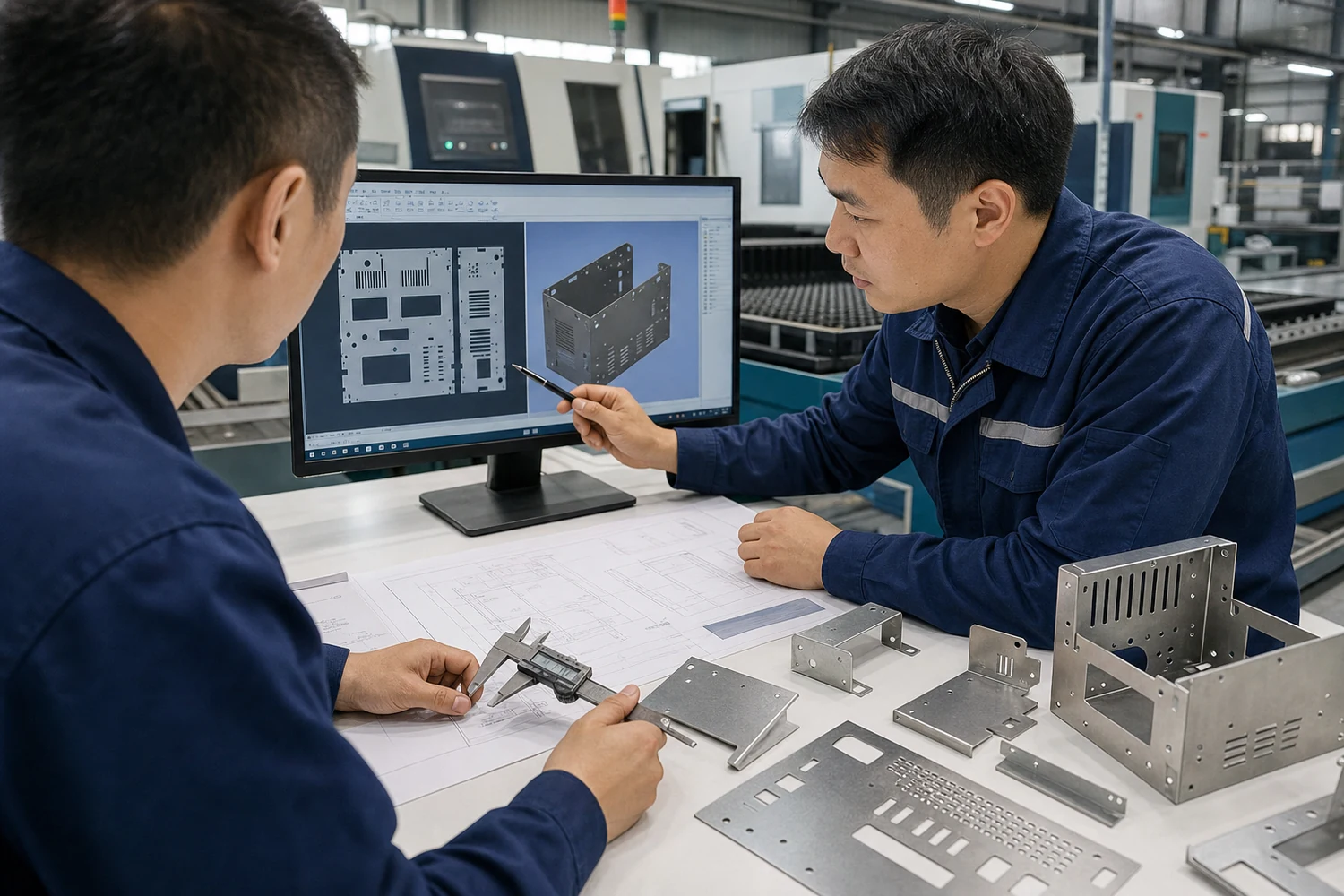
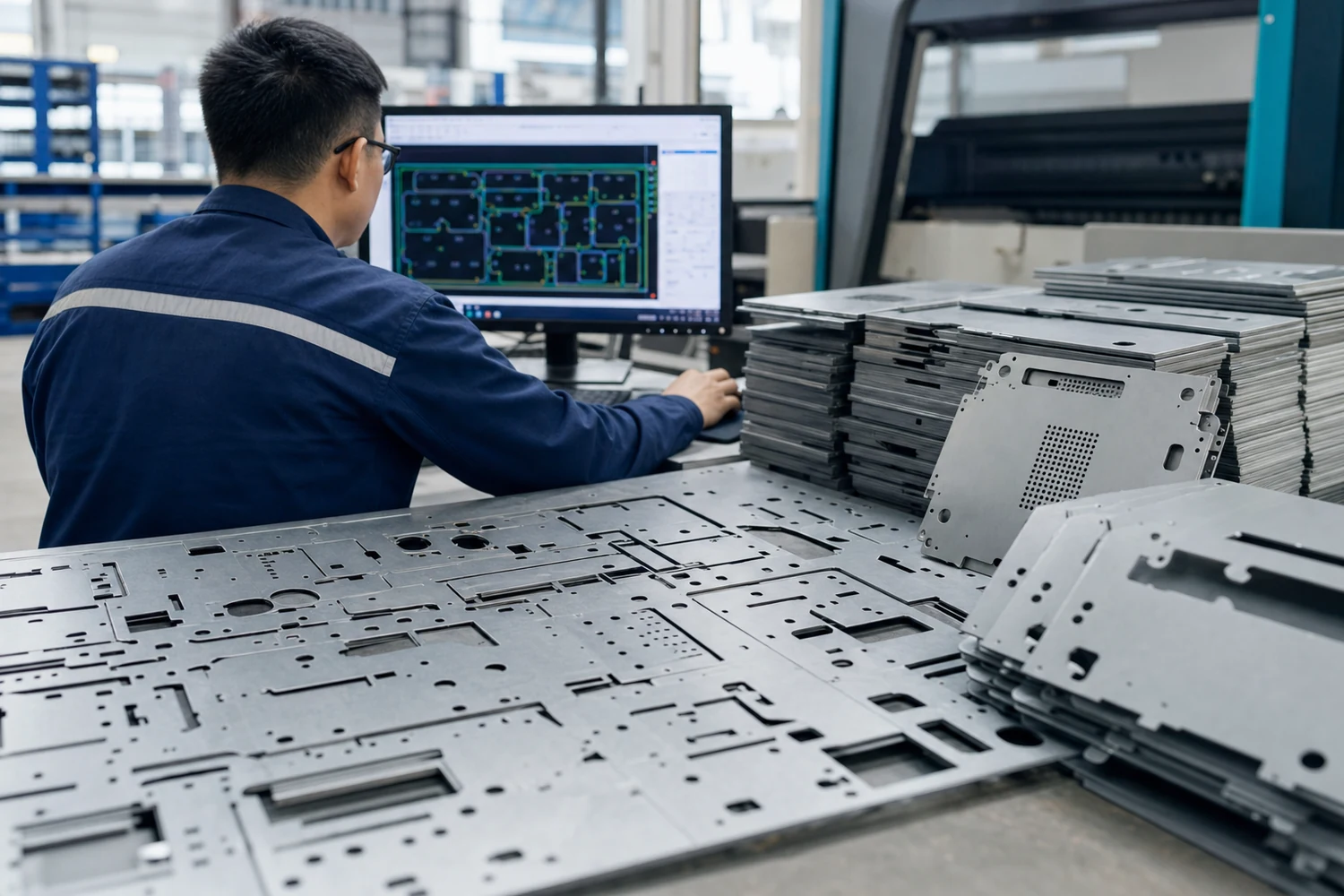
Send STEP for 3D context, DXF/DWG for the laser path and a 2D PDF drawing for tolerances, material, finish and inspection notes. The 2D drawing is where buyer intent lives. The DXF is only geometry; it does not explain which hole must fit a PEM nut or which edge is customer-facing.
- Name the drawing revision and keep every supplier quoting the same version.
- Mark critical holes, slots, bend-related features and visible edges.
- Clarify whether parts are laser-cut only or need full sheet metal fabrication.
The RFQ checklist that prevents scrap
Part data
- Exact material grade, not just “steel” or “stainless”.
- Sheet thickness and acceptable thickness range.
- STEP, DXF/DWG and 2D PDF drawing.
- Cut tolerance and critical dimensions.
- Minimum feature size, tabs or bridges for small parts.
Commercial and quality data
- Quantity, prototype need and repeat cadence.
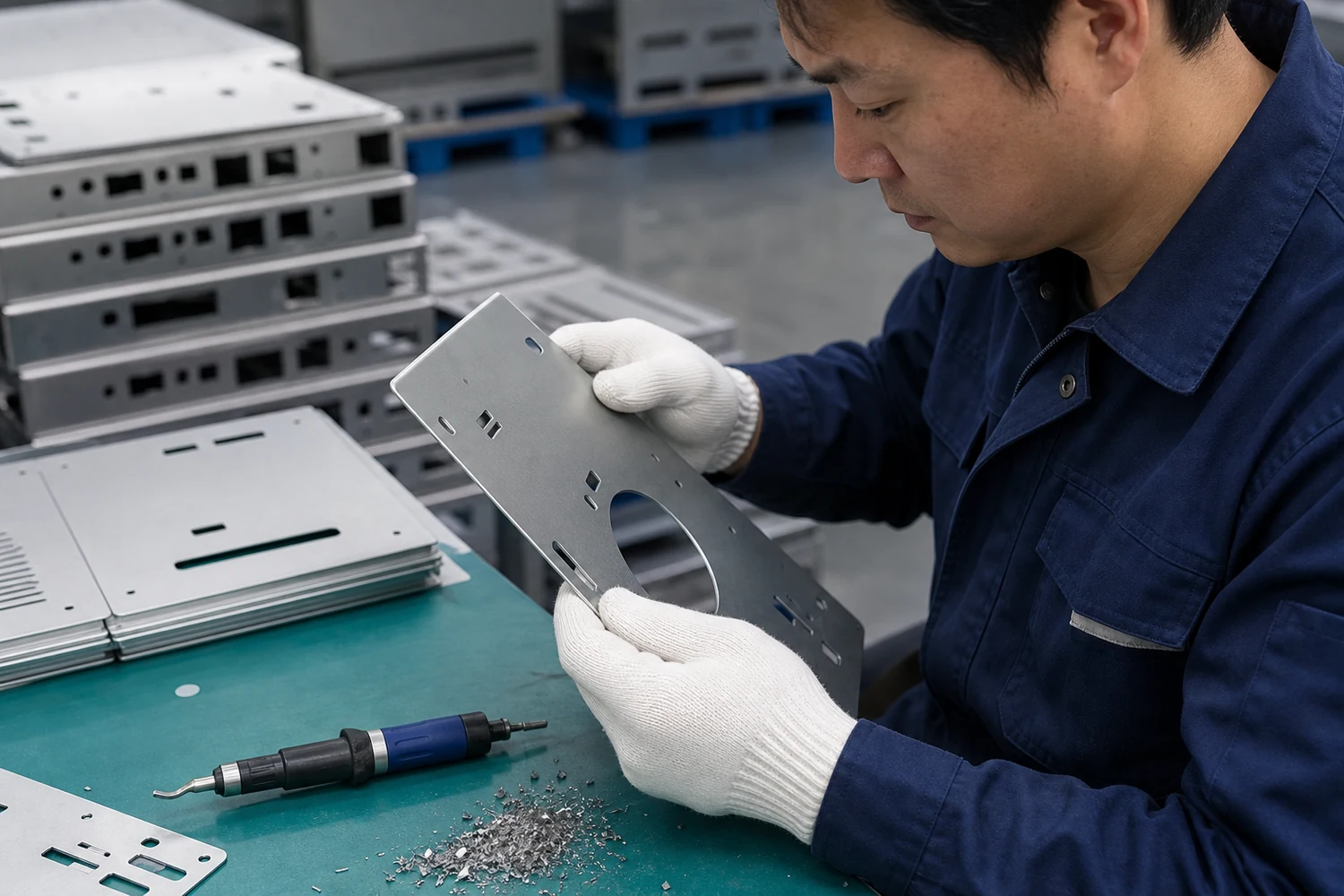
- Edge quality, burr and dross requirement.
- Material certificate or heat-number traceability.
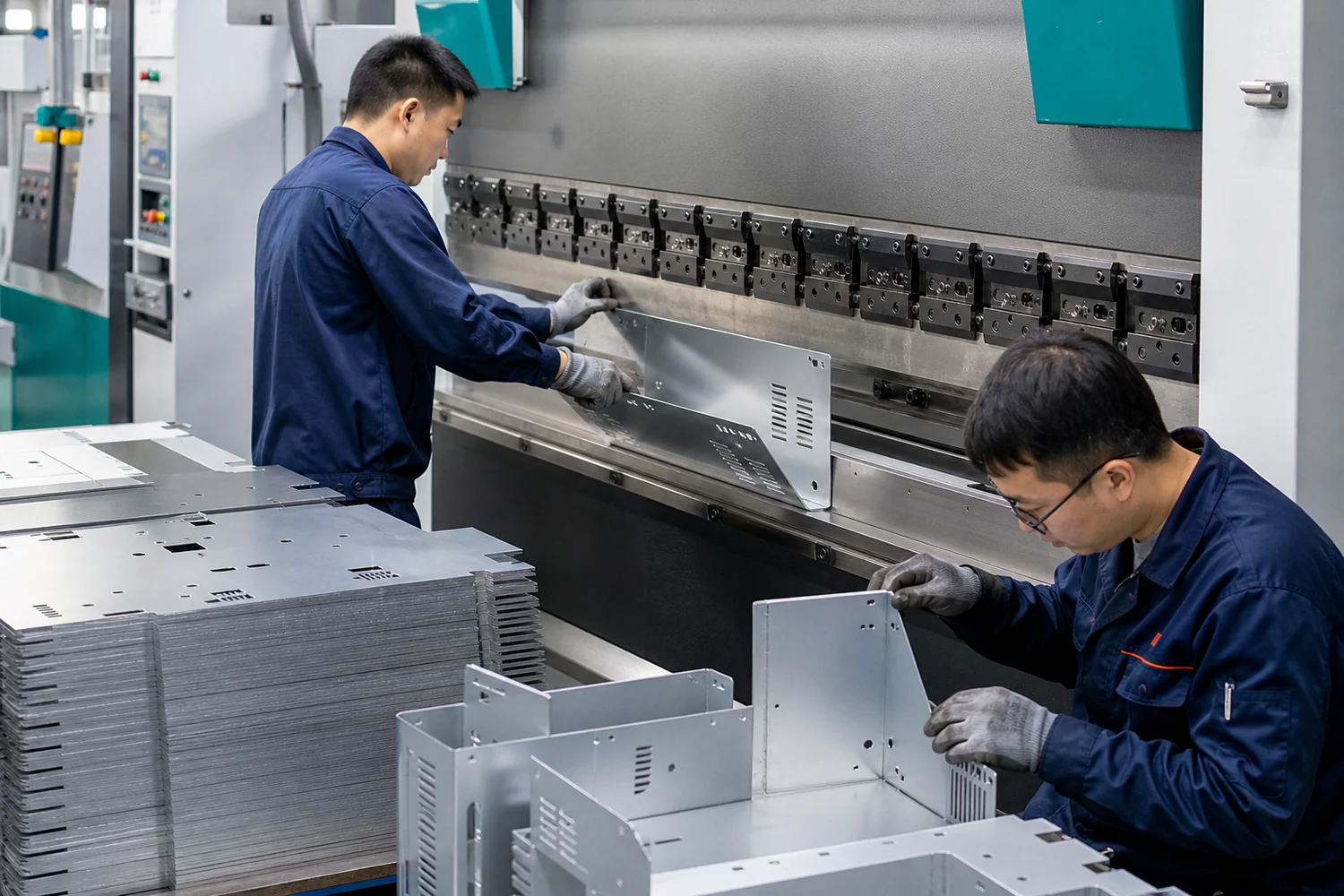
- Secondary operations: bending, welding, PEM, finish, assembly support.
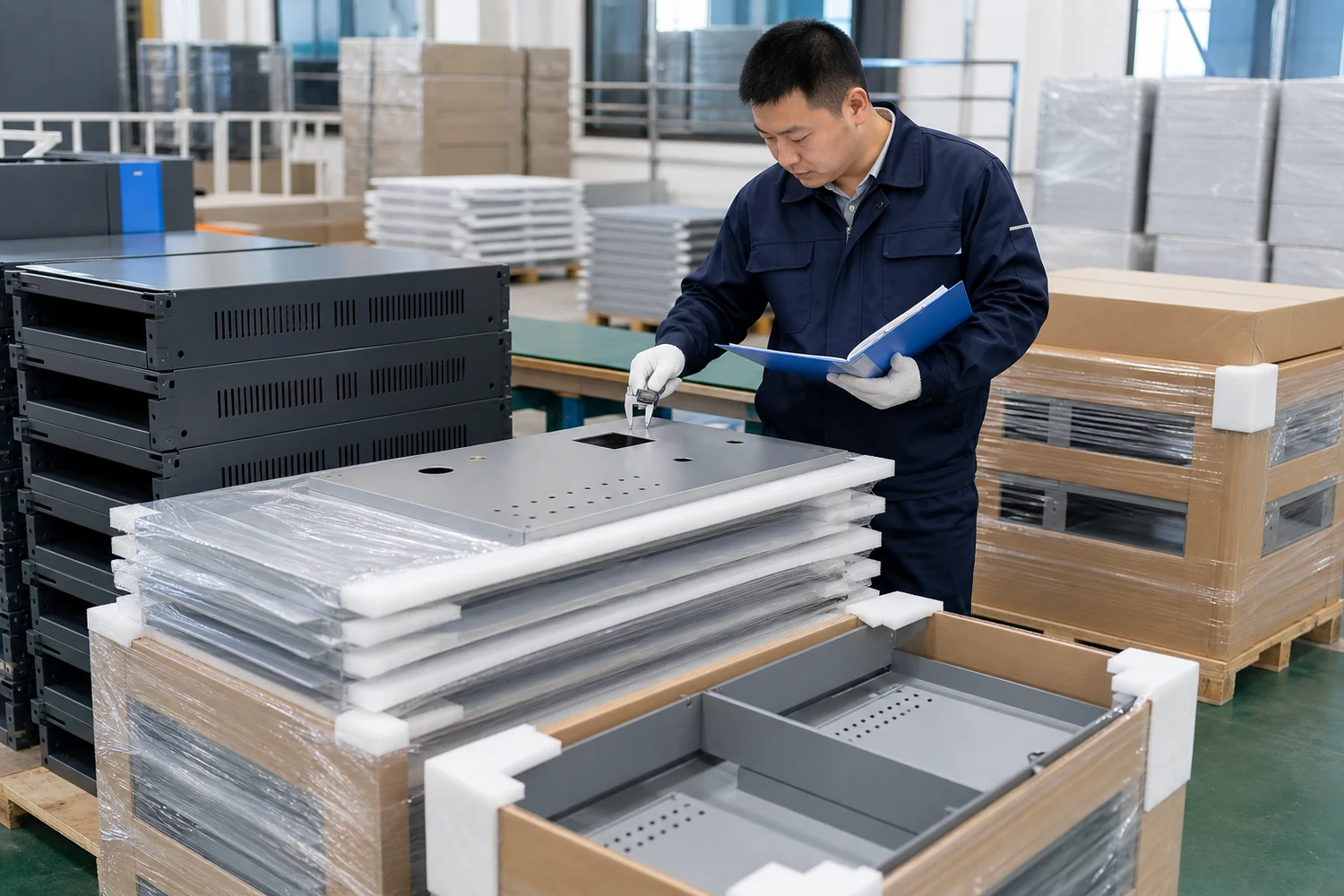
- Surface protection and export packing requirement.
Fiber vs CO2: what buyers should ask
For most thin-to-mid gauge sheet metal, fiber laser cutting is the modern default. It is fast on carbon steel, stainless steel and aluminum, and it handles many reflective materials better than older CO2 machines. But machine type alone does not save a bad RFQ.
- Ask the machine power and the clean-cut thickness range for your material.
- Confirm the factory cuts your grade regularly, not as a brave experiment.
- For thicker plate, ask for sample edge photos or a first-article check before batch production.
Material and certificate discipline
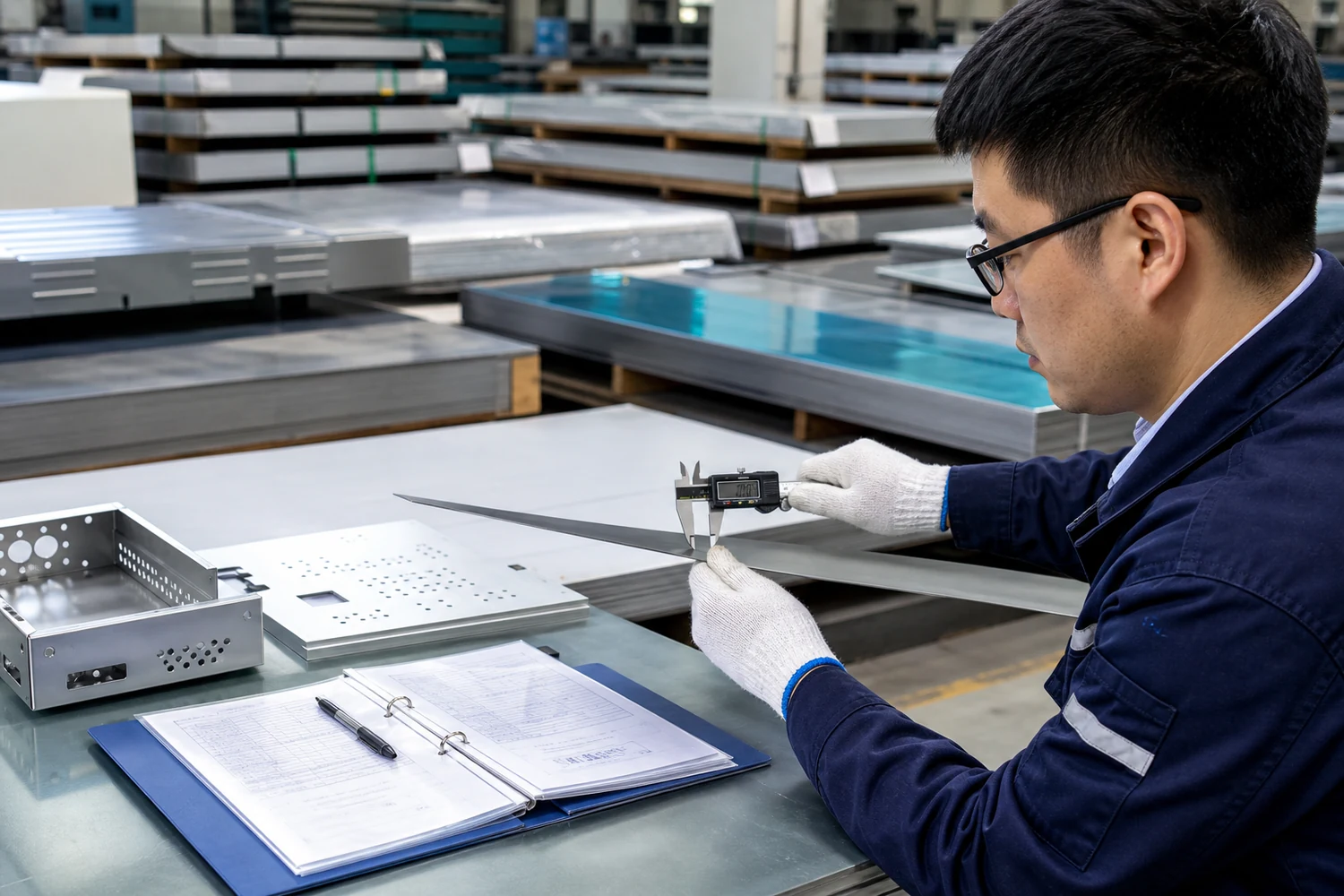
“304 stainless, 1.5 mm” is a real instruction. “Use stainless” is a small procurement adventure nobody asked for. Grade, thickness and traceability matter because a perfect laser edge does not rescue the wrong metal in the field.
If the part will be audited, exported, used outdoors or installed into regulated equipment, ask for mill certificates and heat-number control before placing the PO. It is cheaper than trying to trace a mystery sheet after parts have already shipped.
Buyer trust table: what to ask and why
| RFQ item | Buyer risk if missing | What to ask MSTFAB | Evidence to request |
|---|---|---|---|
| Material grade and thickness | Wrong grade, wrong strength, wrong corrosion behavior. | Confirm grade, thickness range and stock availability. | Material certificate and incoming thickness check. |
| DXF/DWG quality | Open contours, duplicate lines, wrong scale or missing kerf planning. | Review files before cutting and confirm revision. | DFM notes or marked drawing comments. |
| Cut tolerance | Parts do not fit downstream bending, PEM hardware or assembly. | Define critical dimensions and standard tolerance for the rest. | First-article key dimension report. |
| Edge quality | Burrs, dross or heat marks create rework or visible defects. | Define cosmetic edges, deburring level and surface handling. | Edge photos or sample approval. |
| Nesting and yield | Higher material waste and inflated quote. | Ask how parts will be nested and whether repeat orders can be grouped. | Utilization estimate for large batches. |
| Secondary operations | Laser blank is correct, final formed part still fails. | Clarify bending, welding, inserts, finish, inspection and packing scope. | Process route and final QC photos. |
Process evidence buyers should see
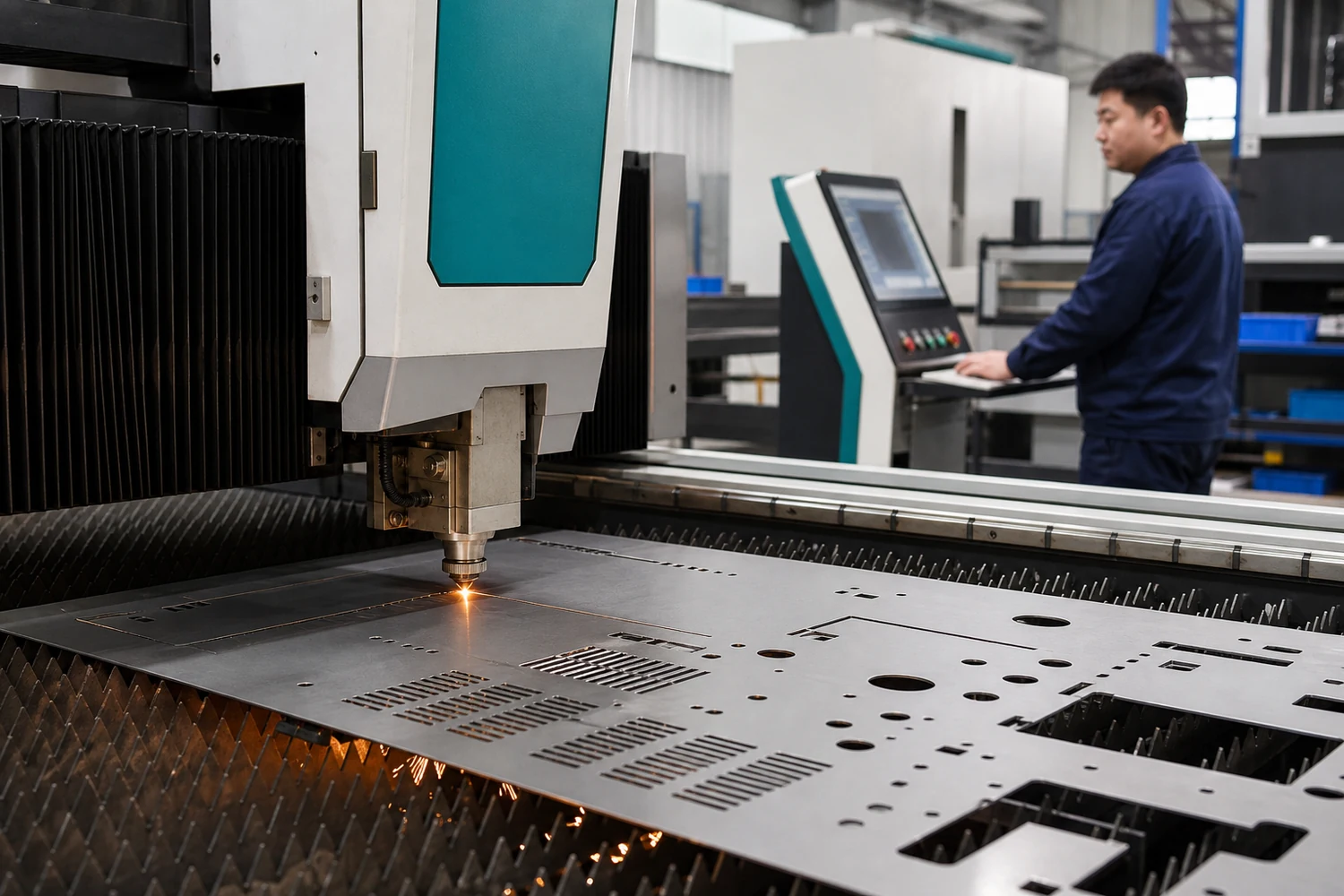
Good laser cutting procurement is not about admiring sparks. It is about seeing whether the factory controls the journey from drawing to usable sheet metal part.

Cost drivers you can actually control
Nesting
Parts that nest tightly use less sheet. Better yield lowers cost without asking the supplier to perform accounting magic.
Tolerance realism
Tight tolerances cost inspection time and scrap risk. Tighten fit features; leave hidden clearance features at standard tolerance.
Thickness
Thicker sheet cuts slower and may need more machine power. Do not over-spec thickness just because last year’s drawing did.
Batch rhythm
A one-off carries setup pain. Repeat cadence helps the shop plan material, nesting and machine time more efficiently.
Edge requirement
A hidden bracket does not need a showroom edge. A visible enclosure panel does. Spend the edge budget where humans can see or touch it.
Secondary scope
Laser cutting is often step one. Bending, welding, coating, PEM hardware and packing must be priced clearly.
Red flags before you award the order
- The quote only says a unit price and ignores material grade, thickness and tolerance.
- The supplier cannot confirm machine power for your material thickness.
- No one asks whether the part will be bent, welded, coated or fitted with PEM hardware.
- Material certificate and heat-number traceability are treated like a strange luxury.
- The shop claims “we do everything” but will not show the floor, equipment or process route.
Related buyer resources
These links support the topic without turning this article into another generic service page.
Laser Cutting Tolerance ChecklistFor downstream bending and welding risk.
Sheet Metal Tolerance TableFor cut, bend and hardware-fit tolerance basics.
Sheet Metal Material Selection GuideFor choosing steel, aluminum and stainless grades.
Sheet Metal Quality ControlFor FAI, CMM, SPC and inspection evidence.
Verify a Real Sheet Metal FactoryFor checking whether the service is factory-direct or brokered.
Frequently asked questions
What should I include in a laser cutting RFQ?
Include material grade, thickness, quantity, DXF/DWG and STEP files, critical tolerances, edge quality, surface protection, material certificate requirements, secondary operations and packing needs.
Can MSTFAB handle more than flat laser-cut blanks?
Yes. MSTFAB can support laser cutting plus CNC bending, welding, PEM hardware, deburring, finishing, inspection and export packing for sheet metal parts and enclosure shells. We do not supply finished electronic products or complete assembled equipment.
Is fiber laser cutting better than CO2?
For most thin-to-mid gauge sheet metal, fiber laser cutting is the usual choice because it is fast and works well on steel, stainless and aluminum. The buyer should confirm machine power against material thickness instead of judging by machine type alone.
Why does edge quality matter?
Visible panels, sealing surfaces, painted parts and hands-on assembly areas may need clean edges, deburring or specific dross limits. Hidden internal brackets can often use a simpler edge requirement.
How do I reduce laser-cut part cost without hurting quality?
Avoid unnecessary tight tolerances, improve nesting, specify the right thickness, group repeat orders and clarify secondary operations before comparing quotes.
Need laser-cut sheet metal parts that fit after the next process?
Send STEP, DXF/DWG, material, thickness, quantity and tolerance notes. MSTFAB will review the drawing before quoting the fabrication route.
For the business impact behind those RFQ details, see how precision laser cutting affects fit, waste and lead time.
 WeChat Contact
 WhatsApp Me Directly