
A finished bracket can be beautifully bent and still be made from the wrong sheet. Incoming inspection is the point to catch material questions before cutting makes the lot harder to identify and more expensive to replace.
What the Buyer Should Put on the Order
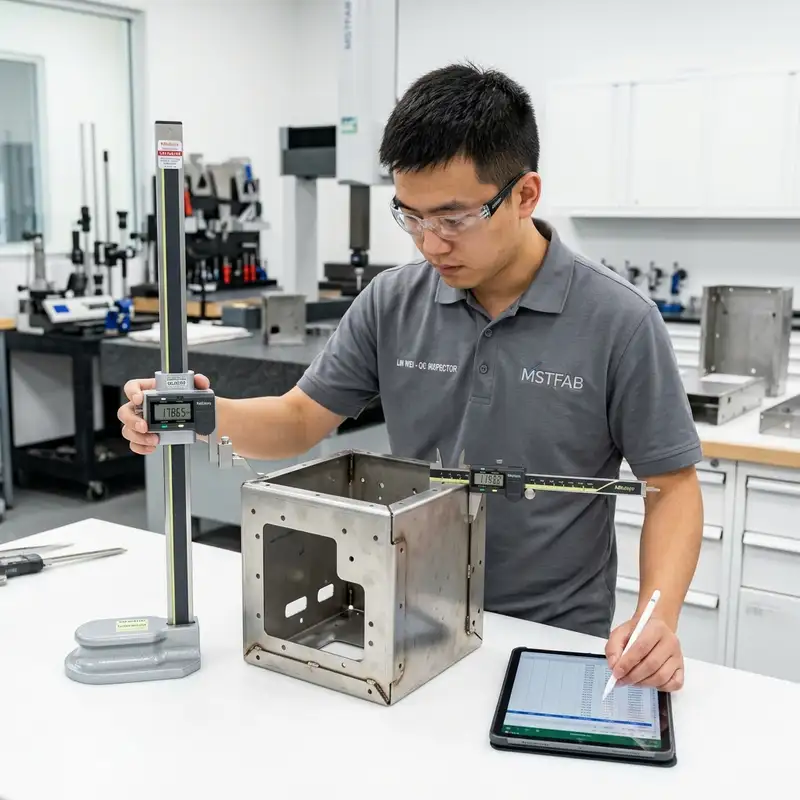
State the grade or alloy, thickness, permitted finish or coating condition, any required mill document, lot or heat traceability, and whether substitutes need written approval. Identify the drawing revision and the features affected by material properties. If a test report must travel with each shipment, specify the type and frequency before quotation.
A generic request for “good steel” is not enough. Nor does a caliper reading prove chemical composition. Conversely, a mill document does not prove every received sheet is the specified thickness or free from transport damage.
| Incoming question | Check or evidence | Buyer decision if unclear |
|---|---|---|
| Is this the approved grade? | Supplier identification and the document type agreed for the order | Hold and confirm; do not substitute by assumption |
| Is the sheet within the required thickness range? | Defined sampling and a suitable measurement method | Confirm specification and disposition before cutting |
| Is the surface usable? | Visual condition against the specified exposed or finished face | Segregate damaged or unsuitable material |
| Can the material be traced later? | Lot/heat reference when required and a link to the work order | Clarify the traceability scope before releasing production |
| What happens to a discrepancy? | Hold, review, written concession or return record | Approve or reject the proposed disposition |
Do Not Ask One Check to Prove Everything
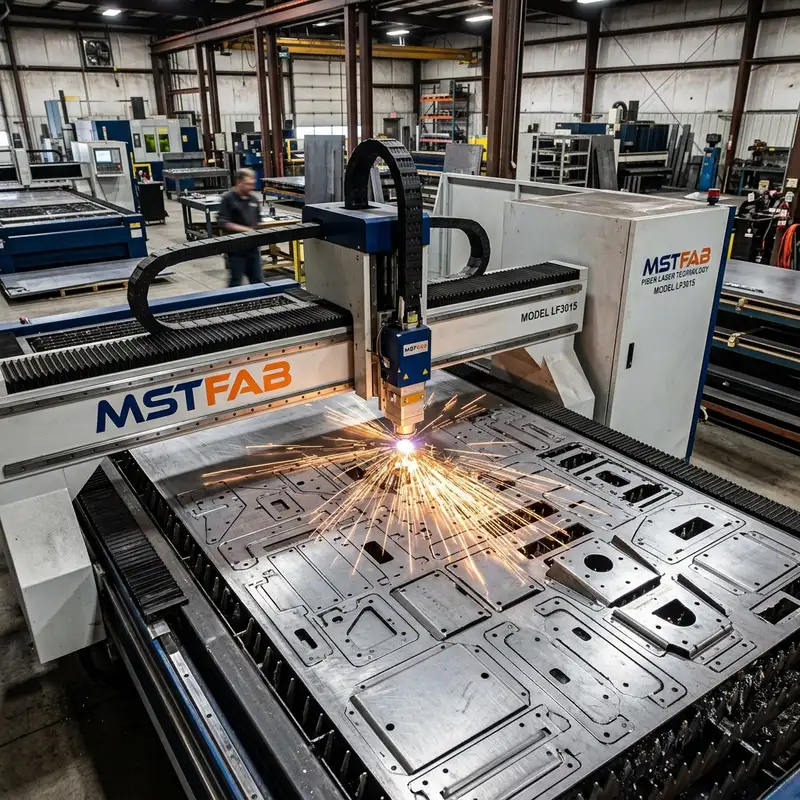
A document can state a material grade or heat, but it needs to match the received material and the buyer’s required traceability level. A thickness check shows a physical measurement, not the alloy chemistry. A surface check reveals scratches or corrosion, not unseen composition. Select checks based on the risk and the approved specification.
Some projects need material test reports or additional verification; others need grade, thickness and lot identification without a report for every shipment. The buyer should state the required evidence and the supplier should confirm what can be provided before the price is agreed. Do not infer a universal inspection package from an ISO 9001 certificate.
Release Material Before It Becomes a Part
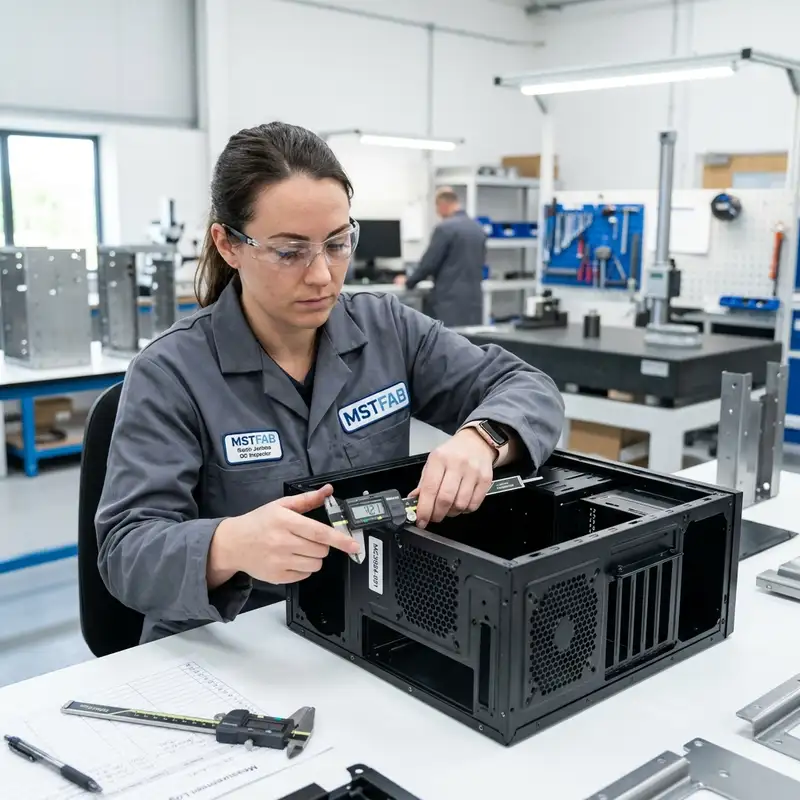
- Identify: match the received stock to the purchase order and approved material specification.
- Check: perform the agreed document, thickness and surface checks at the defined frequency.
- Hold: segregate a questionable lot so it cannot be cut while its status is unresolved.
- Decide: document supplier return, re-verification or a buyer-approved deviation as appropriate.
- Link: retain the identification needed to associate the released stock with the job.
Incoming material inspection is only the first gate. Bending, welding and finish can introduce new issues, so the continuing checks belong in a separate production inspection plan.
Account for Finish and Shipment
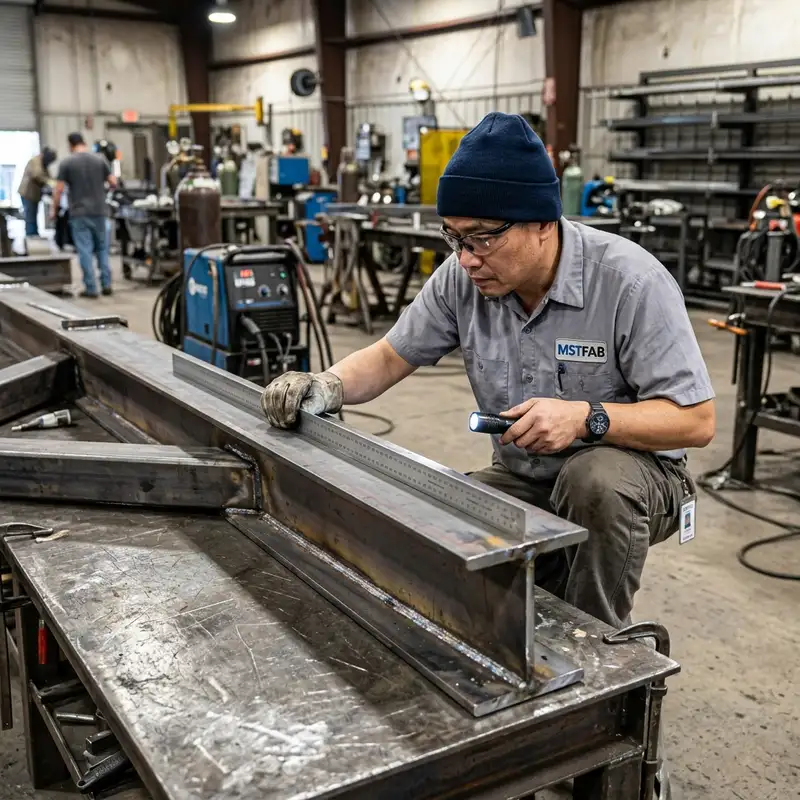
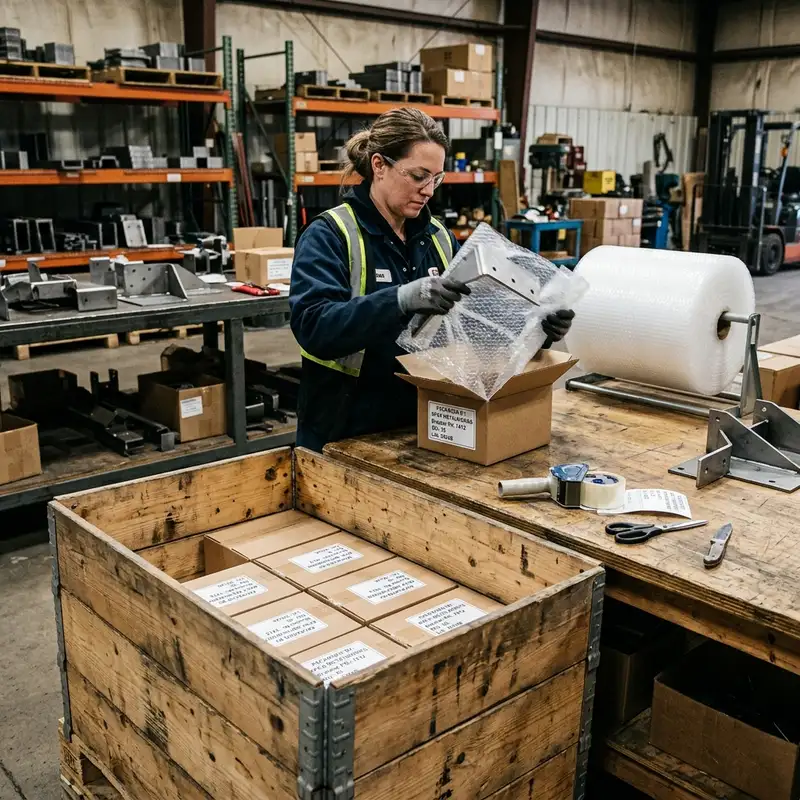
Surface condition matters early when a face will be visible after coating or brushing. If finishing is completed by an established partner, define the material and finish handoff and the checks on return. The finished part still needs packing that protects the approved condition and preserves required lot identification.
Frequently Asked Questions
Is a mill test report included automatically?
Do not assume that. State the document type, traceability level and delivery frequency in the RFQ so availability and cost can be confirmed.
Does a thickness reading prove the grade?
No. Thickness and grade are different requirements and need different evidence.
Can a different alloy be used if the sheet is the right thickness?
Only after the buyer reviews and approves the proposed substitution under the applicable drawing and purchase terms.
Make Material Evidence Part of the Quote
Send the drawing, grade, thickness, quantity, visible-surface requirements, required records and any lot-traceability rule. MSTFAB can review the incoming control scope before fabrication begins.
 WeChat Contact
 WhatsApp Me Directly