
What critical design and fabrication factors govern cleanability and cosmetic finishing for medical equipment enclosures?
Medical equipment enclosure cleanability and cosmetic compliance are governed by six vital engineering rules: (1) Defining aggressive hospital disinfectant wipe compatibility (resistance to quaternary ammonium, 10% bleach, hydrogen peroxide, and 70% IPA), (2) Establishing zoned surface finish classifications (Class A for primary patient-facing surfaces, Class B for side panels, Class C for internal/underside structures), (3) Designing geometry from the cleaning cloth’s perspective (internal corner radii ≥ 3.0 mm and overlapping drainage flanges to eliminate biological contaminant traps), (4) Enforcing burr-free edge conditions per ISO 13715 (radius break 0.2–0.4 mm) to prevent surgical glove snagging, (5) Specifying continuous sanitary TIG weld seams ground flush to Cosmetic Class A without pinholes or crevices, and (6) Selecting certified antimicrobial powder coatings or passivated 304/316L brushed stainless steel with RA ≤ 0.8 μm surface roughness.
In clinical hospital environments, a medical device enclosure is subjected to constant physical handling and aggressive chemical disinfection several times per shift. An enclosure that appears aesthetically flawless in CAD can fail catastrophic clinical trials if disinfectant pools in deep panel seams, if harsh cleaning chemicals blister standard commercial powder coating, or if sharp sheet metal edges snag sterile nitrile gloves. Designing for medical cleanability requires synchronizing mechanical geometry, welding craftsmanship, and coating chemistry.
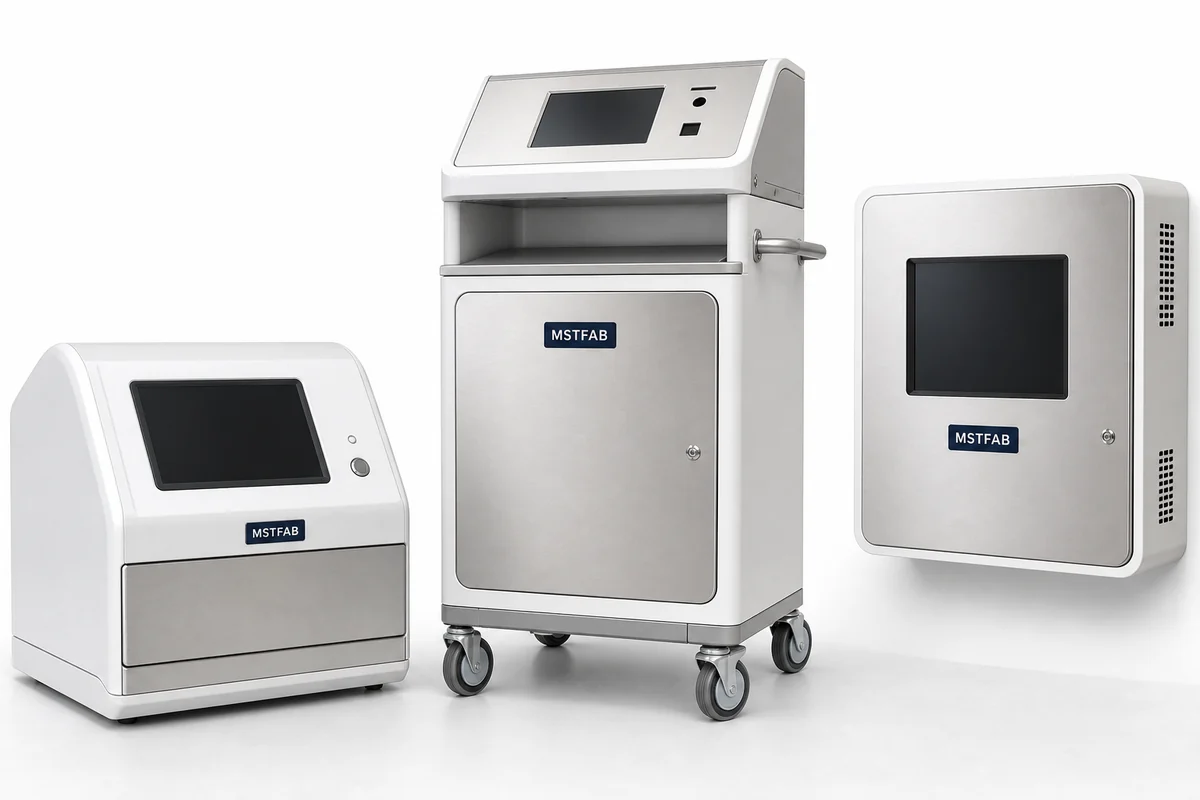
The 6 Engineering Principles of Medical Enclosure Design
1. Designing for Hospital Chemical Disinfectant Compatibility
Standard architectural powder coatings degrade rapidly under hospital-grade sanitizers, developing cloudy discoloration, chalking, and micro-cracking within weeks. Medical enclosures must specify chemical-resistant polyurethane or hybrid epoxy-polyester powder formulations tested to withstand continuous wipe-down cycles with common clinical disinfectants: quaternary ammonium compounds (e.g., CaviWipes), 10% sodium hypochlorite (bleach), accelerated hydrogen peroxide (Oxivir), and 70% isopropyl alcohol.
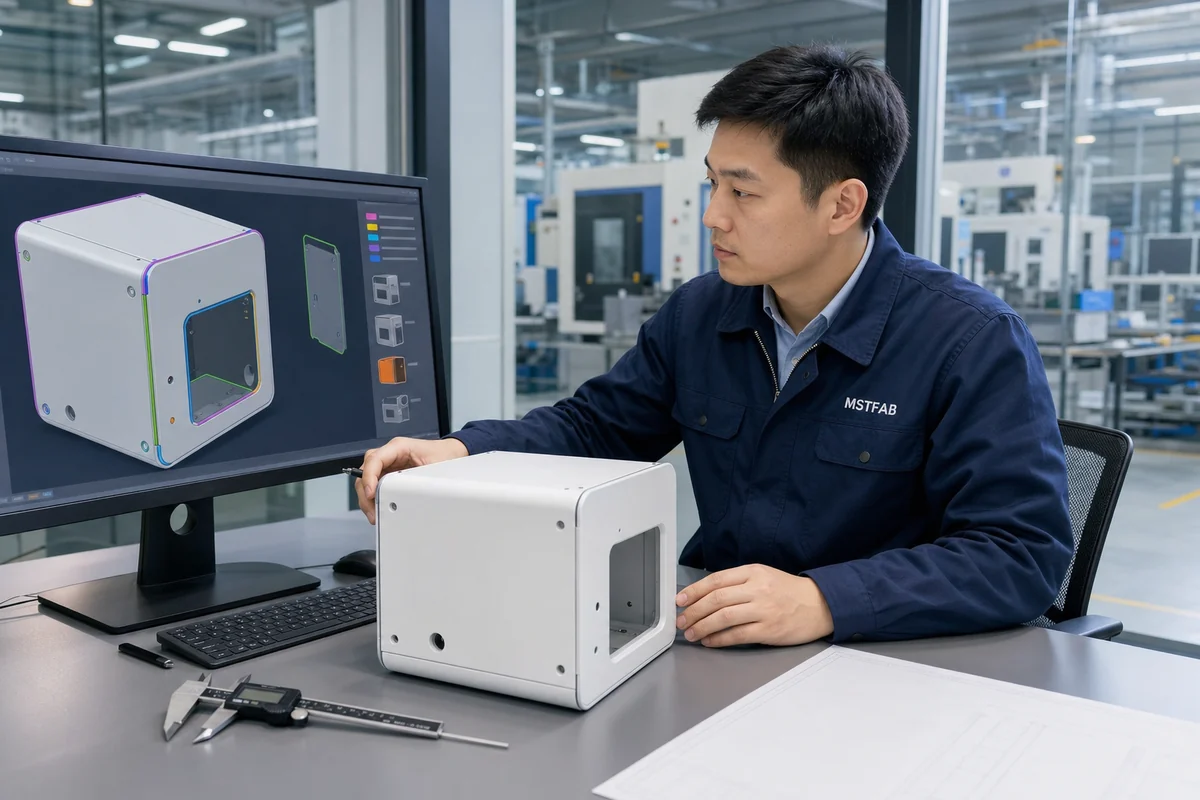
2. Zoned Surface Classifications (Class A / B / C)
Treating every surface of a complex medical console as an optical-grade cosmetic masterpiece inflates fabrication costs without clinical benefit. Drawings should zone surfaces into three distinct classes:
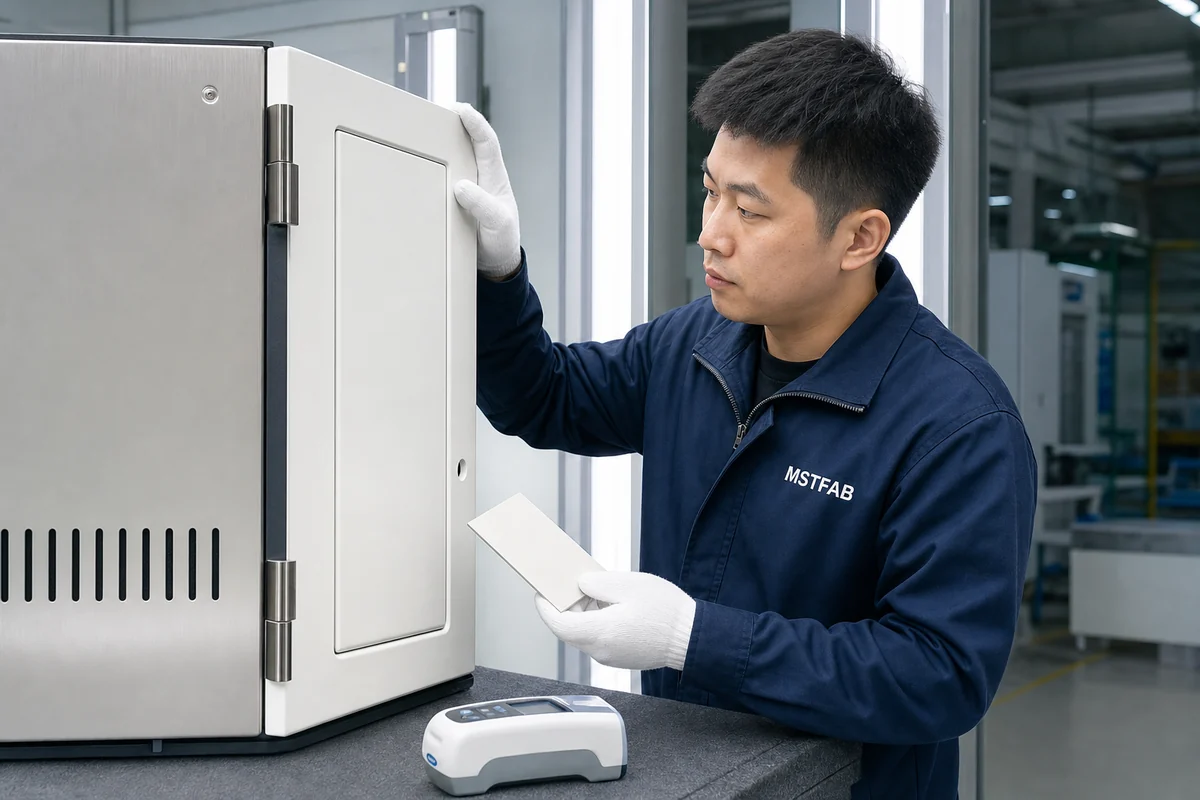
- Class A (Primary Patient & User Facing): Front bezels, touchscreens, top work surfaces. Zero visible blemishes, orange peel, or weld marks allowed; strict color match (ΔE ≤ 0.8).
- Class B (Secondary Exterior): Enclosure sides, rear access panels, under-bezel returns. Minor uniform texture variation allowed; no scratches or runs.
- Class C (Internal & Underside): Structural chassis, internal card cages, cable brackets. Focus strictly on dimensional tolerance, deburring, and corrosion protection.
3. Geometry from the Cleaning Cloth’s Point of View
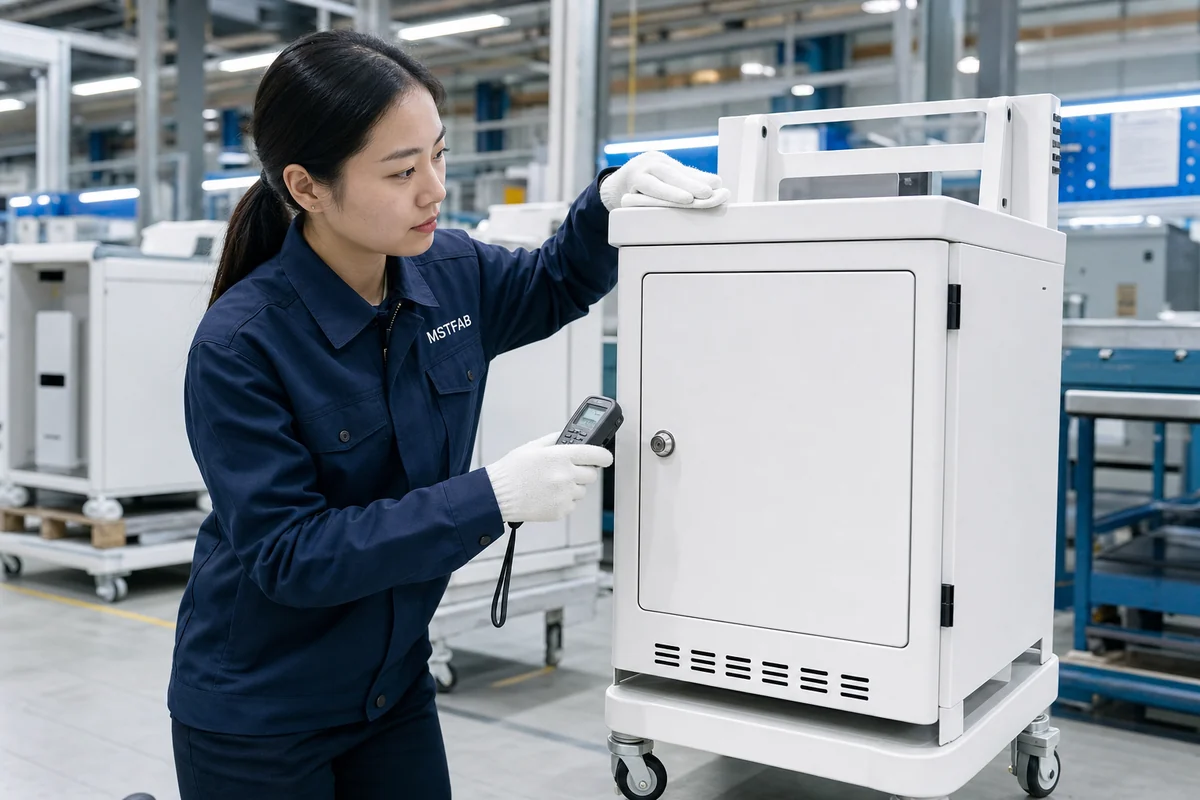
Hospital staff wipe down devices rapidly between patient examinations. Surfaces must facilitate single-pass wiping. Avoid sharp 90° internal corners where dirt accumulates; design bend radii ≥ 3.0 mm. Implement downward-overlapping labyrinth panel flanges and integrated elastomeric silicone gaskets to achieve IP54 or IP65 ingress protection, preventing disinfectant liquids from entering internal power electronics.
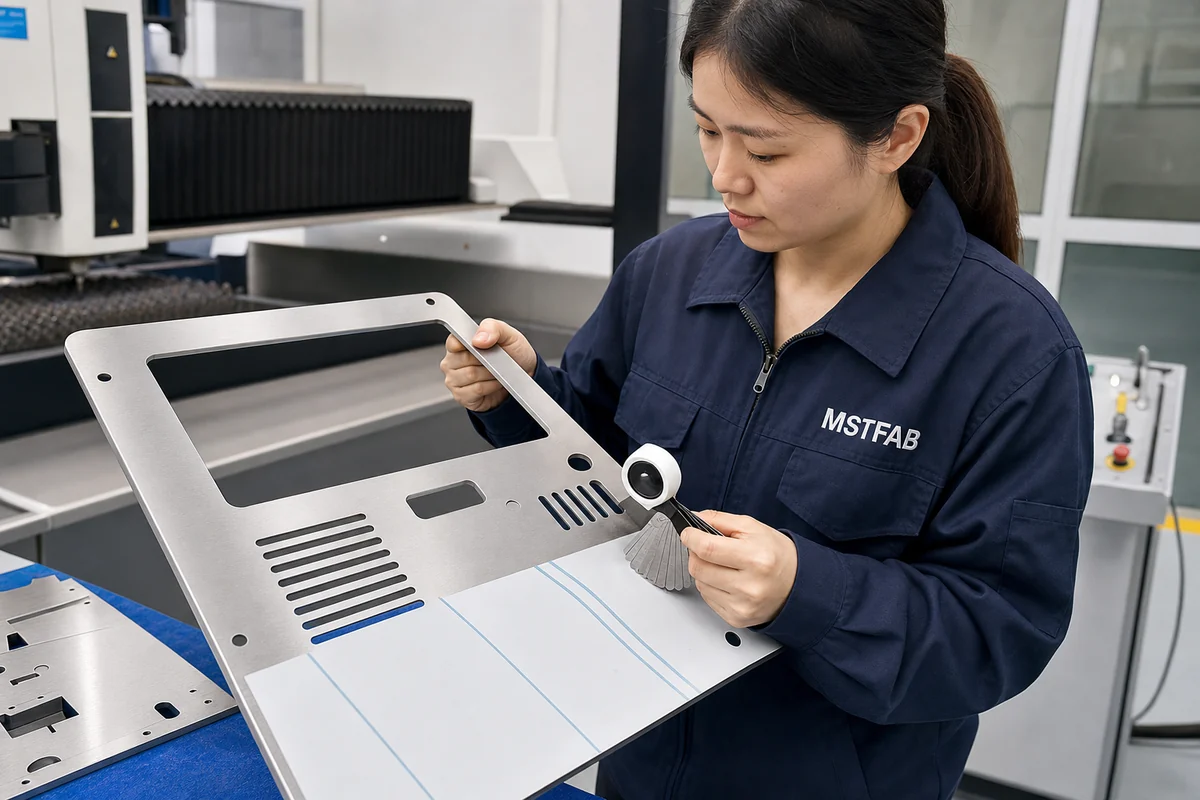
4. Safety Edge Conditioning: Zero Glove Snagging
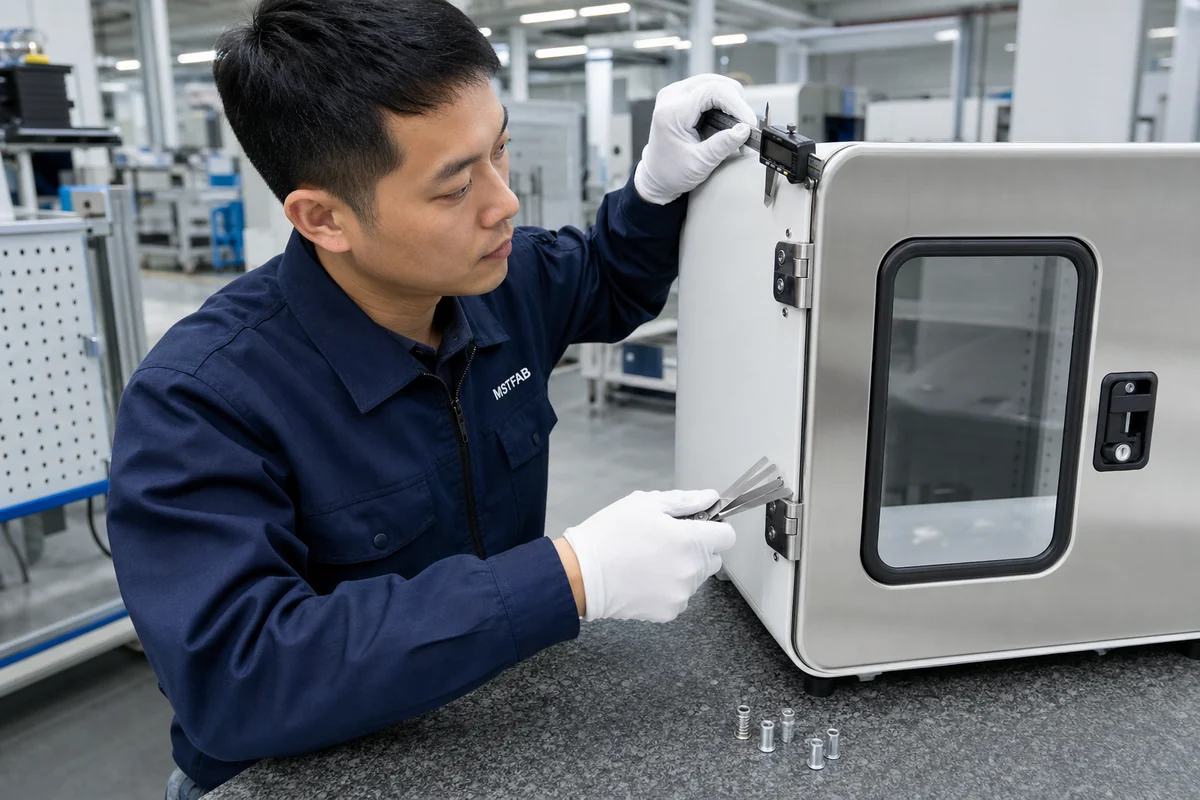
Every exposed edge on a medical enclosure represents a potential safety hazard. Operators must not feel sharp burrs, dross, or razor edges. Laser-cut openings and sheared flanges undergo automated deburring and rotary edge rounding to achieve an edge break of 0.2 to 0.4 mm per ISO 13715, ensuring hospital staff gloves glide smoothly across contact surfaces.
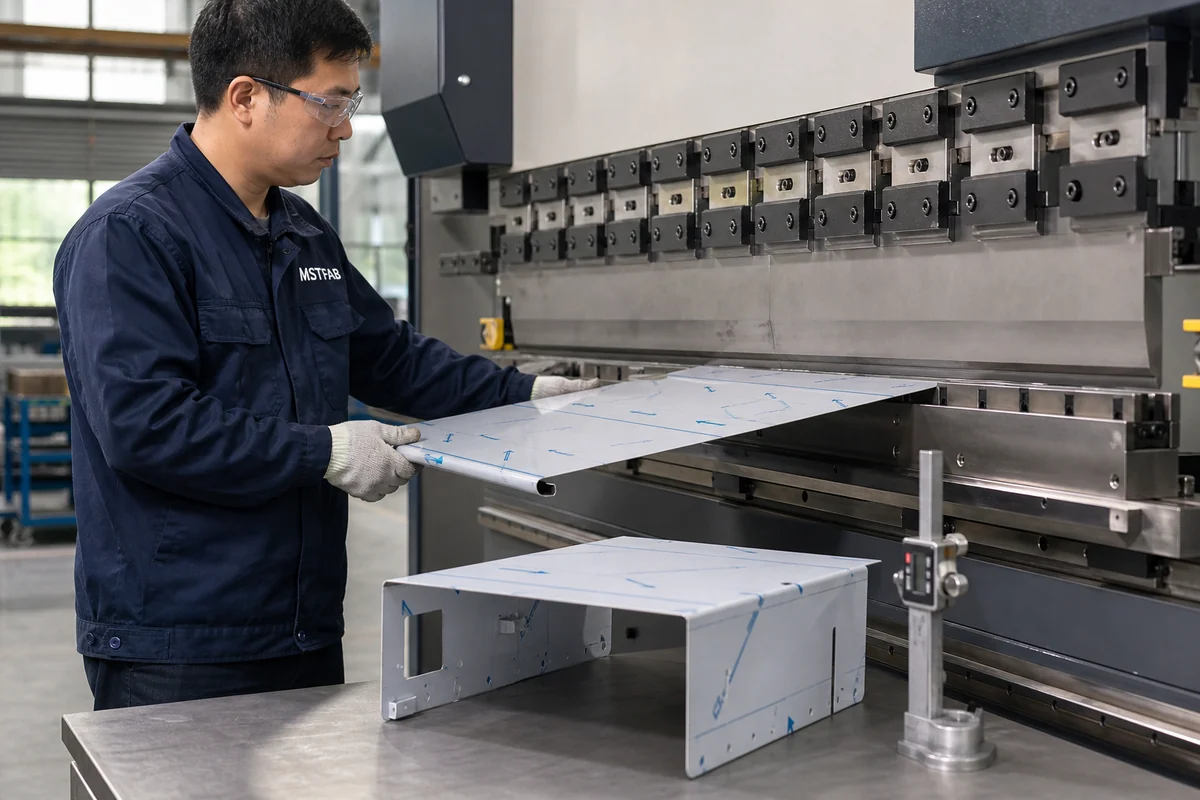
5. Sanitary Weld Seam Execution (Cosmetic Class A)
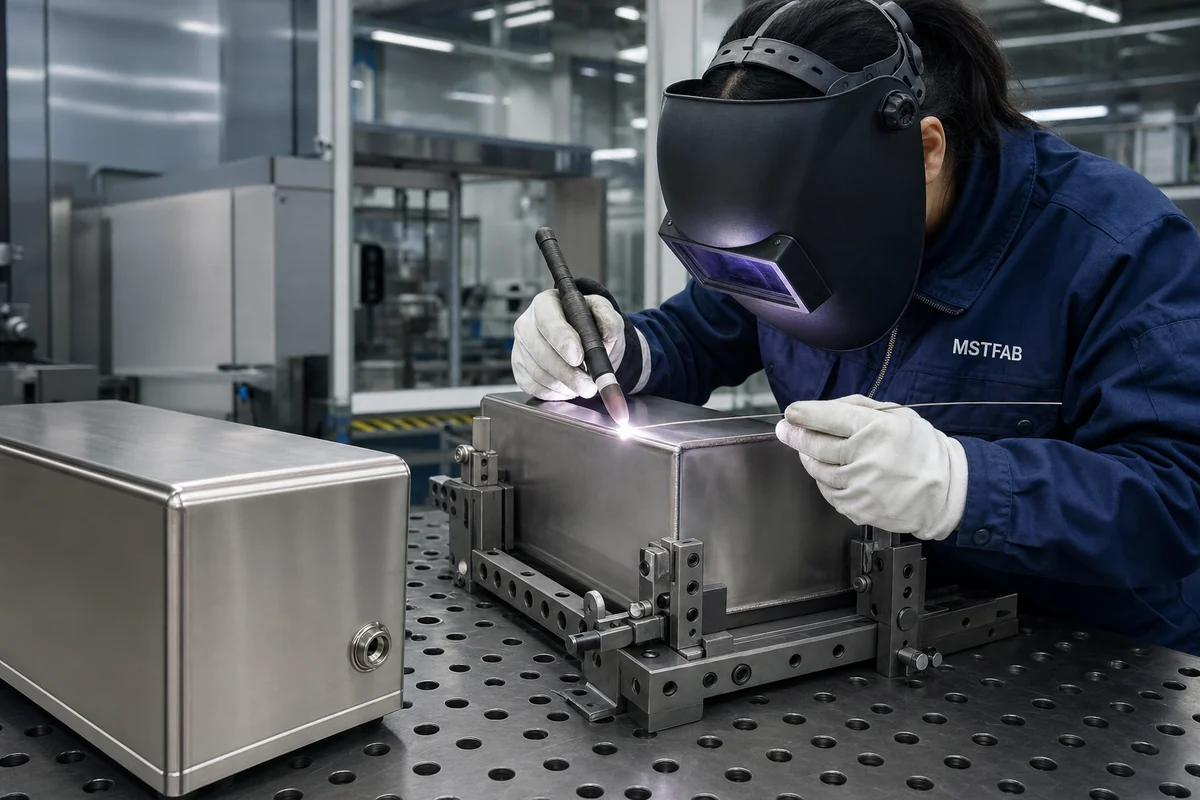
Intermittent stitch welds and open lap joints are forbidden on cleanable medical exteriors because bacteria colonize unsealed crevices. External seams must be fully welded with continuous TIG beads, ground flush, and blended seamlessly into adjacent metal with non-directional abrasive pads. Stainless steel welds undergo chemical pickling and passivation per ASTM A967 to restore chromium oxide corrosion resistance.
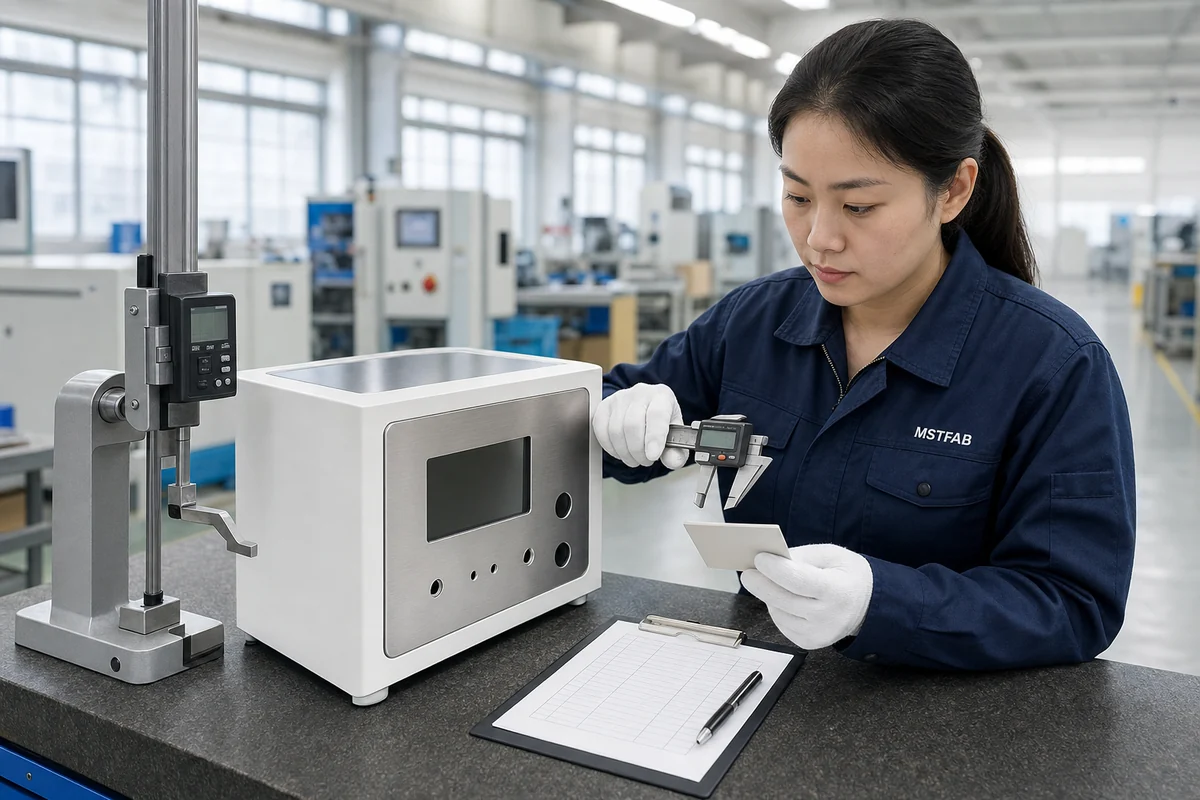
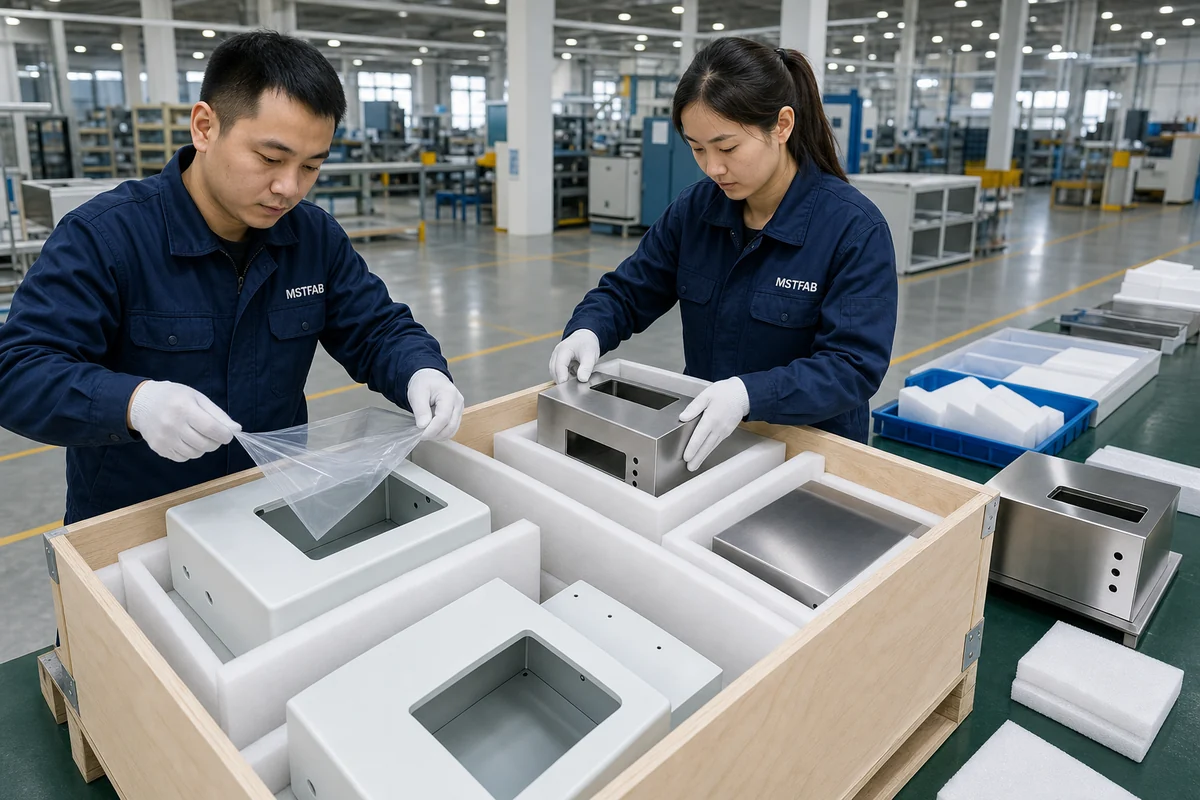
Medical Enclosure Cleanability & Finish Audit Checklist
The engineering checklist below outlines acceptance criteria for medical sheet metal enclosures:
| Design / Finish Checkpoint | Medical Specification Standard | Critical Quality Failure Mode | Inspection / Test Protocol |
|---|---|---|---|
| 1. Disinfectant Resistance | Polyurethane / hybrid powder resistant to bleach & 70% IPA | Coating soft, cloudy, or chalking after chemical wipe | ASTM D5402 solvent rub test (100 double rubs with IPA) |
| 2. Edge Condition | ISO 13715 edge break 0.2 – 0.4 mm on all user surfaces | Sharp burrs tearing surgical gloves or injuring patient | Tactile cotton swab / latex glove drag inspection |
| 3. Cleanable Weld Seams | Continuous TIG weld ground flush (Cosmetic Class A) | Pinholes, porosity, or crevices trapping bacteria | Visual 10× optical inspection + dye-penetrant test |
| 4. Ingress Protection (IP) | IP54 / IP65 continuous elastomeric gasket seal | Disinfectant fluid leaking into internal electronics | IEC 60529 spray nozzle water penetration test |
| 5. Cosmetic Class A Zones | 1000-lux D65 daylight inspection; ΔE ≤ 0.8 | Visible orange peel, tool marks, or dirt inclusions | Spectrophotometer & standard cosmetic limit samples |
| 6. Protective Packaging | Low-tack PE film + non-abrasive foam + wooden crating | Transit scuff marks or packaging adhesive residue | Post-unpacking cosmetic inspection sign-off |
Partner with MSTFAB for Medical Equipment Enclosures
MSTFAB specializes in precision sheet metal fabrication for medical diagnostic devices, surgical carts, and clinical consoles. With hygienic continuous TIG welding, Class A cosmetic surface finishing, chemical-resistant antimicrobial coatings, and full CMM metrology inspection, we deliver medical-grade reliability. Contact our medical engineering team to review your CAD files.
 WeChat Contact
 WhatsApp Me Directly