
The Short Answer
A medical enclosure supplier quality handoff converts an approved sheet metal prototype into a controlled repeat-production package for empty enclosure shells and chassis. Before releasing batch production, freeze a single drawing revision, define critical-to-quality (CTQ) dimensions and cosmetic zones, verify mechanical relationships with trial-fit fixtures, lock material and hardware traceability, and establish written deviation and change-notification rules.
Explore this guide
01 / Revision Baseline Freeze
Consolidate prototype redlines into one released manufacturing package before repeat orders.
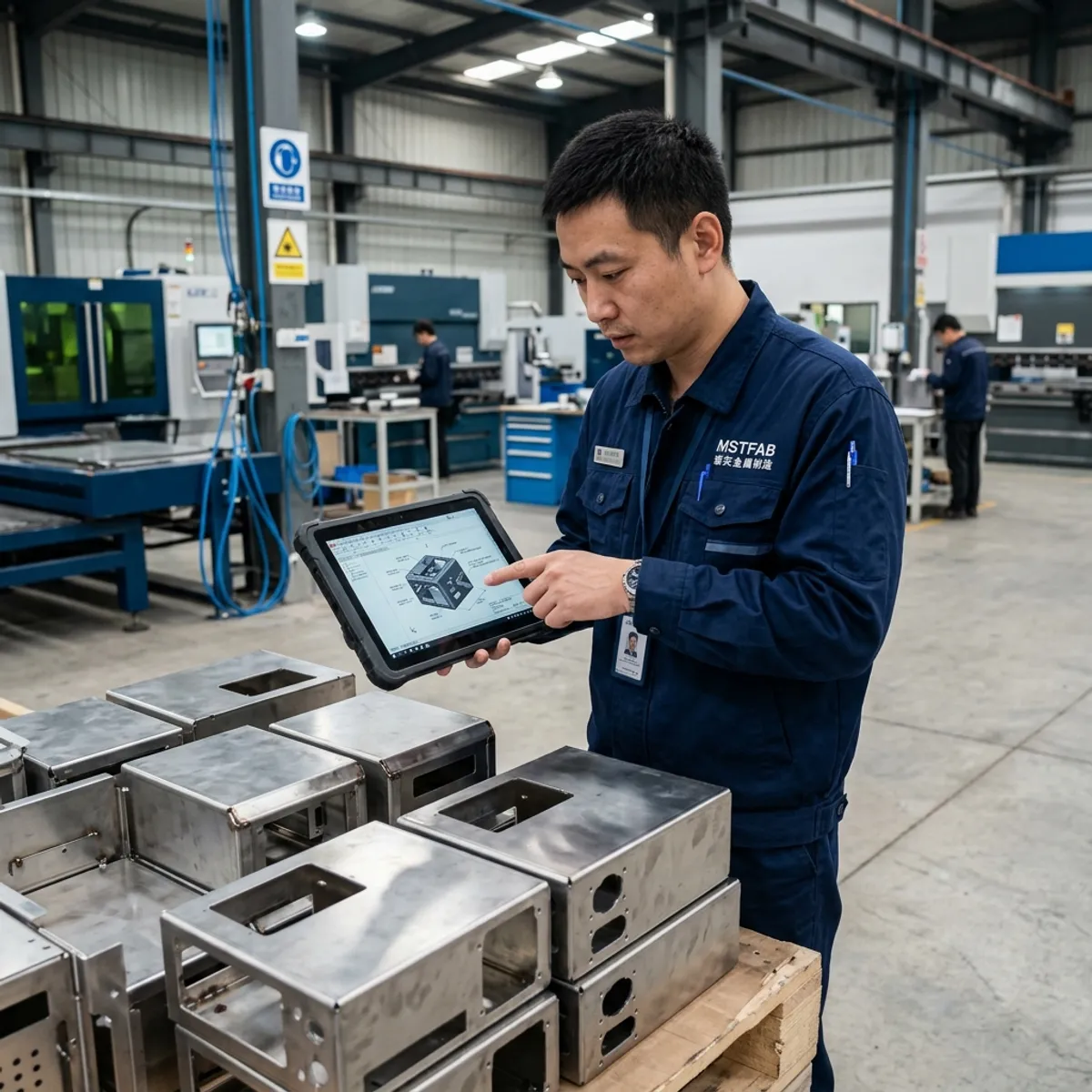
During early medical and laboratory equipment builds, sheet metal brackets, cart frames and cosmetic covers often accumulate informal email tweaks—a shifted PEM stud here, a widened display cutout there, or a hand-dressed weld corner. Starting batch production without consolidating those edits into a single revision invites repeat-lot drift.
A formal supplier quality handoff locks the exact document set that governs fabrication of the empty sheet metal shell: 3D STEP geometry, 2D tolerance drawings, hardware BOMs, masking maps, cosmetic zone standards and incoming/outgoing inspection templates.
Drawing & CAD Alignment
Verify that every prototype redline is updated in both the 3D STEP file and the 2D PDF print with matching revision letters.
Frozen Process Traveler
Lock laser cutting nests, press brake tooling radii, welding fixtures, dressing sequence and outsourced coating parameters.
Traceable Quality Records
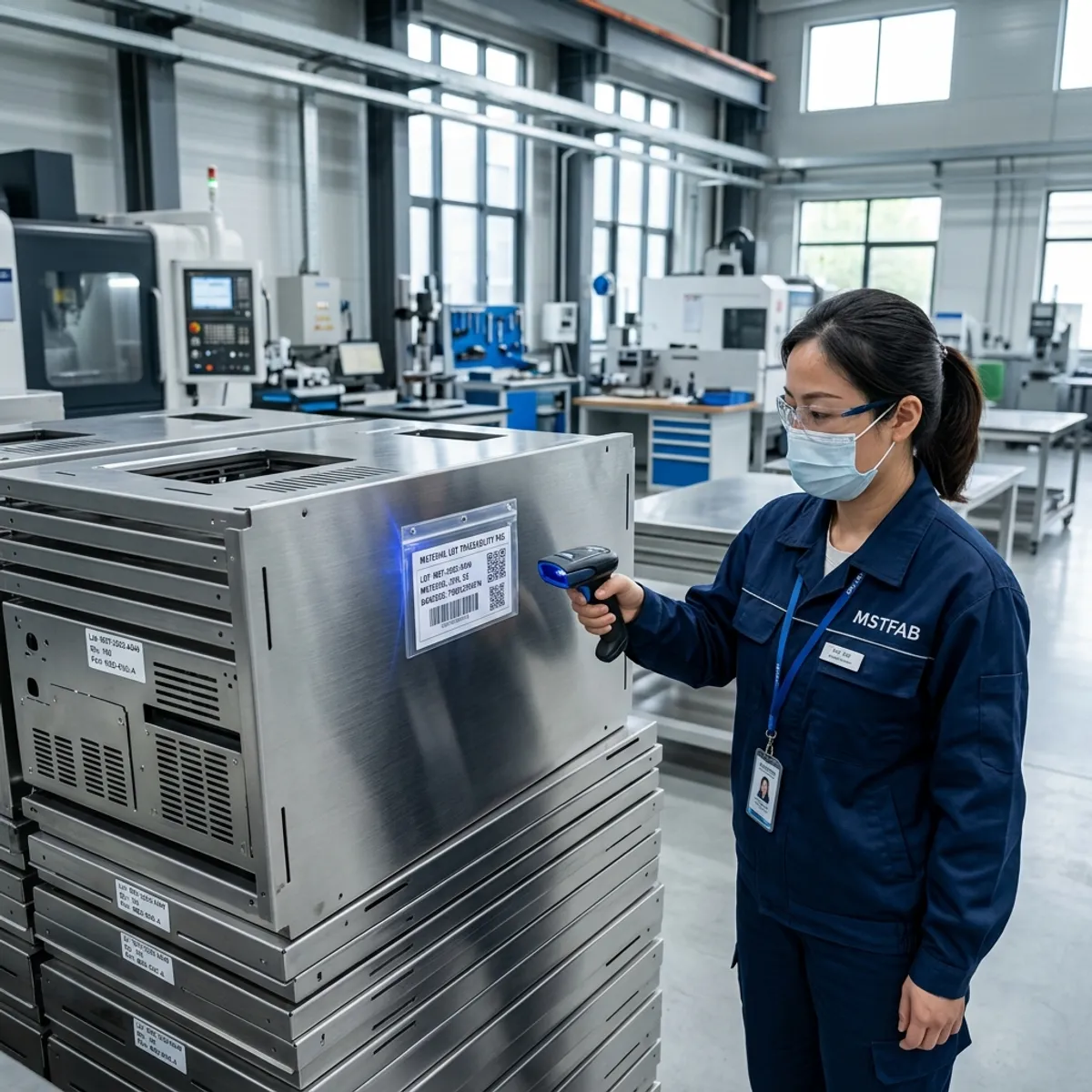
Connect mill material certificates, hardware lot numbers, ballooned FAI data and packing sign-off to each shipment.
Selection vs. handoff: evaluating a factory’s general equipment happens before RFQ award; the quality handoff locks how your specific part number will be built and inspected on every repeat order.
02 / CTQ Mapping and Trial Fit
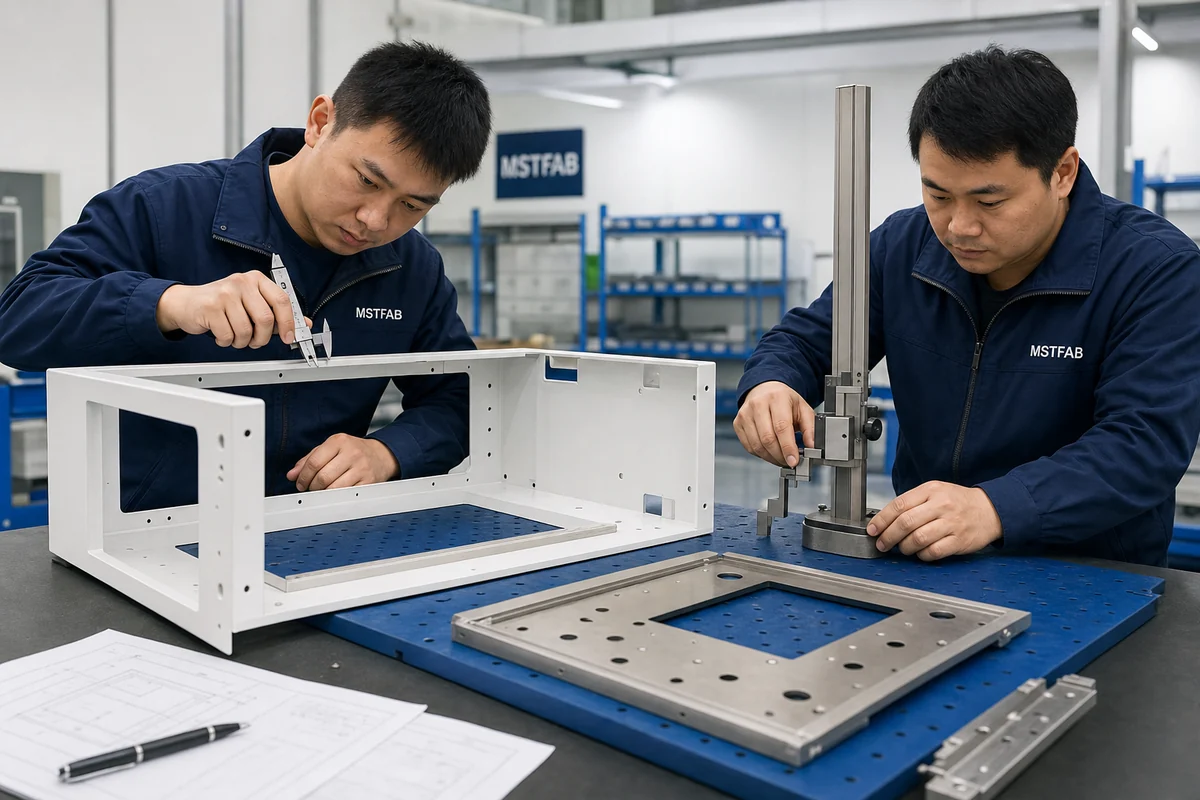
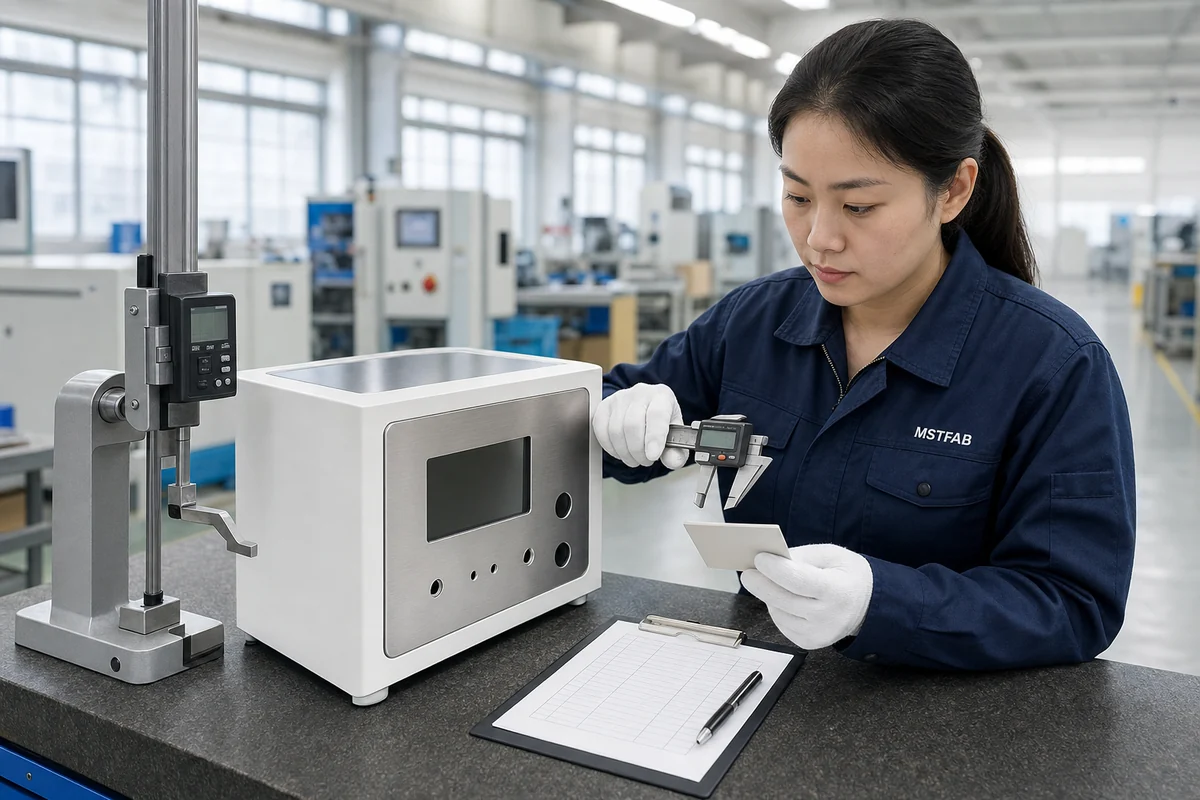
Combine ballooned dimensional inspection with functional subassembly trial fits.
Measuring 150 individual linear dimensions on a complex sheet metal housing does not guarantee that a sliding drawer, cast hinged door or touch-screen bezel will assemble smoothly. Flexible sheet metal panels can bow slightly in the free state while pulling true once bolted to the internal chassis.
- Define CTQ features: highlight critical mounting datums, display window tolerances, caster base flatness and grounding stud positions on a ballooned reference print.
- Specify restraint conditions: clarify which thin-gauge covers are measured clamped to a datum fixture versus inspected in the unrestrained state.
- Verify multi-part relationships: perform full mechanical trial assembly of mating doors, service panels, inner chassis plates and buyer-supplied dummy gauges.
If you are still qualifying vendors before prototype award, review our medical device enclosure supplier checklist to structure your initial factory assessment.
03 / Material Identity and Cleanable Surfaces
Control alloy certificates, fastener part numbers and A/B/C cosmetic zone acceptance.
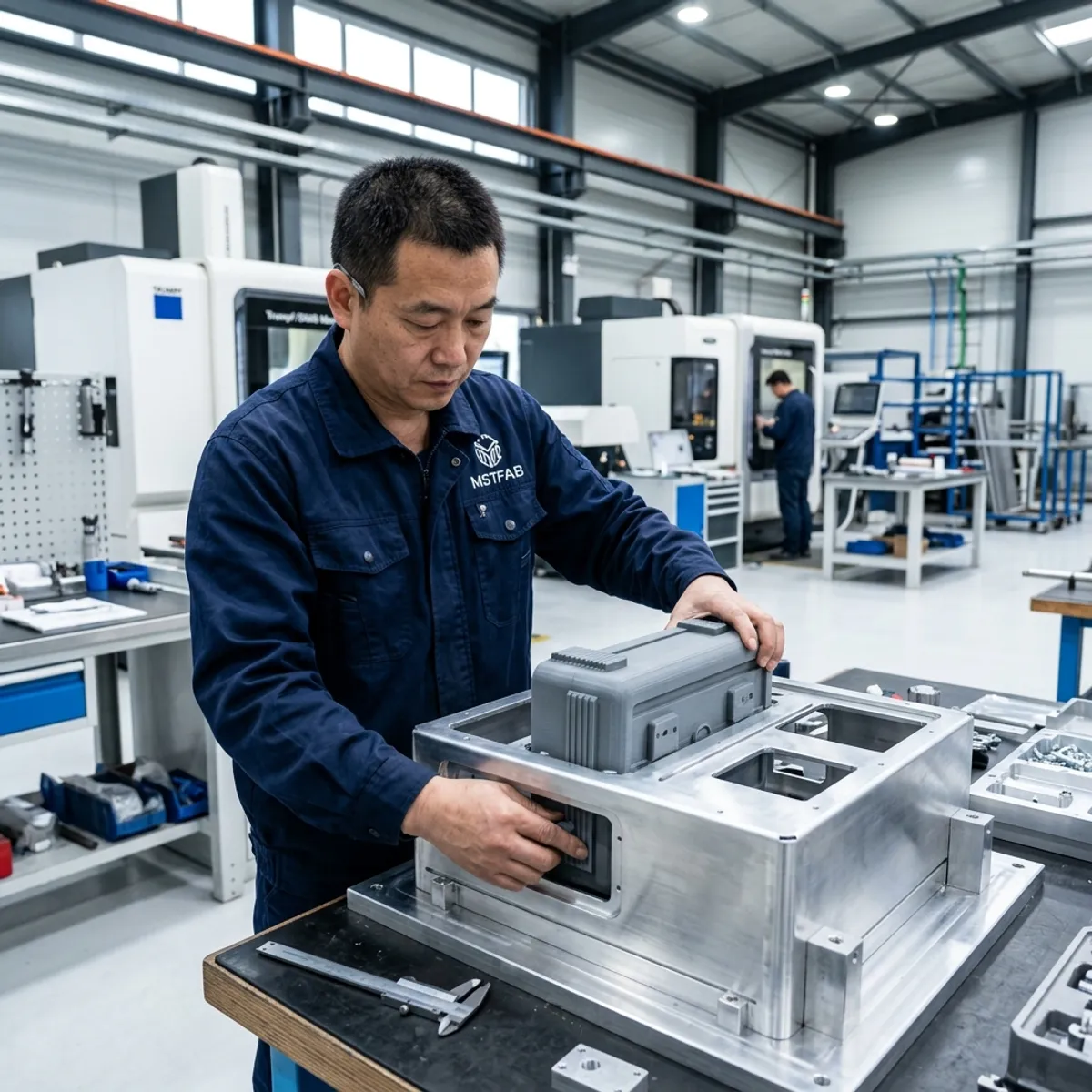
Healthcare and laboratory housings face frequent wipe-downs with hospital disinfectants and sit in brightly lit clinical rooms where uneven gaps or orange-peel powder coat are immediately visible. Both material identity and surface appearance need objective rules.
- Require traceable mill test reports for specified 304/316L stainless steel, 5052/6061 aluminum or electro-galvanized steel sheets.
- Forbid unapproved hardware substitutions on self-clinching nuts, standoffs, weld studs, hinges and latches—record exact manufacturer part numbers on the BOM.
- Divide enclosure exteriors into A (primary front/top visible), B (side/secondary) and C (internal/hidden) cosmetic zones with defined viewing distance, weld-blend smoothness and gloss/color limits.
Specify chemical-resistant powder coatings, passivation or anodizing parameters clearly on the print so pretreatment and curing remain consistent across batches.
04 / Change Control and Nonconformance Rules
Establish written rules for deviations, rework and process change notifications before issues arise.
In medical and laboratory supply chains, an unannounced change in powder brand, bend tooling radius or weld sequence can disrupt downstream assembly or enclosure cleaning validation. A reliable handoff defines what the supplier must never change without prior written approval.
- Locked manufacturing route: keep cutting, forming, welding jig setup, deburring media and coating sub-tier suppliers fixed after FAI approval.
- Quarantine & MRB workflow: segregate any nonconforming parts immediately and submit a documented deviation request rather than shipping unauthorized rework.
- Advance change notice: require written engineering sign-off before any proposed change to material source, fastener brand, finish chemistry or inspection method.
Explore how we manage incoming material checks, in-process verification and final batch release in our sheet metal quality control guide.
05 / Quality Responsibility Matrix
Align OEM and fabricator responsibilities across the production handoff.
Use this responsibility matrix to clarify what the OEM engineering team freezes and what the sheet metal fabricator verifies on every repeat release.
06 / Batch Release Documentation
Ship every repeat batch with a standardized quality data package.
Incoming inspection at the OEM plant moves much faster when the supplier’s quality packet follows the exact numbering and layout agreed during the handoff. Buyers should not have to hunt through mismatched spreadsheets to verify CTQ dimensions.
A standard batch release package includes the Certificate of Conformance (CoC) referencing the exact drawing revision, raw material mill certificates, finishing thickness and adhesion logs, CTQ sampling measurements for the lot, and trial-fit sign-off records.
Serializing or lot-labeling individual cartons and pallet layers allows your receiving team to trace any enclosure panel directly back to its inspection record and raw sheet heat number.
See the full medical enclosure supplier evaluation checklist →
07 / Protective Packing and Scope Boundary
Preserve accepted cosmetic surfaces and frame squareness through export transit.
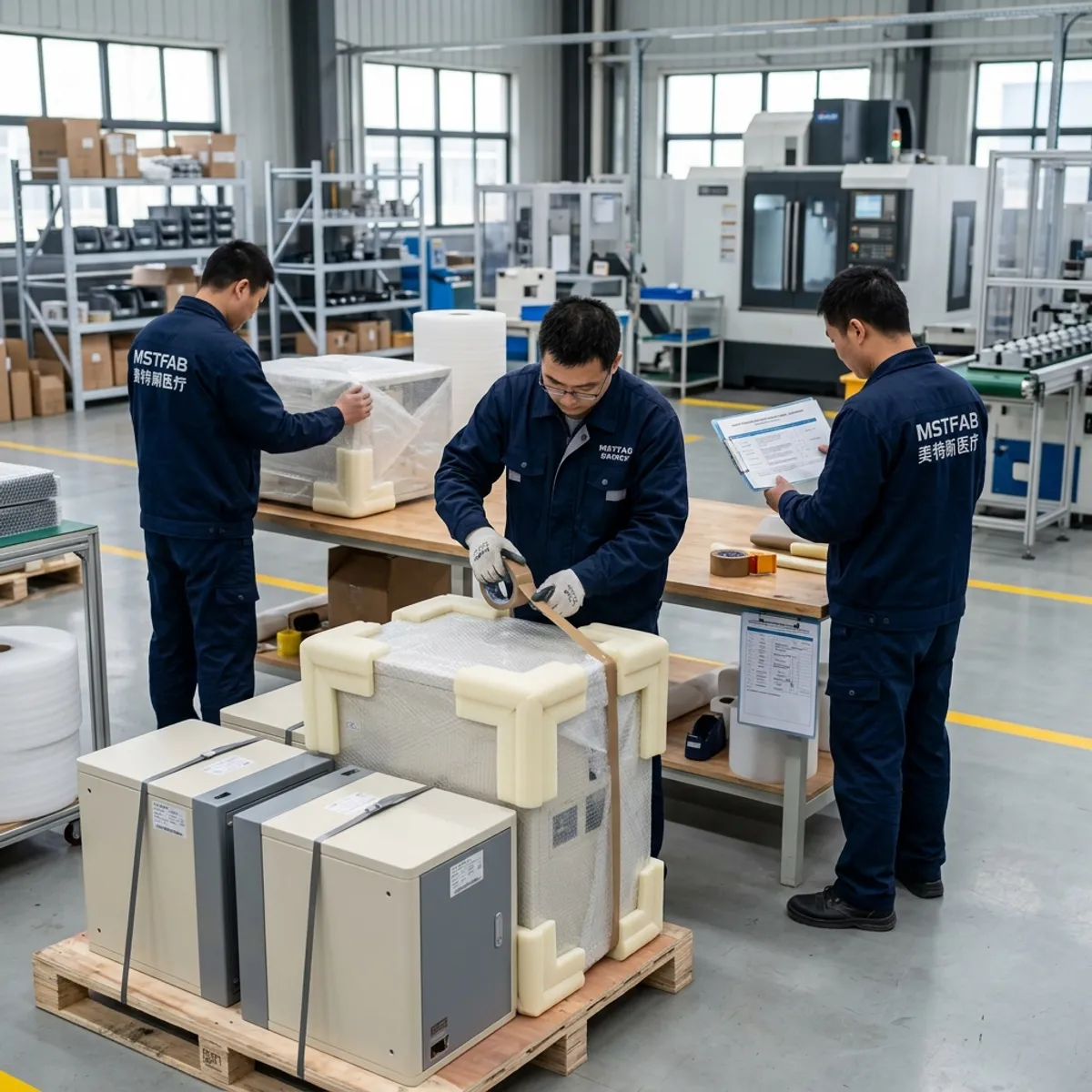
A cosmetic medical housing that passes final inspection can still be rejected at receiving if carton rubbing dulls the textured powder coat or forklift compression racks a welded frame. Define PE surface film compatibility, foam cell dividers and rigid crate blocking as part of the handoff.
Export wooden crates are heat-treated and stamped in compliance with IPPC ISPM 15 international standards, with desiccant packs and shock/tilt protection specified per project.
Manufacturing scope: MSTFAB operates under an ISO 9001 quality management system and fabricates custom drawing-based sheet metal parts, cart frames and empty enclosure shells. Complete medical device or healthcare equipment regulatory certification, electrical integration and sterilization validation remain with the OEM.
08 / Ready-to-Review Handoff Package
Confirm eight items to transition your medical enclosure shell from prototype to repeat production.
- Frozen 3D & 2D revisionUpdated STEP models and PDF prints incorporating all prototype redlines.
- Ballooned CTQ drawingClearly marked critical dimensions, datum targets and restraint notes.
- Approved hardware BOMExact fastener, hinge, caster or latch part numbers and installation notes.
- Cosmetic zone mapDefined A/B/C surfaces, weld dressing smoothness and master color/texture sample.
- Masking & grounding printDimensioned bare-metal contact pads, masked threads and silk-screen artwork.
- Trial-fit gauge / procedureAgreed subassembly fit check or customer-supplied mating dummy gauge.
- Batch QC packet templateRequired CoC format, mill certs, finish logs and lot sampling frequency.
- Packing & change-control specApproved foam/crate pack spec and written ECN / deviation notification rules.
Freezing these eight controls before your first repeat batch prevents revision confusion and protects both dimensional fit and clinical appearance.
Medical enclosure quality handoff questions from OEM buyers
What is the difference between prototype approval and a production quality handoff?
Prototype approval confirms that a sample part works in engineering build testing. A production quality handoff locks the updated drawings, tooling route, CTQ inspection sheet, cosmetic master plaques and change-control rules so repeat batches match the approved baseline.
What quality management system does MSTFAB operate under for medical enclosure shells?
MSTFAB operates under an ISO 9001 quality management system and manufactures custom build-to-print sheet metal parts and empty enclosure shells. Complete medical device regulatory certification and finished system compliance remain with the OEM.
How do you prevent cosmetic drift on powder-coated hospital housings over multiple batches?
We lock the exact powder manufacturer code, pretreatment stages, curing schedule and A/B/C zone inspection lighting, and compare every production run against a physical master color and texture plaque.
Can we supply a mating frame or dummy bezel for first-article and batch fit checks?
Yes. Customer-supplied mechanical check gauges, mating extrusions or display bezels are stored under controlled gauge IDs and used during FAI and recurring lot release to verify real-world assembly fit.
How are minor shop-floor deviations handled if a dimension falls slightly outside print tolerance?
Any nonconforming part is segregated and quarantined. We never perform unapproved structural rework or ship out-of-spec parts without submitting a formal deviation report and receiving written OEM engineering disposition.
How are traceable material and inspection records organized for each shipment?
Each batch ships with a consolidated digital and printed quality packet linking the Certificate of Conformance, raw material mill test reports, hardware lot records, coating thickness logs and ballooned dimensional data to the PO and drawing revision.
Technical references
These quality and dimensional standards support structured first-article inspection, sampling and tolerancing for custom sheet metal enclosures.
Ready to lock your medical enclosure shell for repeat production?
Send your released 3D STEP files, 2D drawings, CTQ requirements and batch quantities. MSTFAB will review your quality handoff package and provide a detailed quotation.
Request a Medical Enclosure Quality Review →
Have a question first? caroline@mstfab.com
 WeChat Contact
 WhatsApp Me Directly