
How can OEM teams manage supplier sheet metal rework without delaying active assembly lines?
OEM teams protect assembly throughput by executing an immediate 4-step containment protocol: (1) establishing a safe-launch sorting cell at the receiving dock to separate conforming parts from suspect stock, (2) issuing a formalized Rework Order defining explicit physical bounds, acceptable tooling methods, and pass/fail re-inspection criteria, (3) deploying certified third-party or supplier-provided rework technicians under factory oversight, and (4) issuing automated chargeback debit memos for all labor, sorting, and downtime costs.
When an incoming shipment of sheet metal brackets arrives with undersized hole diameters, excessive burrs, or slightly misaligned flange angles, factory production managers face a brutal dilemma: reject the lot and shut down the assembly line, or accept defective parts and compromise final product quality. Halting an automated assembly line can cost upwards of USD 10,000 per hour. Managing supplier rework on-site or under tight containment protocols allows OEMs to maintain assembly cadence while holding the vendor accountable.
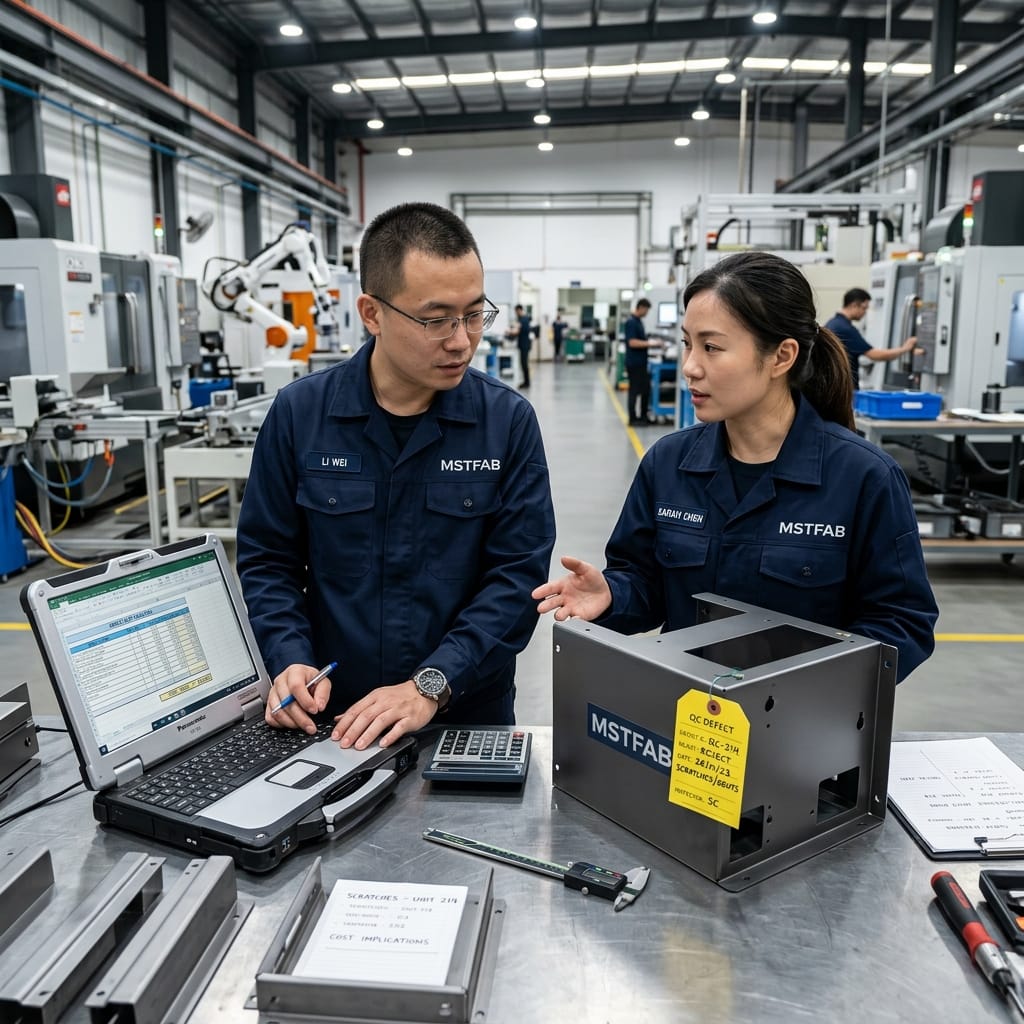
Step 1: Immediate Containment & Safe-Launch Sorting
The moment a non-conformance is identified, containment must be executed within minutes:
- Dock Hold & Quarantine: Apply serialized hold tags to the suspect lot and freeze all warehouse inventory transfers.
- Safe-Launch Sorting Cell: Establish a dedicated sorting station equipped with calibrated go/no-go plug gauges, optical comparators, or calipers. Sort 100% of available stock to feed conforming parts immediately to the line while segregating parts that require rework.
- Supplier Notification (Within 2 Hours): Issue a formal Non-Conformance Report (NCR) with macro photos, dimensional measurement data, and lot numbers, demanding immediate supplier response.
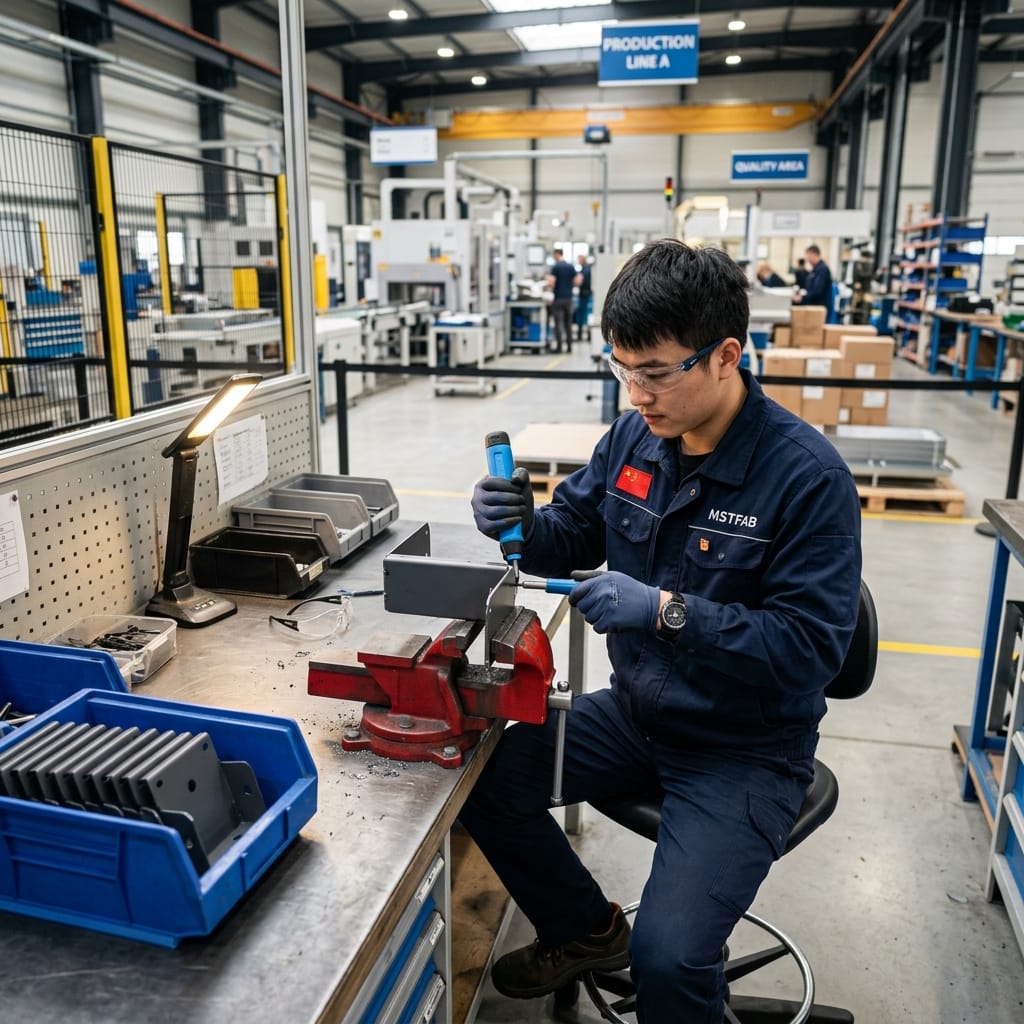
Step 2: Issuing a Formal Rework Order (SOW)
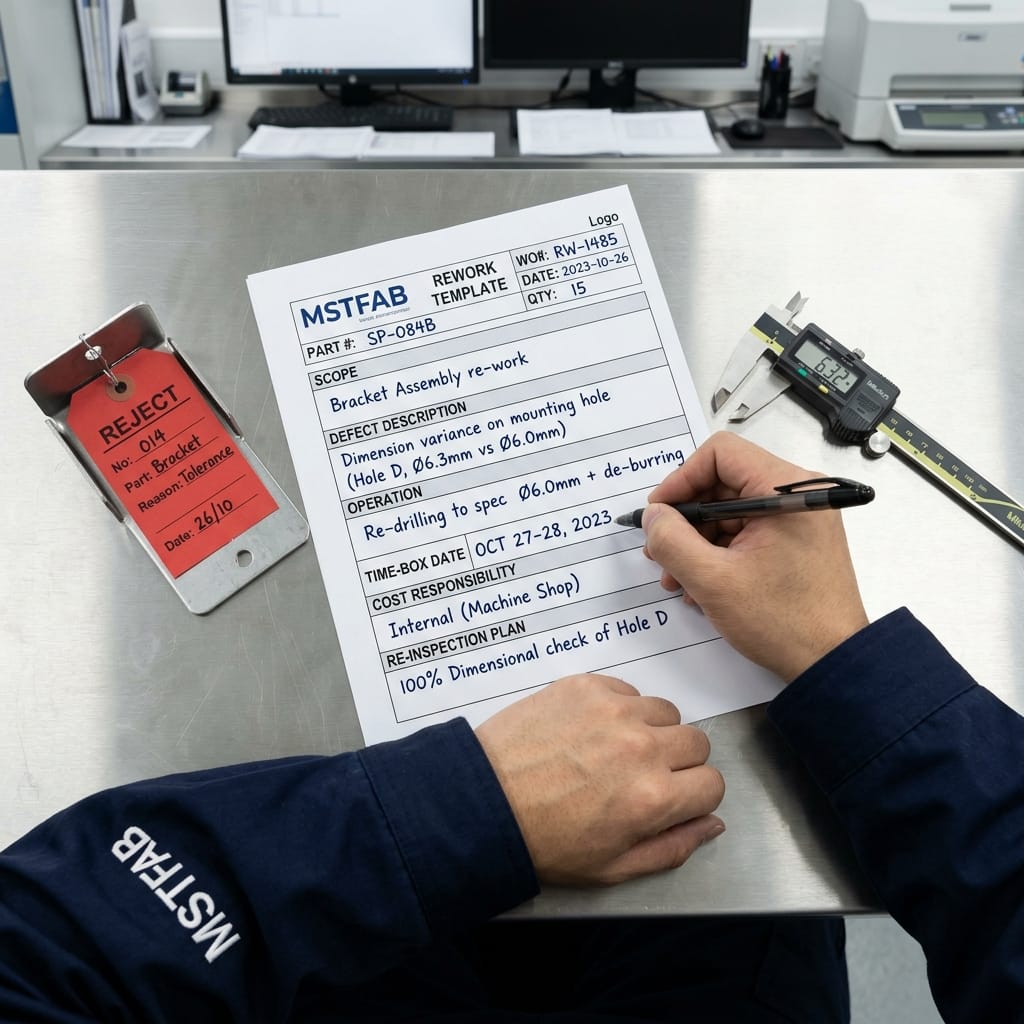
Never allow informal or ad-hoc rework on the shop floor. Uncontrolled grinding, bending, or re-drilling creates secondary defects such as metal shavings in electrical chassis or weakened bend lines. A binding Rework Order must specify:
- Permitted Rework Methods: Detail approved tools (e.g., CNC reaming vs. hand drilling, rotary deburring vs. angle grinder).
- Prohibited Operations: Explicitly forbid thermal flame straightening, hammering, or over-countersinking that thins sheet material below minimum design thresholds.
- Re-Inspection Protocol: Define the exact sampling plan (e.g., Level II 100% or AQL 0.65) and measurement tools required before parts can be cleared for assembly.

Supplier Sheet Metal Rework Decision Matrix
The table below provides a decision matrix for determining the appropriate rework strategy based on defect severity and production urgency:
| Defect Classification | Sheet Metal Example | Recommended Action | Authorized Location | Re-Inspection Gate |
|---|---|---|---|---|
| Heavy Burrs & Sharp Edges | Laser cut edge dross exceeding 0.15 mm specification | Controlled rotary deburring & edge radiusing | On-site OEM containment cell | 100% tactile touch & visual inspection |
| Undersized Clearance Holes | Holes cut 0.25 mm under nominal diameter for PEM studs | Precision carbide reaming with vacuum extraction | On-site rework or 3rd-party sorting | Calibrated go/no-go pin gauge check |
| Flange Angle Deviation (±2°) | Chassis side wall bent to 88° instead of 90° | Secondary press brake re-strike (authorized tooling) | Supplier plant or regional hub | 30-piece CMM angular check & fit check |
| Missing Fastener Hardware | Uninstalled M4 threaded standoffs or clinch nuts | Manual Haeger press installation with certified tooling | On-site or rapid supplier turn | Push-out & torque-out destructive coupon test |
| Surface Coating Blistering | Powder coating flaking or severe orange peel on Class A | REJECT / SCRAP – Do not attempt manual patch | Return to Vendor (RTV) | Chemical strip & complete recoat requalification |
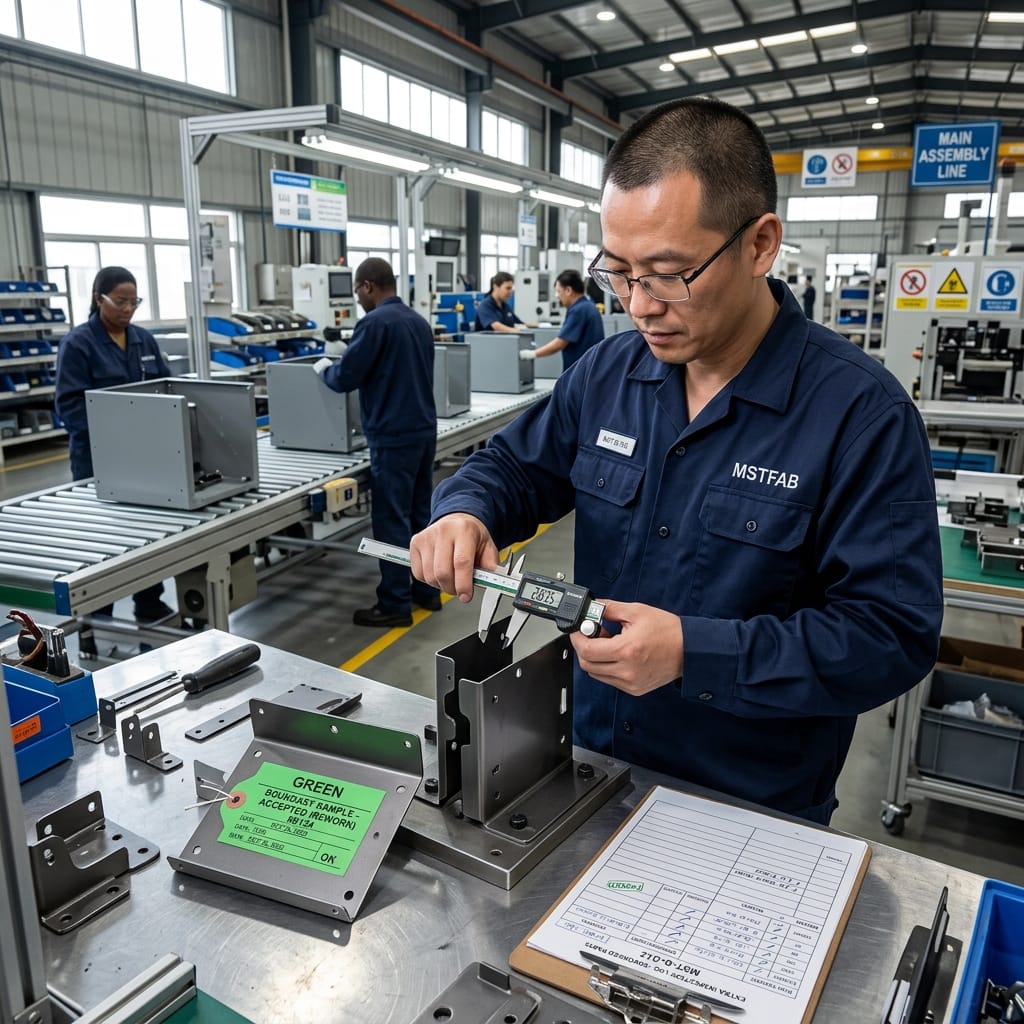
Step 3: Safe-Launch Re-Inspection & Tracking
Reworked parts must never re-enter the general inventory stream blindly. They must pass through a strict “Safe-Launch” gate:
- Color-Coded Serialization: Each reworked part receives a permanent green inspection dot or serialized label distinguishing it from untested inventory.
- Assembly Station Tagging: Work travelers inform line assemblers that the lot represents reworked material, instructing them to flag any secondary assembly resistance immediately.
- Safe-Launch Audit Period: Maintain 100% inspection on the subsequent three production shipments from the supplier to ensure permanent corrective action implementation.
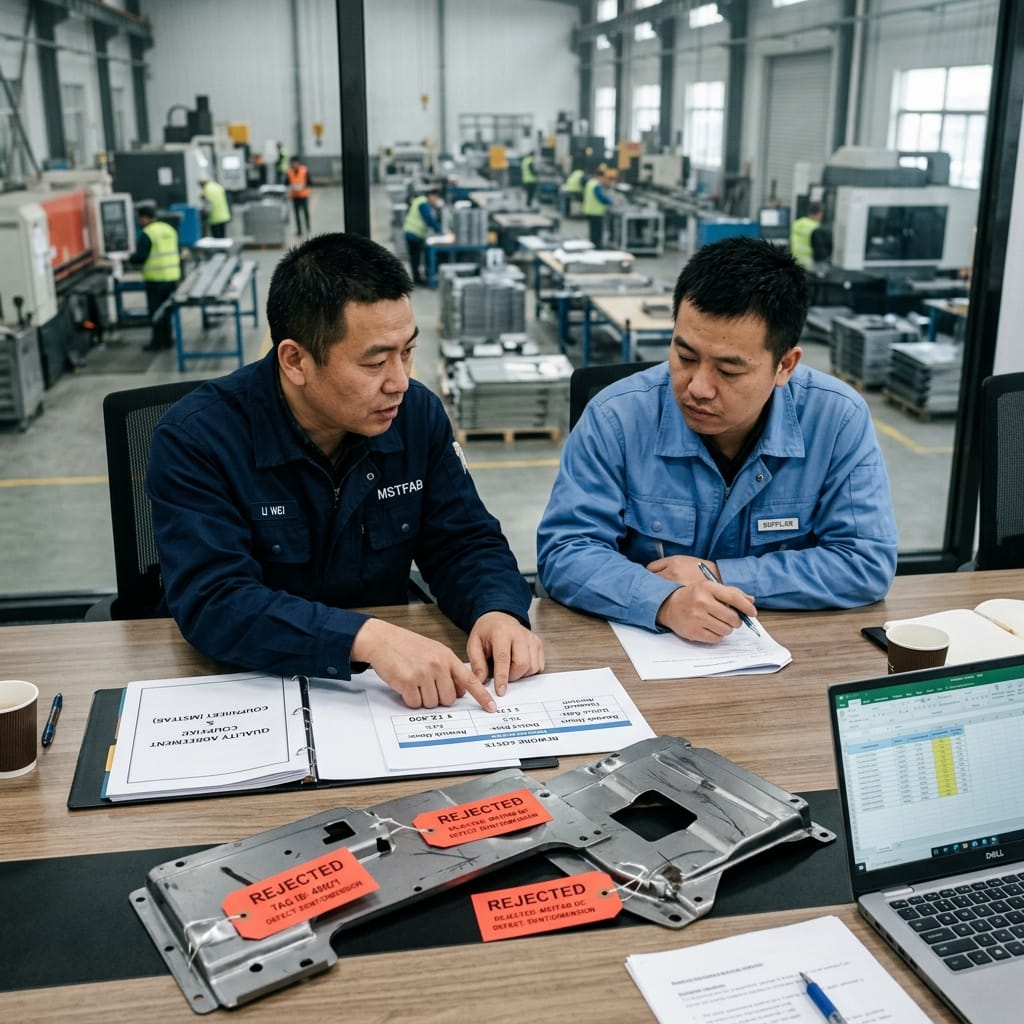
Step 4: Cost Recovery & Supplier Chargebacks
To prevent chronic recurrence, rework must have financial consequences for the supplier. An automated debit memo captures:
- Internal Labor Hours: Tracked at standard burdened factory rates (USD 50–85/hour per inspector/technician).
- Third-Party Sorting Fees: Invoiced directly to the supplier’s account.
- Line Stoppage Downtime: Contractually defined fees for assembly starvation.
- Administrative Processing Fee: Standard USD 250–500 NCR handling charge.
Eliminate Sheet Metal Assembly Line Rework Risks
MSTFAB delivers precision sheet metal fabrications with certified CMM dimensional verification and flawless edge deburring. Our ISO 9001:2015 quality assurance guarantees parts fit your assembly fixtures on the first try, every time. Contact our engineering team today to review your project tolerances.
 WeChat Contact
 WhatsApp Me Directly