
The Short Answer
A machinery enclosure design freeze before NRTL review locks the exact sheet metal geometry, material thickness, door and latch mechanics, internal mounting plate interfaces, protective-earth bonding studs, gasket lands and label recesses before compliance test samples are built. MSTFAB fabricates build-to-print empty sheet metal enclosure shells under an ISO 9001 quality management system so your review sample and subsequent production batches match the frozen drawing package.
Explore this guide
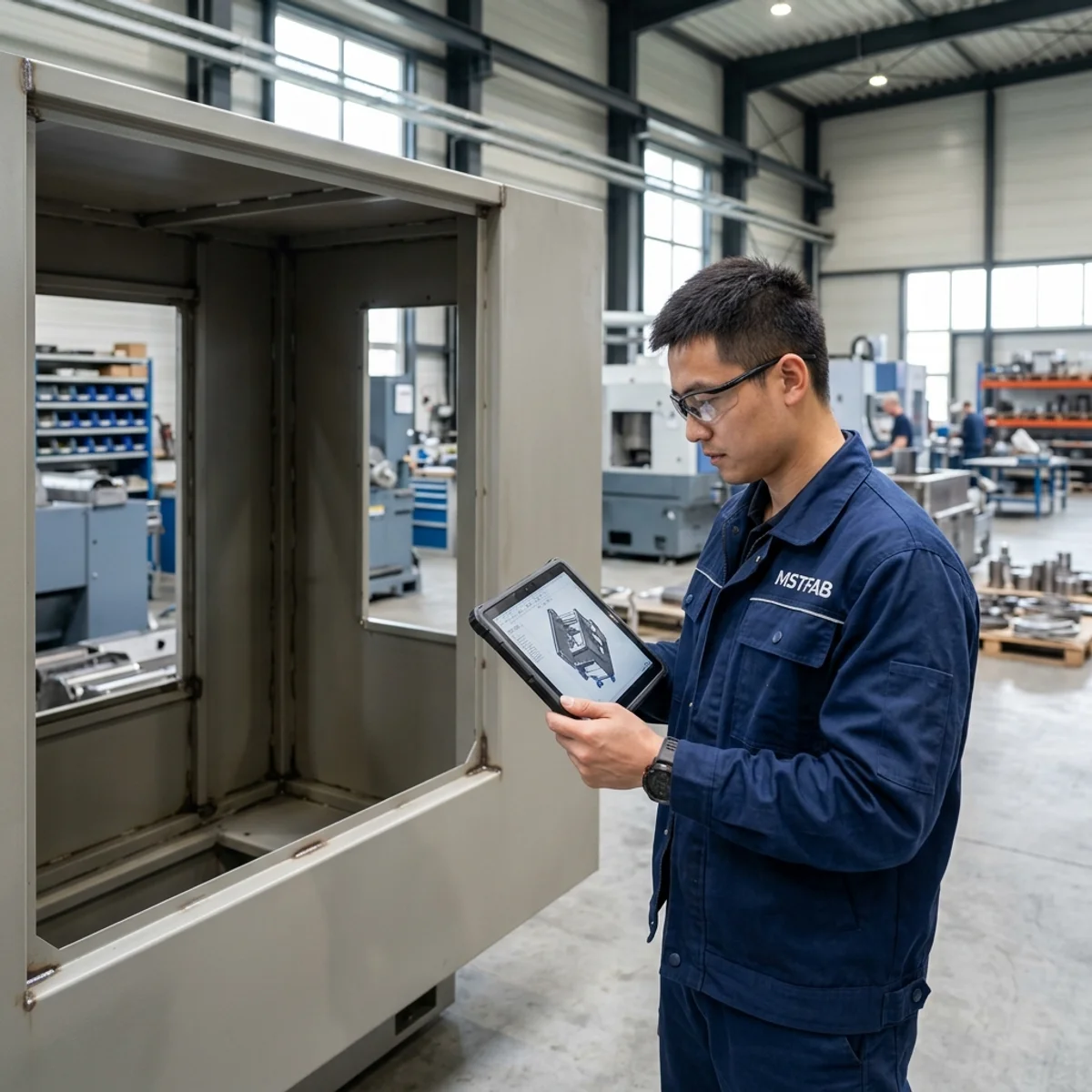
01 / Pre-Review Mechanical Freeze
Lock the sheet metal shell drawings before building your NRTL evaluation sample.
When an OEM submits a completed industrial machine or control panel for Nationally Recognized Testing Laboratory (NRTL) evaluation, the compliance engineer documents the physical construction of the enclosure—metal gauge, overall dimensions, ventilation openings, door latching, grounding studs and internal clearances.
If the prototype enclosure shell was built with unrecorded shop redlines or ad-hoc hand cuts, the OEM ends up with a compliance report tied to a one-off sample that does not match the CAD files sent for repeat production. Freezing the mechanical drawing package first prevents costly re-reviews later.
Verified Sheet Thickness
Explicitly call out nominal steel, stainless or aluminum thickness and alloy grade on every structural wall, door and gland plate.
Controlled Cutout & Louver Map
Freeze exact dimensions for HMI openings, disconnect handle slots, fan cutouts and louver blade geometry before sample build.
Documented Hardware & Studs
Lock the exact part numbers and locations of hinges, latches, mounting plate studs and protective-earth bonding points.
Build the review sample on production tooling: fabricating the evaluation shell with the same laser programs, press brake dies and weld fixtures used for batch production proves the frozen print is repeatable.
02 / Frame Squareness, Doors and Latches
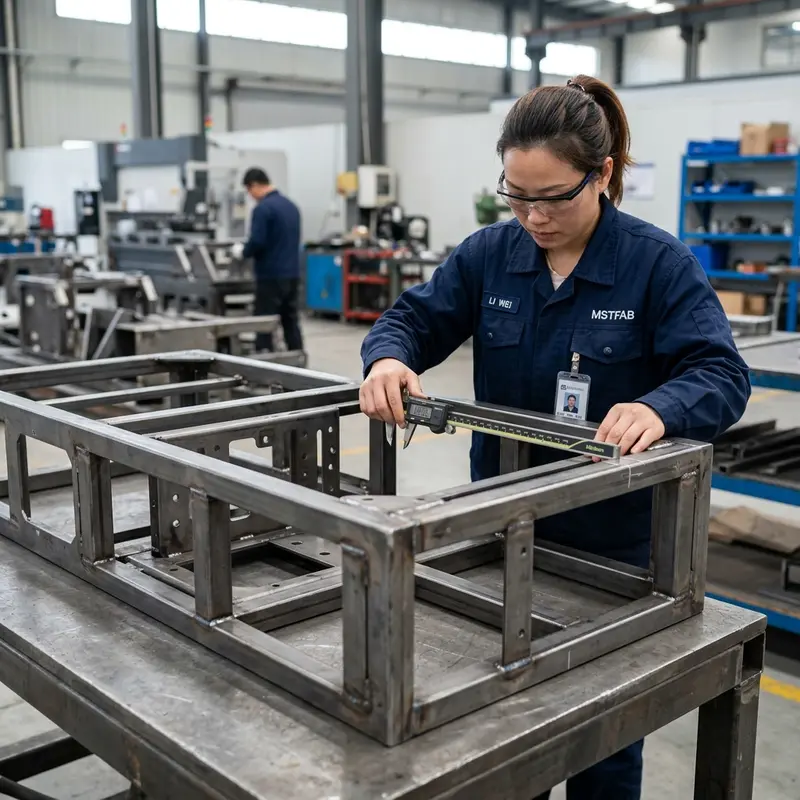
Define welded frame datums, door flanges, hinge pitch and latch engagement.
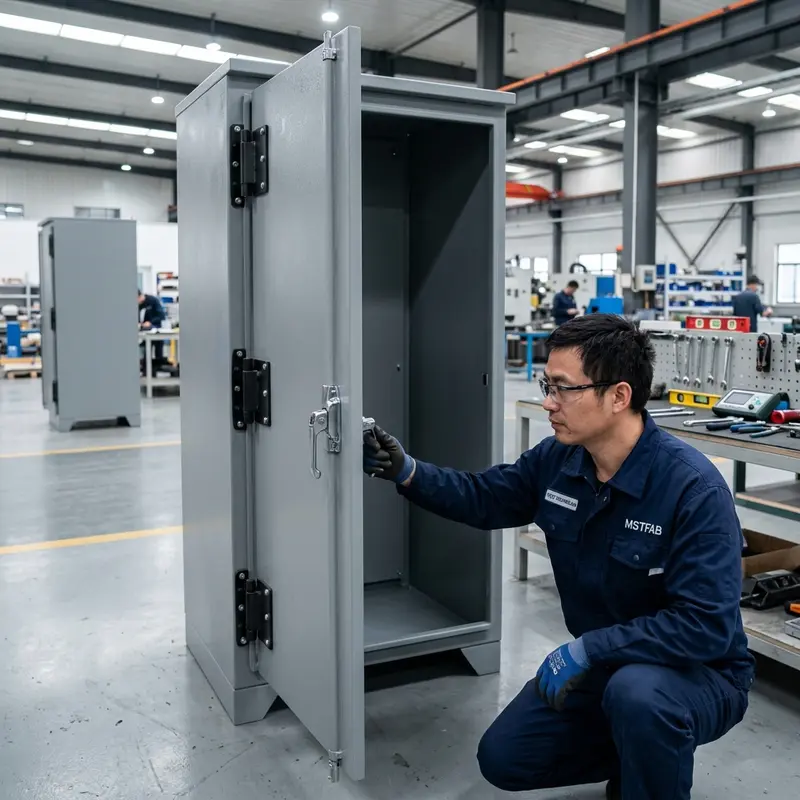
Mechanical rigidity and reliable door closure are core construction checks during equipment safety evaluations. A door that sags on undersized hinges or misses its multi-point latch strike compromises both operator access control and gasket compression.
- Frame datums & diagonal control: specify overall height, width, depth and diagonal squareness tolerances on the welded body so doors and side panels fit without shimming.
- Door stiffening returns: form boxed perimeter return bends or weld internal door stiffener rails so wide doors stay rigid around safety-interlock and disconnect mechanisms.
- Frozen hardware cutouts: lock the exact cutout profiles and mounting pitches for OEM-specified hinges, quarter-turn latches, swing handles and mechanical interlock rods.
Explore our full custom sheet metal fabrication capabilities for welded frames, multi-door cabinets and precision machine guarding.
03 / Internal Interfaces and Exterior Cutouts
Coordinate internal mounting plates, inner barriers and exterior operator cutouts.
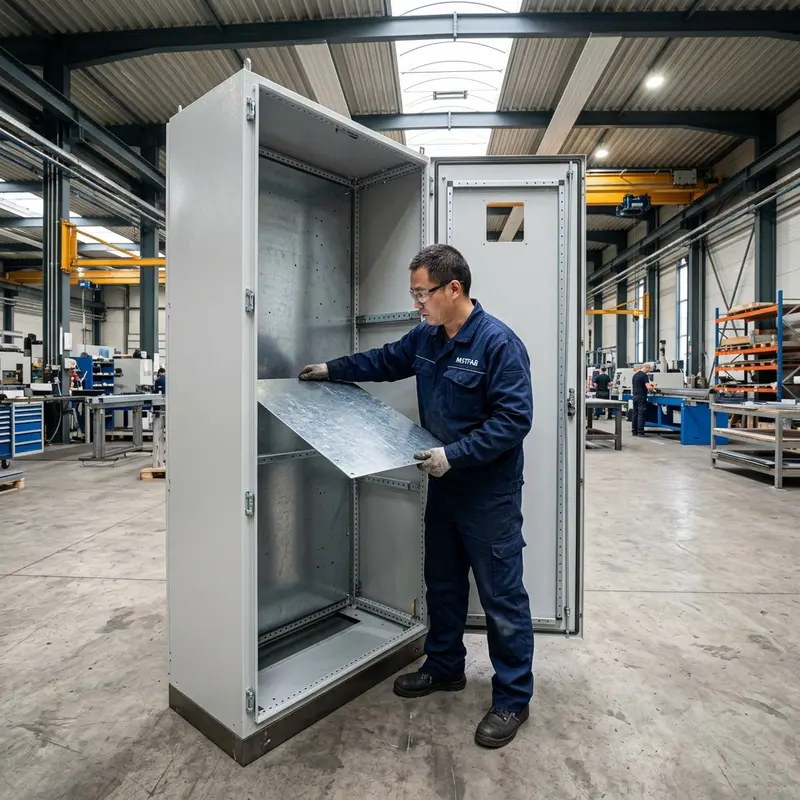
Compliance reviewers verify electrical creepage, clearance and bending space between live components on the backplate and the grounded sheet metal walls or door-mounted devices. Shifting a backplate stud or HMI window by even a few millimeters can violate internal clearance margins.
- Freeze the 3D position of welded backplate mounting studs, DIN-rail brackets and swing-out frame pivots relative to the enclosure walls.
- Coordinate door-mounted HMI cutouts, push-button arrays and rotary disconnect shaft holes with the internal mounting plate datum system.
- Account for powder coat film thickness on tight connector cutouts and sliding gland plates so components install without scraping paint.
Review detailed backplate and barrier tolerancing in our electrical enclosure mounting plate DFM guide and inner cover cutout alignment DFM guide.
04 / Protective-Earth Studs, Seams and Nameplates
Dimension grounding stud locations, conductive masking rings and nameplate landing zones.
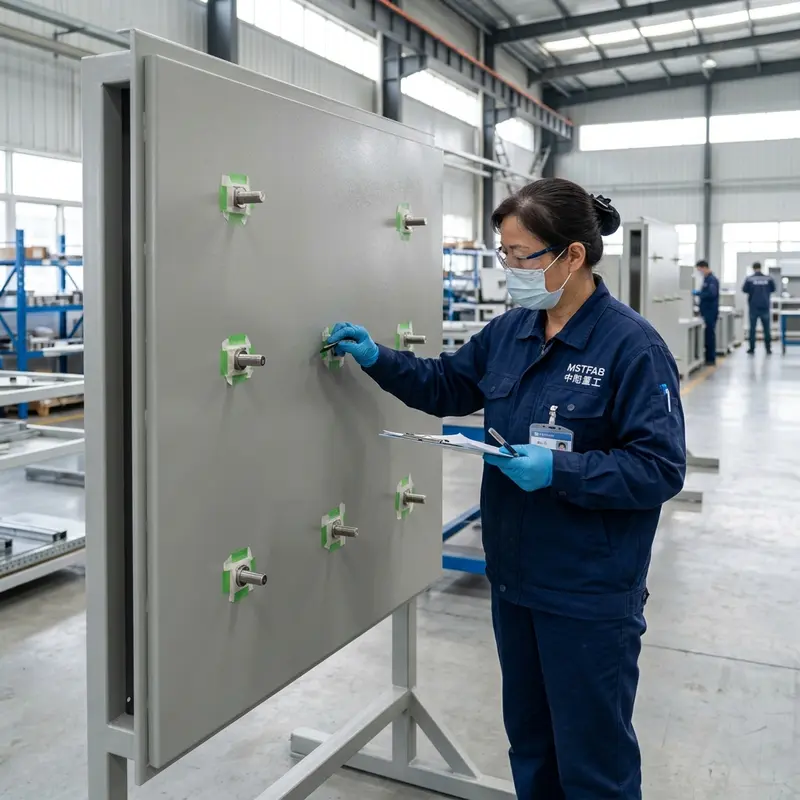
Every removable door, gland plate, roof panel and chassis section that requires protective-earth bonding needs a dedicated, paint-free mechanical connection point defined on the engineering drawing—never left to a shop operator with a hand grinder.
- Dedicated bonding studs: call out exact M6, M8 or M10 weld studs or self-clinching studs on the body, doors and gland plates, including pull/torque test requirements.
- Dimensioned masking zones: draw circular or rectangular bare-metal masking boundaries around every grounding stud and conductive gasket track so powder coat never insulates the joint.
- Nameplate & warning label areas: reserve flat, unobstructed sheet metal zones (or rivet/stud patterns) for the OEM’s rating plate, serial tag and safety warning labels.
See how we verify masking boundaries, weld quality and dimensional accuracy in our sheet metal quality control process.
05 / Design Freeze Verification Matrix
Audit five mechanical freeze categories before releasing the review sample.
Use this pre-release matrix to confirm that your drawing package and first-article inspection cover every mechanical detail of the empty enclosure shell.
06 / Post-Review Change Control
Maintain strict revision control after your machine passes NRTL evaluation.
Once your completed machinery passes third-party evaluation, unannounced changes to sheet metal thickness, ventilation louver dimensions, door latch cutouts or grounding stud positions can conflict with your descriptive compliance report.
Under MSTFAB’s ISO 9001 quality management system, approved enclosure part numbers are locked to their specific drawing revision, laser cutting program, bend tooling setup and BOM hardware list.
We never alter sheet gauge, cutout geometry, weld specifications or coating systems without a formal written Engineering Change Notice (ECN) from your team.
Review our ISO 9001 inspection and document control workflow →
07 / Export Packing and Responsibility Boundary
Protect the frozen enclosure shell in transit and keep compliance roles clear.
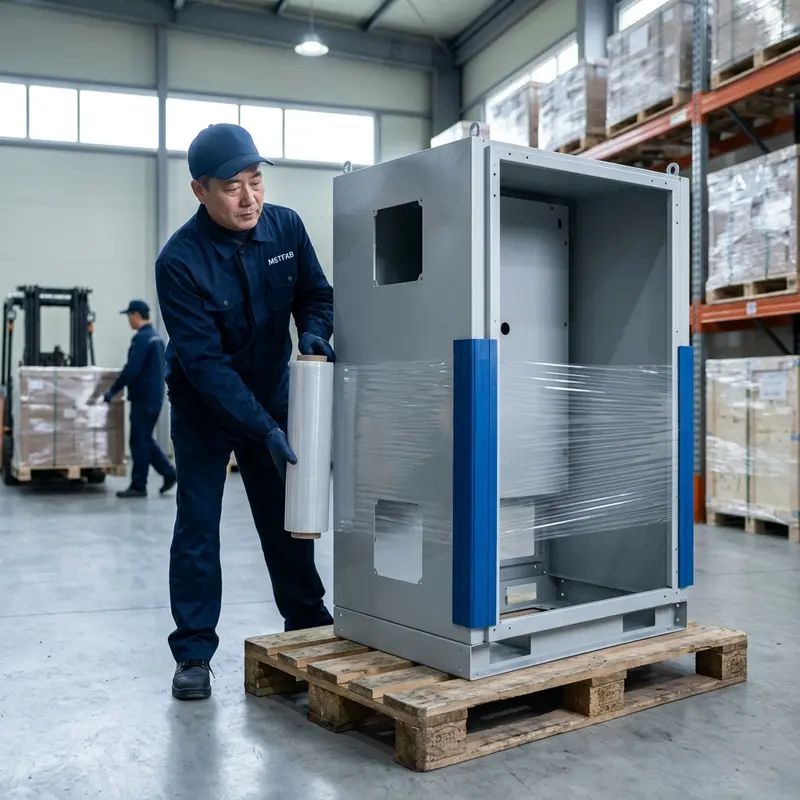
Evaluation sample enclosures and repeat production batches are braced internally, wrapped in moisture-barrier film with foam corner guards, and crated in heavy-duty export boxes so doors, gasket lands and mounting studs arrive undamaged.
All wooden pallets and crates meet IPPC ISPM 15 international phytosanitary standards.
Manufacturing scope: MSTFAB operates under an ISO 9001 quality management system and fabricates custom build-to-print empty sheet metal enclosure shells, frames, doors, mounting plates and mechanical hardware interfaces. MSTFAB does not supply pre-certified enclosures, perform electrical wiring or issue NRTL certifications; complete machinery or control-panel safety certification remains with the OEM.
08 / Ready-to-Review RFQ
Send eight frozen inputs when ordering pre-review and production enclosure shells.
- Frozen 3D STEP assemblyComplete cabinet body, doors, mounting plate, gland plates and covers.
- Released 2D PDF drawingsRevision-controlled prints with datums, tolerances and weld symbols.
- Material & gauge tableExact steel, galvanized, stainless or aluminum alloy and thickness per part.
- Hardware & latch BOMSpecified hinge, latch, interlock cutout, PEM fastener and weld-stud list.
- Grounding & masking mapProtective-earth stud positions and dimensioned paint-free contact rings.
- Gasket & louver detailsSealing land geometry, gasket material callout and ventilation opening limits.
- Surface finish & label zonesPowder coat RAL/texture spec and reserved areas for OEM rating plates.
- FAI & batch scheduleEvaluation sample count, ballooned FAI report requirements and repeat volumes.
Freezing these eight mechanical inputs before your evaluation build ensures your compliance sample and your future production orders come off the exact same drawing baseline.
Machinery enclosure design freeze questions from OEM engineers
Why should we freeze the sheet metal enclosure drawings before building our NRTL review sample?
During an NRTL evaluation of your machine, the inspector records sheet thickness, ventilation opening sizes, door latching and grounding construction from the test sample. If the sample was built from loose sketches, your production drawings will not match the compliance report.
Does MSTFAB certify the completed electrical cabinet or supply a build-to-print sheet metal shell?
MSTFAB operates under an ISO 9001 quality management system and manufactures custom build-to-print empty sheet metal enclosure shells and mechanical subassemblies. Complete electrical integration, testing and NRTL system certification are performed by the OEM.
How should protective-earth grounding points be shown on the enclosure drawing?
Call out the exact weld stud or clinching stud thread size, material and coordinates on the main body, doors and removable panels, and dimension the circular bare-metal masking zone around each stud on the finishing print.
What happens if we need to move an HMI cutout or add a cooling fan after the first article?
Submit a new drawing revision with an updated revision letter. We archive the previous program, update the laser and inspection travelers to the new revision, and provide updated FAI records for the modified features.
Can MSTFAB trial-fit our internal mounting plate and door hardware before shipping the empty shell?
Yes. Every first-article enclosure shell undergoes full mechanical trial assembly—including mounting plates, inner covers, gland plates, hinges and latches—before packing.
What documentation ships with the evaluation sample and repeat batches?
We provide a ballooned First Article Inspection (FAI) dimensional report, raw material mill test certificates confirming alloy and thickness, coating thickness/adhesion logs, and a Certificate of Conformance tied to your exact drawing revision.
Technical references
These references outline general workplace testing laboratory programs, industrial machinery electrical enclosure practices and sheet metal tolerances.
Send your frozen machinery enclosure drawings for a DFM and FAI quote.
Share your 3D STEP assembly, 2D PDF drawings and sample schedule. MSTFAB will review manufacturability and build your empty enclosure shells to print.
Request a Machinery Enclosure DFM Review →
Have a question first? caroline@mstfab.com
 WeChat Contact
 WhatsApp Me Directly