
⚡ Direct Answer: How to Transition from Prototype to Low-Volume Production?
Low-volume sheet metal production (batches from 20 to 500 units) bridges the gap between functional prototype sign-off and multi-thousand-unit hard-tooled manufacturing. Success relies on: 1) Freezing the approved 3D CAD baseline into a controlled Golden Sample; 2) Generating comprehensive First Article Inspection (FAI) reports with full CMM dimensional scans on critical datums; 3) Utilizing soft CNC laser cutting and modular press brake tooling with zero expensive stamping die capital expenditure; and 4) Establishing standardized nesting programs and Kanban buffer replenishment for 10–14 business day batch turnaround.
Prototype vs. Low-Volume vs. High-Volume Production Matrix
| Manufacturing Attribute | Rapid Prototype (1–10 pcs) | Low-Volume Production (20–500 pcs) | Mass Production (>2,000 pcs) |
|---|---|---|---|
| Tooling Cost (NRE) | 0 (Universal laser & standard brake dies) | 0 – 800 (Modular weld fixtures & GO/NO-GO pins) | $15,000 – 80,000 (Progressive stamping dies) |
| Piece Price Factor | Highest (Setup charges heavily weight 1 unit) | Optimal (Setup amortized; saves 35–50% vs prototype) | Lowest per unit |
| Engineering Flexibility | Maximum (Rapid software code revisions) | High (CAD modifications implemented in hours) | Zero (Tooling recutting costs thousands) |
| Batch Lead Time | 3–5 Days | 10–14 Days | 6–12 Weeks (die build + setup) |
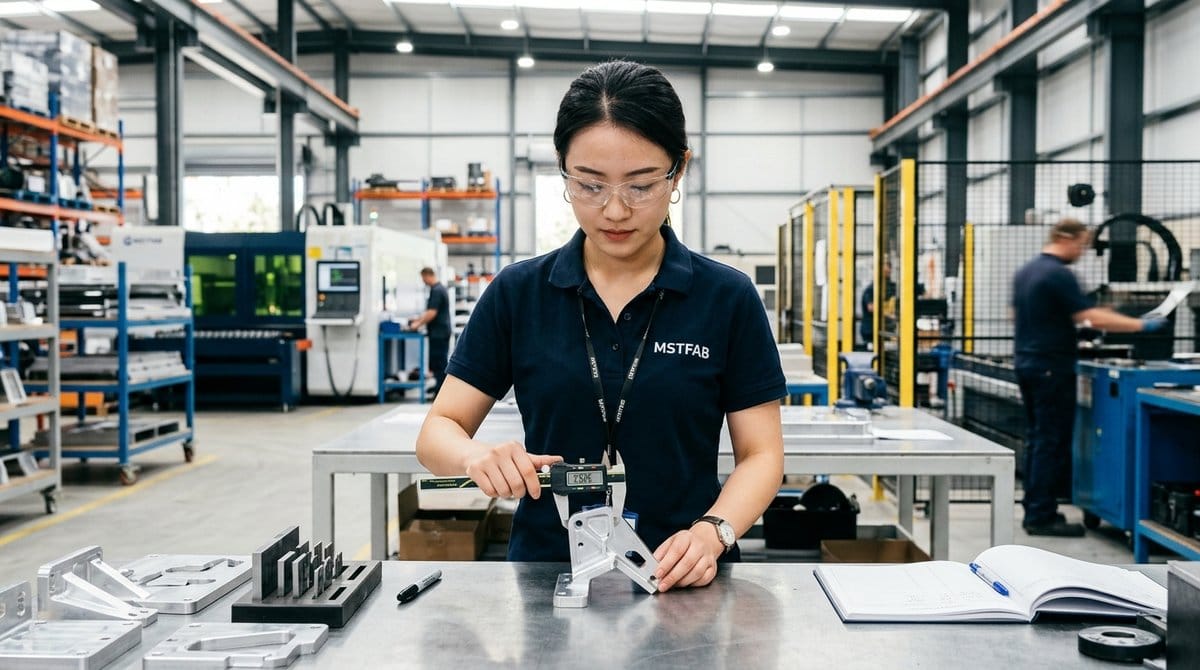
The 4-Step Roadmap to Scaling from Sample to Production
- Formal Golden Sample Sign-Off: Retain two physical golden units from the prototype run—one at the client OEM facility and one in MSTFAB’s quality master archive. This establishes the physical benchmark for visual surface finish, gap tolerances, and latch feel.
- First Article Inspection (FAI) Report per AS9102 / ISO 9001: Perform a 100% ballooned drawing inspection scan using our automated CMM, documenting actual dimensions, material test mill certs, and coating thickness data.
- Modular Welding & Assembly Fixturing: Replace manual hand-clamping with dedicated Demmeler 3D modular welding nests. This guarantees that door hinges, internal PEM standoffs, and mounting flanges repeat within ±0.20mm across every batch.
- Continuous Line Nesting & Material Procurement: Group multi-part enclosure kits (base, cover, brackets) onto common sheet sizes (e.g. 1500x3000mm) to achieve >88% sheet yield, locking in volume raw material pricing discounts.
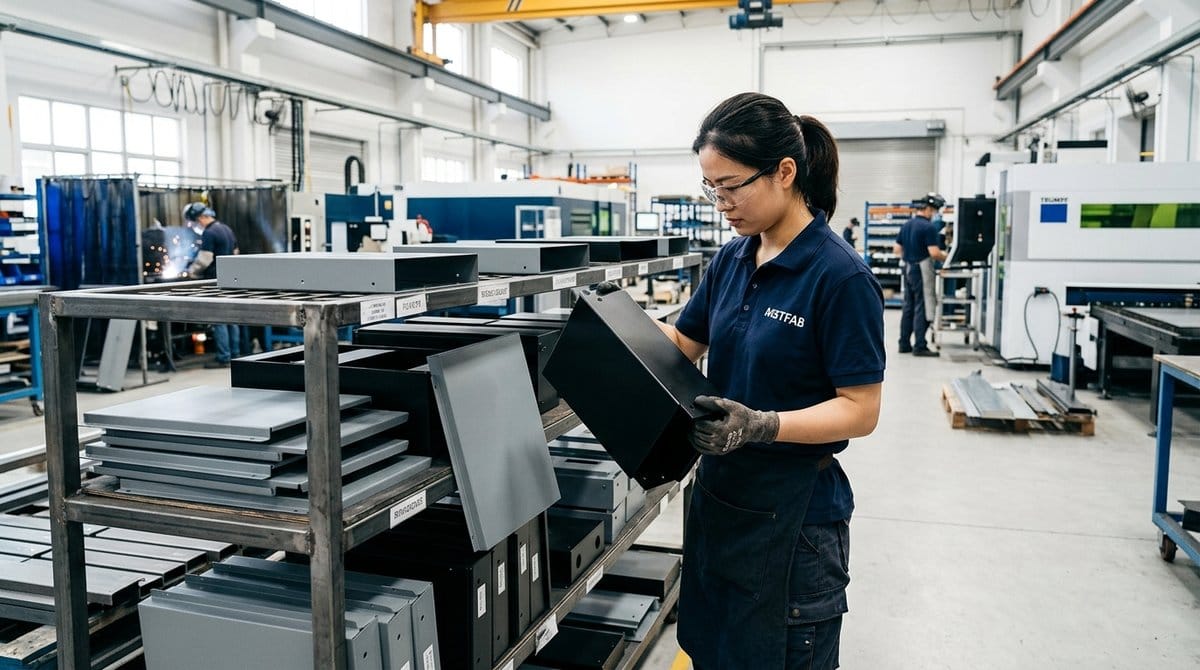
Scale Your Product with Agile Low-Volume Production
No expensive hard tooling charges. Fast turnaround, certified ISO 9001 quality, and dedicated pilot production cells at MSTFAB.
Frequently Asked Questions on Low-Volume Production
What is the minimum order quantity (MOQ) for low-volume production at MSTFAB?
MSTFAB has no rigid minimum order quantity. We routinely support pilot production batches starting at 10 to 25 units, enabling hardware startups and industrial OEMs to validate their market without tying up capital in inventory.
How do you protect against design revision mix-ups between batches?
Every order is tracked under our enterprise ERP/PLM system with strict engineering change order (ECO) controls. CAM laser programs and press brake programs are linked directly to drawing revision numbers, preventing obsolete versions from reaching the shop floor.
 WeChat Contact
 WhatsApp Me Directly