
OEM quotation guide / empty enclosure metalwork
Short answer: a useful laser cut enclosure parts quotation should define more than unit price. It should connect the controlled drawing to material, nesting, cutting, bending, welding, mechanical hardware, finish, inspection, quantity and export packing, while clearly separating empty shell fabrication from electrical or finished-product supply.
What the MSTFAB quotation covers
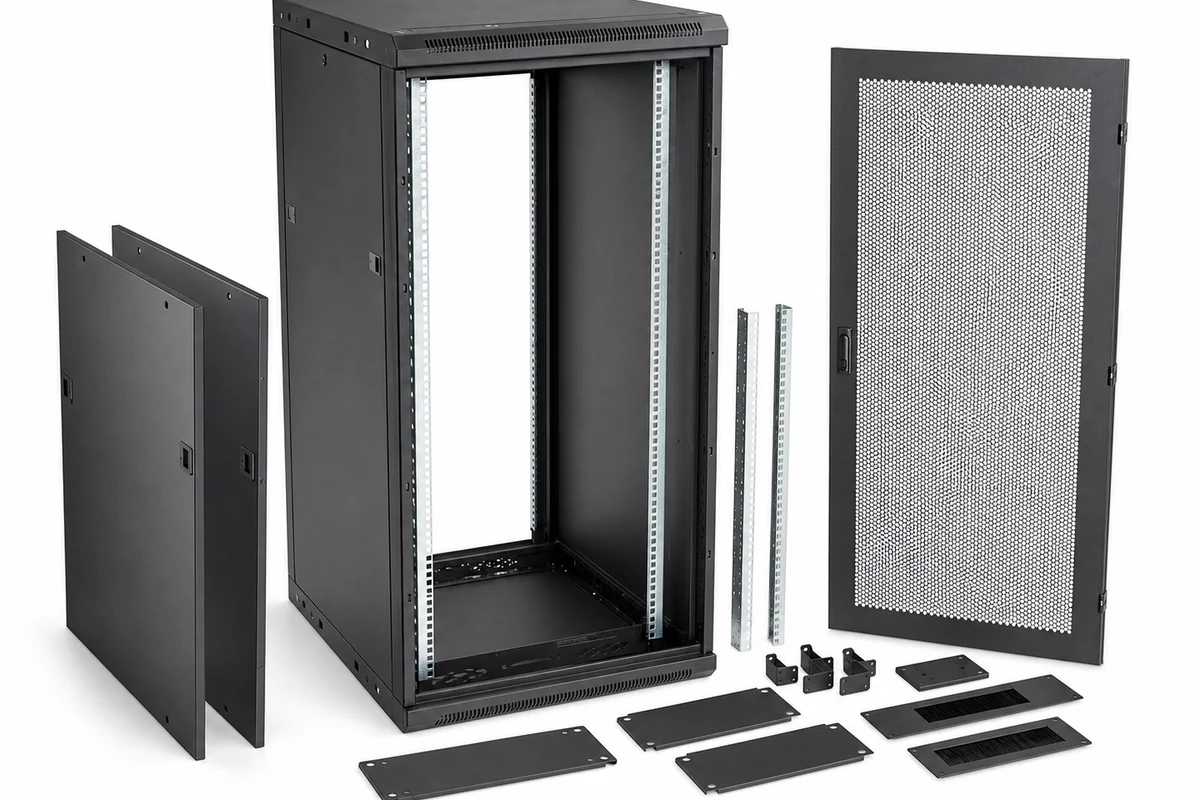
MSTFAB quotes and manufactures drawing-defined laser cut sheet metal enclosure shells and mechanical components. Typical scope includes flat panels, bent covers, enclosure bodies, doors, mounting plates, chassis parts, guards, brackets, frames, gland plates, ventilation panels, studs and specified mechanical hardware interfaces.
- DFM review for sheet metal manufacturability
- Fiber laser cutting and deburring
- CNC bending and fixture welding
- Mechanical fastener insertion and empty-shell trial fit
- Powder coating, dimensional inspection and export packing when specified
- PLCs, PCBs, drives, breakers, displays and electronic devices
- Wiring, cable harnesses and electrical assembly
- Fans, cooling equipment and thermal-system design
- Software, programming, energized testing and commissioning
- Final IP, NEMA, UL, CE or complete-product certification
MSTFAB does not supply complete electrical equipment or finished customer products. We fabricate the empty metal shell and related mechanical parts. That boundary belongs in the quotation, not in a surprised email after the purchase order.
This page focuses on supplier scope, cost structure and manufacturing evidence. Buyers preparing files can use the separate laser cutting RFQ checklist.
Quotation workflow
Five steps from drawing to a comparable quote
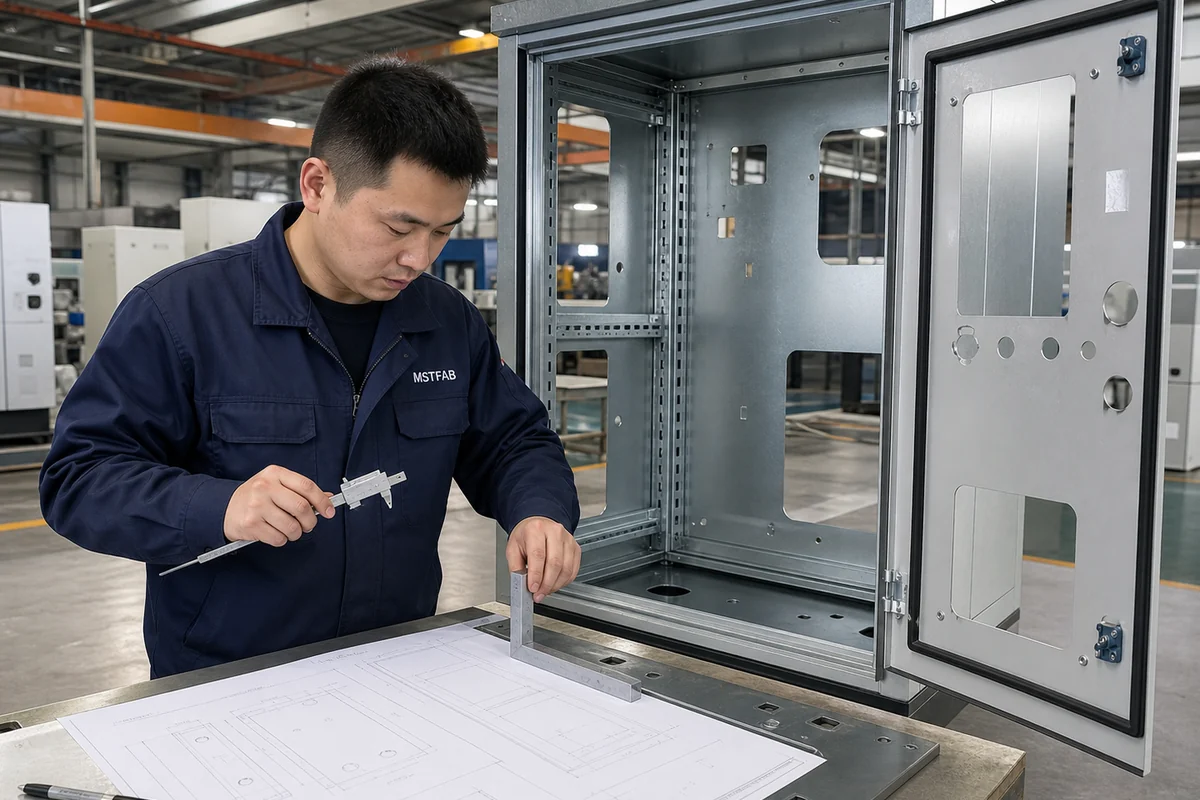
A quotation is only comparable when suppliers are pricing the same revision and the same scope. Include the drawing revision, material, thickness, quantity, finish, critical tolerances, inspection documents, mechanical hardware and packing method. Otherwise a low quote may simply be a shorter list of what the supplier forgot.
Cost structure
What affects a laser cut enclosure parts quotation?
The laser has no interest in a purchasing spreadsheet. It responds to material, geometry and process time. Enclosure quotations also include what happens before and after cutting.
| Cost driver | What changes the price | Buyer detail that improves accuracy |
|---|---|---|
| Material | Grade, thickness, sheet size, availability and usable yield | Exact grade and allowed substitution |
| Laser cutting | Cut length, pierce count, small features, perforation density and edge requirement | Clean DXF or DWG plus controlled PDF |
| Quantity | Nesting efficiency, setup allocation, batch handling and repeat demand | Prototype, order quantity and annual forecast |
| Bending | Number of bends, tool changes, flange access, radius and angle tolerance | Formed dimensions and bend notes |
| Welding | Joint length, fixture needs, distortion control, grinding and cosmetic class | Weld symbols and visible-surface map |
| Hardware | PEM type, studs, hinges, locks, insertion access and sourcing | Part numbers and installation locations |
| Finish | Pretreatment, color, texture, masking, coating build and cosmetic limits | Finish specification and approved sample |
| Evidence and packing | FAI, dimensional reports, special protection, crate and shipment method | Document list and destination |
Send a drawing pack that controls both quotation and production
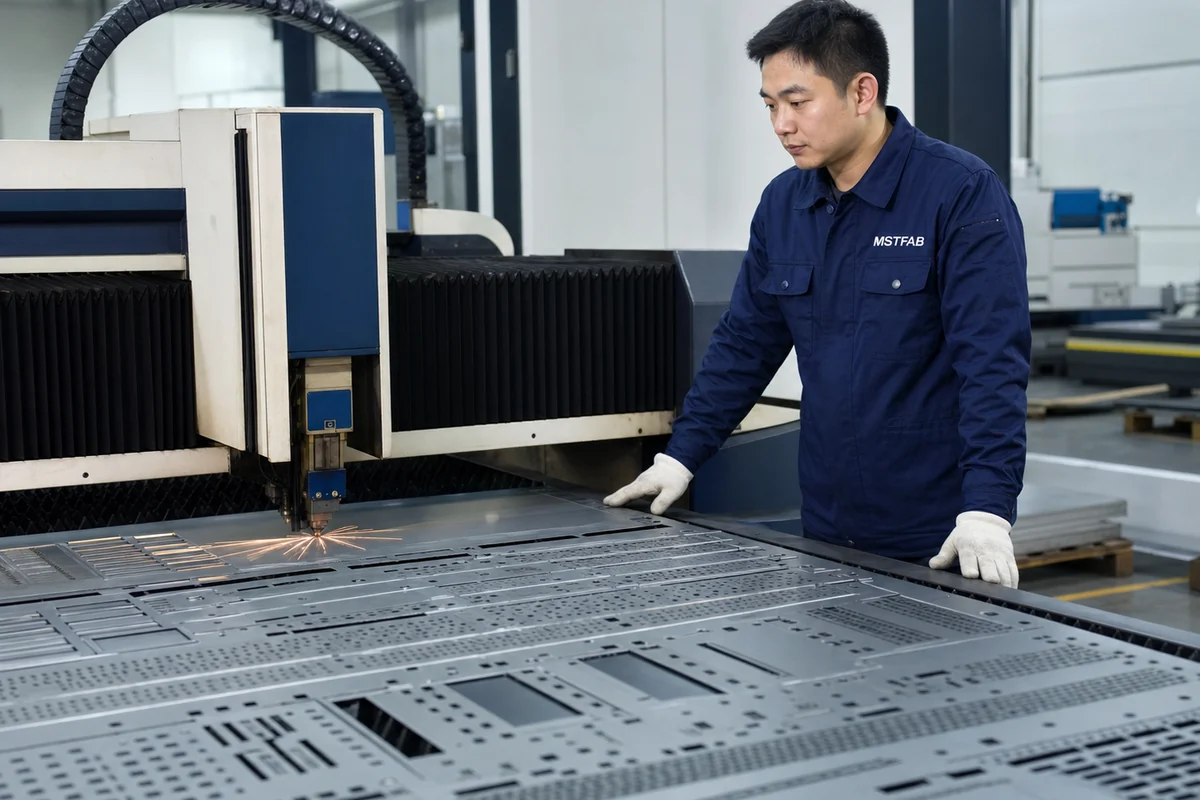
A complete drawing pack normally includes a 2D controlled drawing, a DXF or DWG cutting profile, a STEP model where assembly context matters, and a BOM for multi-part enclosure sets. PDF notes should define material, thickness, finish, critical dimensions, datums, threads, hardware and revision.
Use DXF files for laser cutting profiles and DWG files for controlled 2D geometry. A 3D model helps communicate form, but it should not silently replace tolerances and acceptance notes.
If only a photo or physical sample is available, MSTFAB can review feasibility, but it is not a reliable production definition until dimensions, materials and interfaces are converted into controlled drawings. A ruler beside a photo is useful context. It is not geometric dimensioning and tolerancing.
DFM review prevents cheap quotes from becoming expensive parts
Before quotation release, review closed contours, duplicate lines, minimum holes and slots, feature-to-edge distance, cutout density, bend relief, hole-to-bend distance, flange access, weld access and visible-surface requirements. The review should also identify whether the buyer expects flat blanks or a mechanically complete empty shell.
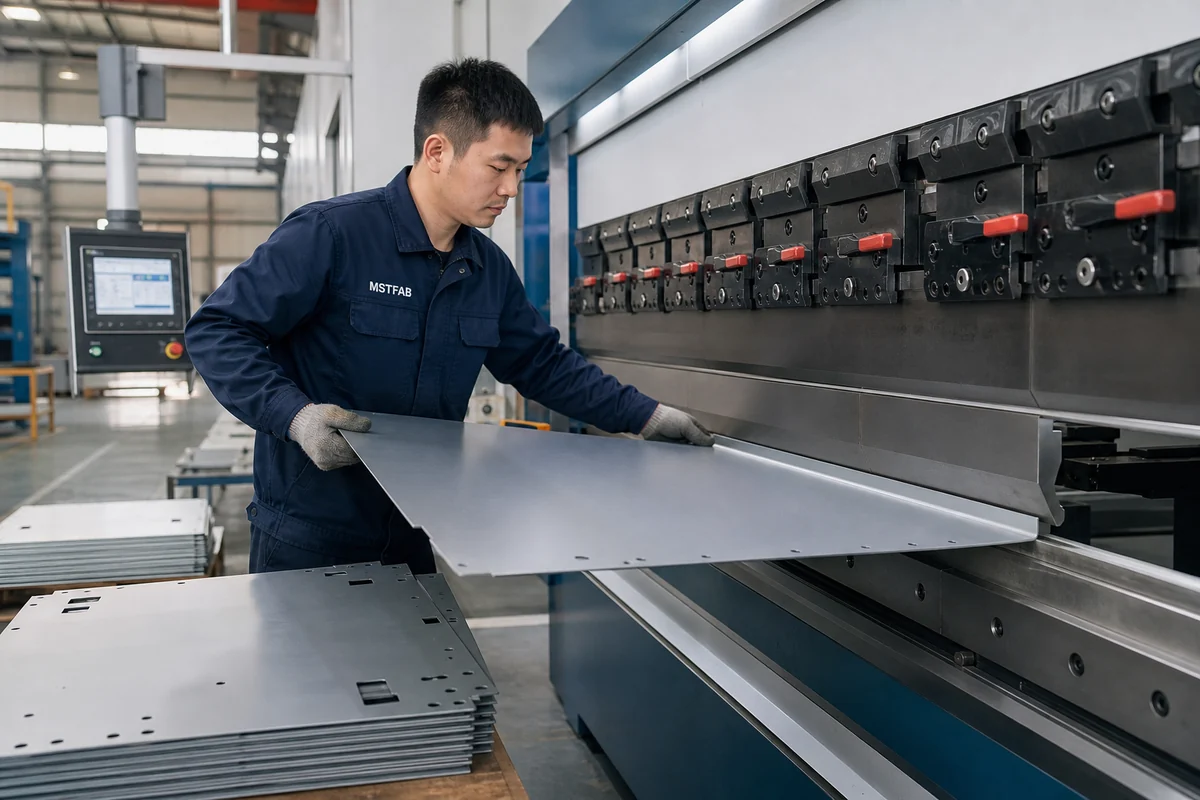
For formed panels, the quote must include realistic tooling and bend sequence. Review MSTFAB’s sheet metal bending capability when the enclosure includes returns, deep flanges or multiple adjacent bends.
Quote the mechanical process route, not only the flat laser blank
Many enclosure parts continue through deburring, CNC bending, tapping, mechanical fastener insertion, welding, grinding, powder coating and trial fit. Each operation changes cost and can change geometry. The route should identify inspection points after high-risk operations.
Welded frames need fixtures, sequence control and post-weld measurement. Doors and removable panels need hinge, latch, gasket-channel and gap checks. MSTFAB can supply these mechanical operations, including sheet metal welding and specified surface treatment, without claiming electrical integration.
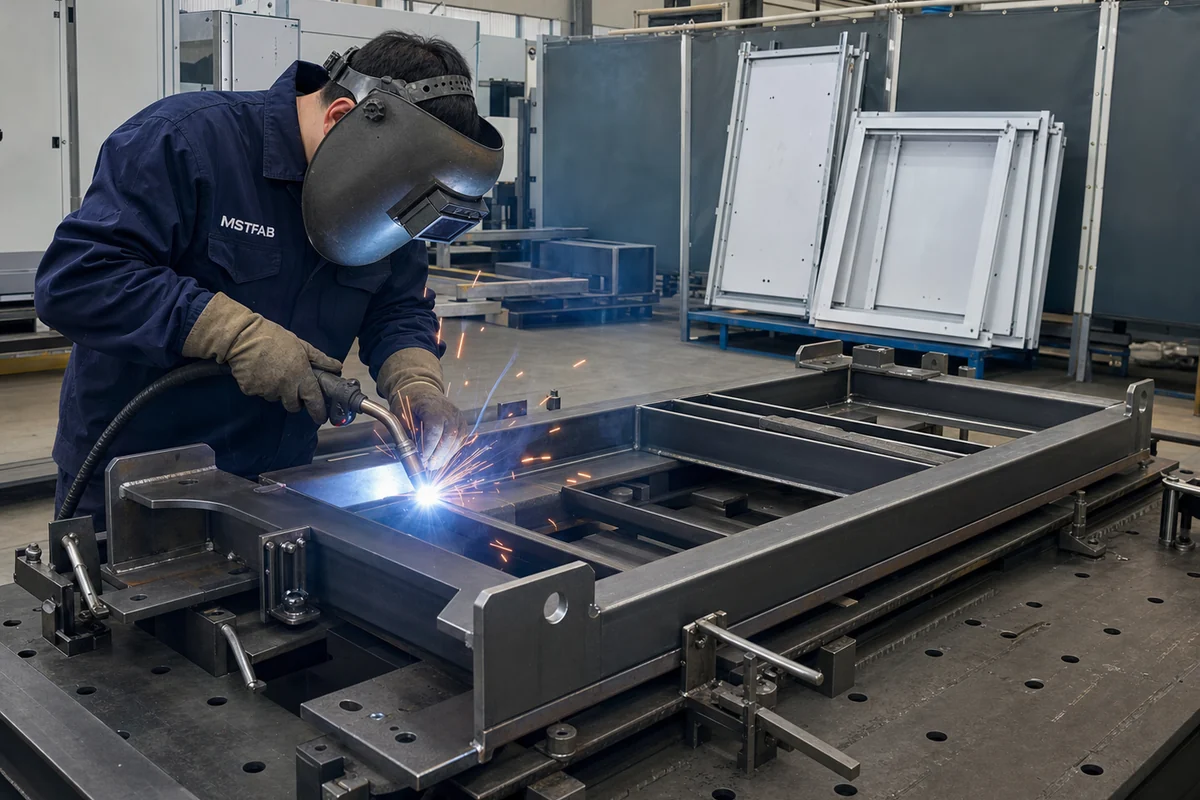

The buyer remains responsible for installed electronics, thermal hardware and final system certification. MSTFAB’s responsibility is to fabricate the drawing-defined empty enclosure metalwork consistently.
Quotation scope examples
Laser cut enclosure parts MSTFAB can manufacture
Common materials include cold-rolled steel, galvanized steel, stainless steel and aluminum. Select material using environment, strength, weight, welding, finish and cost together. The sheet metal material selection guide provides a practical comparison.
Manufacturing evidence
Define inspection before approving the quotation
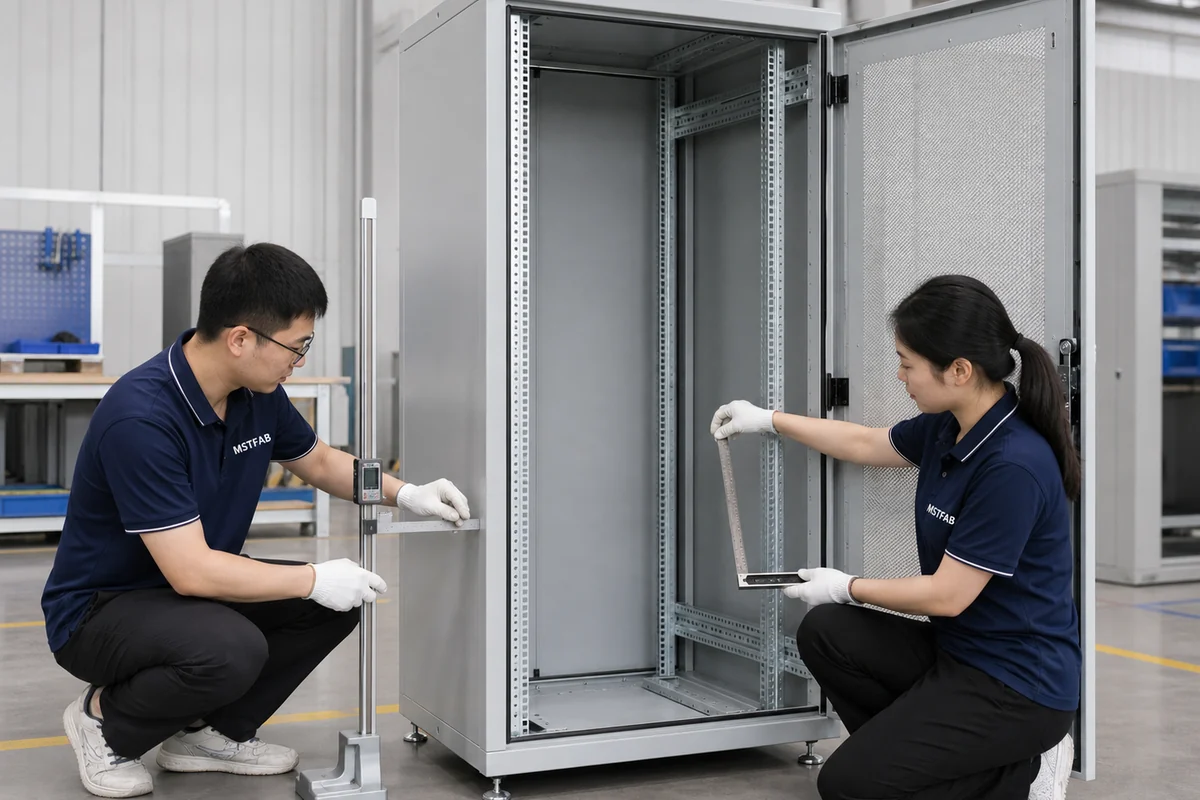
Inspection requirements affect time and cost, so they should not arrive after production. Identify the dimensions that control buyer assembly: hole patterns, door openings, frame diagonals, mounting plates, base interfaces, hardware locations, panel interchangeability and coating-sensitive fits.
| Evidence | Useful for | Typical quotation note | Owner |
|---|---|---|---|
| Material record | Grade and thickness confirmation | Certificate or receiving traceability by agreement | MSTFAB process evidence |
| First article | Validating drawing, process and critical interfaces | Recorded results before batch release | Shared approval |
| Dimensional report | Assembly-critical features | Ballooned drawing and measured values | MSTFAB inspection |
| Finish evidence | Color, coating build, masking and appearance | Approved sample and agreed checks | Shared acceptance |
| System certification | Electrical, thermal, ingress and complete-product performance | Outside empty-shell fabrication scope | Buyer or integrator |
For measured evidence, specify a dimensional inspection report or first-article inspection in the RFQ.
Supplier comparison
Compare quotations without comparing different products
Before selecting a supplier, place each quote beside the same controlled drawing and scope. Check material grade, quantity, secondary operations, finish, tolerances, hardware, inspection, packing, lead time, Incoterm and quotation validity. Separate one-time fixture or tooling cost from recurring unit cost.
A lower quote can be correct. It can also exclude half the work. The useful question is not only “Why is this cheaper?” but “Which scope line changed?”
Export protection
Include packaging in the quote before freight tests the parts
Laser cut panels can scratch, long doors can bow and coated edges can rub. Packaging should separate visible surfaces, support large panels, block welded frames, protect corners and identify loose parts by drawing or assembly set. The method depends on shipment mode and destination.
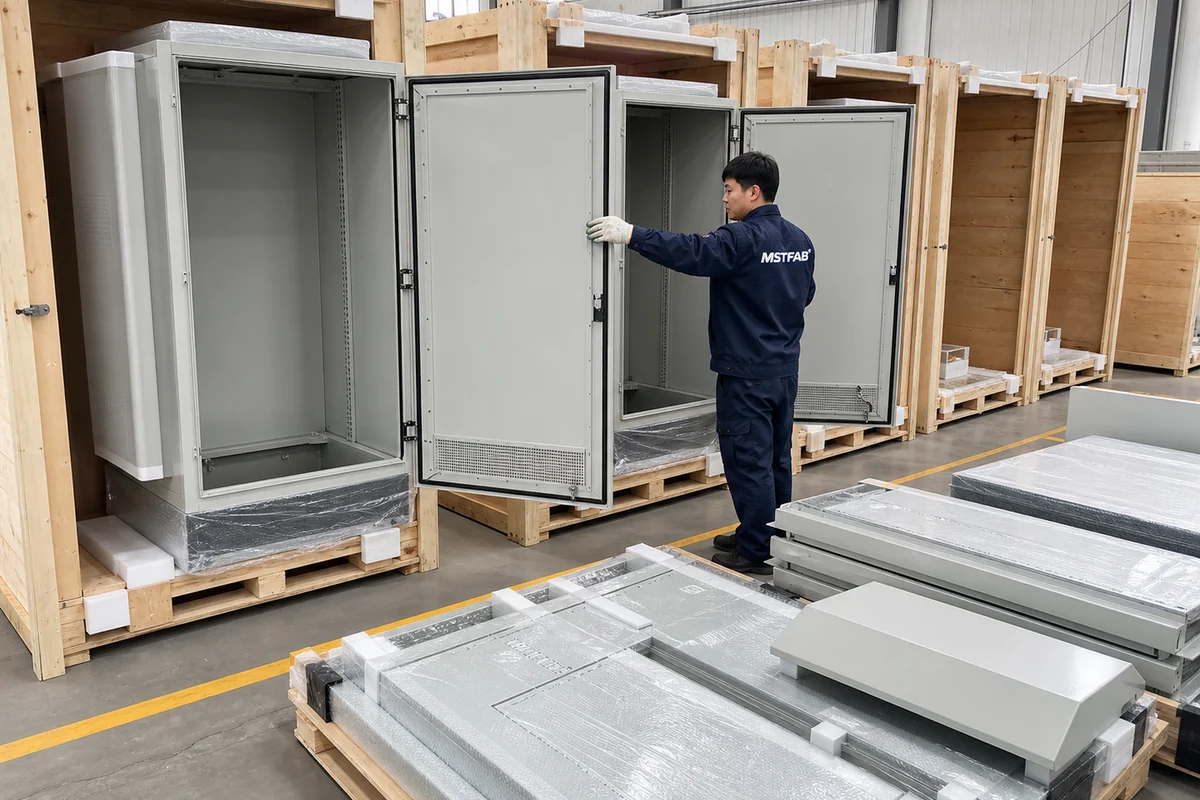
Review MSTFAB’s mechanical assembly and export packaging capability for empty enclosure metalwork.
Buyer trust checks
Verify the factory evidence behind the quotation
Buyers can review MSTFAB’s core laser cutting services, broader sheet metal fabrication capability and factory evidence before sending production drawings.
FAQ
Laser cut enclosure parts quotation questions
Does MSTFAB quote complete electrical enclosures or finished equipment?
No. MSTFAB quotes and fabricates empty sheet metal enclosure shells and mechanical parts. Electrical components, wiring, software, cooling equipment, energized testing and final complete-product certification remain with the buyer or system integrator.
Which files produce the most reliable quotation?
Send a controlled PDF drawing, DXF or DWG cutting profiles, a STEP model where assembly context matters, material grade, thickness, quantity, finish, critical tolerances, mechanical hardware and inspection requirements.
Can MSTFAB quote from a photo or physical sample?
MSTFAB can review feasibility from a photo or sample, but production pricing and acceptance need controlled dimensions, material and interface requirements. Reverse engineering or drawing creation should be agreed as a separate scope.
Why can two quotations for the same enclosure look very different?
Suppliers may assume different material, scrap, quantities, tolerances, secondary processes, finish, inspection, packing or freight. Compare the scope and exclusions line by line before comparing the final total.
Can the quote include bending, welding and powder coating?
Yes. MSTFAB can quote these mechanical fabrication operations when defined by the drawing. Mechanical fastener insertion and empty-shell trial fit can also be included. Electrical assembly is excluded.
Who is responsible for IP, NEMA, UL or CE certification?
MSTFAB can fabricate drawing-defined shell geometry and provide agreed mechanical evidence. The buyer or system integrator owns the complete design, installed equipment, environmental validation and final product certification unless a separate written scope says otherwise.
Drawing-based quotation
Send the enclosure files and define the scope once
Provide the controlled drawing, material, thickness, quantity, finish, critical interfaces, inspection documents and packing requirements. MSTFAB will review the mechanical fabrication route for laser cut empty enclosure metalwork.
 WeChat Contact
 WhatsApp Me Directly