
ISO Certified Sheet Metal Fabrication: How OEM Buyers Verify Real Process Control
Sourcing from an ISO 9001 certified sheet metal fabrication manufacturer only protects your OEM supply chain when the certificate scope matches custom metal fabrication and is backed by lot-traceable Mill Test Certificates (MTC), First Article Inspection (FAI) reports, calibrated CMM/gauge logs, and documented ECN revision control.
- Scope & IAF Accreditation Check: Verify the ISO 9001:2015 certificate covers custom sheet metal cutting, bending, welding, and enclosure assembly under an IAF-accredited registrar.
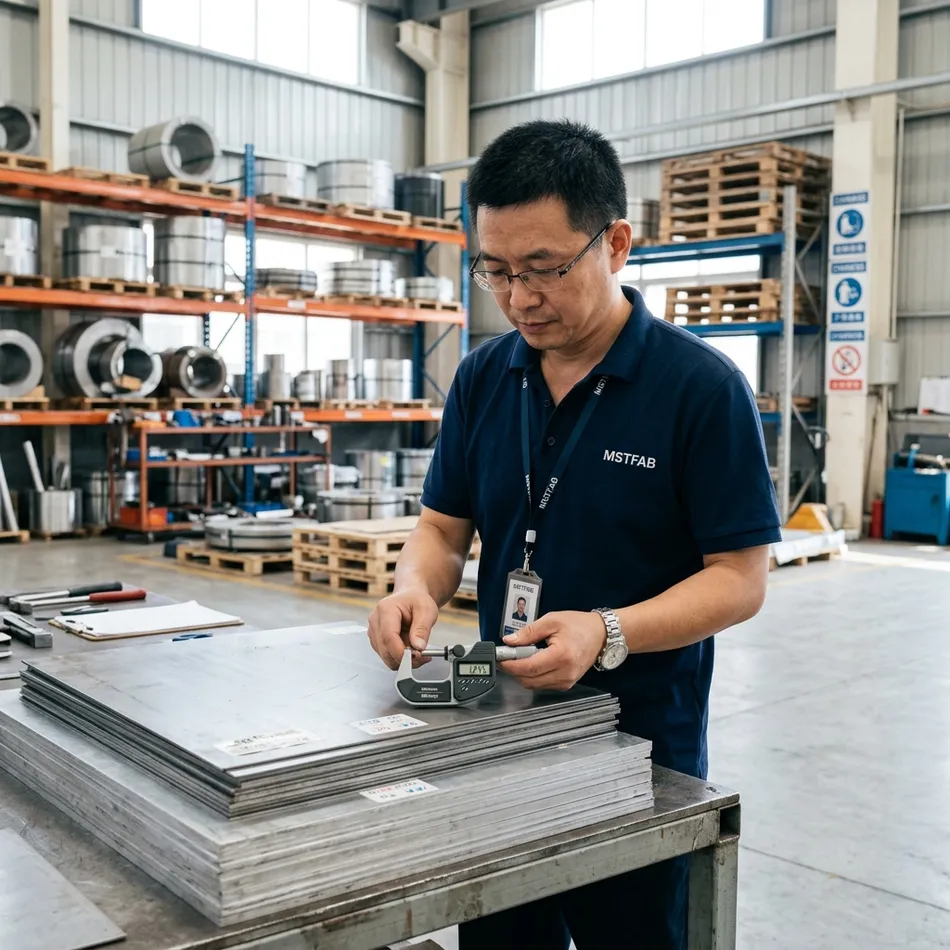
- Heat-Lot Material Traceability: Require incoming EN 10204 3.1 Mill Test Certificates (MTC) tied to raw sheet bundles for 304/316L SS, 5052/6061 Al, and SGCC/SPCC steel.
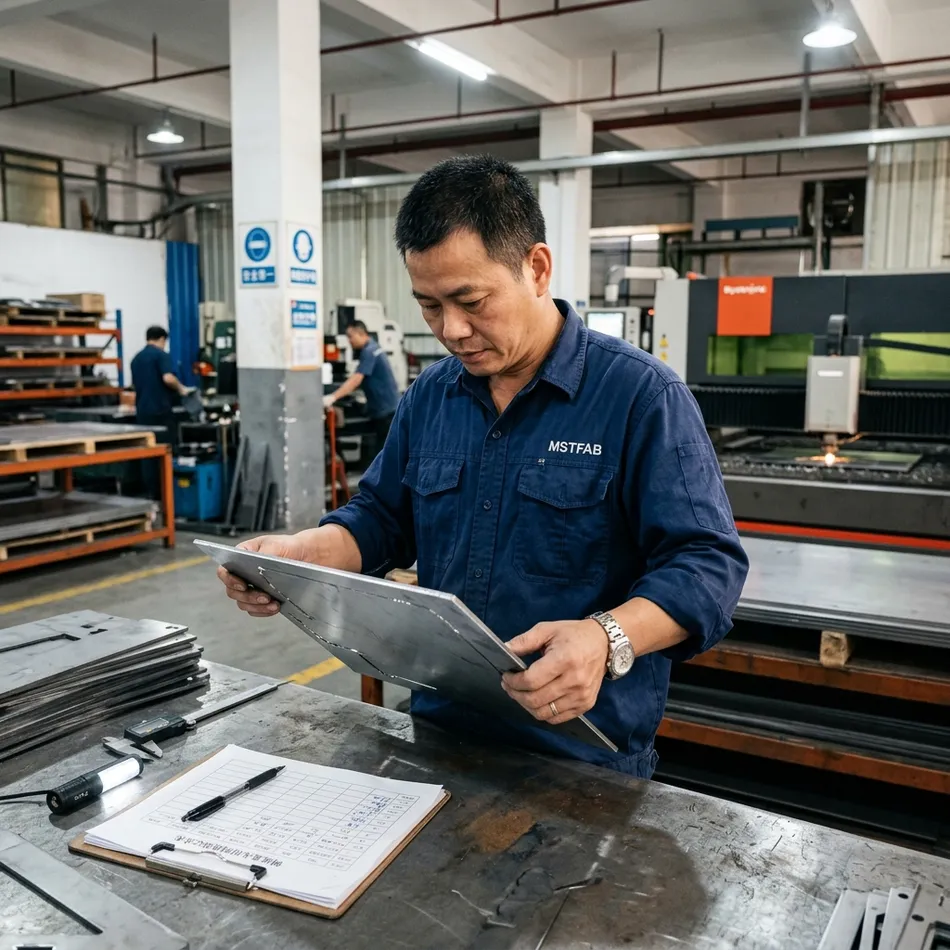
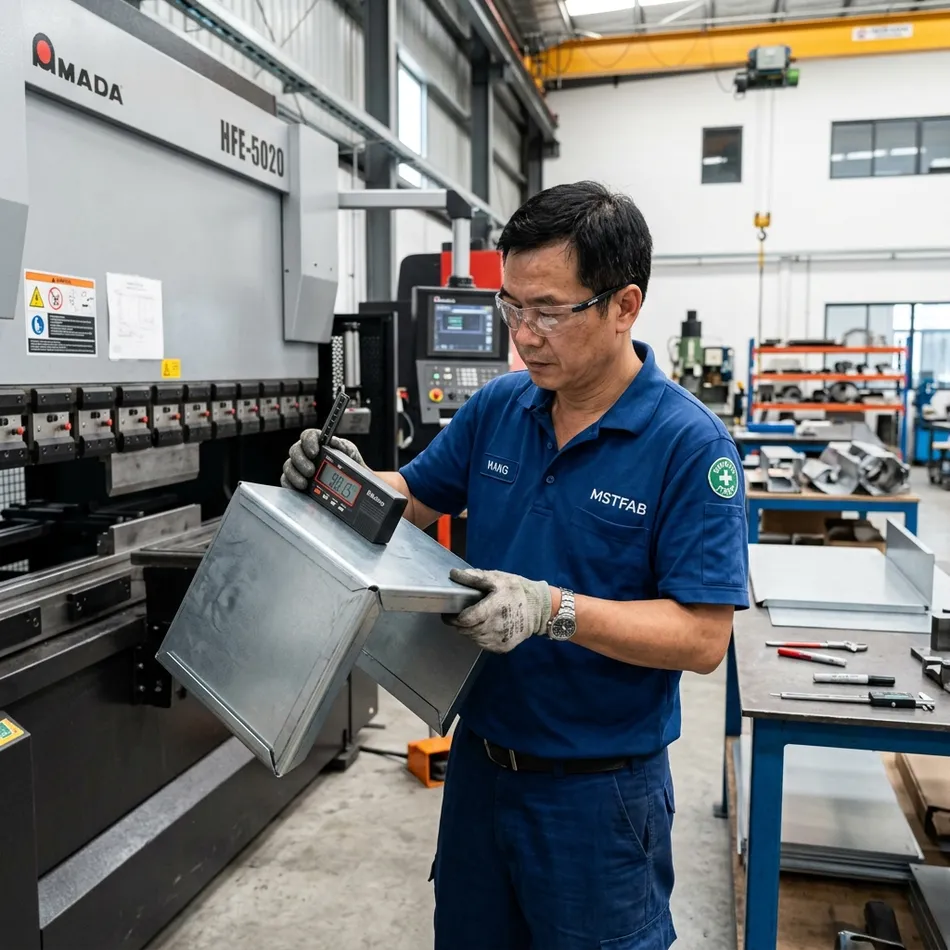
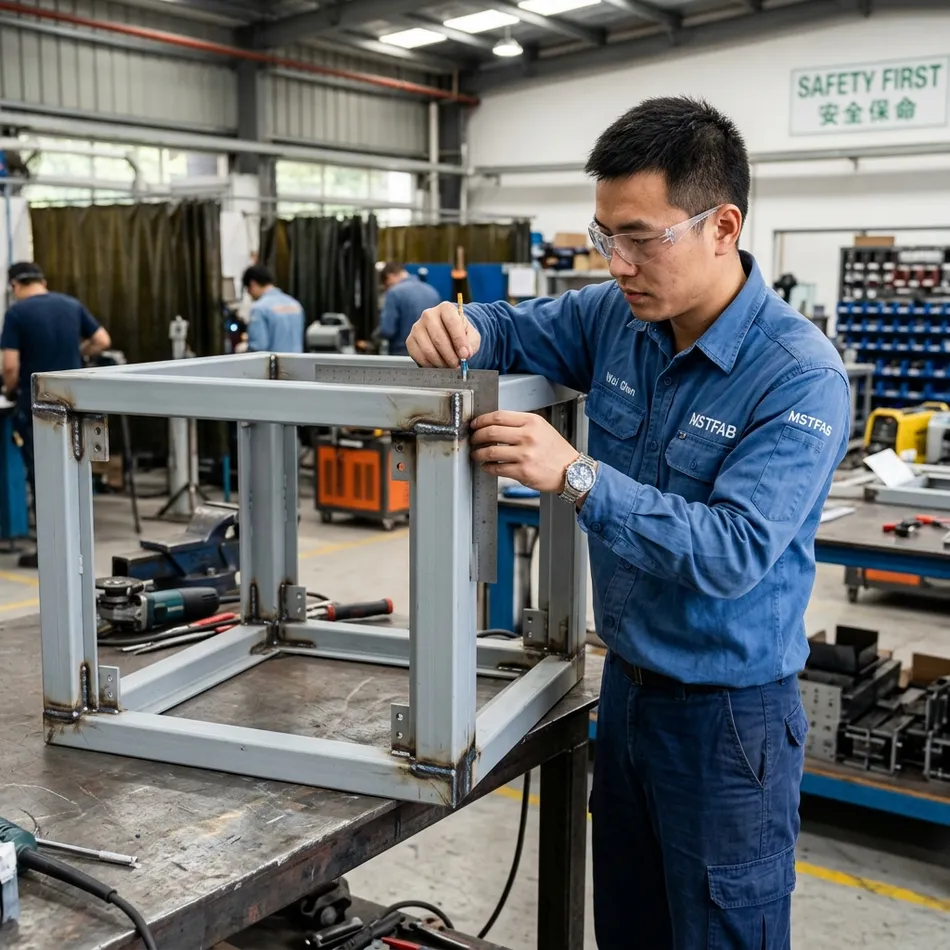
- In-Process & FAI Gates: Enforce first-piece sign-off at fiber laser blanking, CNC press-brake forming (±0.20 mm / ±0.5°), welding fixtures, and post-coat DFT checks.
- Non-Conformance & 8D CAPA: Confirm documented quarantine, root-cause 8D corrective action, and drawing revision lock before releasing repeat batches.
Quick answer: When evaluating an ISO-certified sheet metal fabrication company, verify the certificate’s legal entity, covered sites, scope, standard and current status. Then assess the controls and inspection evidence for your actual parts. A quality-management certificate is not a dimensional report, product approval or guarantee of zero defects.
This guide helps OEM buyers separate certification claims from order-specific evidence. It is not a certificate-validation result for MSTFAB or another supplier. Request current documentation for the contracting entity and manufacturing location before making a qualification decision.

1. Check who and what the certificate covers
Obtain a readable certificate rather than relying on a logo or a cropped factory photograph. Compare the legal name and address with the quotation. If a trading name differs from the certified entity, ask the supplier to explain the relationship. Review the scope and any site schedule against the work being ordered.
Record the certificate number, issuing certification body, standard and edition, dates and status-check source. A printed expiry date alone is not a live status check. Where accredited certification is required by your purchasing policy, verify the relevant accreditation as well.
ISO’s certification guidance explains that ISO develops standards but does not issue certification. It identifies certification and accreditation bodies, and IAF CertSearch, as verification routes.
2. Follow up when a record cannot be found
Search using the certificate number and exact entity details. If the result does not match, ask for clarification and confirm through the issuing body as appropriate. Do not approve a supplier on an unrelated company’s record.
Do not automatically label a certificate false because a search returns no match. The IAF CertSearch verification guide lists reasons why a record may not appear and provides a follow-up route. Keep the status unresolved until the discrepancy is addressed.
3. Ask for evidence tied to your part number
| Buyer concern | Evidence to agree | What it answers |
|---|---|---|
| Wrong drawing reaches production | Released revision, production instructions and a superseded-file control example | How the order’s manufacturing baseline is identified |
| Material differs from the requirement | Purchase specification, receiving identification and material documents where specified | How material identity is linked to the order |
| Parts pass individually but do not assemble | Critical-interface measurements and an agreed fit check | Whether the specified mechanical interfaces meet their acceptance criteria |
| Finish affects threads or mating surfaces | Finish specification, masking requirements and finished-condition checks | Whether the delivered condition matches the released requirements |
| A deviation is repeated without approval | Nonconformance disposition, approval and updated production instructions | Who approved the exception and whether it applies to future orders |
These are purchasing checkpoints, not a claim that every order includes every record. Specify required documentation and inspection before quotation. For the manufacturing route, see our sheet metal fabrication services.
4. Distinguish a first-part check from process capability
A first article records results for the agreed sample and revision. It does not prove that every later part will conform. Ask which features are checked at setup, during production and before release, and how the supplier responds to an out-of-tolerance result.
Likewise, a machine list does not establish measurement capability. Agree on datums, inspection condition and a method suited to the feature. A dimensional result cannot establish an unrelated property, such as weld strength or completed-enclosure protection performance.
Illustrative example, not a customer case: A supplier shows a valid management-system certificate, but the sample report refers to a different drawing revision. Keep the order’s first-article approval open. Resolve the revision mismatch and obtain the agreed evidence; the certificate does not resolve that part-specific discrepancy.
5. Check process ownership without dismissing subcontracting
Ask where cutting, forming, welding, finishing and inspection take place for the selected part. Identify any outsourced operations, required source approvals and responsibility for corrective action. An operation being subcontracted is not, by itself, proof of poor quality.
Do not assume that a certificate for one site or activity establishes the certification status of every outside processor. Where certification coverage matters, obtain the relevant details and verify them separately. Keep process ownership and certificate coverage as distinct questions.
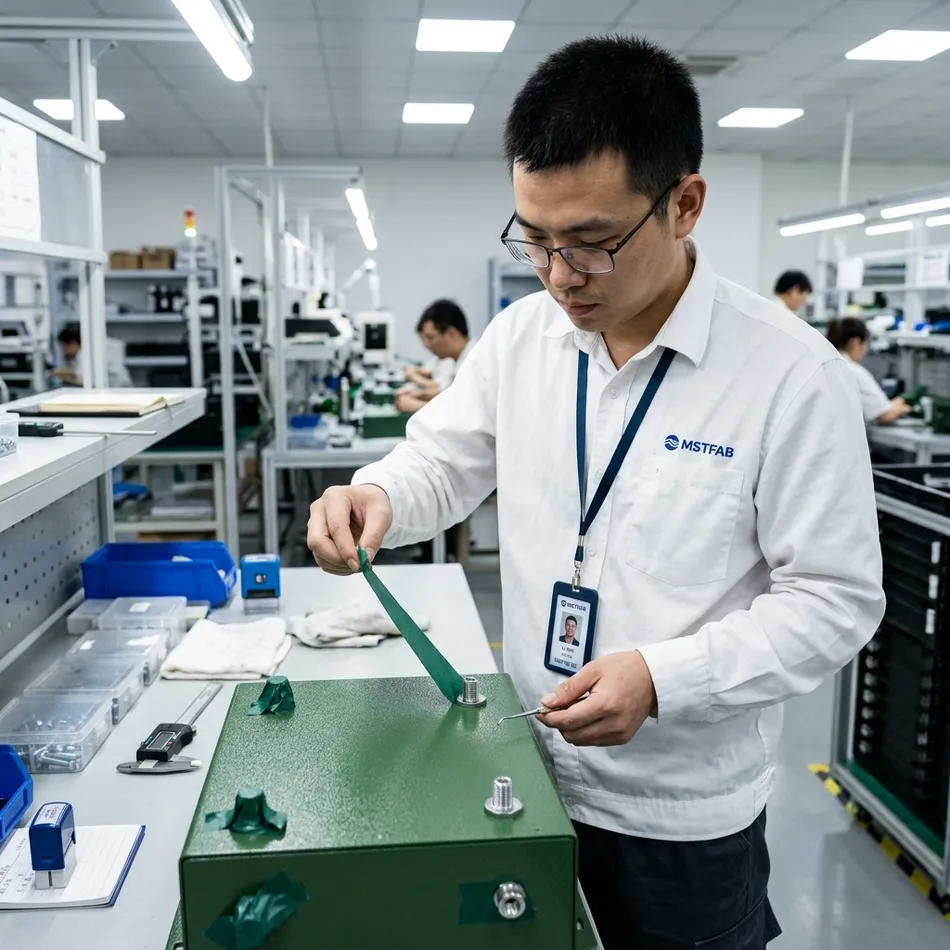
What to include in a supplier qualification request
- Required certification standard and any accreditation requirements
- Contracting entity, manufacturing location and operations being qualified
- Representative drawings, material, quantity and finish
- Critical interfaces and requested first-article records
- Deviation approval and change-notification requirements
- Records required with each shipment and their retention expectations
For MSTFAB orders, request the current qualification documents relevant to your project and confirm the agreed records in the quotation. This page does not replace certificate verification, a supplier audit or acceptance of a particular part.
Manufacturing boundary: MSTFAB supplies drawing-based mechanical sheet metal parts, empty enclosure shells and agreed assemblies. Electronics, wiring and completed-equipment validation remain outside that scope unless separately agreed. Neither a general quality statement nor a management-system certificate is a finished-product certification.
 WeChat Contact
 WhatsApp Me Directly