
What are the critical differences between ISO 9001 and IATF 16949 in sheet metal fabrication?
While ISO 9001:2015 establishes a baseline Quality Management System (QMS) focused on procedural consistency and customer satisfaction, IATF 16949:2016 adds stringent automotive-grade manufacturing controls: mandatory Advanced Product Quality Planning (APQP), Production Part Approval Process (PPAP Level 3), Process Failure Mode and Effects Analysis (PFMEA), Measurement Systems Analysis (Gage R&R < 10%), statistical process capability (Cpk ≥ 1.67), and zero-defect Poke-Yoke error-proofing.
When selecting a sheet metal fabricator for mission-critical industrial, medical, or automotive applications, reviewing a vendor’s quality certification is usually the first qualification step. However, many hardware buyers misunderstand what these certifications actually guarantee. A job shop holding basic ISO 9001 may still rely on visual inspection and informal machine setups, whereas an IATF 16949-compliant manufacturer operates with mathematical rigor, locking down process variation before the first sheet is cut.
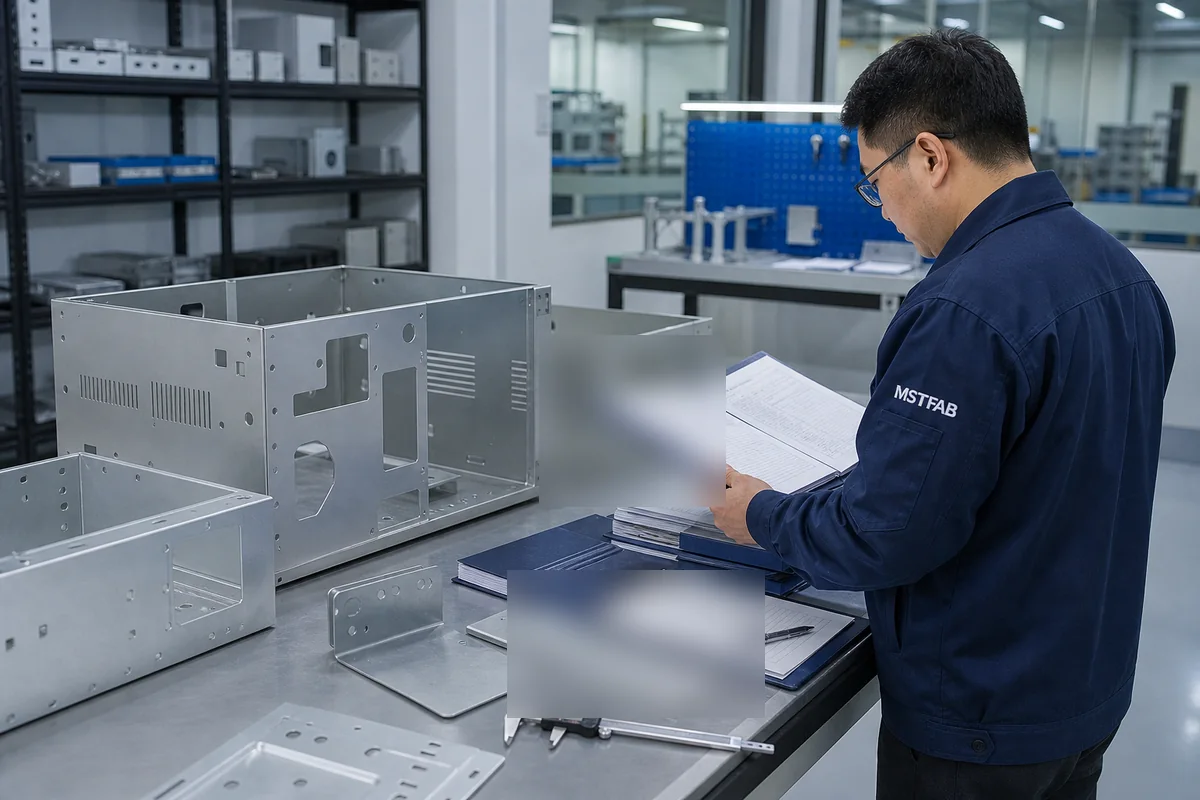
The 5 Core Automotive Quality Tools (AIAG) in Sheet Metal
IATF 16949 differentiates itself from general ISO 9001 by mandating the five AIAG Core Tools across all manufacturing phases:
1. APQP (Advanced Product Quality Planning)
A structured stage-gate framework that guides parts from concept to mass production, ensuring tooling feasibility, machine tonnage calculations, and packaging validation are finalized before volume release.
2. PFMEA (Process Failure Mode & Effects Analysis)
Systematically anticipates every possible shop floor failure: laser assist gas pressure drops, press brake backgauge wear, or powder coat curing underexposure. Each mode is scored by Severity, Occurrence, and Detection, driving mandatory error-proofing.
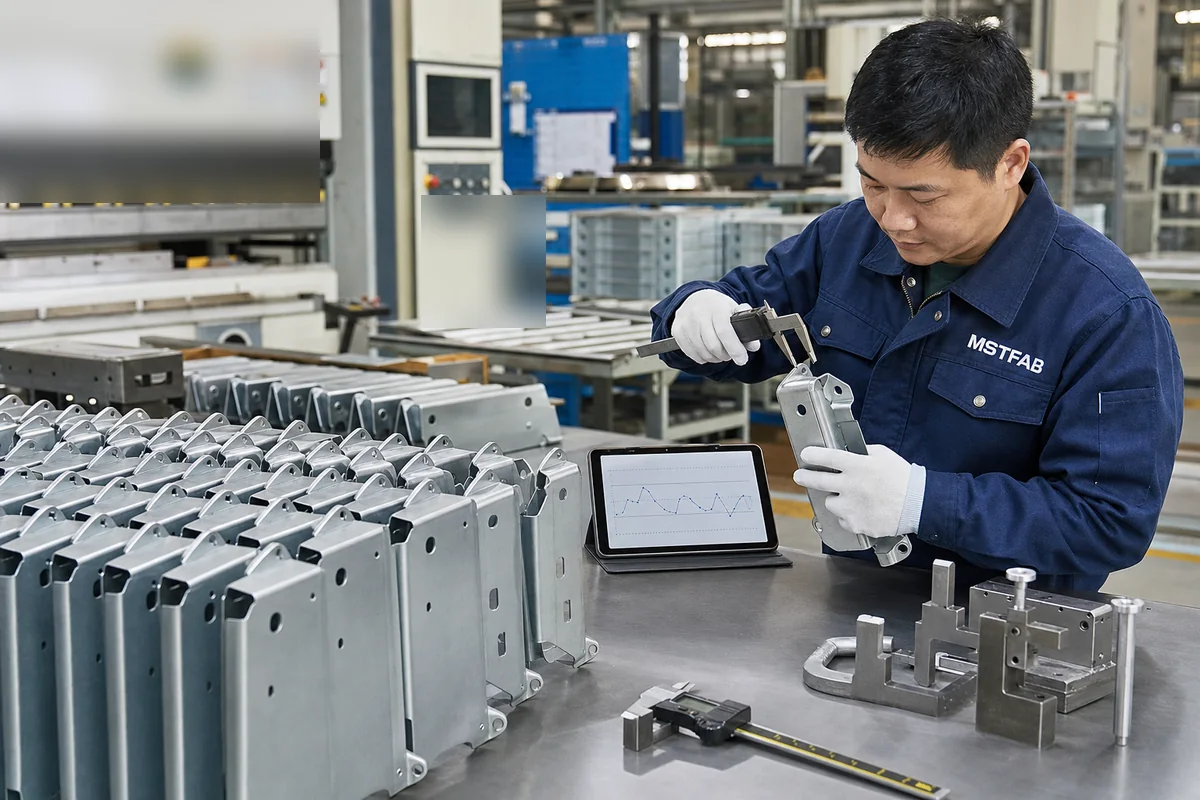
3. MSA (Measurement Systems Analysis / Gage R&R)
Proves mathematically that measuring instruments and human inspectors do not introduce error. Requires Gage Repeatability and Reproducibility (Gage R&R) to contribute less than 10% of total product tolerance spread.
4. SPC (Statistical Process Control)
Replaces post-production inspection with real-time X-bar/R control charts. Critical-to-quality (CTQ) dimensions must demonstrate long-term process capability of Cpk ≥ 1.33 (or Cpk ≥ 1.67 for automotive safety features).

5. PPAP (Production Part Approval Process)
A rigorous 18-element qualification package (typically submitted at Level 3) including dimensional reports, certified material mill certs, control plans, and sample parts produced under volume conditions.
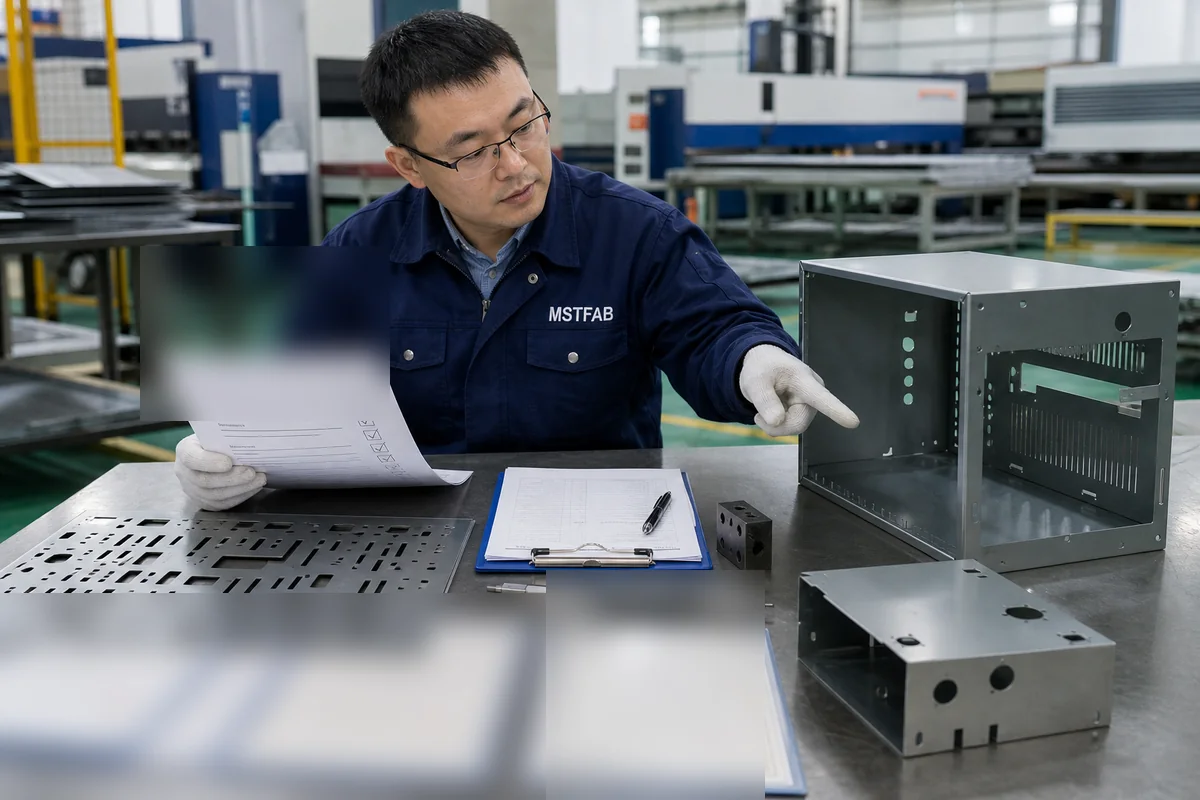
Detailed Comparison: ISO 9001 vs. IATF 16949 in Sheet Metal
The table below summarizes the operational differences between ISO 9001 and IATF 16949 implementations:
| Quality Requirement | ISO 9001:2015 Standard | IATF 16949:2016 Automotive Standard | Real-World Manufacturing Impact |
|---|---|---|---|
| Process Capability Target | No specific mathematical index mandated | Cpk ≥ 1.33 (CTQ: ≥ 1.67) | Virtually zero dimensional drift across runs |
| Measurement Gauge R&R | Routine calibration stickers required | Formal Gage R&R study < 10% error | Eliminates measurement bias between inspectors |
| Defect Error-Proofing | Corrective actions & training logs | Mandatory physical Poke-Yoke devices | Parts physically cannot be loaded backwards |
| Material Traceability | Lot traceability to PO level | Heat-lot traceability to raw coil slit | Instant quarantine of affected coils in < 2 hrs |
| Change Control (PCN) | Supplier manages internal deviations | Strict customer approval for any shift | Zero unauthorized tooling or machine swaps |

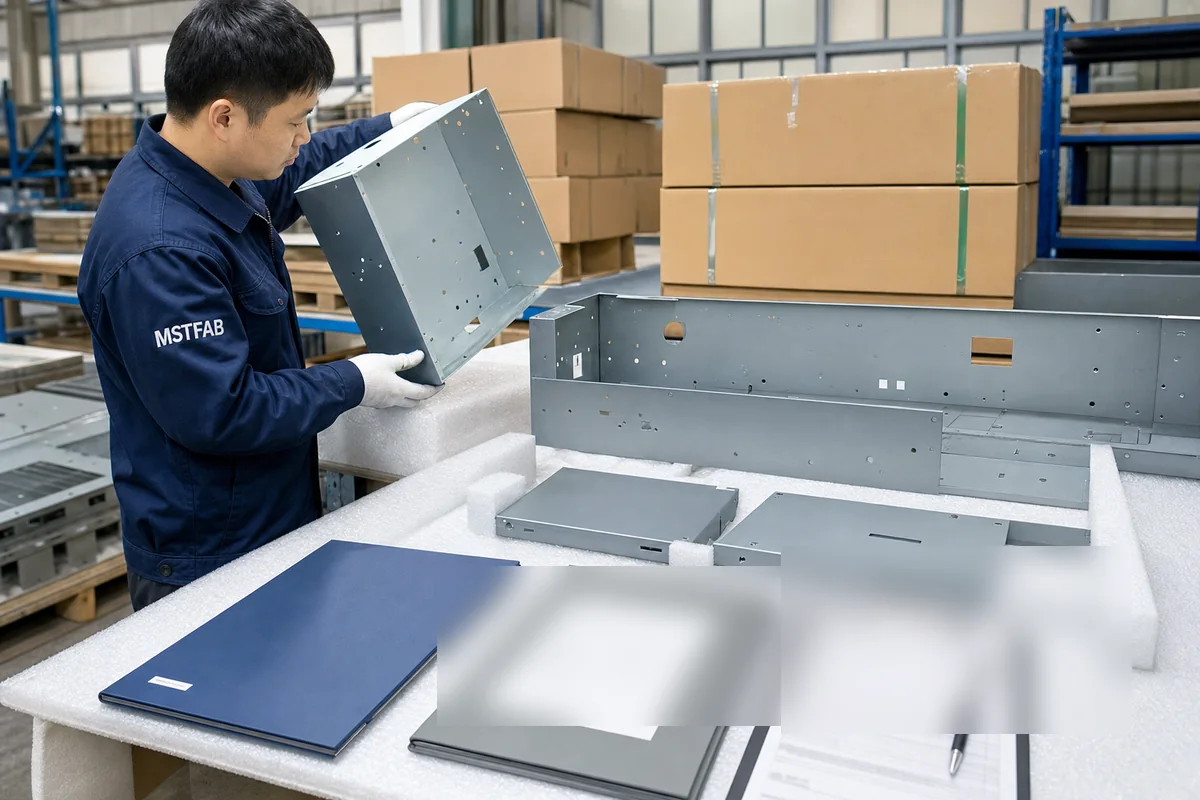
Experience Automotive-Grade Sheet Metal Quality With MSTFAB
MSTFAB integrates ISO 9001:2015 and IATF 16949-grade process controls across all precision sheet metal production. We provide complete PPAP Level 3 documentation, CMM dimensional verification, and real-time SPC capability data (Cpk ≥ 1.33). Partner with our certified manufacturing team today.
 WeChat Contact
 WhatsApp Me Directly