
ISO 13485 vs. GMP vs. ISO 9001 for Medical & Pharma Enclosure Shells: Scope Matrix
When sourcing empty sheet metal enclosure shells for medical devices or pharmaceutical equipment, ISO 9001 governs the fabricator’s mechanical build-to-print quality system, ISO 13485 governs medical device QMS and risk-based lot traceability, and GMP governs hygienic cleanability (such as 304/316L Ra ≤ 0.8 μm finish and crevice-free TIG welds).
- Mechanical Build-to-Print Baseline (ISO 9001): Controls 3D STEP/2D PDF revision locking, First Article Inspection (FAI), and ISO 2768-m dimensional repeatability.
- Traceability & Change Control (ISO 13485 Flow-Down): Defines EN 10204 3.1 mill heat certs, passivation records, and written ECN/4M approval before process changes.
- Cleanroom & Washdown Geometry (GMP Design): Eliminates horizontal liquid traps, open hem crevices, and unsealed weld spatter on 304/316L stainless steel.
QUALITY REQUIREMENTS FOR EMPTY ENCLOSURE SHELLS
ISO 13485 vs ISO 9001 vs GMP is not a contest with one universal winner. The correct supplier requirement depends on what the empty sheet metal enclosure becomes, which risks the OEM assigns to it and what objective evidence the purchasing team needs.

THE QUICK ANSWER
Buy evidence for the actual enclosure risk
- ISO 13485: relevant when the enclosure enters a medical-device quality chain and the OEM’s supplier controls require it.
- ISO 9001: a general quality-management baseline for controlled manufacturing, including many industrial and laboratory enclosure projects.
- GMP: a regulated manufacturing framework tied to products, activities and jurisdictions; it is not a magic badge on a bare metal cabinet.
Then define drawing controls, material traceability, process evidence, inspection records and change notification. A certificate cannot measure a hole pattern from the wall.
First Classify the Enclosure’s Role
Before asking for certificates, decide where the sheet metal part sits in the buyer’s system. Is it a controlled component in a medical device bill of materials? A stainless housing on pharmaceutical production equipment? Or an industrial cabinet installed in a laboratory building but not part of the regulated product?
These situations may look similar in a photograph and require very different supplier controls. The intended use, regulatory strategy and risk classification belong to the OEM. MSTFAB reviews the released mechanical requirements and manufactures the empty enclosure shell accordingly.
Medical device component
The OEM may require medical-sector supplier controls, risk-based records and tighter change notification.
Pharmaceutical equipment shell
Cleanability, material, weld, finish and documentation requirements should come from the buyer’s equipment specification.
Industrial or lab infrastructure
ISO 9001 plus clear drawings and inspection evidence may be the appropriate baseline.
What Each Framework Actually Tells a Buyer
| Framework | Useful signal | What it does not prove |
|---|---|---|
| ISO 13485 | A medical-device-focused quality management system with controlled processes and records within the certified scope | That every enclosure dimension, finish or device-level safety requirement is correct |
| ISO 9001 | A general quality management system covering customer requirements, controlled operations and improvement | Medical-device regulatory compliance or order-specific conformity |
| GMP or cGMP | Regulated controls for defined products and manufacturing activities in an applicable jurisdiction | That a contract sheet metal shop can sell a universally “GMP-certified enclosure” |
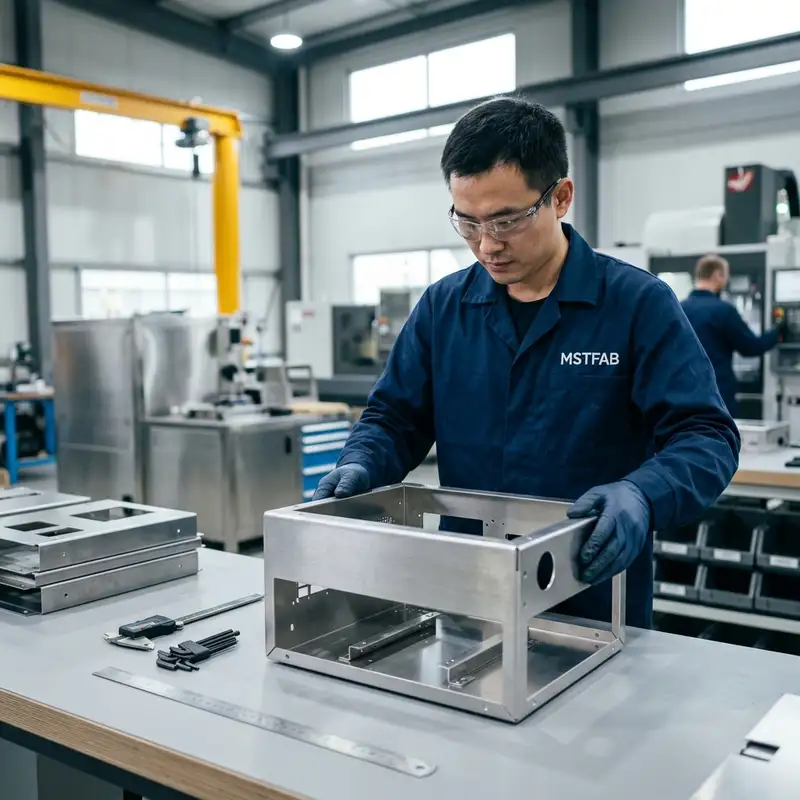
ISO 13485: Relevant to the Supply Chain, Not a Product Badge
ISO 13485 specifies quality-management-system requirements for organizations involved in medical devices. For a custom enclosure buyer, the useful question is not whether the logo appears on a quotation. It is whether the certification scope, site and controlled processes match the work being purchased.
A medical OEM may require ISO 13485 from a critical enclosure supplier, or it may approve a supplier under its own risk-based controls. That decision belongs to the OEM’s quality and regulatory teams. An ISO 13485 certificate does not make an empty chassis a finished medical device, and it does not replace drawings, inspection plans or acceptance records.
Cross-sector labels need the same discipline. An EV charging cabinet near a hospital is not automatically a medical-device component. Our ISO 13485 EV charger enclosure scope guide shows how to separate a documented medical-device flow-down from ordinary EVSE product-safety and environmental requirements.
ISO 9001: A General Manufacturing Baseline
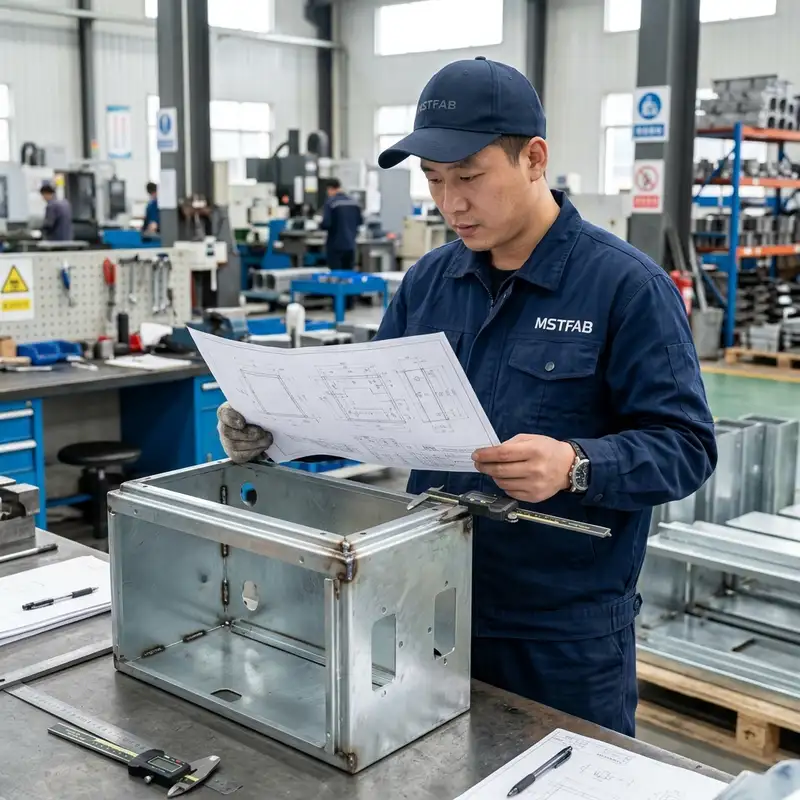
ISO 9001 can provide a sound framework for document control, purchasing, production, inspection, corrective action and continual improvement. It is widely applicable across manufacturing sectors.
For an industrial or laboratory enclosure that is not a controlled medical-device component, ISO 9001 may be a proportionate supplier requirement. For a medical project, it may support supplier approval but does not automatically satisfy the OEM’s medical-device quality plan. The buyer must define the gap instead of asking the certificate to improvise.
GMP: Start With the Product, Process and Jurisdiction
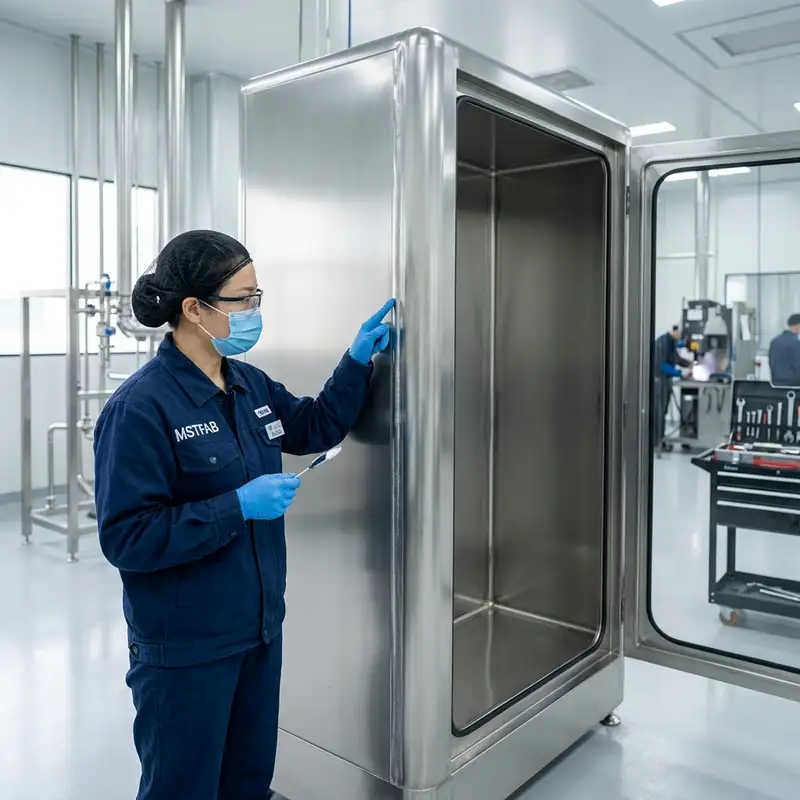
GMP requirements apply to regulated manufacturing activities, not to a generic shape called “enclosure.” A stainless cabinet used on a pharmaceutical filling line may need buyer-defined cleanability, material, surface finish, weld treatment and documentation. The same cabinet shape used around a warehouse controller may not.
The equipment owner should translate its GMP and contamination-control strategy into measurable metalwork requirements. MSTFAB can manufacture those drawing-defined features and supply agreed records. We do not validate the pharmaceutical process, declare hygienic suitability for an unknown use or issue a universal GMP certificate for a sheet metal shell.
Check the Certificate Before You Check the Box
Request the certificate and read it. Confirm the legal entity, manufacturing site, standard and edition, certification body, issue and expiry dates, and scope. Check whether sheet metal fabrication and the location producing your parts are actually included.
A valid certificate from the wrong site is a beautiful answer to a question nobody asked. Buyers should also verify status through the certification body or recognized database when the project risk justifies it.
Match the legal entity
The quotation, certificate, purchase order and manufacturing site should make sense together.
Read the scope
Look for relevant fabrication activities, not merely a broad corporate description.
Verify dates and status
Check issue, expiry, suspension and certification-body information.
Connect scope to evidence
Confirm how the supplier controls your drawing, material, process, inspection and change history.
The Evidence Package Matters More Than Certificate Collecting
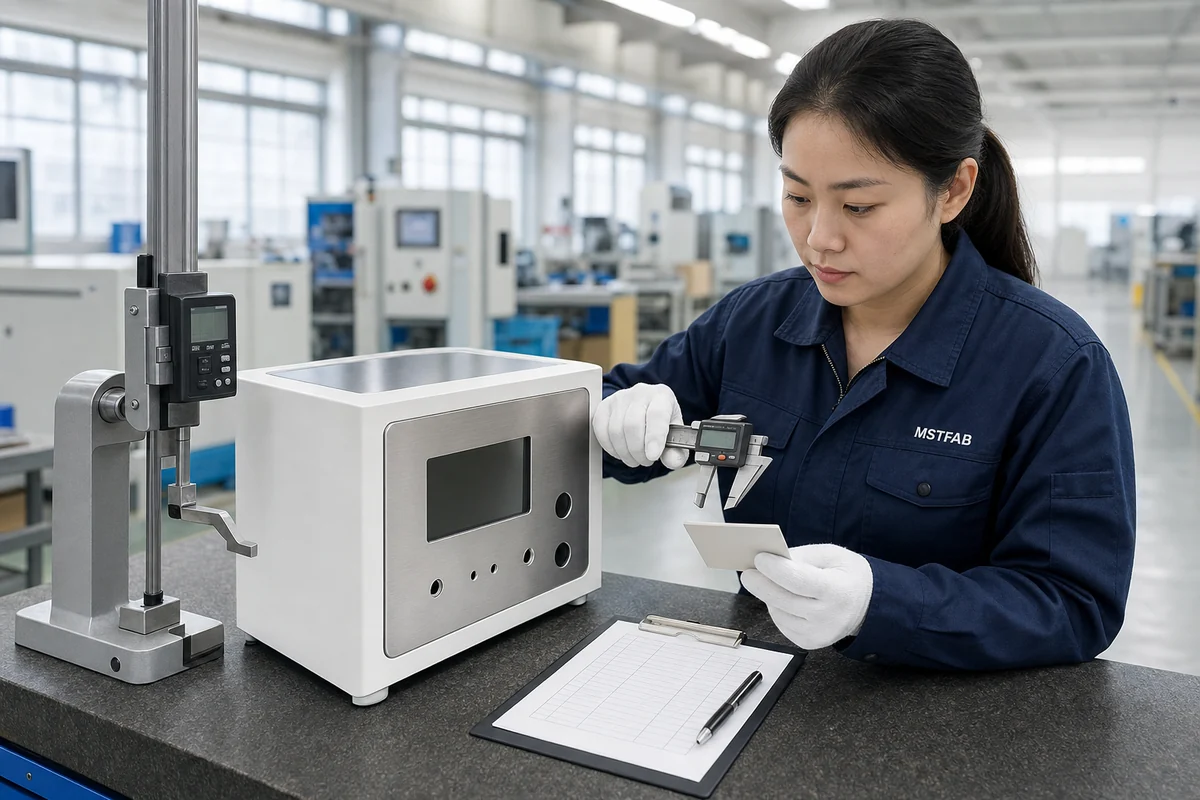
A purchasing team needs evidence that connects the supplier’s system to the actual enclosure. Define it in the RFQ and purchase order. Depending on risk, the package may include material certificates, approved process specifications, hardware certificates, coating records, weld documentation, dimensional reports, first-article inspection and packing identification.
Do not request every document ever invented. Extra paperwork can increase cost without reducing the actual project risk. Ask for the records that answer a defined concern and state the required format before quotation.
Translate Quality Language Into Metalwork Controls
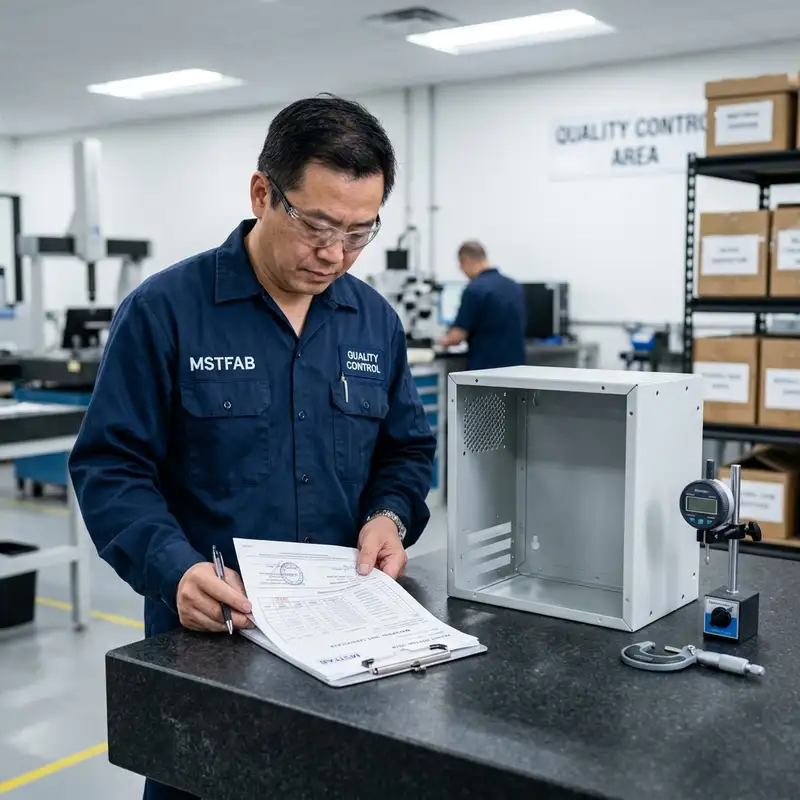
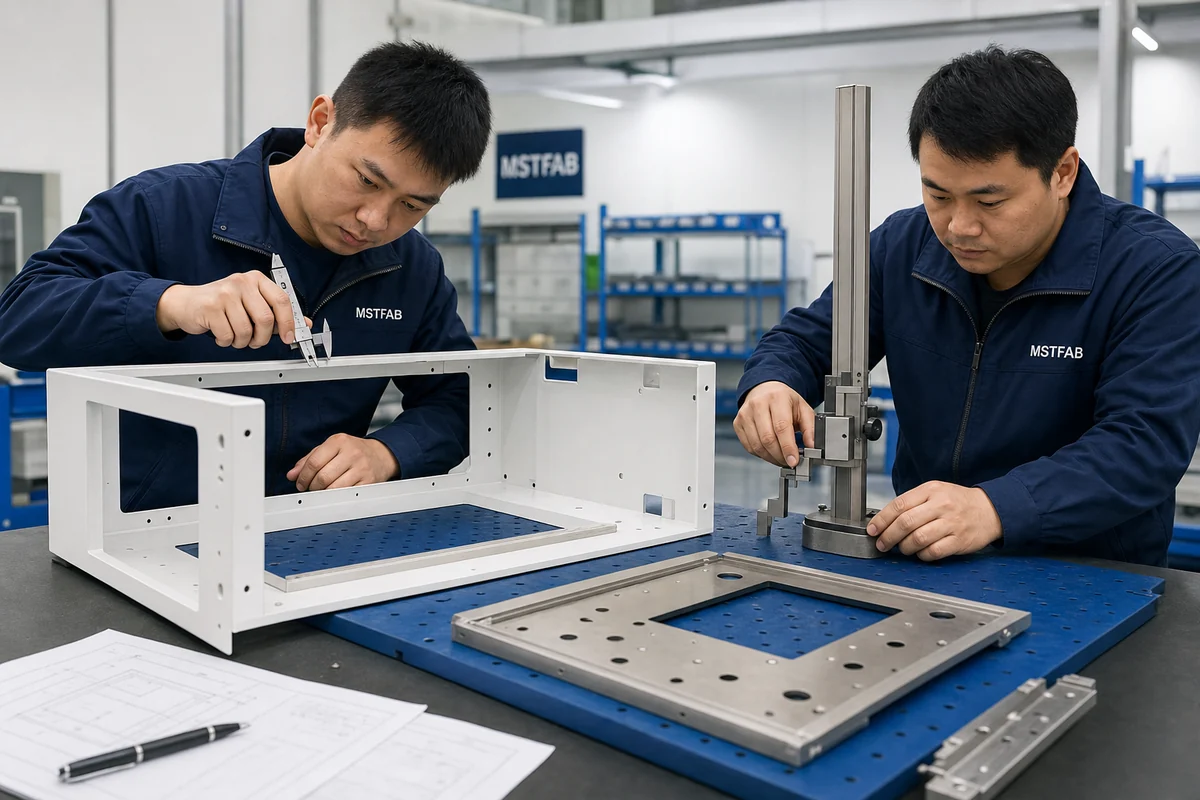
The RFQ should define the part number, revision, material, thickness, critical dimensions, weld class, finish, cosmetic standard, hardware, inspection stage, sampling, documentation and change-notification requirement. These controls make the quality framework useful on the factory floor.
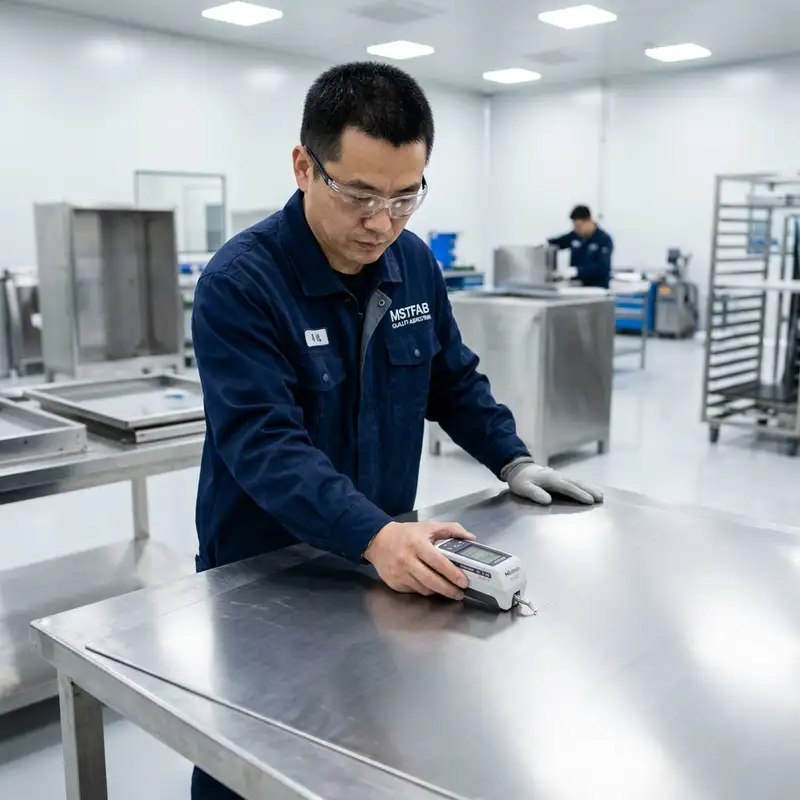
For stainless medical or pharmaceutical equipment shells, also define surface direction, roughness where functional, weld blending, passivation, protected areas and cleaning expectations. “Medical grade finish” sounds confident but gives an inspector nothing to measure.
Use a Risk-Based Supplier Control Package
| Project situation | Typical buyer controls | Useful shell evidence |
|---|---|---|
| Prototype housing for engineering evaluation | Controlled revision, DFM review and first-piece approval | Material confirmation and key dimensional report |
| Repeat medical-device enclosure component | Approved supplier, quality agreement, change notification and risk-based inspection | Traceability, FAI, process records and batch inspection |
| Stainless shell near pharmaceutical processing | URS-derived material, cleanability, weld and finish requirements | Material certificate, weld/finish inspection and agreed surface records |
| Laboratory utility cabinet | General QMS, drawing control and incoming inspection | Material, dimensions, finish and packing identification |
Review the Supplier Handoff Before Production
The OEM should approve one controlled package containing the 3D model, 2D drawings, bill of materials, quality requirements and deviation history. MSTFAB can review manufacturability and measurement access before release. Our medical enclosure supplier quality handoff explains how to align revision control, FAI and change notification.
After approval, repeat orders should reference the same controlled identity. If the OEM changes a hinge, coating, hardware type or critical tolerance, the affected drawings and inspection plan should change together. The word “minor” does not stop a new fastener from colliding with a bend.
What MSTFAB Can and Cannot Provide
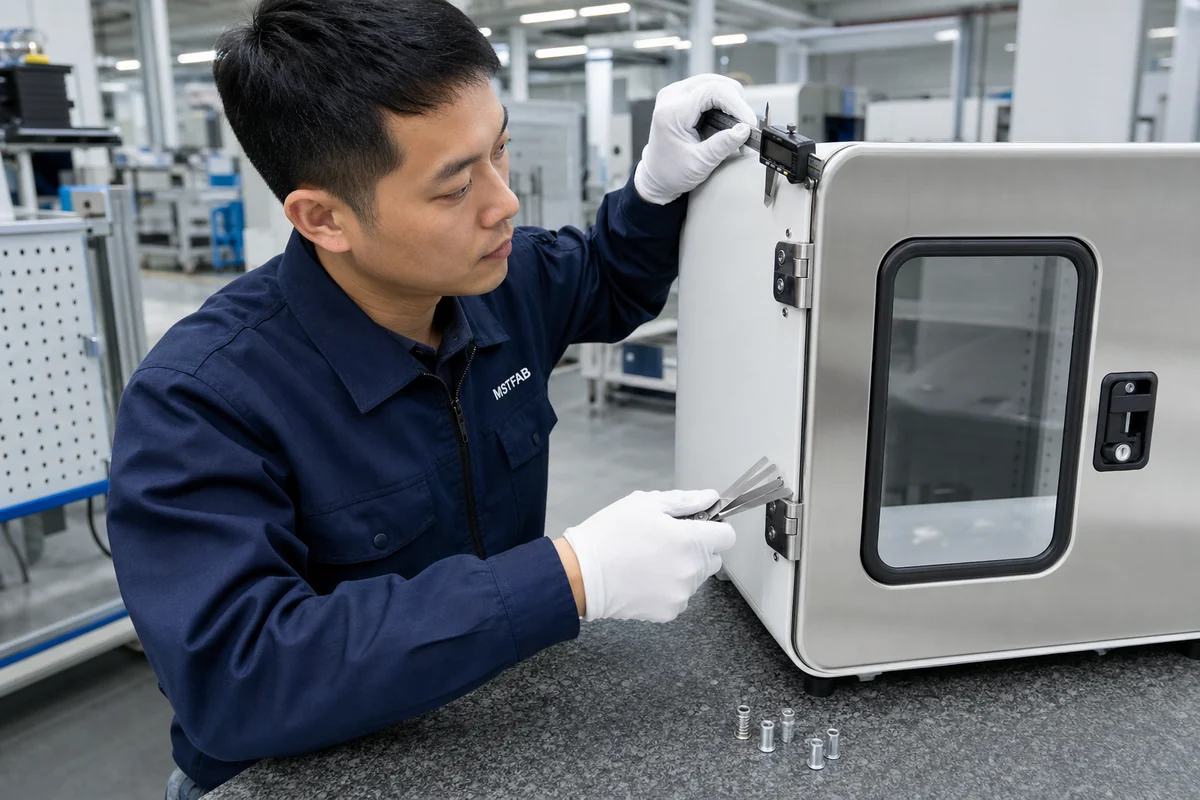
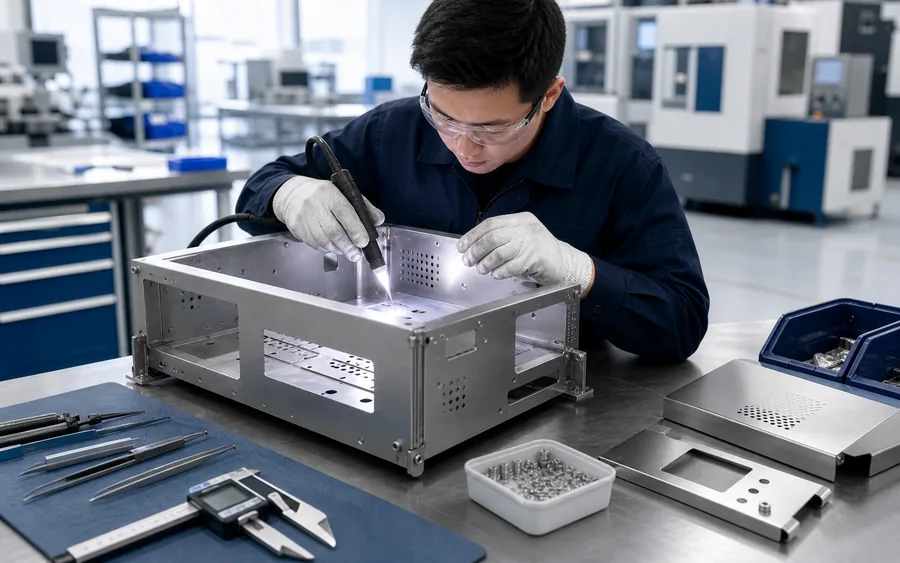
MSTFAB can provide: contract review for empty sheet metal parts, DFM feedback, build-to-print cutting, bending, welding, grinding, customer-specified mechanical hardware installation, specified finishing coordinated through approved production routes, dimensional inspection, agreed first-article records and protective packing.
MSTFAB does not provide: medical device design authority, electronics, wiring, software, sterile-process validation, pharmaceutical process validation, clinical evidence, completed-device registration or certification of the buyer’s final equipment.
RFQ Checklist for a Useful Supplier Decision
- Product role and whether the shell enters a regulated device or process
- Required supplier QMS standard, site and certification scope
- STEP/STP model and controlled PDF drawings with matching revisions
- Material, thickness, finish, cosmetic and cleanability requirements
- Critical dimensions, inspection stage, sampling and FAI format
- Material, welding, coating or passivation records actually needed
- Deviation approval and change-notification expectations
- Prototype, pilot and repeat quantities, labeling and packing
Frequently Asked Questions
Does every medical equipment enclosure supplier need ISO 13485?
No universal rule applies to every shell. The medical-device OEM should determine supplier controls from the enclosure’s role, risk and regulatory strategy.
Is ISO 9001 enough for a medical enclosure?
It may support supplier approval, but the OEM decides whether additional medical-device controls, records or certification are required. The order still needs clear technical and inspection requirements.
Can an empty stainless enclosure be GMP certified?
GMP applies to defined regulated manufacturing activities and systems. MSTFAB can manufacture buyer-specified metalwork and records; we do not issue universal GMP approval for an empty shell.
Does a certificate prove the delivered parts are correct?
No. Check the certificate scope, then use drawing-based inspection, traceability and order-specific records to demonstrate conformity.
Can MSTFAB provide material and first-article records?
Yes, when the RFQ defines the required documents, characteristics, format, inspection method and acceptance criteria.
Does MSTFAB certify the final medical or pharmaceutical equipment?
No. The responsible OEM owns the completed product, regulatory strategy, validation and final compliance.
Official references: ISO 13485:2016, ISO 9001:2026, and FDA current good manufacturing practice resources. The responsible OEM should confirm project-specific regulatory requirements.
Specify the Evidence Before Asking for the Price
Send the controlled drawings, intended enclosure role, quality requirements, documentation list and quantities. MSTFAB will review the build-to-print sheet metal fabrication scope and identify any manufacturing or inspection questions before quotation.
 WeChat Contact
 WhatsApp Me Directly