
⚡ Direct Answer: Galvanized vs. Stainless Steel for Lab Automation?
When specifying sheet metal enclosures for clinical diagnostic instruments and lab automation robotics: 304 / 316L Stainless Steel is mandated for wetted processing zones, pipette reagent stations, and exterior washdown housings exposed to aggressive acids, bleach sterilization, and daily bio-decontamination. Conversely, Galvannealed Steel (SGCC) with an antimicrobial powder coating is the premier cost-effective choice for internal chassis, electrical power sub-boxes, and rear motor drive compartments, delivering 45% lower material costs, superior electromagnetic (EMI) shielding, and high structural rigidity without sacrificing cleanroom compliance.
Material Selection Matrix: Lab Automation Processing vs. Electrical Zones
| Operating Attribute | Galvannealed Steel SGCC (Powder Coated) | Austenitic Stainless Steel 304 / 316L |
|---|---|---|
| 1. Chemical Sterilization Resistance | Good against mild alcohols; compromised if deep paint scratches expose zinc to bleach. | Superior against sodium hypochlorite, isopropyl alcohol (IPA), and hydrogen peroxide vapor (VHP). |
| 2. Particulate Generation Risk | Zero particulate shedding when baked with polyester/epoxy hybrid powder coat. | Completely inert bare metal; passivated surface with zero paint flakes or micro-dust. |
| 3. Electromagnetic (EMI) Shielding | Excellent low-frequency magnetic attenuation (>70 dB) due to high magnetic permeability. | Moderate magnetic attenuation (non-magnetic 300 series); excellent high-frequency RF shielding. |
| 4. Unit Manufacturing Cost Factor | 1.0x (Optimal baseline cost for high-volume OEM equipment) | 2.4x – 3.2x (Higher raw alloy cost + intensive TIG grinding/passivation labor). |
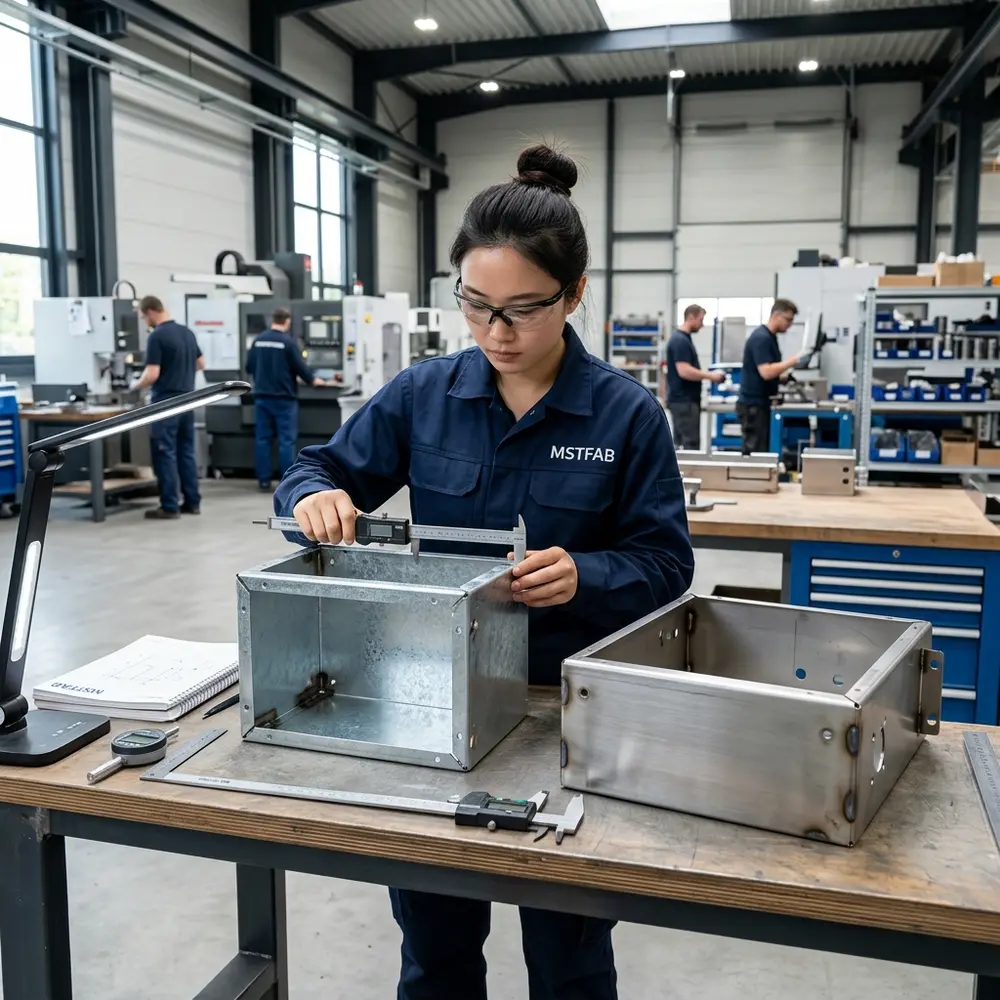
The Hybrid Engineering Strategy for Medical Diagnostic Equipment
Leading clinical diagnostics and liquid-handling robotics OEMs adopt a smart hybrid architecture to optimize both performance and manufacturing costs:
- Internal Structural Sub-Panels (SGCC): Fabricated from 1.5mm–2.0mm galvannealed steel. Provides high structural rigidity to support heavy stepper motors, lead screws, and internal DC power supplies while dampening motor acoustic resonance.
- Fluid Exposure Drip Trays & Reagent Zones (316L SS): Fabricated from 1.5mm 316L stainless steel with continuous TIG liquid-tight welds and electropolished surfaces, preventing corrosion from spilled reagents or saline solutions.
- Exterior Aesthetic Covers (5052-H32 Aluminum or SGCC): Finished with cleanroom-certified antimicrobial powder coatings holding Class A cosmetic standards.
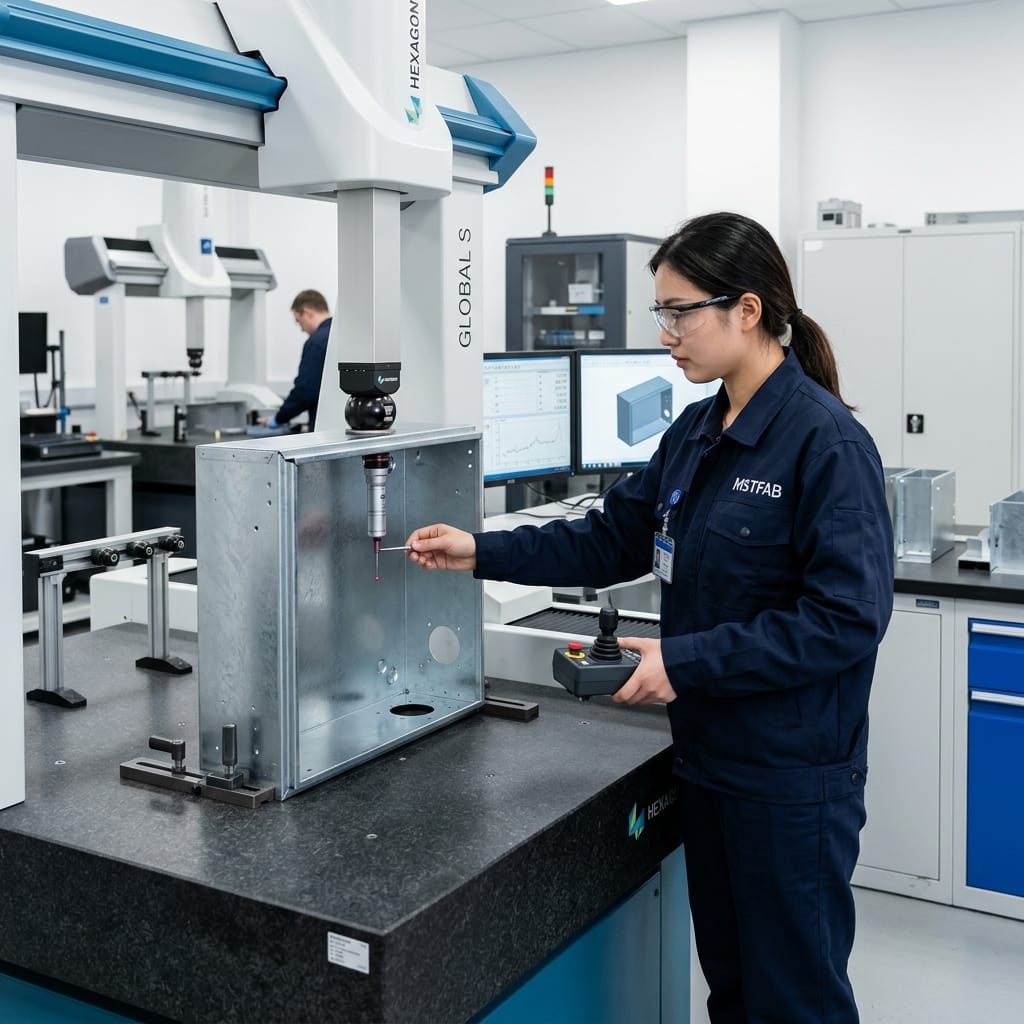
Optimize Your Lab Automation Enclosure Architecture
MSTFAB engineers custom galvanized and stainless steel housings for clinical diagnostic systems and automation robotics.
Frequently Asked Questions on Lab Enclosure Materials
Why is electropolishing recommended for stainless steel in lab automation?
Electropolishing is an electrochemical process that removes microscopic peaks from the metal surface, creating an ultra-smooth mirror finish (Ra < 0.2μm) that drastically reduces bacterial adhesion and prevents proteins or chemical reagents from binding to the surface.
How do you prevent galvanic corrosion between stainless steel and galvanized steel in hybrid assemblies?
We insert non-conductive dielectric nylon or Mylar isolating washers at all mechanical mounting interfaces, preventing direct electrical contact between dissimilar metals and blocking galvanic current flow.
 WeChat Contact
 WhatsApp Me Directly