
Buyer guide / build-to-print enclosure metalwork
How to source a galvanized distribution box shell when the completed enclosure has an IP65 target, without confusing sheet material, metal fabrication and final ingress-protection validation.
Quick answer
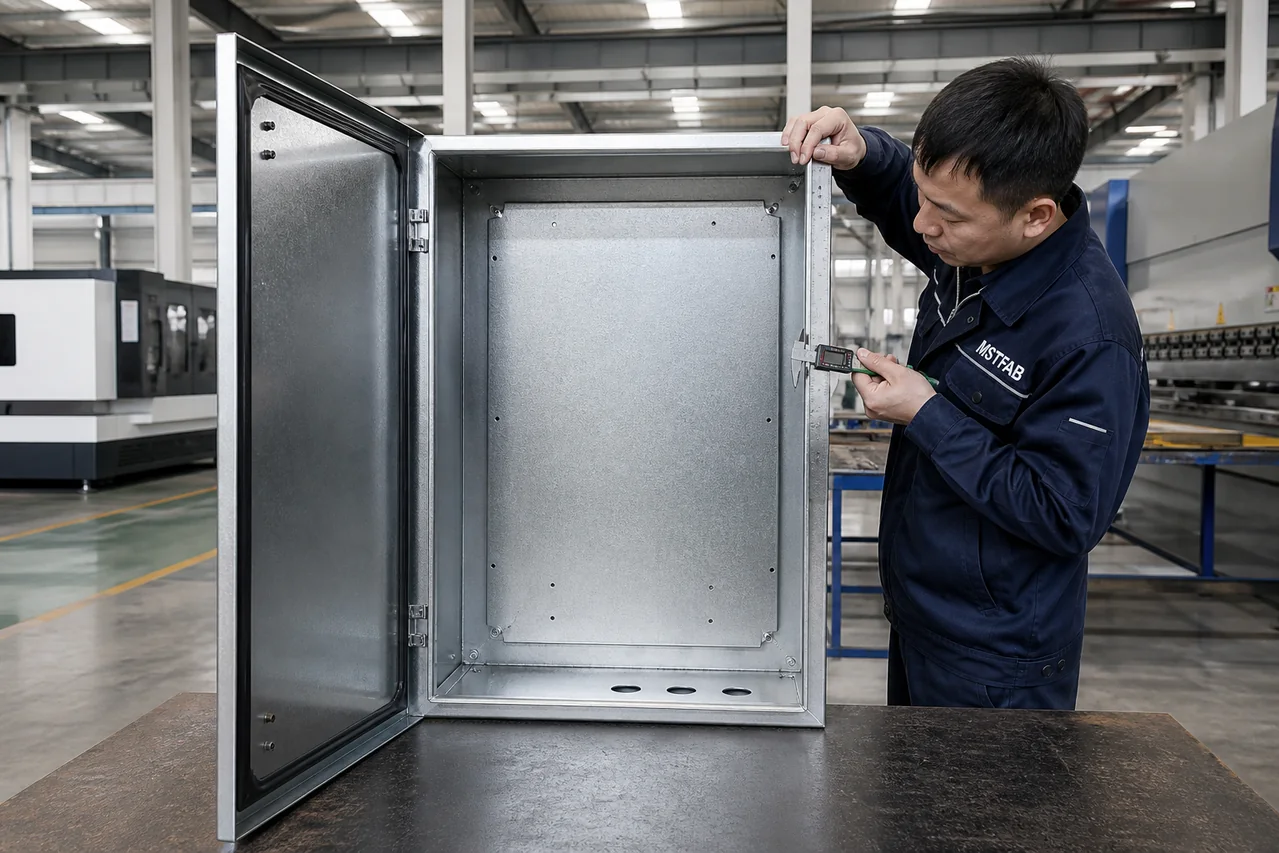
MSTFAB is a build-to-print sheet metal fabrication factory, not a finished electrical-panel manufacturer. We laser cut, CNC bend and weld empty galvanized distribution box bodies, doors, gland plates, mounting plates and mechanical hardware interfaces to the buyer’s released drawings.
IP65 is a classification for the configured enclosure under IEC 60529. The metal shell, door geometry, gasket land, seams, closures and cable-entry system must work together. The OEM, panel builder or responsible test owner controls the final gasket, glands, assembly method, electrical equipment and IP validation. In plain English: we make the metal fit; we do not hide breakers and wiring inside the quotation.
1. Confirm the real environment
IP65 addresses dust ingress and water jets under defined test conditions. It does not, by itself, specify corrosion life, outdoor durability, chemicals, UV exposure or immersion.
2. Freeze every penetration
Door seals are only half the story. Cable glands, gland plates, connectors, vents and unused openings must remain part of the approved enclosure configuration.
3. Define who validates IP65
Put the test owner, sample configuration and acceptance evidence in the RFQ. An empty shell supplier should not imply that zinc coating automatically carries an IP rating.
What IP65 means for a galvanized distribution box shell
IEC 60529 classifies degrees of protection provided by enclosures. In IP65, the first digit addresses protection against solid objects and dust; the second addresses water ingress under the applicable water-jet test. The code does not select galvanized steel, design the electrical circuit or certify the complete distribution equipment.
That distinction matters during purchasing. A buyer can receive a beautifully fabricated galvanized box and still lose the intended ingress protection after a field-drilled hole, a substituted gland or uneven gasket compression. The expensive part is rarely the hole. It is discovering the hole after the panel is wired.
MSTFAB metalwork scope
- Empty enclosure body, door and removable panels
- Laser-cut openings, gland plates and mounting patterns
- CNC bending, welded seams and reinforcement
- Drawing-defined studs, weld nuts and PEM hardware
- Specified finish, masking and dimensional inspection
- Mechanical first article and export packaging
Buyer / integrator scope
- Breakers, busbars, terminals, wiring and electrical design
- Final gland, gasket, vent and connector selection
- Grounding architecture and electrical safety validation
- Completed-enclosure IP test plan and acceptance
- Finished distribution equipment certification
- Installation environment and maintenance controls
Where sheet metal fabrication decides whether the design is buildable
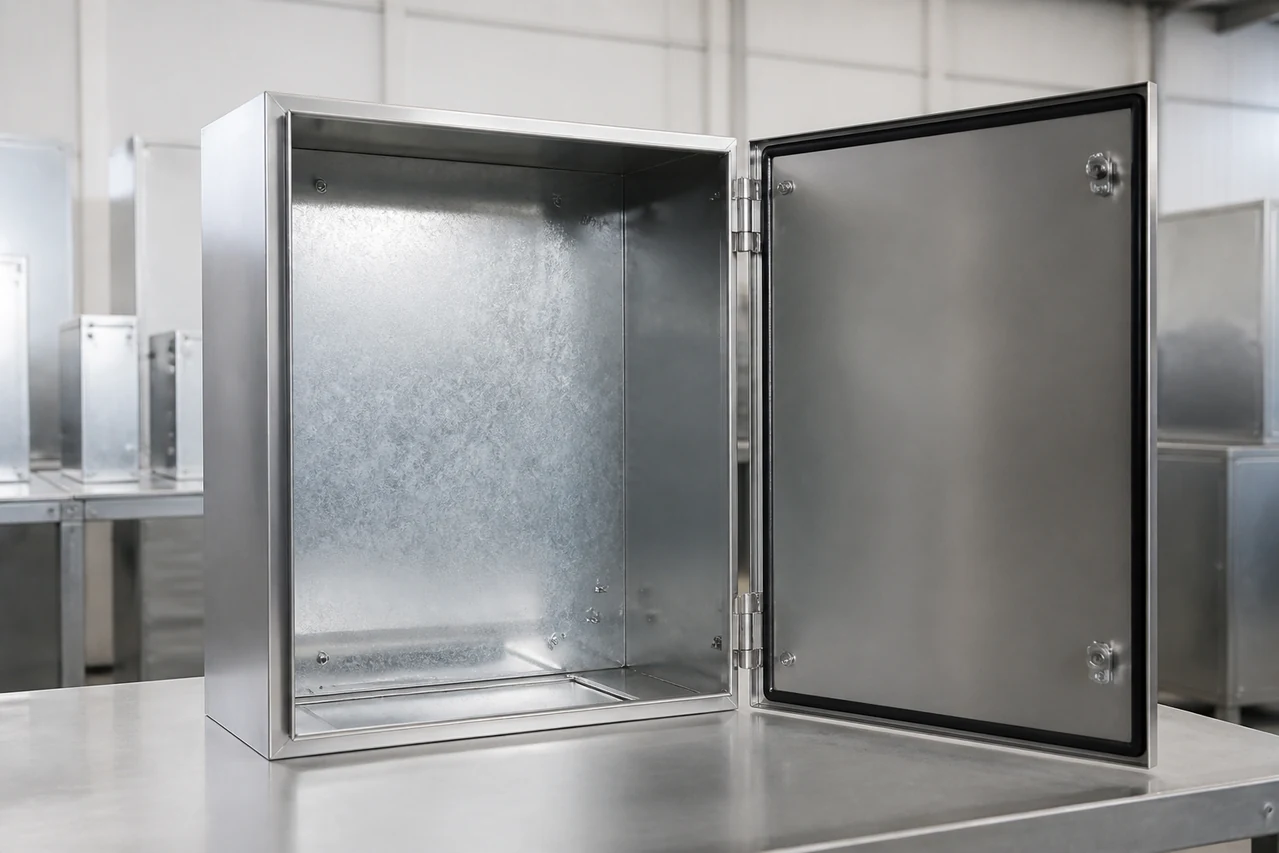
An IP65 target creates several mechanical CTQs before the first electrical device is installed. The useful factory conversation is not “Can you make IP65?” It is “Which metal features protect the tested enclosure configuration, and how will you hold them after bending and welding?”

Laser-cut openings are only useful when the hardware envelope is known
MSTFAB can produce round holes, non-round connector cutouts, removable gland plates and buyer-defined knockouts through our sheet metal laser cutting service. The released package should identify the hardware part number, finished opening size, orientation, washer or nut envelope and installation-tool clearance.
Do not send “add three cable holes” and expect the factory to reverse-engineer the approved sealing system. Three holes may be easy. Three correctly spaced glands that can still be tightened beside a door return are a different project.


Bending and welding control the sealing plane
The door opening can be correct in the flat blank and wrong after forming. Bend sequence, return-flange geometry, welded corners and hinge reinforcement can move the surface that the gasket needs to contact. That is why inspection should follow the process that can change the feature.
For welded shells, the drawing should identify functional datums, permitted seam treatment and the door-to-frame characteristics that matter. Our sheet metal welding service uses project-specific sequence and fixturing; the inspection plan should then verify the completed weldment, not congratulate the laser cutter for dimensions that existed two operations earlier.
Galvanized steel needs its own fabrication plan. Laser-cut edges, weld heat and local grinding can disturb the zinc-protected surface. The buyer should specify the galvanized material route, cosmetic standard, exposed-edge requirement, weld-area repair or secondary finish, and any prohibited substitutions. IP65 and corrosion resistance are separate questions.
Trust table: evidence a buyer can actually use
A certificate logo is not a dimensional report. For an empty enclosure shell, trust comes from connecting the released design to the material, process, inspection and shipment evidence.
| Buyer risk | MSTFAB control | Useful evidence | Buyer decision |
|---|---|---|---|
| Wrong design revision | One released STEP/PDF package and controlled work order | Part number, drawing revision and approved deviation list | Approve the manufacturing baseline |
| Uncontrolled galvanized material | Material identification and purchase record to the specified route | Supplier record or material certificate required by the PO | Define grade, coating and traceability depth |
| Gland or connector will not fit | Laser-cut CTQs tied to stable datums | Dimensional FAI and actual hardware fit check when agreed | Supply component data and tool envelope |
| Door or gasket land moves | Bend and weld sequence, fixture and post-weld inspection | Door gap, flatness or profile results defined by the drawing | Set functional acceptance criteria |
| Silent process substitution | Change notification for controlled material, hardware and process inputs | Approved change record before repeat production | Define which changes require approval |
| IP65 claim is misunderstood | Fabrication records for the agreed shell configuration | Mechanical FAI; project-specific test support if contracted | Own final assembled enclosure validation |
What to send for a useful quotation
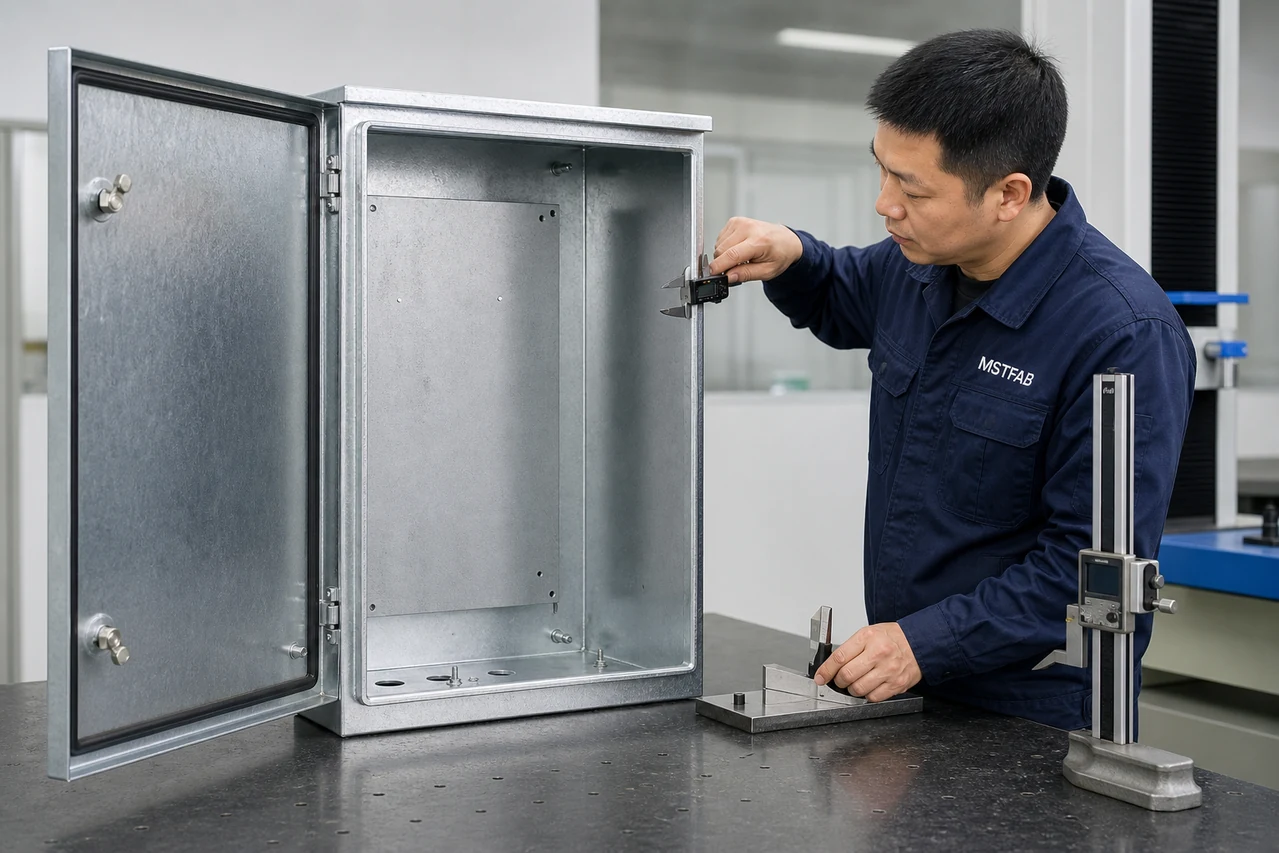
A good RFQ lets the fabricator price the actual work instead of adding a safety margin for missing information. Send:
- STEP/STP assembly and controlled PDF
- Part number and revision
- Galvanized steel grade, route and thickness
- Finish and exposed-edge requirements
- Door, hinge, latch and gasket-land geometry
- Gland, connector and vent schedule
- Mounting plate and internal bracket drawings
- Weld symbols and acceptable seam treatment
- Critical-to-quality dimensions
- First-article and inspection format
- Required change-notification controls
- Prototype and production quantities
- Packaging and shipping destination
- Responsible owner for final IP65 validation
For deeper sealing and test-planning guidance, use the dedicated IP65 sheet metal enclosure guide. This page stays focused on the distribution-box shell and the factory controls a buyer can place on the purchase order.
Frequently asked questions
Does galvanized steel automatically make a distribution box IP65?
No. Galvanized steel is a material and corrosion-protection choice. IP65 applies to the relevant enclosure configuration, including the body, door, sealing interfaces, closures and penetrations under the defined validation route.
Does MSTFAB supply a finished electrical distribution box?
No. MSTFAB supplies drawing-defined empty sheet metal shells and mechanical parts. Breakers, busbars, terminals, wiring, energized testing and completed-equipment certification remain with the buyer or panel builder.
Can MSTFAB laser cut cable-gland and connector openings?
Yes. Supply the approved component drawing, opening geometry, orientation, finished tolerance and hardware envelope. We can fabricate the body opening or a removable gland plate to the released design.
Why inspect the door after welding?
Weld heat can change squareness, flatness and the door-to-frame relationship. A pre-weld dimension is useful process information, but the buyer receives the post-weld enclosure.
Is IP65 the same as corrosion resistance?
No. IP65 addresses ingress protection. Material, coating, cut-edge treatment and service environment determine corrosion performance and should be specified separately.
What should first-article inspection cover?
Project-dependent CTQs can include overall envelope, mounting datums, gland openings, gasket land, door gap, welded studs, removable plate fit, hardware access, finish and packing condition.
Request a distribution box shell DFM review
Send the STEP model, controlled PDF, material, thickness, quantity, CTQs and the buyer-owned IP65 validation requirement.
 WeChat Contact
 WhatsApp Me Directly