
Industrial metal fabrication services for OEM equipment buyers
Need production capability? This article focuses on industrial metal parts procurement guide. For manufacturing scope, process capability and drawing-based quotation support, review MSTFAB’s industrial enclosure manufacturing.
Custom metal parts that fit, survive and repeat in production
MSTFAB manufactures drawing-based industrial sheet metal parts, enclosures, brackets, guards, panels, covers and welded assemblies for OEM equipment buyers. The goal is not just a low unit price. It is fewer fit surprises, fewer finish problems and fewer “why is this shipment dramatic?” moments.
What this page is really about
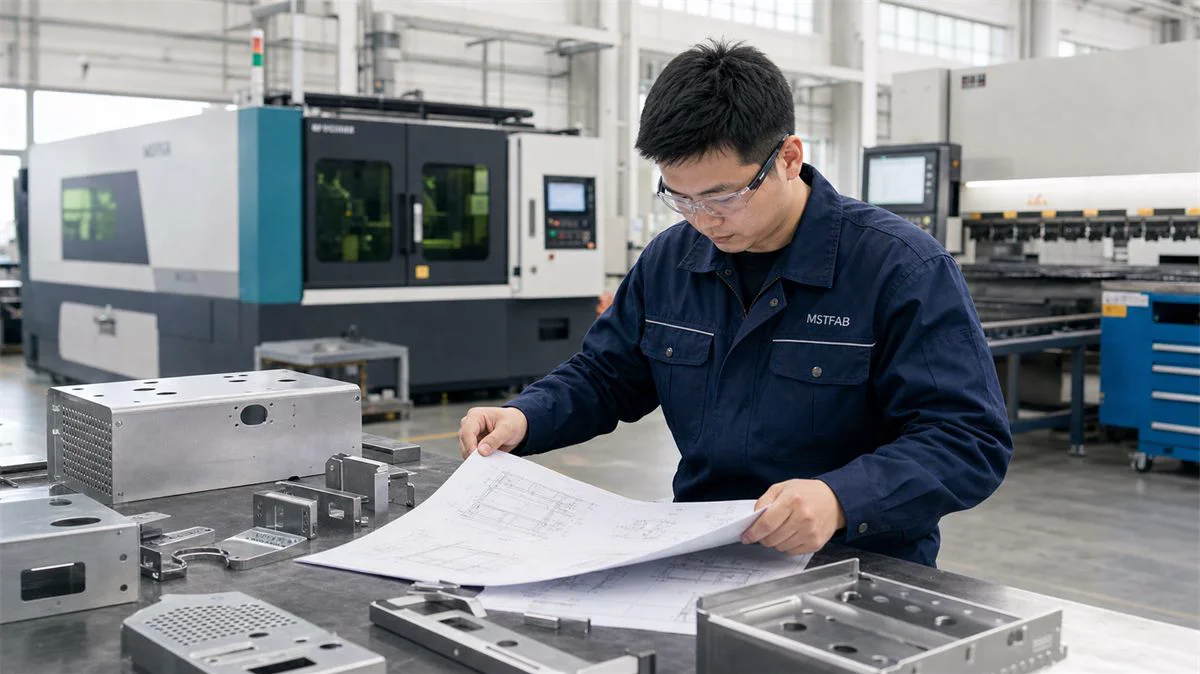
Industrial metal fabrication services cover the custom manufacturing of metal parts used inside real equipment: machine frames, protective guards, electrical cabinet components, automation panels, equipment housings, mounting brackets and welded assemblies. MSTFAB is a custom fabrication partner, not a catalog seller of finished machines.
For OEM buyers, the useful question is simple: can the supplier turn your drawings into repeatable parts that assemble cleanly, survive the use environment and arrive ready for your production line?
What MSTFAB can support
Industrial enclosures
Custom sheet metal cabinets, control box shells, equipment housings and formed panels from OEM drawings.
Machine guards and covers
Protective guards, covers, access panels and safety shields for production equipment and machinery.
Brackets and mounting plates
Structural brackets, reinforcement parts, mounting plates, rails and support components.
Welded assemblies
Welded frames, cabinet bodies, stainless assemblies and metal structures with fixture control.
Finished metal parts
Powder coated, plated, brushed, polished or passivated parts with practical packing protection.
Prototype to repeat orders
First article review, engineering changes, batch production and repeat supply for OEM programs.
Start with files, not guesses
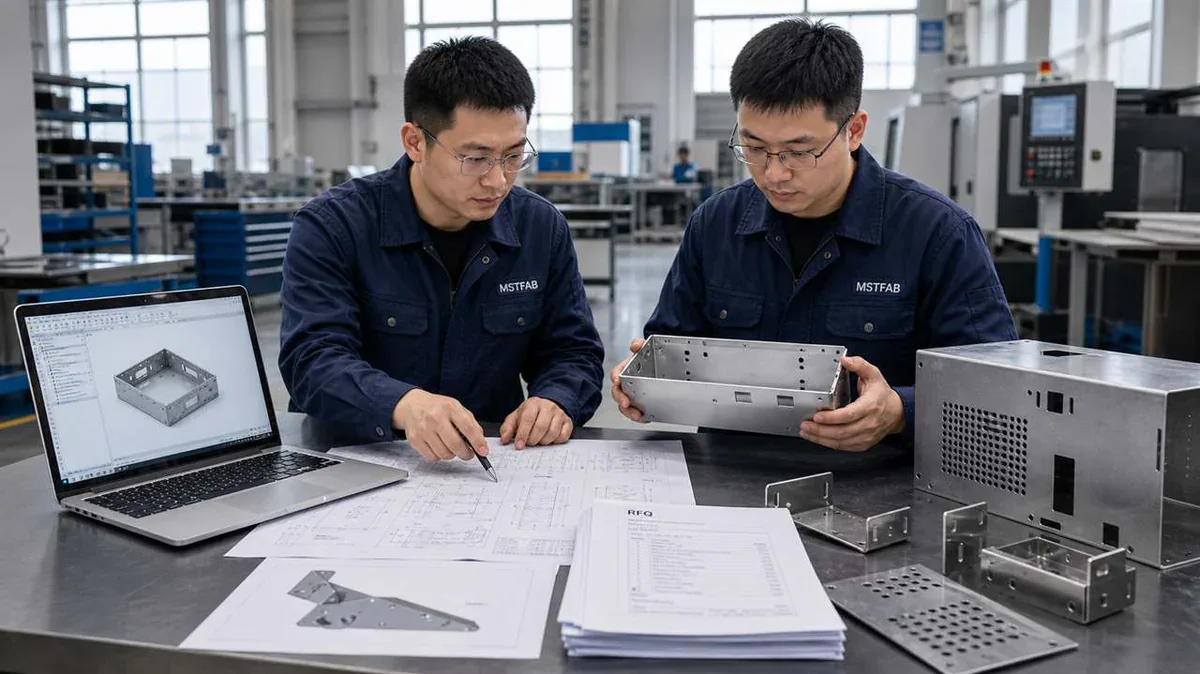
A STEP file shows the shape. A 2D drawing tells the manufacturing story: tolerance, surface finish, bend notes, threads, PEM hardware, grain direction, inspection points and cosmetic surfaces. Both matter.
A complete RFQ usually gets a clearer quote, fewer assumptions and fewer back-and-forth emails. Guessing belongs in weather forecasts, not industrial purchasing.
- STEP or 3D CAD file for geometry and assembly review
- 2D PDF drawing for tolerance and critical dimensions
- DXF or DWG files when flat cutting data is available
- Material grade, thickness, finish and annual forecast
- Installation environment, vibration, load or outdoor exposure notes
Why the lowest unit price is not always the lowest cost
Industrial parts live around vibration, heat, dust, chemicals, water, forklifts, maintenance tools and production schedules that do not care about excuses. A cheap quote is useful only if the parts fit, repeat and survive.
| Buyer concern | What can go wrong | How MSTFAB reduces risk |
|---|---|---|
| Assembly fit | Hole positions, bends or tabs miss mating parts. | DFM review, sample approval, tolerance discussion and dimensional checks. |
| Load and vibration | Brackets flex, panels crack or welded joints fatigue. | Material/thickness review, bend radius checks, weld sequence planning and fixture support. |
| Outdoor or harsh use | Corrosion starts early, coating fails or water collects in the wrong area. | Material selection, coating plan, drainage/ventilation notes and finish inspection. |
| Repeat orders | Batch two looks similar but assembles differently. | Controlled process notes, CNC programs, inspection records and first article reference. |
| Export delivery | Painted parts arrive scratched, bent or mixed together. | Photo confirmation, labels, foam, cartons, pallets and export packing plans. |
Industrial fabrication process
1. Drawing review
We review geometry, tolerances, bend sequence, weld access, finish notes and assembly risks before quoting production.
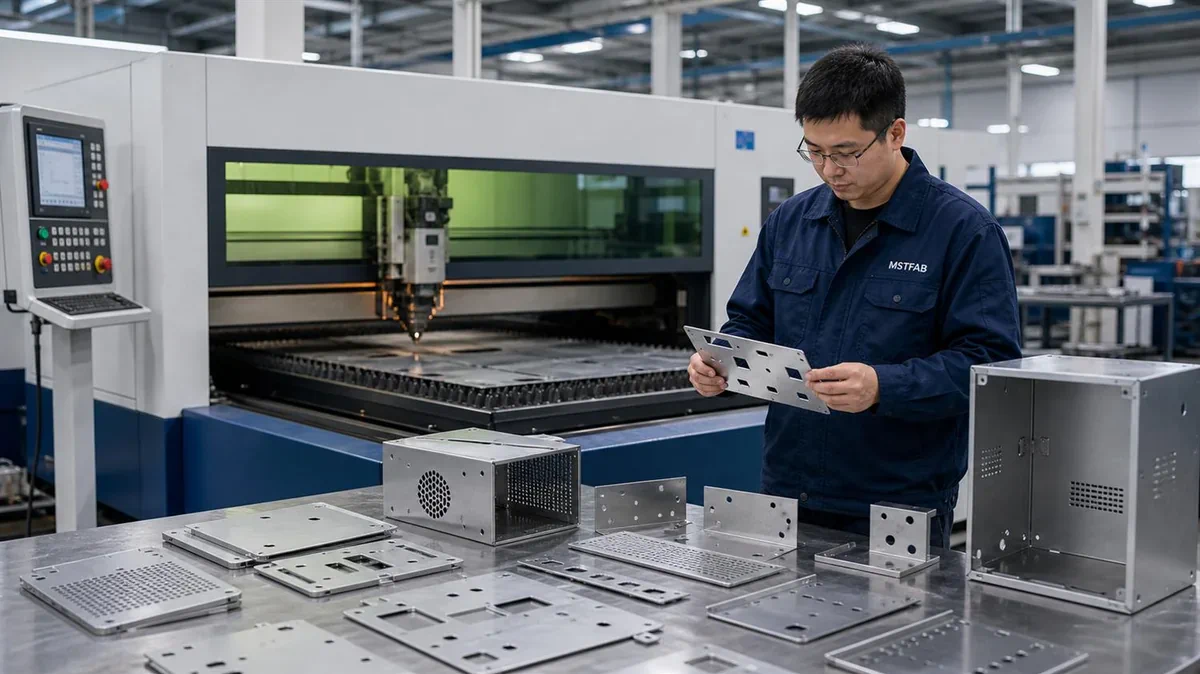
2. Laser cutting
Panels, guards, brackets and blanks are cut from stainless steel, carbon steel, aluminum or galvanized steel.
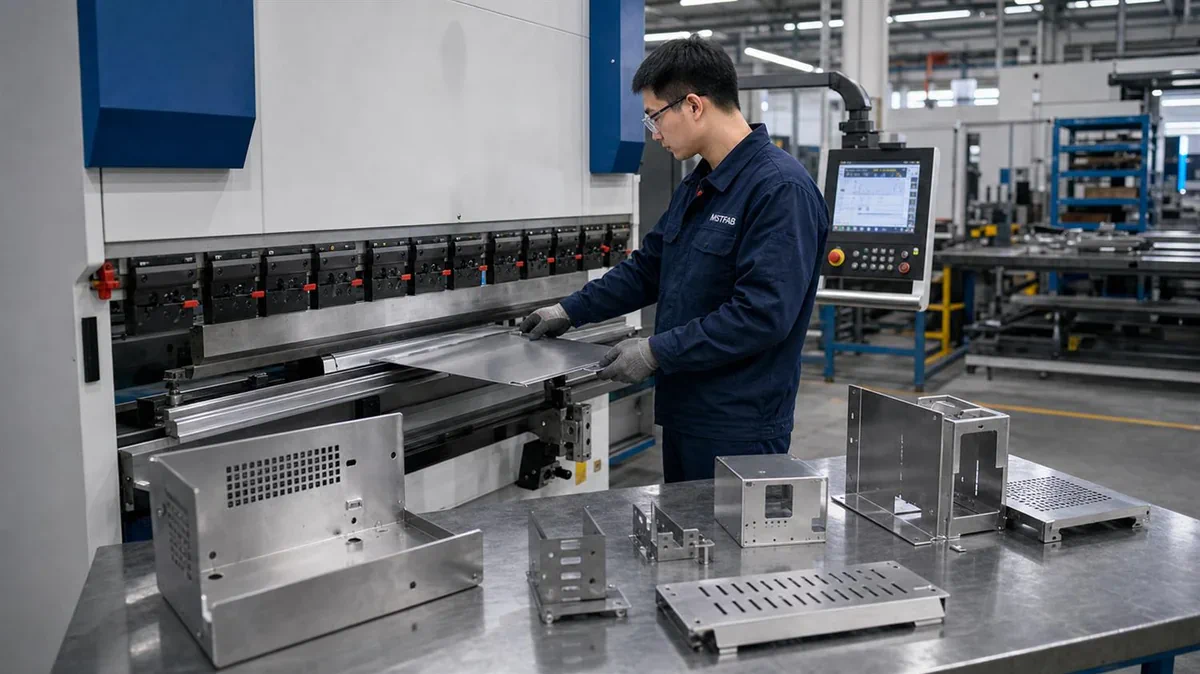
3. CNC bending
Formed parts are bent with attention to springback, inside dimensions, hole-to-bend distance and cosmetic surfaces.
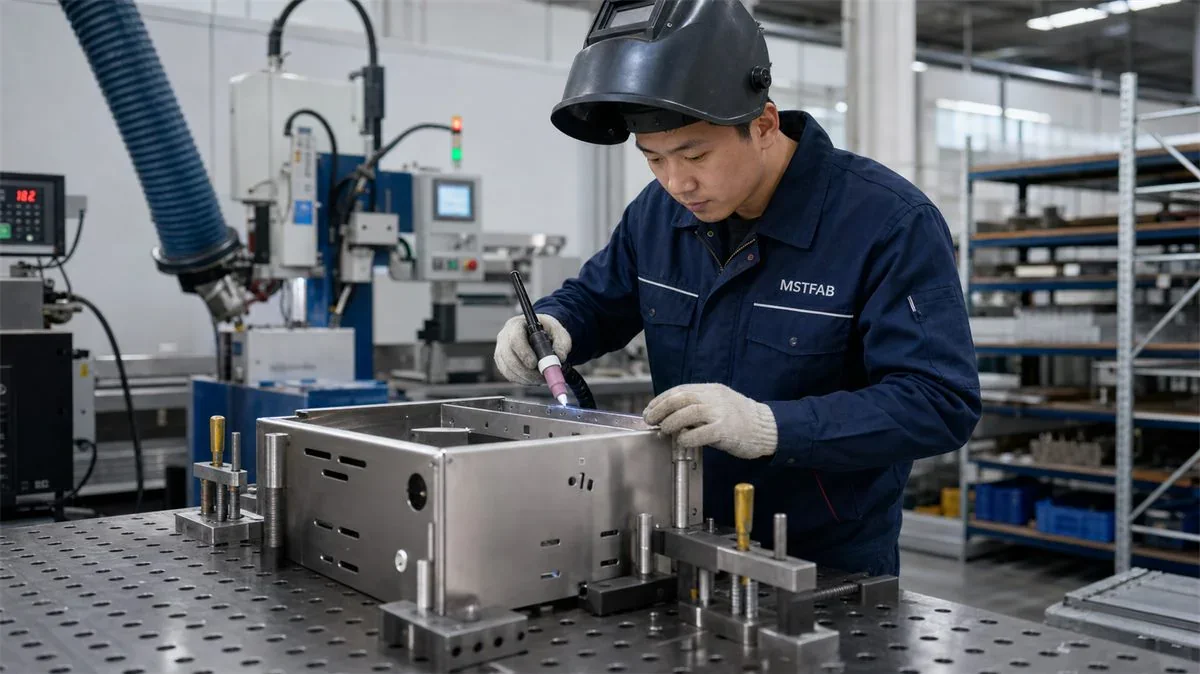
4. Welding and hardware
TIG, MIG, spot welding, studs, PEM nuts and partial assembly are planned around strength and fit.
5. Surface finishing
Powder coating, plating, brushing, polishing, passivation or anodizing can be matched to the use environment.
6. Inspection and packing
Dimensional checks, appearance review, photos, labels and export packing support smoother delivery.
Materials and finishes buyers commonly request
The right material depends on strength, weight, corrosion exposure, welding, appearance and cost target. The right finish depends on the same things plus how angry your customer will be if the visible surface arrives scratched.
- Carbon steel for strong brackets, frames and coated industrial parts
- Stainless steel for corrosion-resistant housings and equipment components
- Aluminum for lighter covers, panels, shells and machine parts
- Galvanized steel for zinc-protected parts and practical cost control
- Powder coating, plating, brushing, polishing and passivation
For deeper finish decisions, see the sheet metal surface finishing guide.
Trust checklist for overseas OEM buyers
| What to request | Why it matters | Good evidence |
|---|---|---|
| DFM notes before production | Catches manufacturing risks before money is spent on a flawed process. | Marked drawings, engineering notes or clear email feedback. |
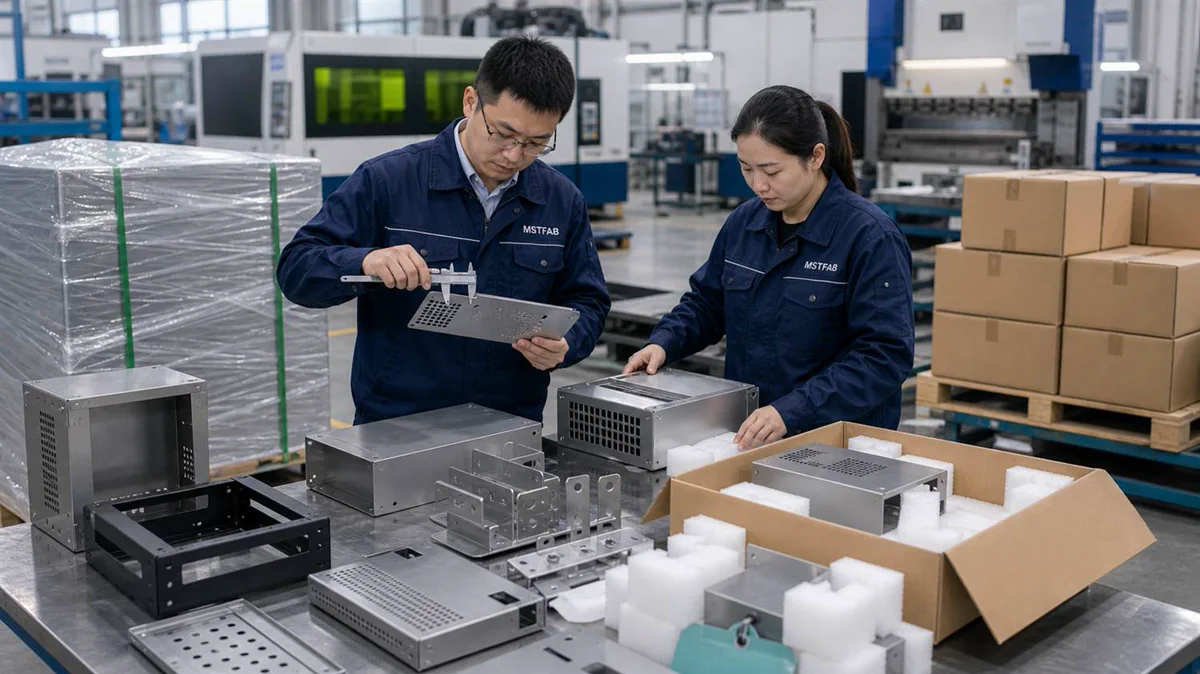
| First article inspection | Confirms fit, finish and critical dimensions before batch production. | Measurement photos, inspection report and sample approval. |
| Bend and weld control | Improves repeatability for frames, cabinets, brackets and covers. | Fixture photos, process notes and comparison with approved sample. |
| Surface finish confirmation | Prevents color, gloss, texture, masking or corrosion surprises. | Finish sample, color code, coating notes and packed part photos. |
| Export packing plan | Reduces scratches, dents, mixed parts and angry unpacking meetings. | Labels, foam protection, carton/pallet photos and packing list. |
RFQ checklist for clearer pricing
Files
- STEP or 3D CAD model
- 2D PDF drawing
- DXF/DWG cutting file if available
Specification
- Material grade and thickness
- Surface finish and color
- Critical tolerance notes
Production
- Prototype or first article quantity
- First batch quantity
- Annual forecast and repeat order plan
Use environment
- Indoor, outdoor or washdown use
- Vibration, load or temperature notes
- Packaging, labeling and shipping requirements
FAQ: industrial metal fabrication services
Does MSTFAB make finished industrial equipment?
No. MSTFAB manufactures custom metal parts, sheet metal enclosures, covers, brackets, panels and fabricated assemblies based on drawings. We do not supply the complete finished machine or internal electronics.
Can MSTFAB make one prototype before batch production?
Yes. Prototype or first article production is often the sensible first step for OEM projects. It helps confirm fit, finish, assembly risk and inspection standards before full production.
Which materials are common for industrial fabricated parts?
Common options include carbon steel, stainless steel, aluminum, galvanized steel and powder coated steel. The right choice depends on strength, weight, corrosion exposure, welding, appearance and cost target.
Can MSTFAB support export packaging?
Yes. Export packaging can include foam protection, cartons, labels, pallet packing and photo confirmation before shipment, especially for painted parts, long panels, welded assemblies and cabinet components.
What should I send for quotation?
Send STEP files, 2D drawings, material and finish requirements, quantity, annual forecast and any assembly or use-environment notes. If some details are not final, MSTFAB can still review and point out what needs confirmation.
Related buyer resources
Sheet metal bending services
Sheet metal welding services
Custom metal parts for industrial equipment
Industrial sheet metal fabrication applications
OEM metal parts ordering checklist
Need custom metal parts for OEM equipment?
Send drawings, material, finish, quantity and application notes. MSTFAB will review the fabrication route and quote the custom metal part scope clearly.
 WeChat Contact
 WhatsApp Me Directly